Heart Failure with Preserved
Ejection Fraction (HFpEF)
Sarfraz Saleemi
Outline
• Classification of heart failure
• Definition of HFpEF
• Prevalence
• Pathophysiology
• Clinical presentation
• Diagnosis
• Treatment
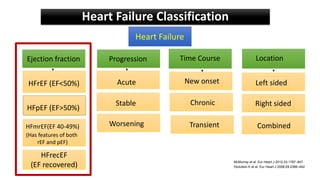
Heart Failure Classification
Heart Failure
Ejection fraction Progression Time Course Location
HFrEF (EF<50%)
HFpEF (EF>50%)
HFmrEF(EF 40-49%)
(Has features of both
rEF and pEF)
HFrecEF
(EF recovered)
Acute
Chronic
New onset Left sided
Transient
Right sided
Stable
Worsening Combined
McMurray et al. Eur Heart J 2012;33:1787–847
Dickstein K et al. Eur Heart J 2008;29:2388–442
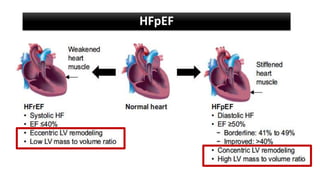
HFpEF
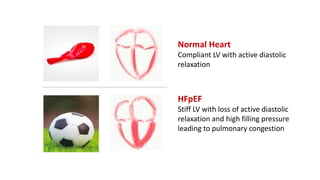
Normal Heart
Compliant LV with active diastolic
relaxation
HFpEF
Stiff LV with loss of active diastolic
relaxation and high filling pressure
leading to pulmonary congestion
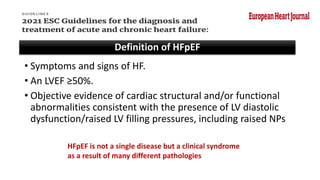
Definition of HFpEF
• Symptoms and signs of HF.
• An LVEF ≥50%.
• Objective evidence of cardiac structural and/or functional
abnormalities consistent with the presence of LV diastolic
dysfunction/raised LV filling pressures, including raised NPs
HFpEF is not a single disease but a clinical syndrome
as a result of many different pathologies
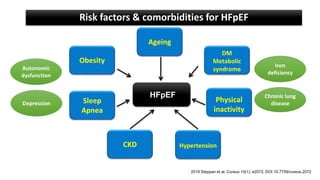
HFpEF
Ageing
Sleep
Apnea
DM
Metabolic
syndrome
Obesity
CKD Hypertension
2018 Steppan et al. Cureus 10(1): e2072. DOI 10.7759/cureus.2072
Physical
inactivity
Risk factors & comorbidities for HFpEF
Autonomic
dysfunction
Depression
Iron
deficiency
Chronic lung
disease
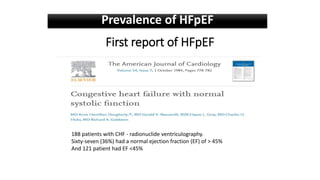
First report of HFpEF
188 patients with CHF - radionuclide ventriculography.
Sixty-seven (36%) had a normal ejection fraction (EF) of > 45%
And 121 patient had EF <45%
Prevalence of HFpEF
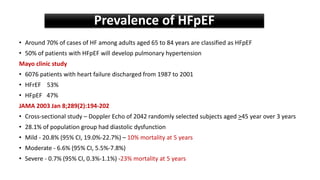
• Around 70% of cases of HF among adults aged 65 to 84 years are classified as HFpEF
• 50% of patients with HFpEF will develop pulmonary hypertension
Mayo clinic study
• 6076 patients with heart failure discharged from 1987 to 2001
• HFrEF 53%
• HFpEF 47%
JAMA 2003 Jan 8;289(2):194-202
• Cross-sectional study – Doppler Echo of 2042 randomly selected subjects aged >45 year over 3 years
• 28.1% of population group had diastolic dysfunction
• Mild - 20.8% (95% CI, 19.0%-22.7%) – 10% mortality at 5 years
• Moderate - 6.6% (95% CI, 5.5%-7.8%)
• Severe - 0.7% (95% CI, 0.3%-1.1%) -23% mortality at 5 years
Prevalence of HFpEF
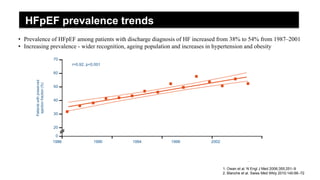
• Prevalence of HFpEF among patients with discharge diagnosis of HF increased from 38% to 54% from 1987–2001
• Increasing prevalence - wider recognition, ageing population and increases in hypertension and obesity
Patients
with
preserved
ejection
fraction
(%)
70
60
50
40
30
20
0
1986 1990 1994 1998 2002
r=0.92, p<0.001
HFpEF prevalence trends
1. Owan et al. N Engl J Med 2006;355:251–9
2. Blanche et al. Swiss Med Wkly 2010;140:66–72
4.6 5.3 5.5 7.1 7.5 11 11.5
43
69 73
0
10
20
30
40
50
60
70
80
HOSPITALIZATION
Per
1000
patient
years
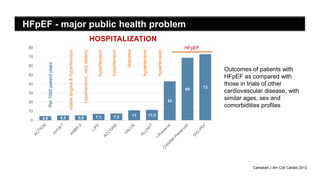
HFpEF - major public health problem
Outcomes of patients with
HFpEF as compared with
those in trials of other
cardiovascular disease, with
similar ages, sex and
comorbidities profiles
stable
angina
&
hypertension
hypertension,
very
elderly
hypertension
hypertension
diabetes
hypertension
hypertension
HFpEF
Campbell J Am Coll Cardiol 2012
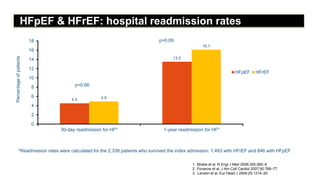
*Readmission rates were calculated for the 2,339 patients who survived the index admission: 1,493 with HFrEF and 846 with HFpEF
4.5
13.5
4.9
16.1
0
2
4
6
8
10
12
14
16
18
30-day readmission for HF* 1-year readmission for HF*
HFpEF HFrEF
p=0.66
p=0.09
Percentage
of
patients
HFpEF & HFrEF: hospital readmission rates
1. Bhatia et al. N Engl J Med 2006;355:260–9
2. Fonarow et al. J Am Coll Cardiol 2007;50:768–77
3. Lenzen et al. Eur Heart J 2004;25:1214–20
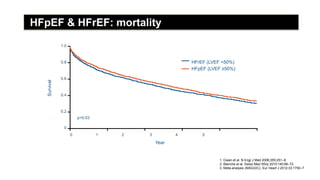
HFpEF & HFrEF: mortality
Survival
1.0
0.8
0.6
0.4
0.2
0
0 1 2 3 4 5
Year
HFrEF (LVEF <50%)
HFpEF (LVEF ≥50%)
p=0.03
1. Owan et al. N Engl J Med 2006;355:251–9
2. Blanche et al. Swiss Med Wkly 2010;140:66–72
3. Meta-analysis (MAGGIC). Eur Heart J 2012;33:1750–7
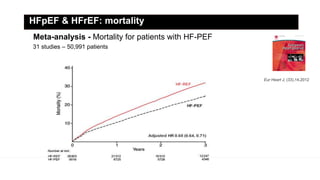
Eur Heart J, (33),14,2012
31 studies – 50,991 patients
HFpEF & HFrEF: mortality
Meta-analysis - Mortality for patients with HF-PEF
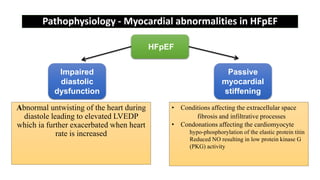
Pathophysiology - Myocardial abnormalities in HFpEF
Abnormal untwisting of the heart during
diastole leading to elevated LVEDP
which ia further exacerbated when heart
rate is increased
HFpEF
Passive
myocardial
stiffening
Impaired
diastolic
dysfunction
• Conditions affecting the extracellular space
fibrosis and infiltrative processes
• Condonations affecting the cardiomyocyte
hypo-phosphorylation of the elastic protein titin
Reduced NO resulting in low protein kinase G
(PKG) activity
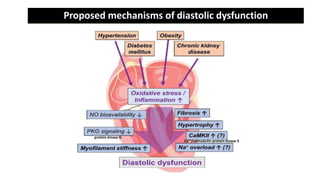
Proposed mechanisms of diastolic dysfunction
protein kinase G
Ca2+/calmodulin-protein kinase II
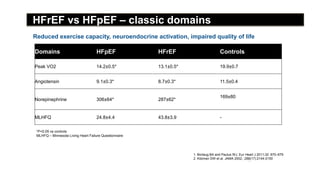
Reduced exercise capacity, neuroendocrine activation, impaired quality of life
*P<0.05 vs controls
MLHFQ – Minnesota Living Heart Failure Questionnaire
HFrEF vs HFpEF – classic domains
Domains HFpEF HFrEF Controls
Peak VO2 14.2±0.5* 13.1±0.5* 19.9±0.7
Angiotensin 9.1±0.3* 8.7±0.3* 11.5±0.4
Norepinephrine 306±64* 287±62*
169±80
MLHFQ 24.8±4.4 43.8±3.9 -
1. Borlaug BA and Paulus WJ. Eur Heart J 2011;32: 670–679
2. Kitzman DW et al. JAMA 2002; ;288(17):2144-2150
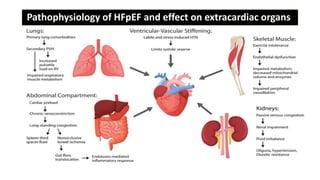
Pathophysiology of HFpEF and effect on extracardiac organs
Diagnosis
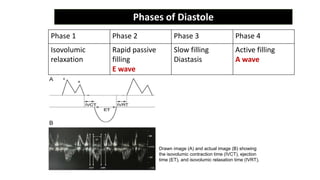
Drawn image (A) and actual image (B) showing
the isovolumic contraction time (IVCT), ejection
time (ET), and isovolumic relaxation time (IVRT).
Phase 1 Phase 2 Phase 3 Phase 4
Isovolumic
relaxation
Rapid passive
filling
E wave
Slow filling
Diastasis
Active filling
A wave
Phases of Diastole
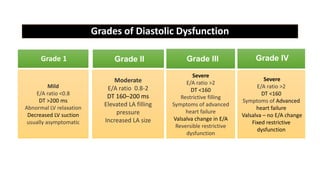
Grades of Diastolic Dysfunction
Mild
E/A ratio <0.8
DT >200 ms
Abnormal LV relaxation
Decreased LV suction
usually asymptomatic
Grade 1 Grade II Grade III Grade IV
Severe
E/A ratio >2
DT <160
Restrictive filling
Symptoms of advanced
heart failure
Valsalva change in E/A
Reversible restrictive
dysfunction
Moderate
E/A ratio 0.8-2
DT 160–200 ms
Elevated LA filling
pressure
Increased LA size
Severe
E/A ratio >2
DT <160
Symptoms of Advanced
heart failure
Valsalva – no E/A change
Fixed restrictive
dysfunction
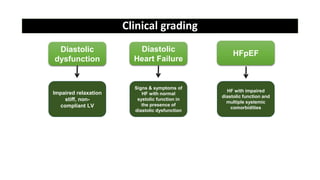
HFpEF
Diastolic
dysfunction
Diastolic
Heart Failure
Impaired relaxation
stiff, non-
compliant LV
Signs & symptoms of
HF with normal
systolic function in
the presence of
diastolic dysfunction
HF with impaired
diastolic function and
multiple systemic
comorbidities
Clinical grading
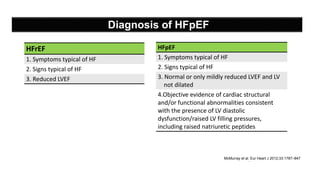
HFrEF
1. Symptoms typical of HF
2. Signs typical of HF
3. Reduced LVEF
HFpEF
1. Symptoms typical of HF
2. Signs typical of HF
3. Normal or only mildly reduced LVEF and LV
not dilated
4.Objective evidence of cardiac structural
and/or functional abnormalities consistent
with the presence of LV diastolic
dysfunction/raised LV filling pressures,
including raised natriuretic peptides
McMurray et al. Eur Heart J 2012;33:1787–847
Diagnosis of HFpEF
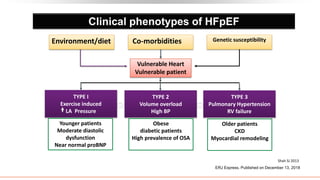
Clinical phenotypes of HFpEF
Co-morbidities
Environment/diet Genetic susceptibility
Vulnerable Heart
Vulnerable patient
Shah SJ 2013
TYPE I
Exercise induced
LA Pressure
TYPE 3
Pulmonary Hypertension
RV failure
TYPE 2
Volume overload
High BP
Younger patients
Moderate diastolic
dysfunction
Near normal proBNP
Obese
diabetic patients
High prevalence of OSA
Older patients
CKD
Myocardial remodeling
ERJ Express. Published on December 13, 2018
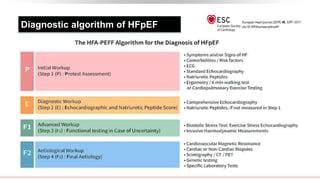
Diagnostic algorithm of HFpEF
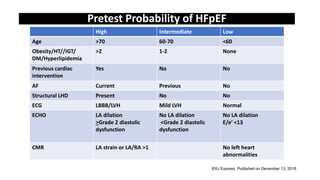
Pretest Probability of HFpEF
High Intermediate Low
Age >70 60-70 <60
Obesity/HT//IGT/
DM/Hyperlipidemia
>2 1-2 None
Previous cardiac
intervention
Yes No No
AF Current Previous No
Structural LHD Present No No
ECG LBBB/LVH Mild LVH Normal
ECHO LA dilation
>Grade 2 diastolic
dysfunction
No LA dilation
<Grade 2 diastolic
dysfunction
No LA dilation
E/e′ <13
CMR LA strain or LA/RA >1 No left heart
abnormalities
ERJ Express. Published on December 13, 2018
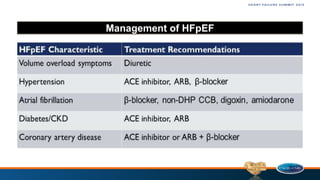
Management of HFpEF
Management of HFpEF
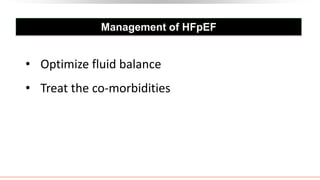
• Optimize fluid balance
• Treat the co-morbidities
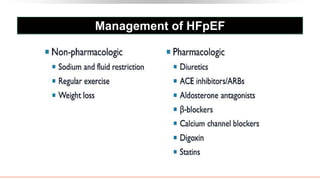
Management of HFpEF
Management of HFpEF
Management of HFpEF
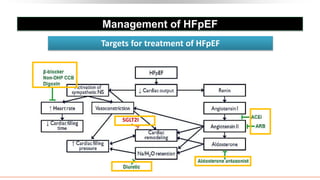
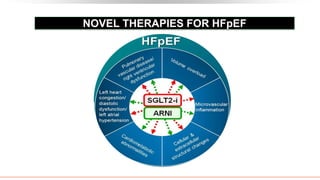
SGLT2I
Targets for treatment of HFpEF
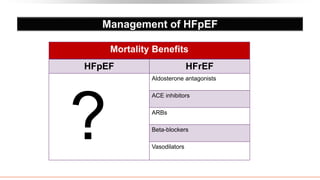
Management of HFpEF
Mortality Benefits
HFpEF HFrEF
?
Aldosterone antagonists
ACE inhibitors
ARBs
Beta-blockers
Vasodilators
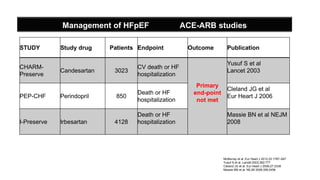
STUDY Study drug Patients Endpoint Outcome Publication
CHARM-
Preserve
Candesartan 3023
CV death or HF
hospitalization
Primary
end-point
not met
Yusuf S et al
Lancet 2003
PEP-CHF Perindopril 850
Death or HF
hospitalization
Cleland JG et al
Eur Heart J 2006
I-Preserve Irbesartan 4128
Death or HF
hospitalization
Massie BN et al NEJM
2008
McMurray et al. Eur Heart J 2012;33:1787–847
Yusuf S et al. Lancet 2003;362:777
Cleland JG et al. Eur Heart J 2006;27:2338
Massie BM et al. NEJM 2008;359:2456
Management of HFpEF ACE-ARB studies
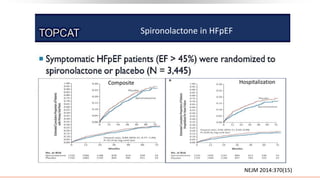
Spironolactone in HFpEF
NEJM 2014:370(15)
Composite Hospitalization
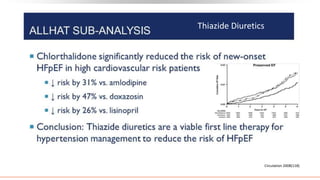
Circulation 2008(118)
Thiazide Diuretics
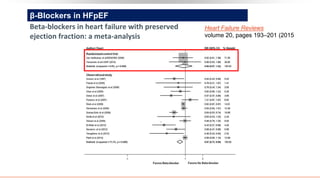
Beta-blockers in heart failure with preserved
ejection fraction: a meta-analysis
Heart Failure Reviews
volume 20, pages 193–201 (2015
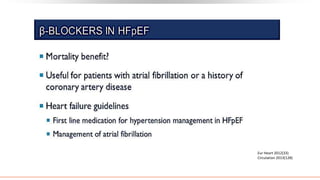
β-Blockers in HFpEF
Eur Heart 2012(33)
Circulation 2013(128)
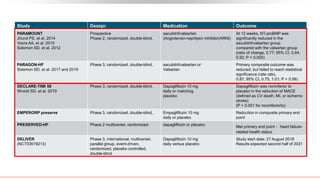
NOVEL THERAPIES FOR HFpEF
Study Design Medication Outcome
PARAMOUNT
Jhund PS, et al. 2014
Voors AA, et al. 2015
Solomon SD, et al. 2012
Prospective
Phase 2, randomized, double-blind,
sacubitril/valsartan
(Angiotensin-neprilysin inhibitor(ARNI)
At 12 weeks, NT-proBNP was
significantly reduced in the
sacubitril/valsartan group
compared with the valsartan group
(ratio of change, 0.77; 95% CI, 0.64,
0.92; P = 0.005)
PARAGON-HF
Solomon SD, et al. 2017 and 2019
Phase 3, randomized, double-blind, sacubitril/valsartan or
Valsartan
Primary composite outcome was
reduced, but failed to reach statistical
significance (rate ratio,
0.87; 95% CI, 0.75, 1.01; P = 0.06)
DECLARE-TIMI 58
Wiviott SD, et al. 2019
Phase 3, randomized, double-blind, Dapagliflozin 10 mg
daily or matching
placebo
Dapagliflozin was noninferior to
placebo in the reduction of MACE
(defined as CV death, MI, or ischemic
stroke)
(P < 0.001 for noninferiority)
EMPERORP preserve Phase 3, randomized, double-blind, Empagliflozin 10 mg
daily or placebo
Reduction in composite primary end
point
PRESERVED-HF Phase 2 multicenter, randomized dapagliflozin or placebo Met primary end point - heart failure-
related health status
DELIVER
(NCT03619213)
Phase 3, international, multicenter,
parallel group, event-driven,
randomized, placebo controlled,
double-blind
Dapagliflozin 10 mg
daily versus placebo
Study start date: 27 August 2018
Results expected second half of 2021
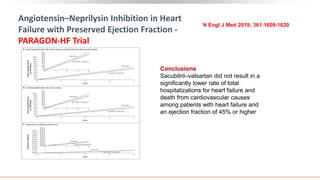
Angiotensin–Neprilysin Inhibition in Heart
Failure with Preserved Ejection Fraction -
PARAGON-HF Trial
N Engl J Med 2019; 381:1609-1620
Conclusions
Sacubitril–valsartan did not result in a
significantly lower rate of total
hospitalizations for heart failure and
death from cardiovascular causes
among patients with heart failure and
an ejection fraction of 45% or higher
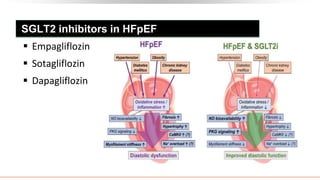
SGLT2 inhibitors in HFpEF
 Empagliflozin
 Sotagliflozin
 Dapagliflozin
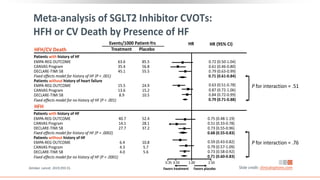
Patients with history of HF
EMPA-REG OUTCOME
CANVAS Program
DECLARE-TIMI 58
Fixed effects model for history of HF (P = .0002)
Patients without history of HF
EMPA-REG OUTCOME
CANVAS Program
DECLARE-TIMI 58
Fixed effects model for no history of HF (P < .0001)
Patients with history of HF
EMPA-REG OUTCOME
CANVAS Program
DECLARE-TIMI 58
Fixed effects model for history of HF (P < .001)
Patients without history of heart failure
EMPA-REG OUTCOME
CANVAS Program
DECLARE-TIMI 58
Fixed effects model for no history of HF (P < .001)
Meta-analysis of SGLT2 Inhibitor CVOTs:
HFH or CV Death by Presence of HF
Slide credit: clinicaloptions.com
0.35 0.50 1.00 2.50
Favors placebo
Favors treatment
0.72 (0.50-1.04)
0.61 (0.46-0.80)
0.79 (0.63-0.99)
0.71 (0.61-0.84)
0.63 (0.51-0.78)
0.87 (0.72-1.06)
0.84 (0.72-0.99)
0.79 (0.71-0.88)
0.75 (0.48-1.19)
0.51 (0.33-0.78)
0.73 (0.55-0.96)
0.68 (0.55-0.83)
0.59 (0.43-0.82)
0.79 (0.57-1.09)
0.73 (0.58-0.92)
0.71 (0.60-0.83)
P for interaction = .51
P for interaction = .76
HFH/CV Death
HR HR (95% CI)
Events/1000 Patient-Yrs
Treatment Placebo
63.6
35.4
45.1
15.5
13.6
8.9
85.5
56.8
55.5
24.9
15.2
10.5
40.7
14.1
27.7
6.4
4.3
4.0
52.4
28.1
37.2
10.8
5.7
5.6
HFH
Zelniker. Lancet. 2019;393:31.
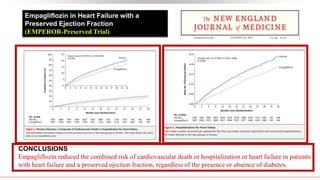
CONCLUSIONS
Empagliflozin reduced the combined risk of cardiovascular death or hospitalization or heart failure in patients
with heart failure and a preserved ejection fraction, regardless of the presence or absence of diabetes.
Empagliflozin in Heart Failure with a
Preserved Ejection Fraction
(EMPEROR-Preserved Trial)
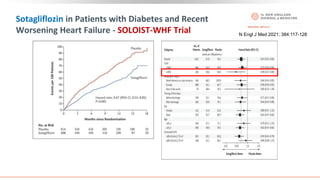
Sotagliflozin in Patients with Diabetes and Recent
Worsening Heart Failure - SOLOIST-WHF Trial N Engl J Med 2021; 384:117-128
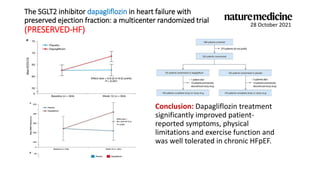
The SGLT2 inhibitor dapagliflozin in heart failure with
preserved ejection fraction: a multicenter randomized trial
(PRESERVED-HF)
Conclusion: Dapagliflozin treatment
significantly improved patient-
reported symptoms, physical
limitations and exercise function and
was well tolerated in chronic HFpEF.
28 October 2021
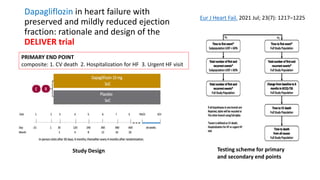
Dapagliflozin in heart failure with
preserved and mildly reduced ejection
fraction: rationale and design of the
DELIVER trial
Eur J Heart Fail. 2021 Jul; 23(7): 1217–1225
Study Design Testing scheme for primary
and secondary end points
PRIMARY END POINT
composite: 1. CV death 2. Hospitalization for HF 3. Urgent HF visit
SGLT2 inhibitors - Caution
SGLT2 inhibitors should be avoided in patients with the following conditions
•All patients with type 1 diabetes mellitus.
•Presence of type 2 diabetes mellitus with prior diabetic ketoacidosis (DKA)
or a condition predisposing to DKA (including pancreatic insufficiency, drug
or alcohol addiction, prolonged fasting).
•Volume depletion or symptomatic hypotension.
•GFR <20 , end-stage kidney disease, or rapidly declining renal function.
•History of complicated urinary tract infections or genitourinary infections.
•Presence of risk factors for foot amputation (neuropathy, foot deformity,
vascular disease, and/or history of previous foot ulceration).
Patients taking SGLT2 inhibitors should be monitored for signs and symptoms
of foot ulceration.
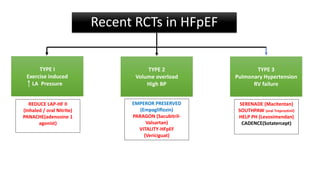
Recent RCTs in HFpEF
TYPE I
Exercise induced
LA Pressure
TYPE 3
Pulmonary Hypertension
RV failure
TYPE 2
Volume overload
High BP
REDUCE LAP-HF II
(Inhaled / oral Nitrite)
PANACHE(adenosine 1
agonist)
EMPEROR PRESERVED
(Empagliflozin)
PARAGON (Sacubitril-
Valsartan)
VITALITY-HFpEF
(Vericiguat)
SERENADE (Macitentan)
SOUTHPAW (oral Treprostinil)
HELP PH (Levosimendan)
CADENCE(Sotatercept)
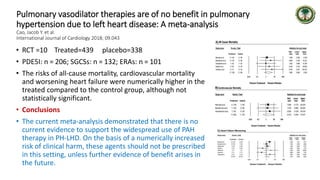
Pulmonary vasodilator therapies are of no benefit in pulmonary
hypertension due to left heart disease: A meta-analysis
Cao, Jacob Y. et al.
International Journal of Cardiology 2018; 09.043
• RCT =10 Treated=439 placebo=338
• PDE5I: n = 206; SGCSs: n = 132; ERAs: n = 101
• The risks of all-cause mortality, cardiovascular mortality
and worsening heart failure were numerically higher in the
treated compared to the control group, although not
statistically significant.
• Conclusions
• The current meta-analysis demonstrated that there is no
current evidence to support the widespread use of PAH
therapy in PH-LHD. On the basis of a numerically increased
risk of clinical harm, these agents should not be prescribed
in this setting, unless further evidence of benefit arises in
the future.
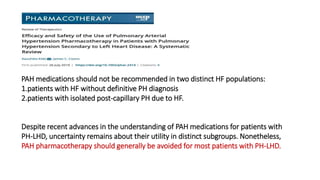
Despite recent advances in the understanding of PAH medications for patients with
PH-LHD, uncertainty remains about their utility in distinct subgroups. Nonetheless,
PAH pharmacotherapy should generally be avoided for most patients with PH-LHD.
PAH medications should not be recommended in two distinct HF populations:
1.patients with HF without definitive PH diagnosis
2.patients with isolated post-capillary PH due to HF.
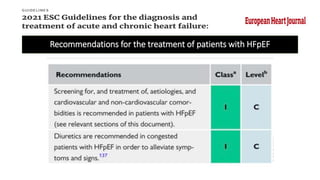
Recommendations for the treatment of patients with HFpEF
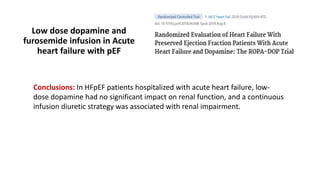
Low dose dopamine and
furosemide infusion in Acute
heart failure with pEF
Conclusions: In HFpEF patients hospitalized with acute heart failure, low-
dose dopamine had no significant impact on renal function, and a continuous
infusion diuretic strategy was associated with renal impairment.
Conclusion
• HFpEF is common in older population with comorbidities.
• Pathophysiology, etiology and management of HFpEF is distinct
• Treatment is based on symptoms and co-morbidities
• Many effective treatments for HFrEF have shown disappointing results when applied to
HFpEF patients
• Medications used to treat HFpEF lack evidence for mortality benefit
• New pharmacological treatment targets such as SGLT2 inhibitors may play a role in
optimum management of HFpEF
• Further research is needed to better understand HFpEF for improved clinical outcome
Thanks

Heart Failure with Preserved Ejection Fraction(HFpEF).ptx

  • 1.
    Heart Failure withPreserved Ejection Fraction (HFpEF) Sarfraz Saleemi
  • 2.
    Outline • Classification ofheart failure • Definition of HFpEF • Prevalence • Pathophysiology • Clinical presentation • Diagnosis • Treatment
  • 3.
    Heart Failure Classification HeartFailure Ejection fraction Progression Time Course Location HFrEF (EF<50%) HFpEF (EF>50%) HFmrEF(EF 40-49%) (Has features of both rEF and pEF) HFrecEF (EF recovered) Acute Chronic New onset Left sided Transient Right sided Stable Worsening Combined McMurray et al. Eur Heart J 2012;33:1787–847 Dickstein K et al. Eur Heart J 2008;29:2388–442
  • 4.
  • 5.
    Normal Heart Compliant LVwith active diastolic relaxation HFpEF Stiff LV with loss of active diastolic relaxation and high filling pressure leading to pulmonary congestion
  • 6.
    Definition of HFpEF •Symptoms and signs of HF. • An LVEF ≥50%. • Objective evidence of cardiac structural and/or functional abnormalities consistent with the presence of LV diastolic dysfunction/raised LV filling pressures, including raised NPs HFpEF is not a single disease but a clinical syndrome as a result of many different pathologies
  • 7.
    HFpEF Ageing Sleep Apnea DM Metabolic syndrome Obesity CKD Hypertension 2018 Steppanet al. Cureus 10(1): e2072. DOI 10.7759/cureus.2072 Physical inactivity Risk factors & comorbidities for HFpEF Autonomic dysfunction Depression Iron deficiency Chronic lung disease
  • 8.
    First report ofHFpEF 188 patients with CHF - radionuclide ventriculography. Sixty-seven (36%) had a normal ejection fraction (EF) of > 45% And 121 patient had EF <45% Prevalence of HFpEF
  • 9.
    • Around 70%of cases of HF among adults aged 65 to 84 years are classified as HFpEF • 50% of patients with HFpEF will develop pulmonary hypertension Mayo clinic study • 6076 patients with heart failure discharged from 1987 to 2001 • HFrEF 53% • HFpEF 47% JAMA 2003 Jan 8;289(2):194-202 • Cross-sectional study – Doppler Echo of 2042 randomly selected subjects aged >45 year over 3 years • 28.1% of population group had diastolic dysfunction • Mild - 20.8% (95% CI, 19.0%-22.7%) – 10% mortality at 5 years • Moderate - 6.6% (95% CI, 5.5%-7.8%) • Severe - 0.7% (95% CI, 0.3%-1.1%) -23% mortality at 5 years Prevalence of HFpEF
  • 10.
    • Prevalence ofHFpEF among patients with discharge diagnosis of HF increased from 38% to 54% from 1987–2001 • Increasing prevalence - wider recognition, ageing population and increases in hypertension and obesity Patients with preserved ejection fraction (%) 70 60 50 40 30 20 0 1986 1990 1994 1998 2002 r=0.92, p<0.001 HFpEF prevalence trends 1. Owan et al. N Engl J Med 2006;355:251–9 2. Blanche et al. Swiss Med Wkly 2010;140:66–72
  • 11.
    4.6 5.3 5.57.1 7.5 11 11.5 43 69 73 0 10 20 30 40 50 60 70 80 HOSPITALIZATION Per 1000 patient years HFpEF - major public health problem Outcomes of patients with HFpEF as compared with those in trials of other cardiovascular disease, with similar ages, sex and comorbidities profiles stable angina & hypertension hypertension, very elderly hypertension hypertension diabetes hypertension hypertension HFpEF Campbell J Am Coll Cardiol 2012
  • 12.
    *Readmission rates werecalculated for the 2,339 patients who survived the index admission: 1,493 with HFrEF and 846 with HFpEF 4.5 13.5 4.9 16.1 0 2 4 6 8 10 12 14 16 18 30-day readmission for HF* 1-year readmission for HF* HFpEF HFrEF p=0.66 p=0.09 Percentage of patients HFpEF & HFrEF: hospital readmission rates 1. Bhatia et al. N Engl J Med 2006;355:260–9 2. Fonarow et al. J Am Coll Cardiol 2007;50:768–77 3. Lenzen et al. Eur Heart J 2004;25:1214–20
  • 13.
    HFpEF & HFrEF:mortality Survival 1.0 0.8 0.6 0.4 0.2 0 0 1 2 3 4 5 Year HFrEF (LVEF <50%) HFpEF (LVEF ≥50%) p=0.03 1. Owan et al. N Engl J Med 2006;355:251–9 2. Blanche et al. Swiss Med Wkly 2010;140:66–72 3. Meta-analysis (MAGGIC). Eur Heart J 2012;33:1750–7
  • 14.
    Eur Heart J,(33),14,2012 31 studies – 50,991 patients HFpEF & HFrEF: mortality Meta-analysis - Mortality for patients with HF-PEF
  • 15.
    Pathophysiology - Myocardialabnormalities in HFpEF Abnormal untwisting of the heart during diastole leading to elevated LVEDP which ia further exacerbated when heart rate is increased HFpEF Passive myocardial stiffening Impaired diastolic dysfunction • Conditions affecting the extracellular space fibrosis and infiltrative processes • Condonations affecting the cardiomyocyte hypo-phosphorylation of the elastic protein titin Reduced NO resulting in low protein kinase G (PKG) activity
  • 16.
    Proposed mechanisms ofdiastolic dysfunction protein kinase G Ca2+/calmodulin-protein kinase II
  • 17.
    Reduced exercise capacity,neuroendocrine activation, impaired quality of life *P<0.05 vs controls MLHFQ – Minnesota Living Heart Failure Questionnaire HFrEF vs HFpEF – classic domains Domains HFpEF HFrEF Controls Peak VO2 14.2±0.5* 13.1±0.5* 19.9±0.7 Angiotensin 9.1±0.3* 8.7±0.3* 11.5±0.4 Norepinephrine 306±64* 287±62* 169±80 MLHFQ 24.8±4.4 43.8±3.9 - 1. Borlaug BA and Paulus WJ. Eur Heart J 2011;32: 670–679 2. Kitzman DW et al. JAMA 2002; ;288(17):2144-2150
  • 18.
    Pathophysiology of HFpEFand effect on extracardiac organs
  • 19.
  • 20.
    Drawn image (A)and actual image (B) showing the isovolumic contraction time (IVCT), ejection time (ET), and isovolumic relaxation time (IVRT). Phase 1 Phase 2 Phase 3 Phase 4 Isovolumic relaxation Rapid passive filling E wave Slow filling Diastasis Active filling A wave Phases of Diastole
  • 21.
    Grades of DiastolicDysfunction Mild E/A ratio <0.8 DT >200 ms Abnormal LV relaxation Decreased LV suction usually asymptomatic Grade 1 Grade II Grade III Grade IV Severe E/A ratio >2 DT <160 Restrictive filling Symptoms of advanced heart failure Valsalva change in E/A Reversible restrictive dysfunction Moderate E/A ratio 0.8-2 DT 160–200 ms Elevated LA filling pressure Increased LA size Severe E/A ratio >2 DT <160 Symptoms of Advanced heart failure Valsalva – no E/A change Fixed restrictive dysfunction
  • 22.
    HFpEF Diastolic dysfunction Diastolic Heart Failure Impaired relaxation stiff,non- compliant LV Signs & symptoms of HF with normal systolic function in the presence of diastolic dysfunction HF with impaired diastolic function and multiple systemic comorbidities Clinical grading
  • 23.
    HFrEF 1. Symptoms typicalof HF 2. Signs typical of HF 3. Reduced LVEF HFpEF 1. Symptoms typical of HF 2. Signs typical of HF 3. Normal or only mildly reduced LVEF and LV not dilated 4.Objective evidence of cardiac structural and/or functional abnormalities consistent with the presence of LV diastolic dysfunction/raised LV filling pressures, including raised natriuretic peptides McMurray et al. Eur Heart J 2012;33:1787–847 Diagnosis of HFpEF
  • 24.
    Clinical phenotypes ofHFpEF Co-morbidities Environment/diet Genetic susceptibility Vulnerable Heart Vulnerable patient Shah SJ 2013 TYPE I Exercise induced LA Pressure TYPE 3 Pulmonary Hypertension RV failure TYPE 2 Volume overload High BP Younger patients Moderate diastolic dysfunction Near normal proBNP Obese diabetic patients High prevalence of OSA Older patients CKD Myocardial remodeling ERJ Express. Published on December 13, 2018
  • 25.
  • 26.
    Pretest Probability ofHFpEF High Intermediate Low Age >70 60-70 <60 Obesity/HT//IGT/ DM/Hyperlipidemia >2 1-2 None Previous cardiac intervention Yes No No AF Current Previous No Structural LHD Present No No ECG LBBB/LVH Mild LVH Normal ECHO LA dilation >Grade 2 diastolic dysfunction No LA dilation <Grade 2 diastolic dysfunction No LA dilation E/e′ <13 CMR LA strain or LA/RA >1 No left heart abnormalities ERJ Express. Published on December 13, 2018
  • 27.
  • 28.
    Management of HFpEF •Optimize fluid balance • Treat the co-morbidities
  • 29.
  • 30.
  • 31.
    Management of HFpEF SGLT2I Targetsfor treatment of HFpEF
  • 32.
    Management of HFpEF MortalityBenefits HFpEF HFrEF ? Aldosterone antagonists ACE inhibitors ARBs Beta-blockers Vasodilators
  • 33.
    STUDY Study drugPatients Endpoint Outcome Publication CHARM- Preserve Candesartan 3023 CV death or HF hospitalization Primary end-point not met Yusuf S et al Lancet 2003 PEP-CHF Perindopril 850 Death or HF hospitalization Cleland JG et al Eur Heart J 2006 I-Preserve Irbesartan 4128 Death or HF hospitalization Massie BN et al NEJM 2008 McMurray et al. Eur Heart J 2012;33:1787–847 Yusuf S et al. Lancet 2003;362:777 Cleland JG et al. Eur Heart J 2006;27:2338 Massie BM et al. NEJM 2008;359:2456 Management of HFpEF ACE-ARB studies
  • 34.
    Spironolactone in HFpEF NEJM2014:370(15) Composite Hospitalization
  • 35.
  • 36.
    Beta-blockers in heartfailure with preserved ejection fraction: a meta-analysis Heart Failure Reviews volume 20, pages 193–201 (2015 β-Blockers in HFpEF
  • 37.
  • 38.
  • 39.
    Study Design MedicationOutcome PARAMOUNT Jhund PS, et al. 2014 Voors AA, et al. 2015 Solomon SD, et al. 2012 Prospective Phase 2, randomized, double-blind, sacubitril/valsartan (Angiotensin-neprilysin inhibitor(ARNI) At 12 weeks, NT-proBNP was significantly reduced in the sacubitril/valsartan group compared with the valsartan group (ratio of change, 0.77; 95% CI, 0.64, 0.92; P = 0.005) PARAGON-HF Solomon SD, et al. 2017 and 2019 Phase 3, randomized, double-blind, sacubitril/valsartan or Valsartan Primary composite outcome was reduced, but failed to reach statistical significance (rate ratio, 0.87; 95% CI, 0.75, 1.01; P = 0.06) DECLARE-TIMI 58 Wiviott SD, et al. 2019 Phase 3, randomized, double-blind, Dapagliflozin 10 mg daily or matching placebo Dapagliflozin was noninferior to placebo in the reduction of MACE (defined as CV death, MI, or ischemic stroke) (P < 0.001 for noninferiority) EMPERORP preserve Phase 3, randomized, double-blind, Empagliflozin 10 mg daily or placebo Reduction in composite primary end point PRESERVED-HF Phase 2 multicenter, randomized dapagliflozin or placebo Met primary end point - heart failure- related health status DELIVER (NCT03619213) Phase 3, international, multicenter, parallel group, event-driven, randomized, placebo controlled, double-blind Dapagliflozin 10 mg daily versus placebo Study start date: 27 August 2018 Results expected second half of 2021
  • 40.
    Angiotensin–Neprilysin Inhibition inHeart Failure with Preserved Ejection Fraction - PARAGON-HF Trial N Engl J Med 2019; 381:1609-1620 Conclusions Sacubitril–valsartan did not result in a significantly lower rate of total hospitalizations for heart failure and death from cardiovascular causes among patients with heart failure and an ejection fraction of 45% or higher
  • 41.
    SGLT2 inhibitors inHFpEF  Empagliflozin  Sotagliflozin  Dapagliflozin
  • 42.
    Patients with historyof HF EMPA-REG OUTCOME CANVAS Program DECLARE-TIMI 58 Fixed effects model for history of HF (P = .0002) Patients without history of HF EMPA-REG OUTCOME CANVAS Program DECLARE-TIMI 58 Fixed effects model for no history of HF (P < .0001) Patients with history of HF EMPA-REG OUTCOME CANVAS Program DECLARE-TIMI 58 Fixed effects model for history of HF (P < .001) Patients without history of heart failure EMPA-REG OUTCOME CANVAS Program DECLARE-TIMI 58 Fixed effects model for no history of HF (P < .001) Meta-analysis of SGLT2 Inhibitor CVOTs: HFH or CV Death by Presence of HF Slide credit: clinicaloptions.com 0.35 0.50 1.00 2.50 Favors placebo Favors treatment 0.72 (0.50-1.04) 0.61 (0.46-0.80) 0.79 (0.63-0.99) 0.71 (0.61-0.84) 0.63 (0.51-0.78) 0.87 (0.72-1.06) 0.84 (0.72-0.99) 0.79 (0.71-0.88) 0.75 (0.48-1.19) 0.51 (0.33-0.78) 0.73 (0.55-0.96) 0.68 (0.55-0.83) 0.59 (0.43-0.82) 0.79 (0.57-1.09) 0.73 (0.58-0.92) 0.71 (0.60-0.83) P for interaction = .51 P for interaction = .76 HFH/CV Death HR HR (95% CI) Events/1000 Patient-Yrs Treatment Placebo 63.6 35.4 45.1 15.5 13.6 8.9 85.5 56.8 55.5 24.9 15.2 10.5 40.7 14.1 27.7 6.4 4.3 4.0 52.4 28.1 37.2 10.8 5.7 5.6 HFH Zelniker. Lancet. 2019;393:31.
  • 43.
    CONCLUSIONS Empagliflozin reduced thecombined risk of cardiovascular death or hospitalization or heart failure in patients with heart failure and a preserved ejection fraction, regardless of the presence or absence of diabetes. Empagliflozin in Heart Failure with a Preserved Ejection Fraction (EMPEROR-Preserved Trial)
  • 44.
    Sotagliflozin in Patientswith Diabetes and Recent Worsening Heart Failure - SOLOIST-WHF Trial N Engl J Med 2021; 384:117-128
  • 45.
    The SGLT2 inhibitordapagliflozin in heart failure with preserved ejection fraction: a multicenter randomized trial (PRESERVED-HF) Conclusion: Dapagliflozin treatment significantly improved patient- reported symptoms, physical limitations and exercise function and was well tolerated in chronic HFpEF. 28 October 2021
  • 46.
    Dapagliflozin in heartfailure with preserved and mildly reduced ejection fraction: rationale and design of the DELIVER trial Eur J Heart Fail. 2021 Jul; 23(7): 1217–1225 Study Design Testing scheme for primary and secondary end points PRIMARY END POINT composite: 1. CV death 2. Hospitalization for HF 3. Urgent HF visit
  • 47.
    SGLT2 inhibitors -Caution SGLT2 inhibitors should be avoided in patients with the following conditions •All patients with type 1 diabetes mellitus. •Presence of type 2 diabetes mellitus with prior diabetic ketoacidosis (DKA) or a condition predisposing to DKA (including pancreatic insufficiency, drug or alcohol addiction, prolonged fasting). •Volume depletion or symptomatic hypotension. •GFR <20 , end-stage kidney disease, or rapidly declining renal function. •History of complicated urinary tract infections or genitourinary infections. •Presence of risk factors for foot amputation (neuropathy, foot deformity, vascular disease, and/or history of previous foot ulceration). Patients taking SGLT2 inhibitors should be monitored for signs and symptoms of foot ulceration.
  • 48.
    Recent RCTs inHFpEF TYPE I Exercise induced LA Pressure TYPE 3 Pulmonary Hypertension RV failure TYPE 2 Volume overload High BP REDUCE LAP-HF II (Inhaled / oral Nitrite) PANACHE(adenosine 1 agonist) EMPEROR PRESERVED (Empagliflozin) PARAGON (Sacubitril- Valsartan) VITALITY-HFpEF (Vericiguat) SERENADE (Macitentan) SOUTHPAW (oral Treprostinil) HELP PH (Levosimendan) CADENCE(Sotatercept)
  • 49.
    Pulmonary vasodilator therapiesare of no benefit in pulmonary hypertension due to left heart disease: A meta-analysis Cao, Jacob Y. et al. International Journal of Cardiology 2018; 09.043 • RCT =10 Treated=439 placebo=338 • PDE5I: n = 206; SGCSs: n = 132; ERAs: n = 101 • The risks of all-cause mortality, cardiovascular mortality and worsening heart failure were numerically higher in the treated compared to the control group, although not statistically significant. • Conclusions • The current meta-analysis demonstrated that there is no current evidence to support the widespread use of PAH therapy in PH-LHD. On the basis of a numerically increased risk of clinical harm, these agents should not be prescribed in this setting, unless further evidence of benefit arises in the future.
  • 50.
    Despite recent advancesin the understanding of PAH medications for patients with PH-LHD, uncertainty remains about their utility in distinct subgroups. Nonetheless, PAH pharmacotherapy should generally be avoided for most patients with PH-LHD. PAH medications should not be recommended in two distinct HF populations: 1.patients with HF without definitive PH diagnosis 2.patients with isolated post-capillary PH due to HF.
  • 51.
    Recommendations for thetreatment of patients with HFpEF
  • 52.
    Low dose dopamineand furosemide infusion in Acute heart failure with pEF Conclusions: In HFpEF patients hospitalized with acute heart failure, low- dose dopamine had no significant impact on renal function, and a continuous infusion diuretic strategy was associated with renal impairment.
  • 53.
    Conclusion • HFpEF iscommon in older population with comorbidities. • Pathophysiology, etiology and management of HFpEF is distinct • Treatment is based on symptoms and co-morbidities • Many effective treatments for HFrEF have shown disappointing results when applied to HFpEF patients • Medications used to treat HFpEF lack evidence for mortality benefit • New pharmacological treatment targets such as SGLT2 inhibitors may play a role in optimum management of HFpEF • Further research is needed to better understand HFpEF for improved clinical outcome
  • 54.