
‘Pull’ System of manufacturing
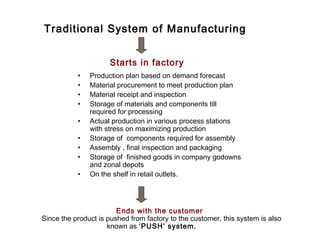
Traditional System of Manufacturing


                     Starts in factory
           •   Production plan based on demand forecast
           •   Material procurement to meet production plan
           •   Material receipt and inspection
           •   Storage of materials and components till
               required for processing
           •   Actual production in various process stations
               with stress on maximizing production
           •   Storage of components required for assembly
           •   Assembly , final inspection and packaging
           •   Storage of finished goods in company godowns
               and zonal depots
           •   On the shelf in retail outlets.


                        Ends with the customer
Since the product is pushed from factory to the customer, this system is also
                     known as ‘PUSH’ system.
Weakness of Traditional System


•    Risk related to forecasts.
•    Long overall business process cycle.
•    Good comfort level at various stages leading to slack in the system.
•    It hides the problems, waste and obstacles in the business flow.
•    Encourages departmental focus as their efficiency is judged on the basis of
     output. (departmental enterprise)


    Pushes up costs and affects competitiveness..
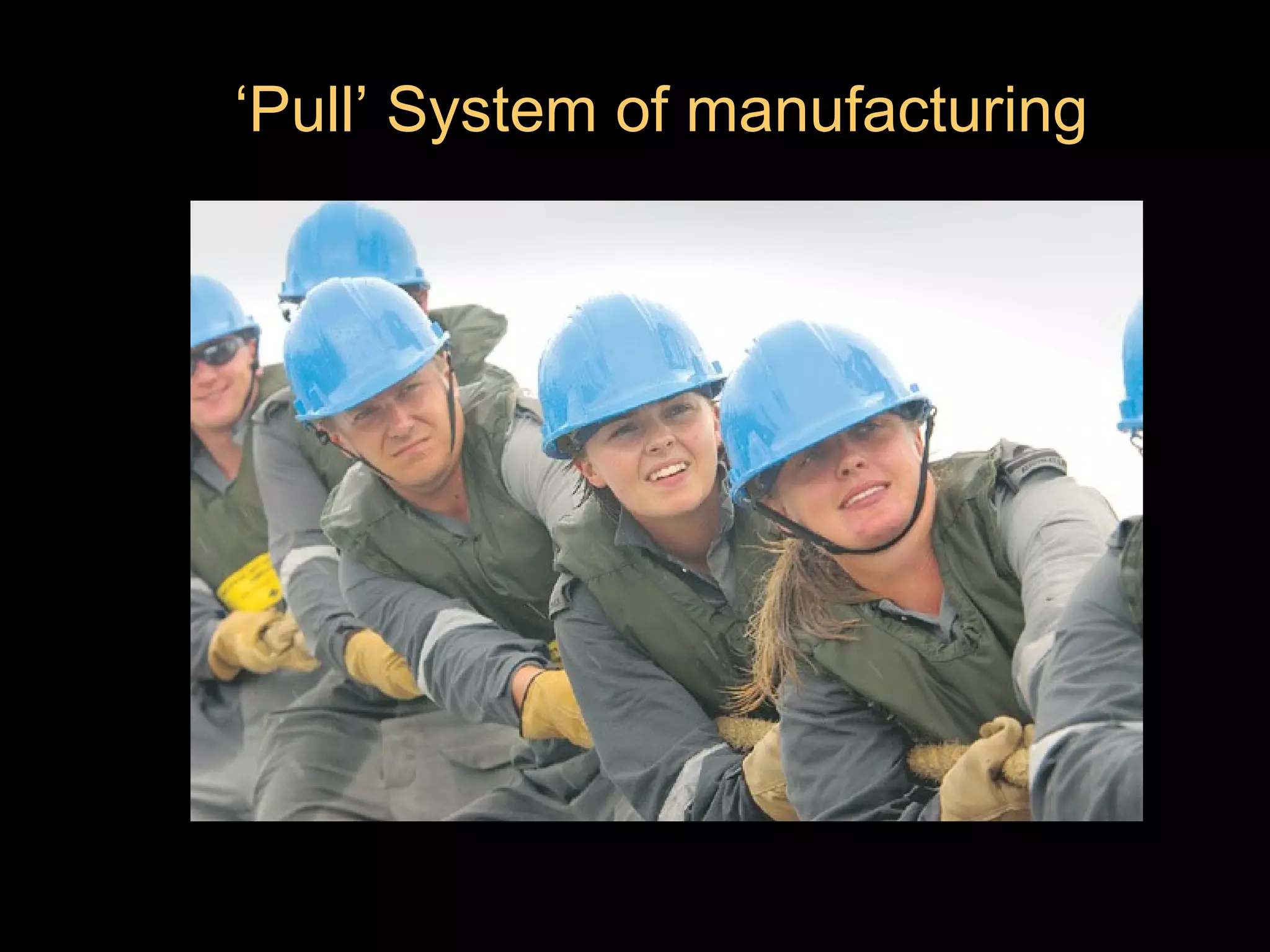
‘Pull’ system of Manufacturing

           Starts with customer


    • Order acquisition by marketing
    • Production planning
    • Just in time receipt of material
    • Pull system of production down the entire process chain by
      kanban, a control tool starting from sales dispatch section.


       Ends with primary producers


       Since the customer pulls the product, it is also called pull system of
       manufacturing.The ‘PULL’ system is used in Lean Manufacturing.
Key Principles
Key Principles


1. Minimize material handling. Preference should be given to low
or no-cost solutions such as gravity-feed slides. Handle product once
only.

2. Minimize distances . Avoid walking, carrying, etc. by creating
cells, combining operations within a work centre, better planning, and
so on.
Key Principles...


3. Minimize strain . Work centres should be ergonomically designed
to avoid back and other muscle strains.

4. Minimize clutter . Everything should have a home, from parts
and tools at a workstation, to equipment and product within
designated floor spaces.

5. Minimize storage . If you have the space, it will surely get filled.
Thus, continuously minimize your storage space for raw material,
WIP, finished goods and spare parts throughout the supply chain.
Key Principles...


6. Maximize utilization . Make optimal use of people, space, and
equipment to improve the return on investment.

7. Maximize flexibility . The key to lean is creating a layout that can
adapt quickly to changes in product, equipment, personnel, or material.

8. Maximize smooth flow . Continuously determine and eliminate
the bottlenecks, then re-balance the line.
Key Principles...


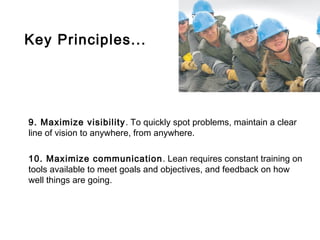
9. Maximize visibility . To quickly spot problems, maintain a clear
line of vision to anywhere, from anywhere.

10. Maximize communication . Lean requires constant training on
tools available to meet goals and objectives, and feedback on how
well things are going.
Pull system of manufacturing

Pull system of manufacturing

  • 1.
    ‘Pull’ System ofmanufacturing
  • 2.
    Traditional System ofManufacturing Starts in factory • Production plan based on demand forecast • Material procurement to meet production plan • Material receipt and inspection • Storage of materials and components till required for processing • Actual production in various process stations with stress on maximizing production • Storage of components required for assembly • Assembly , final inspection and packaging • Storage of finished goods in company godowns and zonal depots • On the shelf in retail outlets. Ends with the customer Since the product is pushed from factory to the customer, this system is also known as ‘PUSH’ system.
  • 3.
    Weakness of TraditionalSystem • Risk related to forecasts. • Long overall business process cycle. • Good comfort level at various stages leading to slack in the system. • It hides the problems, waste and obstacles in the business flow. • Encourages departmental focus as their efficiency is judged on the basis of output. (departmental enterprise) Pushes up costs and affects competitiveness..
  • 4.
    ‘Pull’ system ofManufacturing Starts with customer • Order acquisition by marketing • Production planning • Just in time receipt of material • Pull system of production down the entire process chain by kanban, a control tool starting from sales dispatch section. Ends with primary producers Since the customer pulls the product, it is also called pull system of manufacturing.The ‘PULL’ system is used in Lean Manufacturing.
  • 5.
  • 6.
    Key Principles 1. Minimizematerial handling. Preference should be given to low or no-cost solutions such as gravity-feed slides. Handle product once only. 2. Minimize distances . Avoid walking, carrying, etc. by creating cells, combining operations within a work centre, better planning, and so on.
  • 7.
    Key Principles... 3. Minimizestrain . Work centres should be ergonomically designed to avoid back and other muscle strains. 4. Minimize clutter . Everything should have a home, from parts and tools at a workstation, to equipment and product within designated floor spaces. 5. Minimize storage . If you have the space, it will surely get filled. Thus, continuously minimize your storage space for raw material, WIP, finished goods and spare parts throughout the supply chain.
  • 8.
    Key Principles... 6. Maximizeutilization . Make optimal use of people, space, and equipment to improve the return on investment. 7. Maximize flexibility . The key to lean is creating a layout that can adapt quickly to changes in product, equipment, personnel, or material. 8. Maximize smooth flow . Continuously determine and eliminate the bottlenecks, then re-balance the line.
  • 9.
    Key Principles... 9. Maximizevisibility . To quickly spot problems, maintain a clear line of vision to anywhere, from anywhere. 10. Maximize communication . Lean requires constant training on tools available to meet goals and objectives, and feedback on how well things are going.