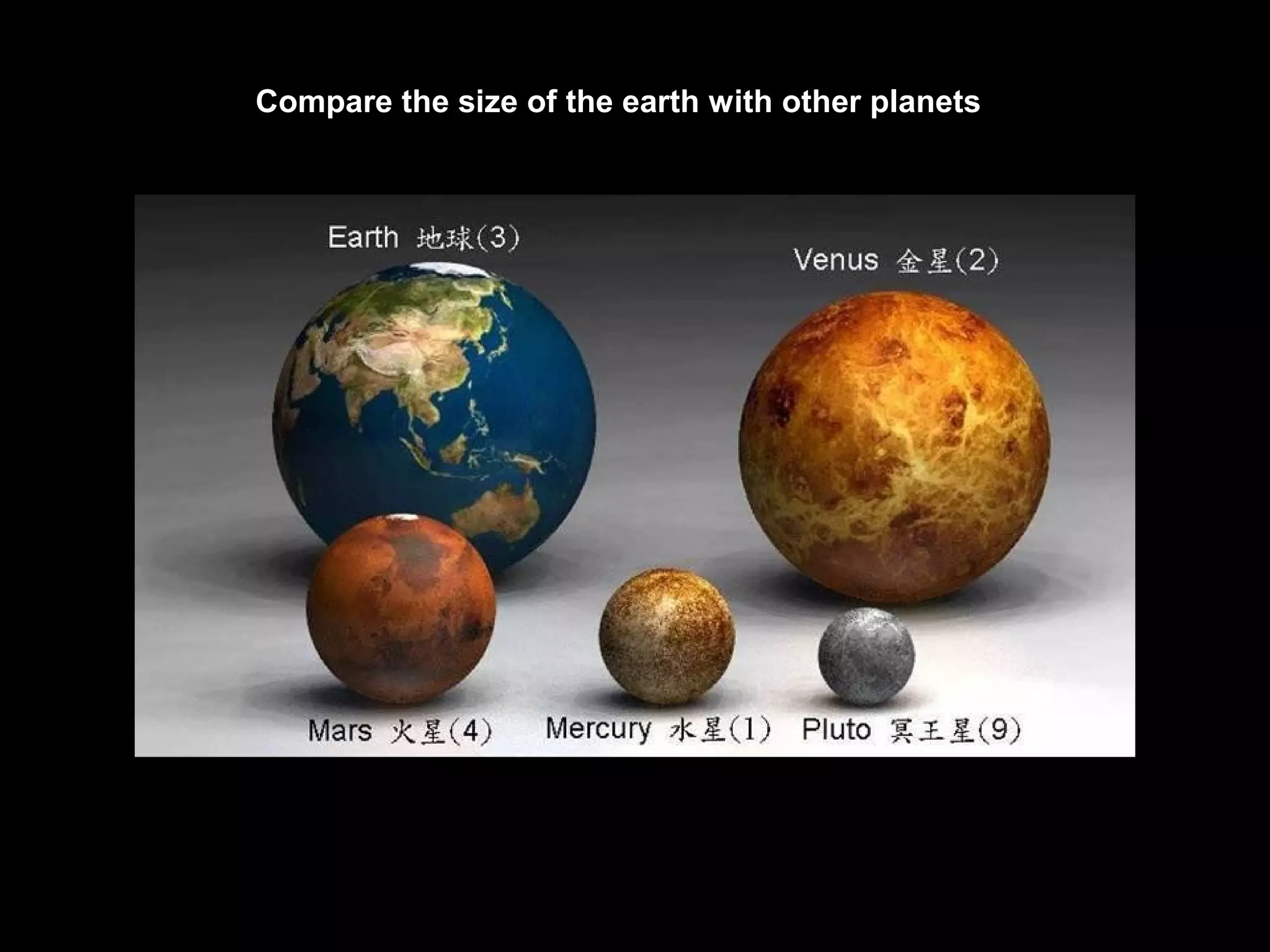

Compare the size of the earth with other planets
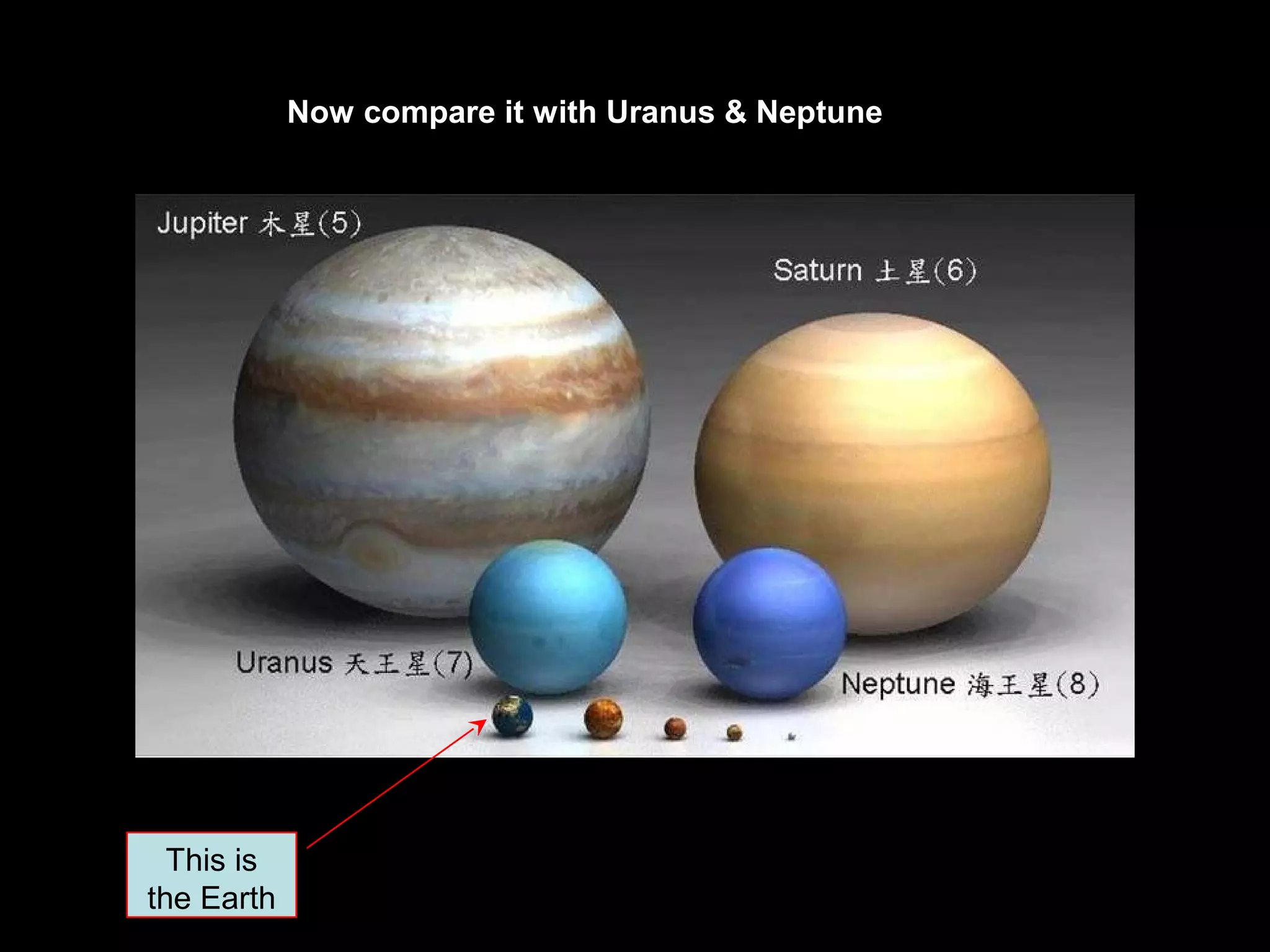
Now compare it with Uranus & Neptune


  This is
the Earth
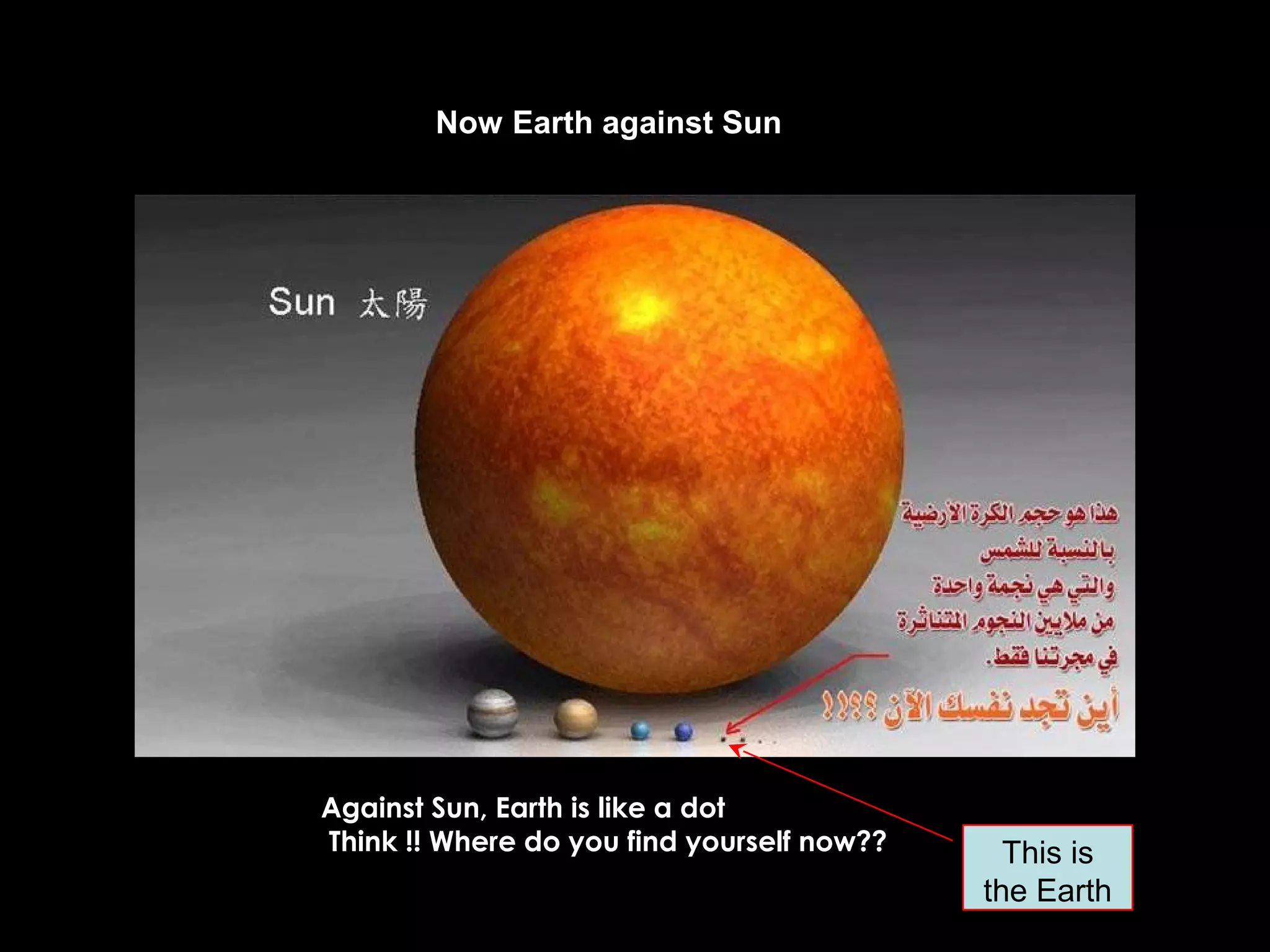
Now Earth against Sun


Against Sun, Earth is like a dot
 Think !! Where do you find yourself now??     This is
                                             the Earth
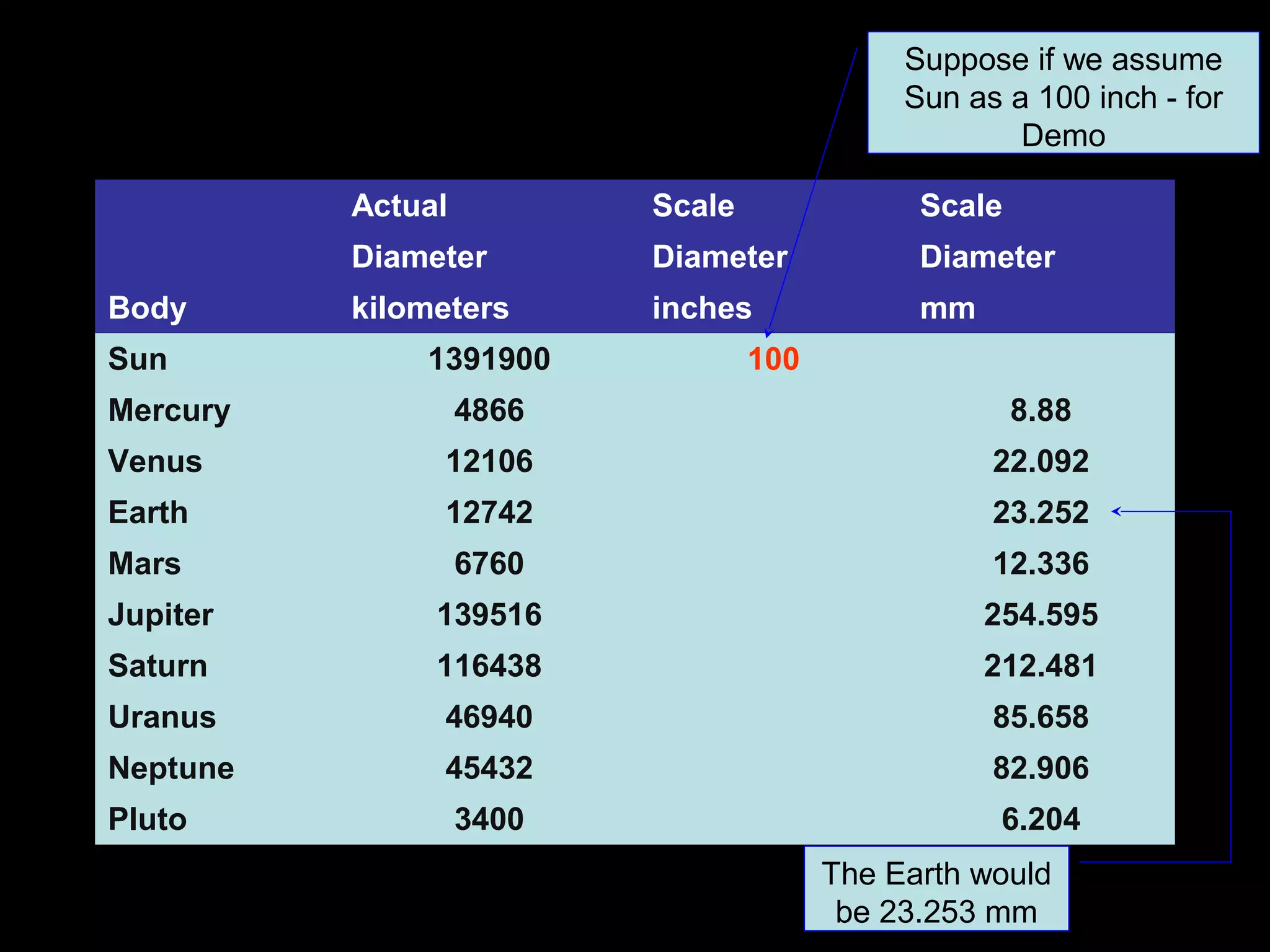
Suppose if we assume
                                             Sun as a 100 inch - for
                                                     Demo

          Actual          Scale               Scale
          Diameter        Diameter            Diameter
Body      kilometers      inches              mm
Sun           1391900             100
Mercury            4866                               8.88
Venus          12106                               22.092
Earth          12742                               23.252
Mars               6760                            12.336
Jupiter        139516                              254.595
Saturn         116438                              212.481
Uranus         46940                               85.658
Neptune        45432                               82.906
Pluto              3400                             6.204
                                        The Earth would
                                         be 23.253 mm
As we have compared the
      Earth with Sun

          Now !!

Start comparing the Sun with
        the Universe
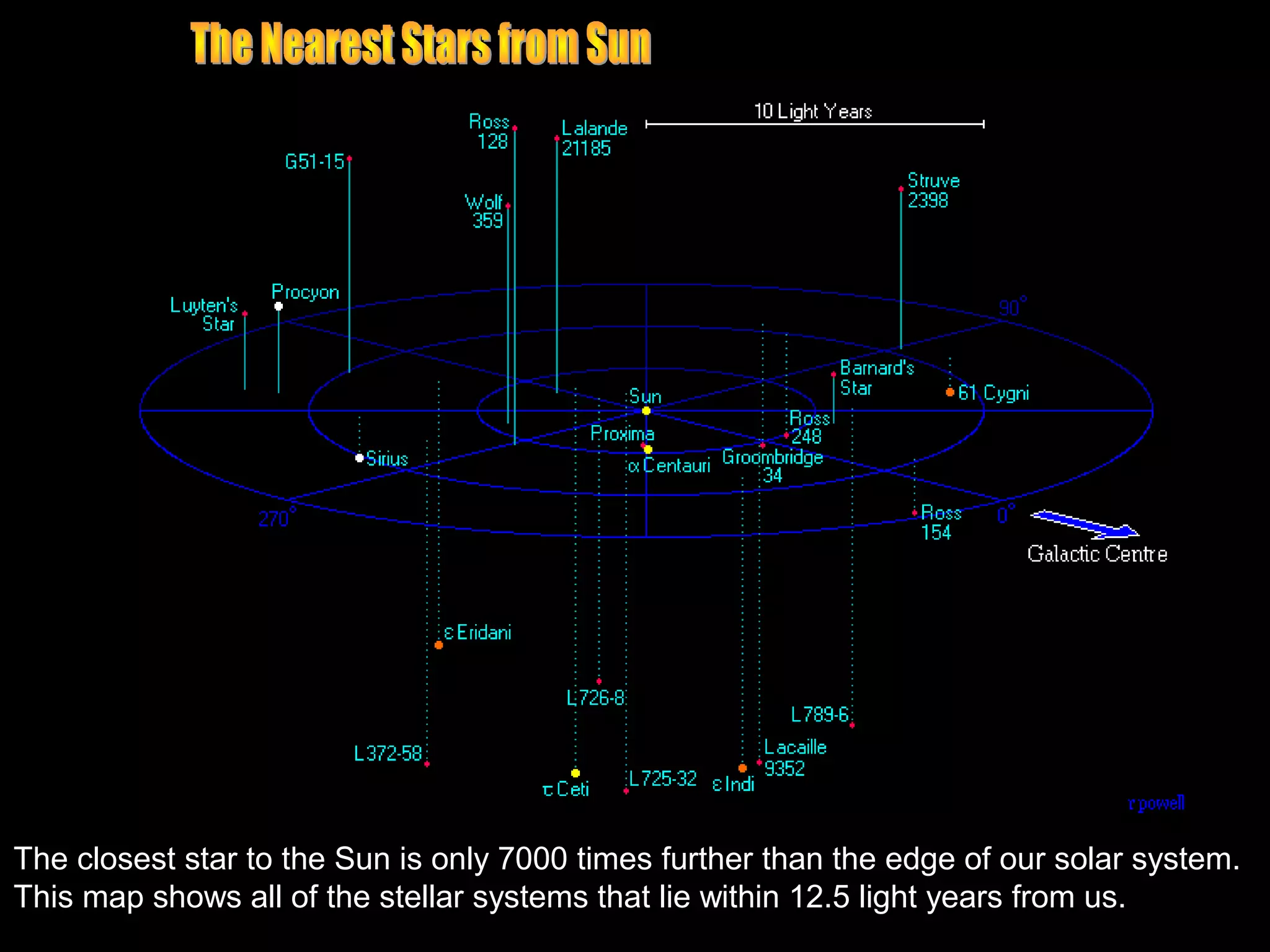
The closest star to the Sun is only 7000 times further than the edge of our solar system.
This map shows all of the stellar systems that lie within 12.5 light years from us.
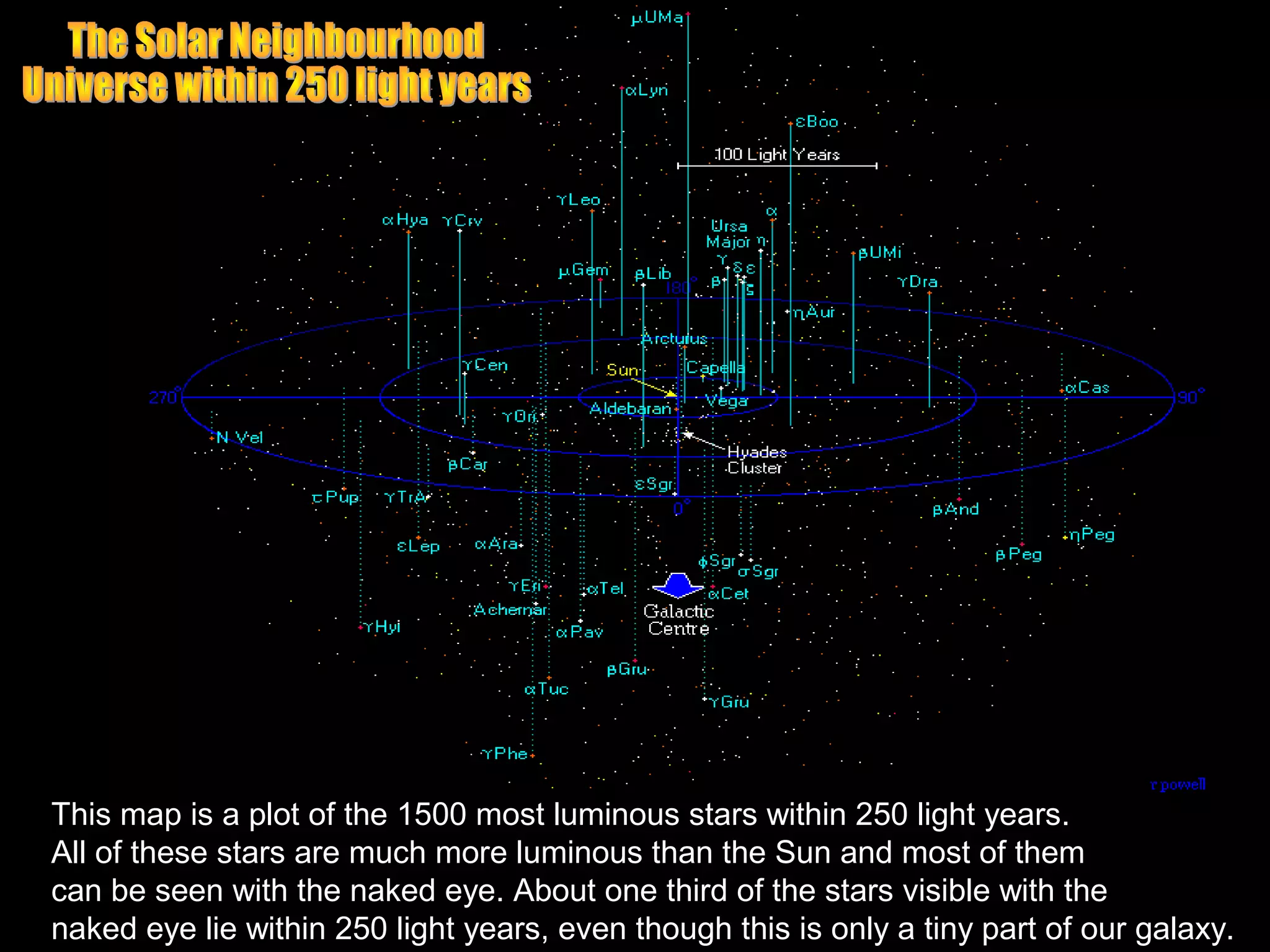
This map is a plot of the 1500 most luminous stars within 250 light years.
All of these stars are much more luminous than the Sun and most of them
can be seen with the naked eye. About one third of the stars visible with the
naked eye lie within 250 light years, even though this is only a tiny part of our galaxy.
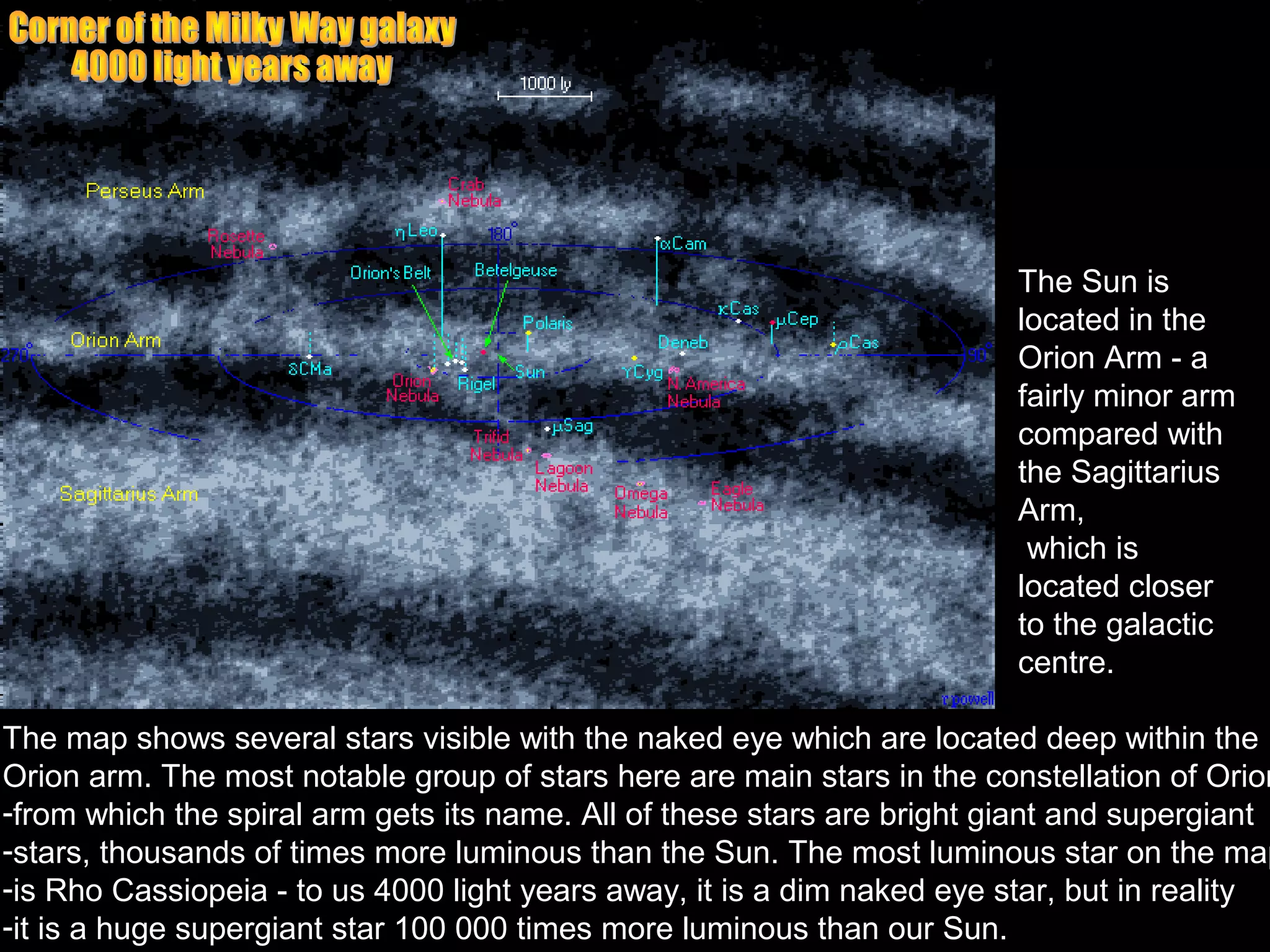
The Sun is
                                                                        located in the
                                                                        Orion Arm - a
                                                                        fairly minor arm
                                                                        compared with
                                                                        the Sagittarius
                                                                        Arm,
                                                                         which is
                                                                        located closer
                                                                        to the galactic
                                                                        centre.

The map shows several stars visible with the naked eye which are located deep within the
Orion arm. The most notable group of stars here are main stars in the constellation of Orion
-from which the spiral arm gets its name. All of these stars are bright giant and supergiant
-stars, thousands of times more luminous than the Sun. The most luminous star on the map
-is Rho Cassiopeia - to us 4000 light years away, it is a dim naked eye star, but in reality
-it is a huge supergiant star 100 000 times more luminous than our Sun.
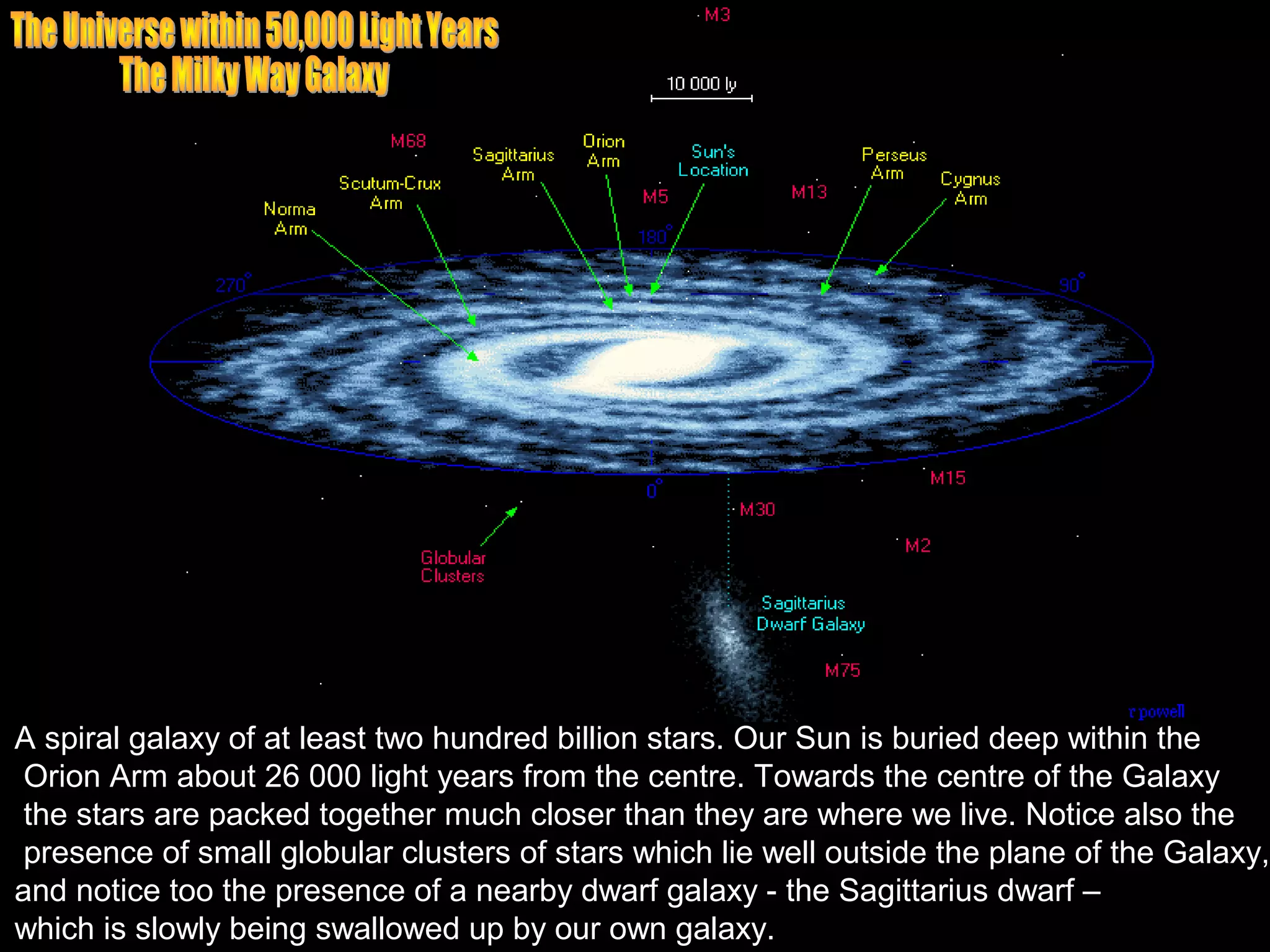
A spiral galaxy of at least two hundred billion stars. Our Sun is buried deep within the
 Orion Arm about 26 000 light years from the centre. Towards the centre of the Galaxy
 the stars are packed together much closer than they are where we live. Notice also the
 presence of small globular clusters of stars which lie well outside the plane of the Galaxy,
and notice too the presence of a nearby dwarf galaxy - the Sagittarius dwarf –
which is slowly being swallowed up by our own galaxy.
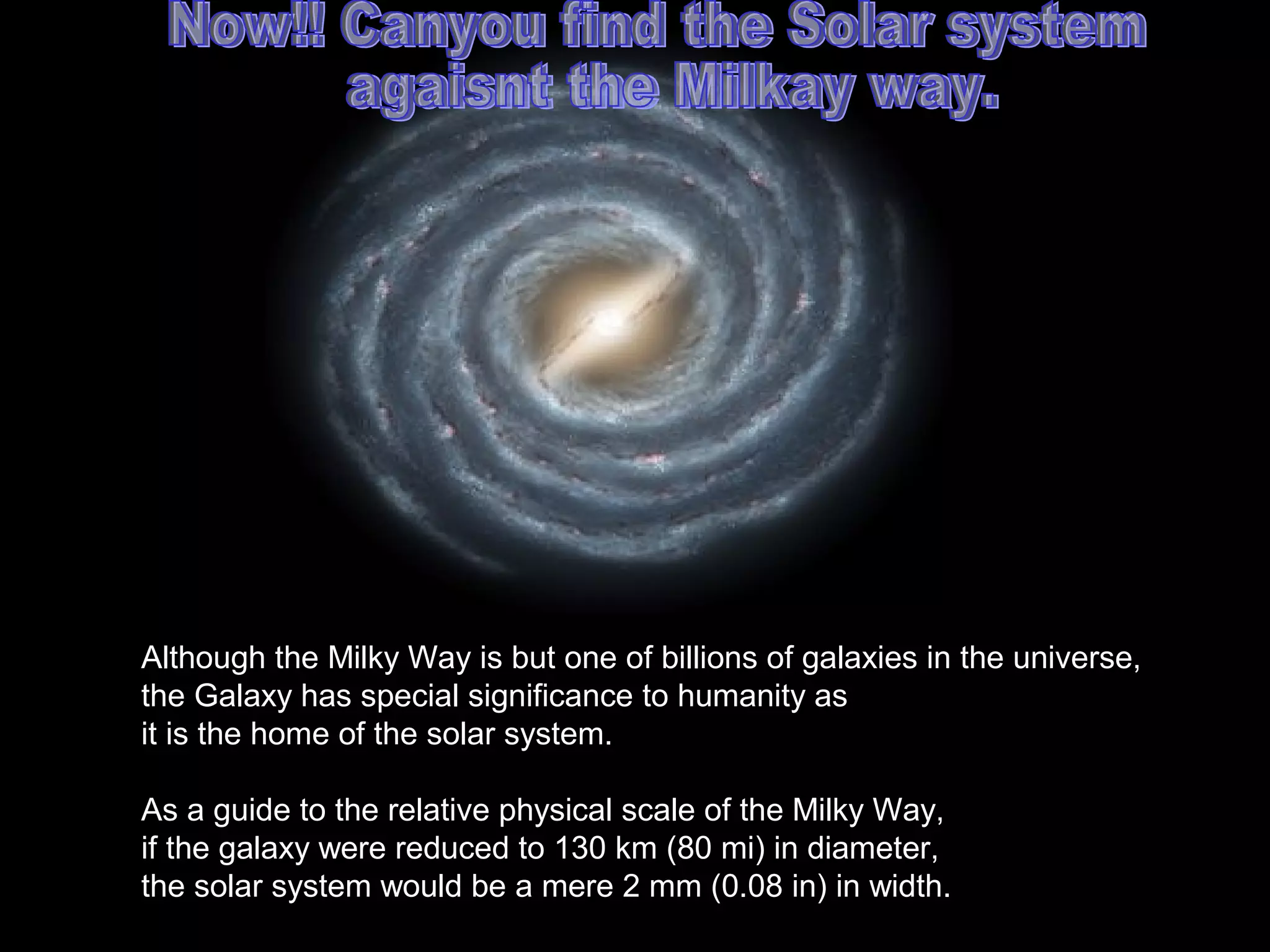
Although the Milky Way is but one of billions of galaxies in the universe,
the Galaxy has special significance to humanity as
it is the home of the solar system.

As a guide to the relative physical scale of the Milky Way,
if the galaxy were reduced to 130 km (80 mi) in diameter,
the solar system would be a mere 2 mm (0.08 in) in width.
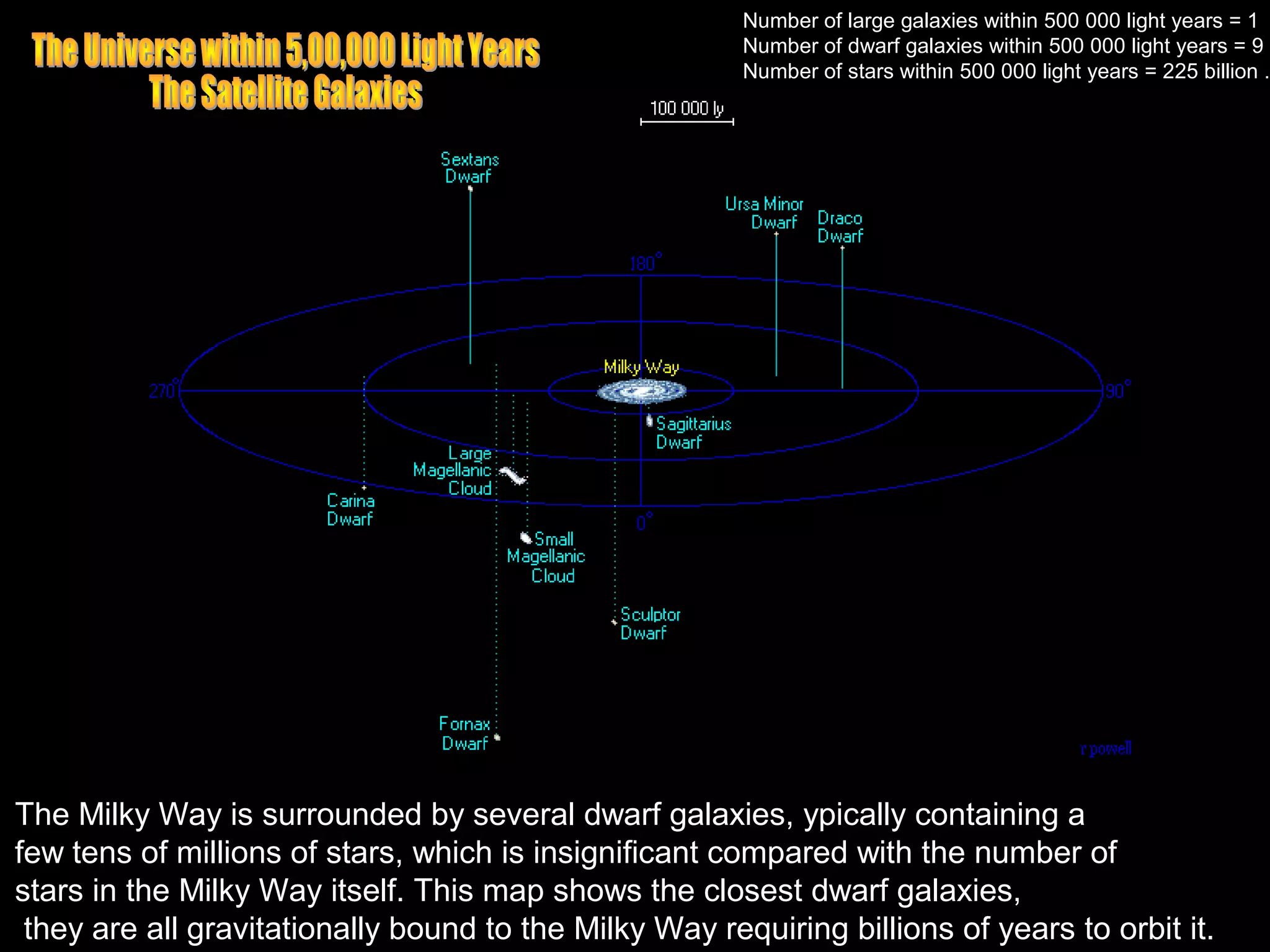
Number of large galaxies within 500 000 light years = 1
                                                        Number of dwarf galaxies within 500 000 light years = 9
                                                        Number of stars within 500 000 light years = 225 billion .


The Milky Way is surrounded by several dwarf galaxies, ypically containing a
few tens of millions of stars, which is insignificant compared with the number of
stars in the Milky Way itself. This map shows the closest dwarf galaxies,
 they are all gravitationally bound to the Milky Way requiring billions of years to orbit it.
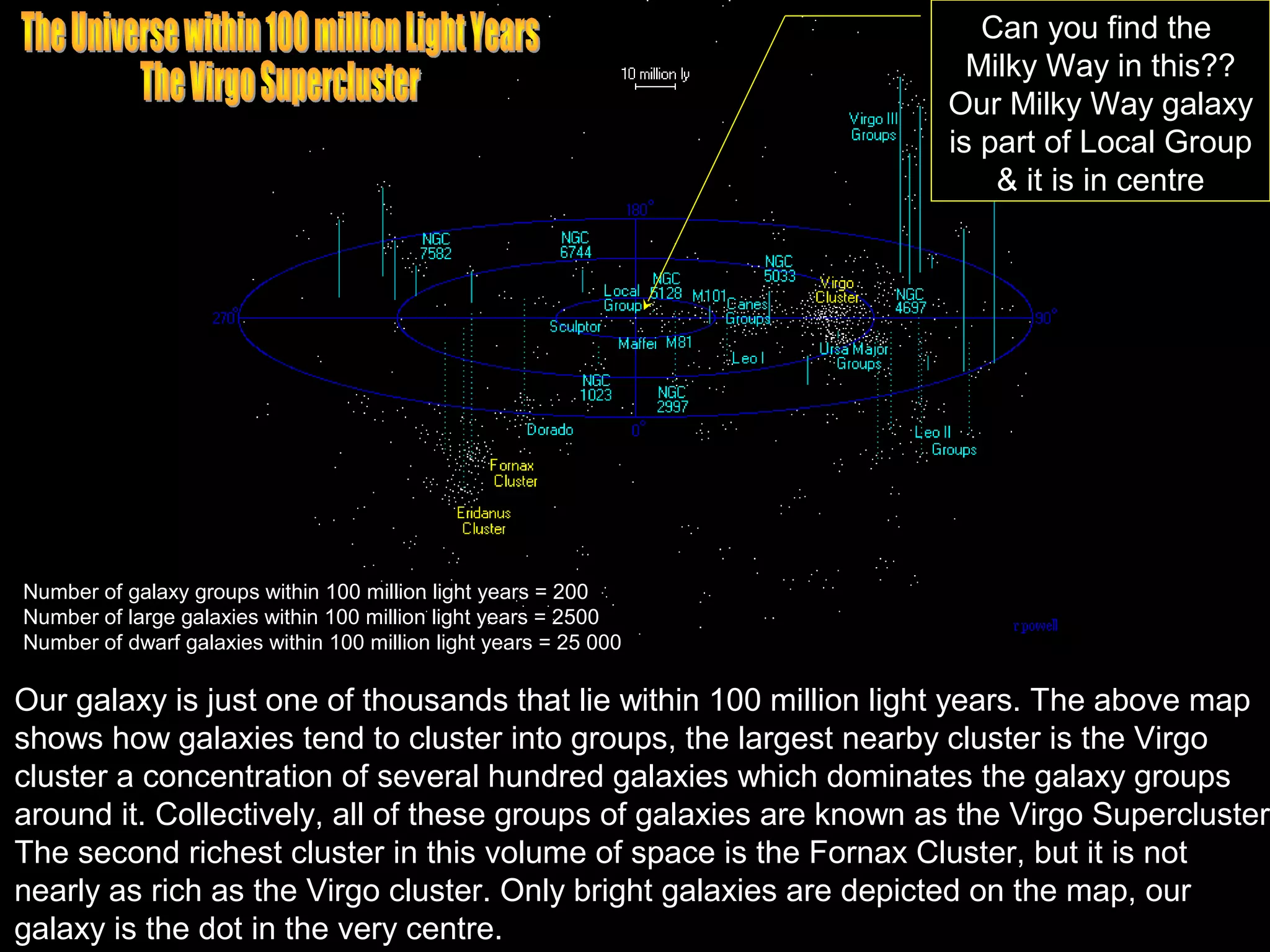
Can you find the
                                                                      Milky Way in this??
                                                                    Our Milky Way galaxy
                                                                    is part of Local Group
                                                                        & it is in centre


Number of galaxy groups within 100 million light years = 200
Number of large galaxies within 100 million light years = 2500
Number of dwarf galaxies within 100 million light years = 25 000

Our galaxy is just one of thousands that lie within 100 million light years. The above map
shows how galaxies tend to cluster into groups, the largest nearby cluster is the Virgo
cluster a concentration of several hundred galaxies which dominates the galaxy groups
around it. Collectively, all of these groups of galaxies are known as the Virgo Supercluster
The second richest cluster in this volume of space is the Fornax Cluster, but it is not
nearly as rich as the Virgo cluster. Only bright galaxies are depicted on the map, our
galaxy is the dot in the very centre.
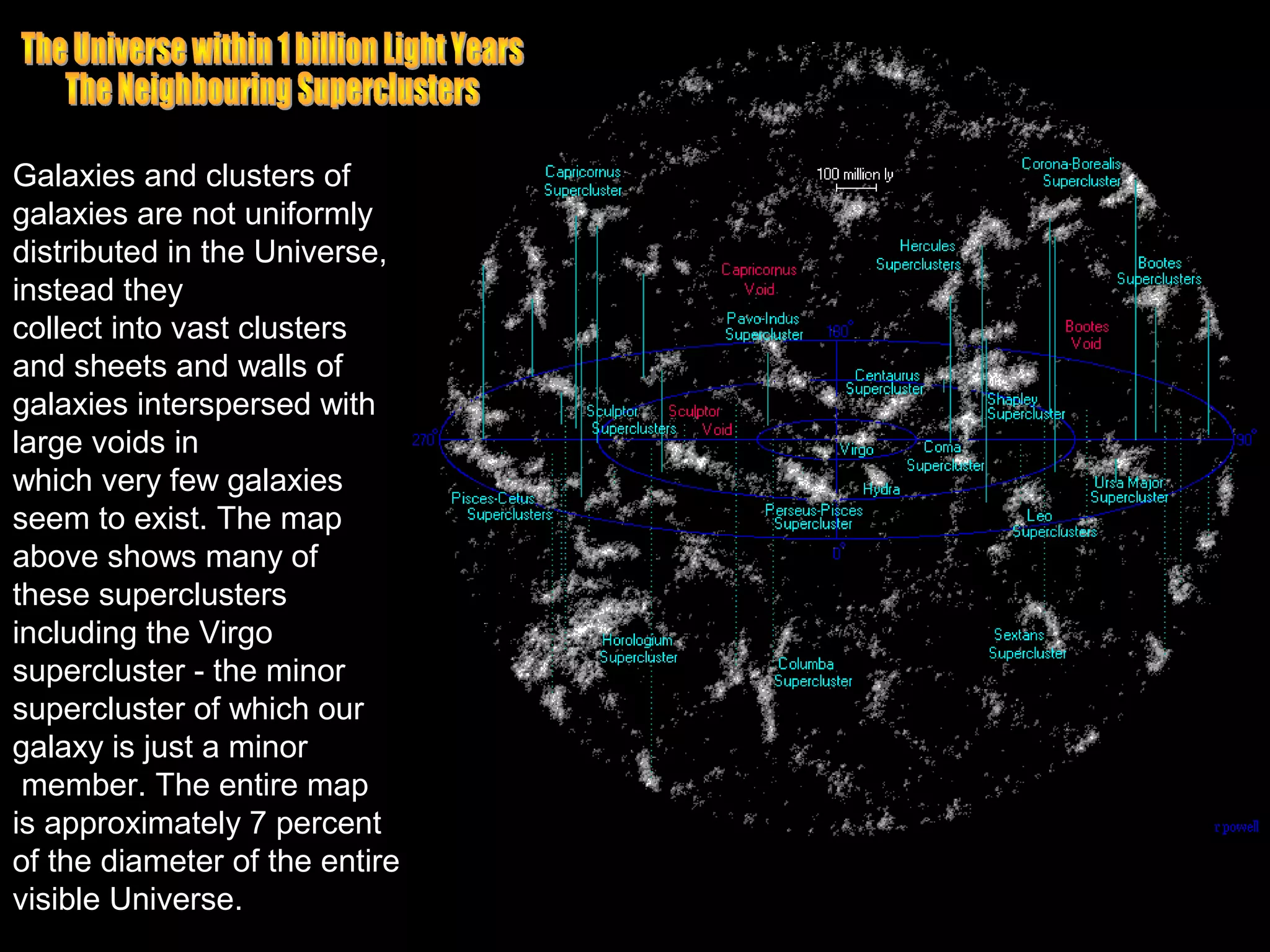
Galaxies and clusters of
galaxies are not uniformly
distributed in the Universe,
instead they
collect into vast clusters
and sheets and walls of
galaxies interspersed with
large voids in
which very few galaxies
seem to exist. The map
above shows many of
these superclusters
including the Virgo
supercluster - the minor
supercluster of which our
galaxy is just a minor
 member. The entire map
is approximately 7 percent
of the diameter of the entire
visible Universe.
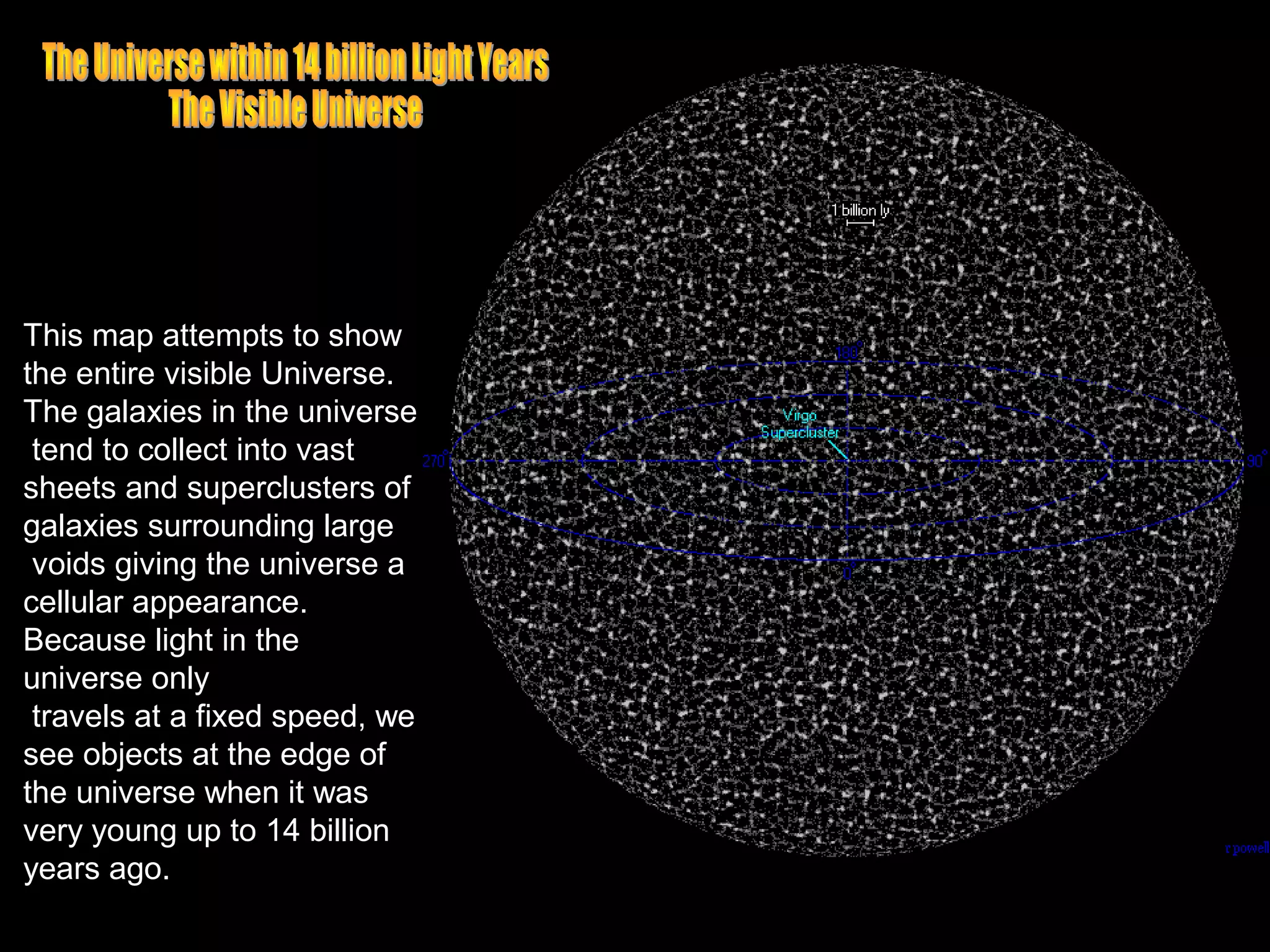
This map attempts to show
the entire visible Universe.
The galaxies in the universe
 tend to collect into vast
sheets and superclusters of
galaxies surrounding large
 voids giving the universe a
cellular appearance.
Because light in the
universe only
 travels at a fixed speed, we
see objects at the edge of
the universe when it was
very young up to 14 billion
years ago.
Now Stop Comparing
               & start thinking about the
                  Knowledge & Power
         of the Creator by seeing this Creation

Don’t you ever ponder over the signs of the Creator ???

       All Praise is to the Lord of the Universe
   The Almighty, The all-Knowing, The Omnipotent

       Can you imagine the Knowledge & Power
          Of the creator of this universe???
Universe

Universe

  • 1.
    Compare the sizeof the earth with other planets
  • 2.
    Now compare itwith Uranus & Neptune This is the Earth
  • 3.
    Now Earth againstSun Against Sun, Earth is like a dot  Think !! Where do you find yourself now?? This is the Earth
  • 4.
    Suppose if weassume Sun as a 100 inch - for Demo Actual Scale Scale Diameter Diameter Diameter Body kilometers inches mm Sun 1391900 100 Mercury 4866 8.88 Venus 12106 22.092 Earth 12742 23.252 Mars 6760 12.336 Jupiter 139516 254.595 Saturn 116438 212.481 Uranus 46940 85.658 Neptune 45432 82.906 Pluto 3400 6.204 The Earth would be 23.253 mm
  • 5.
    As we havecompared the Earth with Sun Now !! Start comparing the Sun with the Universe
  • 6.
    The closest starto the Sun is only 7000 times further than the edge of our solar system. This map shows all of the stellar systems that lie within 12.5 light years from us.
  • 7.
    This map isa plot of the 1500 most luminous stars within 250 light years. All of these stars are much more luminous than the Sun and most of them can be seen with the naked eye. About one third of the stars visible with the naked eye lie within 250 light years, even though this is only a tiny part of our galaxy.
  • 8.
    The Sun is located in the Orion Arm - a fairly minor arm compared with the Sagittarius Arm, which is located closer to the galactic centre. The map shows several stars visible with the naked eye which are located deep within the Orion arm. The most notable group of stars here are main stars in the constellation of Orion -from which the spiral arm gets its name. All of these stars are bright giant and supergiant -stars, thousands of times more luminous than the Sun. The most luminous star on the map -is Rho Cassiopeia - to us 4000 light years away, it is a dim naked eye star, but in reality -it is a huge supergiant star 100 000 times more luminous than our Sun.
  • 9.
    A spiral galaxyof at least two hundred billion stars. Our Sun is buried deep within the Orion Arm about 26 000 light years from the centre. Towards the centre of the Galaxy the stars are packed together much closer than they are where we live. Notice also the presence of small globular clusters of stars which lie well outside the plane of the Galaxy, and notice too the presence of a nearby dwarf galaxy - the Sagittarius dwarf – which is slowly being swallowed up by our own galaxy.
  • 10.
    Although the MilkyWay is but one of billions of galaxies in the universe, the Galaxy has special significance to humanity as it is the home of the solar system. As a guide to the relative physical scale of the Milky Way, if the galaxy were reduced to 130 km (80 mi) in diameter, the solar system would be a mere 2 mm (0.08 in) in width.
  • 11.
    Number of largegalaxies within 500 000 light years = 1 Number of dwarf galaxies within 500 000 light years = 9 Number of stars within 500 000 light years = 225 billion . The Milky Way is surrounded by several dwarf galaxies, ypically containing a few tens of millions of stars, which is insignificant compared with the number of stars in the Milky Way itself. This map shows the closest dwarf galaxies, they are all gravitationally bound to the Milky Way requiring billions of years to orbit it.
  • 12.
    Can you findthe Milky Way in this?? Our Milky Way galaxy is part of Local Group & it is in centre Number of galaxy groups within 100 million light years = 200 Number of large galaxies within 100 million light years = 2500 Number of dwarf galaxies within 100 million light years = 25 000 Our galaxy is just one of thousands that lie within 100 million light years. The above map shows how galaxies tend to cluster into groups, the largest nearby cluster is the Virgo cluster a concentration of several hundred galaxies which dominates the galaxy groups around it. Collectively, all of these groups of galaxies are known as the Virgo Supercluster The second richest cluster in this volume of space is the Fornax Cluster, but it is not nearly as rich as the Virgo cluster. Only bright galaxies are depicted on the map, our galaxy is the dot in the very centre.
  • 13.
    Galaxies and clustersof galaxies are not uniformly distributed in the Universe, instead they collect into vast clusters and sheets and walls of galaxies interspersed with large voids in which very few galaxies seem to exist. The map above shows many of these superclusters including the Virgo supercluster - the minor supercluster of which our galaxy is just a minor member. The entire map is approximately 7 percent of the diameter of the entire visible Universe.
  • 15.
    This map attemptsto show the entire visible Universe. The galaxies in the universe tend to collect into vast sheets and superclusters of galaxies surrounding large voids giving the universe a cellular appearance. Because light in the universe only travels at a fixed speed, we see objects at the edge of the universe when it was very young up to 14 billion years ago.
  • 16.
    Now Stop Comparing & start thinking about the Knowledge & Power of the Creator by seeing this Creation Don’t you ever ponder over the signs of the Creator ??? All Praise is to the Lord of the Universe The Almighty, The all-Knowing, The Omnipotent Can you imagine the Knowledge & Power Of the creator of this universe???