Nature and Scope of
Applied Linguistics
Karim Samnani
∗ What is applied Linguistics?
∗ History of A.L.
∗ Domains of A.L.
∗ Goals of A.L.
∗ Interdisciplines and A.L
∗ Conclusion
Outline
Applied linguistics is an interdisciplinary field which
identifies, investigates, and offers solutions to
language-related real-life problems. Some of the
academic fields related to
applied linguistics are education, psychology, communic
ation research, anthropology, and sociology.
What is applied Linguistics?
Applied Linguistics is the utilization of the knowledge
about the nature of language achieved by linguistics
research for the improvement of the efficiency of some
practical task in which language is a central component.
Definition
∗ It was founded first at the University of Edinburgh
School of Applied Linguistics in 1956.
∗ AL use was theoretical linguistics propagated by
those who clearly wanted to be known as scientists
and not as humanists.
History
Application of Linguistics knowledge in
1) Teaching and Learning of second and foreign
language.
2) Solving practical problems related to language
Primarily Deals with
∗ Investigate problems related to language learning
and teaching.
∗ Highlight the importance of language in culture and
society.
∗ To find some practical steps to solve those problems.
∗ Solve language related problems which linguistics
cannot solve independently.
Goals of A.L.
∗ Language is crucial to human lives. Without language,
most important activities will be inconceivable.
∗ How to use language to one’s advantage.
∗ Understanding how language manipulation causes
disrest in the society
∗ In the world of internet there are many rapid
changes. These changes affect how people use and
perceive language.
Need for A.L.
∗ How can languages best be learnt and taught?
∗ What social factors affect language learning?
∗ How can technology be used to contribute to the
effectiveness of language teaching/learning?
∗ What are the related problems associated with
language disorders?
∗ How can these be prevented?
Questions asked by A.L.
∗ Interdisciplinary studies involves the combining of
two or more academic disciplines into one activity
∗ It is about creating something new by crossing
boundaries, and thinking across them.
Interdisciplines
∗ Computational Linguistics
∗ Sociolinguistics
∗ Psycholinguistics
∗ Neurolinguistics
∗ Ethnolinguistics
∗ Historical Linguistics
∗ Forensic Linguistics
Major Domains
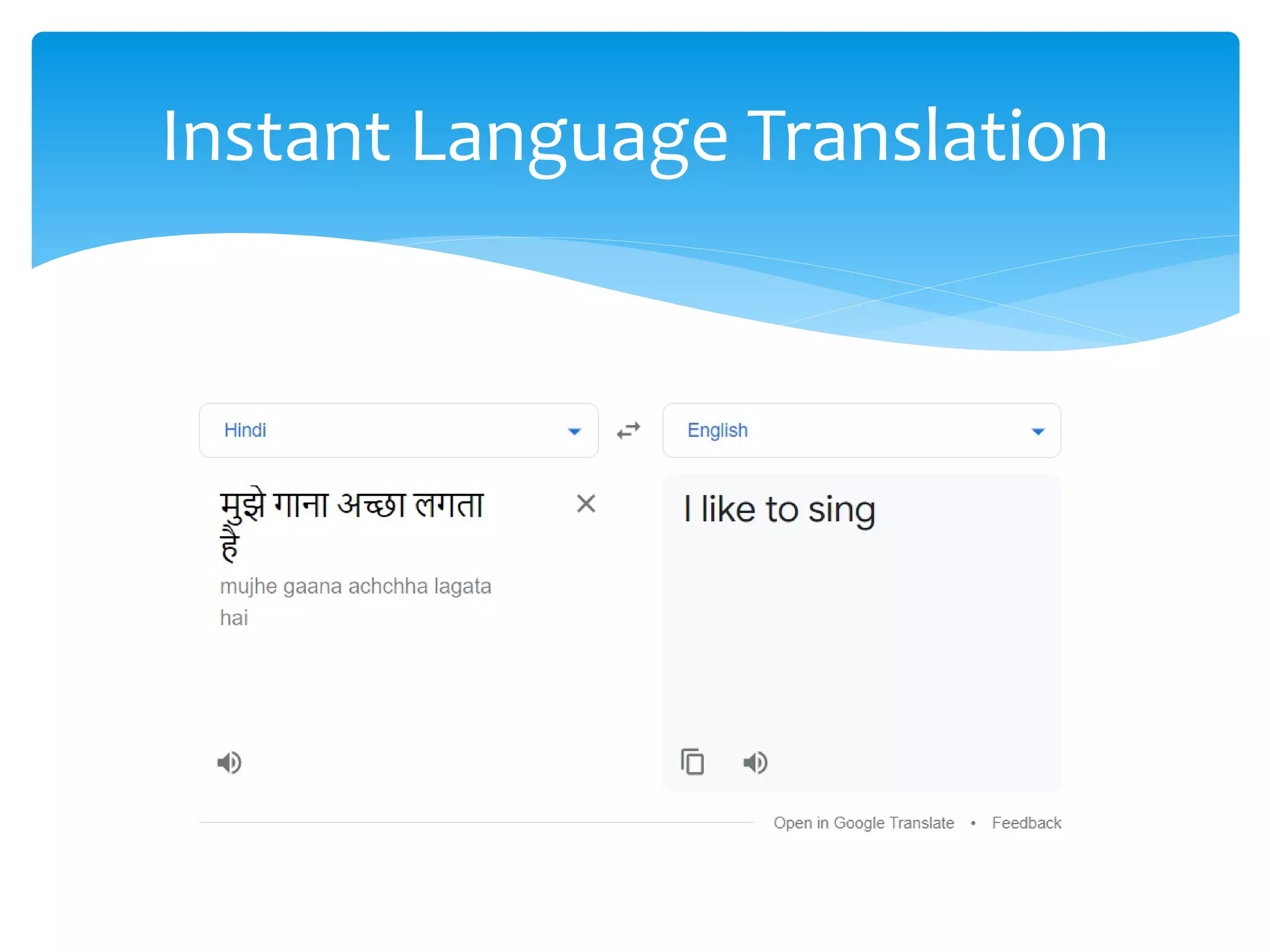
Instant Language Translation
looks at how language is used in a social context
e.g.
∗ language use and social class
∗ language use and gender
∗ language use and occupation
∗ bilingualism
∗ code switching
Sociolinguistics
∗ looks at how language is acquired by humans
∗ how speech is created in real time
∗ how speech is perceived
∗ how language is stored in the brain
∗ how vocabulary is accessed
Psycholinguistics
∗ looks at the neurology of language
∗ how and where our brains store our knowledge of
the language
∗ what happens in our brains as we acquire that
knowledge, and what happens as we use it in our
everyday lives
∗ brain imaging
∗ Lateralization of brain function
Neurolinguistics
∗ speech and language therapy
∗ Natural Language Processing
∗ international and intra-national relations
∗ language planning and policy
∗ discourse analysis
Other Areas of application
Thank You!

Applied linguistics ppt

  • 1.
    Nature and Scopeof Applied Linguistics Karim Samnani
  • 2.
    ∗ What isapplied Linguistics? ∗ History of A.L. ∗ Domains of A.L. ∗ Goals of A.L. ∗ Interdisciplines and A.L ∗ Conclusion Outline
  • 3.
    Applied linguistics isan interdisciplinary field which identifies, investigates, and offers solutions to language-related real-life problems. Some of the academic fields related to applied linguistics are education, psychology, communic ation research, anthropology, and sociology. What is applied Linguistics?
  • 4.
    Applied Linguistics isthe utilization of the knowledge about the nature of language achieved by linguistics research for the improvement of the efficiency of some practical task in which language is a central component. Definition
  • 5.
    ∗ It wasfounded first at the University of Edinburgh School of Applied Linguistics in 1956. ∗ AL use was theoretical linguistics propagated by those who clearly wanted to be known as scientists and not as humanists. History
  • 6.
    Application of Linguisticsknowledge in 1) Teaching and Learning of second and foreign language. 2) Solving practical problems related to language Primarily Deals with
  • 7.
    ∗ Investigate problemsrelated to language learning and teaching. ∗ Highlight the importance of language in culture and society. ∗ To find some practical steps to solve those problems. ∗ Solve language related problems which linguistics cannot solve independently. Goals of A.L.
  • 8.
    ∗ Language iscrucial to human lives. Without language, most important activities will be inconceivable. ∗ How to use language to one’s advantage. ∗ Understanding how language manipulation causes disrest in the society ∗ In the world of internet there are many rapid changes. These changes affect how people use and perceive language. Need for A.L.
  • 9.
    ∗ How canlanguages best be learnt and taught? ∗ What social factors affect language learning? ∗ How can technology be used to contribute to the effectiveness of language teaching/learning? ∗ What are the related problems associated with language disorders? ∗ How can these be prevented? Questions asked by A.L.
  • 10.
    ∗ Interdisciplinary studiesinvolves the combining of two or more academic disciplines into one activity ∗ It is about creating something new by crossing boundaries, and thinking across them. Interdisciplines
  • 11.
    ∗ Computational Linguistics ∗Sociolinguistics ∗ Psycholinguistics ∗ Neurolinguistics ∗ Ethnolinguistics ∗ Historical Linguistics ∗ Forensic Linguistics Major Domains
  • 12.
  • 13.
    looks at howlanguage is used in a social context e.g. ∗ language use and social class ∗ language use and gender ∗ language use and occupation ∗ bilingualism ∗ code switching Sociolinguistics
  • 14.
    ∗ looks athow language is acquired by humans ∗ how speech is created in real time ∗ how speech is perceived ∗ how language is stored in the brain ∗ how vocabulary is accessed Psycholinguistics
  • 15.
    ∗ looks atthe neurology of language ∗ how and where our brains store our knowledge of the language ∗ what happens in our brains as we acquire that knowledge, and what happens as we use it in our everyday lives ∗ brain imaging ∗ Lateralization of brain function Neurolinguistics
  • 16.
    ∗ speech andlanguage therapy ∗ Natural Language Processing ∗ international and intra-national relations ∗ language planning and policy ∗ discourse analysis Other Areas of application
  • 17.