Psoriatic arthritis
HAMIDREZA SADEGHI
SHAHID BEHESHTI UNIVERSITY
OF MEDICAL SCIENCES
psoriatic arthritis
 a seronegative oligoarthritis found in patients with psoriasis
 is a chronic disease characterized by a form of inflammation of the skin (psoriasis)
and joints (inflammatory arthritis).
 15%-25% of people withpsoriasis also develop inflammation of joints (psoriatic
arthritis).
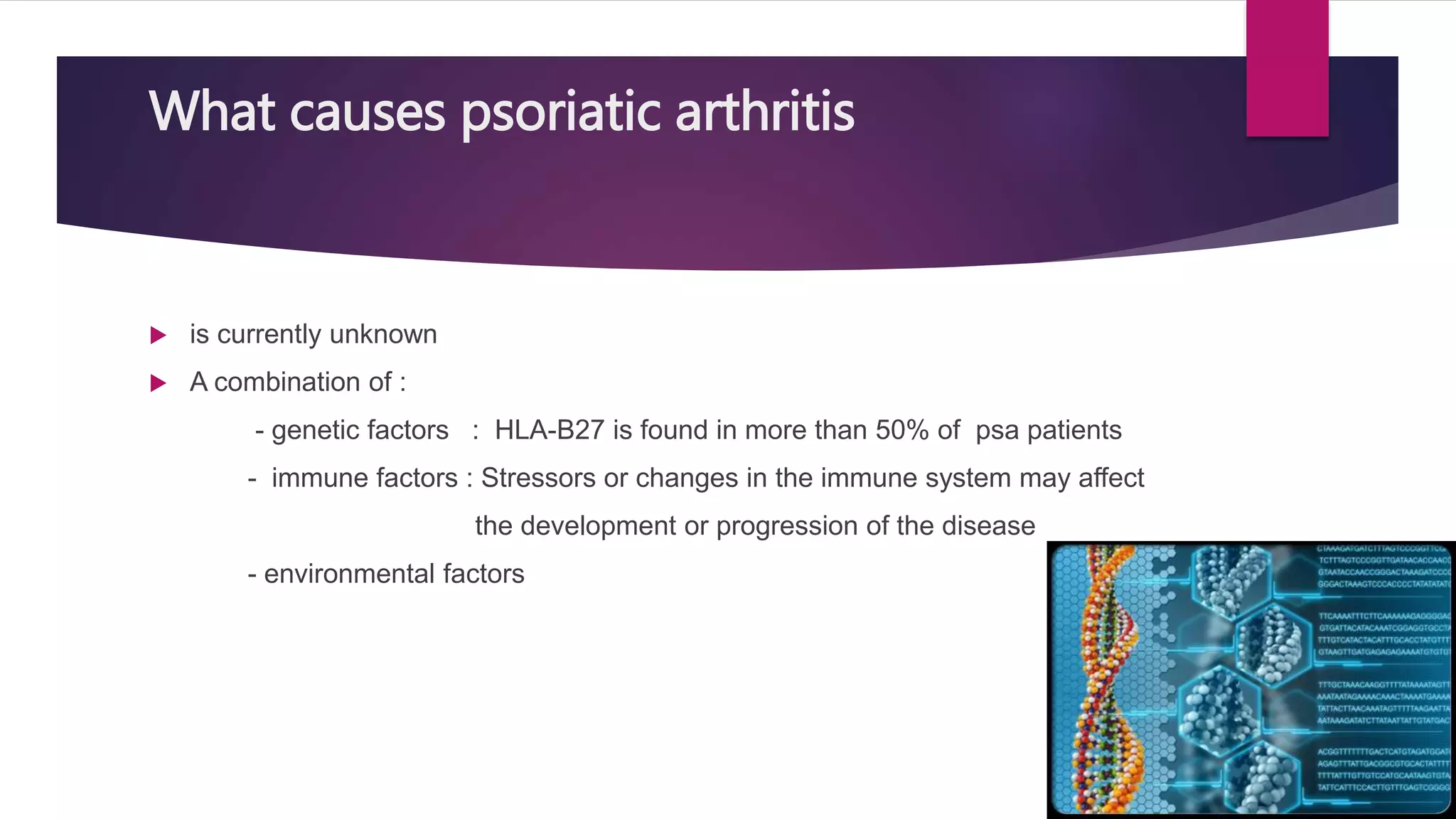
What causes psoriatic arthritis
 is currently unknown
 A combination of :
- genetic factors : HLA-B27 is found in more than 50% of psa patients
- immune factors : Stressors or changes in the immune system may affect
the development or progression of the disease
- environmental factors
What are risk factors ?
 The major risk factor is having a family member with psoriasis 40%
 About 15% of people with psoriasis will develop psoriatic arthritis
 equally common in men and women
Symptoms and Signs?
 Swollen, painful, hot, red joints – frequently in the knees, ankles, and feet
 Swollen fingers or toes that appear like "sausages"
 Joint stiffness that is worse in the mornings
 Pitted nails, or nails separating from the nail bed
 Lower back pain
 inflammation of the tendons
Different Types of Psoriatic Arthritis
 There are five types based on :
A- the parts of the body that are affected
B- the severity of the inflammation
1-Symmetric psoriatic arthritis
2-Asymmetric psoriatic arthritis
3-Distal interphalangeal predominant (DIP)
4-Spondylitis
5-Arthritis mutilans
Symmetric Psoriatic Arthritis
 affects the same joints on both sides of the body.
 usually in symmetrical pairs, such as both knees or both wrists.
 It is considered similar to rheumatoid arthritis, and symptoms
can range from mild to disabling.
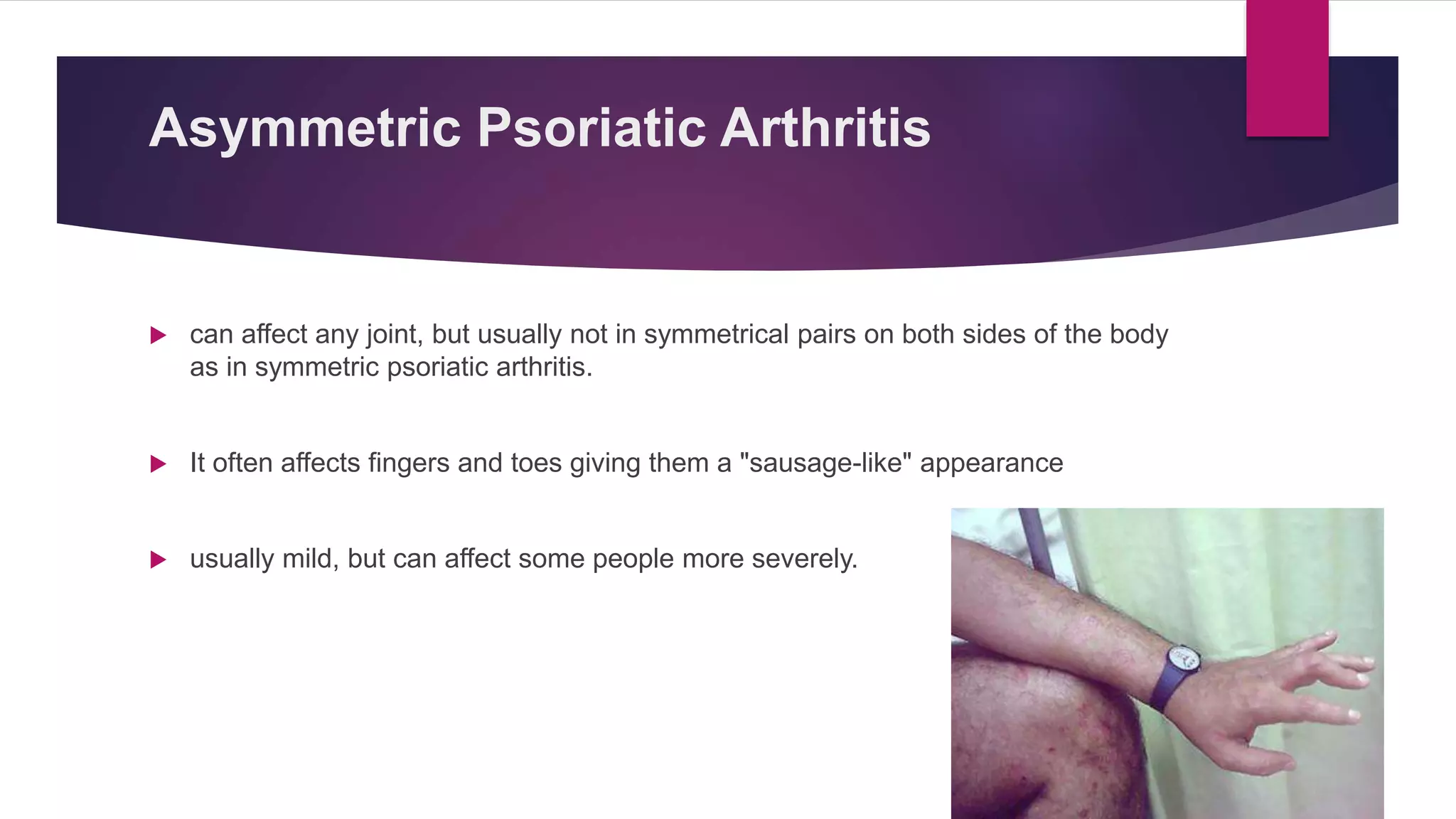
Asymmetric Psoriatic Arthritis
 can affect any joint, but usually not in symmetrical pairs on both sides of the body
as in symmetric psoriatic arthritis.
 It often affects fingers and toes giving them a "sausage-like" appearance
 usually mild, but can affect some people more severely.
Distal Interphalangeal Predominant
(DIP)
 is often confused with osteoarthritis
 it involves the distal joints in the fingers and toes (the small joints closest to the
nail) and may result in changes to the nails.
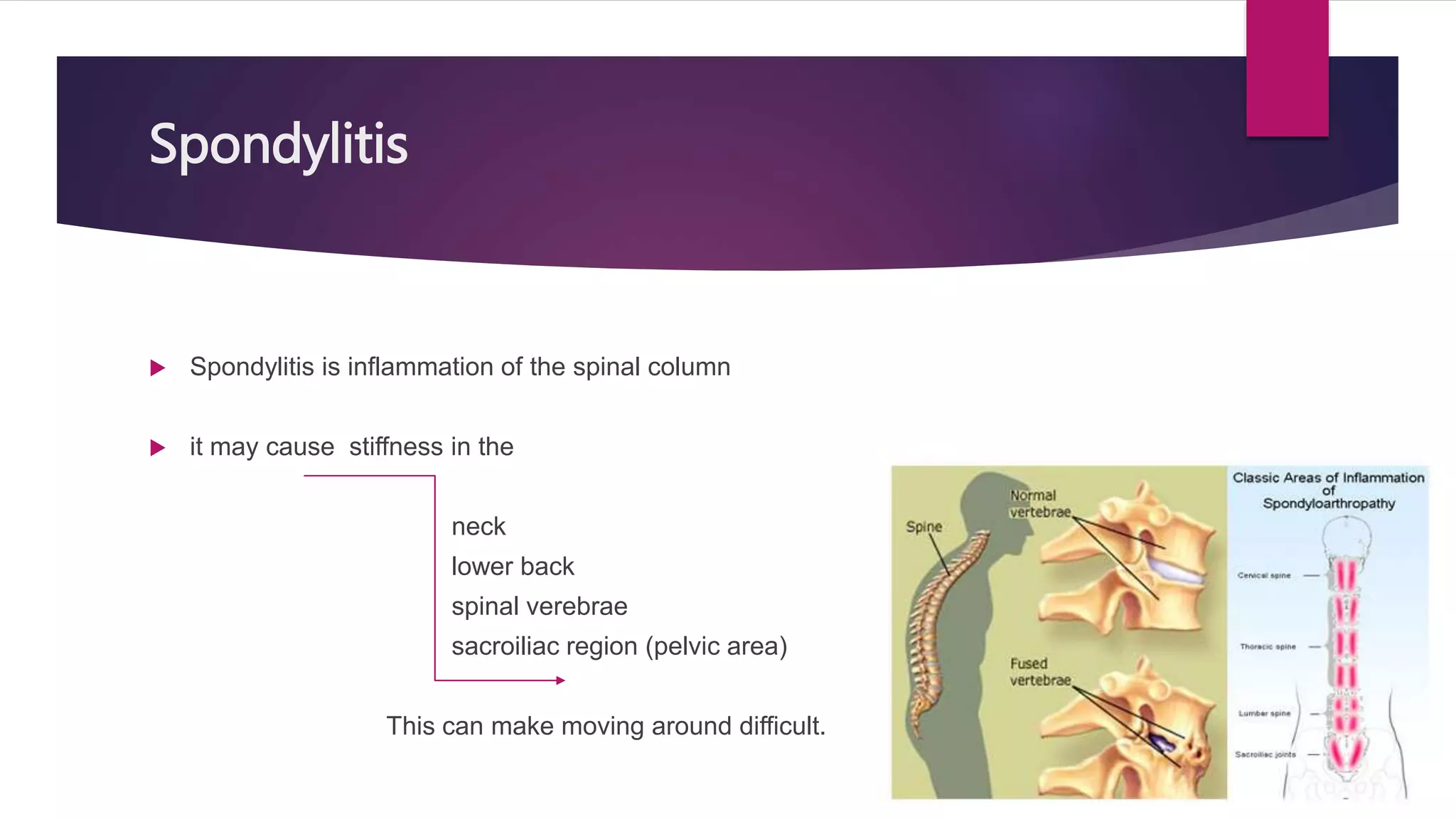
Spondylitis
 Spondylitis is inflammation of the spinal column
 it may cause stiffness in the
neck
lower back
spinal verebrae
sacroiliac region (pelvic area)
This can make moving around difficult.
Arthritis Mutilans
 Arthritis mutilans is the least common form of psoriatic arthritis
 the most severe, causing degeneration and deformity.
 Usually the small joints in the fingers and toes closest to the nail
are involved but it can also affect the neck and lower back.
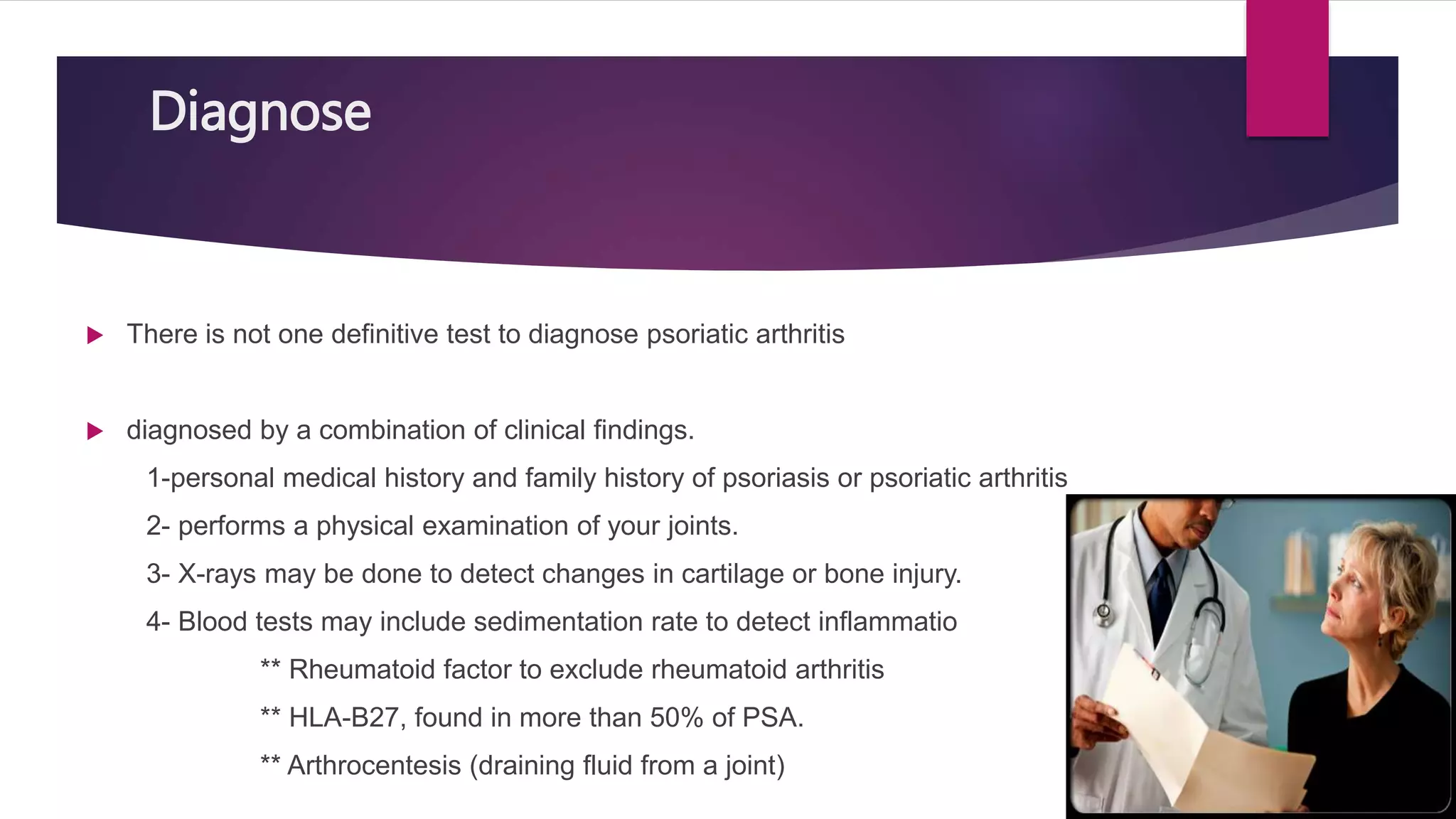
Diagnose
 There is not one definitive test to diagnose psoriatic arthritis
 diagnosed by a combination of clinical findings.
1-personal medical history and family history of psoriasis or psoriatic arthritis
2- performs a physical examination of your joints.
3- X-rays may be done to detect changes in cartilage or bone injury.
4- Blood tests may include sedimentation rate to detect inflammatio
** Rheumatoid factor to exclude rheumatoid arthritis
** HLA-B27, found in more than 50% of PSA.
** Arthrocentesis (draining fluid from a joint)
Treatment for Psoriatic Arthritis
 combination of
* anti-inflammatory medications (NSAIDs)
* regular exercise, either with a physical therapist or at home.
* Warm-up stretching or applying heat to muscles before exercise, and ice
after exercise can decrease soreness in the joints.
If NSAIDs are not sufficient,
methotrexate (Rheumatrex, Trexall),
corticosteroids
antimalarial medications may be prescribed.
Patients may need to use devices to protect the joints, and surgery may be
indicated in some cases.
Is There a Cure for Psoriatic Arthritis?
 There is currently no cure for psoriatic arthritis
 Medications may be able to help with painful symptoms and slow or stop the
progression of the disease.
Psoriatic arthritis

Psoriatic arthritis

  • 1.
    Psoriatic arthritis HAMIDREZA SADEGHI SHAHIDBEHESHTI UNIVERSITY OF MEDICAL SCIENCES
  • 2.
    psoriatic arthritis  aseronegative oligoarthritis found in patients with psoriasis  is a chronic disease characterized by a form of inflammation of the skin (psoriasis) and joints (inflammatory arthritis).  15%-25% of people withpsoriasis also develop inflammation of joints (psoriatic arthritis).
  • 3.
    What causes psoriaticarthritis  is currently unknown  A combination of : - genetic factors : HLA-B27 is found in more than 50% of psa patients - immune factors : Stressors or changes in the immune system may affect the development or progression of the disease - environmental factors
  • 4.
    What are riskfactors ?  The major risk factor is having a family member with psoriasis 40%  About 15% of people with psoriasis will develop psoriatic arthritis  equally common in men and women
  • 5.
    Symptoms and Signs? Swollen, painful, hot, red joints – frequently in the knees, ankles, and feet  Swollen fingers or toes that appear like "sausages"  Joint stiffness that is worse in the mornings  Pitted nails, or nails separating from the nail bed  Lower back pain  inflammation of the tendons
  • 6.
    Different Types ofPsoriatic Arthritis  There are five types based on : A- the parts of the body that are affected B- the severity of the inflammation 1-Symmetric psoriatic arthritis 2-Asymmetric psoriatic arthritis 3-Distal interphalangeal predominant (DIP) 4-Spondylitis 5-Arthritis mutilans
  • 7.
    Symmetric Psoriatic Arthritis affects the same joints on both sides of the body.  usually in symmetrical pairs, such as both knees or both wrists.  It is considered similar to rheumatoid arthritis, and symptoms can range from mild to disabling.
  • 8.
    Asymmetric Psoriatic Arthritis can affect any joint, but usually not in symmetrical pairs on both sides of the body as in symmetric psoriatic arthritis.  It often affects fingers and toes giving them a "sausage-like" appearance  usually mild, but can affect some people more severely.
  • 9.
    Distal Interphalangeal Predominant (DIP) is often confused with osteoarthritis  it involves the distal joints in the fingers and toes (the small joints closest to the nail) and may result in changes to the nails.
  • 10.
    Spondylitis  Spondylitis isinflammation of the spinal column  it may cause stiffness in the neck lower back spinal verebrae sacroiliac region (pelvic area) This can make moving around difficult.
  • 11.
    Arthritis Mutilans  Arthritismutilans is the least common form of psoriatic arthritis  the most severe, causing degeneration and deformity.  Usually the small joints in the fingers and toes closest to the nail are involved but it can also affect the neck and lower back.
  • 12.
    Diagnose  There isnot one definitive test to diagnose psoriatic arthritis  diagnosed by a combination of clinical findings. 1-personal medical history and family history of psoriasis or psoriatic arthritis 2- performs a physical examination of your joints. 3- X-rays may be done to detect changes in cartilage or bone injury. 4- Blood tests may include sedimentation rate to detect inflammatio ** Rheumatoid factor to exclude rheumatoid arthritis ** HLA-B27, found in more than 50% of PSA. ** Arthrocentesis (draining fluid from a joint)
  • 13.
    Treatment for PsoriaticArthritis  combination of * anti-inflammatory medications (NSAIDs) * regular exercise, either with a physical therapist or at home. * Warm-up stretching or applying heat to muscles before exercise, and ice after exercise can decrease soreness in the joints. If NSAIDs are not sufficient, methotrexate (Rheumatrex, Trexall), corticosteroids antimalarial medications may be prescribed. Patients may need to use devices to protect the joints, and surgery may be indicated in some cases.
  • 14.
    Is There aCure for Psoriatic Arthritis?  There is currently no cure for psoriatic arthritis  Medications may be able to help with painful symptoms and slow or stop the progression of the disease.

Editor's Notes

  • #3 with less common, but characteristic, differentiating features of distal joint involvement and arthritis mutilans. Psoriatic arthritis (see the image below) develops in at least 5% of patients with psoriasis.