INTRODUCTION
• Gout a type of arthritis that causes
inflammation, usually in one joint, that
begins suddenly.
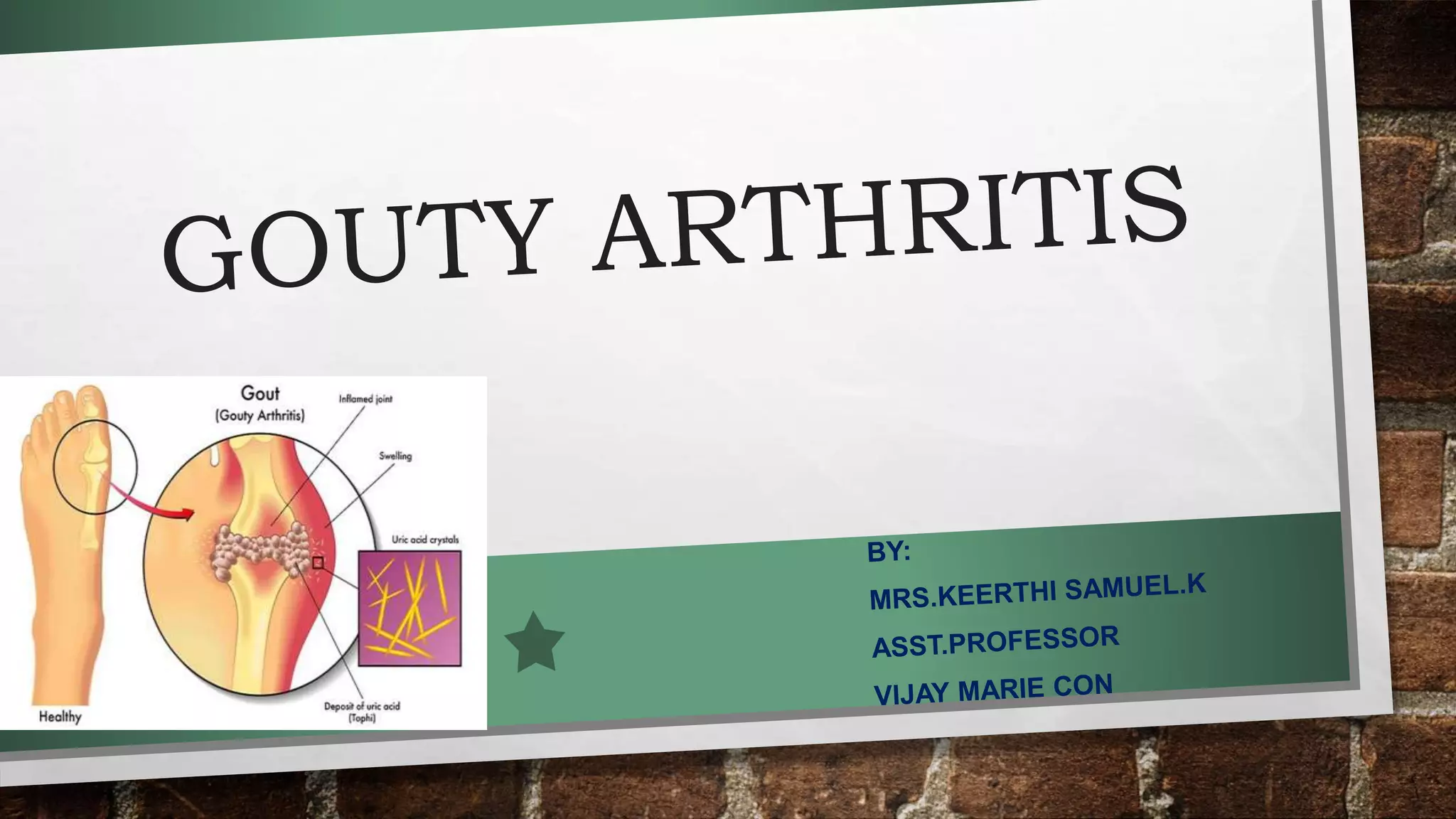
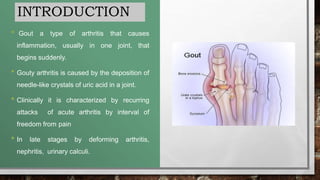
• Gouty arthritis is caused by the deposition of
needle-like crystals of uric acid in a joint.
• Clinically it is characterized by recurring
attacks of acute arthritis by interval of
freedom from pain
• In late stages by deforming arthritis,
nephritis, urinary calculi.
HISTORY OF GOUT
• 2640 BC: podagra first identified by the Egyptians.
• 5th century bc: Hippocrates referred to gout as “unwalkable disease” and
noted links between gout & lifestyle, demographics & other variables
• The word ‘gout’ is derived from the Latin word‘Gutta’.
• Earlier it was believed that an acute attack of the disease was the result of
poison dropping into a joint
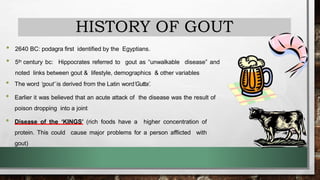
• Disease of the ‘KINGS’ (rich foods have a higher concentration of
protein. This could cause major problems for a person afflicted with
gout)
DEFINITION
• Gout is a hereditary condition of disturbed uric acid
metabolism in which urate salts gets deposited in
articular, periarticular and subcutaneous tissues.
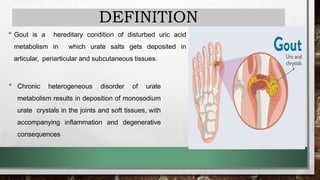
• Chronic heterogeneous disorder of urate
metabolism results in deposition of monosodium
urate crystals in the joints and soft tissues, with
accompanying inflammation and degenerative
consequences
INCIDENCE
• Race : whites> blacks
• Sex : males >females
• Age :2n to 4th decade common at 40years.
• 2.6 million in 2005, projected to increase to 3.6 million in 2025
• Most common form of inflammatory joint disease in men aged ≥40 years
ETIOLOGY
The crystallization of uric acid, often related to relatively high levels in the
blood, is the underlying cause of gout. This can occur because of diet,
genetic predisposition, or underexcretion of urate, the salts of uric acid.[4]
The causes include
• Lifestyle
• Genetics
• Drugs
• Medical conditions
ETIOLOGY-LIFESTYLE
• Dietary causes account for about 12% of gout, and include a strong
association with the consumption of alcohol, fructose-sweetened
drinks, meat, and seafood. among foods richest in purines yielding
high amounts of uric acid are dried anchovies, shrimp, organ meat,
dried mushrooms, seaweed, and beer yeast. chicken and potatoes
also appear related. other triggers include physical trauma and
surgery
• Physical fitness, healthy weight, low-fat dairy products, and to a
lesser extent, coffee and taking vitamin C, appear to decrease the
risk of gout;
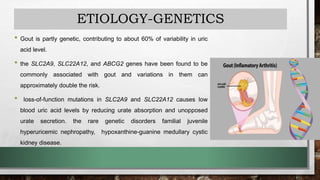
ETIOLOGY-GENETICS
• Gout is partly genetic, contributing to about 60% of variability in uric
acid level.
• the SLC2A9, SLC22A12, and ABCG2 genes have been found to be
commonly associated with gout and variations in them can
approximately double the risk.
• loss-of-function mutations in SLC2A9 and SLC22A12 causes low
blood uric acid levels by reducing urate absorption and unopposed
urate secretion. the rare genetic disorders familial juvenile
hyperuricemic nephropathy, hypoxanthine-guanine medullary cystic
kidney disease.
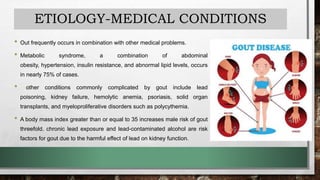
ETIOLOGY-MEDICAL CONDITIONS
• Out frequently occurs in combination with other medical problems.
• Metabolic syndrome, a combination of abdominal
obesity, hypertension, insulin resistance, and abnormal lipid levels, occurs
in nearly 75% of cases.
• other conditions commonly complicated by gout include lead
poisoning, kidney failure, hemolytic anemia, psoriasis, solid organ
transplants, and myeloproliferative disorders such as polycythemia.
• A body mass index greater than or equal to 35 increases male risk of gout
threefold. chronic lead exposure and lead-contaminated alcohol are risk
factors for gout due to the harmful effect of lead on kidney function.
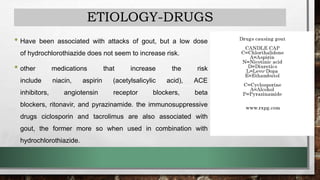
ETIOLOGY-DRUGS
• Have been associated with attacks of gout, but a low dose
of hydrochlorothiazide does not seem to increase risk.
• other medications that increase the risk
include niacin, aspirin (acetylsalicylic acid), ACE
inhibitors, angiotensin receptor blockers, beta
blockers, ritonavir, and pyrazinamide. the immunosuppressive
drugs ciclosporin and tacrolimus are also associated with
gout, the former more so when used in combination with
hydrochlorothiazide.
ETIOLOGY/PREDISPOSING FACTORS
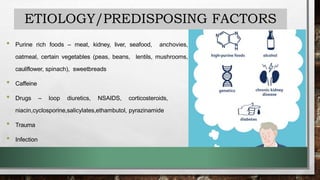
• Purine rich foods – meat, kidney, liver, seafood, anchovies,
oatmeal, certain vegetables (peas, beans, lentils, mushrooms,
cauliflower, spinach), sweetbreads
• Caffeine
• Drugs – loop diuretics, NSAIDS, corticosteroids,
niacin,cyclosporine,salicylates,ethambutol, pyrazinamide
• Trauma
• Infection
ETIOLOGY/PREDISPOSING FACTORS
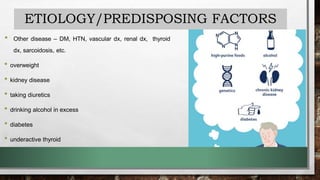
• Other disease – DM, HTN, vascular dx, renal dx, thyroid
dx, sarcoidosis, etc.
• overweight
• kidney disease
• taking diuretics
• drinking alcohol in excess
• diabetes
• underactive thyroid
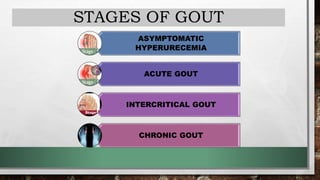
STAGES OF GOUT
ASYMPTOMATIC
HYPERURECEMIA
ACUTE GOUT
INTERCRITICAL GOUT
CHRONIC GOUT
STAGE-I :ASYMPTOMATIC
URICEMIA
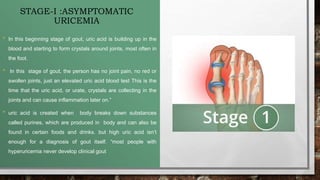
• In this beginning stage of gout, uric acid is building up in the
blood and starting to form crystals around joints, most often in
the foot.
• In this stage of gout, the person has no joint pain, no red or
swollen joints, just an elevated uric acid blood test This is the
time that the uric acid, or urate, crystals are collecting in the
joints and can cause inflammation later on.”
• uric acid is created when body breaks down substances
called purines, which are produced in body and can also be
found in certain foods and drinks. but high uric acid isn’t
enough for a diagnosis of gout itself. “most people with
hyperuricemia never develop clinical gout
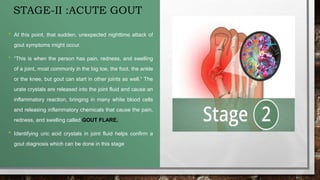
STAGE-II :ACUTE GOUT
• At this point, that sudden, unexpected nighttime attack of
gout symptoms might occur.
• “This is when the person has pain, redness, and swelling
of a joint, most commonly in the big toe, the foot, the ankle
or the knee, but gout can start in other joints as well.“ The
urate crystals are released into the joint fluid and cause an
inflammatory reaction, bringing in many white blood cells
and releasing inflammatory chemicals that cause the pain,
redness, and swelling called GOUT FLARE.
• Identifying uric acid crystals in joint fluid helps confirm a
gout diagnosis which can be done in this stage
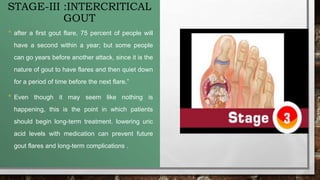
STAGE-III :INTERCRITICAL
GOUT
• after a first gout flare, 75 percent of people will
have a second within a year; but some people
can go years before another attack, since it is the
nature of gout to have flares and then quiet down
for a period of time before the next flare.”
• Even though it may seem like nothing is
happening, this is the point in which patients
should begin long-term treatment. lowering uric
acid levels with medication can prevent future
gout flares and long-term complications .
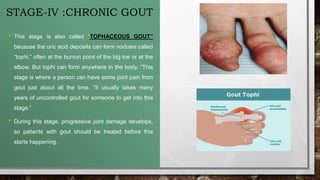
STAGE-IV :CHRONIC GOUT
• This stage is also called “TOPHACEOUS GOUT”
because the uric acid deposits can form nodules called
“tophi,” often at the bunion point of the big toe or at the
elbow. But tophi can form anywhere in the body. “This
stage is where a person can have some joint pain from
gout just about all the time. “It usually takes many
years of uncontrolled gout for someone to get into this
stage.”
• During this stage, progressive joint damage develops,
so patients with gout should be treated before this
starts happening.
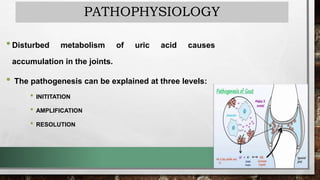
PATHOPHYSIOLOGY
•Disturbed metabolism of uric acid causes
accumulation in the joints.
• The pathogenesis can be explained at three levels:
• INITITATION
• AMPLIFICATION
• RESOLUTION
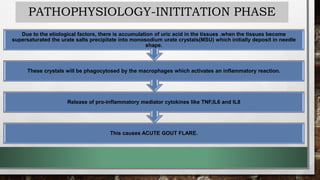
PATHOPHYSIOLOGY-INITITATION PHASE
This causes ACUTE GOUT FLARE.
Release of pro-inflammatory mediator cytokines like TNF,IL6 and IL8
These crystals will be phagocytosed by the macrophages which activates an inflammatory reaction.
Due to the etiological factors, there is accumulation of uric acid in the tissues .when the tissues become
supersaturated the urate salts precipitate into monosodium urate crystals(MSU) which initially deposit in needle
shape.
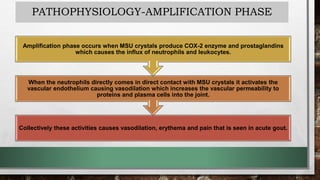
PATHOPHYSIOLOGY-AMPLIFICATION PHASE
Collectively these activities causes vasodilation, erythema and pain that is seen in acute gout.
When the neutrophils directly comes in direct contact with MSU crystals it activates the
vascular endothelium causing vasodilation which increases the vascular permeability to
proteins and plasma cells into the joint.
Amplification phase occurs when MSU crystals produce COX-2 enzyme and prostaglandins
which causes the influx of neutrophils and leukocytes.
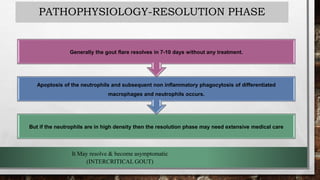
PATHOPHYSIOLOGY-RESOLUTION PHASE
But if the neutrophils are in high density then the resolution phase may need extensive medical care
Apoptosis of the neutrophils and subsequent non inflammatory phagocytosis of differentiated
macrophages and neutrophils occurs.
Generally the gout flare resolves in 7-10 days without any treatment.
It May resolve & become asymptomatic
(INTERCRITICAL GOUT)
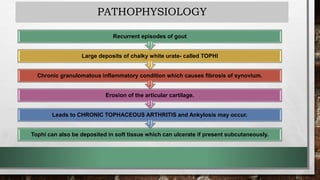
PATHOPHYSIOLOGY
Tophi can also be deposited in soft tissue which can ulcerate if present subcutaneously.
Leads to CHRONIC TOPHACEOUS ARTHRITIS and Ankylosis may occur.
Erosion of the articular cartilage.
Chronic granulomatous inflammatory condition which causes fibrosis of synovium.
Large deposits of chalky white urate- called TOPHI
Recurrent episodes of gout
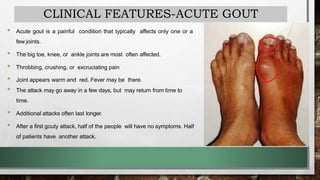
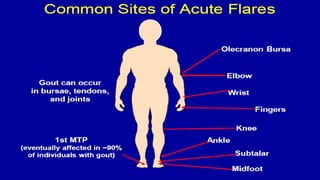
CLINICAL FEATURES-ACUTE GOUT
• Acute gout is a painful condition that typically affects only one or a
few joints.
• The big toe, knee, or ankle joints are most often affected.
• Throbbing, crushing, or excruciating pain
• Joint appears warm and red. Fever may be there.
• The attack may go away in a few days, but may return from time to
time.
• Additional attacks often last longer.
• After a first gouty attack, half of the people will have no symptoms. Half
of patients have another attack.
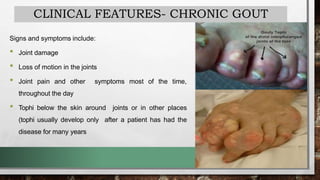
CLINICAL FEATURES- CHRONIC GOUT
Signs and symptoms include:
• Joint damage
• Loss of motion in the joints
• Joint pain and other symptoms most of the time,
throughout the day
• Tophi below the skin around joints or in other places
(tophi usually develop only after a patient has had the
disease for many years
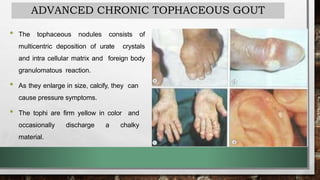
ADVANCED CHRONIC TOPHACEOUS GOUT
• The tophaceous nodules consists of
multicentric deposition of urate crystals
and intra cellular matrix and foreign body
granulomatous reaction.
• As they enlarge in size, calcify, they can
cause pressure symptoms.
• The tophi are firm yellow in color and
occasionally discharge a chalky
material.
1977 ACR CRITERIA FOR ACUTE GOUT
The presence of characteristic urate crystals in the joint fluid, or a tophus proved
to contain urate crystals by chemical means or polarized light microscopy, or the
presence of 6 of the following 12 clinical, laboratory, and radiographic
phenomena:
• More than one attack of acute arthritis
• Maximum inflammation developed within 1 day
• Monoarthritic attack
• Redness observed over joints
1977 ACR CRITERIA FOR ACUTE GOUT
• First metatarsophalangeal joint painful or swollen
• Unilateral first metatarsophalangeal joint attack
• Unilateral tarsal joint attack
• Tophus (proven or suspected)
• Hyperuricemia
• Asymmetric swelling within a joint on x ray/exam
• Subcortical cysts without erosions on x ray
• Joint fluid culture negative for organisms during attack
DIAGNOSTIC FEATURES
• PLAIN RADIOGRAPHS (MAY BE NORMAL)
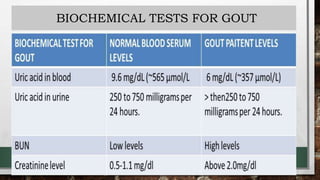
• SERUM URIC ACID
• ARTHROCENTESIS
• SYNOVIAL FLUID ANALYSIS (SHOWS URIC ACID CRYSTALS)
• BUN (BLOOD UREA NITROGEN), SERUM CREATININE
• SYNOVIAL BIOPSY
• URIC ACID – URINE
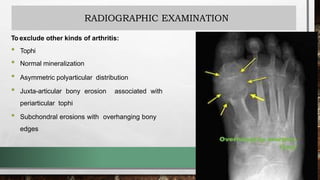
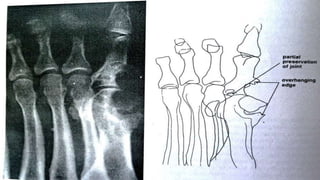
RADIOGRAPHIC EXAMINATION
To exclude other kinds of arthritis:
• Tophi
• Normal mineralization
• Asymmetric polyarticular distribution
• Juxta-articular bony erosion associated with
periarticular tophi
• Subchondral erosions with overhanging bony
edges
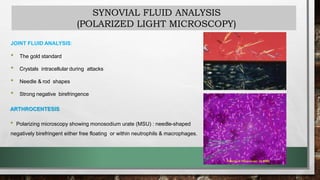
SYNOVIAL FLUID ANALYSIS
(POLARIZED LIGHT MICROSCOPY)
JOINT FLUID ANALYSIS:
• The gold standard
• Crystals intracellular during attacks
• Needle & rod shapes
• Strong negative birefringence
ARTHROCENTESIS
• Polarizing microscopy showing monosodium urate (MSU) : needle-shaped
negatively birefringent either free floating or within neutrophils & macrophages.
BIOCHEMICAL TESTS FOR GOUT
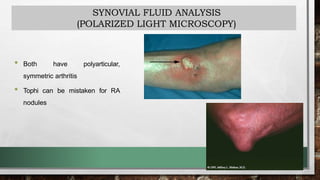
SYNOVIAL FLUID ANALYSIS
(POLARIZED LIGHT MICROSCOPY)
• Both have polyarticular,
symmetric arthritis
• Tophi can be mistaken for RA
nodules
MANAGEMENT
Gout can be treated and controlled. Symptoms are often dramatically improved within
24 hours after treatment has begun. Attacks can be prevented with appropriate therapy
to lower the blood uric acid levels and change in lifestyle by addressing the modifiable
risk factors.
The goals of treatment are to:
•Relieve pain and inflammation
•Prevent future gout attacks that could lead to permanent joint damage and tophi
•Prevent the development of tophi
•Prevent kidney damage from chronically elevated urate levels
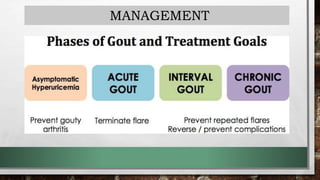
MANAGEMENT
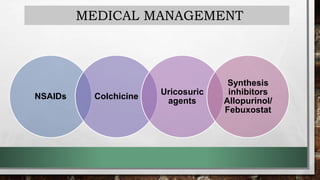
MEDICAL MANAGEMENT
NSAIDs Colchicine
Uricosuric
agents
Synthesis
inhibitors
Allopurinol/
Febuxostat
34
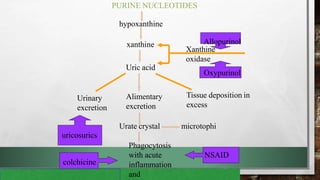
PURINE NUCLEOTIDES
hypoxanthine
xanthine
Uric acid
Xanthine
oxidase
Alimentary
excretion
Urinary
excretion
Tissue deposition in
excess
Urate crystal microtophi
Phagocytosis
with acute
inflammation
and
uricosurics
colchicine
NSAID
Allopurinol
Oxypurinol
MEDICAL MANAGEMENT
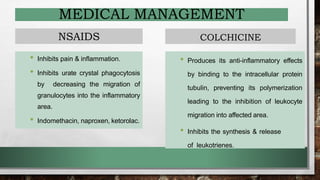
NSAIDS
• Inhibits pain & inflammation.
• Inhibits urate crystal phagocytosis
by decreasing the migration of
granulocytes into the inflammatory
area.
• Indomethacin, naproxen, ketorolac.
COLCHICINE
• Produces its anti-inflammatory effects
by binding to the intracellular protein
tubulin, preventing its polymerization
leading to the inhibition of leukocyte
migration into affected area.
• Inhibits the synthesis & release
of leukotrienes.
MEDICAL MANAGEMENT
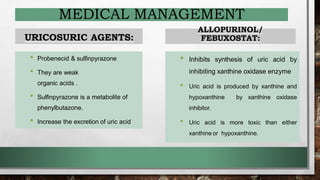
URICOSURIC AGENTS:
• Probenecid & sulfinpyrazone
• They are weak
organic acids .
• Sulfinpyrazone is a metabolite of
phenylbutazone.
• Increase the excretion of uric acid
ALLOPURINOL/
FEBUXOSTAT:
• Inhibits synthesis of uric acid by
inhibiting xanthine oxidase enzyme
• Uric acid is produced by xanthine and
hypoxanthine by xanthine oxidase
inhibitor.
• Uric acid is more toxic than either
xanthine or hypoxanthine.
MEDICAL MANAGEMENT
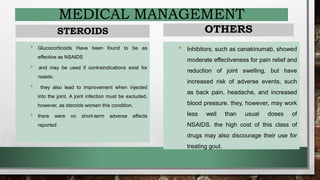
STEROIDS
• Glucocorticoids Have been found to be as
effective as NSAIDS
• and may be used if contraindications exist for
nsaids.
• they also lead to improvement when injected
into the joint. A joint infection must be excluded,
however, as steroids worsen this condition.
• there were no short-term adverse effects
reported
OTHERS
• Inhibitors, such as canakinumab, showed
moderate effectiveness for pain relief and
reduction of joint swelling, but have
increased risk of adverse events, such
as back pain, headache, and increased
blood pressure. they, however, may work
less well than usual doses of
NSAIDS. the high cost of this class of
drugs may also discourage their use for
treating gout.
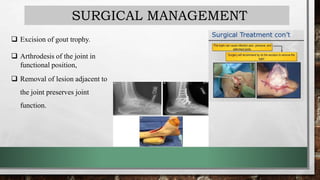
SURGICAL MANAGEMENT
 Excision of gout trophy.
 Arthrodesis of the joint in
functional position,
 Removal of lesion adjacent to
the joint preserves joint
function.
PREVENT DISEASE PROGRESSION
• Lower urate to < 6 mg/dl :
• Depletes
Total body urate pool Deposited crystals
• Treatment is lifelong & continuous
• Drug choices : Uricosuric agents
Xanthine oxidase inhibitor
PREVENTION
 Maintain the concentration of Uric Acid level within the normal range.
 Drinking Plenty of Water.
 Balance your weight with proper diet and exercise
 Avoid purine rich foods
 Reducing alcohol consumption
 Avoid Diuretic Drugs.
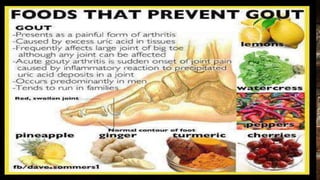
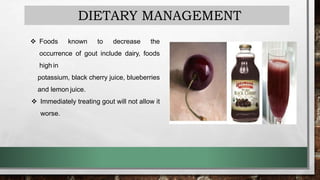
DIETARY MANAGEMENT
 Foods known to decrease the
occurrence of gout include dairy, foods
high in
potassium, black cherry juice, blueberries
and lemon juice.
 Immediately treating gout will not allow it
worse.
RECENT ADVANCEMENTS-NEW DRUGS
 URICASE ENZYMES:
• Catabolize urate to allantoin: More soluble, excretable form
• Currently approved for hyperuricemia in tumor lysis syndrome
• Some concerns: fatal immunogenicity & unknown long-term effects

Gouty arthritis

  • 2.
    INTRODUCTION • Gout atype of arthritis that causes inflammation, usually in one joint, that begins suddenly. • Gouty arthritis is caused by the deposition of needle-like crystals of uric acid in a joint. • Clinically it is characterized by recurring attacks of acute arthritis by interval of freedom from pain • In late stages by deforming arthritis, nephritis, urinary calculi.
  • 3.
    HISTORY OF GOUT •2640 BC: podagra first identified by the Egyptians. • 5th century bc: Hippocrates referred to gout as “unwalkable disease” and noted links between gout & lifestyle, demographics & other variables • The word ‘gout’ is derived from the Latin word‘Gutta’. • Earlier it was believed that an acute attack of the disease was the result of poison dropping into a joint • Disease of the ‘KINGS’ (rich foods have a higher concentration of protein. This could cause major problems for a person afflicted with gout)
  • 5.
    DEFINITION • Gout isa hereditary condition of disturbed uric acid metabolism in which urate salts gets deposited in articular, periarticular and subcutaneous tissues. • Chronic heterogeneous disorder of urate metabolism results in deposition of monosodium urate crystals in the joints and soft tissues, with accompanying inflammation and degenerative consequences
  • 6.
    INCIDENCE • Race :whites> blacks • Sex : males >females • Age :2n to 4th decade common at 40years. • 2.6 million in 2005, projected to increase to 3.6 million in 2025 • Most common form of inflammatory joint disease in men aged ≥40 years
  • 7.
    ETIOLOGY The crystallization ofuric acid, often related to relatively high levels in the blood, is the underlying cause of gout. This can occur because of diet, genetic predisposition, or underexcretion of urate, the salts of uric acid.[4] The causes include • Lifestyle • Genetics • Drugs • Medical conditions
  • 8.
    ETIOLOGY-LIFESTYLE • Dietary causesaccount for about 12% of gout, and include a strong association with the consumption of alcohol, fructose-sweetened drinks, meat, and seafood. among foods richest in purines yielding high amounts of uric acid are dried anchovies, shrimp, organ meat, dried mushrooms, seaweed, and beer yeast. chicken and potatoes also appear related. other triggers include physical trauma and surgery • Physical fitness, healthy weight, low-fat dairy products, and to a lesser extent, coffee and taking vitamin C, appear to decrease the risk of gout;
  • 9.
    ETIOLOGY-GENETICS • Gout ispartly genetic, contributing to about 60% of variability in uric acid level. • the SLC2A9, SLC22A12, and ABCG2 genes have been found to be commonly associated with gout and variations in them can approximately double the risk. • loss-of-function mutations in SLC2A9 and SLC22A12 causes low blood uric acid levels by reducing urate absorption and unopposed urate secretion. the rare genetic disorders familial juvenile hyperuricemic nephropathy, hypoxanthine-guanine medullary cystic kidney disease.
  • 10.
    ETIOLOGY-MEDICAL CONDITIONS • Outfrequently occurs in combination with other medical problems. • Metabolic syndrome, a combination of abdominal obesity, hypertension, insulin resistance, and abnormal lipid levels, occurs in nearly 75% of cases. • other conditions commonly complicated by gout include lead poisoning, kidney failure, hemolytic anemia, psoriasis, solid organ transplants, and myeloproliferative disorders such as polycythemia. • A body mass index greater than or equal to 35 increases male risk of gout threefold. chronic lead exposure and lead-contaminated alcohol are risk factors for gout due to the harmful effect of lead on kidney function.
  • 11.
    ETIOLOGY-DRUGS • Have beenassociated with attacks of gout, but a low dose of hydrochlorothiazide does not seem to increase risk. • other medications that increase the risk include niacin, aspirin (acetylsalicylic acid), ACE inhibitors, angiotensin receptor blockers, beta blockers, ritonavir, and pyrazinamide. the immunosuppressive drugs ciclosporin and tacrolimus are also associated with gout, the former more so when used in combination with hydrochlorothiazide.
  • 12.
    ETIOLOGY/PREDISPOSING FACTORS • Purinerich foods – meat, kidney, liver, seafood, anchovies, oatmeal, certain vegetables (peas, beans, lentils, mushrooms, cauliflower, spinach), sweetbreads • Caffeine • Drugs – loop diuretics, NSAIDS, corticosteroids, niacin,cyclosporine,salicylates,ethambutol, pyrazinamide • Trauma • Infection
  • 13.
    ETIOLOGY/PREDISPOSING FACTORS • Otherdisease – DM, HTN, vascular dx, renal dx, thyroid dx, sarcoidosis, etc. • overweight • kidney disease • taking diuretics • drinking alcohol in excess • diabetes • underactive thyroid
  • 14.
    STAGES OF GOUT ASYMPTOMATIC HYPERURECEMIA ACUTEGOUT INTERCRITICAL GOUT CHRONIC GOUT
  • 15.
    STAGE-I :ASYMPTOMATIC URICEMIA • Inthis beginning stage of gout, uric acid is building up in the blood and starting to form crystals around joints, most often in the foot. • In this stage of gout, the person has no joint pain, no red or swollen joints, just an elevated uric acid blood test This is the time that the uric acid, or urate, crystals are collecting in the joints and can cause inflammation later on.” • uric acid is created when body breaks down substances called purines, which are produced in body and can also be found in certain foods and drinks. but high uric acid isn’t enough for a diagnosis of gout itself. “most people with hyperuricemia never develop clinical gout
  • 16.
    STAGE-II :ACUTE GOUT •At this point, that sudden, unexpected nighttime attack of gout symptoms might occur. • “This is when the person has pain, redness, and swelling of a joint, most commonly in the big toe, the foot, the ankle or the knee, but gout can start in other joints as well.“ The urate crystals are released into the joint fluid and cause an inflammatory reaction, bringing in many white blood cells and releasing inflammatory chemicals that cause the pain, redness, and swelling called GOUT FLARE. • Identifying uric acid crystals in joint fluid helps confirm a gout diagnosis which can be done in this stage
  • 17.
    STAGE-III :INTERCRITICAL GOUT • aftera first gout flare, 75 percent of people will have a second within a year; but some people can go years before another attack, since it is the nature of gout to have flares and then quiet down for a period of time before the next flare.” • Even though it may seem like nothing is happening, this is the point in which patients should begin long-term treatment. lowering uric acid levels with medication can prevent future gout flares and long-term complications .
  • 18.
    STAGE-IV :CHRONIC GOUT •This stage is also called “TOPHACEOUS GOUT” because the uric acid deposits can form nodules called “tophi,” often at the bunion point of the big toe or at the elbow. But tophi can form anywhere in the body. “This stage is where a person can have some joint pain from gout just about all the time. “It usually takes many years of uncontrolled gout for someone to get into this stage.” • During this stage, progressive joint damage develops, so patients with gout should be treated before this starts happening.
  • 19.
    PATHOPHYSIOLOGY •Disturbed metabolism ofuric acid causes accumulation in the joints. • The pathogenesis can be explained at three levels: • INITITATION • AMPLIFICATION • RESOLUTION
  • 20.
    PATHOPHYSIOLOGY-INITITATION PHASE This causesACUTE GOUT FLARE. Release of pro-inflammatory mediator cytokines like TNF,IL6 and IL8 These crystals will be phagocytosed by the macrophages which activates an inflammatory reaction. Due to the etiological factors, there is accumulation of uric acid in the tissues .when the tissues become supersaturated the urate salts precipitate into monosodium urate crystals(MSU) which initially deposit in needle shape.
  • 21.
    PATHOPHYSIOLOGY-AMPLIFICATION PHASE Collectively theseactivities causes vasodilation, erythema and pain that is seen in acute gout. When the neutrophils directly comes in direct contact with MSU crystals it activates the vascular endothelium causing vasodilation which increases the vascular permeability to proteins and plasma cells into the joint. Amplification phase occurs when MSU crystals produce COX-2 enzyme and prostaglandins which causes the influx of neutrophils and leukocytes.
  • 22.
    PATHOPHYSIOLOGY-RESOLUTION PHASE But ifthe neutrophils are in high density then the resolution phase may need extensive medical care Apoptosis of the neutrophils and subsequent non inflammatory phagocytosis of differentiated macrophages and neutrophils occurs. Generally the gout flare resolves in 7-10 days without any treatment. It May resolve & become asymptomatic (INTERCRITICAL GOUT)
  • 23.
    PATHOPHYSIOLOGY Tophi can alsobe deposited in soft tissue which can ulcerate if present subcutaneously. Leads to CHRONIC TOPHACEOUS ARTHRITIS and Ankylosis may occur. Erosion of the articular cartilage. Chronic granulomatous inflammatory condition which causes fibrosis of synovium. Large deposits of chalky white urate- called TOPHI Recurrent episodes of gout
  • 24.
    CLINICAL FEATURES-ACUTE GOUT •Acute gout is a painful condition that typically affects only one or a few joints. • The big toe, knee, or ankle joints are most often affected. • Throbbing, crushing, or excruciating pain • Joint appears warm and red. Fever may be there. • The attack may go away in a few days, but may return from time to time. • Additional attacks often last longer. • After a first gouty attack, half of the people will have no symptoms. Half of patients have another attack.
  • 26.
    CLINICAL FEATURES- CHRONICGOUT Signs and symptoms include: • Joint damage • Loss of motion in the joints • Joint pain and other symptoms most of the time, throughout the day • Tophi below the skin around joints or in other places (tophi usually develop only after a patient has had the disease for many years
  • 27.
    ADVANCED CHRONIC TOPHACEOUSGOUT • The tophaceous nodules consists of multicentric deposition of urate crystals and intra cellular matrix and foreign body granulomatous reaction. • As they enlarge in size, calcify, they can cause pressure symptoms. • The tophi are firm yellow in color and occasionally discharge a chalky material.
  • 28.
    1977 ACR CRITERIAFOR ACUTE GOUT The presence of characteristic urate crystals in the joint fluid, or a tophus proved to contain urate crystals by chemical means or polarized light microscopy, or the presence of 6 of the following 12 clinical, laboratory, and radiographic phenomena: • More than one attack of acute arthritis • Maximum inflammation developed within 1 day • Monoarthritic attack • Redness observed over joints
  • 29.
    1977 ACR CRITERIAFOR ACUTE GOUT • First metatarsophalangeal joint painful or swollen • Unilateral first metatarsophalangeal joint attack • Unilateral tarsal joint attack • Tophus (proven or suspected) • Hyperuricemia • Asymmetric swelling within a joint on x ray/exam • Subcortical cysts without erosions on x ray • Joint fluid culture negative for organisms during attack
  • 30.
    DIAGNOSTIC FEATURES • PLAINRADIOGRAPHS (MAY BE NORMAL) • SERUM URIC ACID • ARTHROCENTESIS • SYNOVIAL FLUID ANALYSIS (SHOWS URIC ACID CRYSTALS) • BUN (BLOOD UREA NITROGEN), SERUM CREATININE • SYNOVIAL BIOPSY • URIC ACID – URINE
  • 31.
    RADIOGRAPHIC EXAMINATION To excludeother kinds of arthritis: • Tophi • Normal mineralization • Asymmetric polyarticular distribution • Juxta-articular bony erosion associated with periarticular tophi • Subchondral erosions with overhanging bony edges
  • 33.
    SYNOVIAL FLUID ANALYSIS (POLARIZEDLIGHT MICROSCOPY) JOINT FLUID ANALYSIS: • The gold standard • Crystals intracellular during attacks • Needle & rod shapes • Strong negative birefringence ARTHROCENTESIS • Polarizing microscopy showing monosodium urate (MSU) : needle-shaped negatively birefringent either free floating or within neutrophils & macrophages.
  • 34.
  • 35.
    SYNOVIAL FLUID ANALYSIS (POLARIZEDLIGHT MICROSCOPY) • Both have polyarticular, symmetric arthritis • Tophi can be mistaken for RA nodules
  • 36.
    MANAGEMENT Gout can betreated and controlled. Symptoms are often dramatically improved within 24 hours after treatment has begun. Attacks can be prevented with appropriate therapy to lower the blood uric acid levels and change in lifestyle by addressing the modifiable risk factors. The goals of treatment are to: •Relieve pain and inflammation •Prevent future gout attacks that could lead to permanent joint damage and tophi •Prevent the development of tophi •Prevent kidney damage from chronically elevated urate levels
  • 37.
  • 38.
  • 39.
    34 PURINE NUCLEOTIDES hypoxanthine xanthine Uric acid Xanthine oxidase Alimentary excretion Urinary excretion Tissuedeposition in excess Urate crystal microtophi Phagocytosis with acute inflammation and uricosurics colchicine NSAID Allopurinol Oxypurinol
  • 40.
    MEDICAL MANAGEMENT NSAIDS • Inhibitspain & inflammation. • Inhibits urate crystal phagocytosis by decreasing the migration of granulocytes into the inflammatory area. • Indomethacin, naproxen, ketorolac. COLCHICINE • Produces its anti-inflammatory effects by binding to the intracellular protein tubulin, preventing its polymerization leading to the inhibition of leukocyte migration into affected area. • Inhibits the synthesis & release of leukotrienes.
  • 41.
    MEDICAL MANAGEMENT URICOSURIC AGENTS: •Probenecid & sulfinpyrazone • They are weak organic acids . • Sulfinpyrazone is a metabolite of phenylbutazone. • Increase the excretion of uric acid ALLOPURINOL/ FEBUXOSTAT: • Inhibits synthesis of uric acid by inhibiting xanthine oxidase enzyme • Uric acid is produced by xanthine and hypoxanthine by xanthine oxidase inhibitor. • Uric acid is more toxic than either xanthine or hypoxanthine.
  • 42.
    MEDICAL MANAGEMENT STEROIDS • GlucocorticoidsHave been found to be as effective as NSAIDS • and may be used if contraindications exist for nsaids. • they also lead to improvement when injected into the joint. A joint infection must be excluded, however, as steroids worsen this condition. • there were no short-term adverse effects reported OTHERS • Inhibitors, such as canakinumab, showed moderate effectiveness for pain relief and reduction of joint swelling, but have increased risk of adverse events, such as back pain, headache, and increased blood pressure. they, however, may work less well than usual doses of NSAIDS. the high cost of this class of drugs may also discourage their use for treating gout.
  • 43.
    SURGICAL MANAGEMENT  Excisionof gout trophy.  Arthrodesis of the joint in functional position,  Removal of lesion adjacent to the joint preserves joint function.
  • 44.
    PREVENT DISEASE PROGRESSION •Lower urate to < 6 mg/dl : • Depletes Total body urate pool Deposited crystals • Treatment is lifelong & continuous • Drug choices : Uricosuric agents Xanthine oxidase inhibitor
  • 45.
    PREVENTION  Maintain theconcentration of Uric Acid level within the normal range.  Drinking Plenty of Water.  Balance your weight with proper diet and exercise  Avoid purine rich foods  Reducing alcohol consumption  Avoid Diuretic Drugs.
  • 46.
    DIETARY MANAGEMENT  Foodsknown to decrease the occurrence of gout include dairy, foods high in potassium, black cherry juice, blueberries and lemon juice.  Immediately treating gout will not allow it worse.
  • 48.
    RECENT ADVANCEMENTS-NEW DRUGS URICASE ENZYMES: • Catabolize urate to allantoin: More soluble, excretable form • Currently approved for hyperuricemia in tumor lysis syndrome • Some concerns: fatal immunogenicity & unknown long-term effects