Scleroderma 
(Systemic Sclerosis)
Definition 
1. Systemic sclerosis (scleroderma) 
a multisystem disorder characterized by 
1) functional and structural abnormalities of blood 
vessels 
2) fibrosis of the skin and internal organs 
3) immune system activation 
4) autoimmunity
Epidemiology 
1. Prevalence: 4-12 new cases per million per year 
2. Susceptibility: host factor 
1) age - peak occurrence: age 35-65 years 
2) gender - female : male = 3-12 : 1 
3) genetic background
Classification 
1. Systemic sclerosis 
– Diffuse cutaneous systemic sclerosis 
– Limited cutaneous systemic sclerosis 
– Overlap syndromes 
2. Localized scleroderma 
– Morphoea 
– Linear scleroderma 
• En coup de sabre
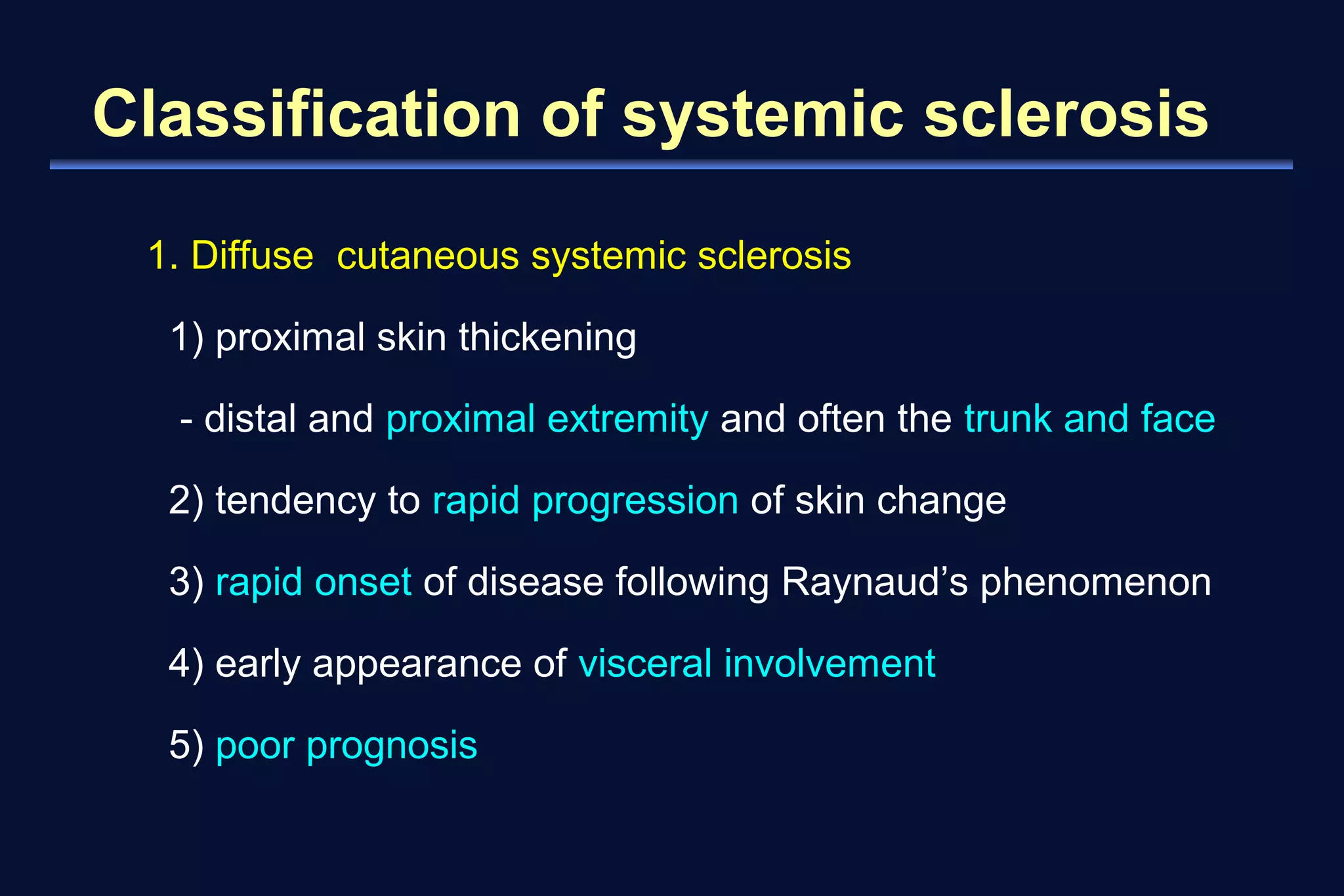
Classification of systemic sclerosis 
1. Diffuse cutaneous systemic sclerosis 
1) proximal skin thickening 
- distal and proximal extremity and often the trunk and face 
2) tendency to rapid progression of skin change 
3) rapid onset of disease following Raynaud’s phenomenon 
4) early appearance of visceral involvement 
5) poor prognosis
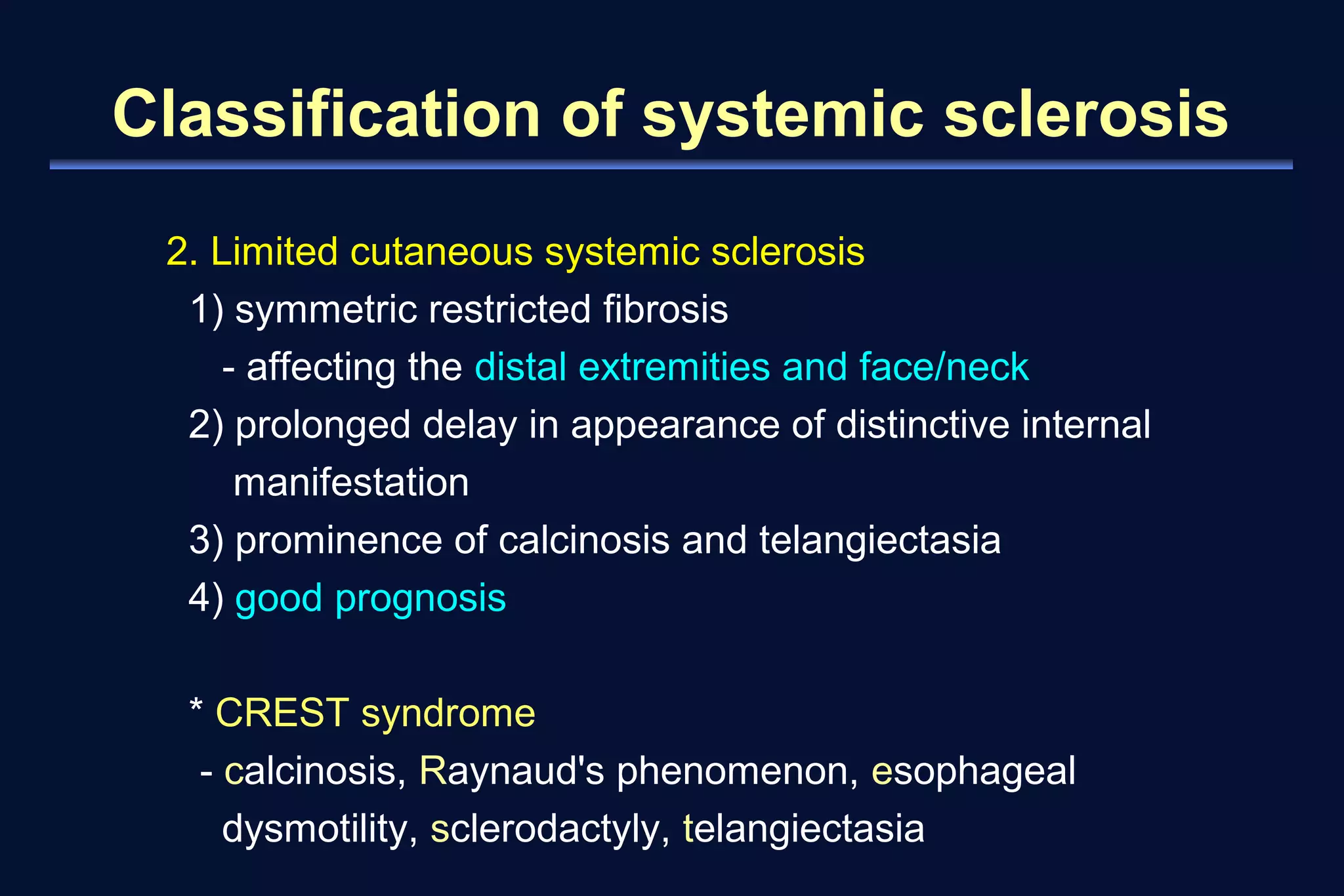
Classification of systemic sclerosis 
2. Limited cutaneous systemic sclerosis 
1) symmetric restricted fibrosis 
- affecting the distal extremities and face/neck 
2) prolonged delay in appearance of distinctive internal 
manifestation 
3) prominence of calcinosis and telangiectasia 
4) good prognosis 
* CREST syndrome 
- calcinosis, Raynaud's phenomenon, esophageal 
dysmotility, sclerodactyly, telangiectasia
Classification of systemic sclerosis 
Overlap syndromes 
– Features of systemic sclerosis together with 
those of at least one other autoimmune 
rheumatic disease, e.g. SLE, RA, or 
polymyositis.
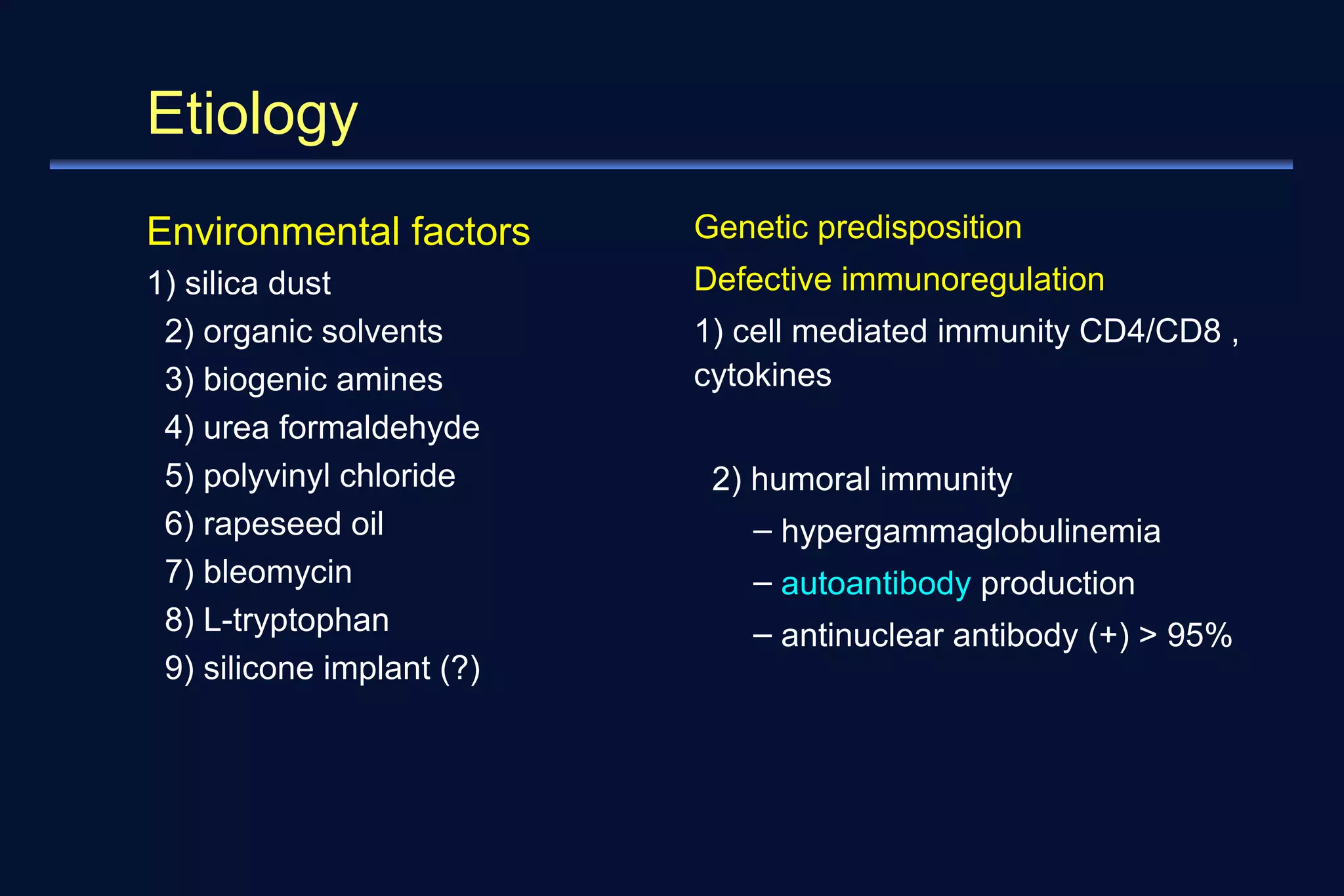
Etiology 
Environmental factors 
1) silica dust 
2) organic solvents 
3) biogenic amines 
4) urea formaldehyde 
5) polyvinyl chloride 
6) rapeseed oil 
7) bleomycin 
8) L-tryptophan 
9) silicone implant (?) 
Genetic predisposition 
Defective immunoregulation 
1) cell mediated immunity CD4/CD8 , 
cytokines 
2) humoral immunity 
– hypergammaglobulinemia 
– autoantibody production 
– antinuclear antibody (+) > 95%
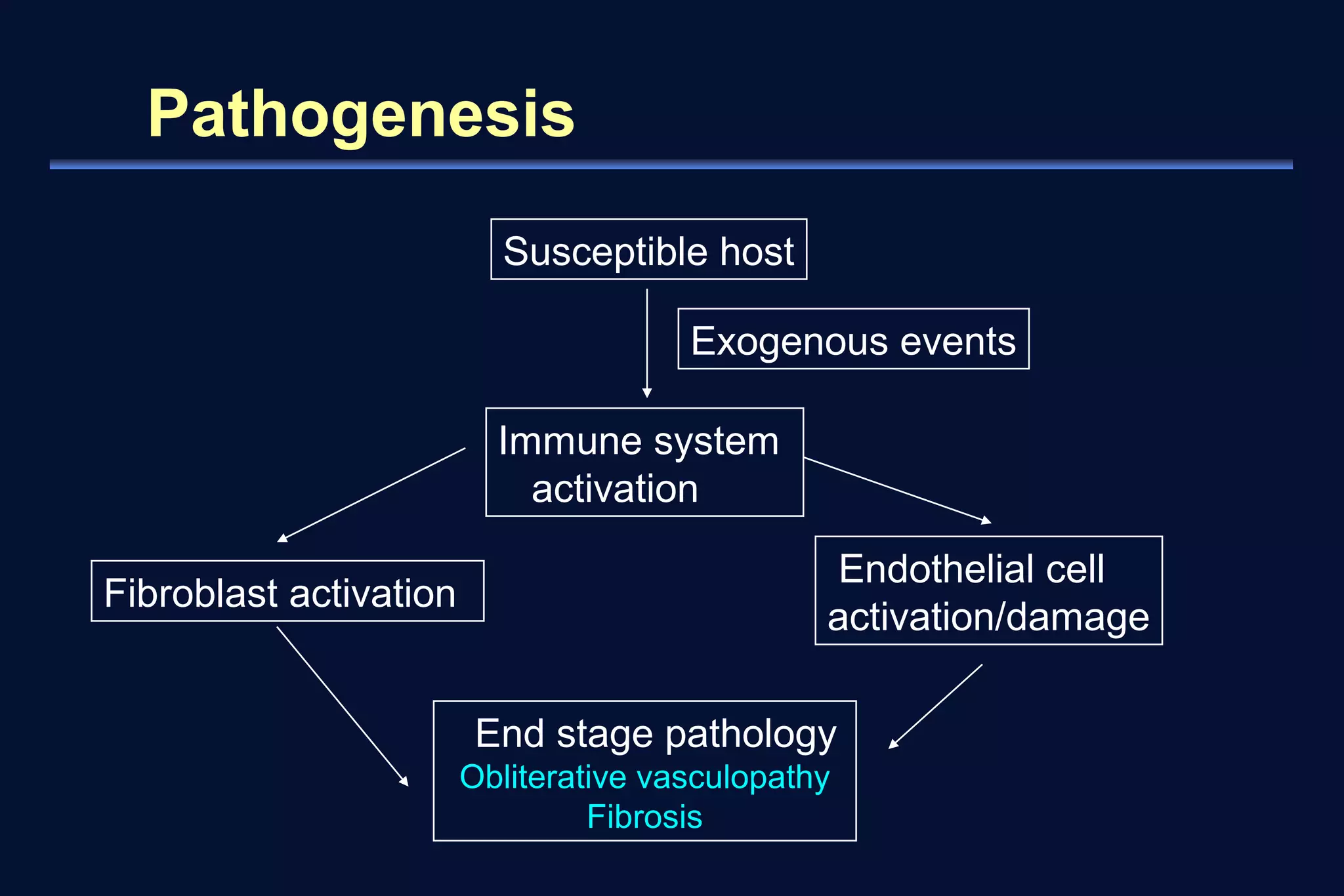
Pathogenesis 
Susceptible host 
Exogenous events 
Immune system 
activation 
Endothelial cell 
Fibroblast activation activation/damage 
End stage pathology 
Obliterative vasculopathy 
Fibrosis
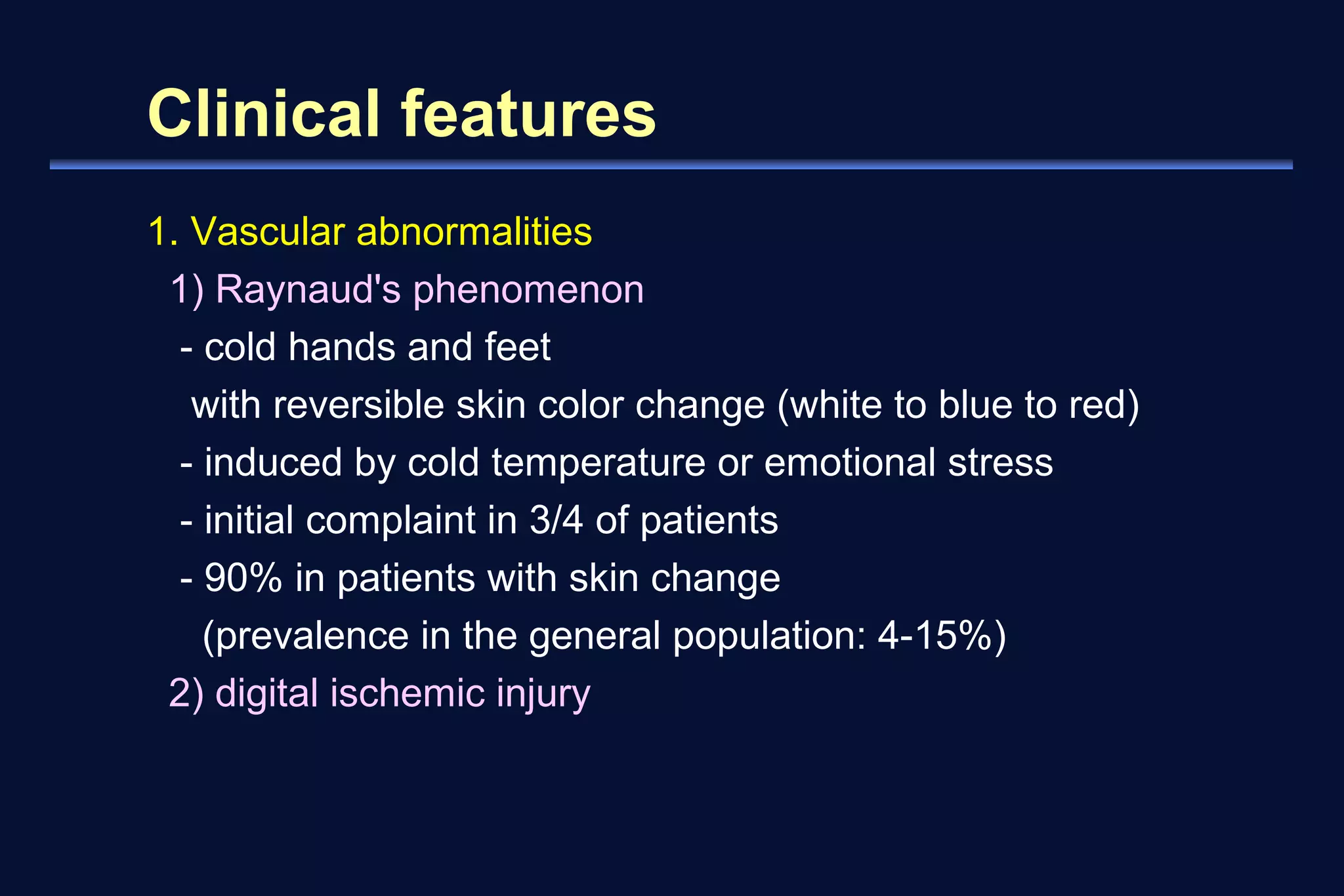
Clinical features 
1. Vascular abnormalities 
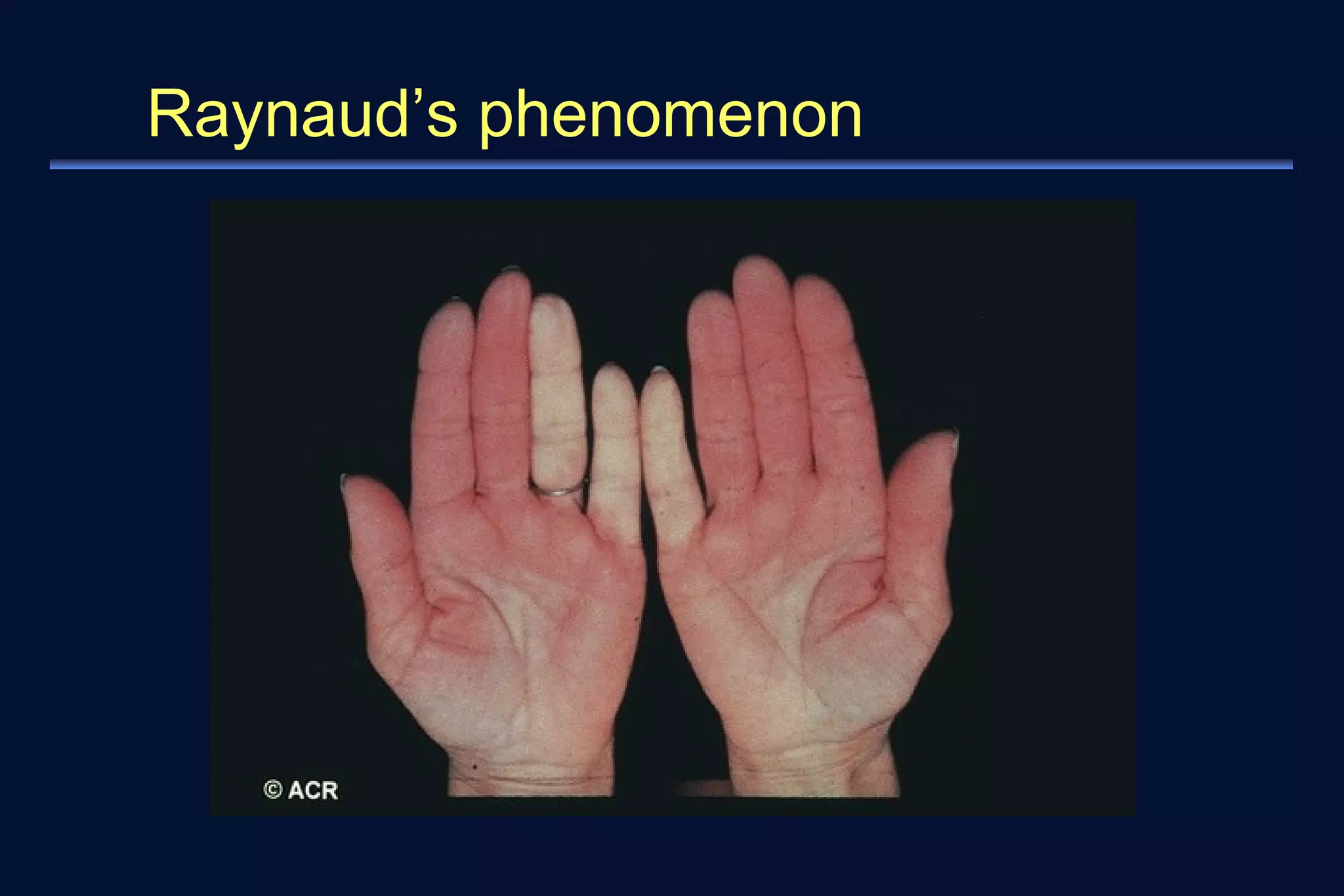
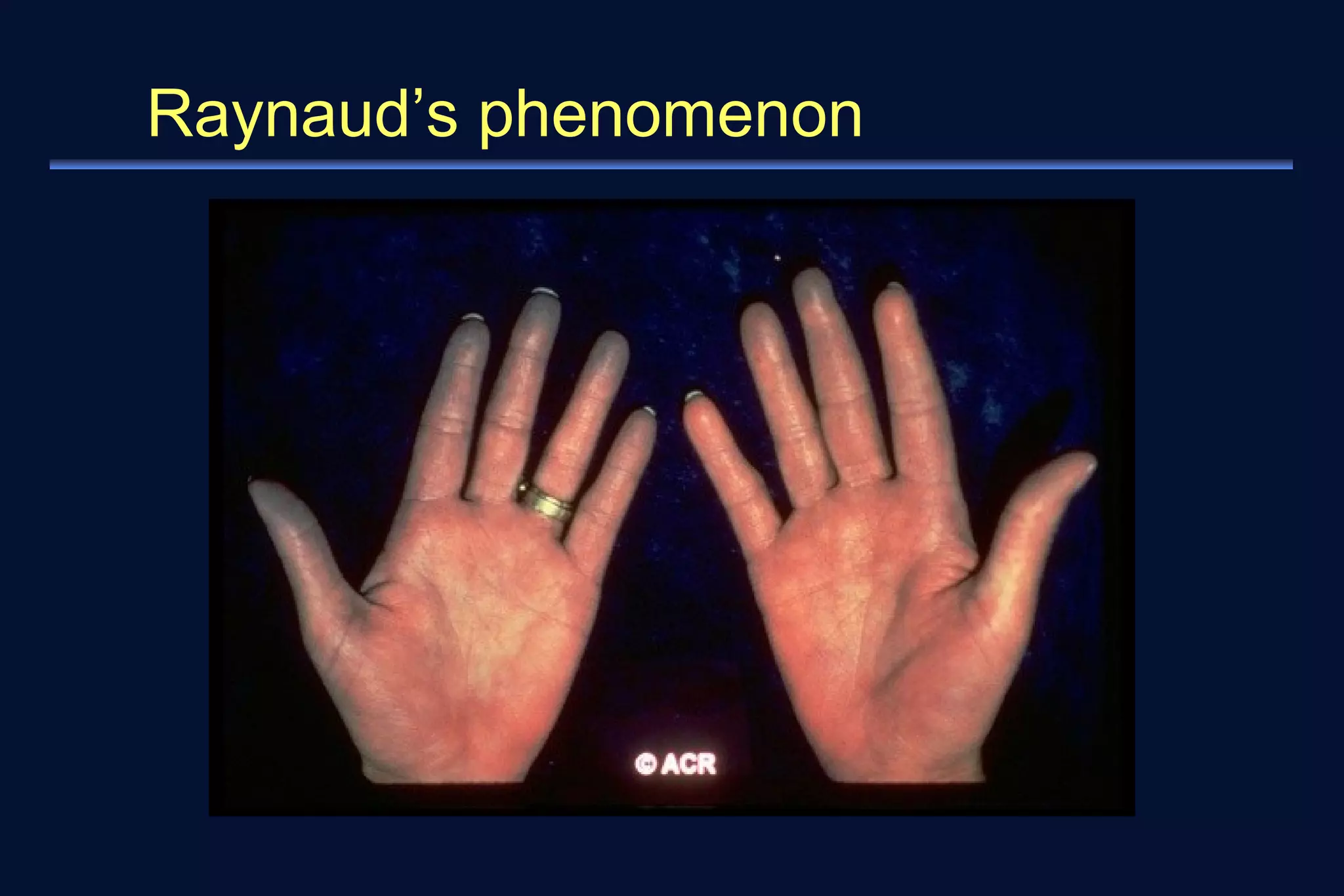
1) Raynaud's phenomenon 
- cold hands and feet 
with reversible skin color change (white to blue to red) 
- induced by cold temperature or emotional stress 
- initial complaint in 3/4 of patients 
- 90% in patients with skin change 
(prevalence in the general population: 4-15%) 
2) digital ischemic injury
Raynaud’s phenomenon
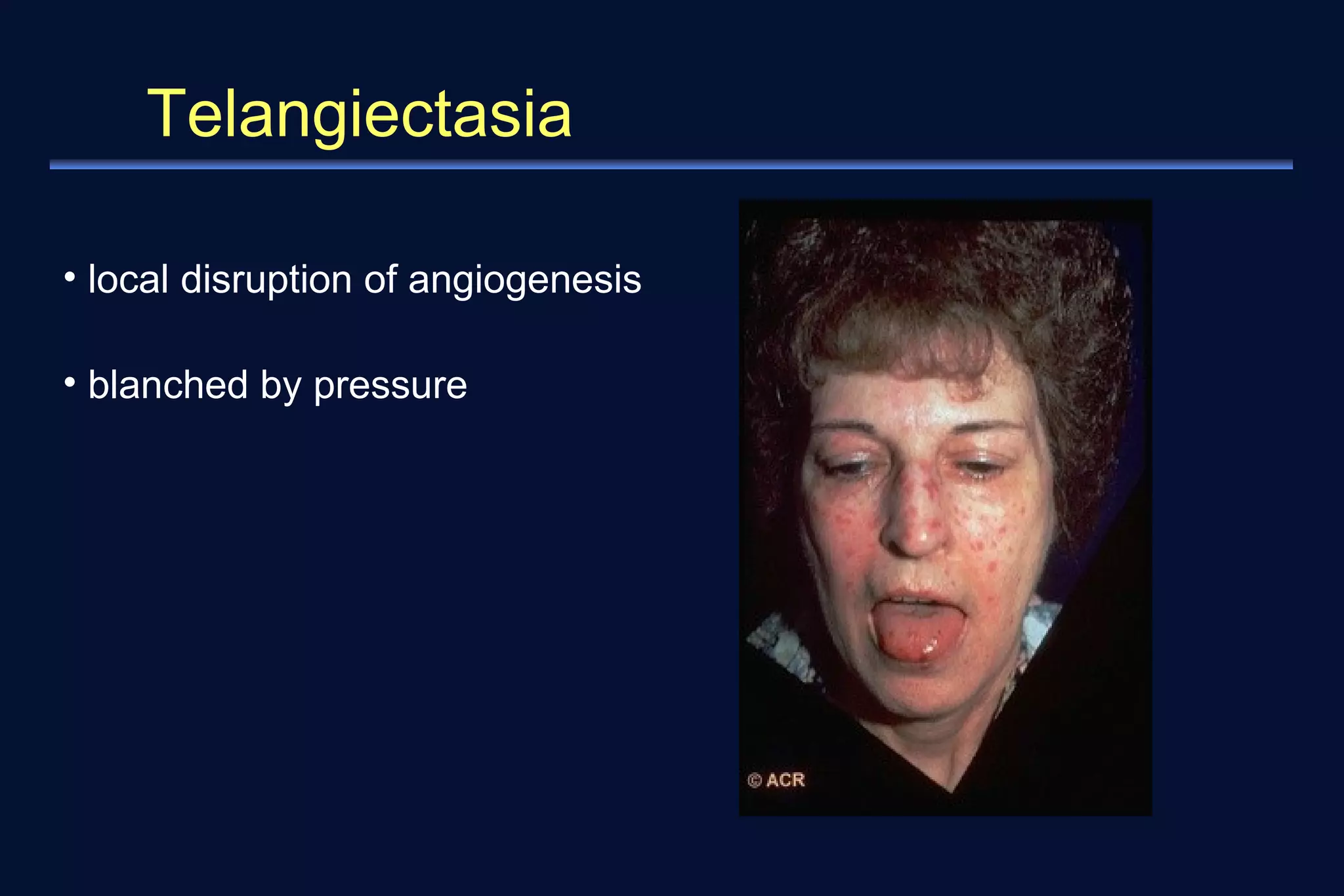
Telangiectasia 
• local disruption of angiogenesis 
• blanched by pressure
Clinical features 
2. Skin involvement (1) 
1) stage 
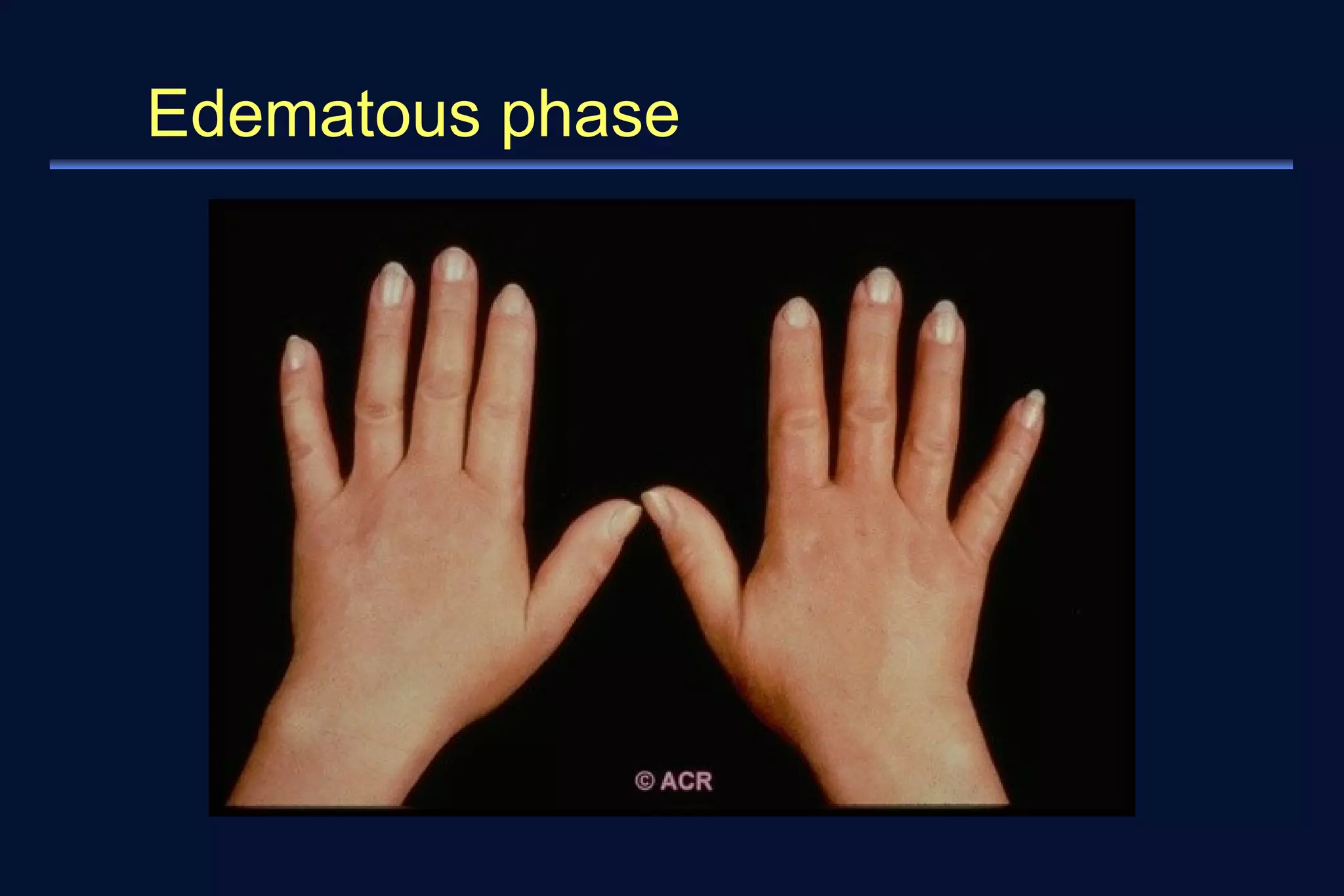
- edematous phase 
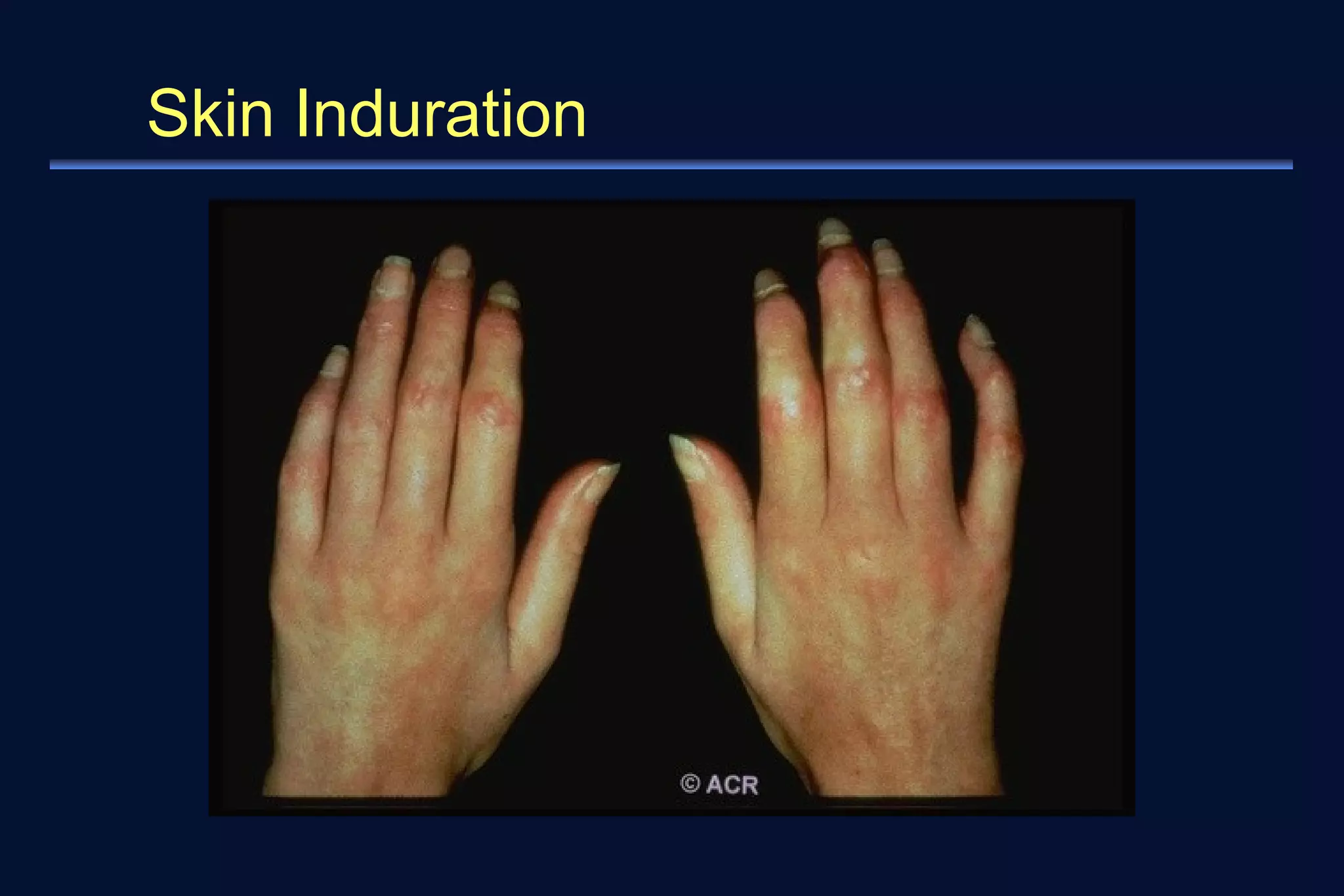
- indurative phase 
- atrophic phase 
2) firm, thickened bound to underlying soft tissue 
3) decrease in range of motion, loss of facial expression, 
inability to open mouth fully, contractures
Edematous phase
Skin Induration
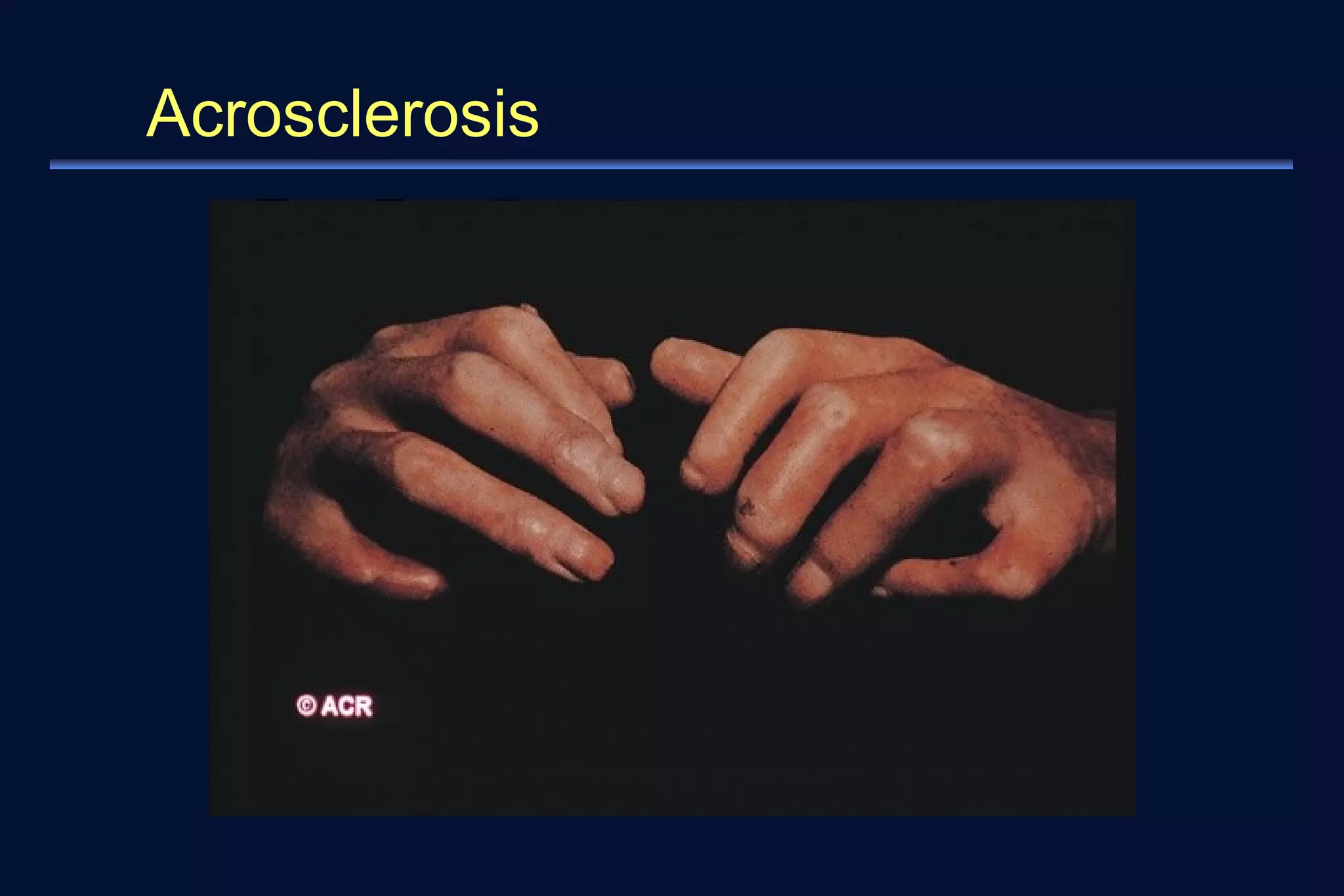
Acrosclerosis
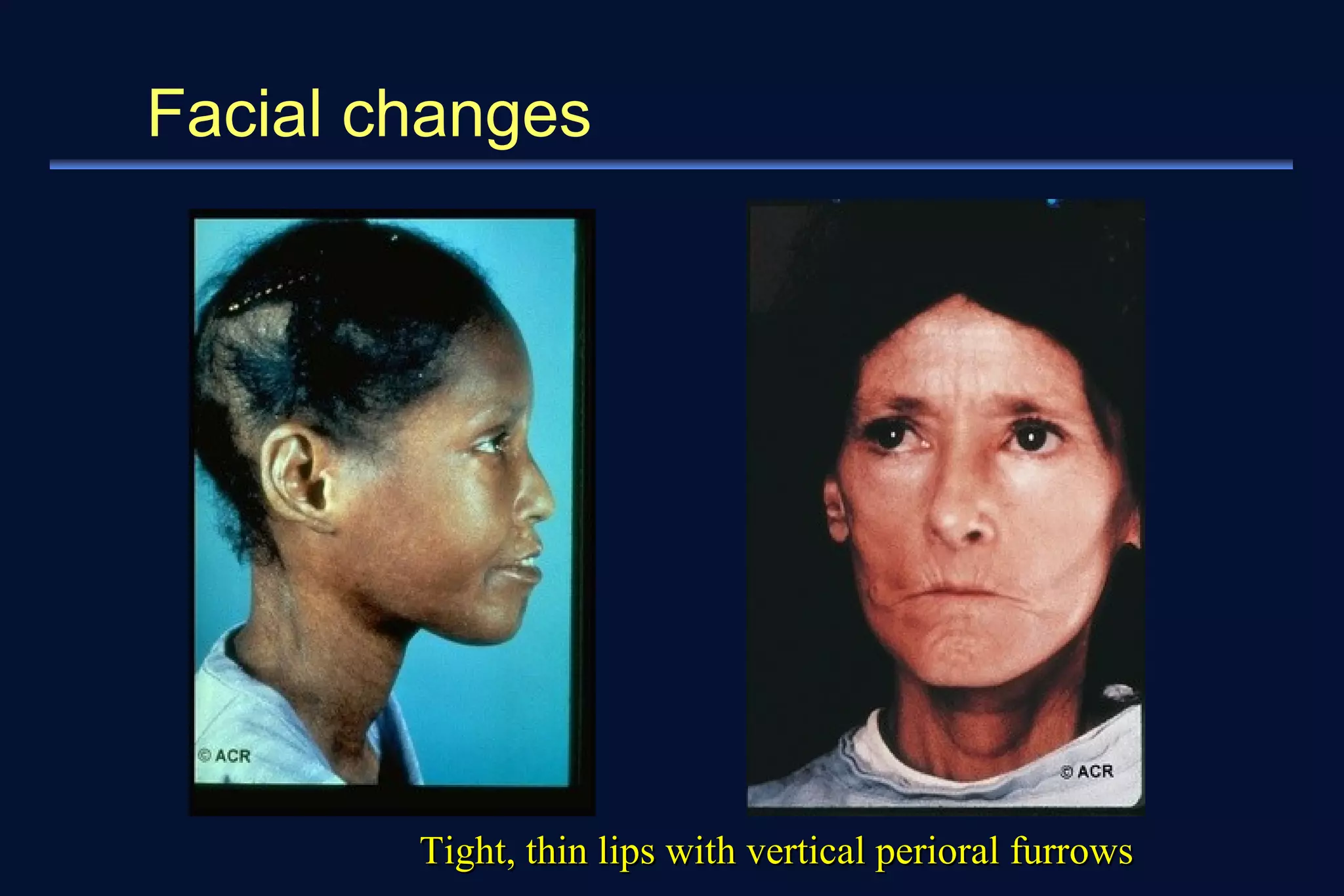
Facial changes 
Tight, thin lips wwiitthh vveerrttiiccaall ppeerriioorraall ffuurrrroowwss
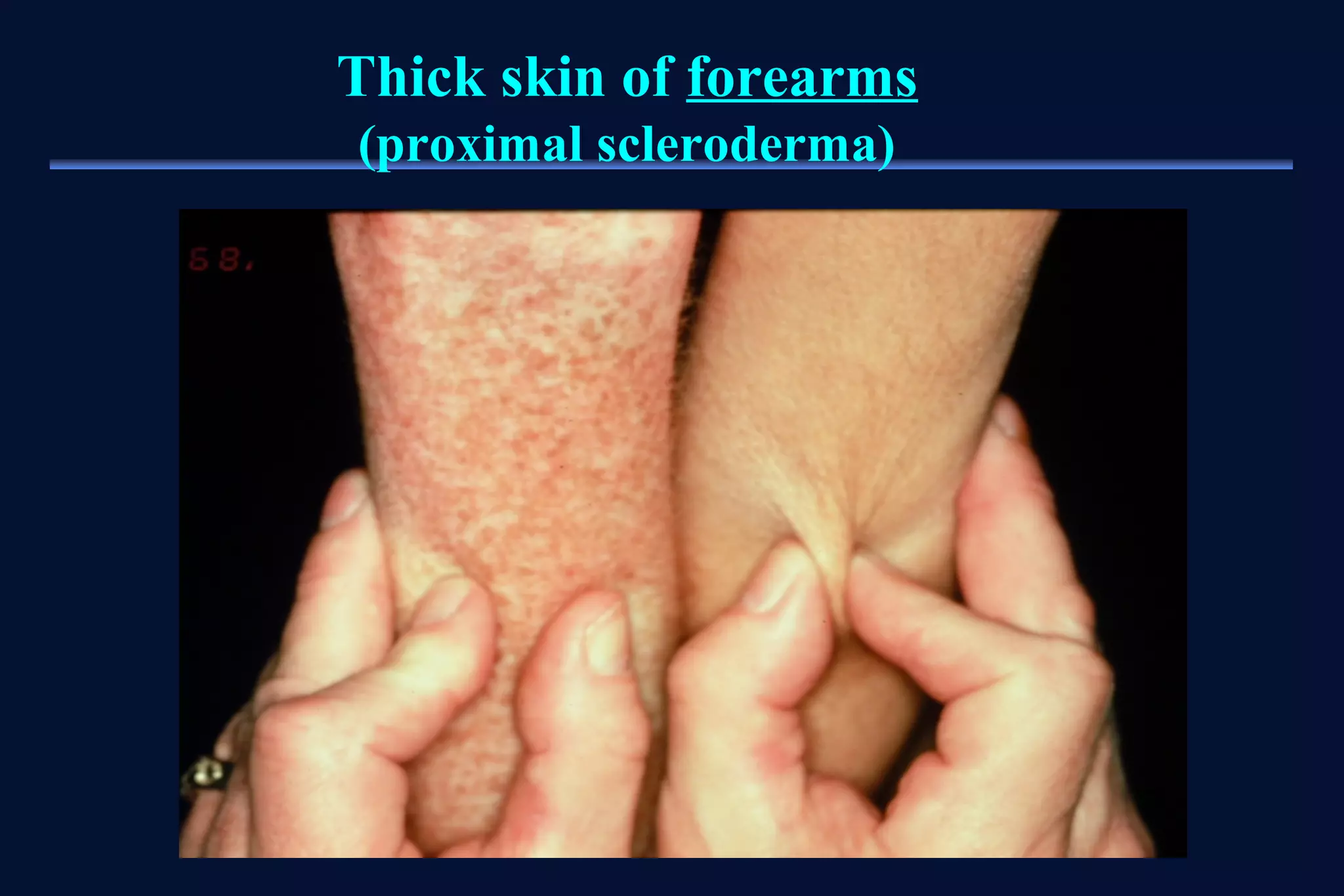
Thick skin of forearms 
(proximal scleroderma)
Clinical features 
2. Skin involvement (2) 
ulceration, loss of soft tissue of finger tip, pigmentation, 
calcific deposit, capillary change 
3. Musculoskeletal system 
• Polyarthritis and flexion contracture 
• Muscle weakness and atrophy (primary /secondary)
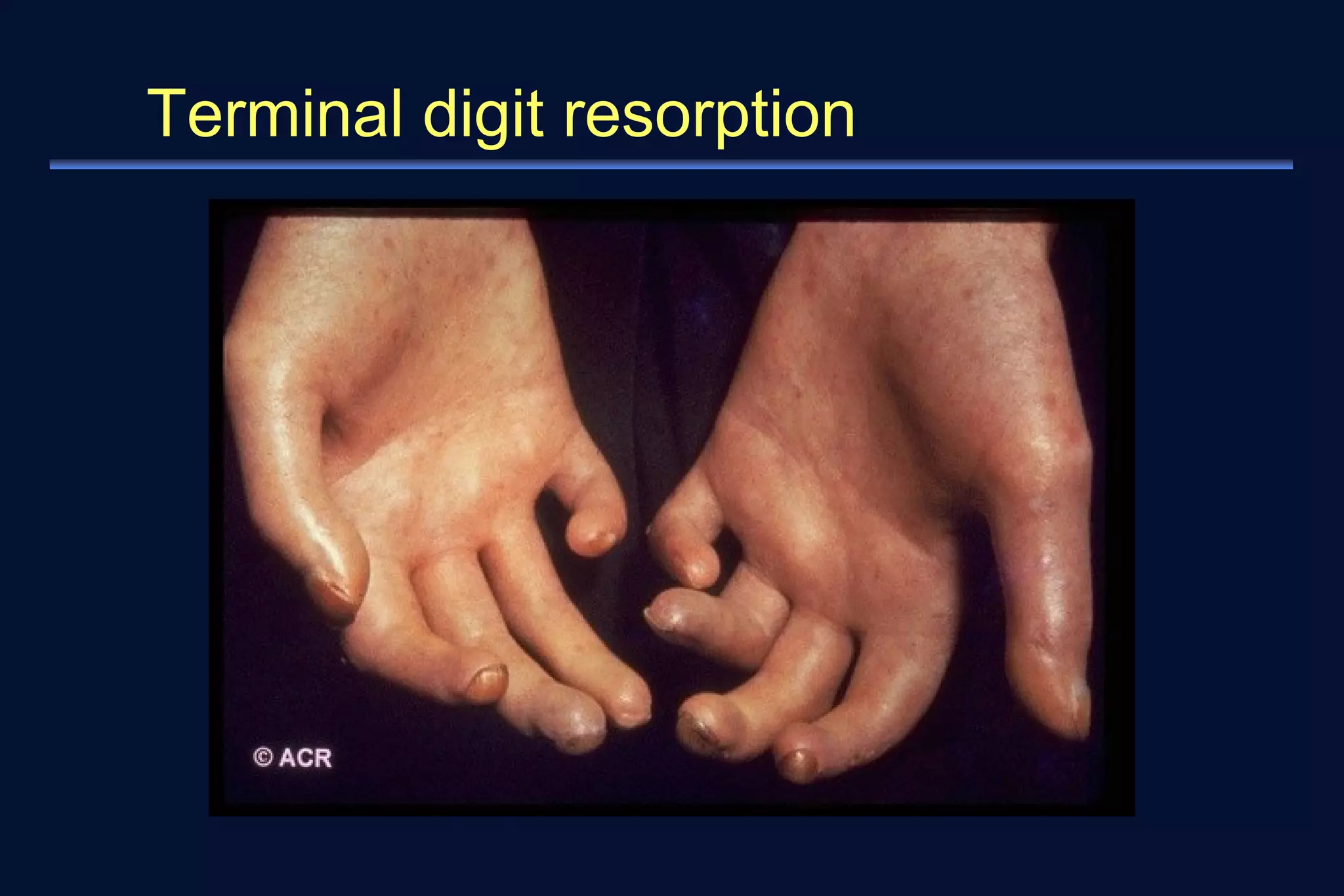
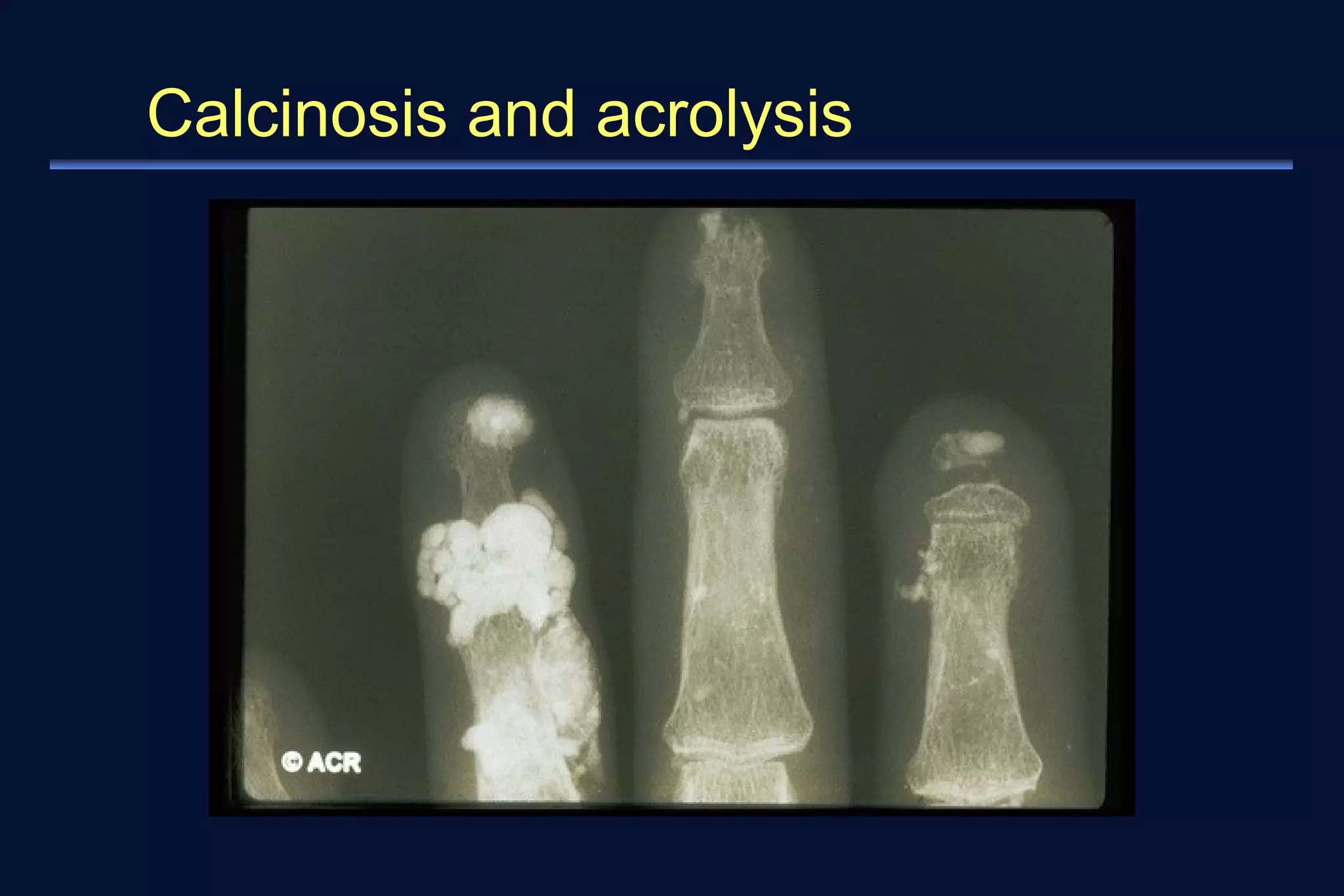
Terminal digit resorption
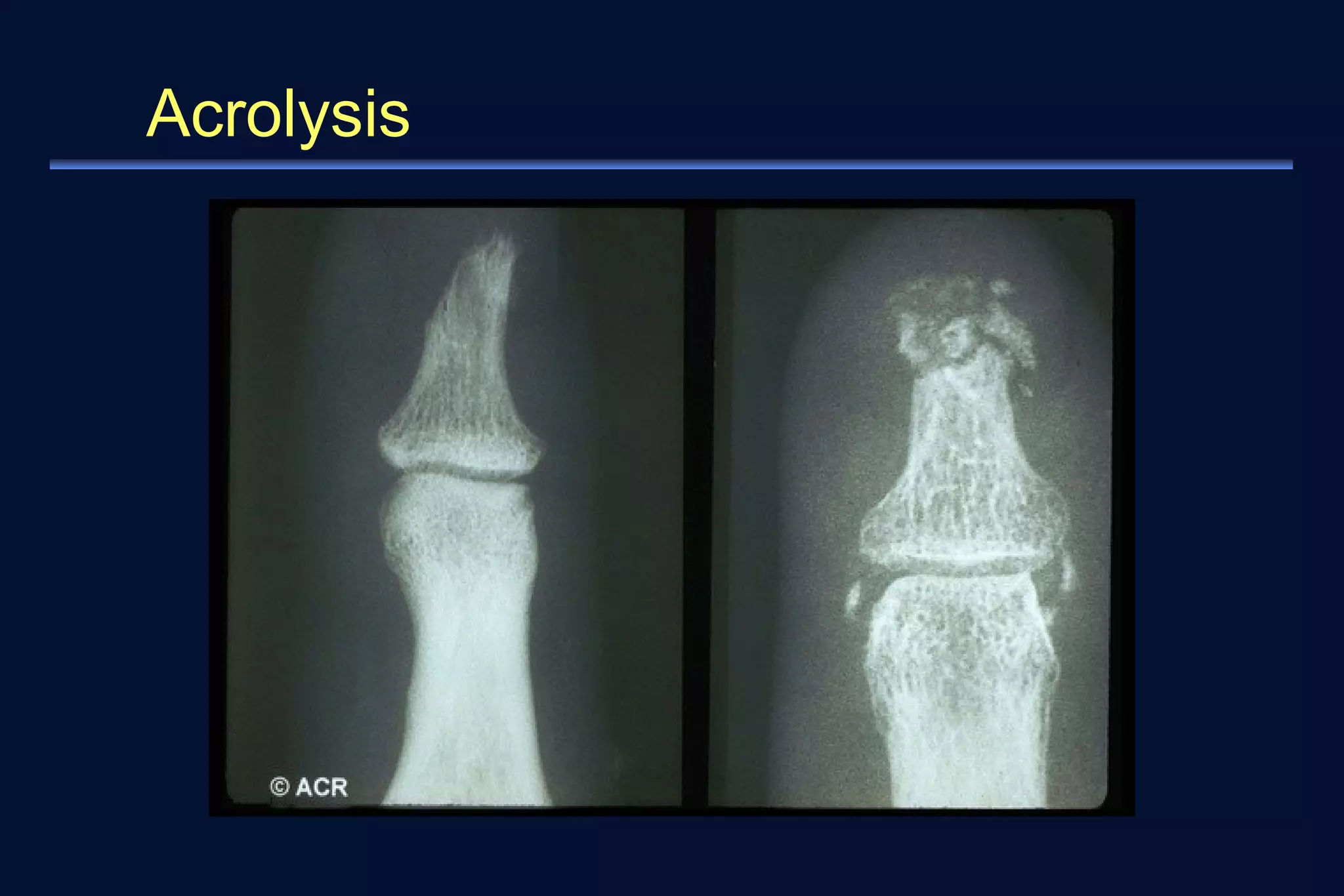
Acrolysis
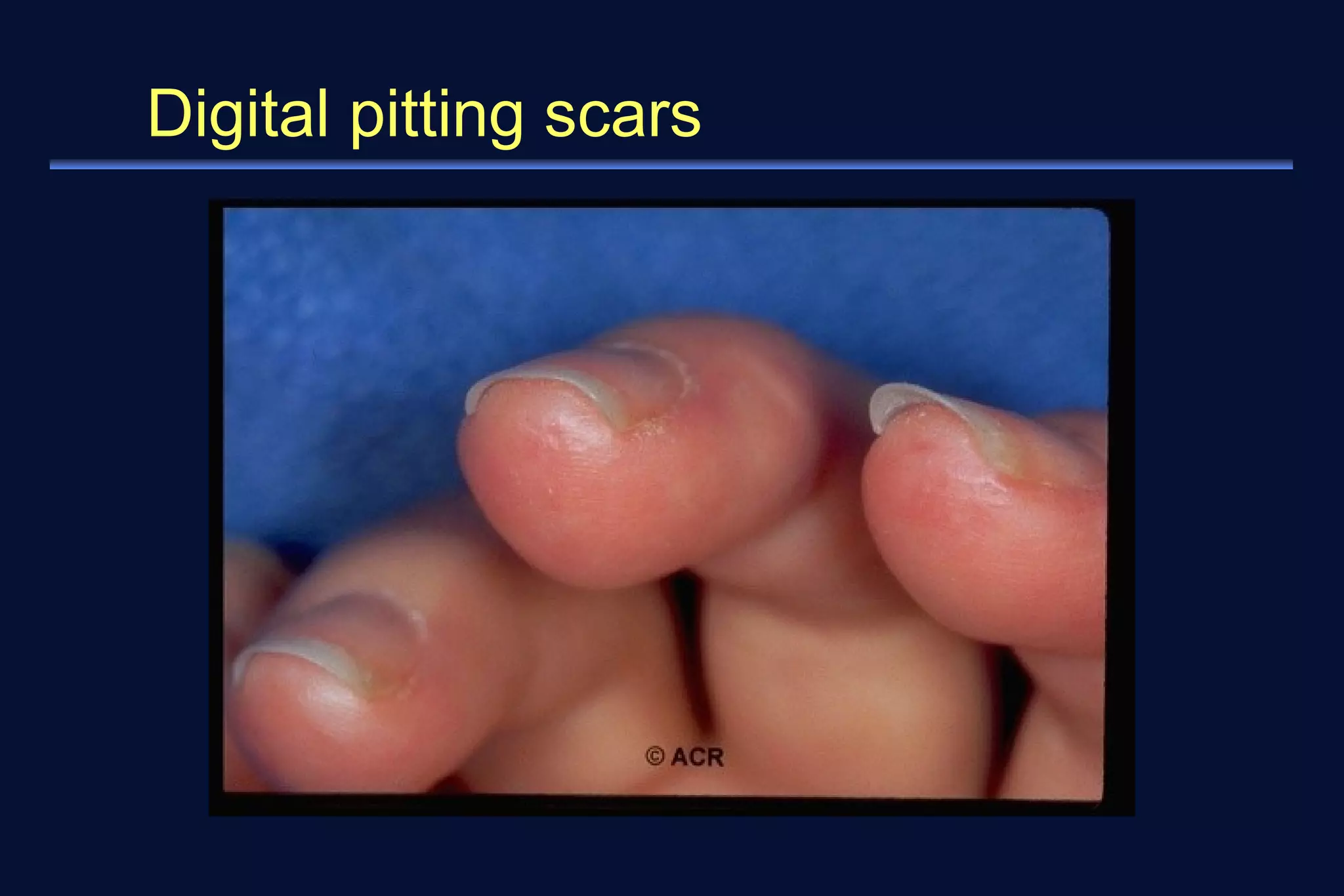
Digital pitting scars
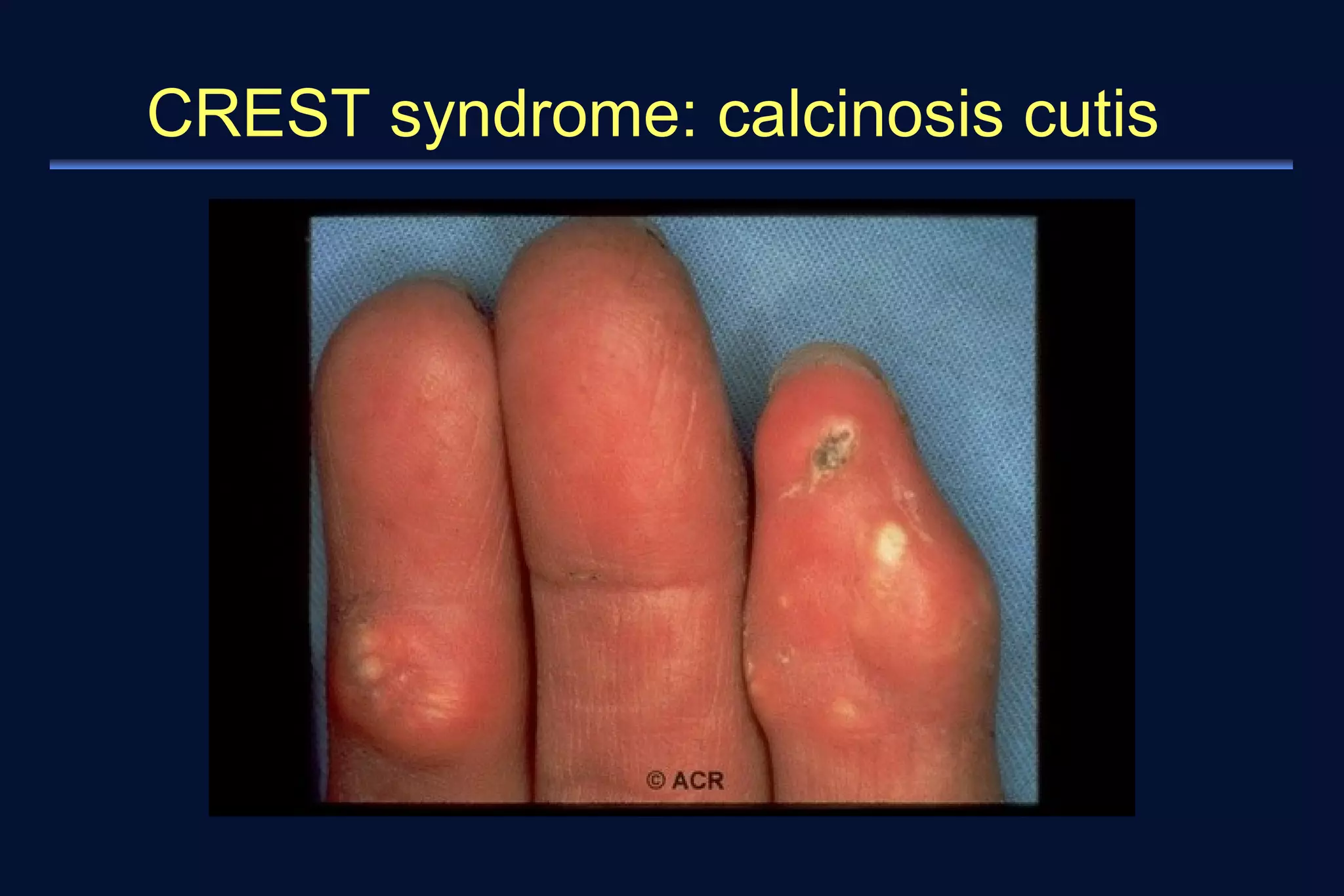
CREST syndrome: calcinosis cutis
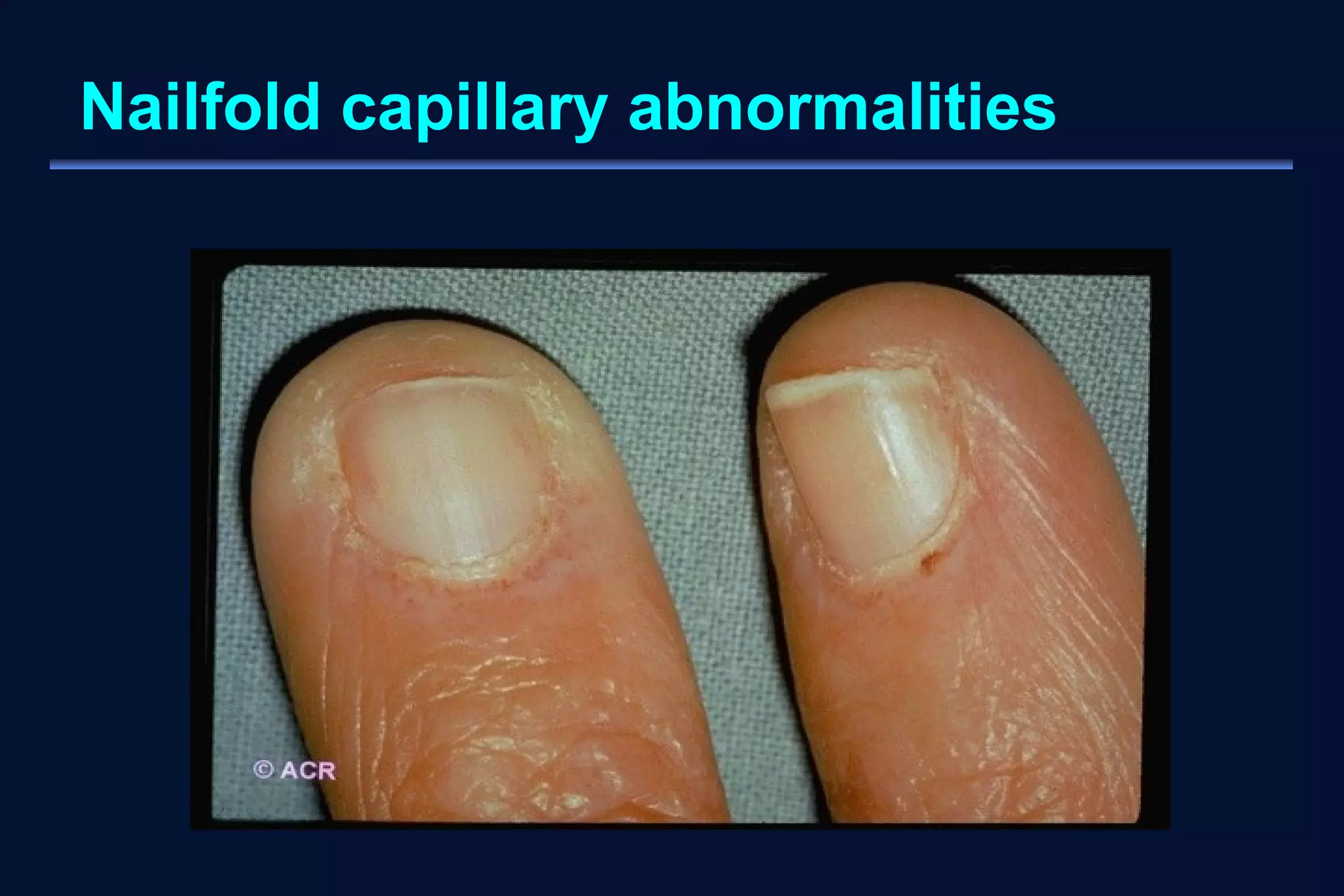
Nailfold capillary abnormalities
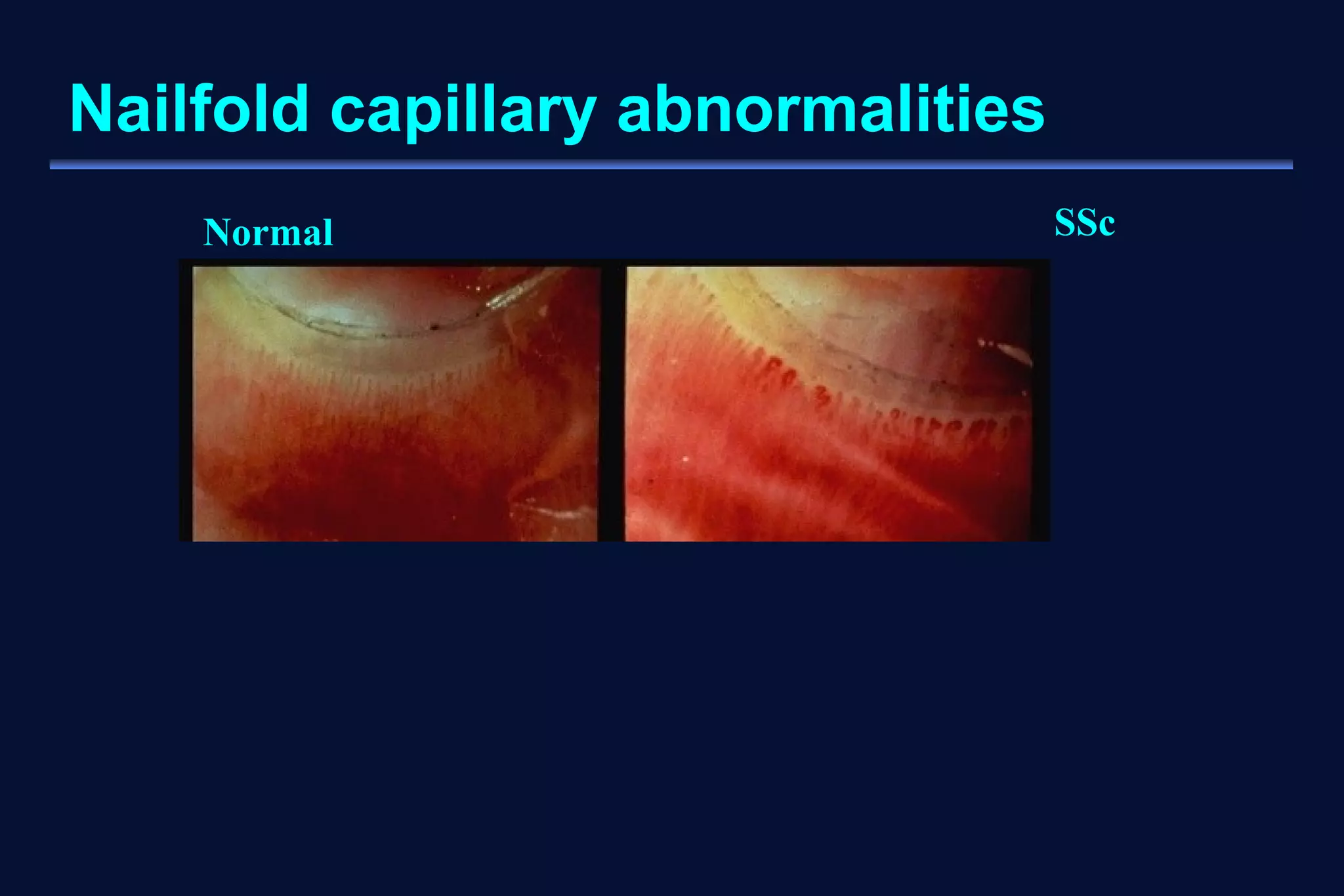
Nailfold capillary abnormalities 
Normal SSc
Calcinosis and acrolysis
Clinical features 
4. intestinal involvement 
1) esophagus: hypomotility and retrosternal pain, 
reflux esophagitis, stricture 
2) stomach: delayed emptying 
3) small intestine: pseudo-obstruction, paralytic ileus, 
malabsorption, weight loss, cachexia 
4) large intestine: chronic constipation and fecal impaction 
diverticula
Clinical features 
5. lungs 
1) 2/3 of patients affected 
- leading cause of mortality and morbidity in later stage 
of systemic sclerosis 
2) pathology 
- interstitial fibrosis 
- intimal thickening of pulmonary arterioles 
(pulmonary hypertension) 
3) Complains - dry cough, breathlessness
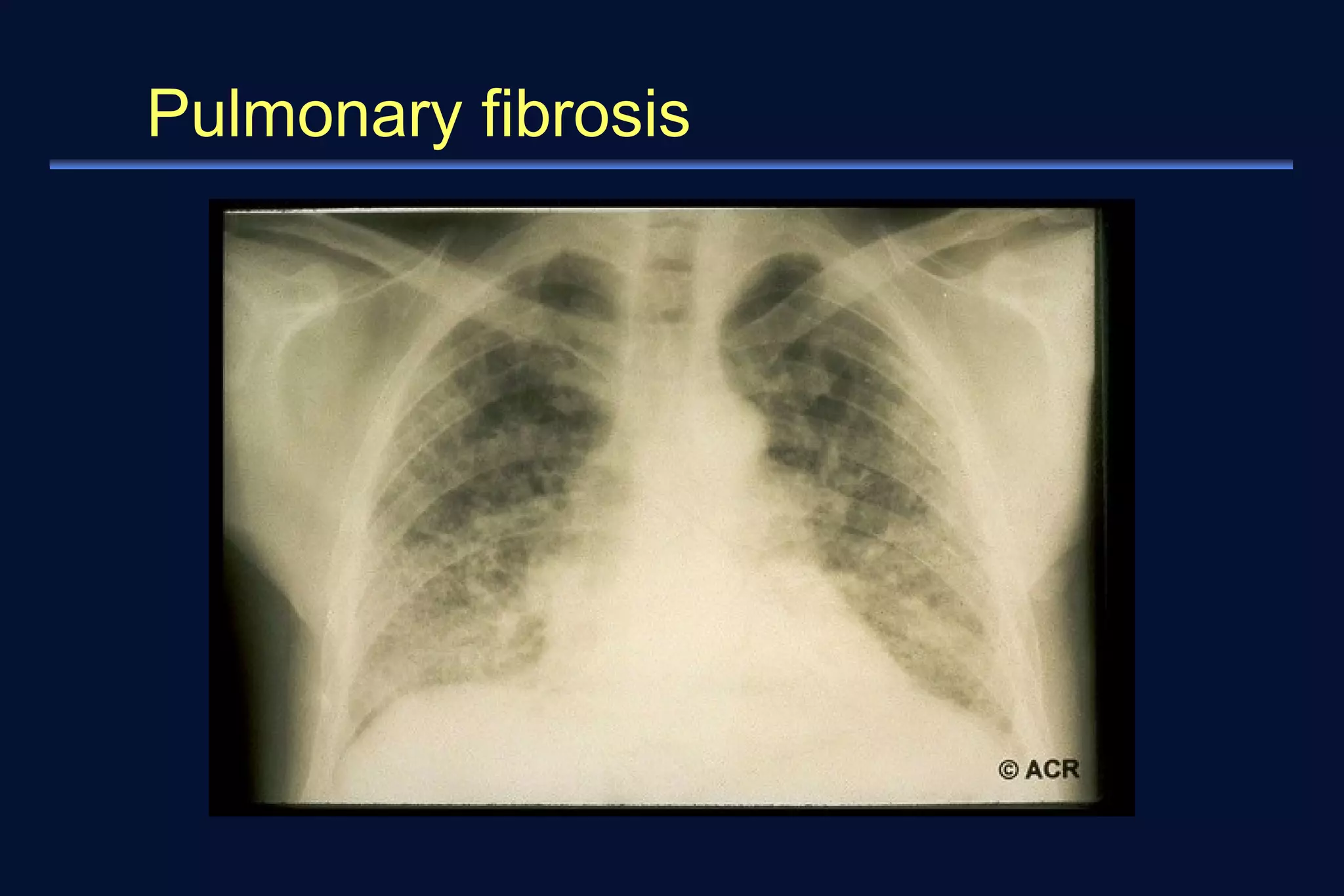
Pulmonary fibrosis
Clinical features 
6. heart (10%) 
1) pericarditis 
2) heart failure 
3) arrhythmia 
4) myocardial fibrosis
Clinical features 
7. kidney 
1) diffuse scleroderma in association with 
rapid progression of skin involvement 
2) pathology 
- intimal hyperplasia of the interlobular artery 
- fibrinoid necrosis of afferent arterioles 
- glomerulosclerosis 
3) proteinuria, abnormal sediment, azotemia, 
microangiopathic hemolytic anemia, renal failure
Clinical features 
Exocrine glands 
– Xerostomia 
– xerophthalmia
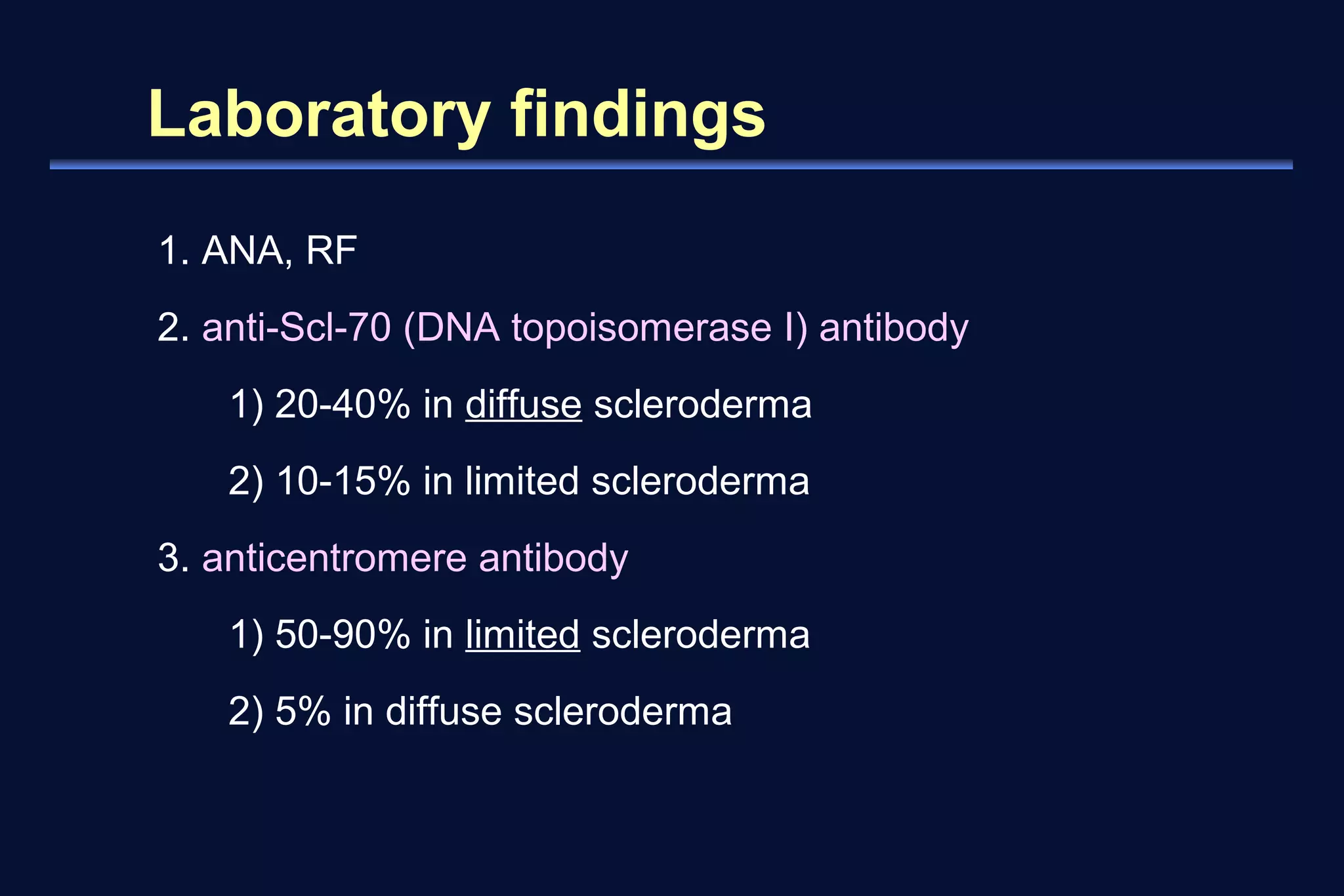
Laboratory findings 
1. ANA, RF 
2. anti-Scl-70 (DNA topoisomerase I) antibody 
1) 20-40% in diffuse scleroderma 
2) 10-15% in limited scleroderma 
3. anticentromere antibody 
1) 50-90% in limited scleroderma 
2) 5% in diffuse scleroderma
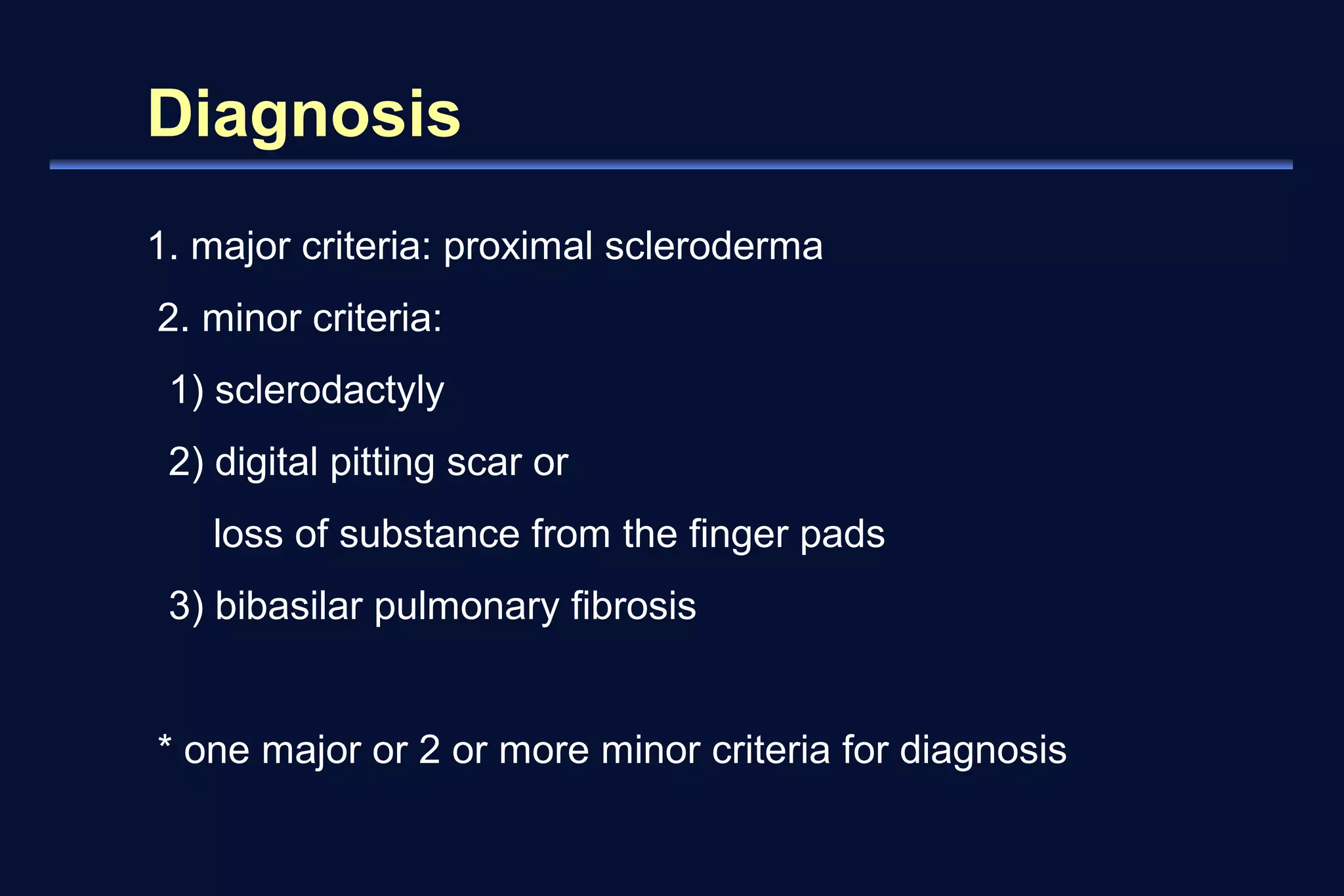
Diagnosis 
1. major criteria: proximal scleroderma 
2. minor criteria: 
1) sclerodactyly 
2) digital pitting scar or 
loss of substance from the finger pads 
3) bibasilar pulmonary fibrosis 
* one major or 2 or more minor criteria for diagnosis
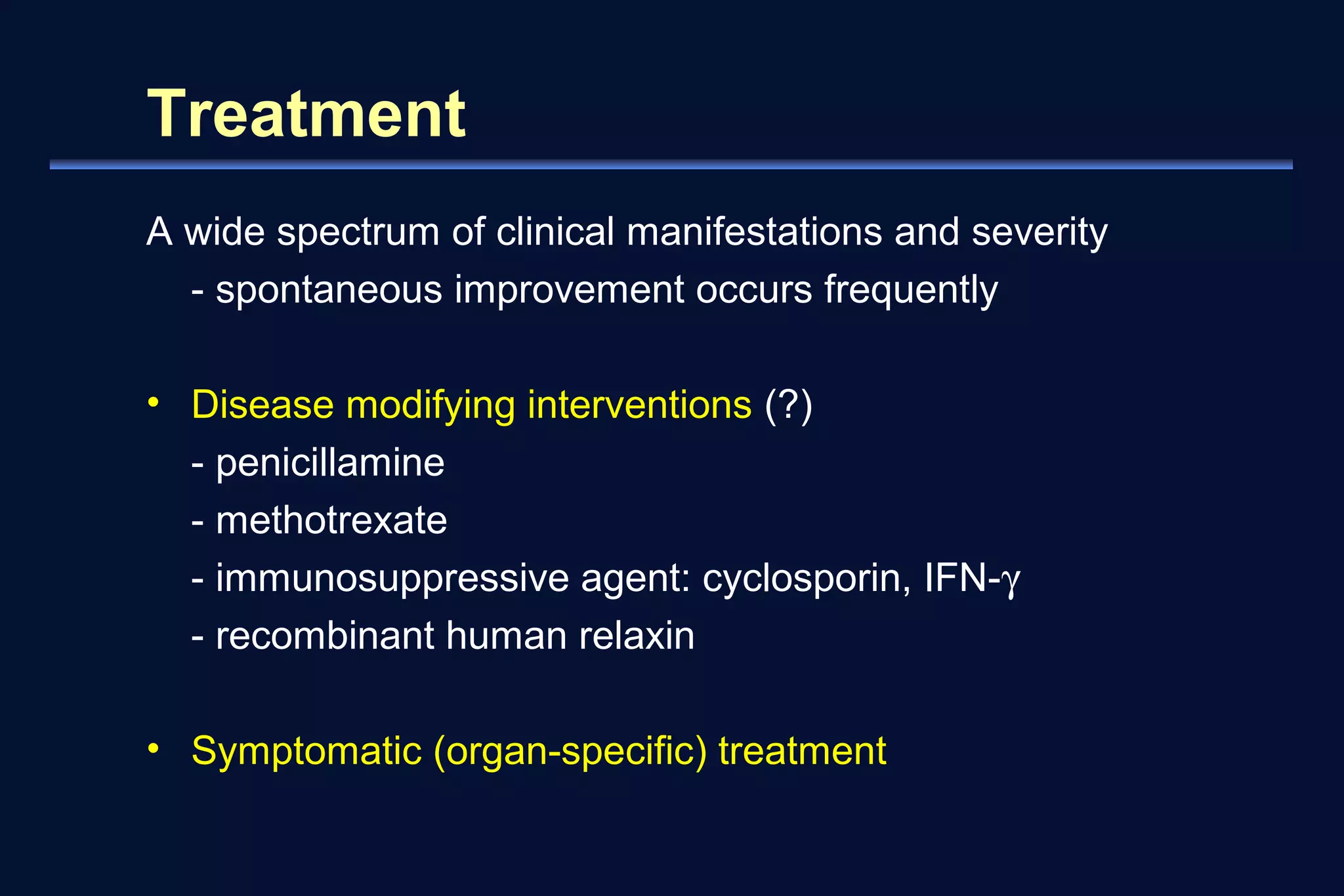
Treatment 
A wide spectrum of clinical manifestations and severity 
- spontaneous improvement occurs frequently 
• Disease modifying interventions (?) 
- penicillamine 
- methotrexate 
- immunosuppressive agent: cyclosporin, IFN-g 
- recombinant human relaxin 
• Symptomatic (organ-specific) treatment
Treatment 
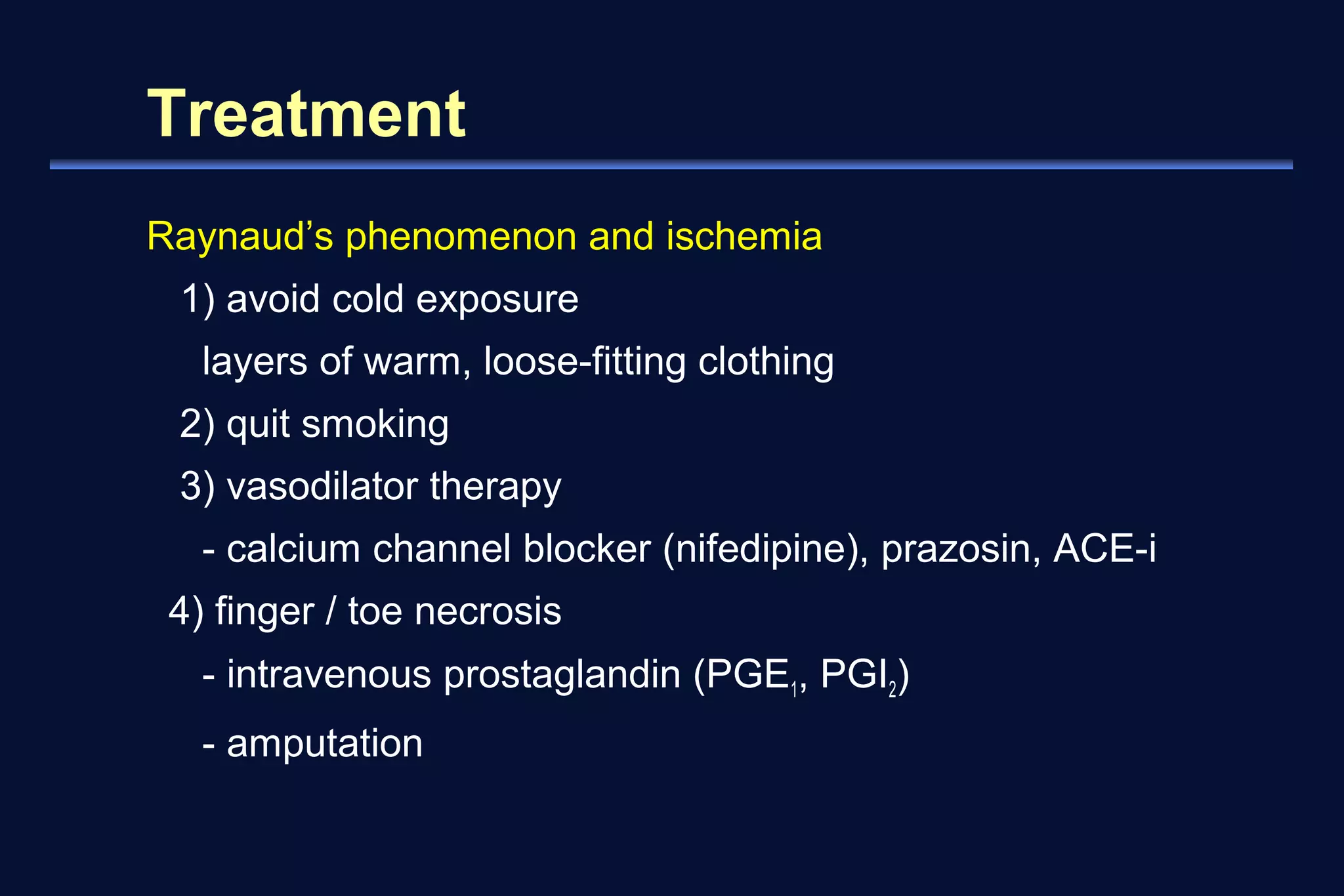
Raynaud’s phenomenon and ischemia 
1) avoid cold exposure 
layers of warm, loose-fitting clothing 
2) quit smoking 
3) vasodilator therapy 
- calcium channel blocker (nifedipine), prazosin, ACE-i 
4) finger / toe necrosis 
- intravenous prostaglandin (PGE1, PGI2) 
- amputation
Treatment 
Gastrointestinal 
1) reflux esophagitis and dysphagia 
- elevation of head of bed 
- small frequent meal 
- avoid lying down within 3-4 hours of eating 
- abstaining from caffeine-containing beverages, 
cigarette smoking 
- H2 blocker, proton-pump inhibitor 
2) gastroparesis: promotility agent (metoclopramide) 
3) malabsorption syndrome: broad spectrum antibiotics
Treatment 
Pulmonary 
1) Interstitial fibrosis 
- corticosteroid 
- cyclophosphamide, azathioprine 
2) pulmonary artery hypertension 
- calcium channel blocker 
- prostacyclin 
- transplantation
Treatment 
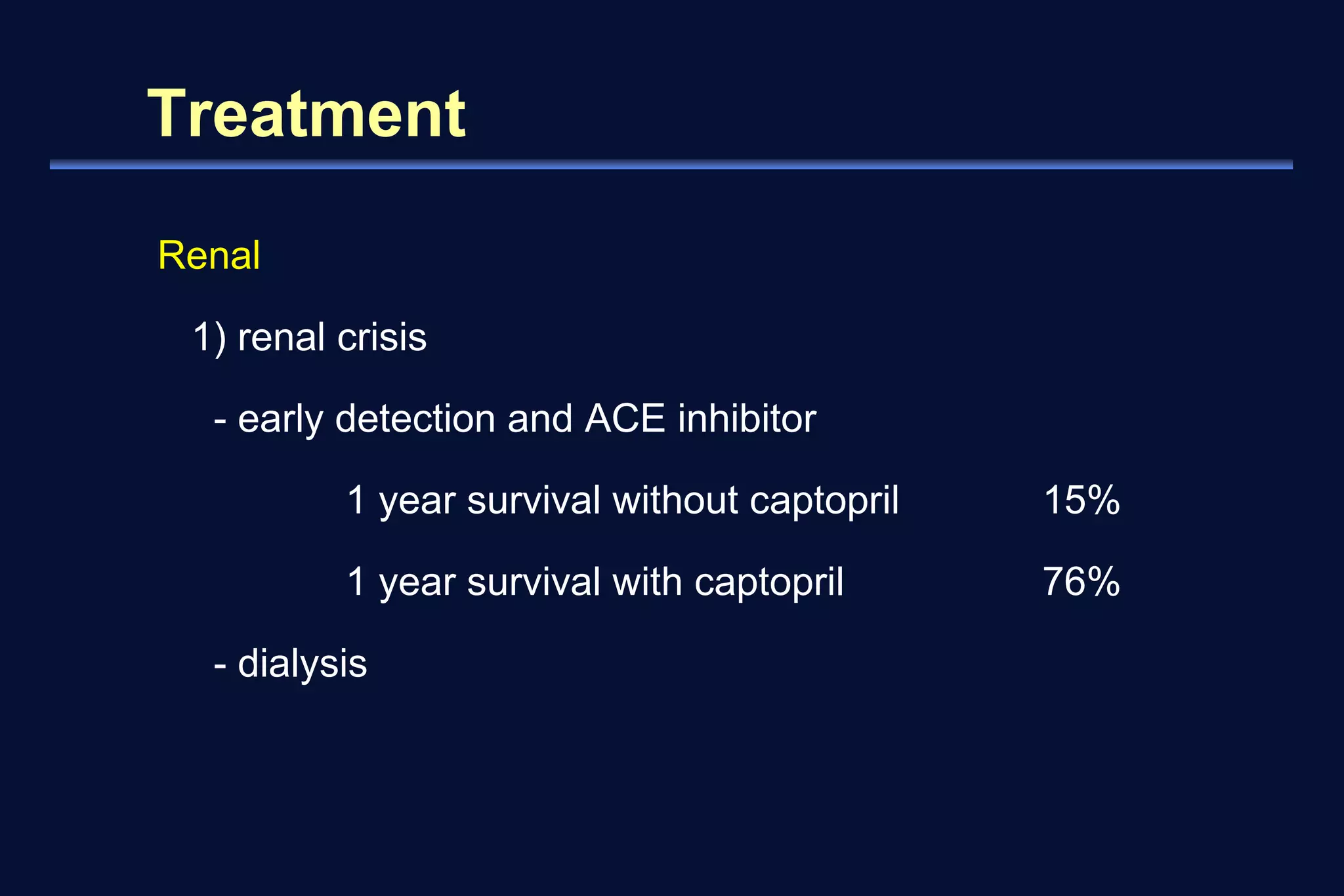
Renal 
1) renal crisis 
- early detection and ACE inhibitor 
1 year survival without captopril 15% 
1 year survival with captopril 76% 
- dialysis
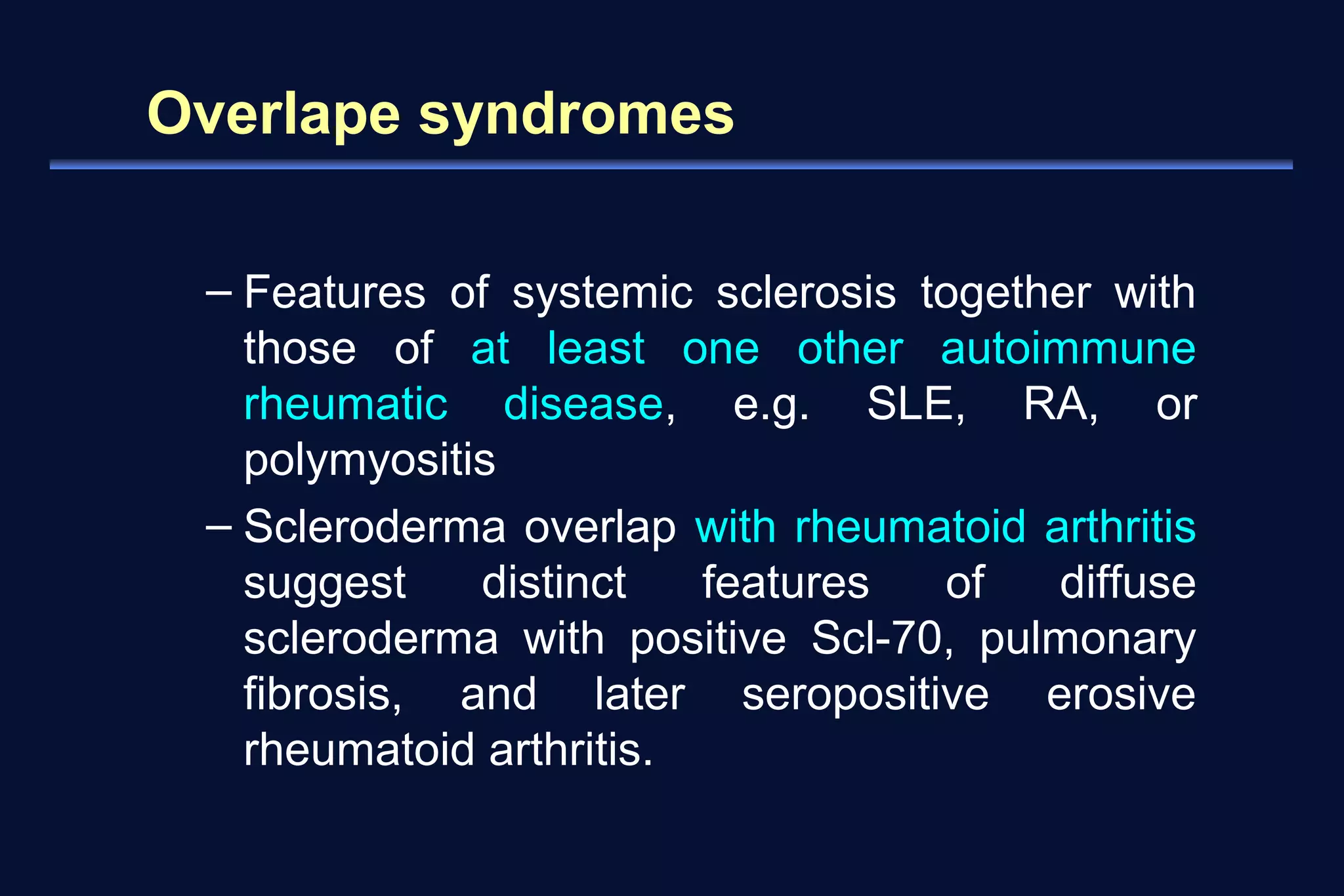
Overlape syndromes 
– Features of systemic sclerosis together with 
those of at least one other autoimmune 
rheumatic disease, e.g. SLE, RA, or 
polymyositis 
– Scleroderma overlap with rheumatoid arthritis 
suggest distinct features of diffuse 
scleroderma with positive Scl-70, pulmonary 
fibrosis, and later seropositive erosive 
rheumatoid arthritis.
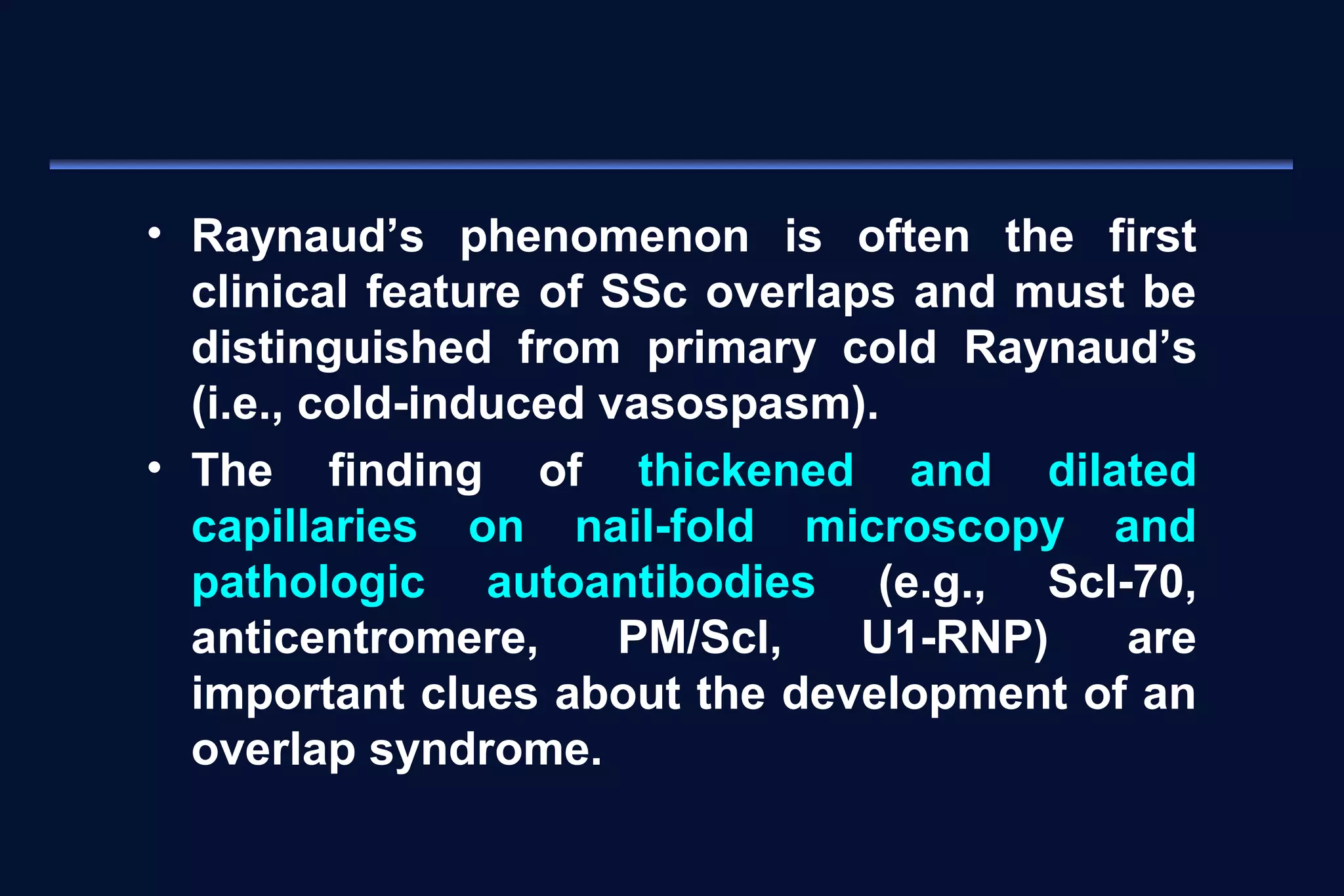
• Raynaud’s phenomenon is often the first 
clinical feature of SSc overlaps and must be 
distinguished from primary cold Raynaud’s 
(i.e., cold-induced vasospasm). 
• The finding of thickened and dilated 
capillaries on nail-fold microscopy and 
pathologic autoantibodies (e.g., Scl-70, 
anticentromere, PM/Scl, U1-RNP) are 
important clues about the development of an 
overlap syndrome.
• In many cases, these overlaps occur in patients 
who do not have prominent skin involvement 
(sine scleroderma) or with the limited form of 
the disease—CREST. 
• The limited form of scleroderma has well 
documented overlap with primary biliary cirrhosis 
often referred as Reynold’s syndrome.
Prognosis 
1. quite variable and difficult to predict 
2. cumulative survival 
diffuse limited 
5 yr 70% 90% 
10 yr 50% 70% 
3. major cause of death 
1) renal involvement 
2) cardiac involvement 
3) pulmonary involvement

Scleroderma

  • 1.
  • 2.
    Definition 1. Systemicsclerosis (scleroderma) a multisystem disorder characterized by 1) functional and structural abnormalities of blood vessels 2) fibrosis of the skin and internal organs 3) immune system activation 4) autoimmunity
  • 3.
    Epidemiology 1. Prevalence:4-12 new cases per million per year 2. Susceptibility: host factor 1) age - peak occurrence: age 35-65 years 2) gender - female : male = 3-12 : 1 3) genetic background
  • 4.
    Classification 1. Systemicsclerosis – Diffuse cutaneous systemic sclerosis – Limited cutaneous systemic sclerosis – Overlap syndromes 2. Localized scleroderma – Morphoea – Linear scleroderma • En coup de sabre
  • 5.
    Classification of systemicsclerosis 1. Diffuse cutaneous systemic sclerosis 1) proximal skin thickening - distal and proximal extremity and often the trunk and face 2) tendency to rapid progression of skin change 3) rapid onset of disease following Raynaud’s phenomenon 4) early appearance of visceral involvement 5) poor prognosis
  • 6.
    Classification of systemicsclerosis 2. Limited cutaneous systemic sclerosis 1) symmetric restricted fibrosis - affecting the distal extremities and face/neck 2) prolonged delay in appearance of distinctive internal manifestation 3) prominence of calcinosis and telangiectasia 4) good prognosis * CREST syndrome - calcinosis, Raynaud's phenomenon, esophageal dysmotility, sclerodactyly, telangiectasia
  • 7.
    Classification of systemicsclerosis Overlap syndromes – Features of systemic sclerosis together with those of at least one other autoimmune rheumatic disease, e.g. SLE, RA, or polymyositis.
  • 8.
    Etiology Environmental factors 1) silica dust 2) organic solvents 3) biogenic amines 4) urea formaldehyde 5) polyvinyl chloride 6) rapeseed oil 7) bleomycin 8) L-tryptophan 9) silicone implant (?) Genetic predisposition Defective immunoregulation 1) cell mediated immunity CD4/CD8 , cytokines 2) humoral immunity – hypergammaglobulinemia – autoantibody production – antinuclear antibody (+) > 95%
  • 9.
    Pathogenesis Susceptible host Exogenous events Immune system activation Endothelial cell Fibroblast activation activation/damage End stage pathology Obliterative vasculopathy Fibrosis
  • 10.
    Clinical features 1.Vascular abnormalities 1) Raynaud's phenomenon - cold hands and feet with reversible skin color change (white to blue to red) - induced by cold temperature or emotional stress - initial complaint in 3/4 of patients - 90% in patients with skin change (prevalence in the general population: 4-15%) 2) digital ischemic injury
  • 11.
  • 12.
  • 13.
    Telangiectasia • localdisruption of angiogenesis • blanched by pressure
  • 14.
    Clinical features 2.Skin involvement (1) 1) stage - edematous phase - indurative phase - atrophic phase 2) firm, thickened bound to underlying soft tissue 3) decrease in range of motion, loss of facial expression, inability to open mouth fully, contractures
  • 15.
  • 16.
  • 17.
  • 18.
    Facial changes Tight,thin lips wwiitthh vveerrttiiccaall ppeerriioorraall ffuurrrroowwss
  • 19.
    Thick skin offorearms (proximal scleroderma)
  • 20.
    Clinical features 2.Skin involvement (2) ulceration, loss of soft tissue of finger tip, pigmentation, calcific deposit, capillary change 3. Musculoskeletal system • Polyarthritis and flexion contracture • Muscle weakness and atrophy (primary /secondary)
  • 21.
  • 22.
  • 23.
  • 24.
  • 25.
  • 26.
  • 27.
  • 28.
    Clinical features 4.intestinal involvement 1) esophagus: hypomotility and retrosternal pain, reflux esophagitis, stricture 2) stomach: delayed emptying 3) small intestine: pseudo-obstruction, paralytic ileus, malabsorption, weight loss, cachexia 4) large intestine: chronic constipation and fecal impaction diverticula
  • 29.
    Clinical features 5.lungs 1) 2/3 of patients affected - leading cause of mortality and morbidity in later stage of systemic sclerosis 2) pathology - interstitial fibrosis - intimal thickening of pulmonary arterioles (pulmonary hypertension) 3) Complains - dry cough, breathlessness
  • 30.
  • 31.
    Clinical features 6.heart (10%) 1) pericarditis 2) heart failure 3) arrhythmia 4) myocardial fibrosis
  • 32.
    Clinical features 7.kidney 1) diffuse scleroderma in association with rapid progression of skin involvement 2) pathology - intimal hyperplasia of the interlobular artery - fibrinoid necrosis of afferent arterioles - glomerulosclerosis 3) proteinuria, abnormal sediment, azotemia, microangiopathic hemolytic anemia, renal failure
  • 33.
    Clinical features Exocrineglands – Xerostomia – xerophthalmia
  • 34.
    Laboratory findings 1.ANA, RF 2. anti-Scl-70 (DNA topoisomerase I) antibody 1) 20-40% in diffuse scleroderma 2) 10-15% in limited scleroderma 3. anticentromere antibody 1) 50-90% in limited scleroderma 2) 5% in diffuse scleroderma
  • 35.
    Diagnosis 1. majorcriteria: proximal scleroderma 2. minor criteria: 1) sclerodactyly 2) digital pitting scar or loss of substance from the finger pads 3) bibasilar pulmonary fibrosis * one major or 2 or more minor criteria for diagnosis
  • 36.
    Treatment A widespectrum of clinical manifestations and severity - spontaneous improvement occurs frequently • Disease modifying interventions (?) - penicillamine - methotrexate - immunosuppressive agent: cyclosporin, IFN-g - recombinant human relaxin • Symptomatic (organ-specific) treatment
  • 37.
    Treatment Raynaud’s phenomenonand ischemia 1) avoid cold exposure layers of warm, loose-fitting clothing 2) quit smoking 3) vasodilator therapy - calcium channel blocker (nifedipine), prazosin, ACE-i 4) finger / toe necrosis - intravenous prostaglandin (PGE1, PGI2) - amputation
  • 38.
    Treatment Gastrointestinal 1)reflux esophagitis and dysphagia - elevation of head of bed - small frequent meal - avoid lying down within 3-4 hours of eating - abstaining from caffeine-containing beverages, cigarette smoking - H2 blocker, proton-pump inhibitor 2) gastroparesis: promotility agent (metoclopramide) 3) malabsorption syndrome: broad spectrum antibiotics
  • 39.
    Treatment Pulmonary 1)Interstitial fibrosis - corticosteroid - cyclophosphamide, azathioprine 2) pulmonary artery hypertension - calcium channel blocker - prostacyclin - transplantation
  • 40.
    Treatment Renal 1)renal crisis - early detection and ACE inhibitor 1 year survival without captopril 15% 1 year survival with captopril 76% - dialysis
  • 41.
    Overlape syndromes –Features of systemic sclerosis together with those of at least one other autoimmune rheumatic disease, e.g. SLE, RA, or polymyositis – Scleroderma overlap with rheumatoid arthritis suggest distinct features of diffuse scleroderma with positive Scl-70, pulmonary fibrosis, and later seropositive erosive rheumatoid arthritis.
  • 42.
    • Raynaud’s phenomenonis often the first clinical feature of SSc overlaps and must be distinguished from primary cold Raynaud’s (i.e., cold-induced vasospasm). • The finding of thickened and dilated capillaries on nail-fold microscopy and pathologic autoantibodies (e.g., Scl-70, anticentromere, PM/Scl, U1-RNP) are important clues about the development of an overlap syndrome.
  • 43.
    • In manycases, these overlaps occur in patients who do not have prominent skin involvement (sine scleroderma) or with the limited form of the disease—CREST. • The limited form of scleroderma has well documented overlap with primary biliary cirrhosis often referred as Reynold’s syndrome.
  • 44.
    Prognosis 1. quitevariable and difficult to predict 2. cumulative survival diffuse limited 5 yr 70% 90% 10 yr 50% 70% 3. major cause of death 1) renal involvement 2) cardiac involvement 3) pulmonary involvement