DR VARUN K
PG GASTROENTEROLOGY










Definition
Pain pathway
Types of pain
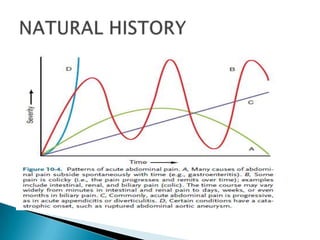
Natural history
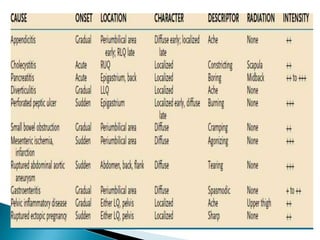
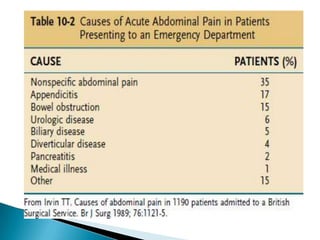
Causes of pain abdomen
Clinical case scenarios
Management
Conclusion



Pain less than one week duration.
Abdominal pain is the presenting complaint in 1.5
percent of office-based visits and in 5 percent of
emergency department visits.



Annual incidence approx. 63/1000 ED visits.



Admission rate varies (high as 63% in pts > 65 yrs
old.)



1.Woodwell DA, Cherry DK. National Ambulatory Medical Care Survey: 2002 summar. Adv Data.
. 2004;(346):1–44.



2. Kamin RA, Nowicki TA, Courtney DS, Powers RD. Pearls and pitfalls in the emergency
department evaluation of abdominal pain. Emerg Med Clin North Am. 2003;21(1):61–72


Three types of pain exist:
1. Visceral
2. Parietal
3. Referred








Visceral pain is transmitted by C fibers.
Involves hollow or solid organs; midline pain
due to bilateral innvervation
Steady ache or vague discomfort to
excruciating or colicky pain
Poorly localized
Secondary autonomic symptoms present.






Abdominal visceral nocioceptors respond to
mechanical and chemical stimuli.
The principal mechanical signal to which
visceral nocioceptors are sensitive is stretch.
Chemical nocioceptors are activated by
substances released in response to
inflammation and injury.






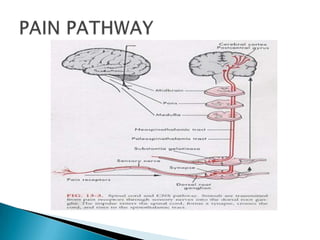
Somatic-parietal pain is mediated by A-δ
fibers that are distributed principally to skin
and muscle.
Signals from this neural pathway are
perceived as sharp, sudden, well localized
pain, such as that which follows an acute
injury.
These fibers convey pain sensations through
spinal nerves.




Stimulation of these fibers activates local
regulatory reflexes mediated by the enteric
nervous system and long spinal reflexes
mediated by the autonomic nervous system,
in addition to transmitting pain sensation to
the central nervous system.
Reflexive responses, such as involuntary
guarding and abdominal rigidity, are
mediated by spinal reflex arcs involving
somatic-parietal pain pathways.






Somatic A-d fibers mediate touch, vibration, and
proprioception in a dermatomal distribution that
matches the visceral innervation of the injured
viscera and synapse with inhibitory interneurons
of the substantia gelatinosa in the spinal cord.
In addition, inhibitory neurons that originate in
the mesencephalon, periventricular gray matter,
and caudate nucleus descend within the spinal
cord to modulate afferent pain pathways.
These inhibitory mechanisms allow cerebral
influences to modify afferent pain impulses.


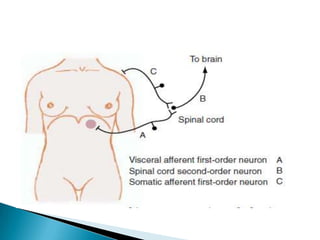
Referred pain is felt in areas remote from the
diseased organs and results when visceral
afferent neurons and somatic afferent
neurons from a different anatomic region
converge on second-order neurons in the
spinal cord at the same spinal segment.





Subdiaphragmatic irritation → ipsilateral
shoulder or supraclavicular pain(kehr’s sign).
Biliary disease → right infrascapular pain
MI → epigastric, neck, jaw or upper extremity
pain
















Gastritis
Acute Gastroenteritis
Hepatic abscess
Rectal sheath hematoma
Herpes Zoster
UTI
Tabes dorsalis
Sickle cell disease
Diabetes Mellitus
Thyrotoxicosis
Addisonians disease
Poryphyria
Hereditary Spherocytosis
Acute appendicitis
Acute diverticulitis
Acute pancreatitis
Acute cholecystitis
Intestinal obstruction
Billiary colic
Ureteric colic
Acute retention of urine
Perforation of peptic ulcer
Perforation of appendix
Ruptured AAA
Perforated oesophgagus










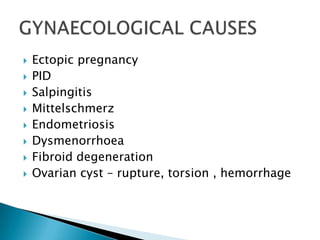
Ectopic pregnancy
PID
Salpingitis
Mittelschmerz
Endometriosis
Dysmenorrhoea
Fibroid degeneration
Ovarian cyst – rupture, torsion , hemorrhage


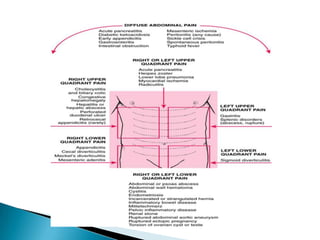
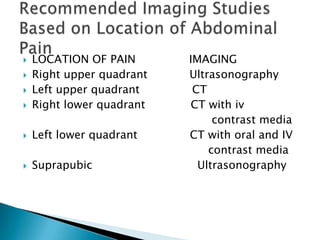
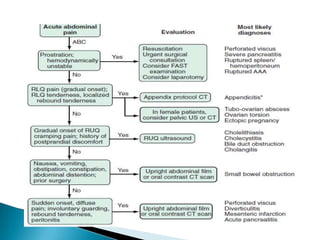
LOCATION OF PAIN
Right upper quadrant
Left upper quadrant
Right lower quadrant



Left lower quadrant



Suprapubic





IMAGING
Ultrasonography
CT
CT with iv
contrast media
CT with oral and IV
contrast media
Ultrasonography












24 year healthy male with one day history of
abdominal pain.
Pain was generalized at first, now worse in right lower
abd & radiates to his right groin.
He has vomited twice today. Denies any diarrhea,
fevers, dysuria or other complaints. No appetite
today.
ROS otherwise negative.
PMHx: negative
PSurgHx: negative
Meds: none
Social hx: no alcohol, tobacco or drug use
Family hx: non-contributory








Physical exam:
T: 37.8, HR: 95, BP 118/76, R: 18, O2 sat:
100% room air
Uncomfortable appearing, slightly pale
Abdomen: soft, non-distended, tender to
palpation in RLQ with mild guarding;
hypoactive bowel sounds
Genital exam: normal







Classic presentation
Periumbilical pain
Anorexia, nausea, vomiting
Pain localizes to RLQ
Occurs only in ½ to 2/3 of patients
26% of appendices are retrocecal and cause pain
in the flank; 4% are in the RUQ
A pelvic appendix can cause suprapubic pain,
dysuria
Males may have pain in the testicles
Addiss DG, Shaffer N, Fowler B, Tauxe RV. The epidemiology of appendicitis and appendectomy
in the United States. Am J Epidemiol 1990; 132:910-25. (Ref 21.)









Depends on duration of symptoms
Rebound, voluntary guarding, rigidity,
tenderness on rectal exam
Fever (a late finding)
Urinalysis abnormal in 19-40%
CBC is not sensitive or specific
Addiss DG, Shaffer N, Fowler B, Tauxe RV. The epidemiology of appendicitis and appendectomy
in the United States. Am J Epidemiol 1990; 132:910-25. (Ref 21.)
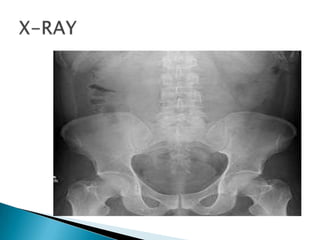
Abdominal xrays
Appendiceal fecolith or gas, localized
ileus, blurred right psoas muscle, free air
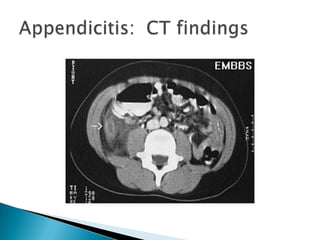
 CT scan
Pericecal inflammation, abscess,
periappendiceal phlegmon, fluid
collection, localized fat stranding







NPO
IVFs
Preoperative antibiotics – decrease the
incidence of postoperative wound infections
Analgesia






Alvarado Score is numerical, it has been
evaluated for ruling in and ruling out
appendicitis.
Studies ruling out appendicitis (using Alvarado <
3-4) have a sensitivity of 96%; studies ruling in
appendicitis (using Alvarado > 6-7) have a
sensitivity of 58-88%, depending on the study
and score cutoffs used.
The 2007 McKay study recommends CT scan for
Alvarado 4-6, surgical consultation for Alvarado
≥ 7, and for Alvarado ≤ 3, no CT for diagnosing
appendicitis, as appendicitis is unlikely


68 yo F with 2 days of LLQ abd pain,
constipation, fevers/chills, nausea; vomited once
at home.



PMHx: HTN, diverticulosis



PSurgHx: negative



Meds: HCTZ



Social hx: no alcohol, tobacco or drug use






T: 37.6, HR: 100, BP: 145/90, R: 19, O2sat:
99% room air
Gen: uncomfortable appearing, slightly pale
Abd: soft, moderately tender LLQ
Rectal: normal tone, guiac neg brown stool








FINDINGS:
Steady, deep discomfort in LLQ
Change in bowel habits
Urinary symptoms
Tenesmus
Paralytic ileus








Low-grade fever
Localized tenderness
Rebound and guarding
Left-sided pain on rectal exam
Occult blood
Peritoneal signs-Suggest perforation or
abscess rupture




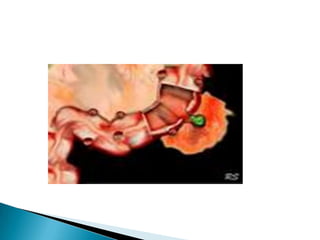
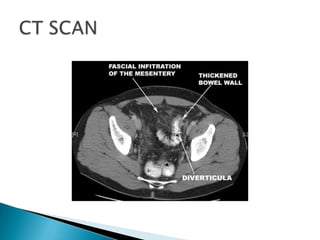
CT scan (IV and oral contrast)
Pericolic fat stranding
Diverticula
Thickened bowel wall
Peridiverticular abscess
Leukocytosis present in only 36% of patients








Hinchey grade I diverticulitis :localized
pericolic abscess or inflammation frequently
Hinchey grade II diverticulitis: pelvic,
intraabdominal, or retroperitoneal abscess.
Hinchey III :generalized purulent peritonitis
Hinchey IV generalized fecal peritonitis.




Fluids
Correct electrolyte abnormalities
Antibiotics.







46 yo M with hx of alcohol abuse with 3 days
of severe boring upper abd pain radiating to
back relieved on leaning forward , vomiting,
subjective fevers.
Med Hx: negative
Surg Hx: negative
Meds: none;
Social hx: heavy alcohol use, smokes 2ppd,
no drug use










Vital signs: T: 37.4, HR: 115, BP: 98/65, R:
22, O2sat: 95% room air
General: ill-appearing, appears in pain
CV: tachycardic, normal heart sounds, pulses
normal
Lungs: clear
Abdomen: mildly distended, moderately TTP
epigastric, +voluntary guarding
Rectal: heme neg stool






CLINICAL FEATURES
Epigastric pain -Constant, boring
pain,Radiates to back.
Vomiting.
Fever.







Patients are usually tachycardic and
tachypneic.
Abdominal examination reveals hypoactive
bowel sounds and marked tenderness to
percussion and palpation in the epigastrium.
Abdominal rigidity is a variable finding.
In rare patients, flank or periumbilical
ecchymoses (Grey-Turner’s or Cullen’s sign,
respectively) develop in the setting of
pancreatic necrosis with hemorrhage.







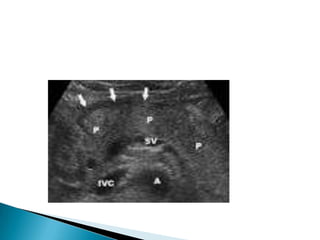
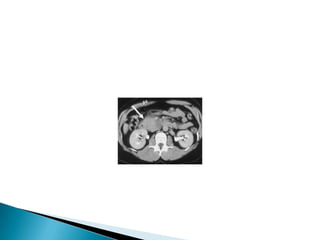
Lipase -Elevated more than 3 times normal
;Sensitivity and specificity >90%
Amylase-Nonspecific
USG abdomen if etiology unknown
CT scan-Useful to evaluate for complications






NPO
IV fluid resuscitation
Maintain urine output of 100 mL/hr
NGT if severe, persistent nausea
No antibiotics unless severe disease







72 yo M with hx of CAD on aspirin and Plavix
with several days of dull upper abd pain and
now with worsening pain “in entire abdomen”
today. Some relief with food until today, now
worse after eating lunch.
Med Hx: CAD, HTN, CHF
Surg Hx: appendectomy
Meds: Aspirin, Plavix, Metoprolol, Lasix
Social hx: smokes 1ppd, denies alcohol or
drug use, lives alone
CLINICAL FEATURES
 Burning epigastric pain leading to sudden
onset severe diffuse abdominal pain
 Epigastric tenderness
 Severe, generalized pain may indicate
perforation with peritonitis
 Occult or gross blood per rectum or NGT if
bleeding.





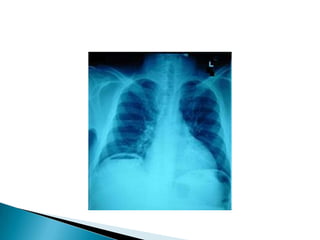
Acute abdominal x-ray series -Lack of free
air does not rule out perforation
Broad-spectrum antibiotics
Surgical consultation









35 yo healthy F to ED c/o nausea and vomiting
since yesterday along with generalized
abdominal pain ,cramping in nature more in the
periumbilical area not radiating
No fevers/chills, +anorexia. Last stool 2 days
ago.
Med Hx: negative
Surg Hx: s/p hysterectomy (for fibroids)
Social Hx: denies alcohol, tobacco or drug use
Family Hx: non-contributory








Crampy, intermittent pain
Periumbilical or diffuse
Inability to have BM or flatus
Nausea and vomiting
Abdominal bloating
Sensation of fullness, anorexia






Distention
Tympany
Absent, high pitched or tinkling bowel sound
or “rushes”
Abdominal tenderness: diffuse, localized, or
minimal








CBC and electrolytes
electrolyte abnormalities
WBC >20,000 suggests bowel necrosis,
abscess or peritonitis
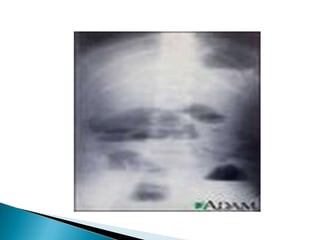
Abdominal x-ray series-Air-fluid levels,
dilated loops of bowel,Lack of gas in distal
bowel and rectum
CT scan-Identify cause of obstruction,
Delineate partial from complete obstruction





Fluid resuscitation
NGT
Analgesia
Hospital observation for ileus or for complete
obstruction







48 yo obese F with one day hx of upper abd
pain after eating, does not radiate, is
intermittent cramping pain, +N/V, no
diarrhea, subjective fevers. No prior similar
symptoms.
Med hx: denies
Surg hx: denies
No meds or allergies
Social hx: no alcohol, tobacco or drug use








T: 100.4, HR: 96, BP: 135/76, R: 18, O2 sat:
100% room air
General: moderately obese, no acute distress
CV: normal
Lungs: clear
Abd: moderately tender RUQ, +Murphy’s
sign, non-distended, normal bowel sounds








RUQ or epigastric pain
Radiation to the back or shoulders
Dull and achy
Pain lasting longer than 6 hours
Nausea,Vomiting,anorexia
Fever, chills.




Epigastric or RUQ pain
Murphy’s sign
Peritoneal signs suggest perforation




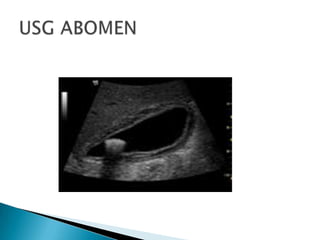
RUQ US
Thicken gallbladder wall
Pericholecystic fluid
Gallstones or sludge
Sonographic murphy sign
HIDA scan-more sensitive & specific than US








Surgical consult
IV fluids
Correct electrolyte abnormalities
Analgesia
Antibiotics
NGT if intractable vomiting







Sudden onset of acute, severe abdominal pain
localized to the midabdomen or paravertebral or
flank areas.
The pain is tearing in nature and associated with
prostration,lightheadedness, and diaphoresis.

Physical examination reveals a pulsatile, tender
abdominal mass in about 90% of cases.
The classic triad of hypotension, a pulsatile
mass, and abdominal pain is present in 75% of
cases and mandates immediate surgical
intervention.








Consider this diagnosis in all elderly patients
with risk factors Atrial fibrillation, recent
MI,Atherosclerosis, CHF, digoxin therapy
Hypercoagulability, prior DVT, liver disease.
Severe pain, often refractory to analgesics
Relatively normal abdominal exam
Embolic source: sudden onset (more gradual
if thrombosis)
Nausea, vomiting and anorexia are common






50% will have diarrhea
Eventually stools will be guiaic-positive
Metabolic acidosis and extreme leukocytosis
when advanced disease is present (bowel
necrosis)
Diagnosis requires mesenteric angiography or
CT angiography




It is defined as pathologic elevation of
intraabdominal pressure.
An elevated intra-abdominal pressure may
develop in a patient who survives massive
volume resuscitation with resulting visceral
edema or who has a disease such as severe
pancreatitis that can cause visceral or
retroperitoneal edema.









The World Society for Abdominal Compartment
Syndrome has established a consensus grading
scheme for ACS based on the measured bladder
pressure.
A normal value for bladder pressure is less than
7 mm Hg.
Grade I ACS is defined as a pressure of 12 to 15
mm Hg.
Grade II as 16 to 20 mm Hg,
Grade III as 21 to 25 mm Hg and
Grade IV as greater than 25 mm Hg.

An G, West M. Abdominal compartment syndrome: A concise clinical review. Crit
Care Med 2008; 36:1304-10




Nonsurgical options for treating low-grade
ACS include gastric decompression, sedation,
neuromuscular blockade, placing the patient
in a reverse Trendelenburg position while
allowing the hips to remain in a neutral
position, and diuretics.
In a patient with high grade ACS, particularly
when renal and respiratory function is
compromised, laparotomy and creation of an
open abdomen is most effective.





Mortality rate for abdominal pain in the
elderly is 11-14%
Perception of pain is altered
Altered reporting of pain: stoicism, fear,
communication problems













Most common causes:
Cholecystitis
Appendicitis
Bowel obstruction
Diverticulitis
Perforated peptic ulcer
Don’t miss these:
AAA, ruptured AAA
Mesenteric ischemia
Myocardial ischemia
Aortic dissection










Appendicitis – do not exclude it because of prolonged
symptoms. Only 20% will have fever, N/V, RLQ pain
and ↑WBC
Acute cholecystitis – most common surgical
emergency in the elderly.
Perforated peptic ulcer – only 50% report a sudden
onset of pain. In one series, missed diagnosis of PPU
was leading cause of death.
Mesenteric ischemia – we make the diagnosis only
25% of the time. Early diagnosis improves chances of
survival. Overall survival is 30%.
Increased frequency of abdominal aortic aneurysms
AAA may look like renal colic in elderly patients




Pregnant women develop acute appendicitis
and cholecystitis at the same rate as their
nonpregnant counterparts.
A number of additional diagnoses, such as
placental abruption and pain related to
tension on the broad ligament, must be
distinguished from nonobstetric diagnoses.






Appendicitis occurs in approximately 1 in
2000 pregnancies and is equally distributed
among the three trimesters.
Biliary tract disease is also common during
pregnancy.
Open or laparoscopic management of these
diseases is safe but is associated with a rate
of preterm delivery of approximately 12% for
appendectomy and 11% for cholecystectomy.


Immunocompromised hosts may manifest
with acute abdominal pain, including
neutropenic enterocolitis, drug-induced
pancreatitis, graft-versus-host disease,
pneumatosis intestinalis, and
cytomegalovirus (CMV) and fungal infections.


In general, immunocompromised patients
may lack the definitive signs of an acute
abdominal crisis usually seen in
immunocompetent persons; an elevated
temperature, peritoneal signs, and
leukocytosis may be absent in these cases.






Acetaminophen
Non-steroidal anti-inflammatory drugs
(NSAIDs)
Opioids
Treatment of cause.






In order to obtain the best therapeutic effect
while minimising side effects, many analgesic
drugs require careful titration and
individualisation of dose regimens.
Multimodal analgesia (that is, the concurrent use
of different classes of analgesics) improves the
effectiveness of acute pain management.
Drug administration can be by oral,
subcutaneous, intramuscular, intravenous,
epidural, intrathecal, inhalational, rectal,
transdermal or transmucosal routes


Some specialised analgesia delivery
techniques require greater medical and
nursing knowledge and expertise like
Patient-controlled analgesia, Epidural and
intrathecal analgesia ,Other regional
analgesic procedures, Continuous infusions
of opioids, local anaesthetics, ketamine and
other drugs.






NON-PHARMACOLOGICAL THERAPIES
Non-pharmacological therapies must be
considered as complementary to
pharmacological therapies.
Psychological interventions, acupuncture,
transcutaneous electrical nerve stimulation
and physical therapy may be effective in
some acute pain settings.




Sir Zachary Cope stated that “Morphine does
little or nothing to stop serious intraabdominal disease, but it puts an efficient
screen in front of the symptoms.
Six studies in which the early administration
of analgesia was compared with
administration of placebo in patients with
acute abdominal pain have shown that the
patients who receive analgesics are more
comfortable and do not experience a delay in
diagnosis.









Significant abdominal tenderness should never
be attributed to gastroenteritis
Incidence of gastroenteritis in the elderly is very
low
Always perform genital examinations when lower
abdominal pain is present – in males and
females, in young and old
In older patients with renal colic symptoms,
exclude AAA
Severe pain should be taken as an indicator of
serious disease
Pain awakening the patient from sleep should
always be considered signficant









Sudden severe pain suggests serious disease
Pain almost always precedes vomiting in surgical
causes; converse is true for most gastroenteritis
and NSAP
Acute cholecystitis is the most common surgical
emergency in the elderly
A lack of free air on a chest xray does NOT rule
out perforation
Signs and symptoms of PUD, gastritis, reflux and
nonspecific dyspepsia have significant overlap
If the pain of biliary colic lasts more than 6
hours, suspect early cholecystitis
THANK YOU

Acute pain abdomen

  • 1.
    DR VARUN K PGGASTROENTEROLOGY
  • 2.
            Definition Pain pathway Types ofpain Natural history Causes of pain abdomen Clinical case scenarios Management Conclusion
  • 3.
      Pain less thanone week duration. Abdominal pain is the presenting complaint in 1.5 percent of office-based visits and in 5 percent of emergency department visits.  Annual incidence approx. 63/1000 ED visits.  Admission rate varies (high as 63% in pts > 65 yrs old.)  1.Woodwell DA, Cherry DK. National Ambulatory Medical Care Survey: 2002 summar. Adv Data. . 2004;(346):1–44.  2. Kamin RA, Nowicki TA, Courtney DS, Powers RD. Pearls and pitfalls in the emergency department evaluation of abdominal pain. Emerg Med Clin North Am. 2003;21(1):61–72
  • 5.
     Three types ofpain exist: 1. Visceral 2. Parietal 3. Referred
  • 6.
         Visceral pain istransmitted by C fibers. Involves hollow or solid organs; midline pain due to bilateral innvervation Steady ache or vague discomfort to excruciating or colicky pain Poorly localized Secondary autonomic symptoms present.
  • 7.
       Abdominal visceral nocioceptorsrespond to mechanical and chemical stimuli. The principal mechanical signal to which visceral nocioceptors are sensitive is stretch. Chemical nocioceptors are activated by substances released in response to inflammation and injury.
  • 8.
       Somatic-parietal pain ismediated by A-δ fibers that are distributed principally to skin and muscle. Signals from this neural pathway are perceived as sharp, sudden, well localized pain, such as that which follows an acute injury. These fibers convey pain sensations through spinal nerves.
  • 9.
      Stimulation of thesefibers activates local regulatory reflexes mediated by the enteric nervous system and long spinal reflexes mediated by the autonomic nervous system, in addition to transmitting pain sensation to the central nervous system. Reflexive responses, such as involuntary guarding and abdominal rigidity, are mediated by spinal reflex arcs involving somatic-parietal pain pathways.
  • 10.
       Somatic A-d fibersmediate touch, vibration, and proprioception in a dermatomal distribution that matches the visceral innervation of the injured viscera and synapse with inhibitory interneurons of the substantia gelatinosa in the spinal cord. In addition, inhibitory neurons that originate in the mesencephalon, periventricular gray matter, and caudate nucleus descend within the spinal cord to modulate afferent pain pathways. These inhibitory mechanisms allow cerebral influences to modify afferent pain impulses.
  • 11.
     Referred pain isfelt in areas remote from the diseased organs and results when visceral afferent neurons and somatic afferent neurons from a different anatomic region converge on second-order neurons in the spinal cord at the same spinal segment.
  • 13.
       Subdiaphragmatic irritation →ipsilateral shoulder or supraclavicular pain(kehr’s sign). Biliary disease → right infrascapular pain MI → epigastric, neck, jaw or upper extremity pain
  • 15.
                 Gastritis Acute Gastroenteritis Hepatic abscess Rectalsheath hematoma Herpes Zoster UTI Tabes dorsalis Sickle cell disease Diabetes Mellitus Thyrotoxicosis Addisonians disease Poryphyria Hereditary Spherocytosis
  • 16.
    Acute appendicitis Acute diverticulitis Acutepancreatitis Acute cholecystitis Intestinal obstruction Billiary colic Ureteric colic Acute retention of urine Perforation of peptic ulcer Perforation of appendix Ruptured AAA Perforated oesophgagus
  • 17.
  • 21.
     LOCATION OF PAIN Rightupper quadrant Left upper quadrant Right lower quadrant  Left lower quadrant  Suprapubic    IMAGING Ultrasonography CT CT with iv contrast media CT with oral and IV contrast media Ultrasonography
  • 22.
             24 year healthymale with one day history of abdominal pain. Pain was generalized at first, now worse in right lower abd & radiates to his right groin. He has vomited twice today. Denies any diarrhea, fevers, dysuria or other complaints. No appetite today. ROS otherwise negative. PMHx: negative PSurgHx: negative Meds: none Social hx: no alcohol, tobacco or drug use Family hx: non-contributory
  • 23.
         Physical exam: T: 37.8,HR: 95, BP 118/76, R: 18, O2 sat: 100% room air Uncomfortable appearing, slightly pale Abdomen: soft, non-distended, tender to palpation in RLQ with mild guarding; hypoactive bowel sounds Genital exam: normal
  • 24.
         Classic presentation Periumbilical pain Anorexia,nausea, vomiting Pain localizes to RLQ Occurs only in ½ to 2/3 of patients 26% of appendices are retrocecal and cause pain in the flank; 4% are in the RUQ A pelvic appendix can cause suprapubic pain, dysuria Males may have pain in the testicles Addiss DG, Shaffer N, Fowler B, Tauxe RV. The epidemiology of appendicitis and appendectomy in the United States. Am J Epidemiol 1990; 132:910-25. (Ref 21.)
  • 25.
          Depends on durationof symptoms Rebound, voluntary guarding, rigidity, tenderness on rectal exam Fever (a late finding) Urinalysis abnormal in 19-40% CBC is not sensitive or specific Addiss DG, Shaffer N, Fowler B, Tauxe RV. The epidemiology of appendicitis and appendectomy in the United States. Am J Epidemiol 1990; 132:910-25. (Ref 21.)
  • 26.
    Abdominal xrays Appendiceal fecolithor gas, localized ileus, blurred right psoas muscle, free air  CT scan Pericecal inflammation, abscess, periappendiceal phlegmon, fluid collection, localized fat stranding 
  • 29.
        NPO IVFs Preoperative antibiotics –decrease the incidence of postoperative wound infections Analgesia
  • 30.
       Alvarado Score isnumerical, it has been evaluated for ruling in and ruling out appendicitis. Studies ruling out appendicitis (using Alvarado < 3-4) have a sensitivity of 96%; studies ruling in appendicitis (using Alvarado > 6-7) have a sensitivity of 58-88%, depending on the study and score cutoffs used. The 2007 McKay study recommends CT scan for Alvarado 4-6, surgical consultation for Alvarado ≥ 7, and for Alvarado ≤ 3, no CT for diagnosing appendicitis, as appendicitis is unlikely
  • 31.
     68 yo Fwith 2 days of LLQ abd pain, constipation, fevers/chills, nausea; vomited once at home.  PMHx: HTN, diverticulosis  PSurgHx: negative  Meds: HCTZ  Social hx: no alcohol, tobacco or drug use
  • 32.
        T: 37.6, HR:100, BP: 145/90, R: 19, O2sat: 99% room air Gen: uncomfortable appearing, slightly pale Abd: soft, moderately tender LLQ Rectal: normal tone, guiac neg brown stool
  • 33.
          FINDINGS: Steady, deep discomfortin LLQ Change in bowel habits Urinary symptoms Tenesmus Paralytic ileus
  • 34.
          Low-grade fever Localized tenderness Reboundand guarding Left-sided pain on rectal exam Occult blood Peritoneal signs-Suggest perforation or abscess rupture
  • 36.
      CT scan (IVand oral contrast) Pericolic fat stranding Diverticula Thickened bowel wall Peridiverticular abscess Leukocytosis present in only 36% of patients
  • 37.
        Hinchey grade Idiverticulitis :localized pericolic abscess or inflammation frequently Hinchey grade II diverticulitis: pelvic, intraabdominal, or retroperitoneal abscess. Hinchey III :generalized purulent peritonitis Hinchey IV generalized fecal peritonitis.
  • 39.
  • 40.
         46 yo Mwith hx of alcohol abuse with 3 days of severe boring upper abd pain radiating to back relieved on leaning forward , vomiting, subjective fevers. Med Hx: negative Surg Hx: negative Meds: none; Social hx: heavy alcohol use, smokes 2ppd, no drug use
  • 41.
          Vital signs: T:37.4, HR: 115, BP: 98/65, R: 22, O2sat: 95% room air General: ill-appearing, appears in pain CV: tachycardic, normal heart sounds, pulses normal Lungs: clear Abdomen: mildly distended, moderately TTP epigastric, +voluntary guarding Rectal: heme neg stool
  • 42.
        CLINICAL FEATURES Epigastric pain-Constant, boring pain,Radiates to back. Vomiting. Fever.
  • 43.
        Patients are usuallytachycardic and tachypneic. Abdominal examination reveals hypoactive bowel sounds and marked tenderness to percussion and palpation in the epigastrium. Abdominal rigidity is a variable finding. In rare patients, flank or periumbilical ecchymoses (Grey-Turner’s or Cullen’s sign, respectively) develop in the setting of pancreatic necrosis with hemorrhage.
  • 44.
        Lipase -Elevated morethan 3 times normal ;Sensitivity and specificity >90% Amylase-Nonspecific USG abdomen if etiology unknown CT scan-Useful to evaluate for complications
  • 47.
         NPO IV fluid resuscitation Maintainurine output of 100 mL/hr NGT if severe, persistent nausea No antibiotics unless severe disease
  • 48.
         72 yo Mwith hx of CAD on aspirin and Plavix with several days of dull upper abd pain and now with worsening pain “in entire abdomen” today. Some relief with food until today, now worse after eating lunch. Med Hx: CAD, HTN, CHF Surg Hx: appendectomy Meds: Aspirin, Plavix, Metoprolol, Lasix Social hx: smokes 1ppd, denies alcohol or drug use, lives alone
  • 50.
    CLINICAL FEATURES  Burningepigastric pain leading to sudden onset severe diffuse abdominal pain  Epigastric tenderness  Severe, generalized pain may indicate perforation with peritonitis  Occult or gross blood per rectum or NGT if bleeding.
  • 51.
       Acute abdominal x-rayseries -Lack of free air does not rule out perforation Broad-spectrum antibiotics Surgical consultation
  • 52.
          35 yo healthyF to ED c/o nausea and vomiting since yesterday along with generalized abdominal pain ,cramping in nature more in the periumbilical area not radiating No fevers/chills, +anorexia. Last stool 2 days ago. Med Hx: negative Surg Hx: s/p hysterectomy (for fibroids) Social Hx: denies alcohol, tobacco or drug use Family Hx: non-contributory
  • 54.
          Crampy, intermittent pain Periumbilicalor diffuse Inability to have BM or flatus Nausea and vomiting Abdominal bloating Sensation of fullness, anorexia
  • 55.
        Distention Tympany Absent, high pitchedor tinkling bowel sound or “rushes” Abdominal tenderness: diffuse, localized, or minimal
  • 56.
         CBC and electrolytes electrolyteabnormalities WBC >20,000 suggests bowel necrosis, abscess or peritonitis Abdominal x-ray series-Air-fluid levels, dilated loops of bowel,Lack of gas in distal bowel and rectum CT scan-Identify cause of obstruction, Delineate partial from complete obstruction
  • 57.
  • 58.
         48 yo obeseF with one day hx of upper abd pain after eating, does not radiate, is intermittent cramping pain, +N/V, no diarrhea, subjective fevers. No prior similar symptoms. Med hx: denies Surg hx: denies No meds or allergies Social hx: no alcohol, tobacco or drug use
  • 59.
         T: 100.4, HR:96, BP: 135/76, R: 18, O2 sat: 100% room air General: moderately obese, no acute distress CV: normal Lungs: clear Abd: moderately tender RUQ, +Murphy’s sign, non-distended, normal bowel sounds
  • 60.
          RUQ or epigastricpain Radiation to the back or shoulders Dull and achy Pain lasting longer than 6 hours Nausea,Vomiting,anorexia Fever, chills.
  • 61.
       Epigastric or RUQpain Murphy’s sign Peritoneal signs suggest perforation
  • 63.
      RUQ US Thicken gallbladderwall Pericholecystic fluid Gallstones or sludge Sonographic murphy sign HIDA scan-more sensitive & specific than US
  • 64.
          Surgical consult IV fluids Correctelectrolyte abnormalities Analgesia Antibiotics NGT if intractable vomiting
  • 65.
        Sudden onset ofacute, severe abdominal pain localized to the midabdomen or paravertebral or flank areas. The pain is tearing in nature and associated with prostration,lightheadedness, and diaphoresis. Physical examination reveals a pulsatile, tender abdominal mass in about 90% of cases. The classic triad of hypotension, a pulsatile mass, and abdominal pain is present in 75% of cases and mandates immediate surgical intervention.
  • 66.
         Consider this diagnosisin all elderly patients with risk factors Atrial fibrillation, recent MI,Atherosclerosis, CHF, digoxin therapy Hypercoagulability, prior DVT, liver disease. Severe pain, often refractory to analgesics Relatively normal abdominal exam Embolic source: sudden onset (more gradual if thrombosis) Nausea, vomiting and anorexia are common
  • 67.
        50% will havediarrhea Eventually stools will be guiaic-positive Metabolic acidosis and extreme leukocytosis when advanced disease is present (bowel necrosis) Diagnosis requires mesenteric angiography or CT angiography
  • 68.
      It is definedas pathologic elevation of intraabdominal pressure. An elevated intra-abdominal pressure may develop in a patient who survives massive volume resuscitation with resulting visceral edema or who has a disease such as severe pancreatitis that can cause visceral or retroperitoneal edema.
  • 69.
           The World Societyfor Abdominal Compartment Syndrome has established a consensus grading scheme for ACS based on the measured bladder pressure. A normal value for bladder pressure is less than 7 mm Hg. Grade I ACS is defined as a pressure of 12 to 15 mm Hg. Grade II as 16 to 20 mm Hg, Grade III as 21 to 25 mm Hg and Grade IV as greater than 25 mm Hg. An G, West M. Abdominal compartment syndrome: A concise clinical review. Crit Care Med 2008; 36:1304-10
  • 70.
      Nonsurgical options fortreating low-grade ACS include gastric decompression, sedation, neuromuscular blockade, placing the patient in a reverse Trendelenburg position while allowing the hips to remain in a neutral position, and diuretics. In a patient with high grade ACS, particularly when renal and respiratory function is compromised, laparotomy and creation of an open abdomen is most effective.
  • 72.
       Mortality rate forabdominal pain in the elderly is 11-14% Perception of pain is altered Altered reporting of pain: stoicism, fear, communication problems
  • 73.
               Most common causes: Cholecystitis Appendicitis Bowelobstruction Diverticulitis Perforated peptic ulcer Don’t miss these: AAA, ruptured AAA Mesenteric ischemia Myocardial ischemia Aortic dissection
  • 74.
          Appendicitis – donot exclude it because of prolonged symptoms. Only 20% will have fever, N/V, RLQ pain and ↑WBC Acute cholecystitis – most common surgical emergency in the elderly. Perforated peptic ulcer – only 50% report a sudden onset of pain. In one series, missed diagnosis of PPU was leading cause of death. Mesenteric ischemia – we make the diagnosis only 25% of the time. Early diagnosis improves chances of survival. Overall survival is 30%. Increased frequency of abdominal aortic aneurysms AAA may look like renal colic in elderly patients
  • 75.
      Pregnant women developacute appendicitis and cholecystitis at the same rate as their nonpregnant counterparts. A number of additional diagnoses, such as placental abruption and pain related to tension on the broad ligament, must be distinguished from nonobstetric diagnoses.
  • 76.
       Appendicitis occurs inapproximately 1 in 2000 pregnancies and is equally distributed among the three trimesters. Biliary tract disease is also common during pregnancy. Open or laparoscopic management of these diseases is safe but is associated with a rate of preterm delivery of approximately 12% for appendectomy and 11% for cholecystectomy.
  • 77.
     Immunocompromised hosts maymanifest with acute abdominal pain, including neutropenic enterocolitis, drug-induced pancreatitis, graft-versus-host disease, pneumatosis intestinalis, and cytomegalovirus (CMV) and fungal infections.
  • 78.
     In general, immunocompromisedpatients may lack the definitive signs of an acute abdominal crisis usually seen in immunocompetent persons; an elevated temperature, peritoneal signs, and leukocytosis may be absent in these cases.
  • 79.
  • 80.
       In order toobtain the best therapeutic effect while minimising side effects, many analgesic drugs require careful titration and individualisation of dose regimens. Multimodal analgesia (that is, the concurrent use of different classes of analgesics) improves the effectiveness of acute pain management. Drug administration can be by oral, subcutaneous, intramuscular, intravenous, epidural, intrathecal, inhalational, rectal, transdermal or transmucosal routes
  • 81.
     Some specialised analgesiadelivery techniques require greater medical and nursing knowledge and expertise like Patient-controlled analgesia, Epidural and intrathecal analgesia ,Other regional analgesic procedures, Continuous infusions of opioids, local anaesthetics, ketamine and other drugs.
  • 82.
       NON-PHARMACOLOGICAL THERAPIES Non-pharmacological therapiesmust be considered as complementary to pharmacological therapies. Psychological interventions, acupuncture, transcutaneous electrical nerve stimulation and physical therapy may be effective in some acute pain settings.
  • 83.
      Sir Zachary Copestated that “Morphine does little or nothing to stop serious intraabdominal disease, but it puts an efficient screen in front of the symptoms. Six studies in which the early administration of analgesia was compared with administration of placebo in patients with acute abdominal pain have shown that the patients who receive analgesics are more comfortable and do not experience a delay in diagnosis.
  • 84.
          Significant abdominal tendernessshould never be attributed to gastroenteritis Incidence of gastroenteritis in the elderly is very low Always perform genital examinations when lower abdominal pain is present – in males and females, in young and old In older patients with renal colic symptoms, exclude AAA Severe pain should be taken as an indicator of serious disease Pain awakening the patient from sleep should always be considered signficant
  • 85.
          Sudden severe painsuggests serious disease Pain almost always precedes vomiting in surgical causes; converse is true for most gastroenteritis and NSAP Acute cholecystitis is the most common surgical emergency in the elderly A lack of free air on a chest xray does NOT rule out perforation Signs and symptoms of PUD, gastritis, reflux and nonspecific dyspepsia have significant overlap If the pain of biliary colic lasts more than 6 hours, suspect early cholecystitis
  • 86.