Trinity Angoni
   It has been postulated that Italian-born
    explorer Christopher Columbus suffered from
    Reiter's arthritis, dying from a heart attack
    caused by the condition
   Reactive arthritis or Reiter’s syndrome is a
    painful form of inflammatory arthritis that
    develops in reaction to an infection by
    bacteria or virus
   By the time the patient presents with
    symptoms, oftentimes the "trigger" infection
    has been cured or is in remission in chronic
    cases
   Reactive arthritis is an RF-seronegative, HLA-
    B27-linked arthritis, often precipitated by
    genitourinary or gastrointestinal infections
   When the arthritis is followed by
    charecteristic of other symptoms it is then
    called reiter’s arthritis.
   The arthritis may be "additive" (more joints
    become inflamed in addition to the primarily
    affected one) or
   Migratory (new joints become inflamed after
    the initially inflamed site has already
    improved).
   Streptococcal throat infection
   glandular fever
   viral flu
   food poisoning
   sexually acquired
    It occurs in reaction to an infection by certain
    bacteria. Most often, these bacteria are in the
    genitals (Chlamydia trachomatis) or the bowel
    (Campylobacter, Salmonella, Shigella and
    Yersinia).
   burning pain on urination (dysuria) or an
    increased frequency of urination
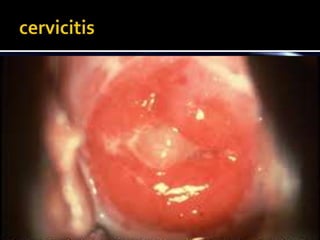
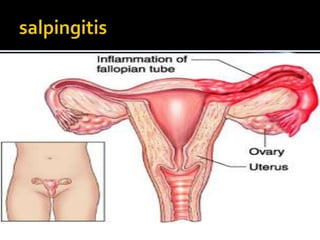
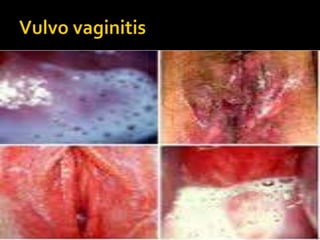
   prostatitis in men and cervicitis, salpingitis
    and/or vulvovaginitis in women.
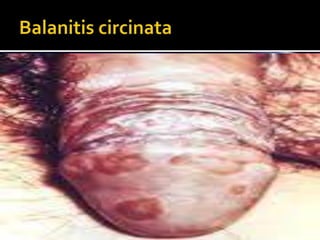
   penile lesions called balanitis circinata
    (circinate balanitis) can be found in males
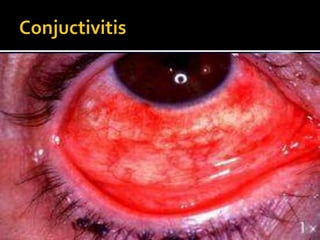
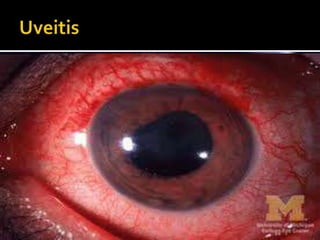
    inflammation of the eyes in the form of
    conjunctivitis or uveitis
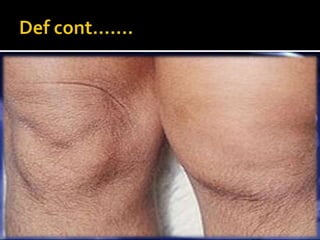
   Swelling and pain in large joints such as the
    knee.
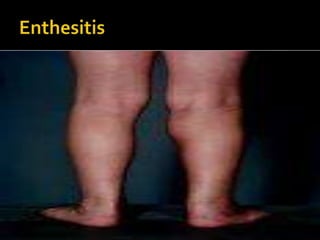
   Enthesitis can involve the Achilles tendon
    resulting in heel pain
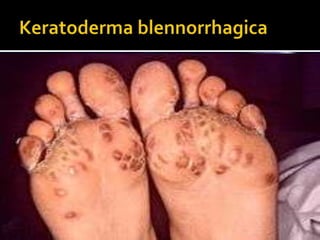
   A small percentage of men and women
    develop small hard nodules called
    keratoderma blennorrhagica on the soles of
    the feet
keratoderma blennorrhagica
   Because common systems involved include
    the eye, the urinary system, and the hands
    and feet, one clinical mnemonic for Reiter's
    syndrome is "Can't see, can't pee, can't climb
    a tree."
   A few studies have been completed, though.
    In Norway between 1988 and 1990, incidence
    was 4.6 cases per 100,000 for Chlamydia-
    induced Reiter's Syndrome and 5 cases per
    100,000 for that induced by enteric bacteria.
   It most commonly strikes individuals aged
    20–40 years of age,
    is more common in men than in women,
   and more common in white than in black
    people.
   This is owing to the high frequency of the
    HLA-B27 gene in the white population.
   Patients with HIV have an increased risk of
    developing Reactive arthritis as well.
   The main goal of treatment is to identify and
    eradicate the underlying infectious source with
    the appropriate antibiotics if still present.
   Otherwise, treatment is symptomatic for each
    problem.
   Analgesics particularly NSAIDs, sulfasalazine,
    steroids .
   immunosuppressants may be needed for
    patients with severe reactive symptoms that do
    not respond to any other treatment.
 Electrotherapy ift
 Social support education
 Circulatory movements
 Deep tissue massage
 Your joints may need to be rested when the pain
  and inflammation is most severe.
 Wrist splints and shoe insoles may be helpful in
  the short-term.
 Ice packs and heat pads, used alternatively, help
  to relieve joint pain and swelling.
   relaxation exercises to help to reduce pain
    and improve sleep.
   Hydrotherapy for soothing joints

Reactive Arthritis

  • 1.
  • 2.
    It has been postulated that Italian-born explorer Christopher Columbus suffered from Reiter's arthritis, dying from a heart attack caused by the condition
  • 3.
    Reactive arthritis or Reiter’s syndrome is a painful form of inflammatory arthritis that develops in reaction to an infection by bacteria or virus  By the time the patient presents with symptoms, oftentimes the "trigger" infection has been cured or is in remission in chronic cases
  • 4.
    Reactive arthritis is an RF-seronegative, HLA- B27-linked arthritis, often precipitated by genitourinary or gastrointestinal infections
  • 5.
    When the arthritis is followed by charecteristic of other symptoms it is then called reiter’s arthritis.
  • 6.
    The arthritis may be "additive" (more joints become inflamed in addition to the primarily affected one) or  Migratory (new joints become inflamed after the initially inflamed site has already improved).
  • 8.
    Streptococcal throat infection  glandular fever  viral flu  food poisoning  sexually acquired
  • 9.
    It occurs in reaction to an infection by certain bacteria. Most often, these bacteria are in the genitals (Chlamydia trachomatis) or the bowel (Campylobacter, Salmonella, Shigella and Yersinia).
  • 10.
    burning pain on urination (dysuria) or an increased frequency of urination  prostatitis in men and cervicitis, salpingitis and/or vulvovaginitis in women.  penile lesions called balanitis circinata (circinate balanitis) can be found in males  inflammation of the eyes in the form of conjunctivitis or uveitis
  • 17.
    Swelling and pain in large joints such as the knee.  Enthesitis can involve the Achilles tendon resulting in heel pain  A small percentage of men and women develop small hard nodules called keratoderma blennorrhagica on the soles of the feet
  • 19.
  • 20.
    Because common systems involved include the eye, the urinary system, and the hands and feet, one clinical mnemonic for Reiter's syndrome is "Can't see, can't pee, can't climb a tree."
  • 21.
    A few studies have been completed, though. In Norway between 1988 and 1990, incidence was 4.6 cases per 100,000 for Chlamydia- induced Reiter's Syndrome and 5 cases per 100,000 for that induced by enteric bacteria.
  • 22.
    It most commonly strikes individuals aged 20–40 years of age,  is more common in men than in women,  and more common in white than in black people.  This is owing to the high frequency of the HLA-B27 gene in the white population.  Patients with HIV have an increased risk of developing Reactive arthritis as well.
  • 23.
    The main goal of treatment is to identify and eradicate the underlying infectious source with the appropriate antibiotics if still present.  Otherwise, treatment is symptomatic for each problem.  Analgesics particularly NSAIDs, sulfasalazine, steroids .  immunosuppressants may be needed for patients with severe reactive symptoms that do not respond to any other treatment.
  • 24.
     Electrotherapy ift Social support education  Circulatory movements  Deep tissue massage  Your joints may need to be rested when the pain and inflammation is most severe.  Wrist splints and shoe insoles may be helpful in the short-term.  Ice packs and heat pads, used alternatively, help to relieve joint pain and swelling.
  • 25.
    relaxation exercises to help to reduce pain and improve sleep.  Hydrotherapy for soothing joints