
Downloaded 17 times
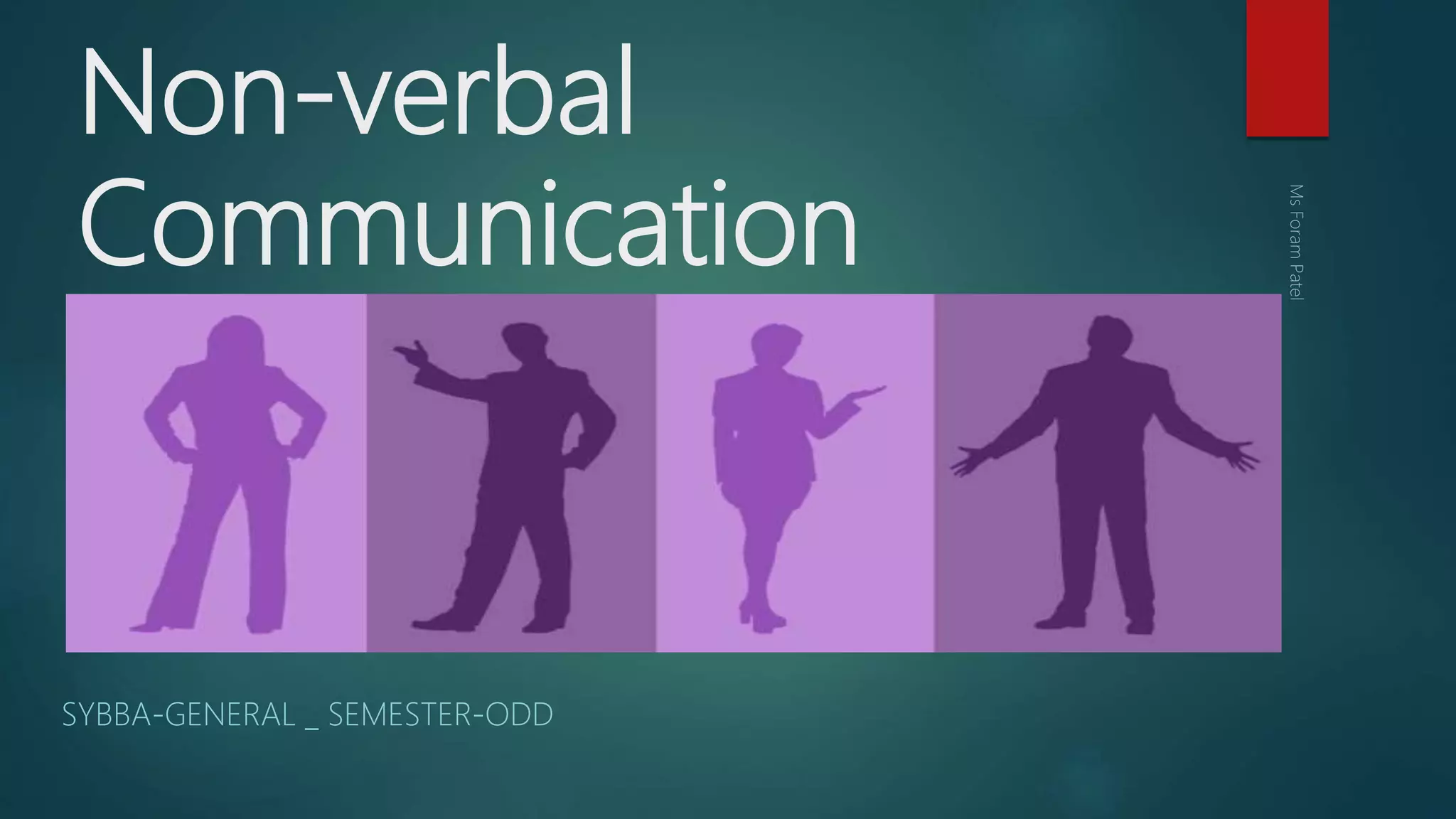
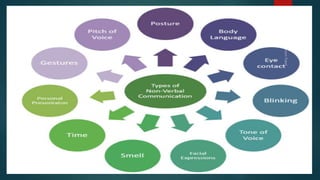
![ Nonverbal communication (NVC) is the transmission of
messages or signals through a nonverbal platform such
as eye contact, facial expressions, gestures, posture, and the
distance between two individuals. It includes the use of
visual cues such as body language (kinesics), distance
(proxemics) and physical environments/appearance, of
(paralanguage) and of touch (haptics).[1] It can also include
the use of time (chronemics) and eye contact and the
of looking while talking and listening, frequency of glances,
patterns of fixation, pupil dilation, and blink rate (oculesics).](https://image.slidesharecdn.com/nvc-proxemics-facialexpressions-201216114923/85/proxemics-facial-expressions-3-320.jpg)
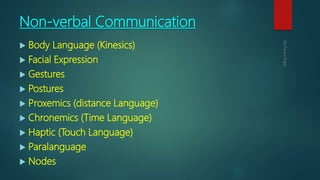
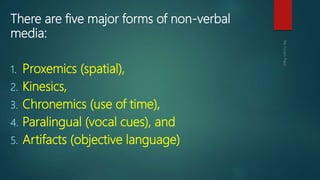
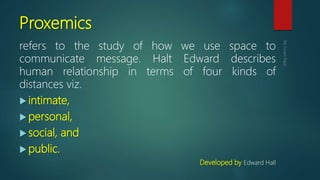
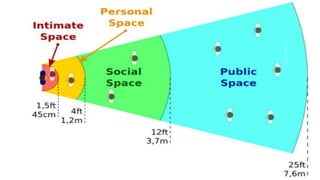
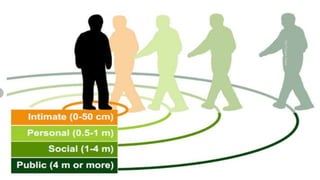
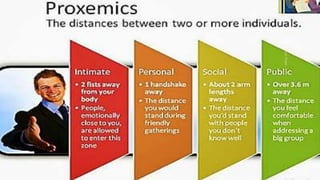
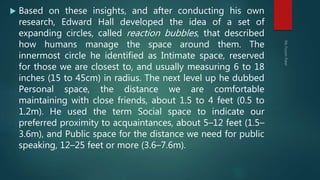

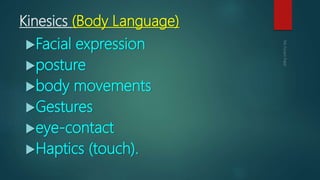
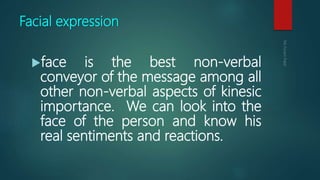
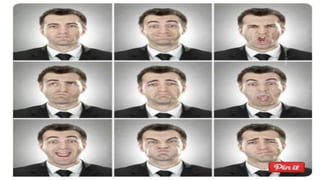
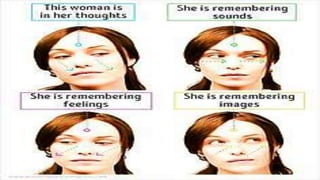
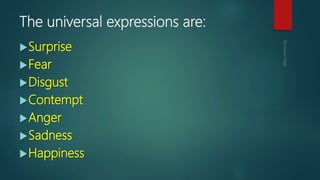
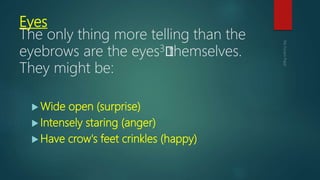
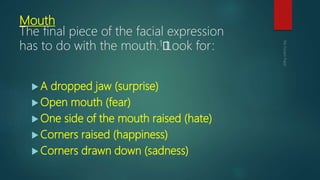
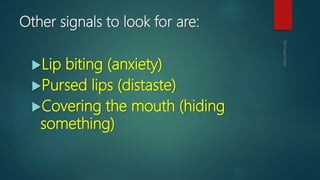









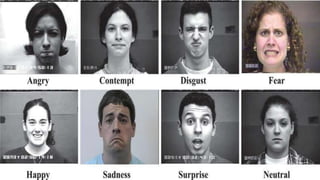

Non-verbal communication involves the transmission of messages through visual cues like body language, proxemics, paralanguage, haptics, and chronemics. It includes two processes: encoding information through facial expressions and gestures, and decoding received signals. The five major forms of non-verbal communication are proxemics (use of space), kinesics (body language), chronemics (use of time), paralanguage (vocal cues), and artifacts. Proxemics refers to Edward Hall's theory of four distances in relationships: intimate, personal, social, and public.


![160210119038[1]](https://cdn.slidesharecdn.com/ss_thumbnails/1602101190381-170108122946-thumbnail.jpg?width=640&height=640&fit=bounds)


