Presentation on
verbal v/s non verbal
communication
1
Presentation by Group 11.
Members- Srishti Gwari.
Richa Pandey.
Rishabh Gambhir.
Mehul Chauhan.
Vaibhavi Joshi.
2
Outline Of Presentation-
 Communication-
 Definition.
 The communication chart.
 Verbal communication-
 Definition.
 Importance.
 Non verbal communication-
 Definition.
 Importance.
 Final glance.
 The doubt killing session.
3
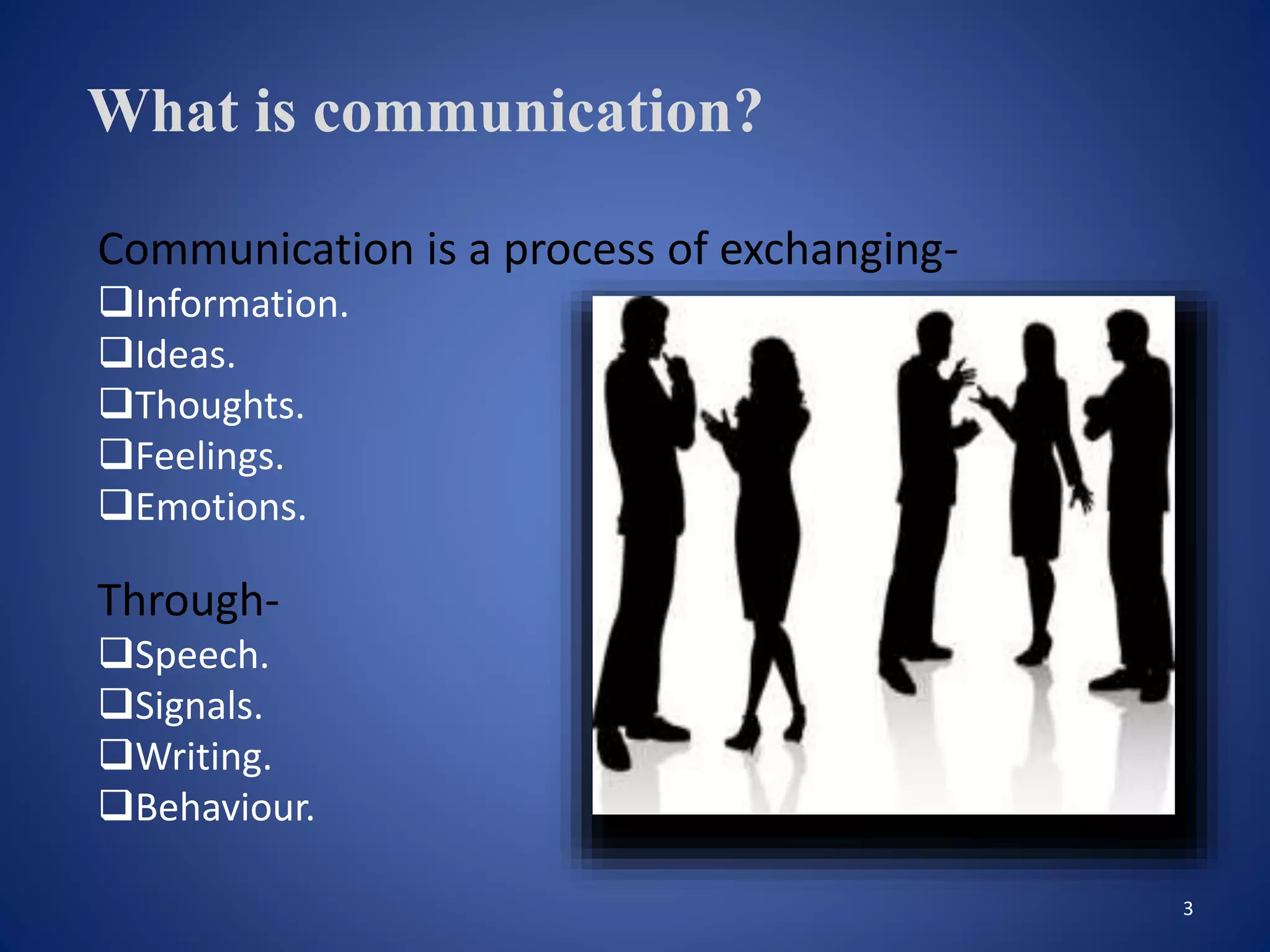
What is communication?
Communication is a process of exchanging-
Information.
Ideas.
Thoughts.
Feelings.
Emotions.
Through-
Speech.
Signals.
Writing.
Behaviour.
4
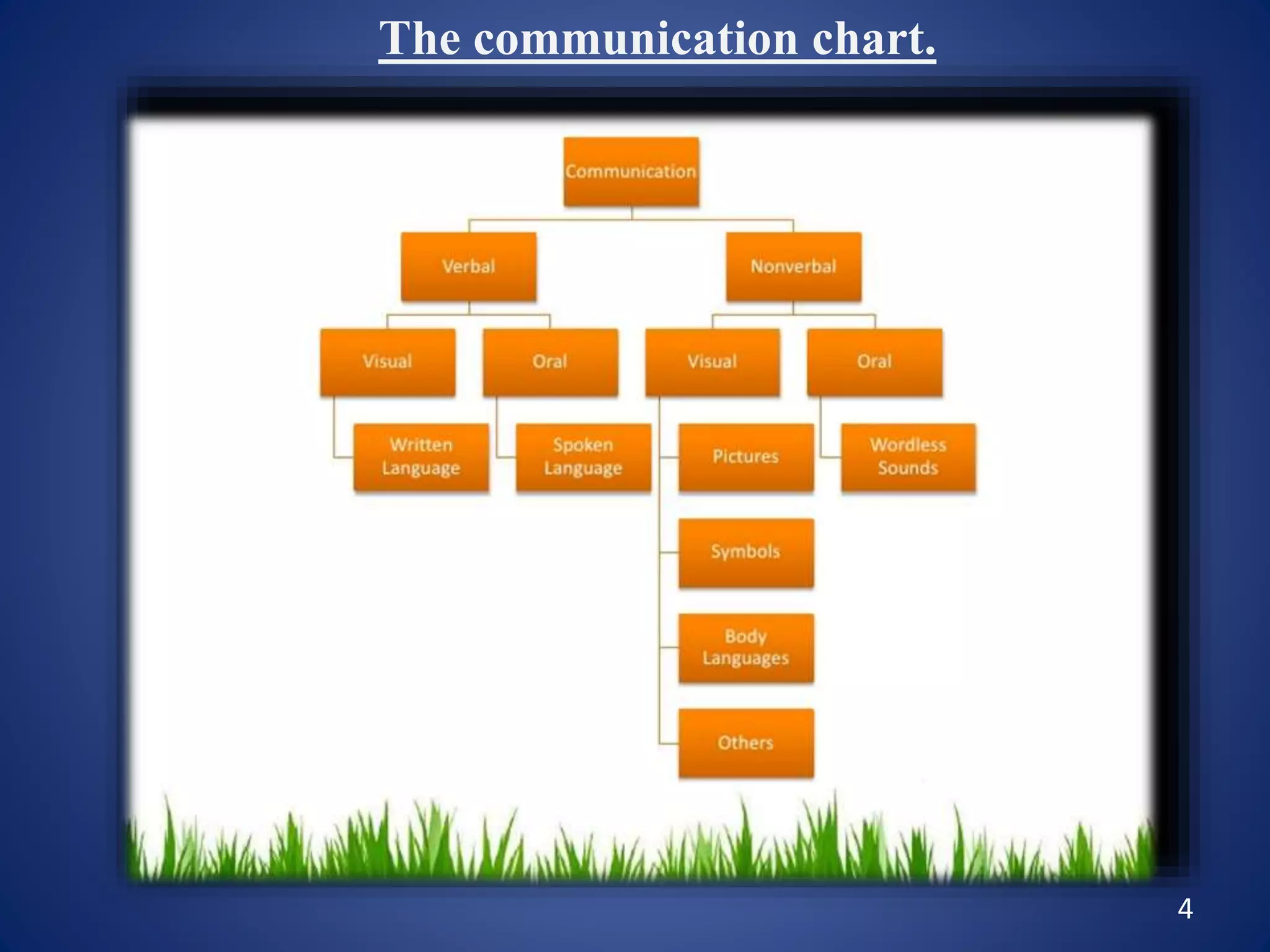
The communication chart.
5
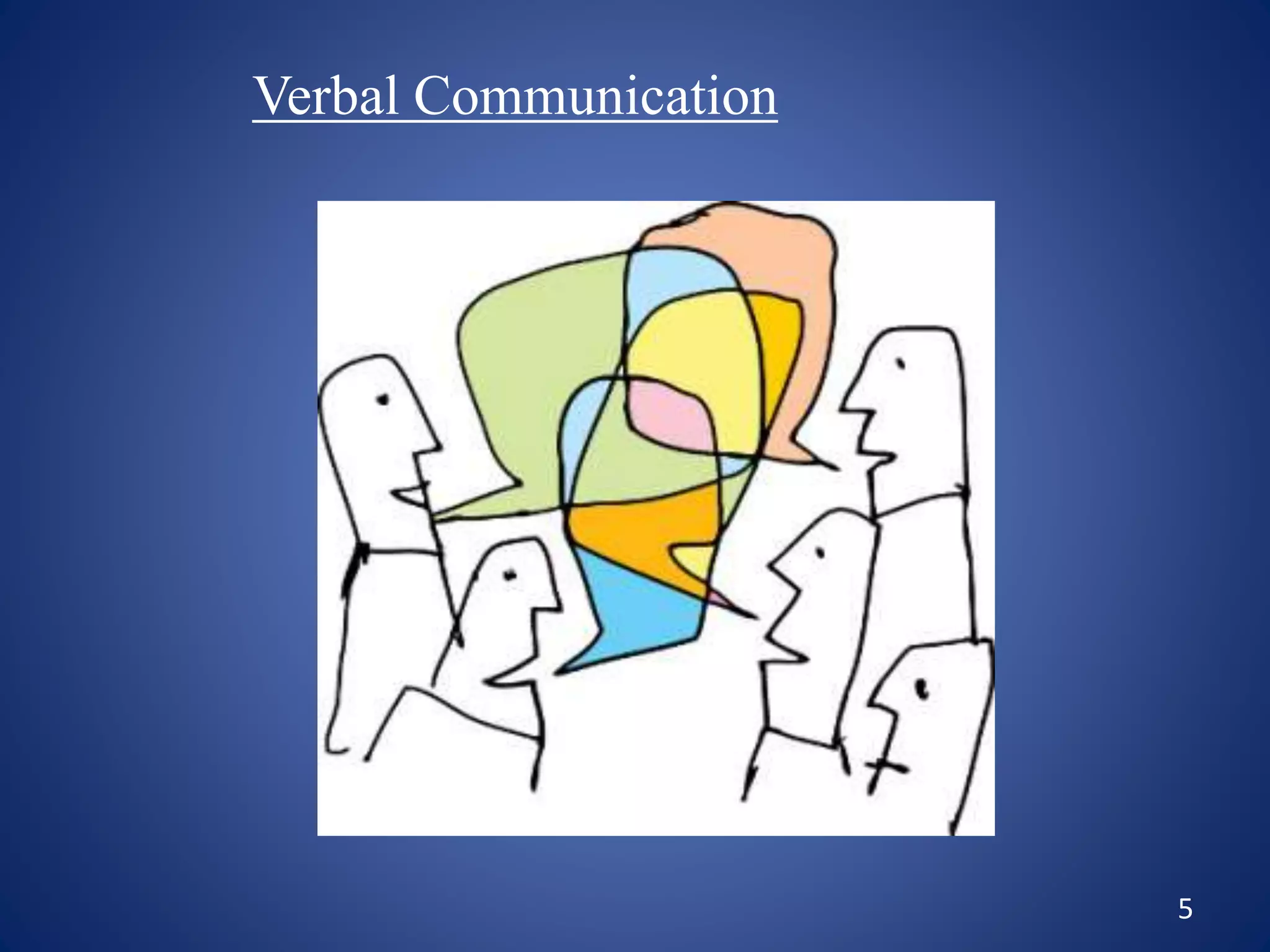
Verbal Communication
6
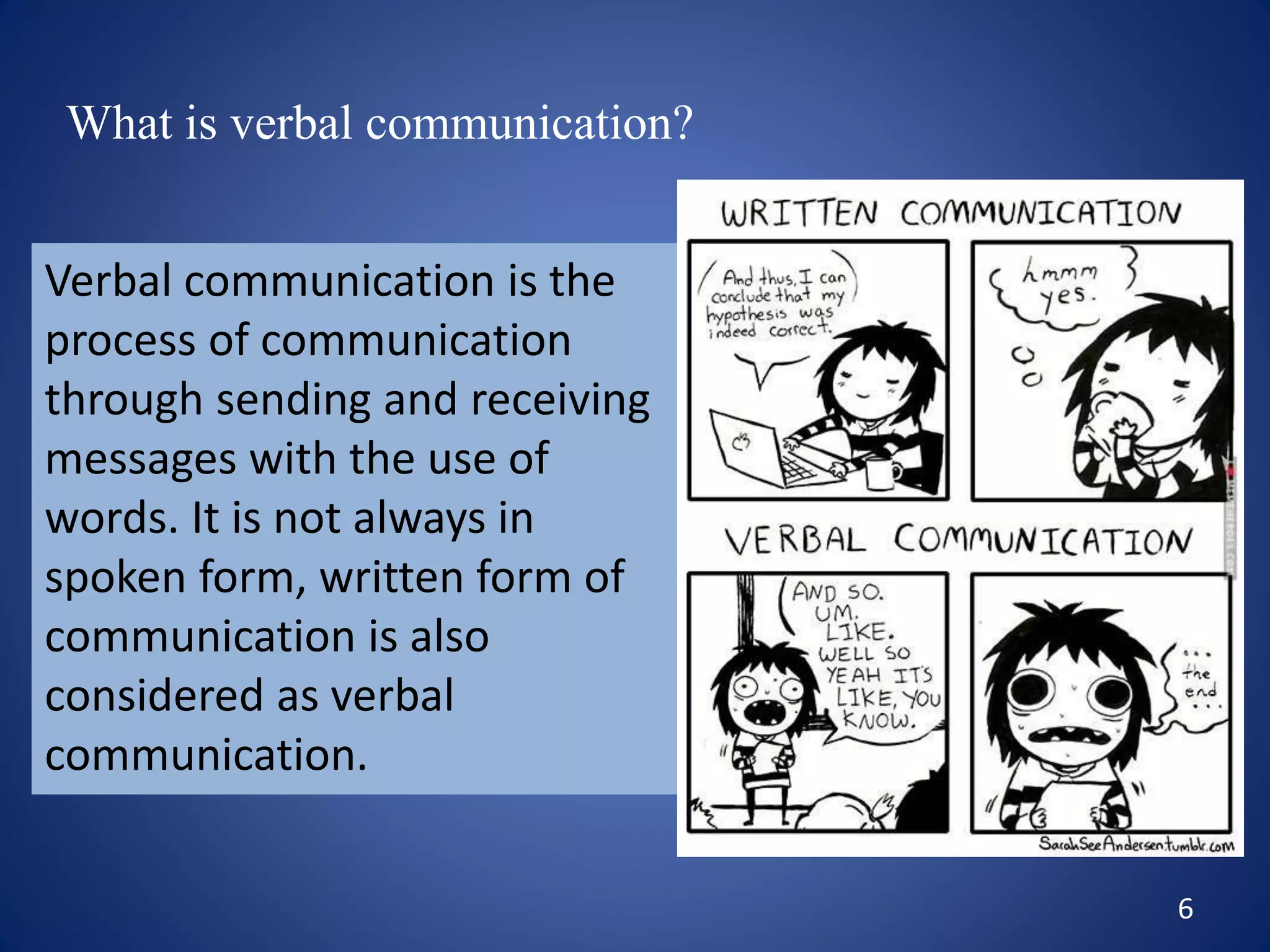
What is verbal communication?
Verbal communication is the
process of communication
through sending and receiving
messages with the use of
words. It is not always in
spoken form, written form of
communication is also
considered as verbal
communication.
7
Importance Of Verbal communication-
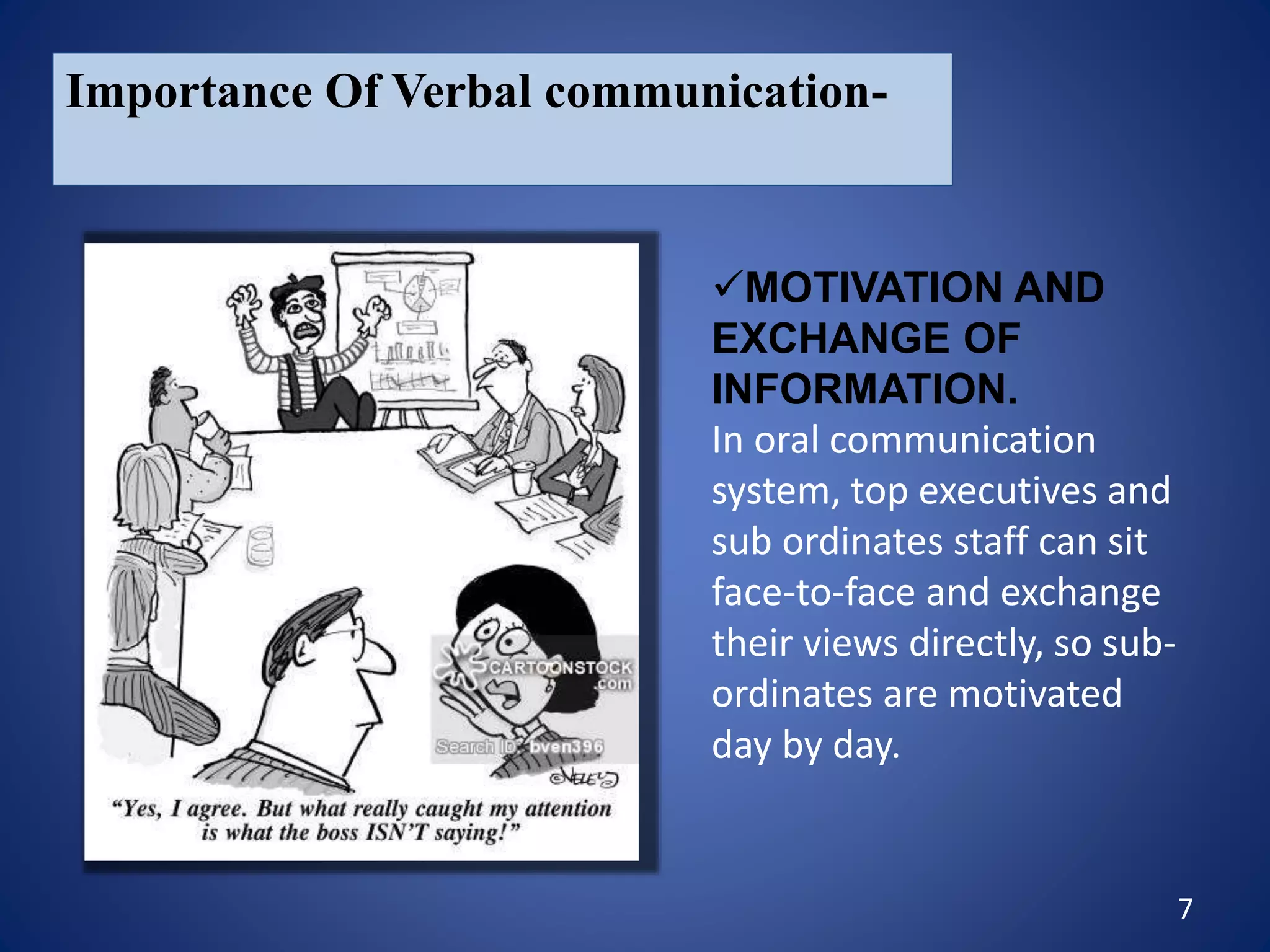
MOTIVATION AND
EXCHANGE OF
INFORMATION.
In oral communication
system, top executives and
sub ordinates staff can sit
face-to-face and exchange
their views directly, so sub-
ordinates are motivated
day by day.
8
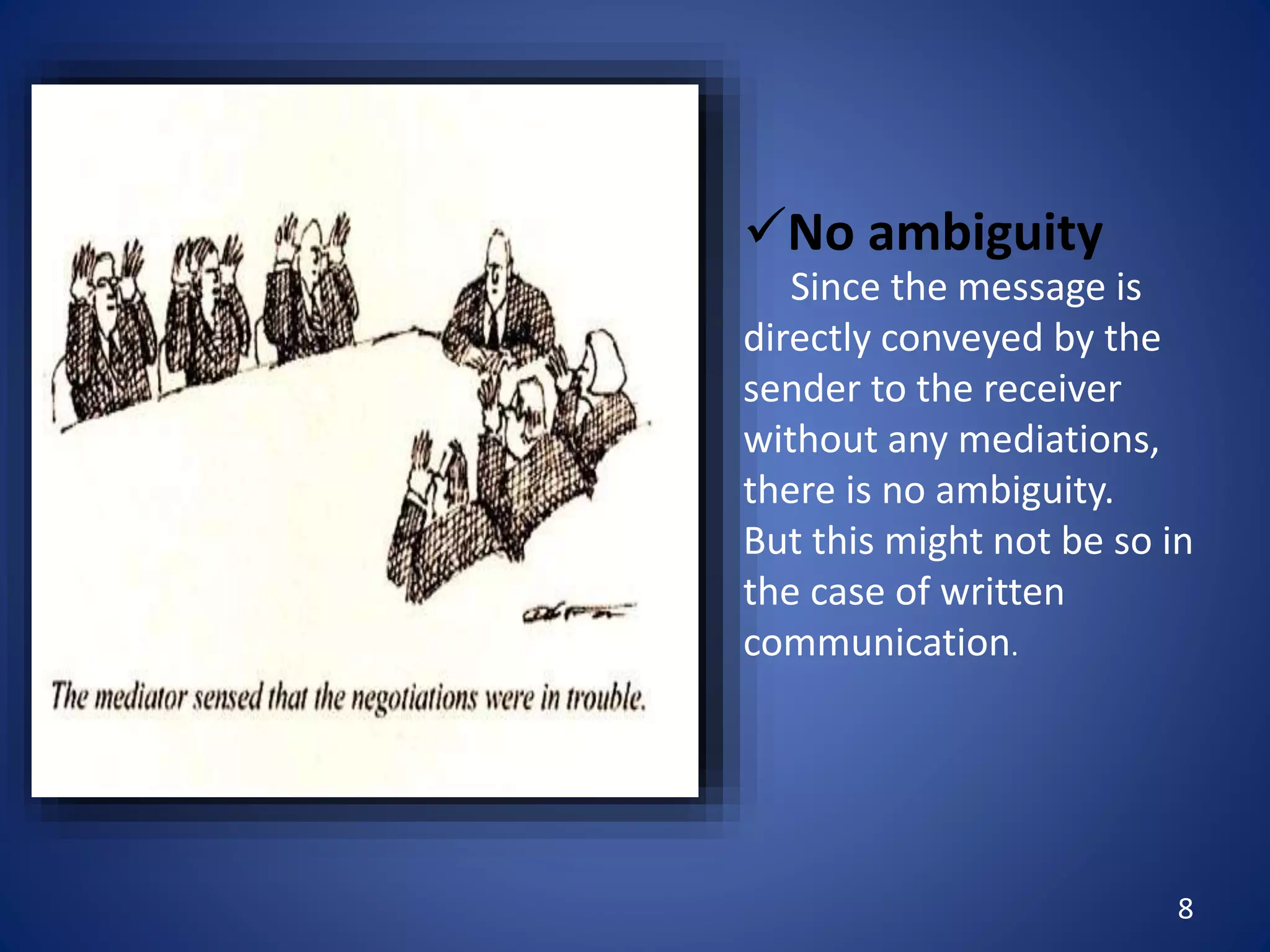
No ambiguity
Since the message is
directly conveyed by the
sender to the receiver
without any mediations,
there is no ambiguity.
But this might not be so in
the case of written
communication.
9
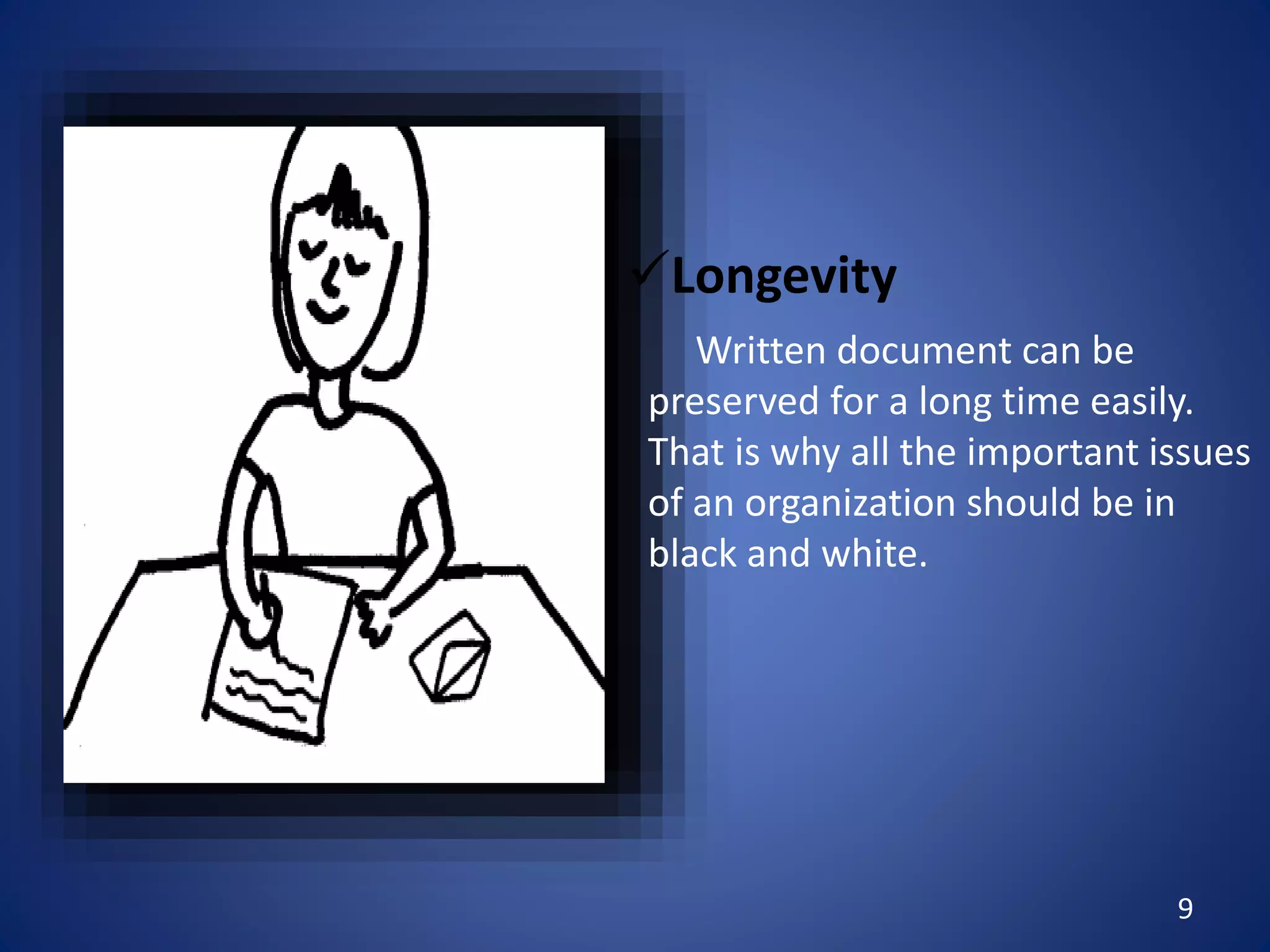
Longevity
Written document can be
preserved for a long time easily.
That is why all the important issues
of an organization should be in
black and white.
10
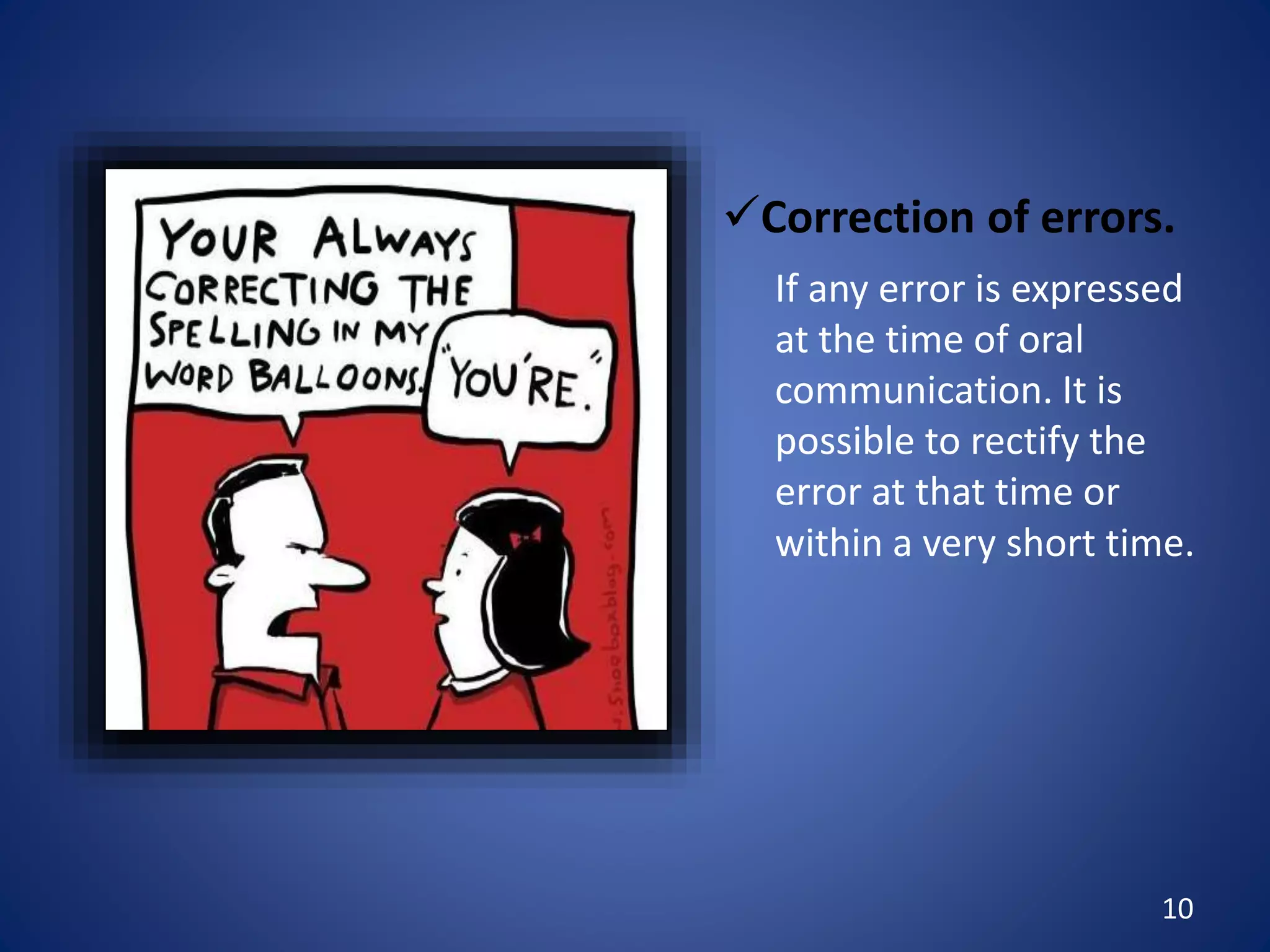
Correction of errors.
If any error is expressed
at the time of oral
communication. It is
possible to rectify the
error at that time or
within a very short time.
11
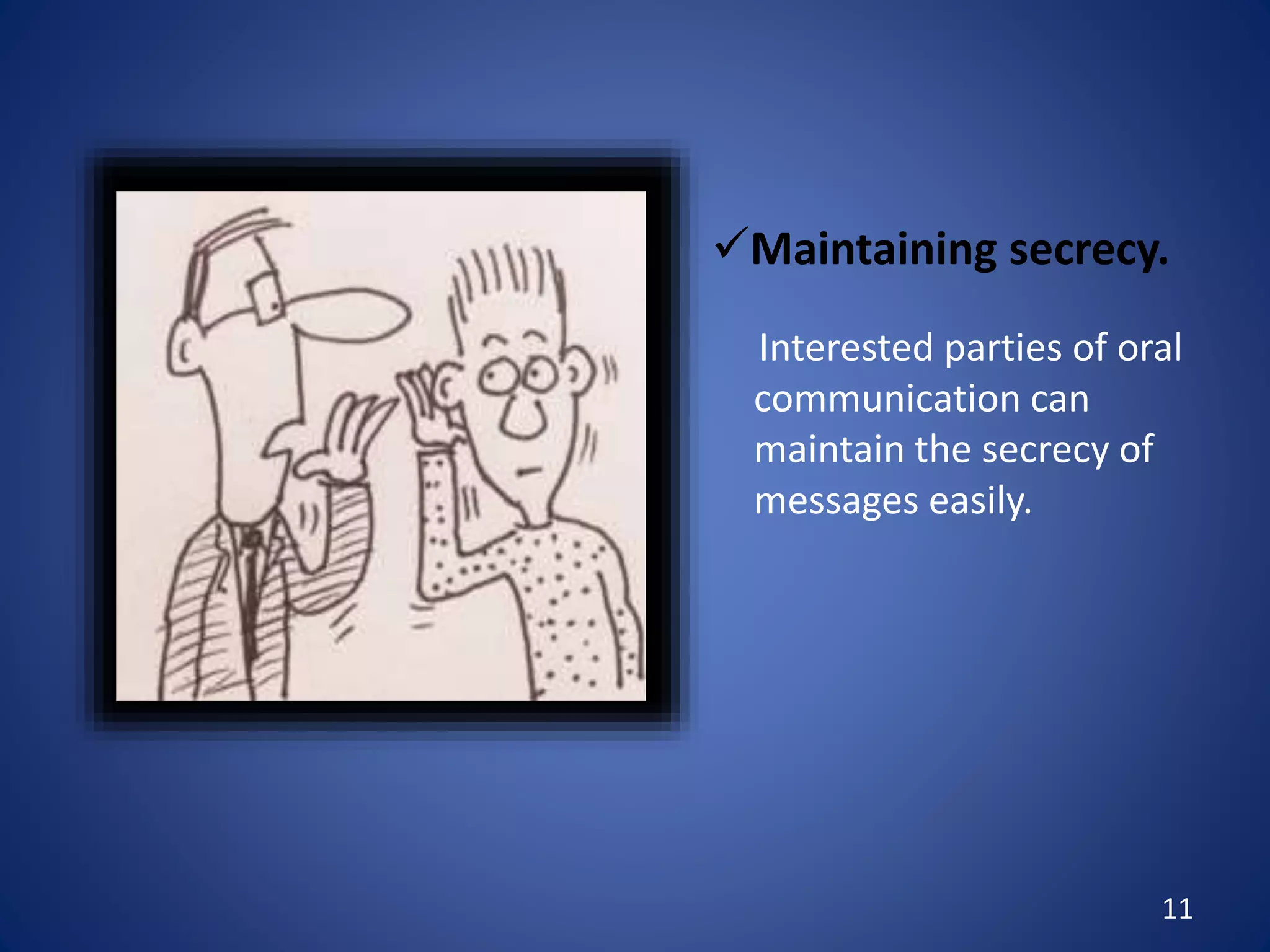
Maintaining secrecy.
Interested parties of oral
communication can
maintain the secrecy of
messages easily.
12
Other points of significance of verbal communication are-
Time saving.
Cost saving.
Immediate feedback.
13
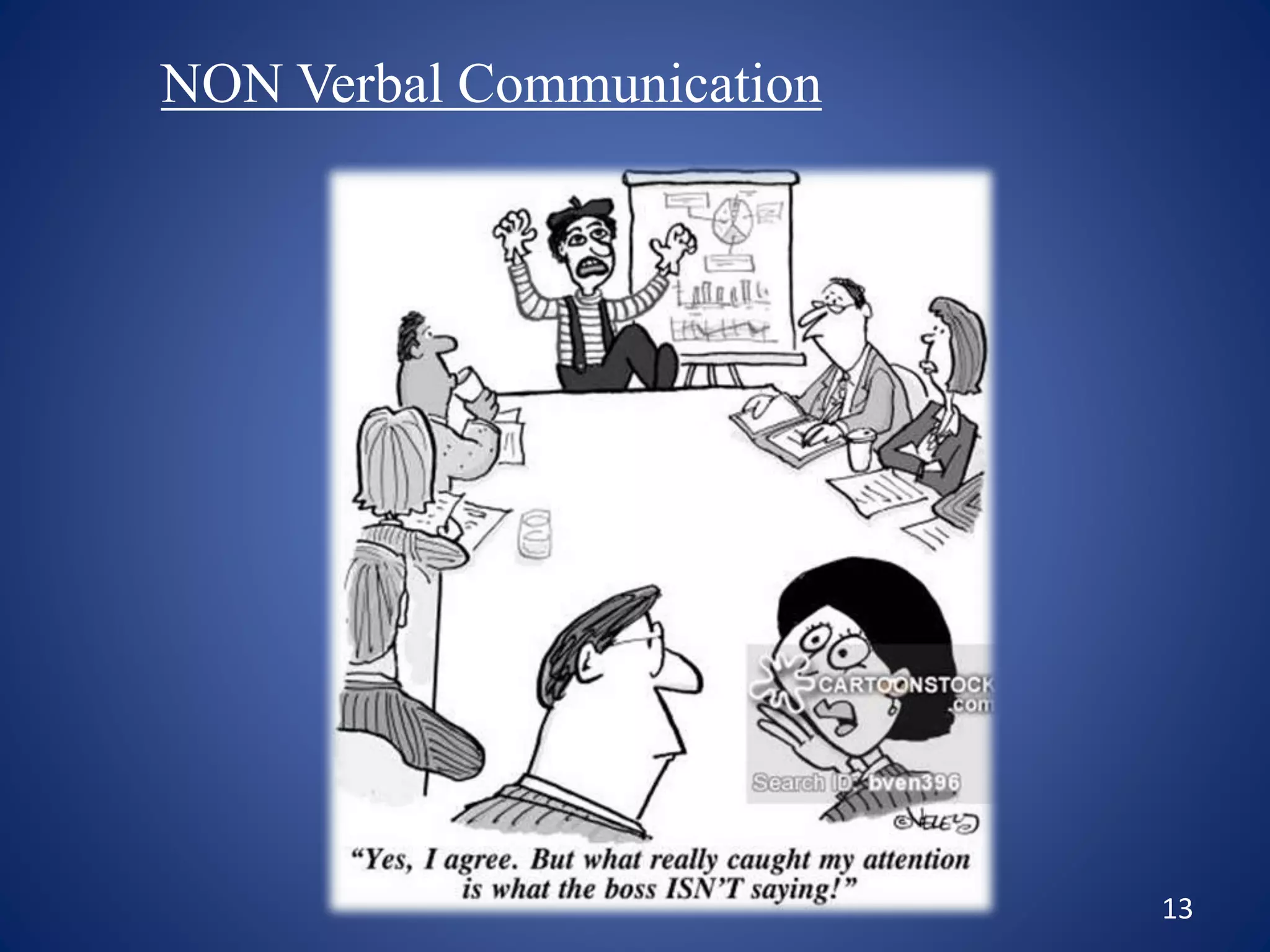
NON Verbal Communication
14
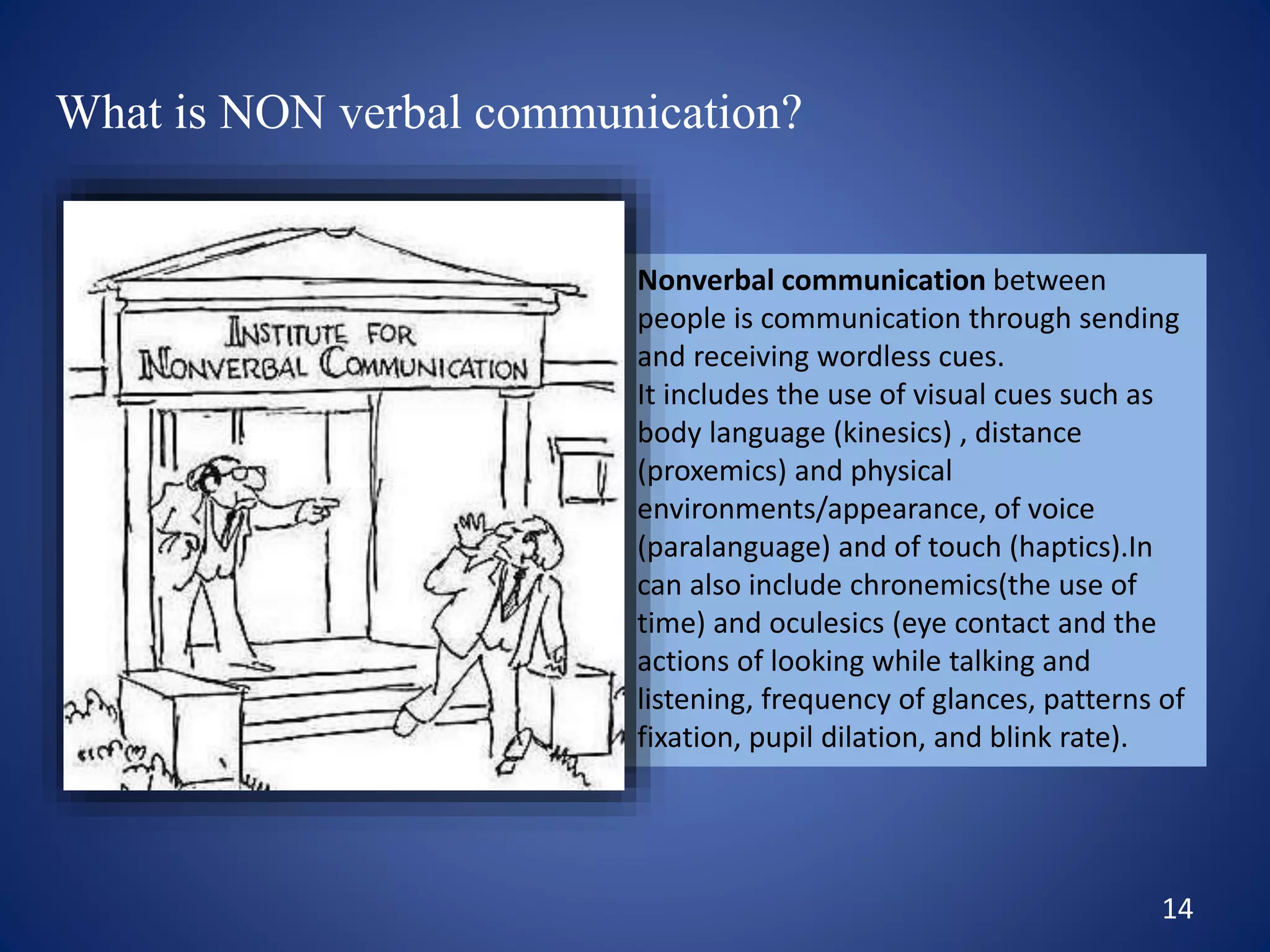
What is NON verbal communication?
Nonverbal communication between
people is communication through sending
and receiving wordless cues.
It includes the use of visual cues such as
body language (kinesics) , distance
(proxemics) and physical
environments/appearance, of voice
(paralanguage) and of touch (haptics).In
can also include chronemics(the use of
time) and oculesics (eye contact and the
actions of looking while talking and
listening, frequency of glances, patterns of
fixation, pupil dilation, and blink rate).
15
Importance Of NON Verbal communication-
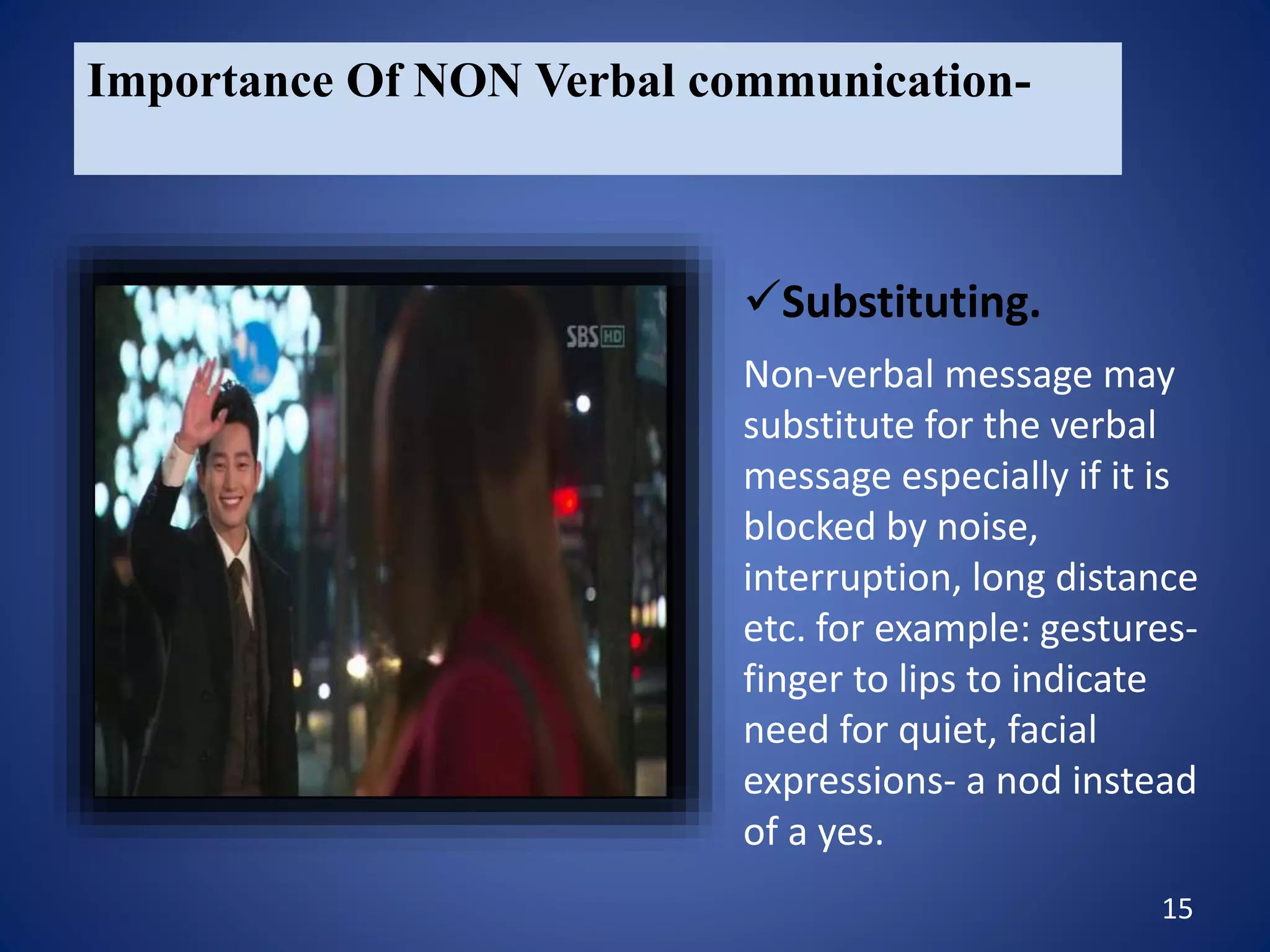
Non-verbal message may
substitute for the verbal
message especially if it is
blocked by noise,
interruption, long distance
etc. for example: gestures-
finger to lips to indicate
need for quiet, facial
expressions- a nod instead
of a yes.
Substituting.
16
Complementary.
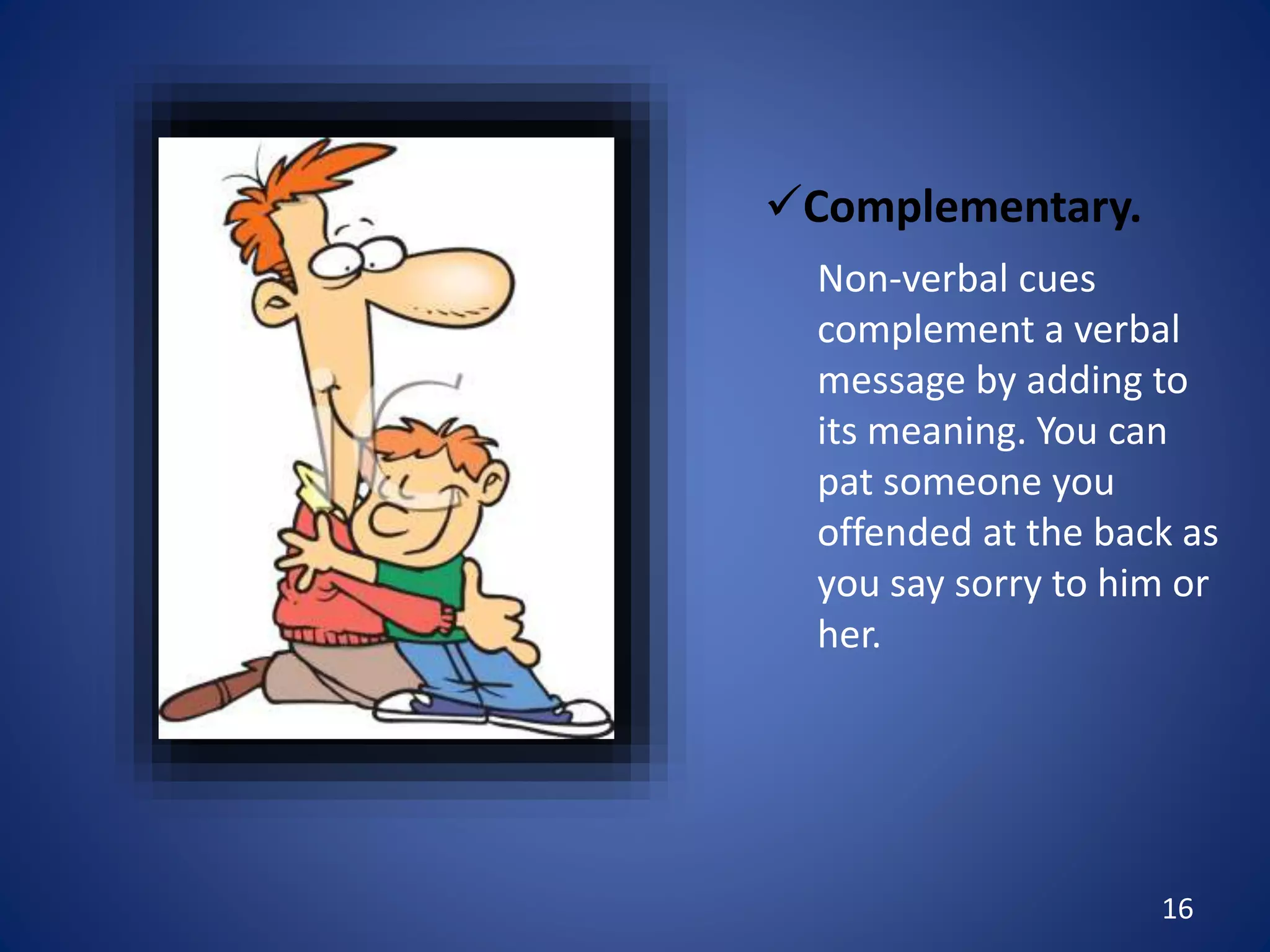
Non-verbal cues
complement a verbal
message by adding to
its meaning. You can
pat someone you
offended at the back as
you say sorry to him or
her.
17
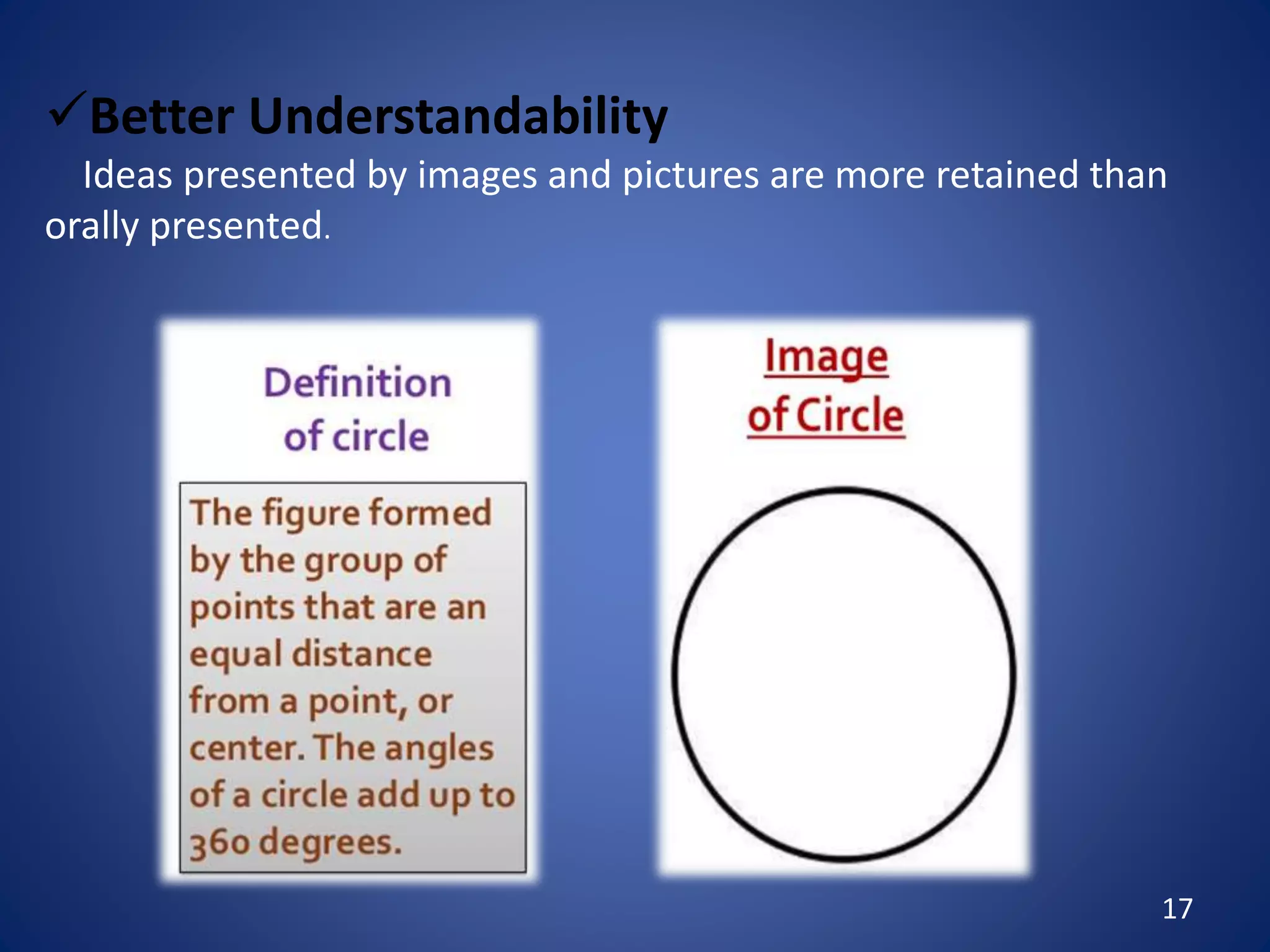
Better Understandability
Ideas presented by images and pictures are more retained than
orally presented.
18
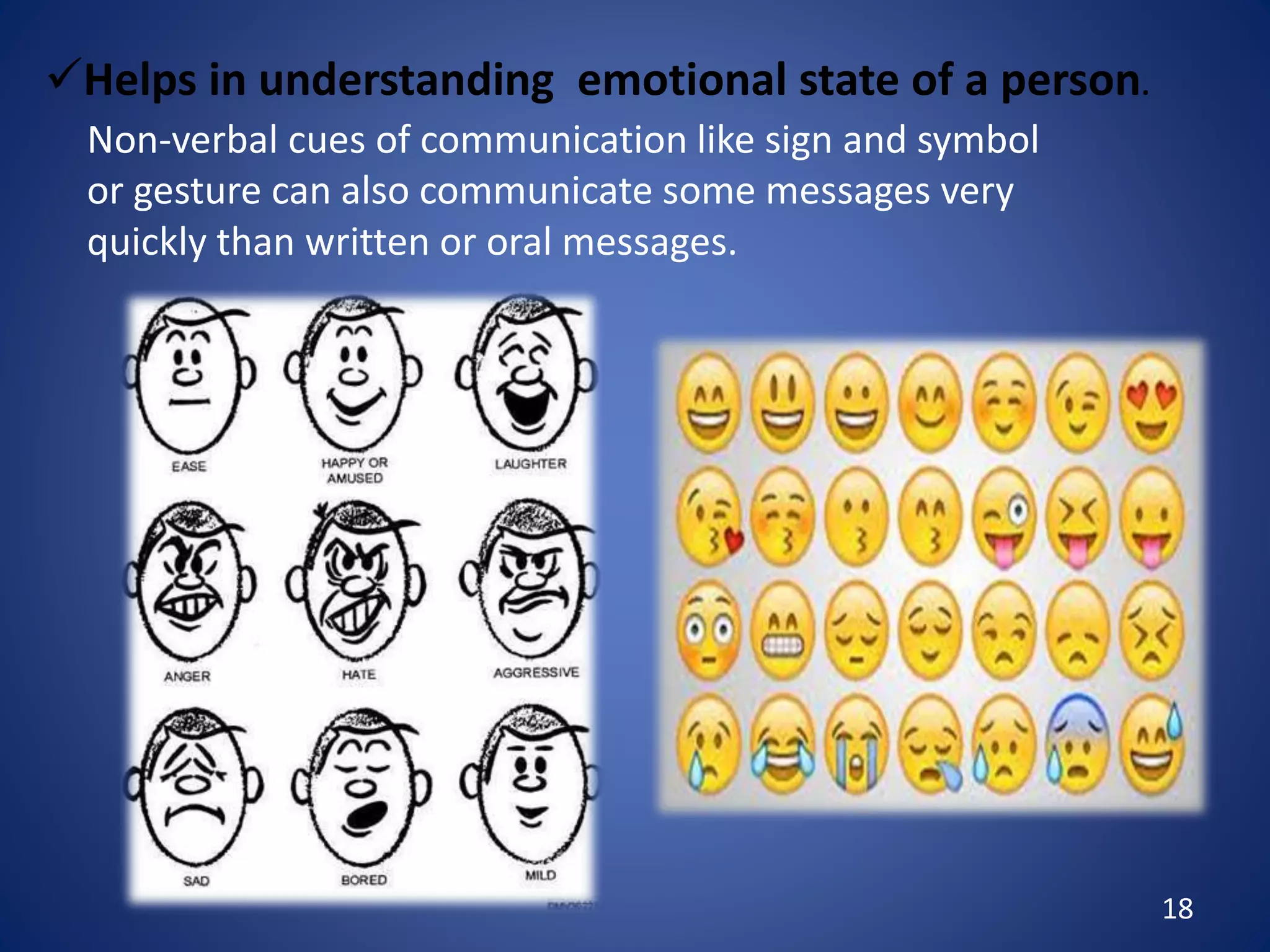
Helps in understanding emotional state of a person.
Non-verbal cues of communication like sign and symbol
or gesture can also communicate some messages very
quickly than written or oral messages.
19
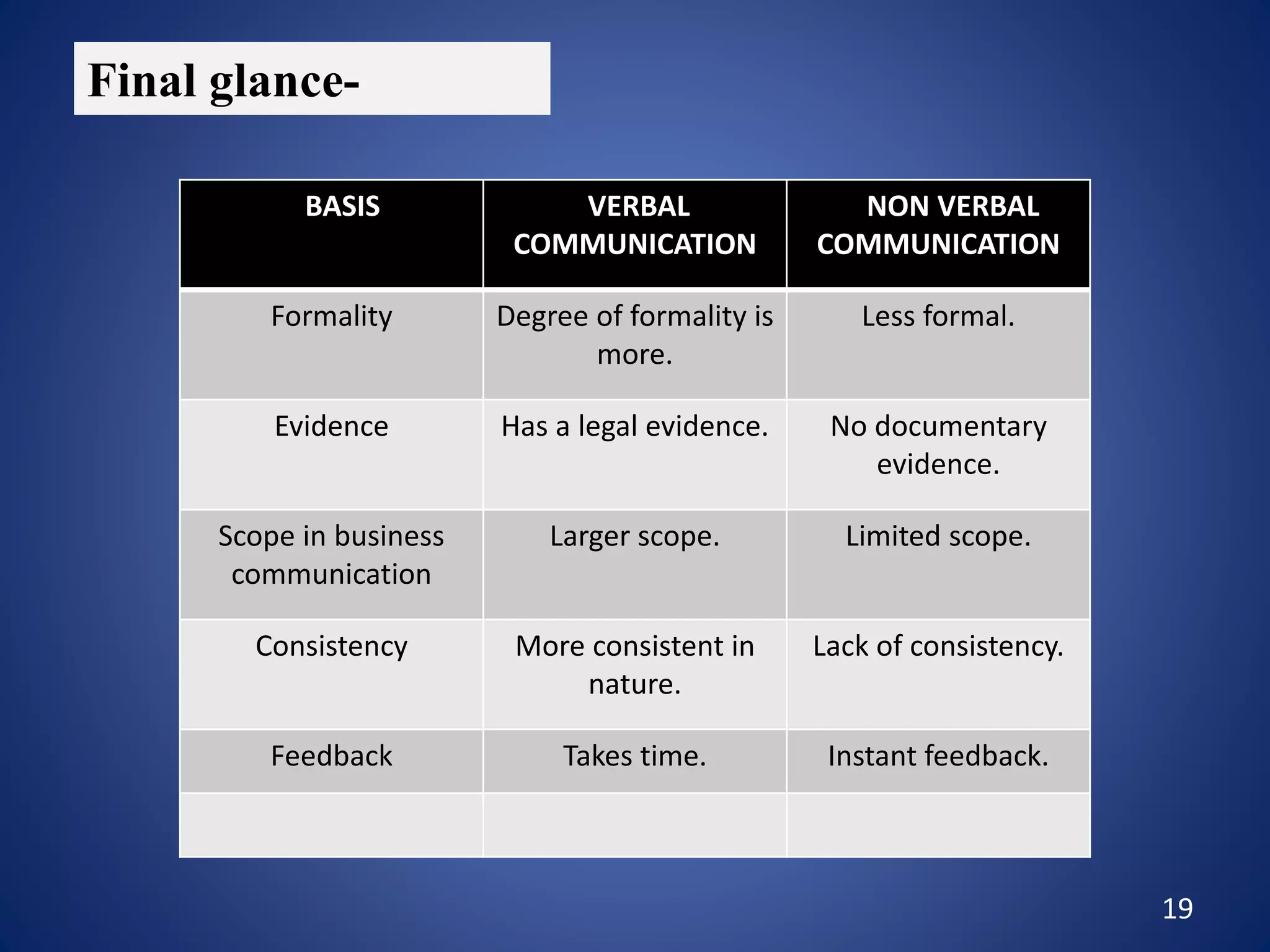
Final glance-
BASIS VERBAL
COMMUNICATION
NON VERBAL
COMMUNICATION
Formality Degree of formality is
more.
Less formal.
Evidence Has a legal evidence. No documentary
evidence.
Scope in business
communication
Larger scope. Limited scope.
Consistency More consistent in
nature.
Lack of consistency.
Feedback Takes time. Instant feedback.
20
The doubt killing session.

Verbal vs non verbal communication.

  • 1.
    Presentation on verbal v/snon verbal communication 1 Presentation by Group 11. Members- Srishti Gwari. Richa Pandey. Rishabh Gambhir. Mehul Chauhan. Vaibhavi Joshi.
  • 2.
    2 Outline Of Presentation- Communication-  Definition.  The communication chart.  Verbal communication-  Definition.  Importance.  Non verbal communication-  Definition.  Importance.  Final glance.  The doubt killing session.
  • 3.
    3 What is communication? Communicationis a process of exchanging- Information. Ideas. Thoughts. Feelings. Emotions. Through- Speech. Signals. Writing. Behaviour.
  • 4.
  • 5.
  • 6.
    6 What is verbalcommunication? Verbal communication is the process of communication through sending and receiving messages with the use of words. It is not always in spoken form, written form of communication is also considered as verbal communication.
  • 7.
    7 Importance Of Verbalcommunication- MOTIVATION AND EXCHANGE OF INFORMATION. In oral communication system, top executives and sub ordinates staff can sit face-to-face and exchange their views directly, so sub- ordinates are motivated day by day.
  • 8.
    8 No ambiguity Since themessage is directly conveyed by the sender to the receiver without any mediations, there is no ambiguity. But this might not be so in the case of written communication.
  • 9.
    9 Longevity Written document canbe preserved for a long time easily. That is why all the important issues of an organization should be in black and white.
  • 10.
    10 Correction of errors. Ifany error is expressed at the time of oral communication. It is possible to rectify the error at that time or within a very short time.
  • 11.
    11 Maintaining secrecy. Interested partiesof oral communication can maintain the secrecy of messages easily.
  • 12.
    12 Other points ofsignificance of verbal communication are- Time saving. Cost saving. Immediate feedback.
  • 13.
  • 14.
    14 What is NONverbal communication? Nonverbal communication between people is communication through sending and receiving wordless cues. It includes the use of visual cues such as body language (kinesics) , distance (proxemics) and physical environments/appearance, of voice (paralanguage) and of touch (haptics).In can also include chronemics(the use of time) and oculesics (eye contact and the actions of looking while talking and listening, frequency of glances, patterns of fixation, pupil dilation, and blink rate).
  • 15.
    15 Importance Of NONVerbal communication- Non-verbal message may substitute for the verbal message especially if it is blocked by noise, interruption, long distance etc. for example: gestures- finger to lips to indicate need for quiet, facial expressions- a nod instead of a yes. Substituting.
  • 16.
    16 Complementary. Non-verbal cues complement averbal message by adding to its meaning. You can pat someone you offended at the back as you say sorry to him or her.
  • 17.
    17 Better Understandability Ideas presentedby images and pictures are more retained than orally presented.
  • 18.
    18 Helps in understandingemotional state of a person. Non-verbal cues of communication like sign and symbol or gesture can also communicate some messages very quickly than written or oral messages.
  • 19.
    19 Final glance- BASIS VERBAL COMMUNICATION NONVERBAL COMMUNICATION Formality Degree of formality is more. Less formal. Evidence Has a legal evidence. No documentary evidence. Scope in business communication Larger scope. Limited scope. Consistency More consistent in nature. Lack of consistency. Feedback Takes time. Instant feedback.
  • 20.