1. Studies of protein molecules generally fall into one of the
three broad categories: Polypeptide chain assembly from free
amino acids, the folding of the chain into a unique three
dimensional object and the relationship between detailed
geometry in solution and biological function.
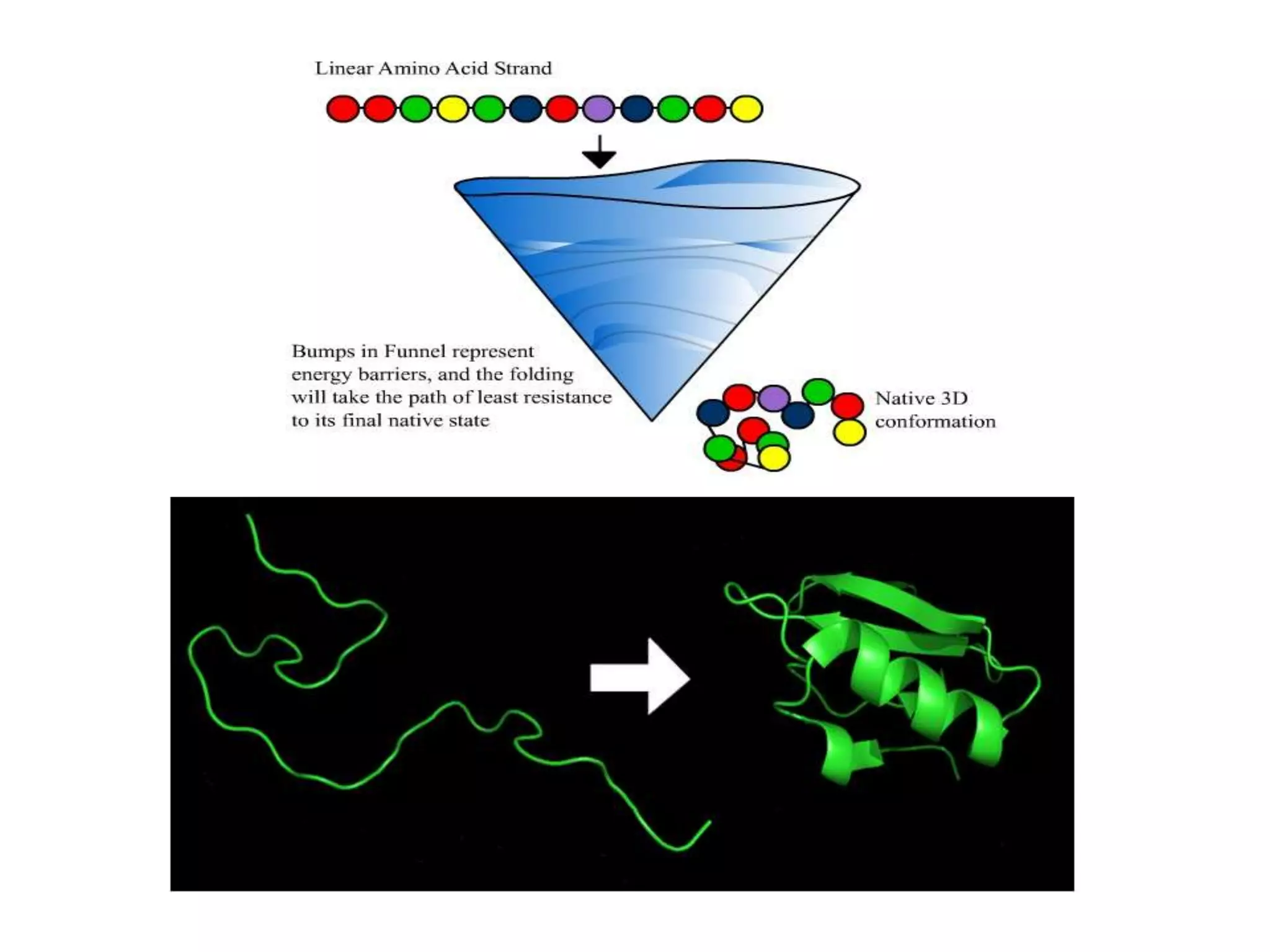
2. Protein folding is the physical process by which a protein
chain acquires its native 3-dimensional structure, a
conformation that is usually biologically functional, in an
expeditions and reproducible manner.
3. Proteins are folded and held together by several forms of
molecular interactions.
4. Protein folding is process in which a polypeptide folds into a
specific, stable, functional ,three-dimensional structure.
Denaturation: Denaturation is a process in which the native
protein conformation undergoes a major change without rupture of
the primary valence bonds that is without a change in the primary
structure.
Modes and Types of Denaturation:
1. Thermal Denaturation
2. Denaturation by changing pH
3. Denaturation by Urea(8M)
4. Denaturation by GdnHCL(6M)
5. Denaturation by other Gnanidinium salt
6. Denaturation by In organic salt
7. Denaturation by Organic solvent and solutes
8. Denaturation by Detergents
9. Other mode of denaturation
(Mono graph of high –pressure denaturation)
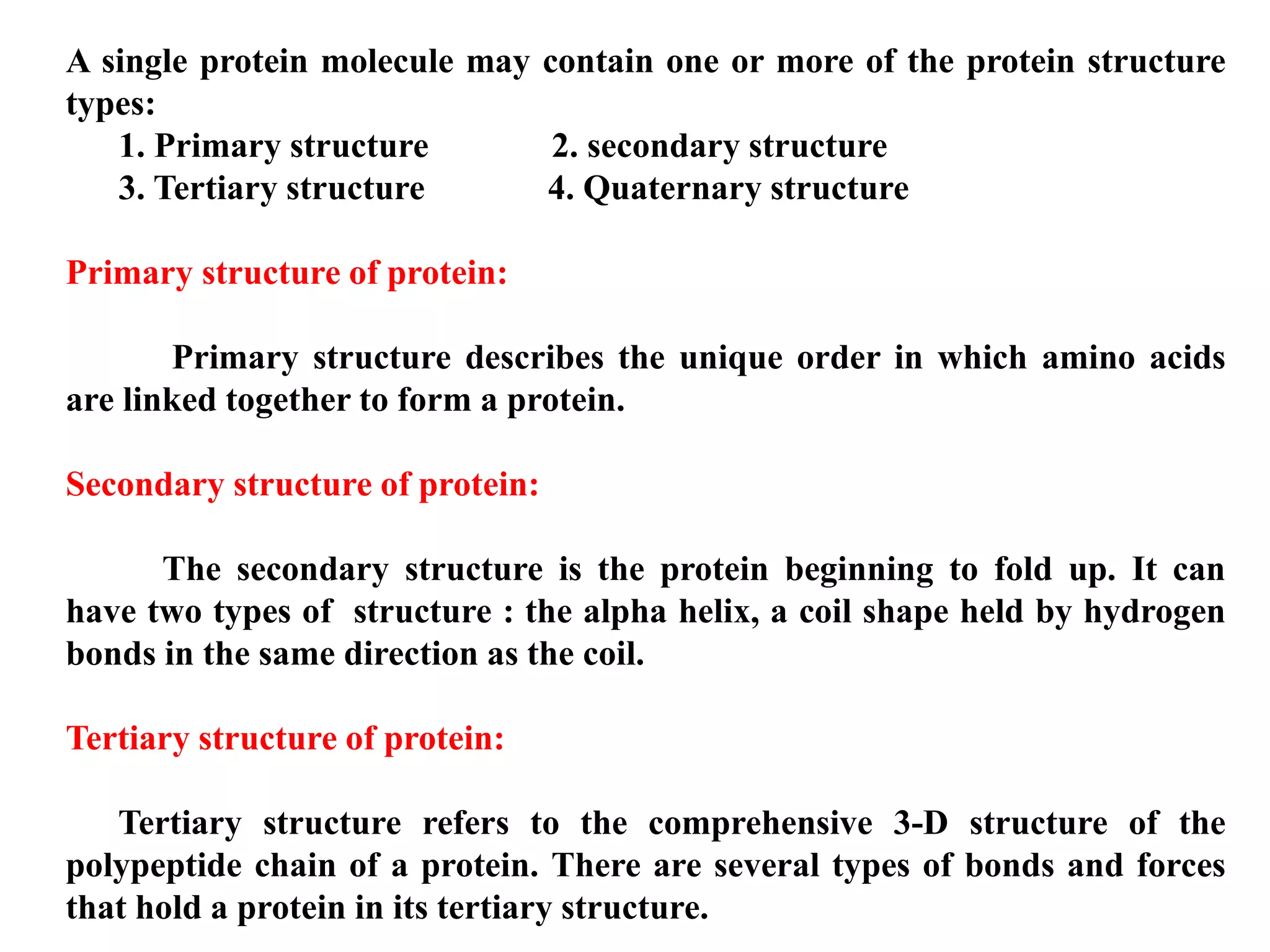
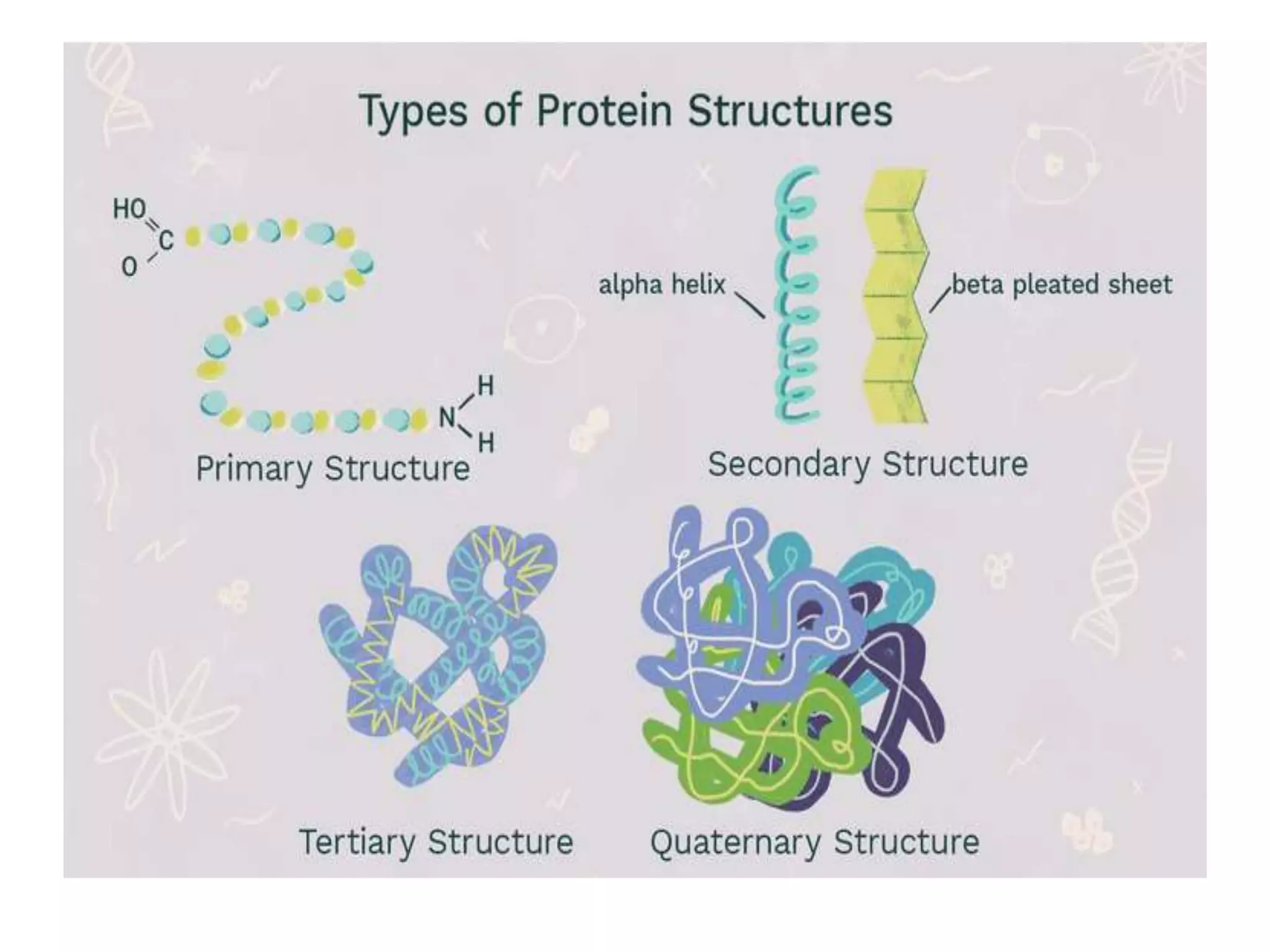
A single protein molecule may contain one or more of the protein structure
types:
1. Primary structure 2. secondary structure
3. Tertiary structure 4. Quaternary structure
Primary structure of protein:
Primary structure describes the unique order in which amino acids
are linked together to form a protein.
Secondary structure of protein:
The secondary structure is the protein beginning to fold up. It can
have two types of structure : the alpha helix, a coil shape held by hydrogen
bonds in the same direction as the coil.
Tertiary structure of protein:
Tertiary structure refers to the comprehensive 3-D structure of the
polypeptide chain of a protein. There are several types of bonds and forces
that hold a protein in its tertiary structure.
Hydrophobic interaction greatly contribute to the folding and
shaping of a protein. Hydrogen bonding in the polypeptide chain
and between amino acid” R” groups helps to stabilize protein
structure by holding the protein in the shape established by the
hydrophobic interactions. Due to protein folding , ionic bonding
can occur between the positively and negatively charged “ R”
groups that come in close contact with one another. Folding can
also result in covalent bonding between the “R” groups of
cysteine amino acids. This type of bonding forms what is called a
disulfide bridge. Interactions called” Vander waals forces also
assist in the stabilization of protein structure .
These interactions pertain to the attractive and
repulsive forces that occur between molecules that becomes
polarized. These forces contribute to the bonding that occurs
between molecules.
Quaternary structure:
Quaternary structure refers to the structure of a
protein macromolecules formed by interactions
between multiple polypeptide chains. Each polypeptide
chain is referred to as a subunit. Protein with
quaternary structure may consist of more than one of
the same type of protein subunit. Hemoglobin is an
example of quaternary protein. Hemoglobin found in
the blood is an iron containing protein that binds with
oxygen molecules.
Its contains four subunits:
Two Alpha subunits
Two beta subunits
Miss folding of Proteins
Proteins can miss function for several reasons. When a
protein miss folded it can lead to denaturation of the protein.
Denaturation is the loss of protein structure and functions.
Many neurodegenerative diseases including hunting tons and
Alzheimer's are associated with the presences of miss folded
protein aggregates in neuronal tissue. The aggregates in
patients can be intracellular (nuclear and or/cytoplasmic) or
extracellular.
Notice that the miss folded protein has a much greater
content of beta-pleated sheets than the normal protein. This
means that some of the alpha-helix corrected into beta –sheet.
Proteins are the most versatile macromolecules. The proteomes of
mammalian cells typically comprise between 10,000 and 20,000 different
proteins. To maintain proteome integrity and cellular health, protein
synthesis, folding, and degradation must be in proper balance and the
abundance of each protein species carefully controlled. The information
that specifies the compactly folded structure of a protein, required for its
biological activity, is encoded in the linear amino acid sequence of the
newly synthesized polypeptide chain which may be up to several thousand
amino acids in length. However, the number of conformations even a
small polypeptide of∼100 amino acids can adopt is astronomically large.
Protein miss folding is believed to be the primary cause of Alzheimer's
disease, Parkinson's disease, Huntington's disease, Creutzfeldt-Jakob
disease, cystic fibrosis, Gaucher's disease and many other degenerative
and neurodegenerative disorders.
Like ….share……..Comments

Protein Folding

  • 2.
    1. Studies ofprotein molecules generally fall into one of the three broad categories: Polypeptide chain assembly from free amino acids, the folding of the chain into a unique three dimensional object and the relationship between detailed geometry in solution and biological function. 2. Protein folding is the physical process by which a protein chain acquires its native 3-dimensional structure, a conformation that is usually biologically functional, in an expeditions and reproducible manner. 3. Proteins are folded and held together by several forms of molecular interactions. 4. Protein folding is process in which a polypeptide folds into a specific, stable, functional ,three-dimensional structure.
  • 4.
    Denaturation: Denaturation isa process in which the native protein conformation undergoes a major change without rupture of the primary valence bonds that is without a change in the primary structure. Modes and Types of Denaturation: 1. Thermal Denaturation 2. Denaturation by changing pH 3. Denaturation by Urea(8M) 4. Denaturation by GdnHCL(6M) 5. Denaturation by other Gnanidinium salt 6. Denaturation by In organic salt 7. Denaturation by Organic solvent and solutes 8. Denaturation by Detergents 9. Other mode of denaturation (Mono graph of high –pressure denaturation)
  • 5.
    A single proteinmolecule may contain one or more of the protein structure types: 1. Primary structure 2. secondary structure 3. Tertiary structure 4. Quaternary structure Primary structure of protein: Primary structure describes the unique order in which amino acids are linked together to form a protein. Secondary structure of protein: The secondary structure is the protein beginning to fold up. It can have two types of structure : the alpha helix, a coil shape held by hydrogen bonds in the same direction as the coil. Tertiary structure of protein: Tertiary structure refers to the comprehensive 3-D structure of the polypeptide chain of a protein. There are several types of bonds and forces that hold a protein in its tertiary structure.
  • 6.
    Hydrophobic interaction greatlycontribute to the folding and shaping of a protein. Hydrogen bonding in the polypeptide chain and between amino acid” R” groups helps to stabilize protein structure by holding the protein in the shape established by the hydrophobic interactions. Due to protein folding , ionic bonding can occur between the positively and negatively charged “ R” groups that come in close contact with one another. Folding can also result in covalent bonding between the “R” groups of cysteine amino acids. This type of bonding forms what is called a disulfide bridge. Interactions called” Vander waals forces also assist in the stabilization of protein structure . These interactions pertain to the attractive and repulsive forces that occur between molecules that becomes polarized. These forces contribute to the bonding that occurs between molecules.
  • 7.
    Quaternary structure: Quaternary structurerefers to the structure of a protein macromolecules formed by interactions between multiple polypeptide chains. Each polypeptide chain is referred to as a subunit. Protein with quaternary structure may consist of more than one of the same type of protein subunit. Hemoglobin is an example of quaternary protein. Hemoglobin found in the blood is an iron containing protein that binds with oxygen molecules. Its contains four subunits: Two Alpha subunits Two beta subunits
  • 9.
    Miss folding ofProteins Proteins can miss function for several reasons. When a protein miss folded it can lead to denaturation of the protein. Denaturation is the loss of protein structure and functions. Many neurodegenerative diseases including hunting tons and Alzheimer's are associated with the presences of miss folded protein aggregates in neuronal tissue. The aggregates in patients can be intracellular (nuclear and or/cytoplasmic) or extracellular. Notice that the miss folded protein has a much greater content of beta-pleated sheets than the normal protein. This means that some of the alpha-helix corrected into beta –sheet.
  • 11.
    Proteins are themost versatile macromolecules. The proteomes of mammalian cells typically comprise between 10,000 and 20,000 different proteins. To maintain proteome integrity and cellular health, protein synthesis, folding, and degradation must be in proper balance and the abundance of each protein species carefully controlled. The information that specifies the compactly folded structure of a protein, required for its biological activity, is encoded in the linear amino acid sequence of the newly synthesized polypeptide chain which may be up to several thousand amino acids in length. However, the number of conformations even a small polypeptide of∼100 amino acids can adopt is astronomically large. Protein miss folding is believed to be the primary cause of Alzheimer's disease, Parkinson's disease, Huntington's disease, Creutzfeldt-Jakob disease, cystic fibrosis, Gaucher's disease and many other degenerative and neurodegenerative disorders.
  • 15.