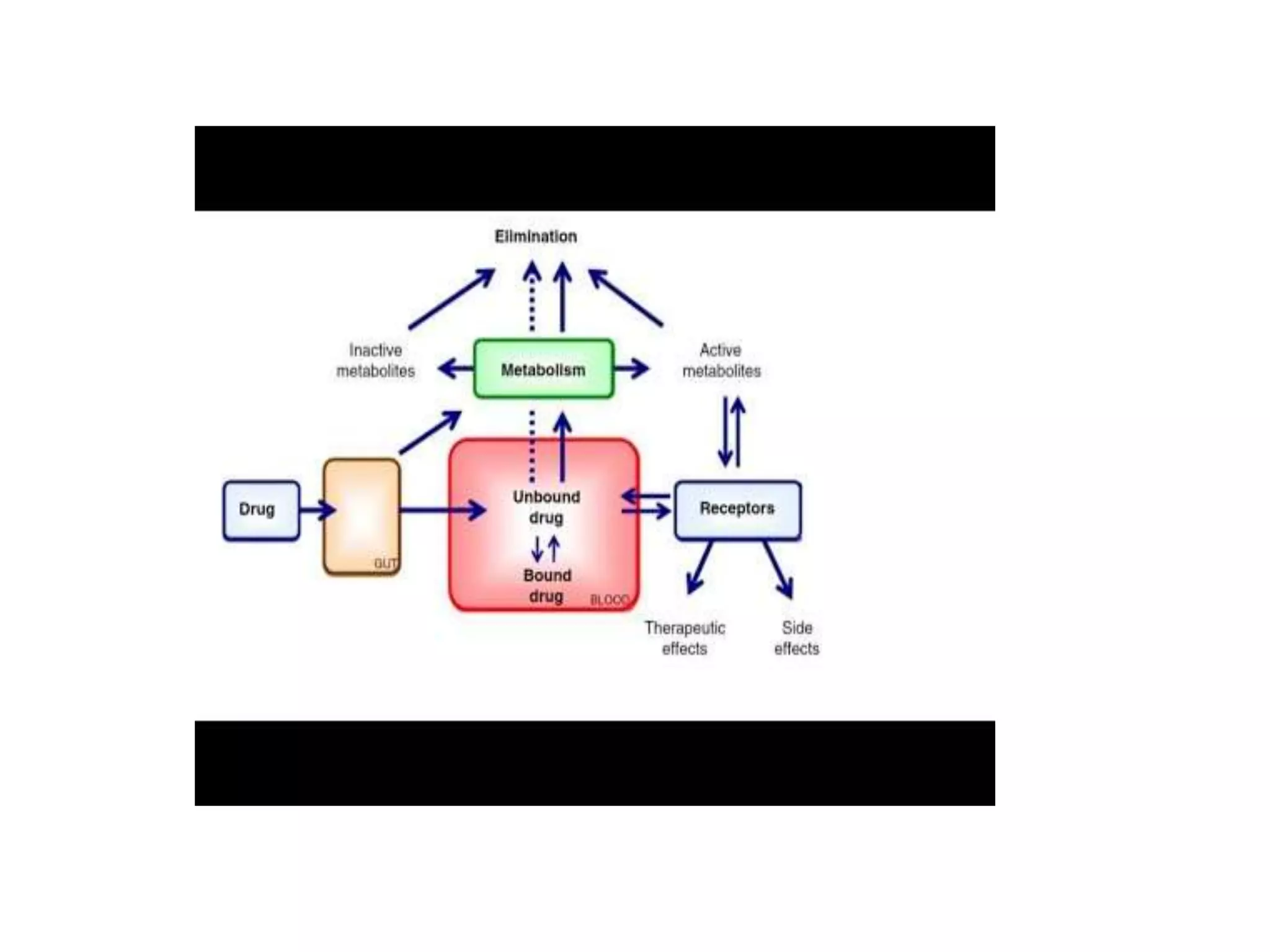
This document discusses protein-drug interactions, which have important implications for drug discovery, pharmacology, and toxicity. It explains that most drugs act by modulating protein activity, and protein transport and distribution in the body also influences drug action. Characterizing the molecular mechanisms of drug-protein binding is crucial for understanding a drug's effects. Common methods to study these interactions include NMR, UV-vis, and circular dichroism spectroscopy, as well as molecular docking simulations and isothermal titration calorimetry. Protein binding influences properties like a drug's activity level, distribution in the body, excretion rate, and toxicity profile.