Program Review & Planning Cycle Use of Results Presented to the  Planning & Budgeting Committee for Evaluation Office of Institutional Effectiveness January 26, 2010
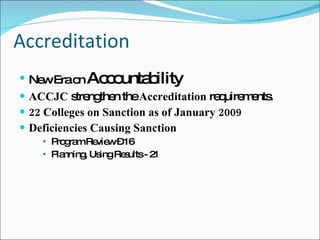
Accreditation New Era on  Accountability   ACCJC  strengthen the  Accreditation  requirements. 22 Colleges on Sanction as of January 2009 Deficiencies Causing Sanction Program Review – 16 Planning, Using Results - 21
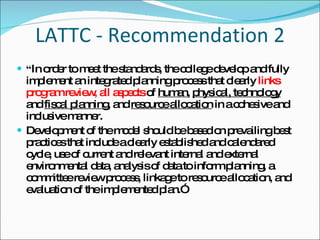
LATTC - Recommendation 2 “ In order to meet the standards, the college develop and fully implement an integrated planning process that clearly  links program review, all aspects  of  human,   physical, technology  and  fiscal planning , and  resource allocation  in a cohesive and inclusive manner.  Development of the model should be based on prevailing best practices that include a clearly established and calendared cycle, use of current and relevant internal and external environmental data, analysis of data to inform planning, a committee review process, linkage to resource allocation, and evaluation of the implemented plan.”
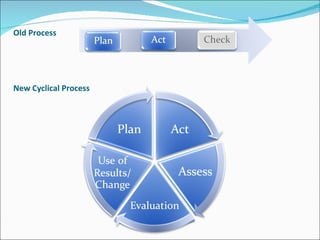
New Cyclical Process Old Process
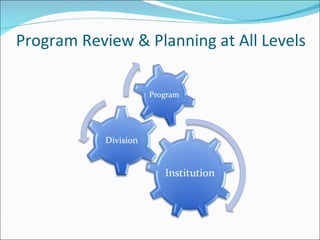
Program Review & Planning at All Levels
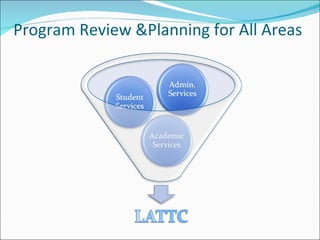
Program Review &Planning for All Areas
Regulation Title 5  regulation says that every program should undergo a program review at least every  6  years. CTE programs every  2  years.
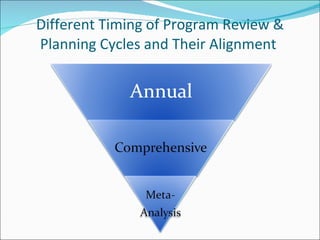
Different Timing of Program Review & Planning Cycles and Their Alignment
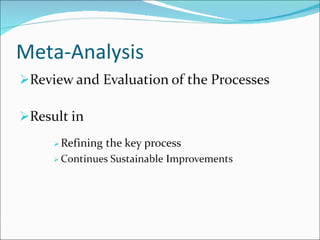
Meta-Analysis
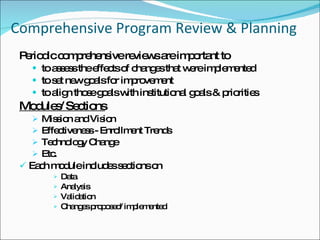
Comprehensive Program Review & Planning  Periodic comprehensive reviews are important to  to assess the effects of changes that were implemented to set new goals for improvement to align those goals with institutional goals & priorities Modules/ Sections Mission and Vision Effectiveness - Enrollment Trends  Technology Change Etc. Each module includes sections on  Data  Analysis  Validation Changes proposed/ implemented
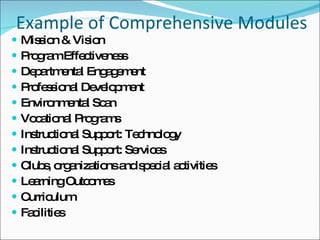
Example of Comprehensive Modules Mission & Vision Program Effectiveness Departmental Engagement Professional Development Environmental Scan Vocational Programs Instructional Support: Technology Instructional Support: Services Clubs, organizations and special activities Learning Outcomes Curriculum Facilities
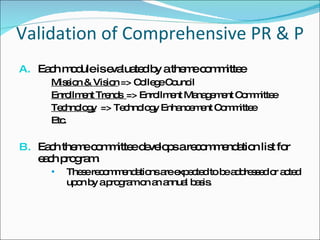
Validation of Comprehensive PR & P Each module is evaluated by a theme committee Mission & Vision  => College Council Enrollment Trends  => Enrollment Management Committee Technology   => Technology Enhancement Committee Etc. Each theme committee develops a recommendation list for each program. These recommendations are expected to be addressed or acted upon by a program on an annual basis.
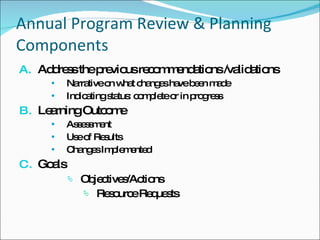
Annual Program Review & Planning Components Address the previous recommendations /validations Narrative on what changes have been made Indicating status: complete or in progress Learning Outcome Assessment  Use of Results Changes Implemented  Goals Objectives/Actions Resource Requests
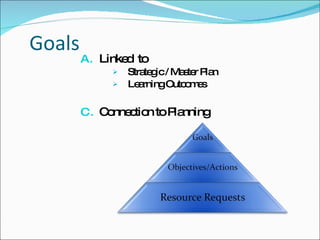
Goals Linked  to Strategic / Master Plan Learning Outcomes Connection to Planning
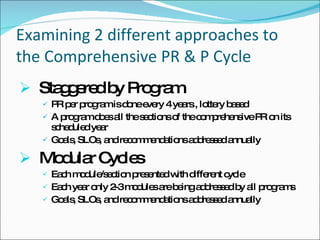
Examining 2 different approaches to the Comprehensive PR & P Cycle Staggered by Program  PR per program is done every 4 years , lottery based A program does all the sections of the comprehensive PR on its scheduled year Goals, SLOs, and recommendations addressed annually Modular Cycles  Each module/section presented with different cycle Each year only 2-3 modules are being addressed by all programs Goals, SLOs, and recommendations addressed annually
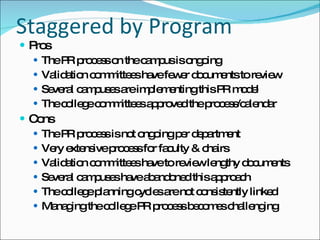
Staggered by Program Pros The PR process on the campus is ongoing  Validation committees have fewer documents to review Several campuses are implementing this PR model  The college committees approved the process/calendar  Cons The PR process is not ongoing per department  Very extensive process for faculty & chairs Validation committees have to review lengthy documents Several campuses have abandoned this approach The college planning cycles are not consistently linked  Managing the college PR process becomes challenging
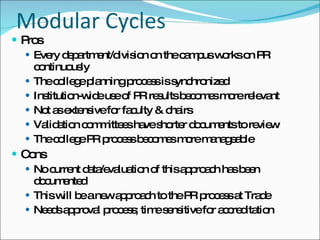
Modular Cycles Pros Every department/division on the campus works on PR continuously  The college planning process is synchronized  Institution-wide use of PR results becomes more relevant  Not as extensive for faculty & chairs Validation committees have shorter documents to review The college PR process becomes more manageable  Cons No current data/evaluation of this approach has been documented This will be a new approach to the PR process at Trade Needs approval process; time sensitive for accreditation
Q & A Your input is valued Please bring or send all your pros and cons concerning both approaches to the meeting Please bring your questions to the committee meeting Please call if you have questions/concerns

Program Review & Planning Cycle

  • 1.
    Program Review &Planning Cycle Use of Results Presented to the Planning & Budgeting Committee for Evaluation Office of Institutional Effectiveness January 26, 2010
  • 2.
    Accreditation New Eraon Accountability ACCJC strengthen the Accreditation requirements. 22 Colleges on Sanction as of January 2009 Deficiencies Causing Sanction Program Review – 16 Planning, Using Results - 21
  • 3.
    LATTC - Recommendation2 “ In order to meet the standards, the college develop and fully implement an integrated planning process that clearly links program review, all aspects of human, physical, technology and fiscal planning , and resource allocation in a cohesive and inclusive manner. Development of the model should be based on prevailing best practices that include a clearly established and calendared cycle, use of current and relevant internal and external environmental data, analysis of data to inform planning, a committee review process, linkage to resource allocation, and evaluation of the implemented plan.”
  • 4.
  • 5.
    Program Review &Planning at All Levels
  • 6.
  • 7.
    Regulation Title 5 regulation says that every program should undergo a program review at least every 6 years. CTE programs every 2 years.
  • 8.
    Different Timing ofProgram Review & Planning Cycles and Their Alignment
  • 9.
  • 10.
    Comprehensive Program Review& Planning Periodic comprehensive reviews are important to to assess the effects of changes that were implemented to set new goals for improvement to align those goals with institutional goals & priorities Modules/ Sections Mission and Vision Effectiveness - Enrollment Trends Technology Change Etc. Each module includes sections on Data Analysis Validation Changes proposed/ implemented
  • 11.
    Example of ComprehensiveModules Mission & Vision Program Effectiveness Departmental Engagement Professional Development Environmental Scan Vocational Programs Instructional Support: Technology Instructional Support: Services Clubs, organizations and special activities Learning Outcomes Curriculum Facilities
  • 12.
    Validation of ComprehensivePR & P Each module is evaluated by a theme committee Mission & Vision => College Council Enrollment Trends => Enrollment Management Committee Technology => Technology Enhancement Committee Etc. Each theme committee develops a recommendation list for each program. These recommendations are expected to be addressed or acted upon by a program on an annual basis.
  • 13.
    Annual Program Review& Planning Components Address the previous recommendations /validations Narrative on what changes have been made Indicating status: complete or in progress Learning Outcome Assessment Use of Results Changes Implemented Goals Objectives/Actions Resource Requests
  • 14.
    Goals Linked to Strategic / Master Plan Learning Outcomes Connection to Planning
  • 15.
    Examining 2 differentapproaches to the Comprehensive PR & P Cycle Staggered by Program PR per program is done every 4 years , lottery based A program does all the sections of the comprehensive PR on its scheduled year Goals, SLOs, and recommendations addressed annually Modular Cycles Each module/section presented with different cycle Each year only 2-3 modules are being addressed by all programs Goals, SLOs, and recommendations addressed annually
  • 16.
    Staggered by ProgramPros The PR process on the campus is ongoing Validation committees have fewer documents to review Several campuses are implementing this PR model The college committees approved the process/calendar Cons The PR process is not ongoing per department Very extensive process for faculty & chairs Validation committees have to review lengthy documents Several campuses have abandoned this approach The college planning cycles are not consistently linked Managing the college PR process becomes challenging
  • 17.
    Modular Cycles ProsEvery department/division on the campus works on PR continuously The college planning process is synchronized Institution-wide use of PR results becomes more relevant Not as extensive for faculty & chairs Validation committees have shorter documents to review The college PR process becomes more manageable Cons No current data/evaluation of this approach has been documented This will be a new approach to the PR process at Trade Needs approval process; time sensitive for accreditation
  • 18.
    Q & AYour input is valued Please bring or send all your pros and cons concerning both approaches to the meeting Please bring your questions to the committee meeting Please call if you have questions/concerns