Lalengzuala 
System Administrator, ICT 
Govt. of Mizoram. 
for 
e-GOVERNANCE PROJECTS
1 
-­‐ 
Introduc,on 
2 
-­‐ 
Importance 
3 
– 
The 
Framework
What? 
M&E 
Why? 
Who? 
When?
MONITORING 
Ongoing 
analysis 
of 
project 
progress 
towards 
achieving 
planned 
results 
with 
the 
purpose 
of 
improving 
management 
decision 
making. 
what? 
EVALUATION 
Assessment 
of 
the 
ef;iciency, 
impact, 
relevance 
and 
sustainability 
of 
the 
project’s 
actions.
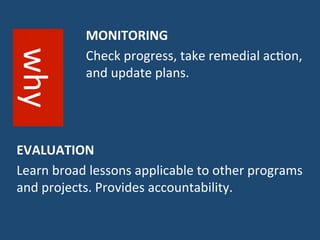
MONITORING 
Check 
progress, 
take 
remedial 
ac,on, 
and 
update 
plans. 
why 
EVALUATION 
Learn 
broad 
lessons 
applicable 
to 
other 
programs 
and 
projects. 
Provides 
accountability.
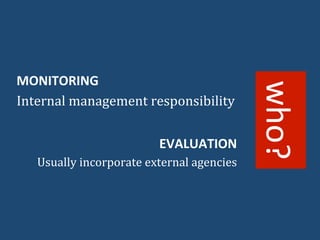
MONITORING 
Internal 
management 
responsibility 
EVALUATION 
Usually 
incorporate 
external 
agencies 
who?
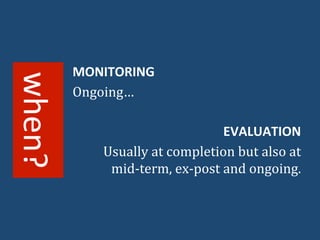
MONITORING 
Ongoing… 
EVALUATION 
Usually 
at 
completion 
but 
also 
at 
mid-­‐term, 
ex-­‐post 
and 
ongoing. 
when?
Monitoring 
& Evaluation 
Why do we need it? 
- NeGP Vision 
- MMPs
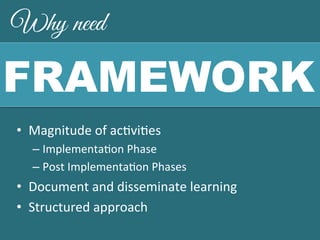
Why need 
FRAMEWORK 
• Magnitude 
of 
ac,vi,es 
– Implementa,on 
Phase 
– Post 
Implementa,on 
Phases 
• Document 
and 
disseminate 
learning 
• Structured 
approach
1 
-­‐ 
Introduc,on 
2 
-­‐ 
Importance 
3 
– 
The 
Framework
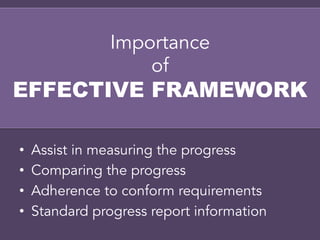
Importance 
of 
EFFECTIVE FRAMEWORK 
• Assist in measuring the progress 
• Comparing the progress 
• Adherence to conform requirements 
• Standard progress report information
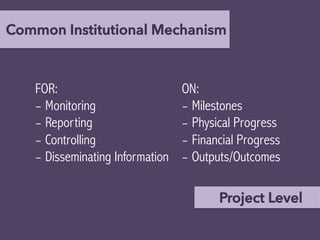
Common Institutional Mechanism 
FOR: 
- Monitoring 
- Reporting 
- Controlling 
- Disseminating Information 
ON: 
- Milestones 
- Physical Progress 
- Financial Progress 
- Outputs/Outcomes 
Project Level
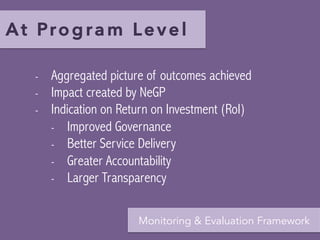
At Program Le v e l 
- Aggregated picture of outcomes achieved 
- Impact created by NeGP 
- Indication on Return on Investment (RoI) 
- Improved Governance 
- Better Service Delivery 
- Greater Accountability 
- Larger Transparency 
Monitoring & Evaluation Framework
1 
-­‐ 
Introduc,on 
2 
-­‐ 
Importance 
3 
– 
The 
Framework
Broad overview of… 
Monitoring and Evaluation! 
Framework
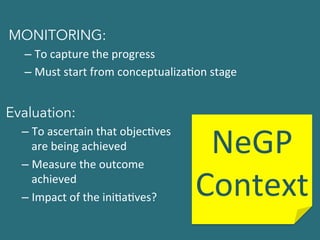
MONITORING: 
– To 
capture 
the 
progress 
– Must 
start 
from 
conceptualiza,on 
stage 
NeGP 
Context 
Evaluation: 
– To 
ascertain 
that 
objec,ves 
are 
being 
achieved 
– Measure 
the 
outcome 
achieved 
– Impact 
of 
the 
ini,a,ves?
the 
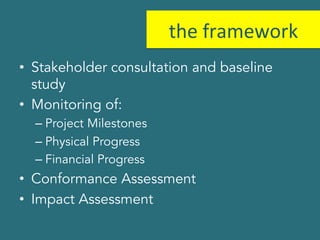
framework 
• Stakeholder consultation and baseline 
study 
• Monitoring of: 
– Project Milestones 
– Physical Progress 
– Financial Progress 
• Conformance Assessment 
• Impact Assessment
detailed… 
MONITORING AND EVALUATION FRAMEWORK
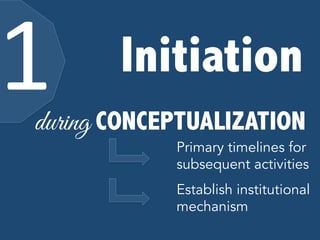
1 
Initiation 
during 
CONCEPTUALIZATION 
Primary timelines for 
subsequent activities 
Establish institutional 
mechanism
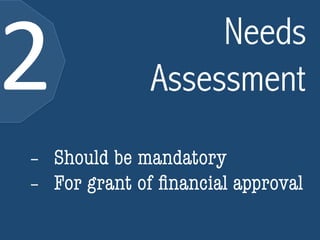
Assessment 2 
Needs 
- Should be mandatory 
- For grant of financial approval
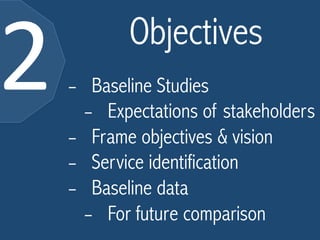
Objectives 2 
- Baseline Studies 
- Expectations of stakeholders 
- Frame objectives & vision 
- Service identification 
- Baseline data 
- For future comparison
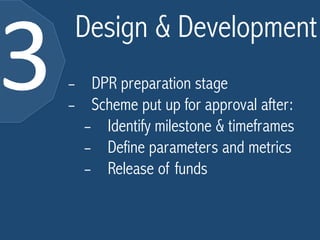
3 
Design & Development - DPR preparation stage 
- Scheme put up for approval after: 
- Identify milestone & timeframes 
- Define parameters and metrics 
- Release of funds
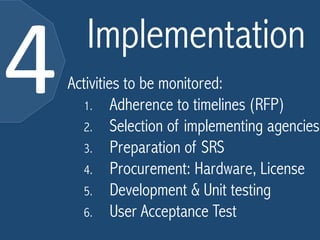
4 
Implementation Activities to be monitored: 
1. Adherence to timelines (RFP) 
2. Selection of implementing agencies 
3. Preparation of SRS 
4. Procurement: Hardware, License 
5. Development & Unit testing 
6. User Acceptance Test
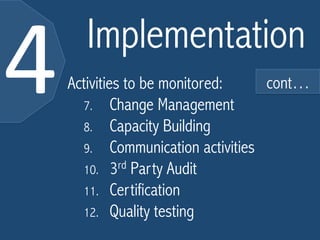
4 
Implementation Activities to be monitored: 
7. Change Management 
8. Capacity Building 
9. Communication activities 
10. 3rd Party Audit 
11. Certification 
12. Quality testing 
cont…
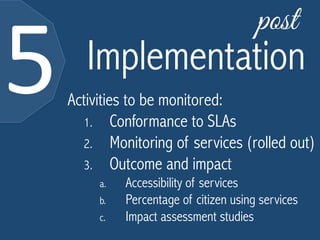
5 
post 
Implementation Activities to be monitored: 
1. Conformance to SLAs 
2. Monitoring of services (rolled out) 
3. Outcome and impact 
a. Accessibility of services 
b. Percentage of citizen using services 
c. Impact assessment studies

Monitoring and Evaluation for e-Governance Projects

  • 1.
    Lalengzuala System Administrator,ICT Govt. of Mizoram. for e-GOVERNANCE PROJECTS
  • 2.
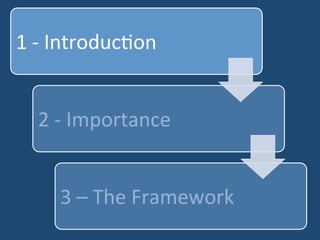
    1 -­‐ Introduc,on 2 -­‐ Importance 3 – The Framework
  • 3.
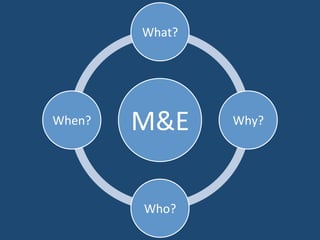
    What? M&E Why? Who? When?
  • 4.
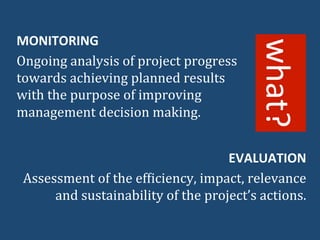
    MONITORING Ongoing analysis of project progress towards achieving planned results with the purpose of improving management decision making. what? EVALUATION Assessment of the ef;iciency, impact, relevance and sustainability of the project’s actions.
  • 5.
    MONITORING Check progress, take remedial ac,on, and update plans. why EVALUATION Learn broad lessons applicable to other programs and projects. Provides accountability.
  • 6.
    MONITORING Internal management responsibility EVALUATION Usually incorporate external agencies who?
  • 7.
    MONITORING Ongoing… EVALUATION Usually at completion but also at mid-­‐term, ex-­‐post and ongoing. when?
  • 8.
    Monitoring & Evaluation Why do we need it? - NeGP Vision - MMPs
  • 9.
    Why need FRAMEWORK • Magnitude of ac,vi,es – Implementa,on Phase – Post Implementa,on Phases • Document and disseminate learning • Structured approach
  • 10.
    1 -­‐ Introduc,on 2 -­‐ Importance 3 – The Framework
  • 11.
    Importance of EFFECTIVEFRAMEWORK • Assist in measuring the progress • Comparing the progress • Adherence to conform requirements • Standard progress report information
  • 12.
    Common Institutional Mechanism FOR: - Monitoring - Reporting - Controlling - Disseminating Information ON: - Milestones - Physical Progress - Financial Progress - Outputs/Outcomes Project Level
  • 13.
    At Program Lev e l - Aggregated picture of outcomes achieved - Impact created by NeGP - Indication on Return on Investment (RoI) - Improved Governance - Better Service Delivery - Greater Accountability - Larger Transparency Monitoring & Evaluation Framework
  • 14.
    1 -­‐ Introduc,on 2 -­‐ Importance 3 – The Framework
  • 15.
    Broad overview of… Monitoring and Evaluation! Framework
  • 16.
    MONITORING: – To capture the progress – Must start from conceptualiza,on stage NeGP Context Evaluation: – To ascertain that objec,ves are being achieved – Measure the outcome achieved – Impact of the ini,a,ves?
  • 17.
    the framework •Stakeholder consultation and baseline study • Monitoring of: – Project Milestones – Physical Progress – Financial Progress • Conformance Assessment • Impact Assessment
  • 18.
    detailed… MONITORING ANDEVALUATION FRAMEWORK
  • 19.
    1 Initiation during CONCEPTUALIZATION Primary timelines for subsequent activities Establish institutional mechanism
  • 20.
    Assessment 2 Needs - Should be mandatory - For grant of financial approval
  • 21.
    Objectives 2 -Baseline Studies - Expectations of stakeholders - Frame objectives & vision - Service identification - Baseline data - For future comparison
  • 22.
    3 Design &Development - DPR preparation stage - Scheme put up for approval after: - Identify milestone & timeframes - Define parameters and metrics - Release of funds
  • 23.
    4 Implementation Activitiesto be monitored: 1. Adherence to timelines (RFP) 2. Selection of implementing agencies 3. Preparation of SRS 4. Procurement: Hardware, License 5. Development & Unit testing 6. User Acceptance Test
  • 24.
    4 Implementation Activitiesto be monitored: 7. Change Management 8. Capacity Building 9. Communication activities 10. 3rd Party Audit 11. Certification 12. Quality testing cont…
  • 25.
    5 post ImplementationActivities to be monitored: 1. Conformance to SLAs 2. Monitoring of services (rolled out) 3. Outcome and impact a. Accessibility of services b. Percentage of citizen using services c. Impact assessment studies