
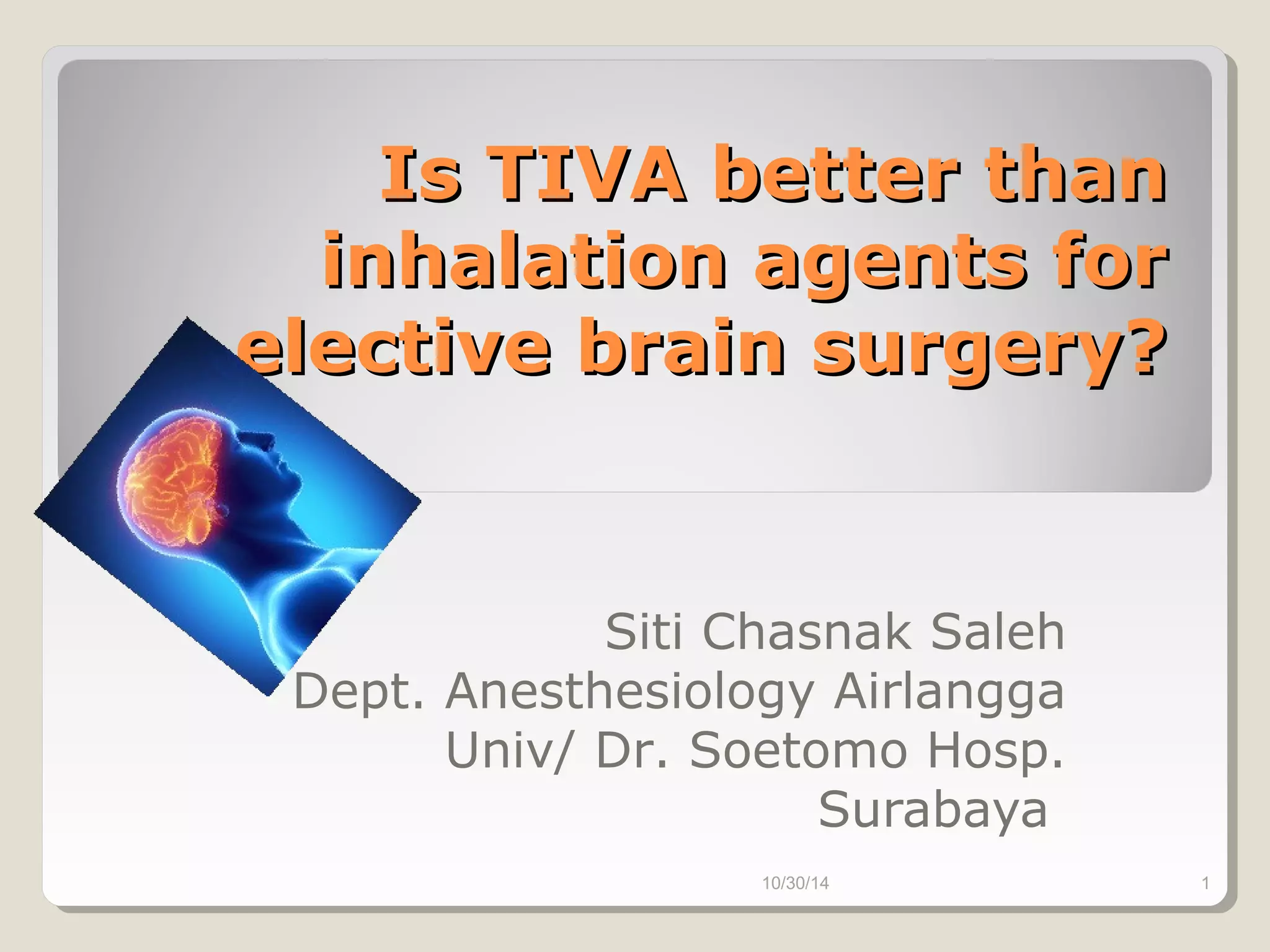


IIss TTIIVVAA bbeetttteerr tthhaann 
iinnhhaallaattiioonn aaggeennttss ffoorr 
eelleeccttiivvee bbrraaiinn ssuurrggeerryy?? 
Siti Chasnak Saleh 
Dept. Anesthesiology Airlangga 
Univ/ Dr. Soetomo Hosp. 
Surabaya 
10/30/14 1
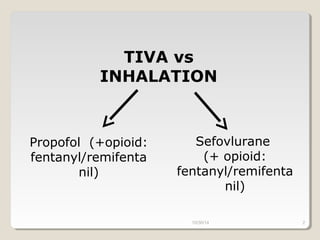
TIVA vs 
INHALATION 
Propofol (+opioid: 
fentanyl/remifenta 
nil) 
Sefovlurane 
(+ opioid: 
fentanyl/remifenta 
nil) 
10/30/14 2
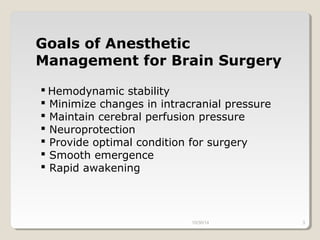
Goals of Anesthetic 
Management for Brain Surgery 
 Hemodynamic stability 
 Minimize changes in intracranial pressure 
 Maintain cerebral perfusion pressure 
 Neuroprotection 
 Provide optimal condition for surgery 
 Smooth emergence 
 Rapid awakening 
10/30/14 3
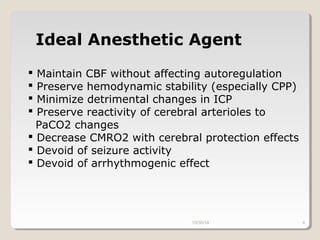
Ideal Anesthetic Agent 
 Maintain CBF without affecting autoregulation 
 Preserve hemodynamic stability (especially CPP) 
 Minimize detrimental changes in ICP 
 Preserve reactivity of cerebral arterioles to 
PaCO2 changes 
 Decrease CMRO2 with cerebral protection effects 
 Devoid of seizure activity 
 Devoid of arrhythmogenic effect 
10/30/14 4
Ideal IV anesthetic drug 
Pharmacodynamic 
•Wide therapeutic ratio 
•Minimal cardiorespiratory & motor side-effects 
•Rapid, predictable, smooth onset 
•Painless & non-irritant 
•Stable at room temperature 
•Rapid recovery (no rebound or emergence 
effects) 
•No adrenal or immune suppression 
•Low potential for anaphylaxis 
10/30/14 5
Pharmacokinetic 
• Rapid redistribution & biotransformation 
• Inactive metabolites 
• Clearance independent of duration of administration 
• Duration of action unaffected by reduced renal or 
hepatic function 
• Rapid recovery 
10/30/14 6
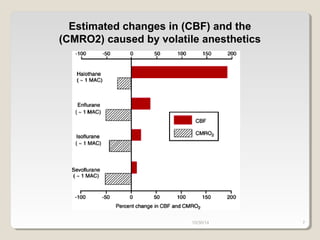
Estimated changes in (CBF) and the 
(CMRO2) caused by volatile anesthetics 
10/30/14 7
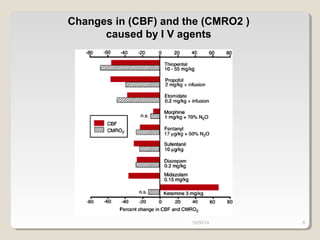
Changes in (CBF) and the (CMRO2 ) 
caused by I V agents 
10/30/14 8
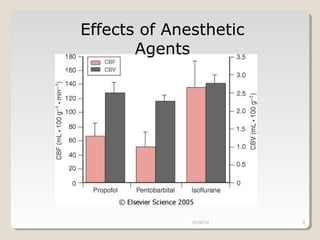
Effects of Anesthetic 
Agents 
10/30/14 9
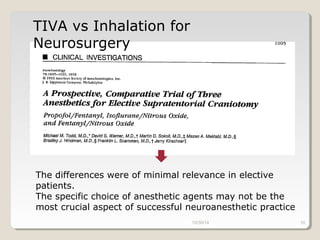
TIVA vs Inhalation for 
Neurosurgery 
The differences were of minimal relevance in elective 
patients. 
The specific choice of anesthetic agents may not be the 
most crucial aspect of successful neuroanesthetic practice 
10/30/14 10
Sevoflurane 
Cerebral pressure 
autoregulation was preserved 
during 0.2 and 1.5 MAC of 
sevoflurane anesthesia in 
human. 
Favouring its use in 
neuroanesthetic practice. 
Gupta et al. BJA 1997; 79:469-472 
10/30/14 11
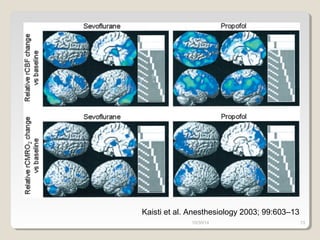
TTIIVVAA vvss IInnhhaallaattiioonn 
 Propofol : reduced rCBF and rCMRO2 
comparably at BIS value of 40 
 Sevoflurane: reduced rCBF less than propofol 
reduced fCMRO2 to an extent 
similar to propofol; does not 
increase ICP 
Anesthesiology 2003; 99:603-613 
10/30/14 12
Kaisti et al. Anesthesiology 2003; 99:603–13 
10/30/14 13
PPRROOPPOOFFOOLL 
In patients without intracranial 
pathology, cerebral pressure 
autoregulation and CO2 reactivity are 
intact during propofol-induced EEG 
silence 
Is this true for patients with 
intracranial pathology? 
Matta,et al. BJA 1995;74:159-163 
10/30/14 14
PROPOFOL and BRAIN TRAUMA 
 Propofol reduced ICP in patients with 
severe brain trauma. 
 Propofol may decrease CPP (its effect on 
MAP ) 
 Propofol exerts no consistent effect on CVR 
 Propofol does not alter cerebral 
arteriovenous oxygen content difference 
Anesthesiology 1990; 73:404-409 
10/30/14 15
CAROTID CLAMPING 
The most importance during 
carotid clamping is cerebral 
blood flow, not arterial 
pressure.  Sevoflurane is 
the preferred agent. 
Anesthesiology 2007; 106:56-64 
10/30/14 16 
1st Interpretation
10/30/14 17 
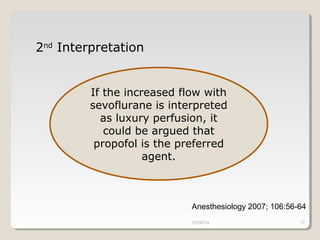
2nd Interpretation 
If the increased flow with 
sevoflurane is interpreted 
as luxury perfusion, it 
could be argued that 
propofol is the preferred 
agent. 
Anesthesiology 2007; 106:56-64
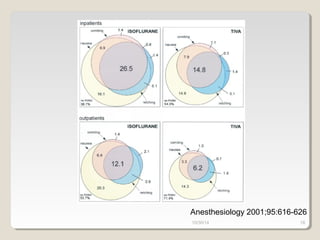
Anesthesiology 2001;95:616-626 
10/30/14 18
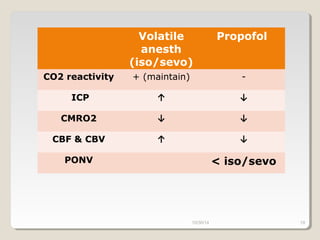
Volatile 
anesth 
(iso/sevo) 
Volatile anesth 
agents (iso/sevo) 
Propofol 
Propofol 
CO2 reactivity + (maintain) - 
ICP ↑ ↓ 
CMRO2 ↓ ↓ 
CBF & CBV ↑ ↓ 
PONV < iso/sevo 
10/30/14 19
10/30/14 20 
COST 
BENEFIT?
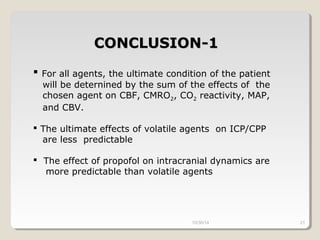
CCOONNCCLLUUSSIIOONN--11 
 For all agents, the ultimate condition of the patient 
will be deternined by the sum of the effects of the 
chosen agent on CBF, CMRO2, CO2 reactivity, MAP, 
and CBV. 
 The ultimate effects of volatile agents on ICP/CPP 
are less predictable 
 The effect of propofol on intracranial dynamics are 
more predictable than volatile agents 
10/30/14 21
CCOONNCCLLUUSSIIOONN--22 
 Propofol reduces intracranial pressure in patients with 
severe brain trauma and ICP to or less that 15 mmHg  
TIVA is preverable , at least until the dura is opened. 
 The CO2 reactivity during anethesia with volatile 
anesthetic agents is significantly higher  inhalation 
anesthesia is preverable in brain tumor surgery. 
10/30/14 22
10/30/14 23

Is TIVA better than inhalation agents for elective brain surgery?

  • 1.
    IIss TTIIVVAA bbeetttteerrtthhaann iinnhhaallaattiioonn aaggeennttss ffoorr eelleeccttiivvee bbrraaiinn ssuurrggeerryy?? Siti Chasnak Saleh Dept. Anesthesiology Airlangga Univ/ Dr. Soetomo Hosp. Surabaya 10/30/14 1
  • 2.
    TIVA vs INHALATION Propofol (+opioid: fentanyl/remifenta nil) Sefovlurane (+ opioid: fentanyl/remifenta nil) 10/30/14 2
  • 3.
    Goals of Anesthetic Management for Brain Surgery  Hemodynamic stability  Minimize changes in intracranial pressure  Maintain cerebral perfusion pressure  Neuroprotection  Provide optimal condition for surgery  Smooth emergence  Rapid awakening 10/30/14 3
  • 4.
    Ideal Anesthetic Agent  Maintain CBF without affecting autoregulation  Preserve hemodynamic stability (especially CPP)  Minimize detrimental changes in ICP  Preserve reactivity of cerebral arterioles to PaCO2 changes  Decrease CMRO2 with cerebral protection effects  Devoid of seizure activity  Devoid of arrhythmogenic effect 10/30/14 4
  • 5.
    Ideal IV anestheticdrug Pharmacodynamic •Wide therapeutic ratio •Minimal cardiorespiratory & motor side-effects •Rapid, predictable, smooth onset •Painless & non-irritant •Stable at room temperature •Rapid recovery (no rebound or emergence effects) •No adrenal or immune suppression •Low potential for anaphylaxis 10/30/14 5
  • 6.
    Pharmacokinetic • Rapidredistribution & biotransformation • Inactive metabolites • Clearance independent of duration of administration • Duration of action unaffected by reduced renal or hepatic function • Rapid recovery 10/30/14 6
  • 7.
    Estimated changes in(CBF) and the (CMRO2) caused by volatile anesthetics 10/30/14 7
  • 8.
    Changes in (CBF)and the (CMRO2 ) caused by I V agents 10/30/14 8
  • 9.
    Effects of Anesthetic Agents 10/30/14 9
  • 10.
    TIVA vs Inhalationfor Neurosurgery The differences were of minimal relevance in elective patients. The specific choice of anesthetic agents may not be the most crucial aspect of successful neuroanesthetic practice 10/30/14 10
  • 11.
    Sevoflurane Cerebral pressure autoregulation was preserved during 0.2 and 1.5 MAC of sevoflurane anesthesia in human. Favouring its use in neuroanesthetic practice. Gupta et al. BJA 1997; 79:469-472 10/30/14 11
  • 12.
    TTIIVVAA vvss IInnhhaallaattiioonn  Propofol : reduced rCBF and rCMRO2 comparably at BIS value of 40  Sevoflurane: reduced rCBF less than propofol reduced fCMRO2 to an extent similar to propofol; does not increase ICP Anesthesiology 2003; 99:603-613 10/30/14 12
  • 13.
    Kaisti et al.Anesthesiology 2003; 99:603–13 10/30/14 13
  • 14.
    PPRROOPPOOFFOOLL In patientswithout intracranial pathology, cerebral pressure autoregulation and CO2 reactivity are intact during propofol-induced EEG silence Is this true for patients with intracranial pathology? Matta,et al. BJA 1995;74:159-163 10/30/14 14
  • 15.
    PROPOFOL and BRAINTRAUMA  Propofol reduced ICP in patients with severe brain trauma.  Propofol may decrease CPP (its effect on MAP )  Propofol exerts no consistent effect on CVR  Propofol does not alter cerebral arteriovenous oxygen content difference Anesthesiology 1990; 73:404-409 10/30/14 15
  • 16.
    CAROTID CLAMPING Themost importance during carotid clamping is cerebral blood flow, not arterial pressure.  Sevoflurane is the preferred agent. Anesthesiology 2007; 106:56-64 10/30/14 16 1st Interpretation
  • 17.
    10/30/14 17 2ndInterpretation If the increased flow with sevoflurane is interpreted as luxury perfusion, it could be argued that propofol is the preferred agent. Anesthesiology 2007; 106:56-64
  • 18.
  • 19.
    Volatile anesth (iso/sevo) Volatile anesth agents (iso/sevo) Propofol Propofol CO2 reactivity + (maintain) - ICP ↑ ↓ CMRO2 ↓ ↓ CBF & CBV ↑ ↓ PONV < iso/sevo 10/30/14 19
  • 20.
  • 21.
    CCOONNCCLLUUSSIIOONN--11  Forall agents, the ultimate condition of the patient will be deternined by the sum of the effects of the chosen agent on CBF, CMRO2, CO2 reactivity, MAP, and CBV.  The ultimate effects of volatile agents on ICP/CPP are less predictable  The effect of propofol on intracranial dynamics are more predictable than volatile agents 10/30/14 21
  • 22.
    CCOONNCCLLUUSSIIOONN--22  Propofolreduces intracranial pressure in patients with severe brain trauma and ICP to or less that 15 mmHg  TIVA is preverable , at least until the dura is opened.  The CO2 reactivity during anethesia with volatile anesthetic agents is significantly higher  inhalation anesthesia is preverable in brain tumor surgery. 10/30/14 22
  • 23.

Editor's Notes

  • #2 Pada saat ini ada dua pilihan teknik anestesi untuk bedah otak terencana, yaitu anestesi berbasis inhalasi/anestesi volatil dan anestesi berbasis intravena (TIVA).
  • #4 Secara umum tujuan yang ingin dicapai dari pengelolaan anestesi untuk bedah tumor otak adalah menjaga stabilitas hemodinamik, meminimumkan perubahan tekanan intrakranial, mempertahankan tekanan perfusi otak, menyiapkan agar pembedahan dapat berlangsung optimal, proses akhir anestesi yang lancar dan pasien sepat bangun. Gangguan hemodinamik misalnya hipotensi dapat berpengaruh terhadap tekanan intrakranial dan tekanan perfusi otak. Keadaan ini tenu akan menyebabkan kondisi otak menjadi lebih buruk.
  • #5 Untuk mencapai tujuan tersebut maka diperlukan pemilihan obat yang dapat menunjangnya. Syarat dari obat anestesi ideal untuk neuroanestesi adalah : dapat mempertahankan aliran darah otak tanpa memberi dampak pada autoregulasi. Mempertahankan stabilitas hemodinamik, dapat meminimumkan efek yang tidak diinginkan pada TIK, mempertahakan reaktivitas arteriol terhadap perubahan PaCO2, menurunkan metabolisme otak yang mempunyai efek terhadap proteksi otak, tidak mempunyai efek yang menimbulkan serangan epilepsi dan aritmi.
  • #6 Untuk obat anestesi intravena yang ideal diperlukan syarat yang meliputi sifat farmakodinamik dan farmakokinetiknya. Sifat farmakodinamik meliputi rasio terapi yang lebar, efek samping terhadap kardiorespirasi dan motor minimum, mula kerja cepat dan dapat diprediksi, tidak menimbulkan nyeri dan iritasi pada penyuntikan, pulihsadar cepat dan tanpa ada efek ‘rebound’ atau efek saat akhir anestesi, tidak berpengaruh terhadap adrenal atau supresi imun, serta kemungkinan kecil terjadinya anafilaksis.
  • #7 Sementara itu sifat farmakokinetik ideal yang diharapkan adalah redistribusi dan biotransformasi, dengan metabolit yang tidak aktif, kliren tidak bergantung pada lama pemberian, lama kerja tidak dipengaruhi oleh gangguan faal ginjal dan hepar, serta masa pulih sadar cepat.
  • #11 Telah diketahui bahwa berbagai obat anestesi umpenyai efek yang berbeda pada fisiologi pembuluh darah otak. Berdasarkan hal tersebut, dilakukan suatu penelitian oleh Todd dkk pada awal th 1990 an untuk mencari bukti apakan perbedaan tersebut mempunyai arti klinis untuk praktek neuroanestesi.
  • #12 Dengan melihat berbagai sifat obat anestesi baik obat inhalasi maupun intravena, maka dapat dibandingkan keduanya untuk dipilih obat mana yang pating cocok untuk digunakan. Dari suatu penelitian pada manusia didapatkan bahwa sevofluran 0,2 dan 1,5 MAC dapt mempertahankn tekanan perfusi otak dan autoregulasi. Keadaan ini menjadi pertimbangan pilihan untuk digunakan pada praktek neuroanestesi (BJA 1997).
  • #14 Tampak area terluas dengan penurunan relatif dari aliran darah otak regional (rCBF) dan metabolisme oksigen regional (rCMRO2) yang disebabkan oleh sevofluran atau propofol saja. Warna menunjukkan daerah yang perubahannya secara statistik bermakna (P &amp;lt; 0.05, corrected for multiple comparisons).