ANESTHESIA AWARENESS
Dr. Raman Ghimire
WHAT HAPPENS IF WE AWAKE
DURING GENERAL ANESTHESIA
??
INTRODUCTION
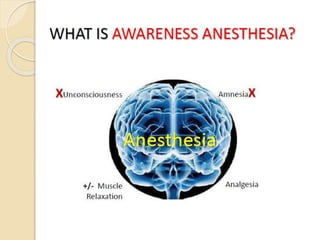
Awareness Anesthesia occurs when a patient becomes conscious
during a surgical procedure performed under GA and subsequently
has recall of these events.
 For anesthesiologists , AA ranks second only to death as a
“dreaded” complication
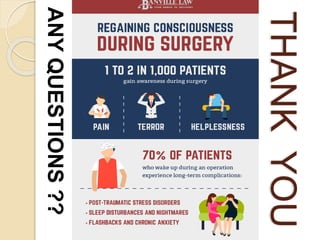
 Incidence: 0.1% - 0.2%
cardiac surgery 1.1% -1.5%.
obstetric C/S (0.4%)
surgery in trauma cases (11% - 43%)
 Significantly influence the cognitive and psychological functions
of the patients
 Medicolegal issue
Who Is at Risk For Anesthesia
Awareness?
 Women > Men
 Age < 60 years
 TIVA > inhalational
 Long duration of surgery
 Awareness history
 People with natural red hair
CAUSES OF AWARENESS
1. Light anesthesia
a. Cardiac surgeries
b. C/S
c. Surgery in trauma
d. ASA physical status 4-5
e. Premature discontinuation of anesthetic agents
2. Increased anesthetic requirements
a. Chronic use of benzodiazepines or opioids
b. Alcoholics
c. Severly anxious patients
d. Difficult intubation
e. Previous awareness experience
3. Improper equipment maintenance or
anesthesiologist error
a. Failure to fill vaporisers
b. Judgement errors related to drugs and volatile agents
c. Disconnections and kinks in tubes from the ventilator
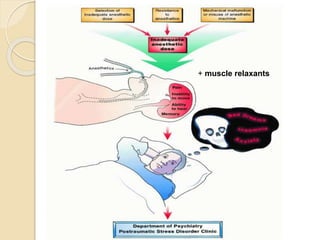
+ muscle relaxants
PATIENT PERCEPTIONS OF
AWARENESS
Recall: immediately after surgery, recovery room, or several days later
Most common
• Sounds and conversation – 89% to 100%
• Sensation of paralysis - 85%
• Anxiety and panic
• Helplessness and powerlessness
• Pain - 39%
Least common
• Visual perceptions
• Intubation or tube
• Feeling the operation without pain
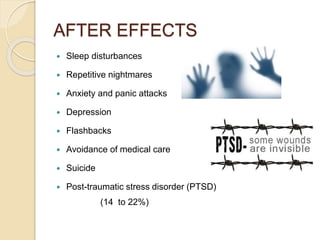
AFTER EFFECTS
 Sleep disturbances
 Repetitive nightmares
 Anxiety and panic attacks
 Depression
 Flashbacks
 Avoidance of medical care
 Suicide
 Post-traumatic stress disorder (PTSD)
(14 to 22%)
Prevention of awareness
A. Preoperative evaluation
1) History
2) Physical examination
3) Identifying patients' risk factors for intraoperative awareness
4) informing high risk patients regarding the possibility of
intraoperative awareness.
B. Preinduction of general anesthesia
1) Prophylactic administration of benzodiazepines.
2) Checking the functioning of anesthesia delivery systems
C. Intraoperative interventions
(1) Cautionary use of the neuromuscular blocking agents
(2) inhalant anesthetics must be monitored with end-tidal gas
analyzers and the minimum alveolar concentration (MAC) of
anesthetic agents should be maintained > 0.8
(3) BIS value < 60
D. Postoperative interventions
(1) Postoperative interview to report awareness
a. What is the last thing you remember before surgery?
b. What is the first thing you remember after surgery?
c. Do you remember anything during the procedure?
d. Did you dream during the procedure?
(2) providing postoperative counseling or psychological
support.
Methods of Monitoring
Consciousness During General
Anesthesia
A. Clinical signs
 Sympathetic activities:
HR, BP,
sweating,
pupillary dilatation,
lacrimation …
 Unreliable
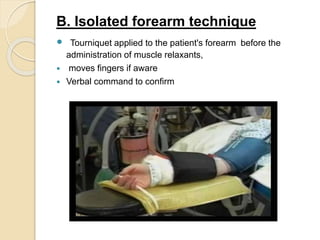
B. Isolated forearm technique
 Tourniquet applied to the patient's forearm before the
administration of muscle relaxants,
 moves fingers if aware
 Verbal command to confirm
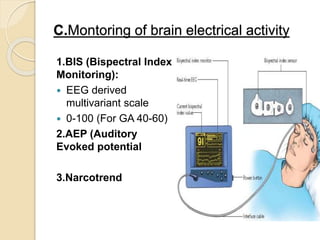
C.Montoring of brain electrical activity
1.BIS (Bispectral Index
Monitoring):
 EEG derived
multivariant scale
 0-100 (For GA 40-60)
2.AEP (Auditory
Evoked potential
3.Narcotrend
D. Measurements of lower esophageal
sphincter contractions
E. EEG of frontalis muscle
MCQs
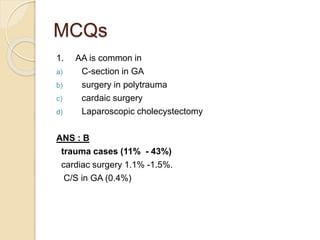
1. AA is common in
a) C-section in GA
b) surgery in polytrauma
c) cardaic surgery
d) Laparoscopic cholecystectomy
ANS : B
trauma cases (11% - 43%)
cardiac surgery 1.1% -1.5%.
C/S in GA (0.4%)
MCQs
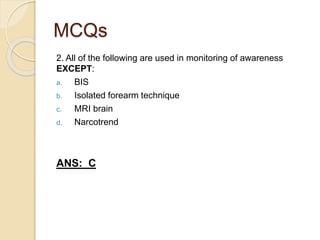
2. All of the following are used in monitoring of awareness
EXCEPT:
a. BIS
b. Isolated forearm technique
c. MRI brain
d. Narcotrend
ANS: C
REFERENCES
 Effects of different methods of general anesthesia on intraoperative
awareness in surgical patients Haijiao Yu, PhD and Di Wu, PhD∗
 Posttraumatic stress disorder in aware patients from the B-aware
trial.Leslie K, Chan MT, Myles PS, Forbes A, McCulloch TJ Anesth
Analg. 2010 Mar 1; 110(3):823-8.
 Chung HS. Awareness and recall during general anesthesia. Korean
J Anesthesiol 2014;66:339–45.
 Awareness during anesthesia: how sure can we be that the patient
is sleeping indeed? G Kotsovolis1 and G Komninos2
 [An anesthetized anesthesiologist tells his experience of waking up
accidentally during the operation].Peduto VA, Silvetti L, Piga M
Minerva Anestesiol. 1994 Jan-Feb; 60(1-2):1-5.
THANKYOU
ANYQUESTIONS??
Cultural references
 Awake, a 2007 film about anesthetic
awareness
 Anesthesia, an award-winning horror film
about anesthesia awareness.
 Return, a Korean thriller movie about
anesthesia awareness.
 In an episode of Nip/Tuck a woman, Rhea
Reynolds, experiences anesthesia awareness
while having surgery to repair scarring on her
face.
 Under: a 2006 film about anesthetic
awareness
 2014 Bollywood movie Heartless – the

Anesthesia awareness

  • 1.
  • 2.
    WHAT HAPPENS IFWE AWAKE DURING GENERAL ANESTHESIA ??
  • 3.
    INTRODUCTION Awareness Anesthesia occurswhen a patient becomes conscious during a surgical procedure performed under GA and subsequently has recall of these events.  For anesthesiologists , AA ranks second only to death as a “dreaded” complication  Incidence: 0.1% - 0.2% cardiac surgery 1.1% -1.5%. obstetric C/S (0.4%) surgery in trauma cases (11% - 43%)  Significantly influence the cognitive and psychological functions of the patients  Medicolegal issue
  • 5.
    Who Is atRisk For Anesthesia Awareness?  Women > Men  Age < 60 years  TIVA > inhalational  Long duration of surgery  Awareness history  People with natural red hair
  • 6.
    CAUSES OF AWARENESS 1.Light anesthesia a. Cardiac surgeries b. C/S c. Surgery in trauma d. ASA physical status 4-5 e. Premature discontinuation of anesthetic agents
  • 7.
    2. Increased anestheticrequirements a. Chronic use of benzodiazepines or opioids b. Alcoholics c. Severly anxious patients d. Difficult intubation e. Previous awareness experience 3. Improper equipment maintenance or anesthesiologist error a. Failure to fill vaporisers b. Judgement errors related to drugs and volatile agents c. Disconnections and kinks in tubes from the ventilator
  • 8.
  • 9.
    PATIENT PERCEPTIONS OF AWARENESS Recall:immediately after surgery, recovery room, or several days later Most common • Sounds and conversation – 89% to 100% • Sensation of paralysis - 85% • Anxiety and panic • Helplessness and powerlessness • Pain - 39% Least common • Visual perceptions • Intubation or tube • Feeling the operation without pain
  • 10.
    AFTER EFFECTS  Sleepdisturbances  Repetitive nightmares  Anxiety and panic attacks  Depression  Flashbacks  Avoidance of medical care  Suicide  Post-traumatic stress disorder (PTSD) (14 to 22%)
  • 11.
    Prevention of awareness A.Preoperative evaluation 1) History 2) Physical examination 3) Identifying patients' risk factors for intraoperative awareness 4) informing high risk patients regarding the possibility of intraoperative awareness. B. Preinduction of general anesthesia 1) Prophylactic administration of benzodiazepines. 2) Checking the functioning of anesthesia delivery systems
  • 12.
    C. Intraoperative interventions (1)Cautionary use of the neuromuscular blocking agents (2) inhalant anesthetics must be monitored with end-tidal gas analyzers and the minimum alveolar concentration (MAC) of anesthetic agents should be maintained > 0.8 (3) BIS value < 60 D. Postoperative interventions (1) Postoperative interview to report awareness a. What is the last thing you remember before surgery? b. What is the first thing you remember after surgery? c. Do you remember anything during the procedure? d. Did you dream during the procedure? (2) providing postoperative counseling or psychological support.
  • 13.
    Methods of Monitoring ConsciousnessDuring General Anesthesia A. Clinical signs  Sympathetic activities: HR, BP, sweating, pupillary dilatation, lacrimation …  Unreliable
  • 14.
    B. Isolated forearmtechnique  Tourniquet applied to the patient's forearm before the administration of muscle relaxants,  moves fingers if aware  Verbal command to confirm
  • 15.
    C.Montoring of brainelectrical activity 1.BIS (Bispectral Index Monitoring):  EEG derived multivariant scale  0-100 (For GA 40-60) 2.AEP (Auditory Evoked potential 3.Narcotrend
  • 16.
    D. Measurements oflower esophageal sphincter contractions E. EEG of frontalis muscle
  • 17.
    MCQs 1. AA iscommon in a) C-section in GA b) surgery in polytrauma c) cardaic surgery d) Laparoscopic cholecystectomy ANS : B trauma cases (11% - 43%) cardiac surgery 1.1% -1.5%. C/S in GA (0.4%)
  • 18.
    MCQs 2. All ofthe following are used in monitoring of awareness EXCEPT: a. BIS b. Isolated forearm technique c. MRI brain d. Narcotrend ANS: C
  • 19.
    REFERENCES  Effects ofdifferent methods of general anesthesia on intraoperative awareness in surgical patients Haijiao Yu, PhD and Di Wu, PhD∗  Posttraumatic stress disorder in aware patients from the B-aware trial.Leslie K, Chan MT, Myles PS, Forbes A, McCulloch TJ Anesth Analg. 2010 Mar 1; 110(3):823-8.  Chung HS. Awareness and recall during general anesthesia. Korean J Anesthesiol 2014;66:339–45.  Awareness during anesthesia: how sure can we be that the patient is sleeping indeed? G Kotsovolis1 and G Komninos2  [An anesthetized anesthesiologist tells his experience of waking up accidentally during the operation].Peduto VA, Silvetti L, Piga M Minerva Anestesiol. 1994 Jan-Feb; 60(1-2):1-5.
  • 20.
  • 21.
    Cultural references  Awake,a 2007 film about anesthetic awareness  Anesthesia, an award-winning horror film about anesthesia awareness.  Return, a Korean thriller movie about anesthesia awareness.  In an episode of Nip/Tuck a woman, Rhea Reynolds, experiences anesthesia awareness while having surgery to repair scarring on her face.  Under: a 2006 film about anesthetic awareness  2014 Bollywood movie Heartless – the

Editor's Notes

  • #4 General anesthesia is the quickest anesthesia method in an emergency; APH, cord prolapse,FD increased blood loss associated with general anesthesia might be due to the uterine atony Considered medical negligence Might costs Thausands of dollar for anesthesiologists
  • #5 GA comprises … If pt is aware and recall events
  • #6 2% of population has Red hair :MC1R (melanocyte-1 receptor ) gene ; increased requirement for anesthesia
  • #7 ASA 4 A patient with severe systemic disease that is a constant threat to life. ASA 5 A moribund patient who is not expected to survive without Operation
  • #9 Inad . Anesthtic dose + muscle relx : Pt is aware bt cannot move
  • #10 Case report of recall after 5 years
  • #12 H/o: drug abuse , systemic illness ,h/o awareness evidences have reported that midazolam application was a protective factor for intraoperative awareness
  • #13 (applying a monitor for the neuromuscular function and maintaining T1 > 5%),
  • #16 0 – flat line in EEG 100- awake
  • #17  frontalis muscle least sensitive to neuromuscular blockers,