Drugs Acting on CNS
• Classification of drugs acting on CNS
– General anesthesia: intravenous and inhalational
– Local anesthetics
– Opioid analgesics
– Agents affecting neuromuscular transmission
– Central nervous system stimulants
– Sedative–hypnotic and anxiolytic
– Drugs used in neurodegenerative disorders
– Antiepileptic drugs
– Drugs used in mood disorders
– Antipsychotic drugs
– Contemporary drug of abuse
2
• General anesthetics
– It depresses the CNS to a sufficient degree
Therefore, it is used to permit the performance of
surgery and other noxious or unpleasant procedures
– It cause complete loss of consciousness
– It has low therapeutic indices and thus require
great care in administration
– The selection of specific drugs and routes of
administration is based on their pharmacokinetic
properties and on the secondary effects of the
various drugs
3
• Historical Perspectives
– Ether was the ideal "first" anesthetic
– It is a liquid at room temperature
– Ether, unlike nitrous oxide, was potent
– It could produce anesthesia without diluting
room air to hypoxic levels
– It was relatively nontoxic and produced limited
respiratory or circulatory compromise
4
• General principles of surgical anesthesia
– Anesthesia is usually neither therapeutic nor diagnostic
– Except in the treatment of status asthmaticus with halothane and
intractable angina with epidural local anesthetics
– The three general objectives to monitor anesthesia are :
 Minimizing the potentially deleterious direct and indirect effects
 Sustaining physiologic homeostasis during surgical procedures
 Which involve major blood loss, tissue ischemia, reperfusion of ischemic
tissue, exposure to a cold environment, and impaired coagulation
 Improving postoperative outcomes
by choosing techniques that block or treat components
of the surgical stress response, which may lead to short-
or long-term sequelae
5
STAGES OF ANESTHESIA
• Anesthetic effects on the brain can be divided into four
stages of increasing depth of CNS depression:
I. Stage of analgesia:
 The patient initially experiences analgesia without amnesia
 Later in stage I, both analgesia and amnesia are produced
II. Stage of excitement
 patient often appears to be delirious and may vocalize but is
definitely amnesic
 Respiration is irregular both in volume and rate, and vomiting
may occur if the patient is stimulated
 For these reasons, efforts are made to limit duration of this
stage by rapidly increasing the concentration
6
III. Stage of surgical anesthesia
begins with recurrence of regular respiration and
extends to complete cessation of spontaneous
respiration (apnea)
IV. Stage of medullary depression
This deep stage of anesthesia includes severe
depression of the CNS, including
the vasomotor center in the medulla
the respiratory center in the brain stem
Without circulatory and respiratory support, death
rapidly ensues
7
• Hemodynamic effects of general anesthesia
– Both intravenous and inhalational agents:
Decrease systemic arterial blood pressure
– These includes;
 Direct vasodilation
Myocardial depression
A blunting of baroreceptor control
A generalized decrease in central sympathetic tone
Etomidate and ketamine must be used with caution in
trauma victims - because intravascular volume
depletion is being compensated by intense
sympathetic discharge
They show minimal hypotensive tendencies
8
• Respiratory effects
– Nearly all general anesthetics reduce ventilatory
drive and the reflexes that maintain airway
patency
– Therefore, ventilation must be assisted or
controlled for at least some period during
surgery
– Endotracheal intubation decline the number of
aspiration deaths
9
• Hypothermia
– General anesthetics lower the core temperature set
point which produce vasoconstriction
• Thereby , it causes heat loss
– Vasodilation produced by both general and regional
anesthesia offsets cold-induced peripheral
vasoconstriction
– Even small drops in body temperatures may lead to an
increase in perioperative morbidity, including
Cardiac complications
Wound infections
Impaired coagulation
– Prevention of hypothermia has emerged as a major
goal of anesthetic care
10
• Nausea and Vomiting
– In the postoperative period, this is continue to be
significant problems
– They are caused by an action of anesthetics on
the CTZ and the brainstem vomiting center:
These are modulated by serotonin (5-HT), histamine,
acetylcholine (ACh), and dopamine (DA)
11
– The 5-HT3-receptor antagonist ondansetron is very effective
in suppressing nausea and vomiting
– Common treatments also include
 Droperidol
 Metoclopramide
 Dexamethasone
 Avoidance of N2O (b/c it is associated with postoperative nausea and
vomiting)
– The use of
 propofol as an induction agent
 NSAIDs ketorolac as a substitute for opioids may decrease
the incidence and severity of postoperative nausea and
vomiting
12
• Ideal properties of general anesthesia
– Amnesia
– Relaxation of skeletal muscle
 This is to facilitate endotracheal intubation, provide the surgeon
ready access to the operative field, and reduce the dose of
anesthetic required to produce immobility
– Minimal and reversible influence on vital physiological
functions
– Analgesia
 Sufficient to abolish the reflex reactions to pain, such as muscular
movement and cardiovascular stimulation
 Attenuation of autonomic responses to noxious stimulation
– Rapid loss of consciousness
 It eliminates awareness,memory of pain, anxiety, and stress
throughout the surgical period
– Prompt patient recovery to psychomotor competence
13
– None of the anesthetic possesses all of the features
– The patient’s needs are usually met with the use of
anesthetic drugs and/or adjunctive agents, such as:
 Neuromuscular blocking drugs
Opioids
• Balanced anesthesia
– It is a term used to describe the multidrug approach to
manage the patient’s anesthetic needs
– It takes advantage of each drug’s beneficial effects
– It minimizes each agent’s adverse effects
14
• Mechanisms of Anesthesia
– The inhalational anesthetics
inhibit excitatory synapses and enhance inhibitory
synapses in various preparations
It also can act postsynaptically, by altering the
response to released neurotransmitter
– The intravenous agents act predominantly by:
Enhancing inhibitory neurotransmission
whereas ketamine predominantly inhibits excitatory
neurotransmission at glutamatergic synapses
15
• Anatomic sites of anesthetic action
– General anesthetics could interrupt nervous
system function at myriad/many/ levels,
including:
Peripheral sensory neurons
The spinal cord
The brainstem
The cerebral cortex
16
• General anesthesia is divided into two groups:
Parenteral/intravenous anesthetics
Inhalational anesthetics
17
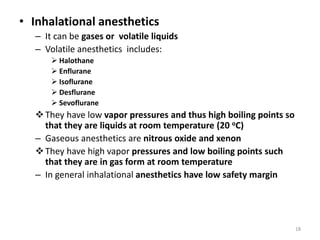
• Inhalational anesthetics
– It can be gases or volatile liquids
– Volatile anesthetics includes:
 Halothane
 Enflurane
 Isoflurane
 Desflurane
 Sevoflurane
They have low vapor pressures and thus high boiling points so
that they are liquids at room temperature (20 oC)
– Gaseous anesthetics are nitrous oxide and xenon
They have high vapor pressures and low boiling points such
that they are in gas form at room temperature
– In general inhalational anesthetics have low safety margin
18
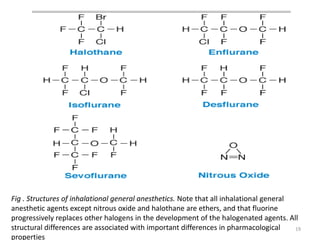
Fig . Structures of inhalational general anesthetics. Note that all inhalational general
anesthetic agents except nitrous oxide and halothane are ethers, and that fluorine
progressively replaces other halogens in the development of the halogenated agents. All
structural differences are associated with important differences in pharmacological
properties
19
PHARMACOKINETICS
– Inhaled anesthetics, volatile as well as gaseous, are
taken up through gas exchange in the alveoli
It is uptaken into the blood
It is distributed and partitioned into the effect
compartments
– These are important determinants of the kinetics
of these agents
– An ideal anesthetic
should have a rapid onset (induction)
should be rapidly terminated
20
• Uptake and distribution
A. Inspired concentration and ventilation
– The driving force for uptake of an inhaled anesthetic is the
alveolar concentration
– Two parameters determine how quickly the alveolar
concentration changes:
Inspired concentration or partial pressure
Alveolar ventilation
– Increases in the inspired partial pressure increase the rate of
rise in the alveoli and thus accelerate induction
– It is expressed as a ratio of alveolar concentration (FA) over
inspired concentration (FI I )
– The faster FA /FI approaches 1 (1 representing the
equilibrium)
21
 An increase in ventilation will increase the rate of rise
– The magnitude of the effect varies according to the
blood:gas partition coefficient
– An increase in pulmonary ventilation is accompanied by :
Only a slight increase in arterial tension of an anesthetic with
low blood solubility
However, can significantly increase tension of agents with
moderate to high blood solubility
– Hyperventilation increases the speed of induction of
anesthesia with inhaled anesthetics that would normally
have a slow onset
– Depression of respiration by opioid analgesics slows the
onset of anesthesia
– It needs assisting of ventilation manually or mechanically
22
B. Factors controlling uptake
– Increase of FA /FI is an important determinant of
the speed of induction
– It is opposed by the uptake of anesthetic into the
blood
1. Solubility
– The blood:gas partition coefficient is a useful
index of solubility
– It defines the relative affinity of an anesthetic for
the blood compared with that of inspired gas
23
– An anesthetic with low blood solubility diffuses from the
lung into the arterial blood:
Few molecules are required to raise its partial pressure
The arterial tension rises rapidly
Eg. nitrous oxide, desflurane, sevoflurane
– Conversely, for anesthetics with moderate to high
solubility such as halothane, isoflurane:
More molecules dissolve before partial pressure changes
significantly
Arterial tension of the gas increases less rapidly
– Methoxyflurane, a highly soluble agent, requires
several hours to induce unconsciousness and may be
clinically impractical if administered
24
Fig. The alveolar anesthetic concentration (FA) approaches the inspired anesthetic
concentration (FI) fastest for the least soluble agents
25
2. Cardiac output
– Changes in pulmonary blood flow affects the uptake of anesthetic gases
from the alveolar space
– An increase in pulmonary blood flow (ie, increased cardiac output):
 Will increase the uptake of anesthetic into the blood, thereby decreasing the
rate by which FA/FI rises
 This will decrease the rate of induction of anesthesia
3. Alveolar-venous partial pressure difference
– Tissues, including the brain, that have a high blood flow per unit mass
equilibrate with the alveolar tension of anesthetic gases first
– Tissues with lower blood flow require a longer time
– Although muscle and skin constitute 50% of the total body mass
 Anesthetics accumulate more slowly in these tissues than in highly perfused
tissues (eg, brain) because they receive only one fifth of the resting cardiac
output
26
Fig. demonstrate the distribution of anesthetic agent to different tissue based
on perfusion rate 27
• Elimination
– Recovery from inhalation anesthesia follows some of the
same principles in reverse that are important during
induction
– The time to recovery depends on the rate of
elimination of the anesthetic from the brain
– Important factors governing rate of recovery
includes:
Blood:gas partition coefficient
Pulmonary blood flow
Magnitude of ventilation
Tissue solubility of the anesthetic
28
– In inhaled anesthetics with low blood:gas
partition coefficients
Brains are eliminated at faster rates than the more
soluble anesthetics
– Washout of nitrous oxide, desflurane, and
sevoflurane occurs at a rapid rate, leading to a
more rapid recovery from their anesthetic effects
compared with halothane and isoflurane
29
• Halothane
• Pharmacokinetics
– It has relatively high blood:gas partition coefficient
– It has high fat: blood partition coefficient
– Induction with halothane therefore is relatively slow
– The speed of recovery from halothane is lengthened as a
function of duration of administration
– The major metabolite of halothane is trifluoroacetic acid
– Trifluoroacetylchloride is an intermediate in oxidative
metabolism of halothane
– This metabolite can trifluoroacetylate several proteins in
the liver
– It causes halothane-induced hepatic necrosis
30
• Clinical use
– Usually is used for maintenance of anesthesia
– It is not pungent and is therefore well tolerated for
inhalation induction of anesthesia
This is most commonly done in children, in whom
preoperative placement of an intravenous catheter
can be difficult
31
• Side Effects
• CVS
– Dose-dependent reduction in arterial blood pressure
 By myocardial depression leading to reduced cardiac output
• Respiratory system
– The decreased alveolar ventilation results in an elevation in arterial
CO2 tension
– It involves depression of central chemoceptor mechanisms
– It also inhibits peripheral chemoceptor responses to arterial
hypoxemia
• Nervous system
– It dilates the cerebral vasculature
– It increases cerebral blood flow and cerebral blood volume
– This can result in an increase in intracranial pressure, especially in
patients with space-occupying intracranial masses, brain edema, or
preexisting intracranial hypertension
32
• Muscle
– Halothane also potentiates the actions of non-depolarizing muscle
relaxants (curariform drugs)
• It increases both their duration of action and the magnitude of their
effect
– Halothane and the other halogenated inhalational anesthetics can
trigger malignant hyperthermia
– This syndrome is characterized by:
 Severe muscle contraction
 A massive increase in metabolic rate in genetically susceptible patients
– This syndrome frequently is fatal and is treated by immediate
discontinuation of the anesthetic and administration of dantrolene
– Uterine smooth muscle is relaxed by halothane
– However, halothane inhibits uterine contractions during parturition,
prolonging labor and increasing blood loss
 Therefore it is not used as an analgesic or anesthetic for labor and
vaginal delivery
33
• Isoflurane
• Pharmacokinetics
– It has a blood:gas partition coefficient substantially lower than that of
halothane or enflurane
– It has faster induction and recovery rate than with halothane
– More than 99% of inhaled isoflurane is excreted unchanged by the lungs
• Clinical use
– Used for maintenance of anesthesia after induction with other agents
because of its pungent odor
– The use of other drugs such as opioids or nitrous oxide reduces the
concentration of isoflurane required for surgical anesthesia
• Side Effects
• CVS
– It produces a concentration-dependent decrease in arterial blood pressure
34
• Respiratory system
– Isoflurane produces concentration-dependent depression of
ventilation
– It is an effective bronchodilator
– However, it is an airway irritant and can stimulate airway reflexes,
producing coughing and laryngospasm
• Nervous System
– Isoflurane produces increased cerebral blood flow
– It causes a modest risk of an increase in intracranial pressure
• Muscle
– Isoflurane produces some relaxation of skeletal muscle by its central
effects
– It also enhances the effects of both depolarizing and non-
depolarizing muscle relaxants
– Isoflurane relaxes uterine smooth muscle and is not recommended
for analgesia or anesthesia for labor and vaginal delivery
35
• Enflurane
• Pharmacokinetics
– It has relatively high blood:gas partition coefficient
– Its induction of anesthesia and recovery rate is
relatively slow
– About 2-8% of absorbed enflurane undergoing
oxidative metabolism in the liver by CYP2E1
• Clinical Use
– Used for maintenance rather than induction of
anesthesia
– Now with the advent of newer agent it is rarely used
for clinical anesthesia in developed countries
36
• Side effects
• CVS
– It causes a concentration-dependent decrease in
arterial blood pressure
– Hypotension is due in part to depression of
myocardial contractility
– It produces neither the bradycardia seen with
halothane nor the tachycardia
• Respiratory system
– It produces a greater depression of the ventilatory
responses to hypoxia and hypercarbia than do either
halothane
– It is an effective bronchodilator
37
• Nervous system
– It is a cerebral vasodilator and thus can increase intracranial
pressure in some patients
– It produces electrical seizure activity
– Enflurane generally is not used in patients with seizure
disorders
• Muscle
– It produces significant skeletal muscle relaxation
– It also significantly enhances the effects of non-depolarizing
muscle relaxants
– It relaxes uterine smooth muscle
– It is not widely used for obstetric anesthesia
38
• Desflurane
• Pharmacokinetics
– It has a very low blood:gas partition coefficient (0.42)
– It has very rapid induction of anesthesia
– Emergence from anesthesia also is very rapid
– Greater than 99% of absorbed desflurane is eliminated
unchanged through the lungs
• Clinical Use
– It is a widely used anesthetic for outpatient surgery because
of its rapid onset of action and rapid recovery
– It irritates the tracheobronchial tree and can provoke
coughing, salivation, and bronchospasm
– Anesthesia therefore usually is induced with an intravenous
agent, with desflurane subsequently administered for
maintenance of anesthesia
39
• Side effects
• CVS
– It causes a concentration-dependent decrease in blood
pressure
– It produces hypotension primarily by decreasing
systemic vascular resistance
– cardiac output is well preserved
• Respiratory system
– It causes a concentration-dependent increase in
respiratory rate and a decrease in tidal volume
– It has a strong airway irritant
– Because of its irritant properties, desflurane is not used
for induction of anesthesia
40
• Nervous System
– It produces an increase in cerebral blood flow and
can increase intracranial pressure
– Increases in intracranial pressure can be prevented
by hyperventilation
• Muscle
– Desflurane produces direct skeletal muscle
relaxation
– It enhances the effects of non-depolarizing and
depolarizing neuromuscular blocking agents
41
• Sevoflurane
• Pharmacokinetics
– Sevoflurane has low solubility in blood and other tissues
– It has rapid induction of anesthesia
– It has rapid emergence from anesthesia
– About 3% of absorbed sevoflurane is biotransformed
– It is metabolized in the liver by CYP2E1
• Clinical use
– It is widely used, particularly for outpatient anesthesia,
because of its rapid recovery
– It is well-suited for inhalation induction of anesthesia
(particularly in children) because it is not irritating to the
airway
42
• Side effects
• CVS
– It produces a concentration-dependent decrease in arterial
blood pressure
– This hypotensive effect primarily is due to systemic
vasodilation
– Unlike isoflurane or desflurane, sevoflurane does not produce
tachycardia and thus may be a preferable agent in patients
prone to myocardial ischemia
• Respiratory system
– Sevoflurane produces a concentration-dependent reduction in
tidal volume and increase in respiratory rate
– It is not irritating to the airway and is a potent bronchodilator
43
• Nervous system
– It increases intracranial pressure in patients with poor
intracranial compliance
– In children, sevoflurane is associated with delirium upon
emergence from anesthesia
• Muscle
– Sevoflurane produces skeletal muscle relaxation
– It enhances the effects of non-depolarizing and depolarizing
NMB
• Kidney
– Controversy has surrounded the potential nephrotoxicity of
compound A
– The FDA recommends that sevoflurane be administered
with fresh gas flows of at least 2 L/min to minimize
accumulation of compound A
44
• Nitrous Oxide(N2O)
– N2O (commonly called laughing gas)
– It produces its anesthetic effect without decreasing
blood pressure or cardiac output
• Pharmacokinetics
– Nitrous oxide is very insoluble in blood and other tissues
– It has rapid induction of anesthesia and rapid emergence
following discontinuation of administration
– The rapid uptake of N2O from alveolar gas serves to
concentrate co-administered halogenated anesthetics
– This effect (the "second gas effect") speeds induction of
anesthesia
45
– On discontinuation, nitrous oxide gas can diffuse
from blood to the alveoli, diluting O2 in the lung
– This can produce an effect called diffusional
hypoxia
– To avoid hypoxia, 100% O2 rather than air should be
administered when N2O is discontinued
– About 99.9% of nitrous oxide is eliminated in
unchanged form by the lungs
– Nitrous oxide is not biotransformed by enzymatic
action in human tissue
46
– N2O can oxidize the cobalt I (Co+) form of vitamin B12 to
Co3+
Thereby preventing vitamin B12 from acting as a co-factor
for methionine synthetase
– Inactivation of methionine synthetase can produce signs
of vitamin B12 deficiency, including megaloblastic
anemia and peripheral neuropathy
– The risk is high in patients with malnutrition, vitamin
B12 deficiency, or alcoholism
– For this reason, N2O is not used as a chronic analgesic
or as a sedative in critical care settings
47
• Clinical Use
– N2O is a weak anesthetic agent that has significant analgesic
effects
– Deep levels of anesthesia are unattainable, even when using
the highest practical concentrations of N2O (N2O 60–80%
with oxygen 40–20%)
– At this high concentration patients exhibit signs of CNS
excitation, such as physical struggling and vomiting
– Analgesia is produced at concentrations as low as 20%
– The analgesic property of N2O is a function of the activation
of
 opioidergic neurons in the periacqueductal gray matter
 the adrenergic neurons in the locus ceruleus
48
• Side effects
• CVS
– Nitrous oxide has stimulatory effects on the sympathetic
nervous system
– It also increases venous tone in both the peripheral and
pulmonary vasculature
– This effects can be exaggerated in patients with preexisting
pulmonary hypertension
– Thus, the drug generally is not used in these patient
• Nervous System
– It can significantly increase cerebral blood flow and intracranial
pressure
– This effect is attenuated by the simultaneous administration
of intravenous agents such as opiates and propofol
49
• Respiratory System
– It causes modest increases in respiratory rate
– Respiratory depressant effect of N2O are synergistic
with drugs such as the opioids and benzodiazepines
• Muscle
– Nitrous oxide does not relax skeletal muscle
– It does not enhance the effects of neuromuscular
blocking drugs
– Unlike the halogenated anesthetics, nitrous oxide does
not trigger malignant hyperthermia
50
• Intravenous anesthetics
– It plays an important role in the practice of modern
anesthesia
– They are widely used to facilitate rapid induction of
anesthesia
– With the introduction of propofol;
 intravenous anesthesia also became an option for the maintenance
of anesthesia
– Currently available intravenous anesthetics are not ideal
anesthetic drugs
– All the five desired effects (unconsciousness, amnesia,
analgesia, inhibition of autonomic reflexes, and skeletal
muscle relaxation) cannot be achieved
– Therefore, balanced anesthesia with multiple drugs (inhaled
anesthetics, sedative-hypnotics, opioids, NMB drugs)
required
51
• Barbiturates
– The three barbiturates used for clinical anesthesia are
Sodium thiopental
Thiamylal
Methohexital
– Sodium thiopental has been used most frequently for
inducing anesthesia
– Thiamylal is licensed in the U.S. only for veterinary use
– Mixing barbiturates with drugs in acidic solutions during
anesthetic induction can result in precipitation
– Therefore delaying the administration of other drugs
until the barbiturate has cleared the intravenous tube is
needed
52
• Pharmacokinetics
– Clearance of barbiturate is variable
– Methohexital is differ from the other two IV
barbiturates in its much more rapid clearance
Thus, it accumulates less during prolonged infusions
– Prolonged infusions or very large doses of
thiopental and thiamylal can produce
unconsciousness lasting several days
Because they have slow elimination and large volumes
of distribution
– Propofol has largely supplanted methohexital for
outpatient procedures that require a rapid return
to an alert state
53
– All three barbiturates are primarily eliminated by
hepatic metabolism and renal excretion
– Therefore, liver cirrhosis result in prolongation of
the clinical action of barbiturates
– Thiopental undergoes desulfuration to the longer-
acting hypnotic pentobarbital
– These drugs are highly protein bound
– Hepatic disease or reduction in serum protein
concentration will
increase the initial free concentration and hypnotic
effect of an induction dose
54
• Clinical use
– Thiopental or methohexital is used for induction of
anesthesia (unconciousness occurs in less than 30 seconds)
– Neonates and infants usually require a higher induction dose
(5-8 mg/kg), whereas elderly and pregnant patients require
less (1-3 mg/kg)- this is due to rapid metabolism in neonates
and infants
– For induction of pediatric patients without IV access, any of
the three drugs can be given off-label per rectum at 10-
fold the IV dose
– Doses can be reduced by 10-50% after premedication with
benzodiazepines, opiates, or ἀ2 adrenergic agonists,
because of their additive hypnotic effect
55
• Side Effects
• Nervous System
– Barbiturates suppress the EEG
– They reduce the cerebral metabolic rate, as
measured by cerebral O2 consumption (CMRO2)
– Because of this reason, cerebral blood flow and
intracranial pressure are reduced
• CVS
– They produce dose-dependent decreases in blood
pressure via vasodilation
56
• Respiratory system
– Barbiturates are respiratory depressants
– Reflex responses to hypercarbia and hypoxia are
diminished by anesthetic barbiturates
– Compared to propofol, barbiturates produce a higher
incidence of wheezing in asthmatics, attributed to
histamine release from mast cells
• Other adverse effects
– Barbiturates can induce fatal attacks of porphyria in
patients with acute intermittent or variegate porphyria
– It is contraindicated in such patients
– Methohexital can produce pain on injection to a greater
degree than thiopental
– They do not trigger malignant hyperthermia
57
• Propofol
– It is the most commonly used parenteral anesthetic in the U.S
– Fospropofol is a prodrug
– Fospropofol is hydrolyzed by endothelial alkaline phosphatases
to yield propofol, phosphate, and formaldehyde
• Pharmacokinetics
– Propofol has shorter duration of action after infusion
– Rapid clearance of propofol explains the more rapid emergence
from anesthesia in comparison to barbiturates
– This facilitates a more rapid discharge from the recovery room
– It is highly protein bound
– Its pharmacokinetics may be affected by conditions that alter
serum protein levels
58
– Clearance of propofol is reduced in the elderly
The required dose of propofol for both induction and
maintenance of anesthesia may be decreased
– In neonates, propofol clearance is also reduced
– By contrast, in young children, a more rapid
clearance may necessitate larger doses of
propofol for induction and maintenance
59
• Clinical use
– Because of its reasonably short elimination t1/2, propofol
often is used for maintenance of anesthesia as well as for
induction
– It has a significant anti-emetic action
• Side effects
• Nervous System
– Sedation and hypnotic actions of propofol are mediated by
its action on GABAA receptors
– It suppresses the EEG
– It decreases CMRO2, cerebral blood flow, and intracranial
and intraocular pressures
– It suppresses seizure activity in experimental models
– It has been used for the treatment of status epilepticus in
humans
60
• CVS
– Propofol produces a dose-dependent decrease in blood pressure:
 By both vasodilation and possibly mild depression of myocardial contractility
– It blunts the baroreceptor reflex in response to sympathetic activity
• Respiratory system
– Propofol produces a slightly greater degree of respiratory depression than
thiopental
– It is less likely than barbiturates to provoke bronchospasm and may be the
induction agent of choice in asthmatics
• Other side effects
– Pain on injection site - can be reduced by premedication with an opioid or
coadministration with lidocaine
– Though propofol does cross placental membranes, it is considered safe for use in
pregnant women
– Propofol does not trigger malignant hyperthermia
– Propofol poses high risk of bacterial infection
 b/c it is supplied in a mixture of soybean oil, glycerol, and egg lecithin - an excellent
media for bacterial growth
– Therefore once the vial is opened, it should be discarded within 6 hrs
61
• Etomidate
– It has greater margin of safety because of its limited effects on the
cardiovascular and respiratory systems
• Pharmacokinetics
– Etomidate is rapidly hydrolyzed in the liver to inactive compound
– It has a rapid onset of action
– Elimination is both renal (78%) and biliary (22%)
– The plasma protein binding of etomidate is high but less than that of
barbiturates and propofol
• Clinical use
– Induction of anesthesia
– It has high incidence of pain on injection and myoclonic movements
 Lidocaine effectively reduces the pain of injection
– Myoclonic movements can be reduced by premedication with either
benzodiazepines or opiates
– Etomidate also may be given rectally
62
• Side effects
• CVS
– A primary advantage of etomidate is:
 Its ability to preserve cardiovascular and respiratory stability
 Both cardiac output and diastolic pressure are well maintained
– Useful for patient with compromised myocardial oxygen or blood supply or both
– Of all induction agents, etomidate is best suited to maintain cardiovascular
stability in patients with:
 Coronary artery disease
 Cardiomyopathy
 cerebral vascular disease
 Hypovolemia
• Nervous System
– Etomidate produces hypnosis
– It has no analgesic effects
– Etomidate produces increased EEG activity in epileptogenic foci and has been
associated with seizures
– Effect on cerebral blood flow, metabolism, and intracranial and intraocular
pressures are similar to those of thiopental
63
• Respiratory and other side effects
– Etomidate’s respiratory depression appears to be
less than that due to thiopental
– Etomidate does have two major drawbacks:
It has been associated with nausea and vomiting
The drug also inhibits adrenal biosynthetic enzymes
required for the production of cortisol and some other
steroids
– It does not produce adrenocortical suppression
after bolus dosing
– Transient apnea
64
• Ketamine
– It is a congener of phencyclidine
– The state of unconsciousness it produces is
trancelike (i.e., eyes may remain open until deep
anesthesia is obtained)
– It has frequently been characterized as dissociative
(i.e., the patient may appear awake and reactive
but does not respond to sensory stimuli)
– The term dissociative anesthesia is used to describe
these qualities of profound analgesia, amnesia, and
superficial level of sleep
65
• Pharmacokinetics
– Ketamine is hepatically metabolized to
norketamine
– It has reduced CNS activity
– Norketamine is further metabolized and excreted
in urine and bile
– Ketamine has a large volume of distribution and
rapid clearance :
This makes it suitable for continuous infusion without
the lengthening in duration of action seen with
thiopental
– Ketamine has lower protein binding
66
• Clinical use
– It is useful for anesthetizing patients at risk for
hypotension and bronchospasm and for certain
pediatric procedures
– Ketamine rapidly produces a hypnotic state quite
distinct from others
– It reduces the development of tolerance to long-
term opioid use
– Ketamine does not elicit pain on injection or true
excitatory behavior as described for
methohexital
67
Side effects
• Nervous System
– Ketamine has indirect sympathomimetic activity
– It is anesthetic induction of choice in patients who are at risk
of developing significant hypotension
– The ketamine-induced cataleptic state is accompanied by
nystagmus with pupillary dilation, salivation, lacrimation, and
spontaneous limb movements with increased overall muscle
tone
– Ketamine produces profound analgesia, a distinct advantage
over other parenteral anesthetics
– Ketamine increases cerebral blood flow and intracranial
pressure (ICP)
– This problem can be attenuated by the simultaneous
administration of sedative hyponotics (propofol, midazolam,
barbiturates)
68
– Emergence delirium, characterized by hallucinations,
vivid dreams, and delusions, is a frequent complication of
ketamine
– These can result in serious patient dissatisfaction and can
complicate postoperative management
– Benzodiazepines reduce the incidence of emergence
delirium
• CVS
– Induction doses of ketamine typically increase blood
pressure, heart rate, and cardiac output
– These are most likely mediated by inhibition of both
central and peripheral catecholamine reuptake
– Ketamine has direct negative inotropic and vasodilating
activity, but these effects usually are overwhelmed by
the indirect sympathomimetic action
69
– It is a useful drug, along with etomidate, for patients at risk
for hypotension during anesthesia
– While not arrhythmogenic, ketamine increases myocardial
O2 consumption
– It is not an ideal drug for patients at risk for myocardial
ischemia
• Respiratory system
– Its respiratory depression is less severe
– Ketamine is a potent bronchodilator due to its indirect
sympathomimetic activity and perhaps some direct
bronchodilating activity
– It is particularly well-suited for anesthetizing patients at
high risk for bronchospasm
– Increased salivation that attends ketamine administration
can be effectively prevented by anticholinergic agents such
as glycopyrrolate
70
• Benzodiazepines
– Commonly used in the perioperative period
include midazolam, lorazepam, and less
frequently, diazepam
– Their most desired effects are anxiolysis and
anterograde amnesia, which are extremely useful
for premedication
71

General anesthesia.pptx for pharmacy students 3rd year 1st sem

  • 1.
  • 2.
    • Classification ofdrugs acting on CNS – General anesthesia: intravenous and inhalational – Local anesthetics – Opioid analgesics – Agents affecting neuromuscular transmission – Central nervous system stimulants – Sedative–hypnotic and anxiolytic – Drugs used in neurodegenerative disorders – Antiepileptic drugs – Drugs used in mood disorders – Antipsychotic drugs – Contemporary drug of abuse 2
  • 3.
    • General anesthetics –It depresses the CNS to a sufficient degree Therefore, it is used to permit the performance of surgery and other noxious or unpleasant procedures – It cause complete loss of consciousness – It has low therapeutic indices and thus require great care in administration – The selection of specific drugs and routes of administration is based on their pharmacokinetic properties and on the secondary effects of the various drugs 3
  • 4.
    • Historical Perspectives –Ether was the ideal "first" anesthetic – It is a liquid at room temperature – Ether, unlike nitrous oxide, was potent – It could produce anesthesia without diluting room air to hypoxic levels – It was relatively nontoxic and produced limited respiratory or circulatory compromise 4
  • 5.
    • General principlesof surgical anesthesia – Anesthesia is usually neither therapeutic nor diagnostic – Except in the treatment of status asthmaticus with halothane and intractable angina with epidural local anesthetics – The three general objectives to monitor anesthesia are :  Minimizing the potentially deleterious direct and indirect effects  Sustaining physiologic homeostasis during surgical procedures  Which involve major blood loss, tissue ischemia, reperfusion of ischemic tissue, exposure to a cold environment, and impaired coagulation  Improving postoperative outcomes by choosing techniques that block or treat components of the surgical stress response, which may lead to short- or long-term sequelae 5
  • 6.
    STAGES OF ANESTHESIA •Anesthetic effects on the brain can be divided into four stages of increasing depth of CNS depression: I. Stage of analgesia:  The patient initially experiences analgesia without amnesia  Later in stage I, both analgesia and amnesia are produced II. Stage of excitement  patient often appears to be delirious and may vocalize but is definitely amnesic  Respiration is irregular both in volume and rate, and vomiting may occur if the patient is stimulated  For these reasons, efforts are made to limit duration of this stage by rapidly increasing the concentration 6
  • 7.
    III. Stage ofsurgical anesthesia begins with recurrence of regular respiration and extends to complete cessation of spontaneous respiration (apnea) IV. Stage of medullary depression This deep stage of anesthesia includes severe depression of the CNS, including the vasomotor center in the medulla the respiratory center in the brain stem Without circulatory and respiratory support, death rapidly ensues 7
  • 8.
    • Hemodynamic effectsof general anesthesia – Both intravenous and inhalational agents: Decrease systemic arterial blood pressure – These includes;  Direct vasodilation Myocardial depression A blunting of baroreceptor control A generalized decrease in central sympathetic tone Etomidate and ketamine must be used with caution in trauma victims - because intravascular volume depletion is being compensated by intense sympathetic discharge They show minimal hypotensive tendencies 8
  • 9.
    • Respiratory effects –Nearly all general anesthetics reduce ventilatory drive and the reflexes that maintain airway patency – Therefore, ventilation must be assisted or controlled for at least some period during surgery – Endotracheal intubation decline the number of aspiration deaths 9
  • 10.
    • Hypothermia – Generalanesthetics lower the core temperature set point which produce vasoconstriction • Thereby , it causes heat loss – Vasodilation produced by both general and regional anesthesia offsets cold-induced peripheral vasoconstriction – Even small drops in body temperatures may lead to an increase in perioperative morbidity, including Cardiac complications Wound infections Impaired coagulation – Prevention of hypothermia has emerged as a major goal of anesthetic care 10
  • 11.
    • Nausea andVomiting – In the postoperative period, this is continue to be significant problems – They are caused by an action of anesthetics on the CTZ and the brainstem vomiting center: These are modulated by serotonin (5-HT), histamine, acetylcholine (ACh), and dopamine (DA) 11
  • 12.
    – The 5-HT3-receptorantagonist ondansetron is very effective in suppressing nausea and vomiting – Common treatments also include  Droperidol  Metoclopramide  Dexamethasone  Avoidance of N2O (b/c it is associated with postoperative nausea and vomiting) – The use of  propofol as an induction agent  NSAIDs ketorolac as a substitute for opioids may decrease the incidence and severity of postoperative nausea and vomiting 12
  • 13.
    • Ideal propertiesof general anesthesia – Amnesia – Relaxation of skeletal muscle  This is to facilitate endotracheal intubation, provide the surgeon ready access to the operative field, and reduce the dose of anesthetic required to produce immobility – Minimal and reversible influence on vital physiological functions – Analgesia  Sufficient to abolish the reflex reactions to pain, such as muscular movement and cardiovascular stimulation  Attenuation of autonomic responses to noxious stimulation – Rapid loss of consciousness  It eliminates awareness,memory of pain, anxiety, and stress throughout the surgical period – Prompt patient recovery to psychomotor competence 13
  • 14.
    – None ofthe anesthetic possesses all of the features – The patient’s needs are usually met with the use of anesthetic drugs and/or adjunctive agents, such as:  Neuromuscular blocking drugs Opioids • Balanced anesthesia – It is a term used to describe the multidrug approach to manage the patient’s anesthetic needs – It takes advantage of each drug’s beneficial effects – It minimizes each agent’s adverse effects 14
  • 15.
    • Mechanisms ofAnesthesia – The inhalational anesthetics inhibit excitatory synapses and enhance inhibitory synapses in various preparations It also can act postsynaptically, by altering the response to released neurotransmitter – The intravenous agents act predominantly by: Enhancing inhibitory neurotransmission whereas ketamine predominantly inhibits excitatory neurotransmission at glutamatergic synapses 15
  • 16.
    • Anatomic sitesof anesthetic action – General anesthetics could interrupt nervous system function at myriad/many/ levels, including: Peripheral sensory neurons The spinal cord The brainstem The cerebral cortex 16
  • 17.
    • General anesthesiais divided into two groups: Parenteral/intravenous anesthetics Inhalational anesthetics 17
  • 18.
    • Inhalational anesthetics –It can be gases or volatile liquids – Volatile anesthetics includes:  Halothane  Enflurane  Isoflurane  Desflurane  Sevoflurane They have low vapor pressures and thus high boiling points so that they are liquids at room temperature (20 oC) – Gaseous anesthetics are nitrous oxide and xenon They have high vapor pressures and low boiling points such that they are in gas form at room temperature – In general inhalational anesthetics have low safety margin 18
  • 19.
    Fig . Structuresof inhalational general anesthetics. Note that all inhalational general anesthetic agents except nitrous oxide and halothane are ethers, and that fluorine progressively replaces other halogens in the development of the halogenated agents. All structural differences are associated with important differences in pharmacological properties 19
  • 20.
    PHARMACOKINETICS – Inhaled anesthetics,volatile as well as gaseous, are taken up through gas exchange in the alveoli It is uptaken into the blood It is distributed and partitioned into the effect compartments – These are important determinants of the kinetics of these agents – An ideal anesthetic should have a rapid onset (induction) should be rapidly terminated 20
  • 21.
    • Uptake anddistribution A. Inspired concentration and ventilation – The driving force for uptake of an inhaled anesthetic is the alveolar concentration – Two parameters determine how quickly the alveolar concentration changes: Inspired concentration or partial pressure Alveolar ventilation – Increases in the inspired partial pressure increase the rate of rise in the alveoli and thus accelerate induction – It is expressed as a ratio of alveolar concentration (FA) over inspired concentration (FI I ) – The faster FA /FI approaches 1 (1 representing the equilibrium) 21
  • 22.
     An increasein ventilation will increase the rate of rise – The magnitude of the effect varies according to the blood:gas partition coefficient – An increase in pulmonary ventilation is accompanied by : Only a slight increase in arterial tension of an anesthetic with low blood solubility However, can significantly increase tension of agents with moderate to high blood solubility – Hyperventilation increases the speed of induction of anesthesia with inhaled anesthetics that would normally have a slow onset – Depression of respiration by opioid analgesics slows the onset of anesthesia – It needs assisting of ventilation manually or mechanically 22
  • 23.
    B. Factors controllinguptake – Increase of FA /FI is an important determinant of the speed of induction – It is opposed by the uptake of anesthetic into the blood 1. Solubility – The blood:gas partition coefficient is a useful index of solubility – It defines the relative affinity of an anesthetic for the blood compared with that of inspired gas 23
  • 24.
    – An anestheticwith low blood solubility diffuses from the lung into the arterial blood: Few molecules are required to raise its partial pressure The arterial tension rises rapidly Eg. nitrous oxide, desflurane, sevoflurane – Conversely, for anesthetics with moderate to high solubility such as halothane, isoflurane: More molecules dissolve before partial pressure changes significantly Arterial tension of the gas increases less rapidly – Methoxyflurane, a highly soluble agent, requires several hours to induce unconsciousness and may be clinically impractical if administered 24
  • 25.
    Fig. The alveolaranesthetic concentration (FA) approaches the inspired anesthetic concentration (FI) fastest for the least soluble agents 25
  • 26.
    2. Cardiac output –Changes in pulmonary blood flow affects the uptake of anesthetic gases from the alveolar space – An increase in pulmonary blood flow (ie, increased cardiac output):  Will increase the uptake of anesthetic into the blood, thereby decreasing the rate by which FA/FI rises  This will decrease the rate of induction of anesthesia 3. Alveolar-venous partial pressure difference – Tissues, including the brain, that have a high blood flow per unit mass equilibrate with the alveolar tension of anesthetic gases first – Tissues with lower blood flow require a longer time – Although muscle and skin constitute 50% of the total body mass  Anesthetics accumulate more slowly in these tissues than in highly perfused tissues (eg, brain) because they receive only one fifth of the resting cardiac output 26
  • 27.
    Fig. demonstrate thedistribution of anesthetic agent to different tissue based on perfusion rate 27
  • 28.
    • Elimination – Recoveryfrom inhalation anesthesia follows some of the same principles in reverse that are important during induction – The time to recovery depends on the rate of elimination of the anesthetic from the brain – Important factors governing rate of recovery includes: Blood:gas partition coefficient Pulmonary blood flow Magnitude of ventilation Tissue solubility of the anesthetic 28
  • 29.
    – In inhaledanesthetics with low blood:gas partition coefficients Brains are eliminated at faster rates than the more soluble anesthetics – Washout of nitrous oxide, desflurane, and sevoflurane occurs at a rapid rate, leading to a more rapid recovery from their anesthetic effects compared with halothane and isoflurane 29
  • 30.
    • Halothane • Pharmacokinetics –It has relatively high blood:gas partition coefficient – It has high fat: blood partition coefficient – Induction with halothane therefore is relatively slow – The speed of recovery from halothane is lengthened as a function of duration of administration – The major metabolite of halothane is trifluoroacetic acid – Trifluoroacetylchloride is an intermediate in oxidative metabolism of halothane – This metabolite can trifluoroacetylate several proteins in the liver – It causes halothane-induced hepatic necrosis 30
  • 31.
    • Clinical use –Usually is used for maintenance of anesthesia – It is not pungent and is therefore well tolerated for inhalation induction of anesthesia This is most commonly done in children, in whom preoperative placement of an intravenous catheter can be difficult 31
  • 32.
    • Side Effects •CVS – Dose-dependent reduction in arterial blood pressure  By myocardial depression leading to reduced cardiac output • Respiratory system – The decreased alveolar ventilation results in an elevation in arterial CO2 tension – It involves depression of central chemoceptor mechanisms – It also inhibits peripheral chemoceptor responses to arterial hypoxemia • Nervous system – It dilates the cerebral vasculature – It increases cerebral blood flow and cerebral blood volume – This can result in an increase in intracranial pressure, especially in patients with space-occupying intracranial masses, brain edema, or preexisting intracranial hypertension 32
  • 33.
    • Muscle – Halothanealso potentiates the actions of non-depolarizing muscle relaxants (curariform drugs) • It increases both their duration of action and the magnitude of their effect – Halothane and the other halogenated inhalational anesthetics can trigger malignant hyperthermia – This syndrome is characterized by:  Severe muscle contraction  A massive increase in metabolic rate in genetically susceptible patients – This syndrome frequently is fatal and is treated by immediate discontinuation of the anesthetic and administration of dantrolene – Uterine smooth muscle is relaxed by halothane – However, halothane inhibits uterine contractions during parturition, prolonging labor and increasing blood loss  Therefore it is not used as an analgesic or anesthetic for labor and vaginal delivery 33
  • 34.
    • Isoflurane • Pharmacokinetics –It has a blood:gas partition coefficient substantially lower than that of halothane or enflurane – It has faster induction and recovery rate than with halothane – More than 99% of inhaled isoflurane is excreted unchanged by the lungs • Clinical use – Used for maintenance of anesthesia after induction with other agents because of its pungent odor – The use of other drugs such as opioids or nitrous oxide reduces the concentration of isoflurane required for surgical anesthesia • Side Effects • CVS – It produces a concentration-dependent decrease in arterial blood pressure 34
  • 35.
    • Respiratory system –Isoflurane produces concentration-dependent depression of ventilation – It is an effective bronchodilator – However, it is an airway irritant and can stimulate airway reflexes, producing coughing and laryngospasm • Nervous System – Isoflurane produces increased cerebral blood flow – It causes a modest risk of an increase in intracranial pressure • Muscle – Isoflurane produces some relaxation of skeletal muscle by its central effects – It also enhances the effects of both depolarizing and non- depolarizing muscle relaxants – Isoflurane relaxes uterine smooth muscle and is not recommended for analgesia or anesthesia for labor and vaginal delivery 35
  • 36.
    • Enflurane • Pharmacokinetics –It has relatively high blood:gas partition coefficient – Its induction of anesthesia and recovery rate is relatively slow – About 2-8% of absorbed enflurane undergoing oxidative metabolism in the liver by CYP2E1 • Clinical Use – Used for maintenance rather than induction of anesthesia – Now with the advent of newer agent it is rarely used for clinical anesthesia in developed countries 36
  • 37.
    • Side effects •CVS – It causes a concentration-dependent decrease in arterial blood pressure – Hypotension is due in part to depression of myocardial contractility – It produces neither the bradycardia seen with halothane nor the tachycardia • Respiratory system – It produces a greater depression of the ventilatory responses to hypoxia and hypercarbia than do either halothane – It is an effective bronchodilator 37
  • 38.
    • Nervous system –It is a cerebral vasodilator and thus can increase intracranial pressure in some patients – It produces electrical seizure activity – Enflurane generally is not used in patients with seizure disorders • Muscle – It produces significant skeletal muscle relaxation – It also significantly enhances the effects of non-depolarizing muscle relaxants – It relaxes uterine smooth muscle – It is not widely used for obstetric anesthesia 38
  • 39.
    • Desflurane • Pharmacokinetics –It has a very low blood:gas partition coefficient (0.42) – It has very rapid induction of anesthesia – Emergence from anesthesia also is very rapid – Greater than 99% of absorbed desflurane is eliminated unchanged through the lungs • Clinical Use – It is a widely used anesthetic for outpatient surgery because of its rapid onset of action and rapid recovery – It irritates the tracheobronchial tree and can provoke coughing, salivation, and bronchospasm – Anesthesia therefore usually is induced with an intravenous agent, with desflurane subsequently administered for maintenance of anesthesia 39
  • 40.
    • Side effects •CVS – It causes a concentration-dependent decrease in blood pressure – It produces hypotension primarily by decreasing systemic vascular resistance – cardiac output is well preserved • Respiratory system – It causes a concentration-dependent increase in respiratory rate and a decrease in tidal volume – It has a strong airway irritant – Because of its irritant properties, desflurane is not used for induction of anesthesia 40
  • 41.
    • Nervous System –It produces an increase in cerebral blood flow and can increase intracranial pressure – Increases in intracranial pressure can be prevented by hyperventilation • Muscle – Desflurane produces direct skeletal muscle relaxation – It enhances the effects of non-depolarizing and depolarizing neuromuscular blocking agents 41
  • 42.
    • Sevoflurane • Pharmacokinetics –Sevoflurane has low solubility in blood and other tissues – It has rapid induction of anesthesia – It has rapid emergence from anesthesia – About 3% of absorbed sevoflurane is biotransformed – It is metabolized in the liver by CYP2E1 • Clinical use – It is widely used, particularly for outpatient anesthesia, because of its rapid recovery – It is well-suited for inhalation induction of anesthesia (particularly in children) because it is not irritating to the airway 42
  • 43.
    • Side effects •CVS – It produces a concentration-dependent decrease in arterial blood pressure – This hypotensive effect primarily is due to systemic vasodilation – Unlike isoflurane or desflurane, sevoflurane does not produce tachycardia and thus may be a preferable agent in patients prone to myocardial ischemia • Respiratory system – Sevoflurane produces a concentration-dependent reduction in tidal volume and increase in respiratory rate – It is not irritating to the airway and is a potent bronchodilator 43
  • 44.
    • Nervous system –It increases intracranial pressure in patients with poor intracranial compliance – In children, sevoflurane is associated with delirium upon emergence from anesthesia • Muscle – Sevoflurane produces skeletal muscle relaxation – It enhances the effects of non-depolarizing and depolarizing NMB • Kidney – Controversy has surrounded the potential nephrotoxicity of compound A – The FDA recommends that sevoflurane be administered with fresh gas flows of at least 2 L/min to minimize accumulation of compound A 44
  • 45.
    • Nitrous Oxide(N2O) –N2O (commonly called laughing gas) – It produces its anesthetic effect without decreasing blood pressure or cardiac output • Pharmacokinetics – Nitrous oxide is very insoluble in blood and other tissues – It has rapid induction of anesthesia and rapid emergence following discontinuation of administration – The rapid uptake of N2O from alveolar gas serves to concentrate co-administered halogenated anesthetics – This effect (the "second gas effect") speeds induction of anesthesia 45
  • 46.
    – On discontinuation,nitrous oxide gas can diffuse from blood to the alveoli, diluting O2 in the lung – This can produce an effect called diffusional hypoxia – To avoid hypoxia, 100% O2 rather than air should be administered when N2O is discontinued – About 99.9% of nitrous oxide is eliminated in unchanged form by the lungs – Nitrous oxide is not biotransformed by enzymatic action in human tissue 46
  • 47.
    – N2O canoxidize the cobalt I (Co+) form of vitamin B12 to Co3+ Thereby preventing vitamin B12 from acting as a co-factor for methionine synthetase – Inactivation of methionine synthetase can produce signs of vitamin B12 deficiency, including megaloblastic anemia and peripheral neuropathy – The risk is high in patients with malnutrition, vitamin B12 deficiency, or alcoholism – For this reason, N2O is not used as a chronic analgesic or as a sedative in critical care settings 47
  • 48.
    • Clinical Use –N2O is a weak anesthetic agent that has significant analgesic effects – Deep levels of anesthesia are unattainable, even when using the highest practical concentrations of N2O (N2O 60–80% with oxygen 40–20%) – At this high concentration patients exhibit signs of CNS excitation, such as physical struggling and vomiting – Analgesia is produced at concentrations as low as 20% – The analgesic property of N2O is a function of the activation of  opioidergic neurons in the periacqueductal gray matter  the adrenergic neurons in the locus ceruleus 48
  • 49.
    • Side effects •CVS – Nitrous oxide has stimulatory effects on the sympathetic nervous system – It also increases venous tone in both the peripheral and pulmonary vasculature – This effects can be exaggerated in patients with preexisting pulmonary hypertension – Thus, the drug generally is not used in these patient • Nervous System – It can significantly increase cerebral blood flow and intracranial pressure – This effect is attenuated by the simultaneous administration of intravenous agents such as opiates and propofol 49
  • 50.
    • Respiratory System –It causes modest increases in respiratory rate – Respiratory depressant effect of N2O are synergistic with drugs such as the opioids and benzodiazepines • Muscle – Nitrous oxide does not relax skeletal muscle – It does not enhance the effects of neuromuscular blocking drugs – Unlike the halogenated anesthetics, nitrous oxide does not trigger malignant hyperthermia 50
  • 51.
    • Intravenous anesthetics –It plays an important role in the practice of modern anesthesia – They are widely used to facilitate rapid induction of anesthesia – With the introduction of propofol;  intravenous anesthesia also became an option for the maintenance of anesthesia – Currently available intravenous anesthetics are not ideal anesthetic drugs – All the five desired effects (unconsciousness, amnesia, analgesia, inhibition of autonomic reflexes, and skeletal muscle relaxation) cannot be achieved – Therefore, balanced anesthesia with multiple drugs (inhaled anesthetics, sedative-hypnotics, opioids, NMB drugs) required 51
  • 52.
    • Barbiturates – Thethree barbiturates used for clinical anesthesia are Sodium thiopental Thiamylal Methohexital – Sodium thiopental has been used most frequently for inducing anesthesia – Thiamylal is licensed in the U.S. only for veterinary use – Mixing barbiturates with drugs in acidic solutions during anesthetic induction can result in precipitation – Therefore delaying the administration of other drugs until the barbiturate has cleared the intravenous tube is needed 52
  • 53.
    • Pharmacokinetics – Clearanceof barbiturate is variable – Methohexital is differ from the other two IV barbiturates in its much more rapid clearance Thus, it accumulates less during prolonged infusions – Prolonged infusions or very large doses of thiopental and thiamylal can produce unconsciousness lasting several days Because they have slow elimination and large volumes of distribution – Propofol has largely supplanted methohexital for outpatient procedures that require a rapid return to an alert state 53
  • 54.
    – All threebarbiturates are primarily eliminated by hepatic metabolism and renal excretion – Therefore, liver cirrhosis result in prolongation of the clinical action of barbiturates – Thiopental undergoes desulfuration to the longer- acting hypnotic pentobarbital – These drugs are highly protein bound – Hepatic disease or reduction in serum protein concentration will increase the initial free concentration and hypnotic effect of an induction dose 54
  • 55.
    • Clinical use –Thiopental or methohexital is used for induction of anesthesia (unconciousness occurs in less than 30 seconds) – Neonates and infants usually require a higher induction dose (5-8 mg/kg), whereas elderly and pregnant patients require less (1-3 mg/kg)- this is due to rapid metabolism in neonates and infants – For induction of pediatric patients without IV access, any of the three drugs can be given off-label per rectum at 10- fold the IV dose – Doses can be reduced by 10-50% after premedication with benzodiazepines, opiates, or ἀ2 adrenergic agonists, because of their additive hypnotic effect 55
  • 56.
    • Side Effects •Nervous System – Barbiturates suppress the EEG – They reduce the cerebral metabolic rate, as measured by cerebral O2 consumption (CMRO2) – Because of this reason, cerebral blood flow and intracranial pressure are reduced • CVS – They produce dose-dependent decreases in blood pressure via vasodilation 56
  • 57.
    • Respiratory system –Barbiturates are respiratory depressants – Reflex responses to hypercarbia and hypoxia are diminished by anesthetic barbiturates – Compared to propofol, barbiturates produce a higher incidence of wheezing in asthmatics, attributed to histamine release from mast cells • Other adverse effects – Barbiturates can induce fatal attacks of porphyria in patients with acute intermittent or variegate porphyria – It is contraindicated in such patients – Methohexital can produce pain on injection to a greater degree than thiopental – They do not trigger malignant hyperthermia 57
  • 58.
    • Propofol – Itis the most commonly used parenteral anesthetic in the U.S – Fospropofol is a prodrug – Fospropofol is hydrolyzed by endothelial alkaline phosphatases to yield propofol, phosphate, and formaldehyde • Pharmacokinetics – Propofol has shorter duration of action after infusion – Rapid clearance of propofol explains the more rapid emergence from anesthesia in comparison to barbiturates – This facilitates a more rapid discharge from the recovery room – It is highly protein bound – Its pharmacokinetics may be affected by conditions that alter serum protein levels 58
  • 59.
    – Clearance ofpropofol is reduced in the elderly The required dose of propofol for both induction and maintenance of anesthesia may be decreased – In neonates, propofol clearance is also reduced – By contrast, in young children, a more rapid clearance may necessitate larger doses of propofol for induction and maintenance 59
  • 60.
    • Clinical use –Because of its reasonably short elimination t1/2, propofol often is used for maintenance of anesthesia as well as for induction – It has a significant anti-emetic action • Side effects • Nervous System – Sedation and hypnotic actions of propofol are mediated by its action on GABAA receptors – It suppresses the EEG – It decreases CMRO2, cerebral blood flow, and intracranial and intraocular pressures – It suppresses seizure activity in experimental models – It has been used for the treatment of status epilepticus in humans 60
  • 61.
    • CVS – Propofolproduces a dose-dependent decrease in blood pressure:  By both vasodilation and possibly mild depression of myocardial contractility – It blunts the baroreceptor reflex in response to sympathetic activity • Respiratory system – Propofol produces a slightly greater degree of respiratory depression than thiopental – It is less likely than barbiturates to provoke bronchospasm and may be the induction agent of choice in asthmatics • Other side effects – Pain on injection site - can be reduced by premedication with an opioid or coadministration with lidocaine – Though propofol does cross placental membranes, it is considered safe for use in pregnant women – Propofol does not trigger malignant hyperthermia – Propofol poses high risk of bacterial infection  b/c it is supplied in a mixture of soybean oil, glycerol, and egg lecithin - an excellent media for bacterial growth – Therefore once the vial is opened, it should be discarded within 6 hrs 61
  • 62.
    • Etomidate – Ithas greater margin of safety because of its limited effects on the cardiovascular and respiratory systems • Pharmacokinetics – Etomidate is rapidly hydrolyzed in the liver to inactive compound – It has a rapid onset of action – Elimination is both renal (78%) and biliary (22%) – The plasma protein binding of etomidate is high but less than that of barbiturates and propofol • Clinical use – Induction of anesthesia – It has high incidence of pain on injection and myoclonic movements  Lidocaine effectively reduces the pain of injection – Myoclonic movements can be reduced by premedication with either benzodiazepines or opiates – Etomidate also may be given rectally 62
  • 63.
    • Side effects •CVS – A primary advantage of etomidate is:  Its ability to preserve cardiovascular and respiratory stability  Both cardiac output and diastolic pressure are well maintained – Useful for patient with compromised myocardial oxygen or blood supply or both – Of all induction agents, etomidate is best suited to maintain cardiovascular stability in patients with:  Coronary artery disease  Cardiomyopathy  cerebral vascular disease  Hypovolemia • Nervous System – Etomidate produces hypnosis – It has no analgesic effects – Etomidate produces increased EEG activity in epileptogenic foci and has been associated with seizures – Effect on cerebral blood flow, metabolism, and intracranial and intraocular pressures are similar to those of thiopental 63
  • 64.
    • Respiratory andother side effects – Etomidate’s respiratory depression appears to be less than that due to thiopental – Etomidate does have two major drawbacks: It has been associated with nausea and vomiting The drug also inhibits adrenal biosynthetic enzymes required for the production of cortisol and some other steroids – It does not produce adrenocortical suppression after bolus dosing – Transient apnea 64
  • 65.
    • Ketamine – Itis a congener of phencyclidine – The state of unconsciousness it produces is trancelike (i.e., eyes may remain open until deep anesthesia is obtained) – It has frequently been characterized as dissociative (i.e., the patient may appear awake and reactive but does not respond to sensory stimuli) – The term dissociative anesthesia is used to describe these qualities of profound analgesia, amnesia, and superficial level of sleep 65
  • 66.
    • Pharmacokinetics – Ketamineis hepatically metabolized to norketamine – It has reduced CNS activity – Norketamine is further metabolized and excreted in urine and bile – Ketamine has a large volume of distribution and rapid clearance : This makes it suitable for continuous infusion without the lengthening in duration of action seen with thiopental – Ketamine has lower protein binding 66
  • 67.
    • Clinical use –It is useful for anesthetizing patients at risk for hypotension and bronchospasm and for certain pediatric procedures – Ketamine rapidly produces a hypnotic state quite distinct from others – It reduces the development of tolerance to long- term opioid use – Ketamine does not elicit pain on injection or true excitatory behavior as described for methohexital 67
  • 68.
    Side effects • NervousSystem – Ketamine has indirect sympathomimetic activity – It is anesthetic induction of choice in patients who are at risk of developing significant hypotension – The ketamine-induced cataleptic state is accompanied by nystagmus with pupillary dilation, salivation, lacrimation, and spontaneous limb movements with increased overall muscle tone – Ketamine produces profound analgesia, a distinct advantage over other parenteral anesthetics – Ketamine increases cerebral blood flow and intracranial pressure (ICP) – This problem can be attenuated by the simultaneous administration of sedative hyponotics (propofol, midazolam, barbiturates) 68
  • 69.
    – Emergence delirium,characterized by hallucinations, vivid dreams, and delusions, is a frequent complication of ketamine – These can result in serious patient dissatisfaction and can complicate postoperative management – Benzodiazepines reduce the incidence of emergence delirium • CVS – Induction doses of ketamine typically increase blood pressure, heart rate, and cardiac output – These are most likely mediated by inhibition of both central and peripheral catecholamine reuptake – Ketamine has direct negative inotropic and vasodilating activity, but these effects usually are overwhelmed by the indirect sympathomimetic action 69
  • 70.
    – It isa useful drug, along with etomidate, for patients at risk for hypotension during anesthesia – While not arrhythmogenic, ketamine increases myocardial O2 consumption – It is not an ideal drug for patients at risk for myocardial ischemia • Respiratory system – Its respiratory depression is less severe – Ketamine is a potent bronchodilator due to its indirect sympathomimetic activity and perhaps some direct bronchodilating activity – It is particularly well-suited for anesthetizing patients at high risk for bronchospasm – Increased salivation that attends ketamine administration can be effectively prevented by anticholinergic agents such as glycopyrrolate 70
  • 71.
    • Benzodiazepines – Commonlyused in the perioperative period include midazolam, lorazepam, and less frequently, diazepam – Their most desired effects are anxiolysis and anterograde amnesia, which are extremely useful for premedication 71

Editor's Notes

  • #6 THE β2 STIMULATING EFFECT of halothane, resulting in bronchial dilatation, has been established. In the following case this effect was used in treating prolonged bronchospasm unresponsive to conventional medical therapy
  • #11 Modalities to maintain normothermia include using warm intravenous fluids, heat exchangers in the anesthesia circuit, forced-warm-air covers, and new technology involving water-filled garments with microprocessor feedback control to a core temperature set point. Cardiovascular - Increased pulse and blood pressure (postoperatively), systemic vascular resistance (SVR), contractility, ventricular dysrhythmias and irritability, myocardial depression and secretion of catecholamines. Cardiac output and heart rate are decreased (intraoperative). Respiratory - Strength is diminished at body core temperature of less than 33C, but CO2 ventilatory response is unaffected. Hepatic - Blood flow and function are diminished which will decrease significantly the metabolism of some drugs. Renal - Decrease in renal blood flow due to increase in renal vascular resistance. Inhibition of tubular resorption maintains normal urinary volume until progressively lower temperatures inhibit reabsorption of sodium and potassium and an antiduiretic hormone (ADH) mediated diuresis results. Plasma electrolyte usually remain normal. Neurologic - Decreased cerebral blood flow, increased cerebrovascular resistance, decreased minimum alveolar concentration, delayed emergence from anesthesia due to direct depressant effects of hypothermia, altered mental sensorium to include drowsiness and confusion. Metabolic - Decreased metabolic rate, decreased tissue perfusion leading to metabolic acidosis, and hyperglycemia from catecholamines may occur. Increased oxygen consumption may occur due to shivering postoperatively. Hematologic - Increased blood viscosity, thrombocytopenia, leftward shift of the hemoglobin dissociation curve causing increase difficulty of oxygen unloading from hemoglobin leading to hypoxia, alterations in coagulation via impaired platelet function, decreased coagulation factor activity leading to a greater intraoperative bleeding and blood loss. Immunologic - Impaired immune system function increasing rate of postoperative wound infection. Drug Pharmacology - Decreased hepatic blood flow, and metabolism coupled with decreased renal blood flow and clearance result in decreased anesthetic requirement, delayed awakening due to reduced rates of drug clearance. Shivering and Wound Healing - Increased shivering which can increase heat production by 100% - 300% with concomitant oxygen consumption up to 500% and increased production of CO2. Vasoconstriction and the reduced delivery of oxygen to injured tissues also leads to a delay in wound healing and a significant rate of postoperative infection
  • #12 Dexamethasone is utilised frequently in the perioperative setting, including prophylaxis against postoperative nausea and vomiting, reduction of airway and cerebral oedema, and it may be useful in the management of acute and chronic pain Dexamethasone is used for prevention and treatment of chemotherapy related and postoperative nausea and vomiting (PONV). It has been recommended as first line for PONV 6 at a dose of 5-10mg prior to induction (level IIa evidence) 7. In children, doses from 0.05-1.5mg/kg have been used. The guidelines published by Gan 7 recommend a dose of 0.15mg/kg. Multiple theories have been proposed for the mechanism of action of dexamethasone: reduction of 5-hydroxytryptophan in neurones by reduction of tryptophan, decreased serotonin release from the gut and increasing the response to other antiemetics at a receptor level 8. In addition, there may be decreased 5HT3 turnover in the central nervous system or central inhibition of prostaglandin synthesis
  • #44  It has been postulated that this phenomenon has become more acutely noticed with the increased use of agents such as sevoflurane and desflurane that have a rapid emergence profile due to their low blood gas solubility profile. It was thought that rapid emergence with lack of adequate pain control before emergence contributed or was the cause of this problem. This has been supported by Davis noting that ketorolac administration decreased the incidence of emergence delirium three to fourfold after myringotomy with either halothane or sevoflurane anesthesia.13 Several studies have documented a reduction in ED with the administration of fentanyl 2.5 ug/kg intraoperatively or 2.0 ug/kg fentanyl administered intranasally, 1 ug/kg in each nostril after the induction of anesthesia
  • #49 At least part of the activation of the locus ceruleus is due to release of corticotrophin-releasing factor from the hypothalamus as a result of antagonism of the NMDA receptor Nitrous oxide cannot be used at concentrations >80% because this limits the delivery of adequate O2 Because of this limitation, nitrous oxide is used primarily as an adjunct to other inhalational or intravenous anesthetics Nitrous oxide substantially reduces the requirement for inhalational anesthetics
  • #62 Propofol should be used with caution in patients at risk for or intolerant of decreases in blood pressure The bronchodilator properties of propofol may be attenuated by the metabisulfite preservative in some propofol formulations