Soma Giri

Disclaimer: - Some of the images and content have been taken from different online sources and this presentation
                  is intended only for knowledge sharing but not for any profitable reasons
What is Product?
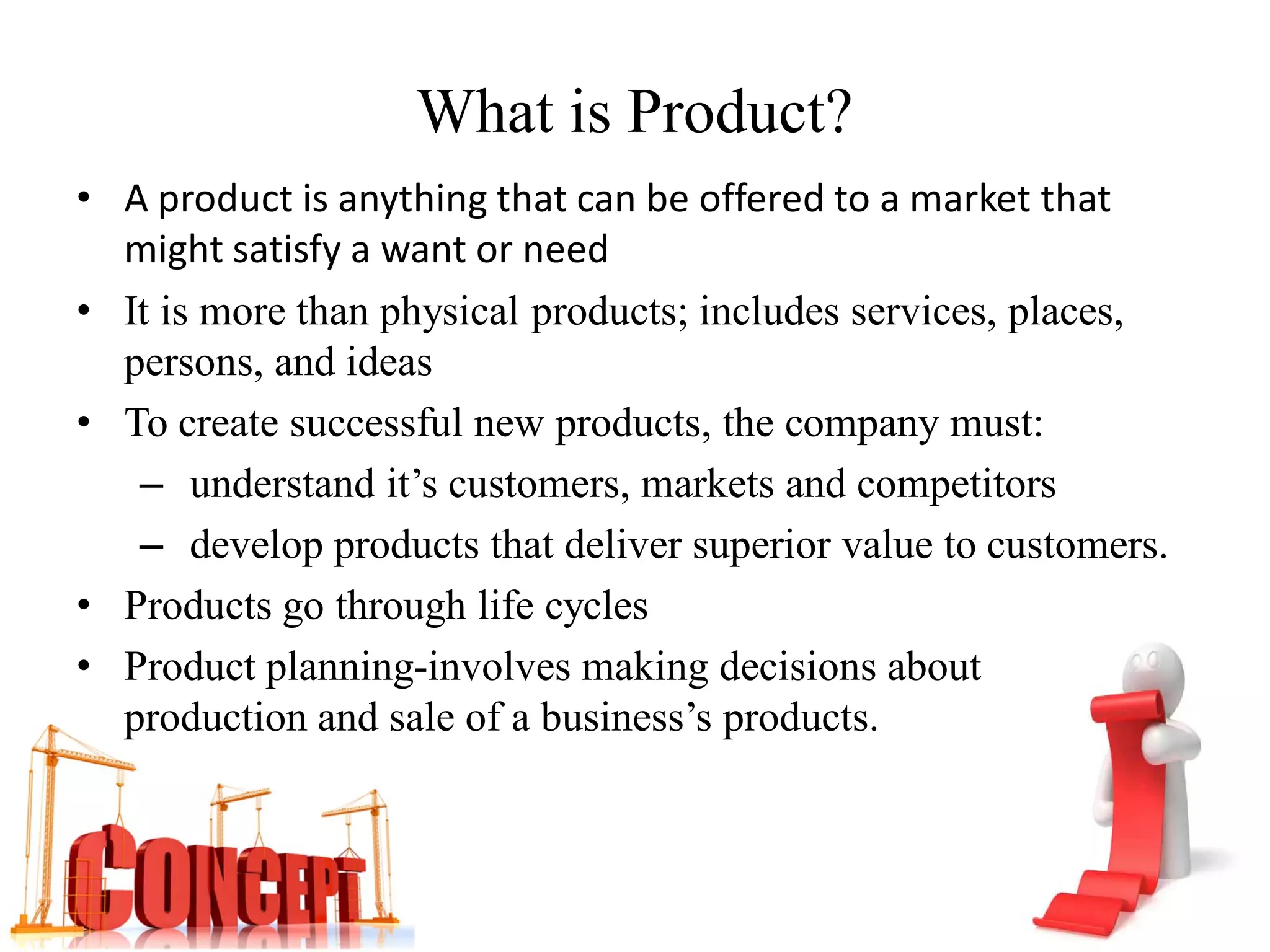
• A product is anything that can be offered to a market that
  might satisfy a want or need
• It is more than physical products; includes services, places,
  persons, and ideas
• To create successful new products, the company must:
   – understand it’s customers, markets and competitors
   – develop products that deliver superior value to customers.
• Products go through life cycles
• Product planning-involves making decisions about the
  production and sale of a business’s products.
Why do Products fail?

•   Doesn’t match current company objectives
•   Make room for other products
•   Overestimating market size
•   Poor marketing research
•   Obsolete
•   Lost its appeal
•   No longer profitable
•   Conflicts with other products in the same product line
•   Design problems
•   Excessive development costs
•   Incorrectly positioned, priced, or advertised
•   Competitive reaction
Product
                     quality      Physical
          Seller’s             characteristics
          services               of goods


  Seller’s                            Price
reputation


 Colour                               Brand


      Product                   Packaging
      warranty
                     Design
Why crawl when you can       Improving and updating product lines is crucial for the
         run?
                              success for any organisation.
Staying still resembles a    Failure for an organisation to change could result in a
          rock
                              decline in sales and with competitors racing ahead.
                             The process of NPD is crucial within an organisation.
                             Products go through the stages of their lifecycle and
                              will eventually have to be replaced
NPD Strategy
•   Original products
•   Acquisition
•   Product improvements
•   Product modifications
•   New brands through the firm’s own R&D efforts.

                                New Product
                                Development


                                           Quality               Brand
    Growth            Productivity
                                         Improvement           Maintenance

• New Products       Reduce Cost         Quality of Design   • Conformance
• New Packages       • Formulas                              • Special Situations
                     • Packages                              • Regulatory
                     •Manufacturing                          • Environmental
                                                             • Specifications
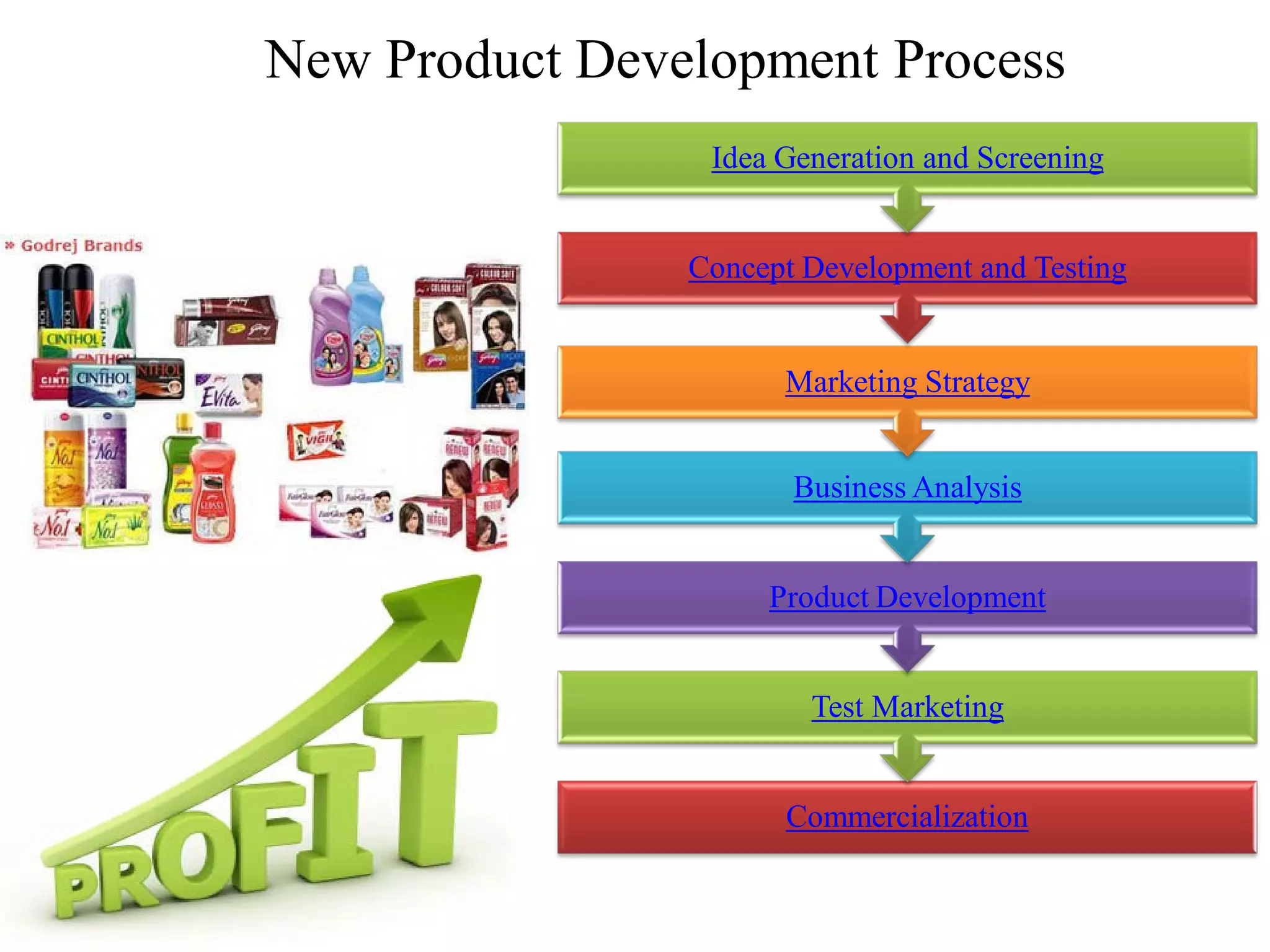
New Product Development Process
                 Idea Generation and Screening


                Concept Development and Testing


                      Marketing Strategy


                       Business Analysis


                     Product Development


                        Test Marketing


                      Commercialization
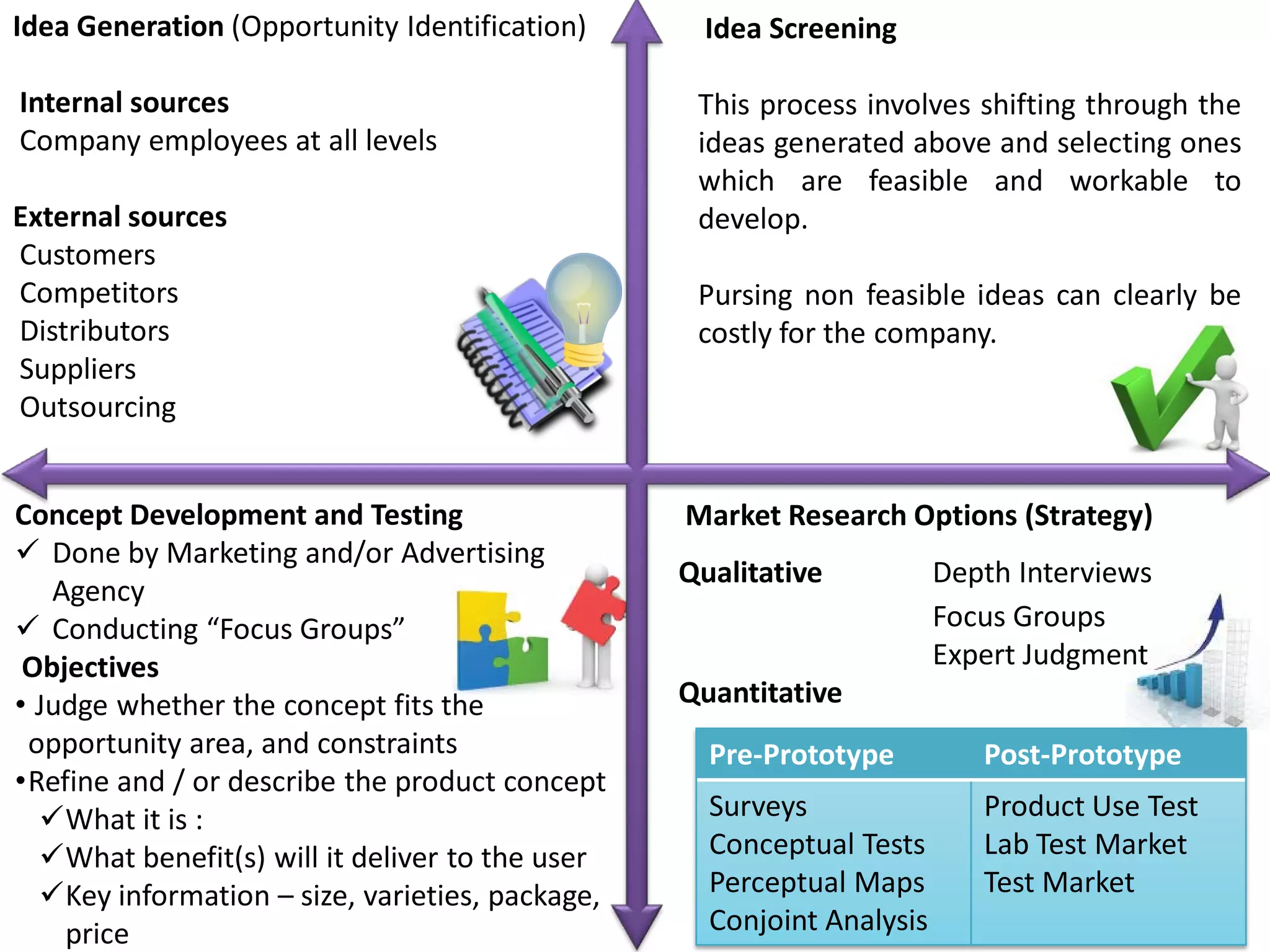
Idea Generation (Opportunity Identification)       Idea Screening

Internal sources                                  This process involves shifting through the
Company employees at all levels                   ideas generated above and selecting ones
                                                  which are feasible and workable to
External sources                                  develop.
Customers
Competitors                                       Pursing non feasible ideas can clearly be
Distributors                                      costly for the company.
Suppliers
Outsourcing


Concept Development and Testing                  Market Research Options (Strategy)
 Done by Marketing and/or Advertising
                                                 Qualitative           Depth Interviews
   Agency
 Conducting “Focus Groups”                                            Focus Groups
 Objectives                                                            Expert Judgment
• Judge whether the concept fits the             Quantitative
 opportunity area, and constraints                 Pre-Prototype          Post-Prototype
•Refine and / or describe the product concept
  What it is :                                    Surveys                Product Use Test
  What benefit(s) will it deliver to the user     Conceptual Tests       Lab Test Market
  Key information – size, varieties, package,     Perceptual Maps        Test Market
    price                                          Conjoint Analysis
Business Analysis

Evaluate the marketing plan will special
emphasis on sales , cost, profit estimates.
Must pass the business test criteria for
further development


                                              Product Development

                                              • Initial stages with broad design parameters
                                                 • Produce early prototypes
                                                 • Show and obtain feedback from end users
                                                 • Refine design

                                              • Fine tune & finalise design
                                                • Vary formulations on key ingredients
                                                • Conduct product testing amongst end users
                                                • Experimental designs offer most powerful
                                                  learning
                                                • Optimise final design and packaging
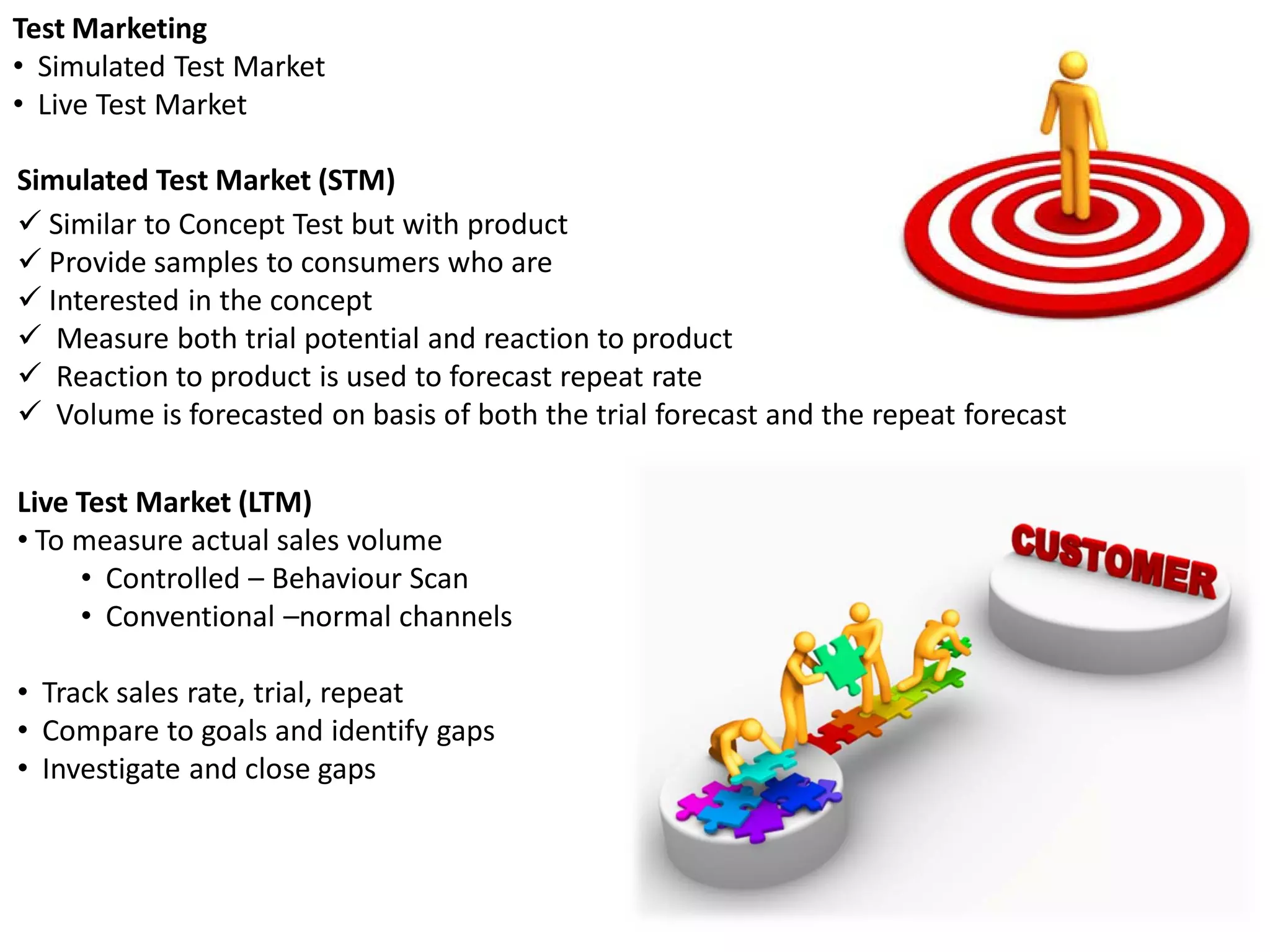
Test Marketing
• Simulated Test Market
• Live Test Market

Simulated Test Market (STM)
 Similar to Concept Test but with product
 Provide samples to consumers who are
 Interested in the concept
 Measure both trial potential and reaction to product
 Reaction to product is used to forecast repeat rate
 Volume is forecasted on basis of both the trial forecast and the repeat forecast

Live Test Market (LTM)
• To measure actual sales volume
     • Controlled – Behaviour Scan
     • Conventional –normal channels

• Track sales rate, trial, repeat
• Compare to goals and identify gaps
• Investigate and close gaps
Commercialisation

• National expansion of product
     • Develop market rollout plan
• Can involve significant capital investment
     •Brick & Mortar : Equipment
• Can involve distribution costs
     •Slotting fees : Sales incentives
• Build product into a “Platform”
     •Maintain growth and sustain competitive advantage
MAJOR PRODUCTS
Product planning & development

Product planning & development

  • 1.
    Soma Giri Disclaimer: -Some of the images and content have been taken from different online sources and this presentation is intended only for knowledge sharing but not for any profitable reasons
  • 2.
    What is Product? •A product is anything that can be offered to a market that might satisfy a want or need • It is more than physical products; includes services, places, persons, and ideas • To create successful new products, the company must: – understand it’s customers, markets and competitors – develop products that deliver superior value to customers. • Products go through life cycles • Product planning-involves making decisions about the production and sale of a business’s products.
  • 3.
    Why do Productsfail? • Doesn’t match current company objectives • Make room for other products • Overestimating market size • Poor marketing research • Obsolete • Lost its appeal • No longer profitable • Conflicts with other products in the same product line • Design problems • Excessive development costs • Incorrectly positioned, priced, or advertised • Competitive reaction
  • 4.
    Product quality Physical Seller’s characteristics services of goods Seller’s Price reputation Colour Brand Product Packaging warranty Design
  • 5.
    Why crawl whenyou can  Improving and updating product lines is crucial for the run? success for any organisation. Staying still resembles a  Failure for an organisation to change could result in a rock decline in sales and with competitors racing ahead.  The process of NPD is crucial within an organisation.  Products go through the stages of their lifecycle and will eventually have to be replaced
  • 6.
    NPD Strategy • Original products • Acquisition • Product improvements • Product modifications • New brands through the firm’s own R&D efforts. New Product Development Quality Brand Growth Productivity Improvement Maintenance • New Products Reduce Cost Quality of Design • Conformance • New Packages • Formulas • Special Situations • Packages • Regulatory •Manufacturing • Environmental • Specifications
  • 7.
    New Product DevelopmentProcess Idea Generation and Screening Concept Development and Testing Marketing Strategy Business Analysis Product Development Test Marketing Commercialization
  • 8.
    Idea Generation (OpportunityIdentification) Idea Screening Internal sources This process involves shifting through the Company employees at all levels ideas generated above and selecting ones which are feasible and workable to External sources develop. Customers Competitors Pursing non feasible ideas can clearly be Distributors costly for the company. Suppliers Outsourcing Concept Development and Testing Market Research Options (Strategy)  Done by Marketing and/or Advertising Qualitative Depth Interviews Agency  Conducting “Focus Groups” Focus Groups Objectives Expert Judgment • Judge whether the concept fits the Quantitative opportunity area, and constraints Pre-Prototype Post-Prototype •Refine and / or describe the product concept What it is : Surveys Product Use Test What benefit(s) will it deliver to the user Conceptual Tests Lab Test Market Key information – size, varieties, package, Perceptual Maps Test Market price Conjoint Analysis
  • 9.
    Business Analysis Evaluate themarketing plan will special emphasis on sales , cost, profit estimates. Must pass the business test criteria for further development Product Development • Initial stages with broad design parameters • Produce early prototypes • Show and obtain feedback from end users • Refine design • Fine tune & finalise design • Vary formulations on key ingredients • Conduct product testing amongst end users • Experimental designs offer most powerful learning • Optimise final design and packaging
  • 10.
    Test Marketing • SimulatedTest Market • Live Test Market Simulated Test Market (STM)  Similar to Concept Test but with product  Provide samples to consumers who are  Interested in the concept  Measure both trial potential and reaction to product  Reaction to product is used to forecast repeat rate  Volume is forecasted on basis of both the trial forecast and the repeat forecast Live Test Market (LTM) • To measure actual sales volume • Controlled – Behaviour Scan • Conventional –normal channels • Track sales rate, trial, repeat • Compare to goals and identify gaps • Investigate and close gaps
  • 11.
    Commercialisation • National expansionof product • Develop market rollout plan • Can involve significant capital investment •Brick & Mortar : Equipment • Can involve distribution costs •Slotting fees : Sales incentives • Build product into a “Platform” •Maintain growth and sustain competitive advantage
  • 12.