A Presentation by:-

•Chandan Jagtap
•Sachin Methree
•Ajit Mangarulkar
•Nikhil Kadam
•Umesh Panaskar
Causes of New Product Failures
     •Overestimation of Market Size
     •Poor quality of products
     •Non delivery of promised benefits of
     product
     •Product Incorrectly Positioned
     •Rapid change in economy
     •Too little marketing support

     •To create successful new products, the
     company must:
          understand it’s customers, markets and
         competitors
          develop products that deliver superior
         value to customers.
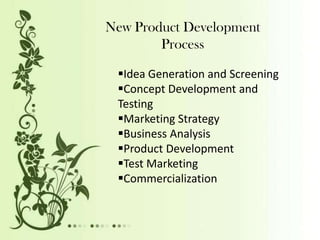
New Product Development
        Process

 Idea Generation and Screening
 Concept Development and
 Testing
 Marketing Strategy
 Business Analysis
 Product Development
 Test Marketing
 Commercialization
New Product Development Process
Step 1. Idea Generation

        Systematic Search for New
              Product Ideas
     •Internal sources
     •Customers
     •Competitors
     •Distributors
     •Suppliers
New Product Development Process
Step 2. Idea Screening

     Process to spot good ideas and drop
     poor ones

     Criteria
         • Market Size
         • Product Price
         • Development Time & Costs
         • Manufacturing Costs
         • Rate of Return
New Product Development Process
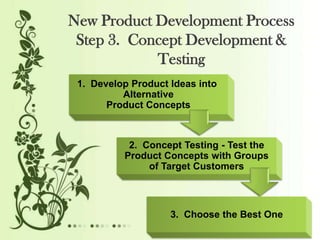
 Step 3. Concept Development &
            Testing
 1. Develop Product Ideas into
          Alternative
       Product Concepts


           2. Concept Testing - Test the
          Product Concepts with Groups
               of Target Customers


                    3. Choose the Best One
New Product Development Process
      Step 4. Marketing Strategy
             Development
Marketing Strategy Statement Formulation
                     Part One - Overall:
                       Target Market
                Planned Product Positioning
                    Sales & Profit Goals
                       Market Share

                   Part Two - Short-Term:
                  Product’s Planned Price
                         Distribution
                     Marketing Budget


                  Part Three - Long-Term:
                   Sales & Profit Goals
                  Marketing Mix Strategy
New Product Development Process
Step 5. Business Analysis
Step 6. Product Development

          Business Analysis

   Review of Product Sales, Costs,
   and Profits Projections to See if
   They Meet Company Objectives


        If No, Eliminate
        Product Concept

                                  If Yes, Move to
                               Product Development
New Product Development Process
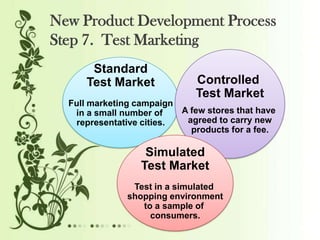
Step 7. Test Marketing
       Standard
      Test Market             Controlled
                              Test Market
  Full marketing campaign
   in a small number of   A few stores that have
   representative cities.  agreed to carry new
                            products for a fee.

                   Simulated
                  Test Market
                Test in a simulated
               shopping environment
                  to a sample of
                    consumers.
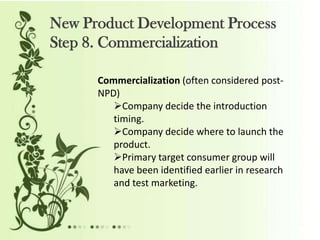
New Product Development Process
Step 8. Commercialization

      Commercialization (often considered post-
      NPD)
         Company decide the introduction
         timing.
         Company decide where to launch the
         product.
         Primary target consumer group will
         have been identified earlier in research
         and test marketing.
Conclusion

•These steps may be iterated as needed.
•To reduce the time that the NPD process takes, many
companies are completing several steps at the same time
(referred to as concurrent engineering or time to
market)
  • Many industry leaders see new product development
     as an ongoing process (referred to as continuous
         development) in which the entire organization is
             always looking for opportunities.
Final

Final

  • 2.
    A Presentation by:- •ChandanJagtap •Sachin Methree •Ajit Mangarulkar •Nikhil Kadam •Umesh Panaskar
  • 3.
    Causes of NewProduct Failures •Overestimation of Market Size •Poor quality of products •Non delivery of promised benefits of product •Product Incorrectly Positioned •Rapid change in economy •Too little marketing support •To create successful new products, the company must:  understand it’s customers, markets and competitors  develop products that deliver superior value to customers.
  • 4.
    New Product Development Process Idea Generation and Screening Concept Development and Testing Marketing Strategy Business Analysis Product Development Test Marketing Commercialization
  • 5.
    New Product DevelopmentProcess Step 1. Idea Generation Systematic Search for New Product Ideas •Internal sources •Customers •Competitors •Distributors •Suppliers
  • 6.
    New Product DevelopmentProcess Step 2. Idea Screening Process to spot good ideas and drop poor ones Criteria • Market Size • Product Price • Development Time & Costs • Manufacturing Costs • Rate of Return
  • 7.
    New Product DevelopmentProcess Step 3. Concept Development & Testing 1. Develop Product Ideas into Alternative Product Concepts 2. Concept Testing - Test the Product Concepts with Groups of Target Customers 3. Choose the Best One
  • 8.
    New Product DevelopmentProcess Step 4. Marketing Strategy Development Marketing Strategy Statement Formulation Part One - Overall: Target Market Planned Product Positioning Sales & Profit Goals Market Share Part Two - Short-Term: Product’s Planned Price Distribution Marketing Budget Part Three - Long-Term: Sales & Profit Goals Marketing Mix Strategy
  • 9.
    New Product DevelopmentProcess Step 5. Business Analysis Step 6. Product Development Business Analysis Review of Product Sales, Costs, and Profits Projections to See if They Meet Company Objectives If No, Eliminate Product Concept If Yes, Move to Product Development
  • 10.
    New Product DevelopmentProcess Step 7. Test Marketing Standard Test Market Controlled Test Market Full marketing campaign in a small number of A few stores that have representative cities. agreed to carry new products for a fee. Simulated Test Market Test in a simulated shopping environment to a sample of consumers.
  • 11.
    New Product DevelopmentProcess Step 8. Commercialization Commercialization (often considered post- NPD) Company decide the introduction timing. Company decide where to launch the product. Primary target consumer group will have been identified earlier in research and test marketing.
  • 12.
    Conclusion •These steps maybe iterated as needed. •To reduce the time that the NPD process takes, many companies are completing several steps at the same time (referred to as concurrent engineering or time to market) • Many industry leaders see new product development as an ongoing process (referred to as continuous development) in which the entire organization is always looking for opportunities.