THE
     PRODUCT DEVELOPMENT
           PROCESS
              AND
       TYPES OF PRODUCT

By group – B
Team leader –
(GOURAV RANJAN)
PRODUCT DEVELOPMENT
PROCESS

It is process that describes the basic steps
needed to design a product. This process
represents the basic sequence of steps or
activities that a firm employs to conceive, design
and bring a product to market which suits the
customer demand.
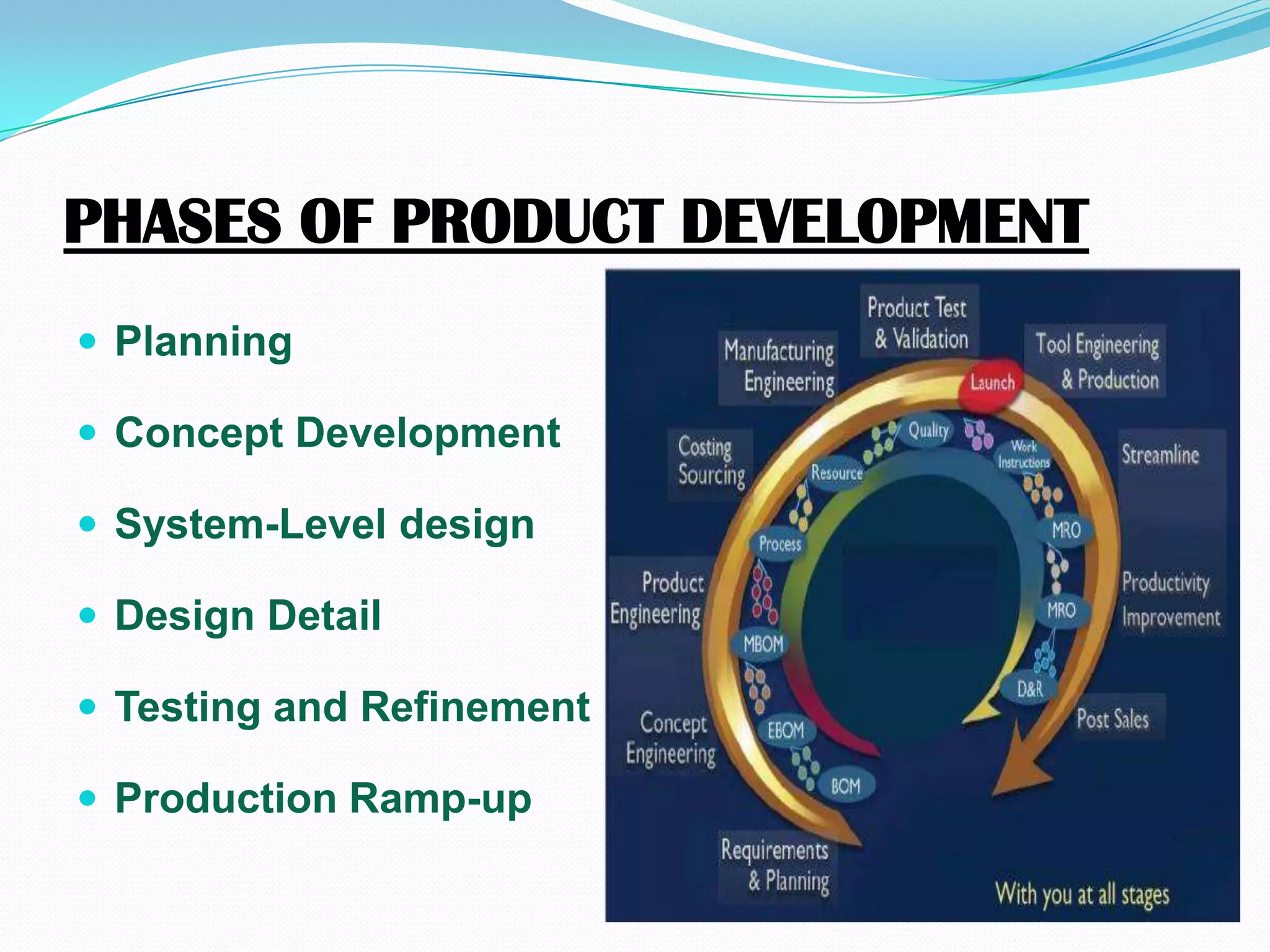
PHASES OF PRODUCT DEVELOPMENT
 Planning

 Concept Development

 System-Level design

 Design Detail

 Testing and Refinement

 Production Ramp-up
0. PLANNING :
 Referred as phase ‘zero’;


 Begins with corporate strategy , assessment of
  technology development and market objectives.

 This phase specifies the target market for the product,
  business goal, key assumption and various different
  constraints.
1. CONCEPT DEVELOPMENT:
 The need of target market is specified,


 Product concept are generated, evaluated and
 compared,

 One or more product concept are selected for further
 development and testing.
2. SYSTEM LEVEL DESIGN :
  Product architecture,

  The decomposition of the product into subsystem
   and components,

  Geometric layout of the product,

  Functional specification of each of the product
   subsystem,

  Preliminary process flow diagram for the final
   assembly process.
3. DESIGN DETAIL :
Output of this phase are –

 Drawing or computer file describing the geometry and
 its production tooling,

 Specification of purchased part,,


 Process plan for the fabrication and assembly of the
 product .
4. TESTING and REFINEMENT :
 Construction & evaluation of multiple preproduction
 versions of the products,

 Prototypes are made with same geometry and material
 properties as per the final product but not necessary
 the same fabrication,

 Prototypes are tested whether the product will work as
 designed and satisfy consumer demand.
5. PRODUCTION RAMP-UP :
 Product is made by using the intended production
 system,

 Purpose of the ramp up is to train the workforce and to
 work out any remaining problems to the production
 process,

 Products produced during product ramp up are send
 to preferred customers and careful evaluation is done
 to checkout remaining flaws.
TYPES OF PRODUCT :
 Generic (market pull products)
 Technology push products
 Platform products
 Process incentive products
 Customized products
 High risk products
 Quick build products
 Complex systems
Any Query
  ?????

PRODUCT DEVELOPMENT PROCESS

  • 1.
    THE PRODUCT DEVELOPMENT PROCESS AND TYPES OF PRODUCT By group – B Team leader – (GOURAV RANJAN)
  • 2.
    PRODUCT DEVELOPMENT PROCESS It isprocess that describes the basic steps needed to design a product. This process represents the basic sequence of steps or activities that a firm employs to conceive, design and bring a product to market which suits the customer demand.
  • 3.
    PHASES OF PRODUCTDEVELOPMENT  Planning  Concept Development  System-Level design  Design Detail  Testing and Refinement  Production Ramp-up
  • 4.
    0. PLANNING : Referred as phase ‘zero’;  Begins with corporate strategy , assessment of technology development and market objectives.  This phase specifies the target market for the product, business goal, key assumption and various different constraints.
  • 5.
    1. CONCEPT DEVELOPMENT: The need of target market is specified,  Product concept are generated, evaluated and compared,  One or more product concept are selected for further development and testing.
  • 6.
    2. SYSTEM LEVELDESIGN :  Product architecture,  The decomposition of the product into subsystem and components,  Geometric layout of the product,  Functional specification of each of the product subsystem,  Preliminary process flow diagram for the final assembly process.
  • 7.
    3. DESIGN DETAIL: Output of this phase are –  Drawing or computer file describing the geometry and its production tooling,  Specification of purchased part,,  Process plan for the fabrication and assembly of the product .
  • 8.
    4. TESTING andREFINEMENT :  Construction & evaluation of multiple preproduction versions of the products,  Prototypes are made with same geometry and material properties as per the final product but not necessary the same fabrication,  Prototypes are tested whether the product will work as designed and satisfy consumer demand.
  • 9.
    5. PRODUCTION RAMP-UP:  Product is made by using the intended production system,  Purpose of the ramp up is to train the workforce and to work out any remaining problems to the production process,  Products produced during product ramp up are send to preferred customers and careful evaluation is done to checkout remaining flaws.
  • 10.
    TYPES OF PRODUCT:  Generic (market pull products)  Technology push products  Platform products  Process incentive products  Customized products  High risk products  Quick build products  Complex systems
  • 11.

Editor's Notes

  • #6 Concept is a description of the form, function, and features of a product and is usually accompanied by a set of specifications, an analysis of a comparative products and a economic justification of the project.