L. J. POLYTECHNIC, AHMEDABAD
SUBMITTED BY:
VAIBHAV BHARAMBE
Mechanical Engineering Department
Self Employment And Entrepreneurship Development
PRODUCT SELECTION
INTRODUCTION TO PRODUCT
SELECTION
What is product ?
• Product is the bundle of satisfaction.
• Product is the conceptual creation of a producer approved by the
consumer.
• The Philip Kotler is tell the a product is anything that can be
offered to a market for attention, acquisition, use or consumption.
• This proper definition of product given in “Marketing Management”
by Philips kotler.
INTRODUCTION TO PRODUCT
SELECTION
Product selection:-
• Product selection is the process in which retailor choose the shape
or material of the product as per market demand.
Term included in product selection :-
• Material
• Shape
• Color
• Price
PRODUCT SELECTION
Demand and
Supply
Characteristics
Frequency of
Consumption
Nature of use
Product
Characteristics
Standard
products
Job-order
products
 Fast moving
Consumers goods
Consumer
durable:
Consumers
goods
Industrial
goods
Product class
Product line
Product mix
CONCEPT OF PRODUCT SELECTION
• Product selection is a decision process, in which the design team
selects one or few product concept for further development.
• An entrepreneur establishes a business unit with a modest
investments in a small scale level.
• As he senses business opportunities from the changing environment,
keeps on adding, improving and dropping different types of product.
• A small business unit progressively becomes large through additional
investments.
• The new product investment areas are as under:
• (i) Introduction of new product.
• (ii) Expansion of the existing product.
• (iii) Diversification in a new line of product by an already existing
unit.
• (iv) Business integration investments- the business is a step-by-step
and sequential conversion of raw material into finish product. E.g. a raw
cotton is converted into finished cloths through spinning, weaving, and
processing.
GROUP-1 CHAPTER:-3.1(i)(ii)
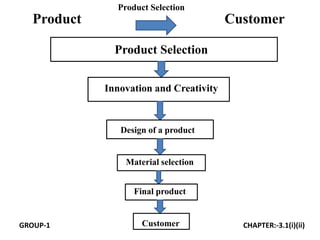
Product Selection
Innovation and Creativity
Design of a product
Material selection
Final product
Customer
Product Customer
Product Selection
GROUP-1 CHAPTER:-3.1(i)(ii)
IMPORTANT AVENNUES OF NEW
PRODUCT SELECTION
• Innovation product, through R & D efforts.
• Differentiated imitative product of some existing entrepreneur.
• Offensive strategy like sale of joint or by – product for cross
subsidizing the main product price-cut.
• Defensive strategy through developing self-sufficiency using
backward or forward integration.
• Joining hand with competitor through collaboration in
manufacturing or marketing the products.
• Production of components with some large units, e.g.
manufacturing of only a component used in scooters, cars, or
machinery manufacturing.
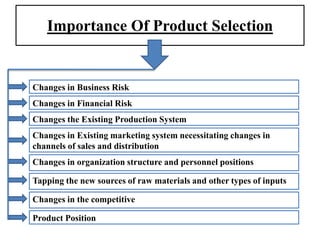
Importance Of Product Selection
Changes in Business Risk
Changes in Financial Risk
Changes the Existing Production System
Changes in Existing marketing system necessitating changes in
channels of sales and distribution
Changes in organization structure and personnel positions
Tapping the new sources of raw materials and other types of inputs
Changes in the competitive
Product Position
PRODUCT SELECTION

PRODUCT SELECTION

  • 1.
    L. J. POLYTECHNIC,AHMEDABAD SUBMITTED BY: VAIBHAV BHARAMBE Mechanical Engineering Department Self Employment And Entrepreneurship Development PRODUCT SELECTION
  • 2.
    INTRODUCTION TO PRODUCT SELECTION Whatis product ? • Product is the bundle of satisfaction. • Product is the conceptual creation of a producer approved by the consumer. • The Philip Kotler is tell the a product is anything that can be offered to a market for attention, acquisition, use or consumption. • This proper definition of product given in “Marketing Management” by Philips kotler.
  • 3.
    INTRODUCTION TO PRODUCT SELECTION Productselection:- • Product selection is the process in which retailor choose the shape or material of the product as per market demand. Term included in product selection :- • Material • Shape • Color • Price
  • 4.
    PRODUCT SELECTION Demand and Supply Characteristics Frequencyof Consumption Nature of use Product Characteristics Standard products Job-order products  Fast moving Consumers goods Consumer durable: Consumers goods Industrial goods Product class Product line Product mix
  • 5.
    CONCEPT OF PRODUCTSELECTION • Product selection is a decision process, in which the design team selects one or few product concept for further development. • An entrepreneur establishes a business unit with a modest investments in a small scale level. • As he senses business opportunities from the changing environment, keeps on adding, improving and dropping different types of product. • A small business unit progressively becomes large through additional investments. • The new product investment areas are as under: • (i) Introduction of new product. • (ii) Expansion of the existing product. • (iii) Diversification in a new line of product by an already existing unit. • (iv) Business integration investments- the business is a step-by-step and sequential conversion of raw material into finish product. E.g. a raw cotton is converted into finished cloths through spinning, weaving, and processing. GROUP-1 CHAPTER:-3.1(i)(ii)
  • 6.
    Product Selection Innovation andCreativity Design of a product Material selection Final product Customer Product Customer Product Selection GROUP-1 CHAPTER:-3.1(i)(ii)
  • 7.
    IMPORTANT AVENNUES OFNEW PRODUCT SELECTION • Innovation product, through R & D efforts. • Differentiated imitative product of some existing entrepreneur. • Offensive strategy like sale of joint or by – product for cross subsidizing the main product price-cut. • Defensive strategy through developing self-sufficiency using backward or forward integration. • Joining hand with competitor through collaboration in manufacturing or marketing the products. • Production of components with some large units, e.g. manufacturing of only a component used in scooters, cars, or machinery manufacturing.
  • 8.
    Importance Of ProductSelection Changes in Business Risk Changes in Financial Risk Changes the Existing Production System Changes in Existing marketing system necessitating changes in channels of sales and distribution Changes in organization structure and personnel positions Tapping the new sources of raw materials and other types of inputs Changes in the competitive Product Position