1
Preparedby:Ms.HimaniR.
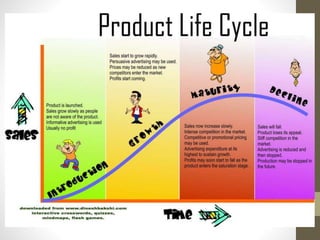
Product Life Cycle
• Like human beings, products too have a
life span
• Product goes through varied stages from
inception to decline
• Death of a product refers to when it stops
generating sales and profits
• In each stage there are distinct
opportunities and problems with respect
to marketing strategy and profit potential.
2
Preparedby:Ms.HimaniR.
Continued
• Products require different marketing,
financing, manufacturing, purchasing and
personnel strategies in the different stages
of their life cycle.
• The PLC concept provides a useful
framework for developing effective
marketing strategies in different stages of
the Product Life Cycle.
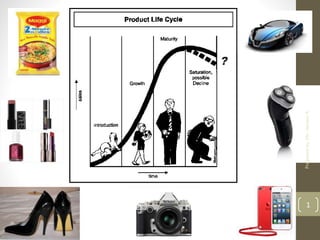
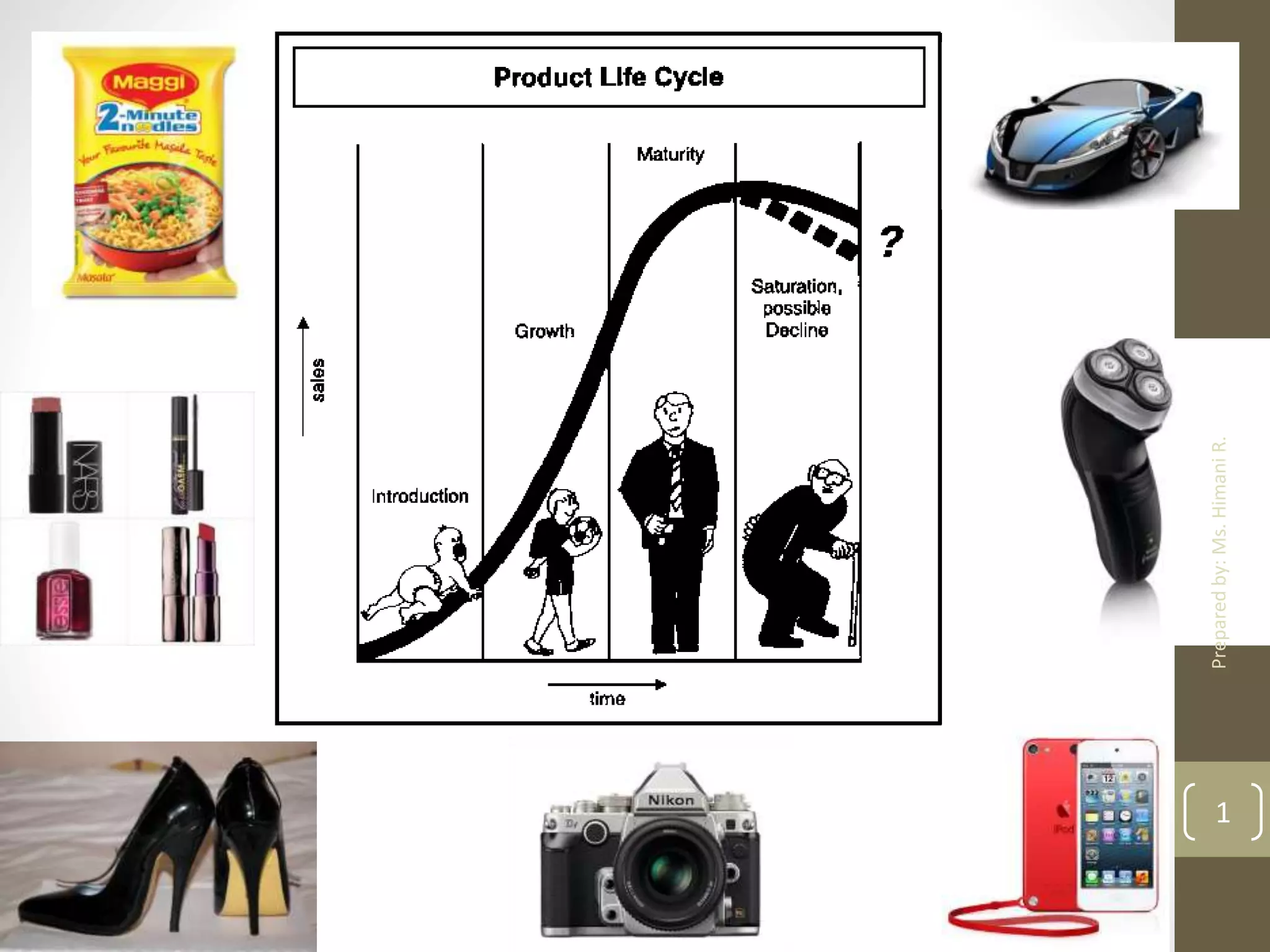
• There are four stages in the Product Life
Cycle – introduction, growth, maturity and
decline.
3
Preparedby:Ms.HimaniR.
Introduction
• Product is launched in the market
• Very few buyers of the product
• Low sales, low/no profit
• Distribution and promotion expenses are
high
• Skimming strategy/ Penetration strategy
• Little or no competition
5
Preparedby:Ms.HimaniR.
Growth
• Costs reduced due to economies of scale
• Sales volume increases significantly
• Profitability begins to rise
• Public awareness increases
• Competition begins to increase with a few
new players in establishing market
• Increased competition leads to price
decreases 6
Preparedby:Ms.HimaniR.
Maturity
• Costs are lowered as a result of production
volumes
• Sales volume start slowing down and market
saturation is reached
• Increase in competitors entering the market
• Prices tend to drop due to the proliferation of
competing products
• Brand differentiation and feature diversification
is emphasized to maintain or increase market
share
• Focus on modification should be given
7
Preparedby:Ms.HimaniR.
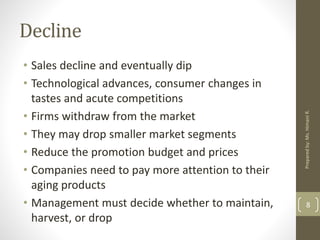
Decline
• Sales decline and eventually dip
• Technological advances, consumer changes in
tastes and acute competitions
• Firms withdraw from the market
• They may drop smaller market segments
• Reduce the promotion budget and prices
• Companies need to pay more attention to their
aging products
• Management must decide whether to maintain,
harvest, or drop
8
Preparedby:Ms.HimaniR.
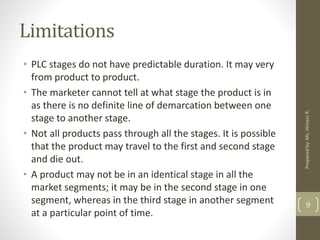
Limitations
• PLC stages do not have predictable duration. It may very
from product to product.
• The marketer cannot tell at what stage the product is in
as there is no definite line of demarcation between one
stage to another stage.
• Not all products pass through all the stages. It is possible
that the product may travel to the first and second stage
and die out.
• A product may not be in an identical stage in all the
market segments; it may be in the second stage in one
segment, whereas in the third stage in another segment
at a particular point of time.
9
Preparedby:Ms.HimaniR.

Product Life Cycle

  • 1.
  • 2.
    Product Life Cycle •Like human beings, products too have a life span • Product goes through varied stages from inception to decline • Death of a product refers to when it stops generating sales and profits • In each stage there are distinct opportunities and problems with respect to marketing strategy and profit potential. 2 Preparedby:Ms.HimaniR.
  • 3.
    Continued • Products requiredifferent marketing, financing, manufacturing, purchasing and personnel strategies in the different stages of their life cycle. • The PLC concept provides a useful framework for developing effective marketing strategies in different stages of the Product Life Cycle. • There are four stages in the Product Life Cycle – introduction, growth, maturity and decline. 3 Preparedby:Ms.HimaniR.
  • 5.
    Introduction • Product islaunched in the market • Very few buyers of the product • Low sales, low/no profit • Distribution and promotion expenses are high • Skimming strategy/ Penetration strategy • Little or no competition 5 Preparedby:Ms.HimaniR.
  • 6.
    Growth • Costs reduceddue to economies of scale • Sales volume increases significantly • Profitability begins to rise • Public awareness increases • Competition begins to increase with a few new players in establishing market • Increased competition leads to price decreases 6 Preparedby:Ms.HimaniR.
  • 7.
    Maturity • Costs arelowered as a result of production volumes • Sales volume start slowing down and market saturation is reached • Increase in competitors entering the market • Prices tend to drop due to the proliferation of competing products • Brand differentiation and feature diversification is emphasized to maintain or increase market share • Focus on modification should be given 7 Preparedby:Ms.HimaniR.
  • 8.
    Decline • Sales declineand eventually dip • Technological advances, consumer changes in tastes and acute competitions • Firms withdraw from the market • They may drop smaller market segments • Reduce the promotion budget and prices • Companies need to pay more attention to their aging products • Management must decide whether to maintain, harvest, or drop 8 Preparedby:Ms.HimaniR.
  • 9.
    Limitations • PLC stagesdo not have predictable duration. It may very from product to product. • The marketer cannot tell at what stage the product is in as there is no definite line of demarcation between one stage to another stage. • Not all products pass through all the stages. It is possible that the product may travel to the first and second stage and die out. • A product may not be in an identical stage in all the market segments; it may be in the second stage in one segment, whereas in the third stage in another segment at a particular point of time. 9 Preparedby:Ms.HimaniR.