Product Life Cycle
Sri Venkataramana Swamy
College Bantwal
III.B.com A-Batch
Contents:
• Product Life Cycle (PLC)
• PLC Stages
o Introduction
o Growth
o Maturity
o Saturation
o Decline
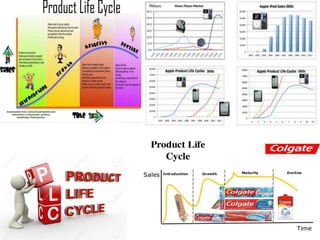
Product Life Cycle
Every product has its life. Industrial goods
may have a longer life than consumer goods.
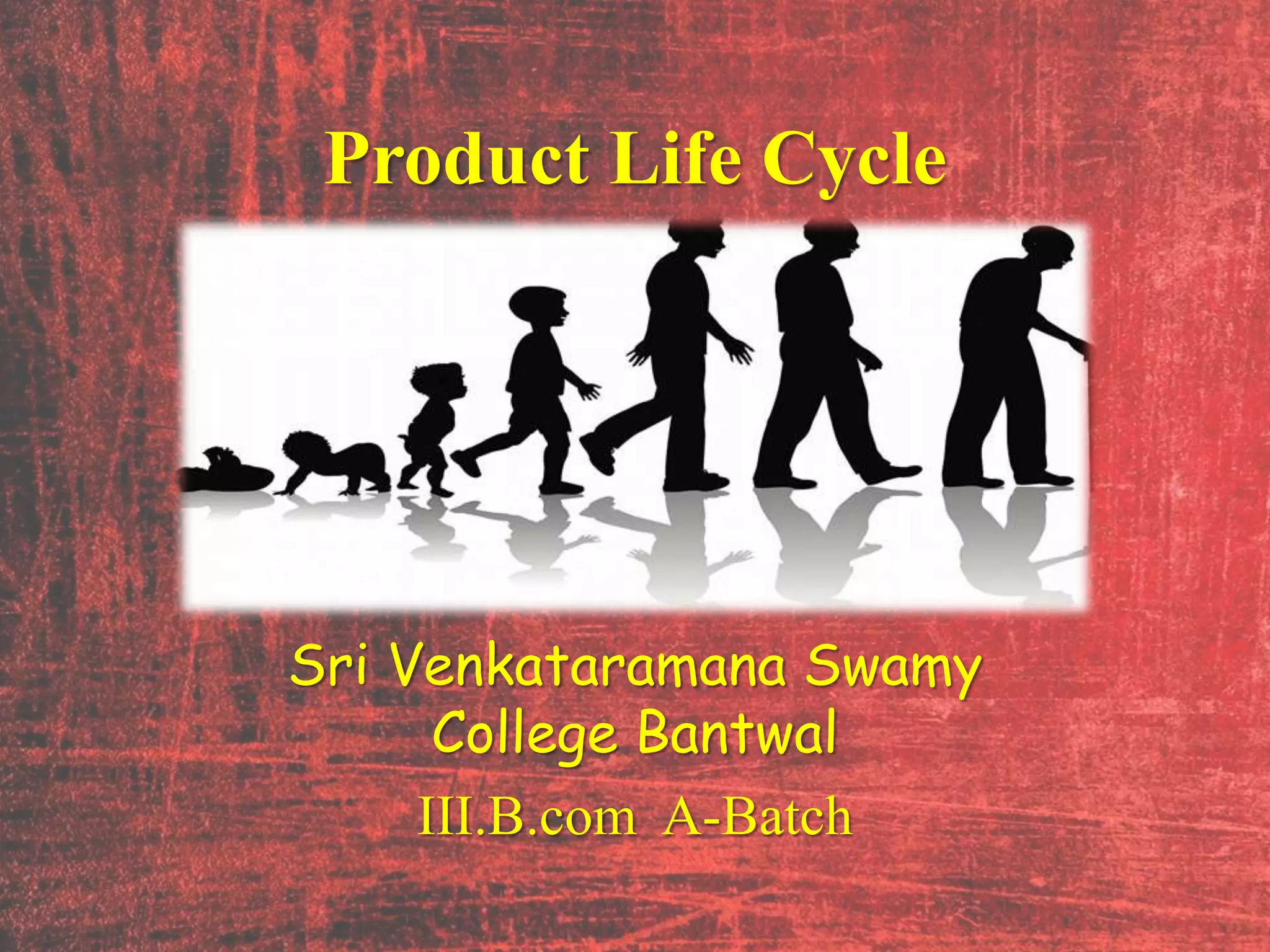
Products, like human beings, have length of
life, known as Product Life Cycle (PLC).
In the words of Philip Kotler, “ The Product life
cycle is an attempt to recognise distinct stages
in the sales history of the product”.
Introduction Stage
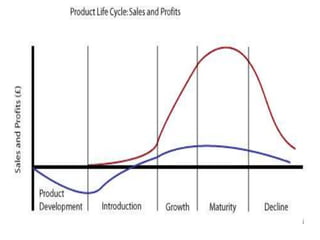
In the introduction stage, initial sales growth is slow, but
marketing & promotional expenses are high, leading to negative or
no profit. The Company tries to create product awareness and
induces trial for the product.
Growth Stage
In the growth stage, sales starts picking up, leading to rising
profits. The company tries to maximize market share,
resulting in increase in profits.
Maturity & Saturation Stage
Sales reach to its peak in this stage and then it starts declining.
Profit also starts declining. At the end of the stage, the company
struggles to keep its market share intact.
Declining Stage
In the decline stage, sales as well as profit goes down.
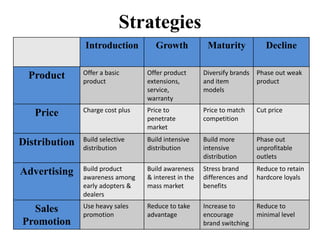
Strategies
Introduction Growth Maturity Decline
Product Offer a basic
product
Offer product
extensions,
service,
warranty
Diversify brands
and item
models
Phase out weak
product
Price Charge cost plus Price to
penetrate
market
Price to match
competition
Cut price
Distribution Build selective
distribution
Build intensive
distribution
Build more
intensive
distribution
Phase out
unprofitable
outlets
Advertising Build product
awareness among
early adopters &
dealers
Build awareness
& interest in the
mass market
Stress brand
differences and
benefits
Reduce to retain
hardcore loyals
Sales
Promotion
Use heavy sales
promotion
Reduce to take
advantage
Increase to
encourage
brand switching
Reduce to
minimal level
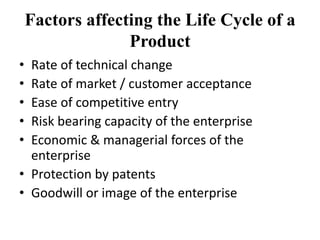
Factors affecting the Life Cycle of a
Product
• Rate of technical change
• Rate of market / customer acceptance
• Ease of competitive entry
• Risk bearing capacity of the enterprise
• Economic & managerial forces of the
enterprise
• Protection by patents
• Goodwill or image of the enterprise
Thank you

Product life cycle

  • 1.
    Product Life Cycle SriVenkataramana Swamy College Bantwal III.B.com A-Batch
  • 2.
    Contents: • Product LifeCycle (PLC) • PLC Stages o Introduction o Growth o Maturity o Saturation o Decline
  • 3.
    Product Life Cycle Everyproduct has its life. Industrial goods may have a longer life than consumer goods. Products, like human beings, have length of life, known as Product Life Cycle (PLC). In the words of Philip Kotler, “ The Product life cycle is an attempt to recognise distinct stages in the sales history of the product”.
  • 4.
    Introduction Stage In theintroduction stage, initial sales growth is slow, but marketing & promotional expenses are high, leading to negative or no profit. The Company tries to create product awareness and induces trial for the product.
  • 5.
    Growth Stage In thegrowth stage, sales starts picking up, leading to rising profits. The company tries to maximize market share, resulting in increase in profits.
  • 6.
    Maturity & SaturationStage Sales reach to its peak in this stage and then it starts declining. Profit also starts declining. At the end of the stage, the company struggles to keep its market share intact.
  • 7.
    Declining Stage In thedecline stage, sales as well as profit goes down.
  • 10.
    Strategies Introduction Growth MaturityDecline Product Offer a basic product Offer product extensions, service, warranty Diversify brands and item models Phase out weak product Price Charge cost plus Price to penetrate market Price to match competition Cut price Distribution Build selective distribution Build intensive distribution Build more intensive distribution Phase out unprofitable outlets Advertising Build product awareness among early adopters & dealers Build awareness & interest in the mass market Stress brand differences and benefits Reduce to retain hardcore loyals Sales Promotion Use heavy sales promotion Reduce to take advantage Increase to encourage brand switching Reduce to minimal level
  • 11.
    Factors affecting theLife Cycle of a Product • Rate of technical change • Rate of market / customer acceptance • Ease of competitive entry • Risk bearing capacity of the enterprise • Economic & managerial forces of the enterprise • Protection by patents • Goodwill or image of the enterprise
  • 12.