PRODUCT LIFE
CYCLE
WHAT IS PRODUCT LIFE
CYCLE?
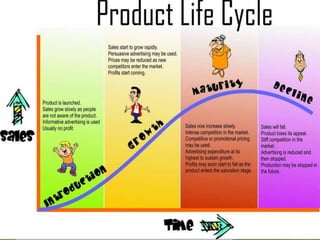
 According to Phillip Kotler: PLC is an attempt to recognise distinct
stages in the sales history of the product.
 According to Arch Patton: PLC has many points of similarity with the
human life cycle; the product is born, grows lustily, attains dynamic
maturity then enters its declining year.
WHAT IS PRODUCT LIFE
CYCLE ?
 It describes the stages a new product goes through from beginning
to end.
 It is a tool used by marketing professionals to understand the
market and plan the marketing mix.
 The life cycle concept may apply to a brand or to a category of
product. Its duration may be as short as a few months for a fad
item or a century or more for product categories such as the
gasoline-powered automobile.
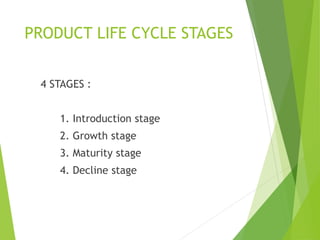
PRODUCT LIFE CYCLE STAGES
4 STAGES :
1. Introduction stage
2. Growth stage
3. Maturity stage
4. Decline stage
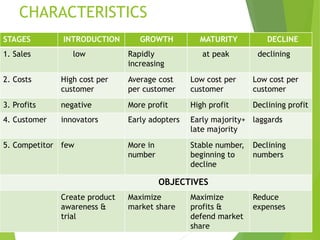
CHARACTERISTICS
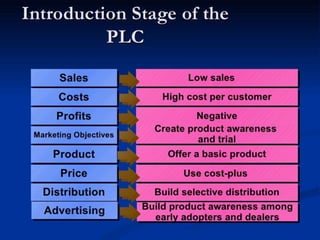
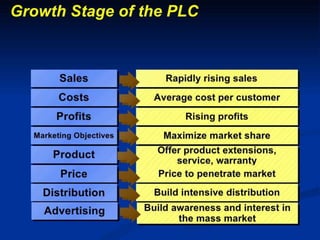
STAGES INTRODUCTION GROWTH MATURITY DECLINE
1. Sales low Rapidly
increasing
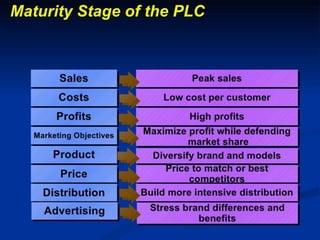
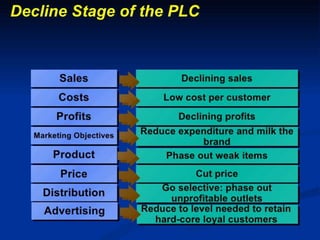
at peak declining
2. Costs High cost per
customer
Average cost
per customer
Low cost per
customer
Low cost per
customer
3. Profits negative More profit High profit Declining profit
4. Customer innovators Early adopters Early majority+
late majority
laggards
5. Competitor few More in
number
Stable number,
beginning to
decline
Declining
numbers
OBJECTIVES
Create product
awareness &
trial
Maximize
market share
Maximize
profits &
defend market
share
Reduce
expenses
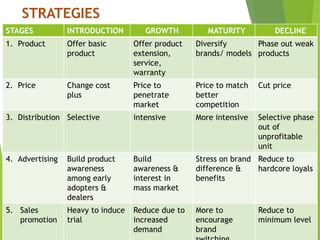
STRATEGIES
STAGES INTRODUCTION GROWTH MATURITY DECLINE
1. Product Offer basic
product
Offer product
extension,
service,
warranty
Diversify
brands/ models
Phase out weak
products
2. Price Change cost
plus
Price to
penetrate
market
Price to match
better
competition
Cut price
3. Distribution Selective intensive More intensive Selective phase
out of
unprofitable
unit
4. Advertising Build product
awareness
among early
adopters &
dealers
Build
awareness &
interest in
mass market
Stress on brand
difference &
benefits
Reduce to
hardcore loyals
5. Sales
promotion
Heavy to induce
trial
Reduce due to
increased
demand
More to
encourage
brand
Reduce to
minimum level
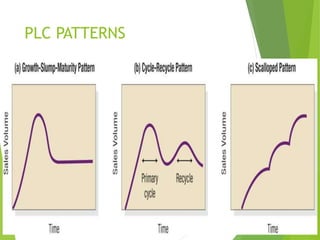
PLC PATTERNS
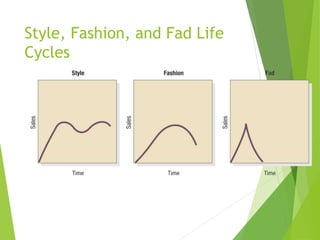
Style, Fashion, and Fad Life
Cycles
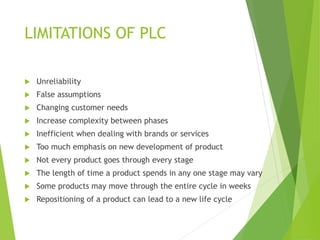
LIMITATIONS OF PLC
 Unreliability
 False assumptions
 Changing customer needs
 Increase complexity between phases
 Inefficient when dealing with brands or services
 Too much emphasis on new development of product
 Not every product goes through every stage
 The length of time a product spends in any one stage may vary
 Some products may move through the entire cycle in weeks
 Repositioning of a product can lead to a new life cycle

PLC.pptx

  • 1.
  • 2.
    WHAT IS PRODUCTLIFE CYCLE?  According to Phillip Kotler: PLC is an attempt to recognise distinct stages in the sales history of the product.  According to Arch Patton: PLC has many points of similarity with the human life cycle; the product is born, grows lustily, attains dynamic maturity then enters its declining year.
  • 3.
    WHAT IS PRODUCTLIFE CYCLE ?  It describes the stages a new product goes through from beginning to end.  It is a tool used by marketing professionals to understand the market and plan the marketing mix.  The life cycle concept may apply to a brand or to a category of product. Its duration may be as short as a few months for a fad item or a century or more for product categories such as the gasoline-powered automobile.
  • 5.
    PRODUCT LIFE CYCLESTAGES 4 STAGES : 1. Introduction stage 2. Growth stage 3. Maturity stage 4. Decline stage
  • 11.
    CHARACTERISTICS STAGES INTRODUCTION GROWTHMATURITY DECLINE 1. Sales low Rapidly increasing at peak declining 2. Costs High cost per customer Average cost per customer Low cost per customer Low cost per customer 3. Profits negative More profit High profit Declining profit 4. Customer innovators Early adopters Early majority+ late majority laggards 5. Competitor few More in number Stable number, beginning to decline Declining numbers OBJECTIVES Create product awareness & trial Maximize market share Maximize profits & defend market share Reduce expenses
  • 12.
    STRATEGIES STAGES INTRODUCTION GROWTHMATURITY DECLINE 1. Product Offer basic product Offer product extension, service, warranty Diversify brands/ models Phase out weak products 2. Price Change cost plus Price to penetrate market Price to match better competition Cut price 3. Distribution Selective intensive More intensive Selective phase out of unprofitable unit 4. Advertising Build product awareness among early adopters & dealers Build awareness & interest in mass market Stress on brand difference & benefits Reduce to hardcore loyals 5. Sales promotion Heavy to induce trial Reduce due to increased demand More to encourage brand Reduce to minimum level
  • 13.
  • 14.
    Style, Fashion, andFad Life Cycles
  • 15.
    LIMITATIONS OF PLC Unreliability  False assumptions  Changing customer needs  Increase complexity between phases  Inefficient when dealing with brands or services  Too much emphasis on new development of product  Not every product goes through every stage  The length of time a product spends in any one stage may vary  Some products may move through the entire cycle in weeks  Repositioning of a product can lead to a new life cycle