Product Design SpecificationsProduct Design Specifications
Arooj Zaidi
What is PDS?What is PDS?
The product design specification (PDS) is a listing of the
critical parameters, specifications and requirements for
the product you are designing. It is a statement of what
the product should be and should do. The PDS is
created during the problem
definition activity very early in the design process. Much
of the product design specification is driven by
customer needs. It is intended to show what you are
trying to achieve, NOT what you will end up with.
Factors that are consideredFactors that are considered
1. Product Design & Performance issues
2. Market issues
3. Capability issues
Product Design & Performance issuesProduct Design & Performance issues
 Expected product quality standards and requirements
 Expected product size and weight
 Expected product aesthetics -- customer requirement
 Expected product performance requirements -- the voice of the
customer!
 Expected product reliability standards and requirements
 Expected product safety requirements.
 Expected product service environment.
 Expected product maintenance requirements.
 Possible off-the-shelf component parts.
 Material requirements
 Expected product recycling potential and expected disposal
 Manufacturing process requirements and limitations.
 Product packaging requirements.
Market issuesMarket issues
 Potential customer base
 Market constraints on product
 Expected product competition
 Target product price -- OEM and MSRP
 Target production volume and market share
 Expected product distribution environment.
Capability issuesCapability issues
 Company constraints on product design, manufacture, and
distribution.
 PRP schedule requirements -- time to market.
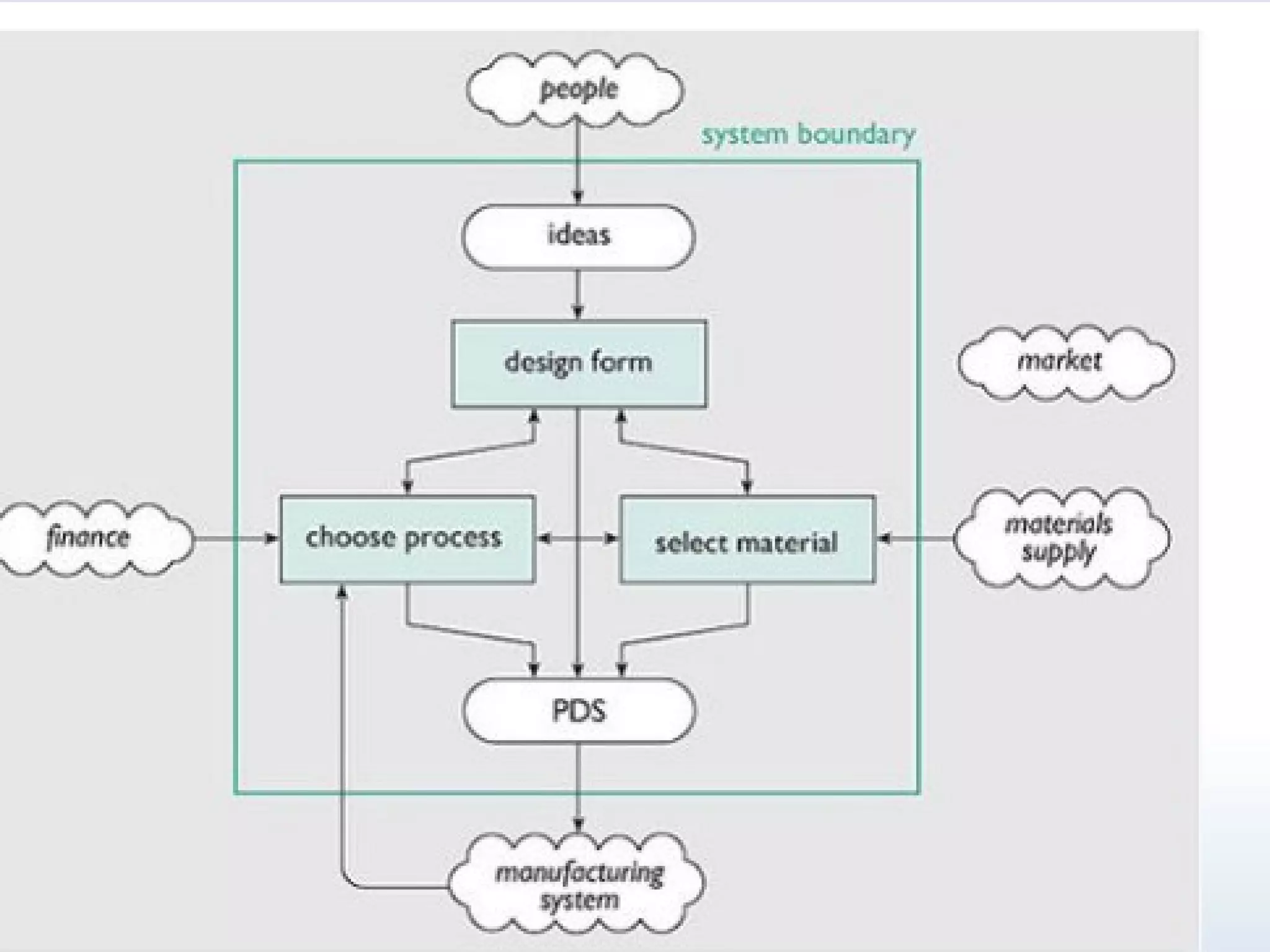
PDS process flow diagramPDS process flow diagram
Project-Kiosk DesignProject-Kiosk Design
 A small, temporary, standalone booth used in high-foot-
traffic areas for marketing purposes. A kiosk will usually
be manned by one or two individuals who help attract
attention to the booth to get new customers.
 The different types of kiosks include: point-of-
information kiosks, product promotion kiosks, service
or transaction kiosks, product-dispensing kiosks, and
internet Commerce kiosks. 
Typical Design ConstraintsTypical Design Constraints
Kiosk Structure:
 Size= 10’ x 10’
 No portion of kiosk may extend past the designated Leased
area. This includes tables, chairs, condiment stands, point of
sales stations, signage, etc.
 ƒ Minimum of 10’-0” clearance on all sides of the kiosk.
 ƒ No portion of the kiosk, including the sign, shall extend
above 8’-0”.
MaterialsMaterials
 ƒ Acceptable finishes for the counter face and top include
combinations of glass, metal, stone, marble, ceramic tile,
hardwoods (no plywoods), solid surface materials such as Avonite,
Corian, Wilsonart, or equal.
 ƒ Laminate, vinyl, and rubber are not permitted.
 ƒ All glass is to be tempered.
Counters displayCounters display
 Counter design plays a vital role in the perception of the
kiosk quality. It is the feature that the customer comes in
contact with and function as the kiosk’s storefront.
Therefore, it will be held to the highest design standards.
 Specific Requirements:
 ƒ Varying counter heights are highly encouraged to
promote creativity of design.
 ƒ General counter height must not exceed 42”; counter
height may extend to 4’-0” in
 ƒ Cash registers and other equipment must be recessed
such that at no point will they extend more than 9” above
the counter.
 ƒ Storage shall be concealed from the public view
Product design specifications 1

Product design specifications 1

  • 1.
    Product Design SpecificationsProductDesign Specifications Arooj Zaidi
  • 2.
    What is PDS?Whatis PDS? The product design specification (PDS) is a listing of the critical parameters, specifications and requirements for the product you are designing. It is a statement of what the product should be and should do. The PDS is created during the problem definition activity very early in the design process. Much of the product design specification is driven by customer needs. It is intended to show what you are trying to achieve, NOT what you will end up with.
  • 3.
    Factors that areconsideredFactors that are considered 1. Product Design & Performance issues 2. Market issues 3. Capability issues
  • 4.
    Product Design &Performance issuesProduct Design & Performance issues  Expected product quality standards and requirements  Expected product size and weight  Expected product aesthetics -- customer requirement  Expected product performance requirements -- the voice of the customer!  Expected product reliability standards and requirements  Expected product safety requirements.  Expected product service environment.  Expected product maintenance requirements.  Possible off-the-shelf component parts.  Material requirements  Expected product recycling potential and expected disposal  Manufacturing process requirements and limitations.  Product packaging requirements.
  • 5.
    Market issuesMarket issues Potential customer base  Market constraints on product  Expected product competition  Target product price -- OEM and MSRP  Target production volume and market share  Expected product distribution environment.
  • 6.
    Capability issuesCapability issues Company constraints on product design, manufacture, and distribution.  PRP schedule requirements -- time to market.
  • 7.
    PDS process flowdiagramPDS process flow diagram
  • 8.
    Project-Kiosk DesignProject-Kiosk Design A small, temporary, standalone booth used in high-foot- traffic areas for marketing purposes. A kiosk will usually be manned by one or two individuals who help attract attention to the booth to get new customers.  The different types of kiosks include: point-of- information kiosks, product promotion kiosks, service or transaction kiosks, product-dispensing kiosks, and internet Commerce kiosks. 
  • 9.
    Typical Design ConstraintsTypicalDesign Constraints Kiosk Structure:  Size= 10’ x 10’  No portion of kiosk may extend past the designated Leased area. This includes tables, chairs, condiment stands, point of sales stations, signage, etc.  ƒ Minimum of 10’-0” clearance on all sides of the kiosk.  ƒ No portion of the kiosk, including the sign, shall extend above 8’-0”.
  • 10.
    MaterialsMaterials  ƒ Acceptablefinishes for the counter face and top include combinations of glass, metal, stone, marble, ceramic tile, hardwoods (no plywoods), solid surface materials such as Avonite, Corian, Wilsonart, or equal.  ƒ Laminate, vinyl, and rubber are not permitted.  ƒ All glass is to be tempered.
  • 11.
    Counters displayCounters display Counter design plays a vital role in the perception of the kiosk quality. It is the feature that the customer comes in contact with and function as the kiosk’s storefront. Therefore, it will be held to the highest design standards.  Specific Requirements:  ƒ Varying counter heights are highly encouraged to promote creativity of design.  ƒ General counter height must not exceed 42”; counter height may extend to 4’-0” in  ƒ Cash registers and other equipment must be recessed such that at no point will they extend more than 9” above the counter.  ƒ Storage shall be concealed from the public view