Downloaded 1,175 times
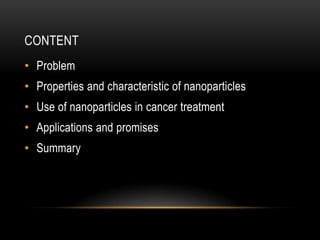
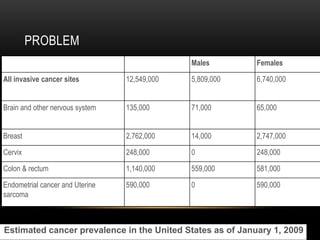

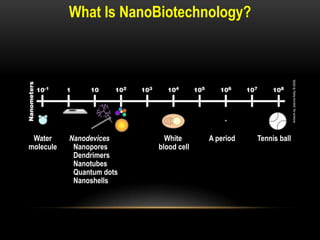
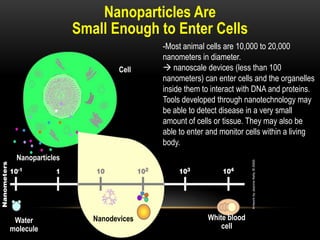
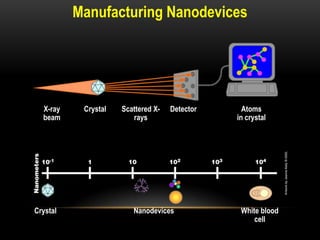
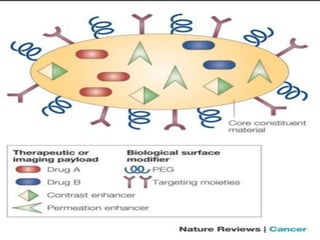
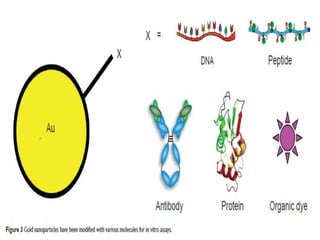
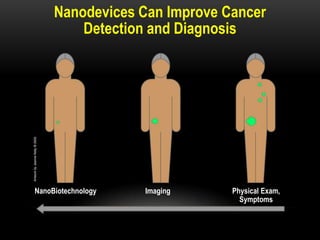
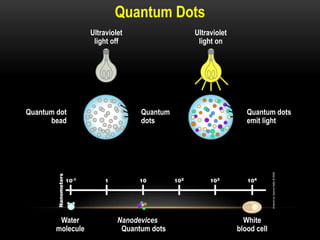
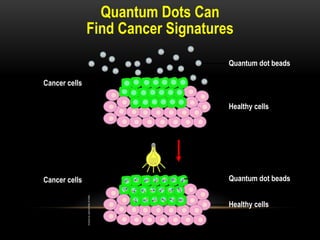
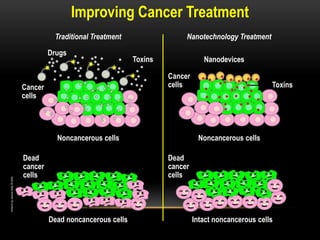
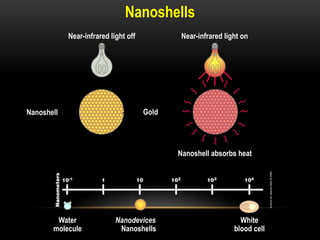
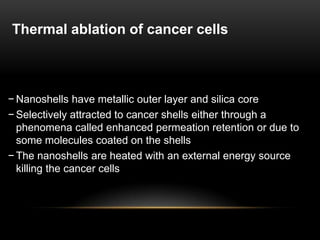
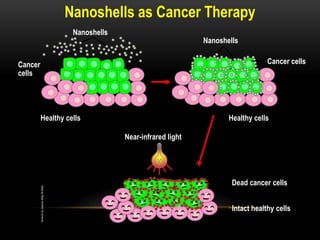
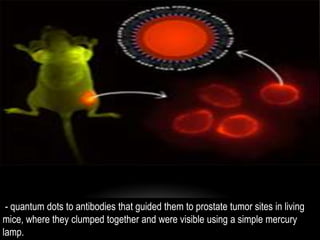
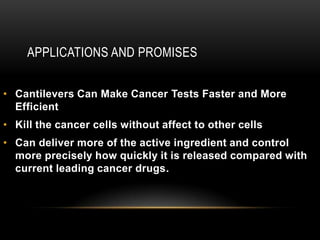
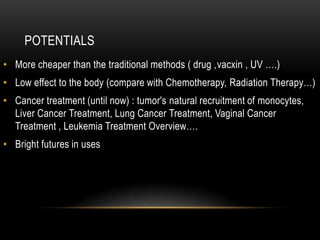
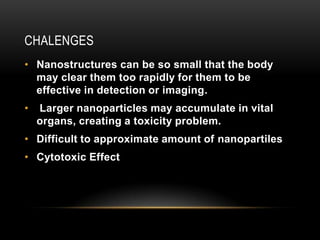



Nanoparticles show promise for improving cancer detection and treatment. They are small enough to enter cells and interact with DNA and proteins. Quantum dots and nanoshells can be used to detect cancer signatures. Nanoshells coated with cancer-targeting molecules can selectively heat and destroy cancer cells when exposed to near-infrared light, protecting healthy cells. While challenges remain around toxicity and delivery, nanoparticles may enable cheaper, less toxic cancer therapies compared to chemotherapy and improve outcomes.


![CASE_PRESENTATION_ON_subdural_hematoma(SDH)[1 FINAL PPT]-1.pptx](https://cdn.slidesharecdn.com/ss_thumbnails/casepresentationonsubduralhematomasdh1finalppt-1-260129172522-d405d375-thumbnail.jpg?width=640&height=640&fit=bounds)


