










The Principles Of Constructive Learning
The Overall curriculum
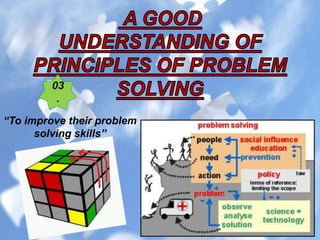
Principles of Problem Solving
Critical Thinking and Metacognitive Skills
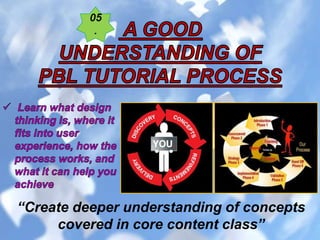
PBL Tutorial Process
Learning Objectives Ecpected of the Students
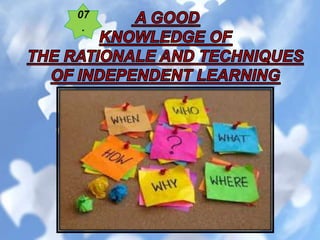
Rationale and Techniques of Independent Learning
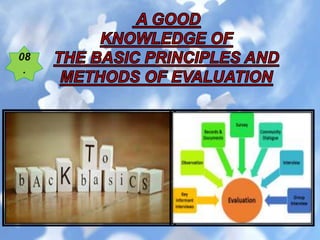
Basic Principles and Methods of Evaluation
Available Respective useful Resources
Importance of Collborative Work
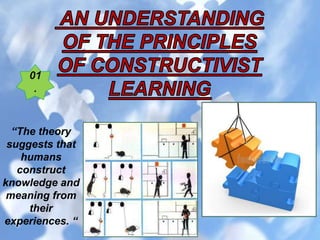
“The theory
suggests that
humans
construct
knowledge and
meaning from
their
experiences. “
“The total
learning
experience
which
children are
exposed to in
school
hours”
“To improve their problem
solving skills”
“The ability to think clearly and rationally,
understanding the logical connection between ideas.”
“Create deeper understanding of concepts
covered in core content class”
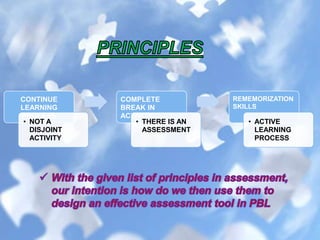
CONTINUE
LEARNING
PROCESS
• NOT A
DISJOINT
ACTIVITY
COMPLETE
BREAK IN
ACTIVITY
• THERE IS AN
ASSESSMENT
REMEMORIZATION
SKILLS
• ACTIVE
LEARNING
PROCESS
“ The PBL learning environment is more
stimulating and human”
• Acquiring subject matter
knowldge
• Motivating students to
learning
• Developing student's thinking
skills.
• Helping students with
retention
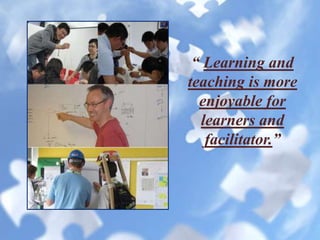
“ Learning and
teaching is more
enjoyable for
learners and
facilitator.”
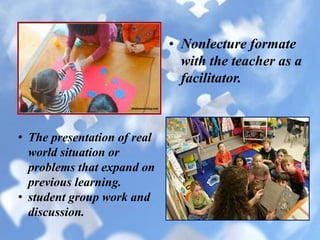
• Nonlecture formate
with the teacher as a
facilitator.
• The presentation of real
world situation or
problems that expand on
previous learning.
• student group work and
discussion.
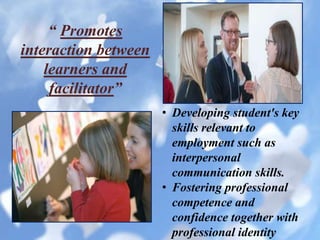
“ Promotes
interaction between
learners and
facilitator”
• Developing student's key
skills relevant to
employment such as
interpersonal
communication skills.
• Fostering professional
competence and
confidence together with
professional identity
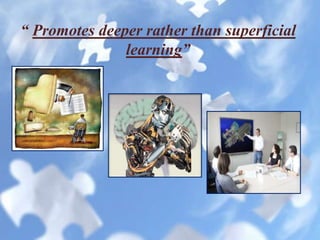
“ Promotes deeper rather than superficial
learning”
• Learning is initiated by a problem
• Problems are based on complex, real-
world situation
• Learning is active, integrated,
cumulative and connected
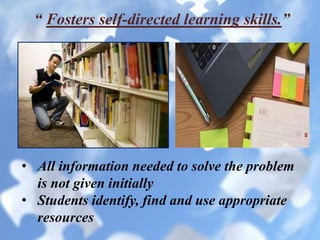
“ Fosters self-directed learning skills.”
• All information needed to solve the problem
is not given initially
• Students identify, find and use appropriate
resources
“Prior learning experiences may not
prepare learners well
for PBL”
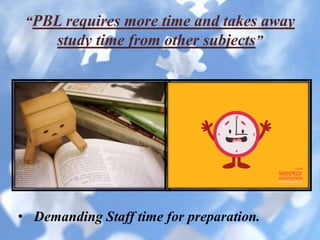
“PBL requires more time and takes away
study time from other subjects”
• Demanding Staff time for preparation.
“It creates some anxiety because learning
is messier”
• Students lack in basic
knowledge as they are
directly proceed to real
time problems.
• Stress full activities for
students and staff.
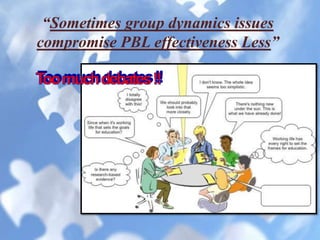
“Sometimes group dynamics issues
compromise PBL effectiveness Less”
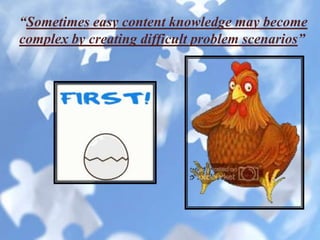
“Sometimes easy content knowledge may become
complex by creating difficult problem scenarios”
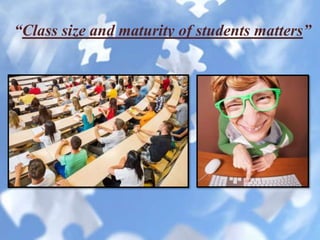
“Class size and maturity of students matters”
“Costly with significant startup and
maintenance”
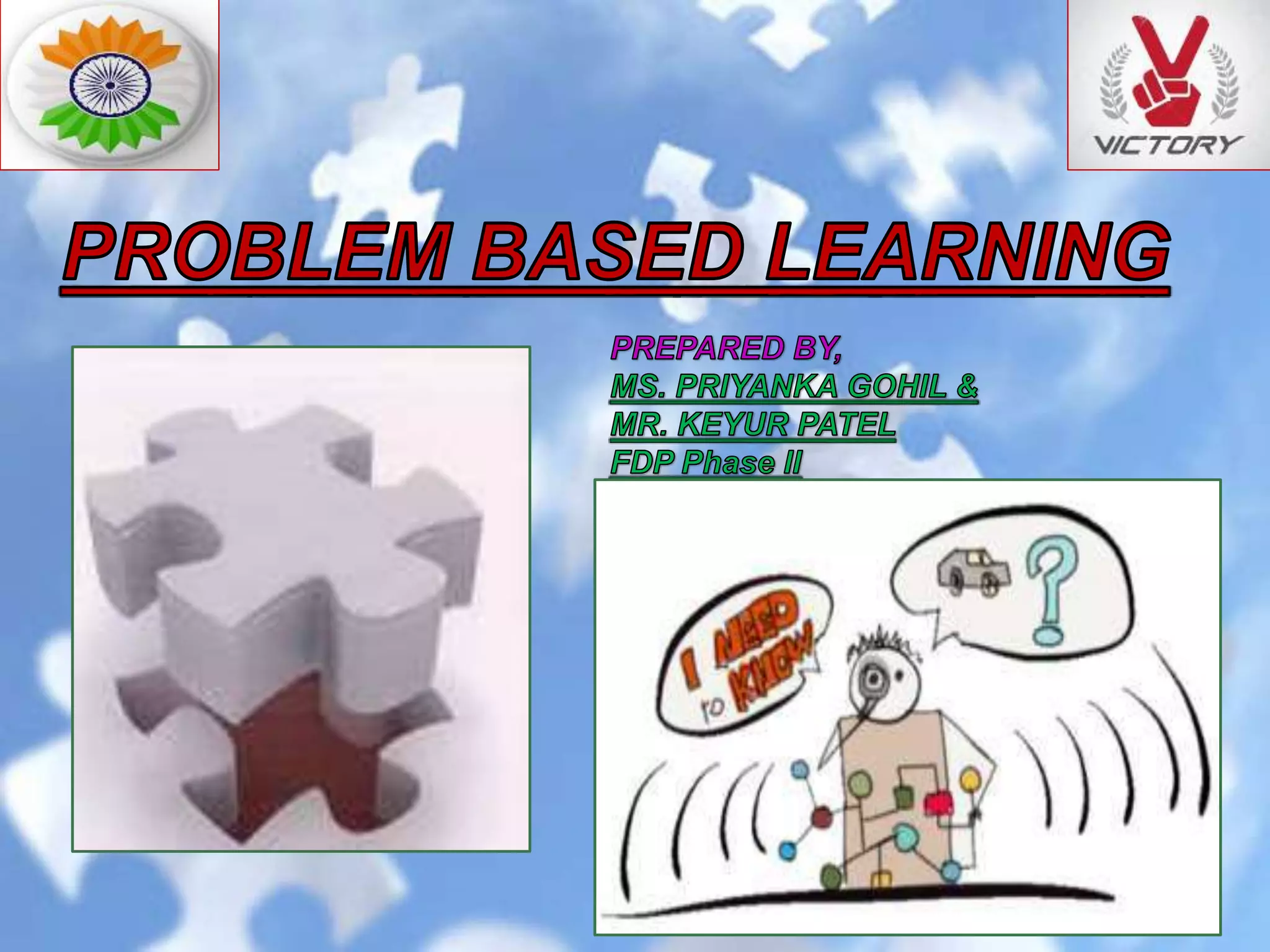
Problem based learning

Problem based learning