Private brand
bini.p.j
s3MBA
PRIVATE BRANDING
Definition
A private brand is a product that is
exclusively manufactured by the large
manufacture for the small retailers. The
retailer will market the product under its
own brand name. Prices for private
brands are usually set cheaper than
competing name brands.
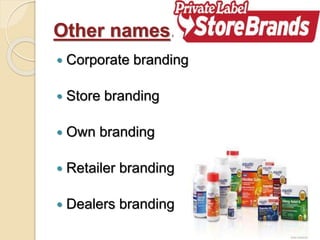
Other names…
 Corporate branding
 Store branding
 Own branding
 Retailer branding
 Dealers branding
Examples
 Grocery products - canned food,
frozen food, rice, cereal, sodas, etc.
 Generic medicine and health products
- pain relievers, cough syrup,
bandages, etc.
 Textiles - towels, washcloths, bed
sheets, etc.
 Household supplies - cleaning
products, kitchen utensils, dishes, etc.
Why Develop Private Brands?
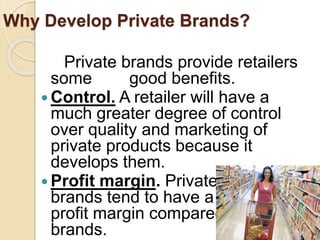
Private brands provide retailers
some good benefits.
 Control. A retailer will have a
much greater degree of control
over quality and marketing of
private products because it
develops them.
 Profit margin. Private product
brands tend to have a higher
profit margin compared to name
brands.
 Image. You can create a unique image for
your retail establishment with your private
brands.
 Customer loyalty. It's possible to improve
customer loyalty because of the
exclusivity of private brands. If you can
get consumers hooked on your private
brand, then they must go to your store to
get it because it is the only place they can
get it. Private label branding is one way to
separate yourself from competitors.

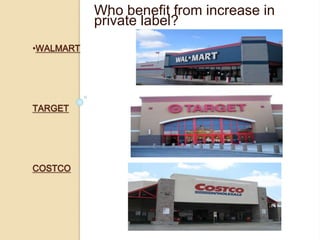
•WALMART
TARGET
COSTCO
Who benefit from increase in
private label?
COCA COLA
PEPSICO
P&G
Who benefit from decrease in private label?
Challenges faced by private
labels
THANK YOU

private brand

  • 1.
  • 2.
    PRIVATE BRANDING Definition A privatebrand is a product that is exclusively manufactured by the large manufacture for the small retailers. The retailer will market the product under its own brand name. Prices for private brands are usually set cheaper than competing name brands.
  • 3.
    Other names…  Corporatebranding  Store branding  Own branding  Retailer branding  Dealers branding
  • 4.
    Examples  Grocery products- canned food, frozen food, rice, cereal, sodas, etc.  Generic medicine and health products - pain relievers, cough syrup, bandages, etc.
  • 5.
     Textiles -towels, washcloths, bed sheets, etc.  Household supplies - cleaning products, kitchen utensils, dishes, etc.
  • 6.
    Why Develop PrivateBrands? Private brands provide retailers some good benefits.  Control. A retailer will have a much greater degree of control over quality and marketing of private products because it develops them.  Profit margin. Private product brands tend to have a higher profit margin compared to name brands.
  • 7.
     Image. Youcan create a unique image for your retail establishment with your private brands.  Customer loyalty. It's possible to improve customer loyalty because of the exclusivity of private brands. If you can get consumers hooked on your private brand, then they must go to your store to get it because it is the only place they can get it. Private label branding is one way to separate yourself from competitors. 
  • 8.
  • 9.
    COCA COLA PEPSICO P&G Who benefitfrom decrease in private label?
  • 11.
    Challenges faced byprivate labels
  • 13.