MADE BY:-
SNEH LATA
BRAND POSITIONING
 Brand positioning it is the consumer mentally rank the
brand in their minds with one or more dimensions. It
is when consumer choose the best out of number of
brands we can say brand is positioned in the mind of
the consumer.
DEFINITION OF BRAND POSITIONING
 “The act of designing the company’s offer so that it
occupies a distinct and valued place in the mind of the
target customer.”
 - PHILIP KOTLER
EXAMPLE
DIFFERENTIATING THE BRAND
 BETTER OFFERING: It means that the company offer
out performs its rivals.
 NEWER OFFERING: It means to develop the product
that did not exist before.
 CHEAPER OFFERING: This means getting a similar
brand for less money.
 FASTER OFFERING: It means the performance of
delivery time involved in buying a particular brand.
METHODS TO DIFFERENTIATE
 PRODUCT DIFFERENTIATION
 SERVICE DIFFERENTIATION
IMAGE DIFFERENTIATION
BRAND POSITIONING PROCESS
1) Identify the business's direct competition.
2) Understand the position of the competitor in the
market.
3) Documenting the provider's own position in today
market
4) Comparing the company position with its
competitor’s position.
5) Develop a distinctive differentiating and value based
position.
6) Creating a position statement with key message
EXAMPLE
ADVERTISING AND BRAND
POSITIONING
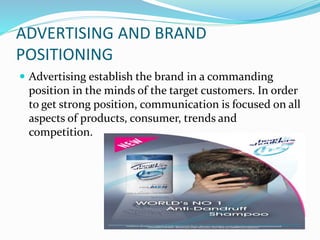
 Advertising establish the brand in a commanding
position in the minds of the target customers. In order
to get strong position, communication is focused on all
aspects of products, consumer, trends and
competition.
SELECTION OF RIGHT BRAND POSITION
1) Determine desired position for brand
2) Examine the current perceived position among
consumers
3) Is our desired brand position differentiated enough to
carve out a viable market niche
4) Communicate unique brand position in a way that is
understandable and compelling to our consumers.
5) To understand how our desired brand position similar to
existing brands in the marketplace.
6) Evaluate resources to overcome those similar brands and
establish a strong position
7) Follow discipline to stay true to our position
8) Choose a position that have long term viability based on
things.
BRAND IDENTIFICATION
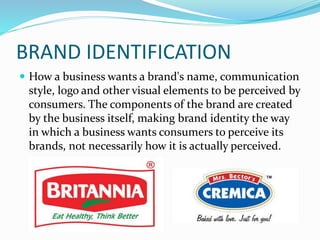
 How a business wants a brand's name, communication
style, logo and other visual elements to be perceived by
consumers. The components of the brand are created
by the business itself, making brand identity the way
in which a business wants consumers to perceive its
brands, not necessarily how it is actually perceived.
ELEMENTS OF BRAND IDENTITY
DIMENSIONS OF BRAND IDENTITY
 CORE IDENTITY- IT REPRESENT THE SOUL OF
THE BRAND AND FUDAMENTAL VALUE
 EXTENDED IDENTITY- IT MAKES THE COMPLETE
DESCRIPTION
DIMENSIONS OF BRAND IDENTITY
OF MARUTI CARS
• ECONOMICAL
• FUEL EFFICIENT
CORE
IDENTITY
• LARGEST MARKET
SHARE
• EASY ON POCKET
EXTENDED
IDENTITY
SOURCES OF BRAND IDENTITY
SYMBOLS:
LOGOS
ELEMENTS OF LOGOS
 LOGO TYPE
ICON
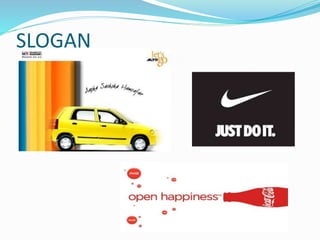
SLOGAN
FUNDAMENTALS OF LODO DESIGN
 BUSINESS / PRODUCT NAME
•ICON
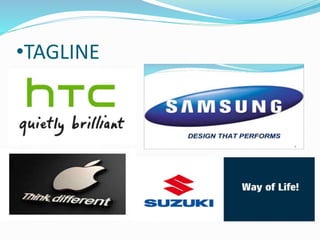
•TAGLINE
TRADEMARKS
EXAMPLE OF TRADEMARKS
PROCESS OF BRAND DEVELOPING
1. Consider the audience
2. Define the brand
Personality
3. Design brand logo
4. Choose colors wisely
5. Decide on typography
6. Add texture
7. Plan the presentation
8. Create your voice
Brand positioning and identification

Brand positioning and identification

  • 1.
  • 2.
    BRAND POSITIONING  Brandpositioning it is the consumer mentally rank the brand in their minds with one or more dimensions. It is when consumer choose the best out of number of brands we can say brand is positioned in the mind of the consumer.
  • 3.
    DEFINITION OF BRANDPOSITIONING  “The act of designing the company’s offer so that it occupies a distinct and valued place in the mind of the target customer.”  - PHILIP KOTLER
  • 4.
  • 5.
    DIFFERENTIATING THE BRAND BETTER OFFERING: It means that the company offer out performs its rivals.
  • 6.
     NEWER OFFERING:It means to develop the product that did not exist before.
  • 7.
     CHEAPER OFFERING:This means getting a similar brand for less money.
  • 8.
     FASTER OFFERING:It means the performance of delivery time involved in buying a particular brand.
  • 9.
    METHODS TO DIFFERENTIATE PRODUCT DIFFERENTIATION
  • 10.
  • 11.
  • 12.
    BRAND POSITIONING PROCESS 1)Identify the business's direct competition. 2) Understand the position of the competitor in the market. 3) Documenting the provider's own position in today market 4) Comparing the company position with its competitor’s position. 5) Develop a distinctive differentiating and value based position. 6) Creating a position statement with key message
  • 13.
  • 14.
    ADVERTISING AND BRAND POSITIONING Advertising establish the brand in a commanding position in the minds of the target customers. In order to get strong position, communication is focused on all aspects of products, consumer, trends and competition.
  • 15.
    SELECTION OF RIGHTBRAND POSITION 1) Determine desired position for brand 2) Examine the current perceived position among consumers 3) Is our desired brand position differentiated enough to carve out a viable market niche 4) Communicate unique brand position in a way that is understandable and compelling to our consumers. 5) To understand how our desired brand position similar to existing brands in the marketplace. 6) Evaluate resources to overcome those similar brands and establish a strong position 7) Follow discipline to stay true to our position 8) Choose a position that have long term viability based on things.
  • 16.
    BRAND IDENTIFICATION  Howa business wants a brand's name, communication style, logo and other visual elements to be perceived by consumers. The components of the brand are created by the business itself, making brand identity the way in which a business wants consumers to perceive its brands, not necessarily how it is actually perceived.
  • 17.
  • 18.
    DIMENSIONS OF BRANDIDENTITY  CORE IDENTITY- IT REPRESENT THE SOUL OF THE BRAND AND FUDAMENTAL VALUE  EXTENDED IDENTITY- IT MAKES THE COMPLETE DESCRIPTION
  • 19.
    DIMENSIONS OF BRANDIDENTITY OF MARUTI CARS • ECONOMICAL • FUEL EFFICIENT CORE IDENTITY • LARGEST MARKET SHARE • EASY ON POCKET EXTENDED IDENTITY
  • 21.
    SOURCES OF BRANDIDENTITY SYMBOLS:
  • 22.
  • 23.
  • 24.
  • 25.
  • 26.
    FUNDAMENTALS OF LODODESIGN  BUSINESS / PRODUCT NAME
  • 27.
  • 28.
  • 29.
  • 30.
  • 31.
    PROCESS OF BRANDDEVELOPING 1. Consider the audience 2. Define the brand Personality 3. Design brand logo 4. Choose colors wisely 5. Decide on typography 6. Add texture 7. Plan the presentation 8. Create your voice