PRINCIPLES OF GENERAL SURGERY
Dr MH Abdul Rahman
General Surgeon
Assistant Professor,Dept of General Surgery
Principles of General Surgery
• Develop a Surgical diagnosis
• Basic necessities of surgery
• Aseptic technique
• Incisions
• Tissue handling
• Hemostasis and wound healing
• Promotion of hemostasis and wound healing
• Decontamination and debridement
• Edema control
• Management of General health and Nutrition
• Human tissues due to their innate properties
react to injury with less predictability, With
experience certain set principles are evolved
for optimal healing. These are called BASIC
PRINCIPLES OF SURGERY.
DEVELOPING A SURGICAL DIAGNOSIS
Decisions on surgery made from
• Identifying signs and symptoms
• Complete and thorough history
• Physical examination
• Radiographic findings
• Laboratory investigations
• Record keeping/Documentation
• Differential diagnosis
BASIC NECESSITIES FOR SURGERY
• CONSENT
• ACCESS
• ANESTHESIA
• VISIBILITY
• HEMOSTASIS
• ASSISTANCE
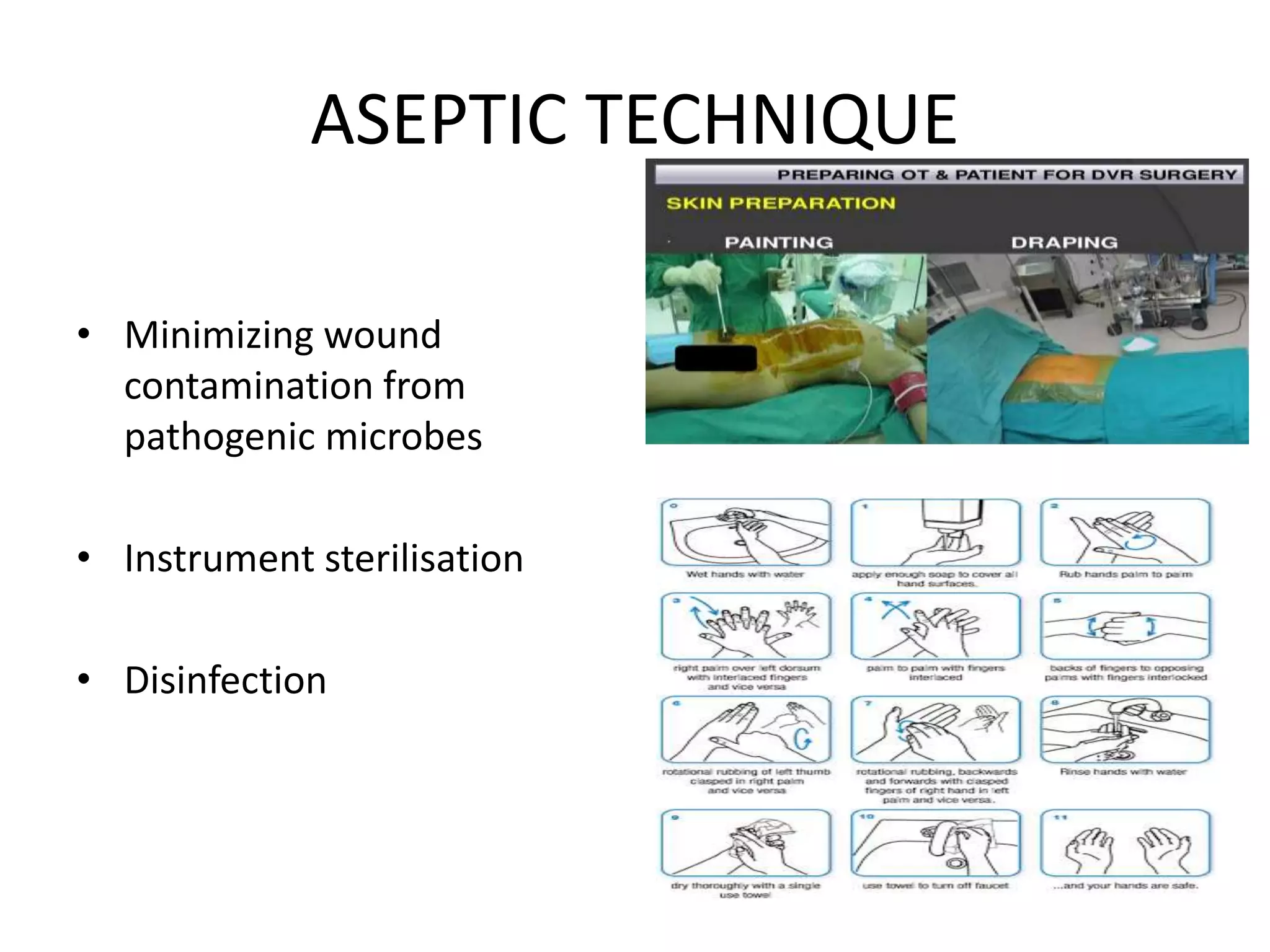
ASEPTIC TECHNIQUE
• Minimizing wound
contamination from
pathogenic microbes
• Instrument sterilisation
• Disinfection
• Universal precautions
• Surgical staff and surgeon
preparation
• Clean and sterile technique
INCISIONS
• Use of sharp blade of
proper size
• Firm continuous strokes
• Avoid injury to vital
structures
• Respect skin lines
TISSUE HANDLING
• Respect tissue
• Avoid excessive crushing, pulling, extremes of
temperatures, dessication, harsh chemicals
and tissue damage for proper healing.
• Use of instruments and retractors for minimal
tissue handling e.g.,Forceps, Retractors
• Use of irrigation, protection of soft tissue
while cauterisation
HEMOSTASIS
Prevention of excessive blood loss helps in
• Preserving patients oxygen carrying capacity
• Increasing visibility
• Prevent formation of hematomas
• Prevent infection
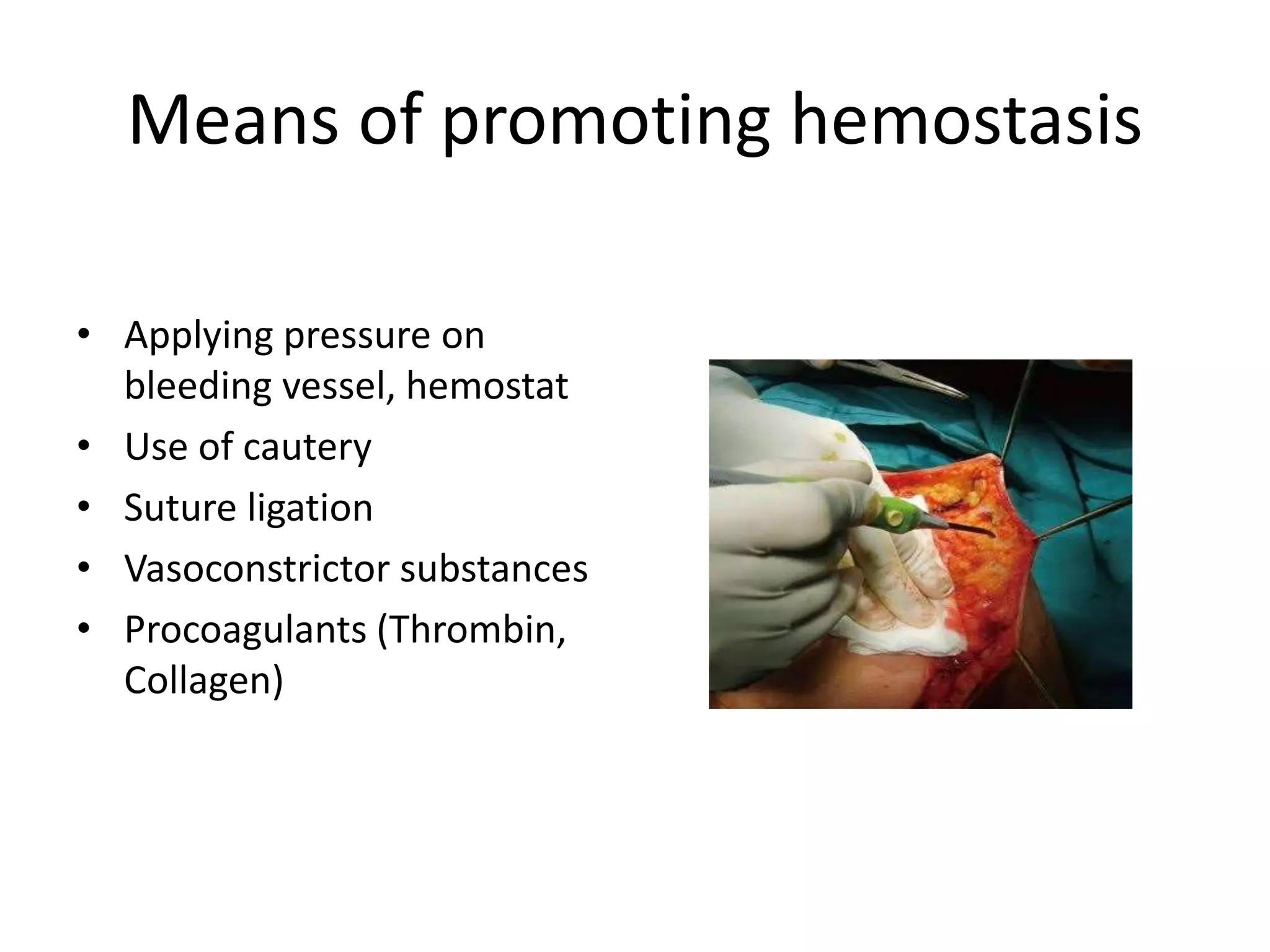
Means of promoting hemostasis
• Applying pressure on
bleeding vessel, hemostat
• Use of cautery
• Suture ligation
• Vasoconstrictor substances
• Procoagulants (Thrombin,
Collagen)
WOUND HEALING
• Aseptic technique
• Sterile precautions
• Proper tissue handling
• Avoid hematoma
• Avoid dead space
• Avoid infection
• Adequate nutrition
• Physiotherapy, Functional
Activity and Mobilisation
DECONTAMINATION AND
DEBRIDEMENT
• Decontamination is to remove debris, foreign
bodies, reduce bacterial count, minimize
infection
• Use of irrigation, dressing
• Debridement is to remove necrotic,
devitalized tissue
• Can be Mechanical, Chemical, Surgical.
EDEMA CONTROL
• Collection of fluid in interstitial space
Factors responsible are
• Tissue injury
• Inflammatory mediators
EDEMA CONTROL
Edema controlled by
• Gentle tissue handling,
• Anti inflammatory drugs,
• Elevation, Compression bandage
• ‘RICE’ technique in trauma
GENERAL HEALTH AND NUTRITION
Assessment of
• Height
• Weight
• Built
• Nourishment
• Vitals
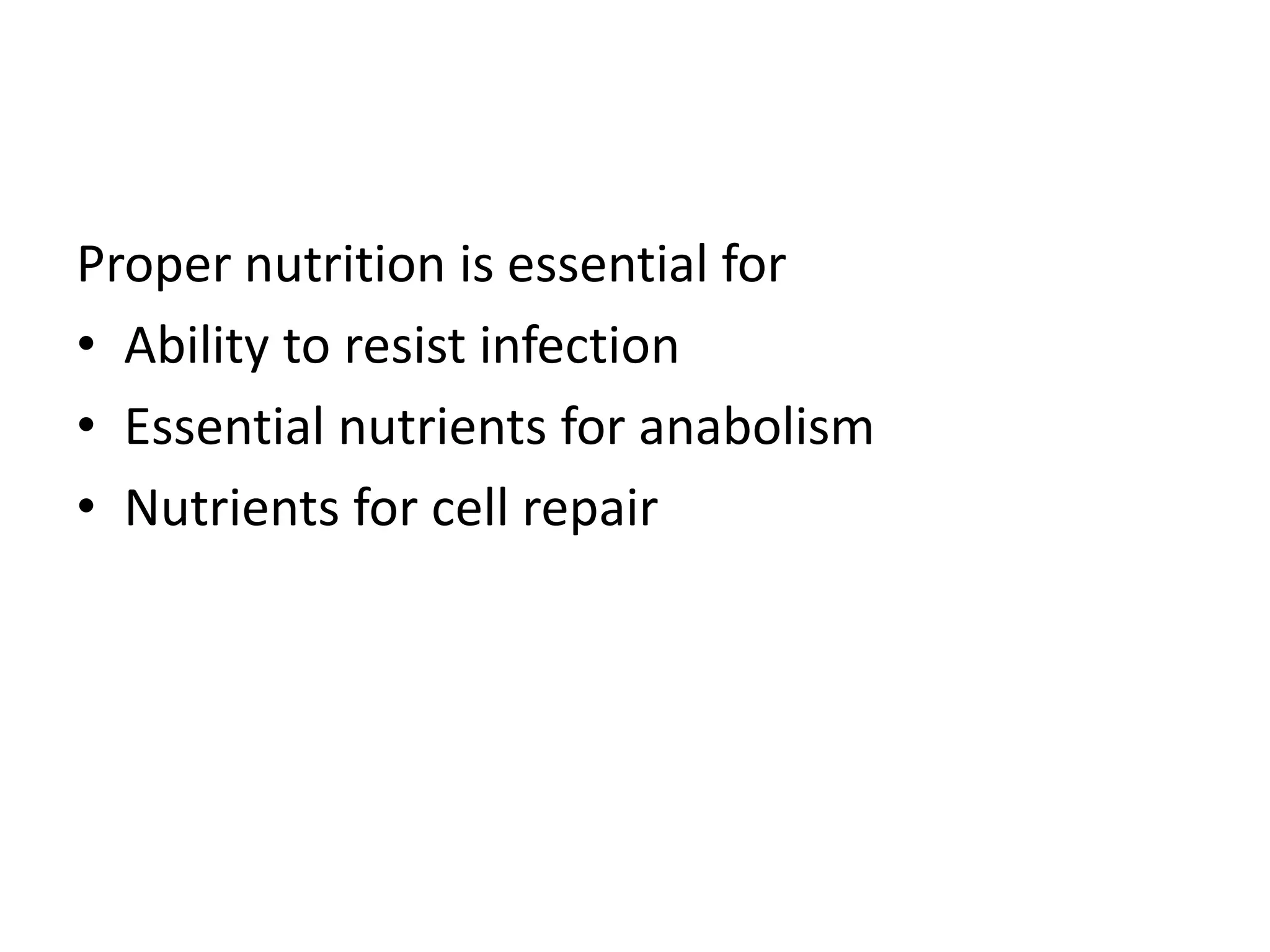
Proper nutrition is essential for
• Ability to resist infection
• Essential nutrients for anabolism
• Nutrients for cell repair
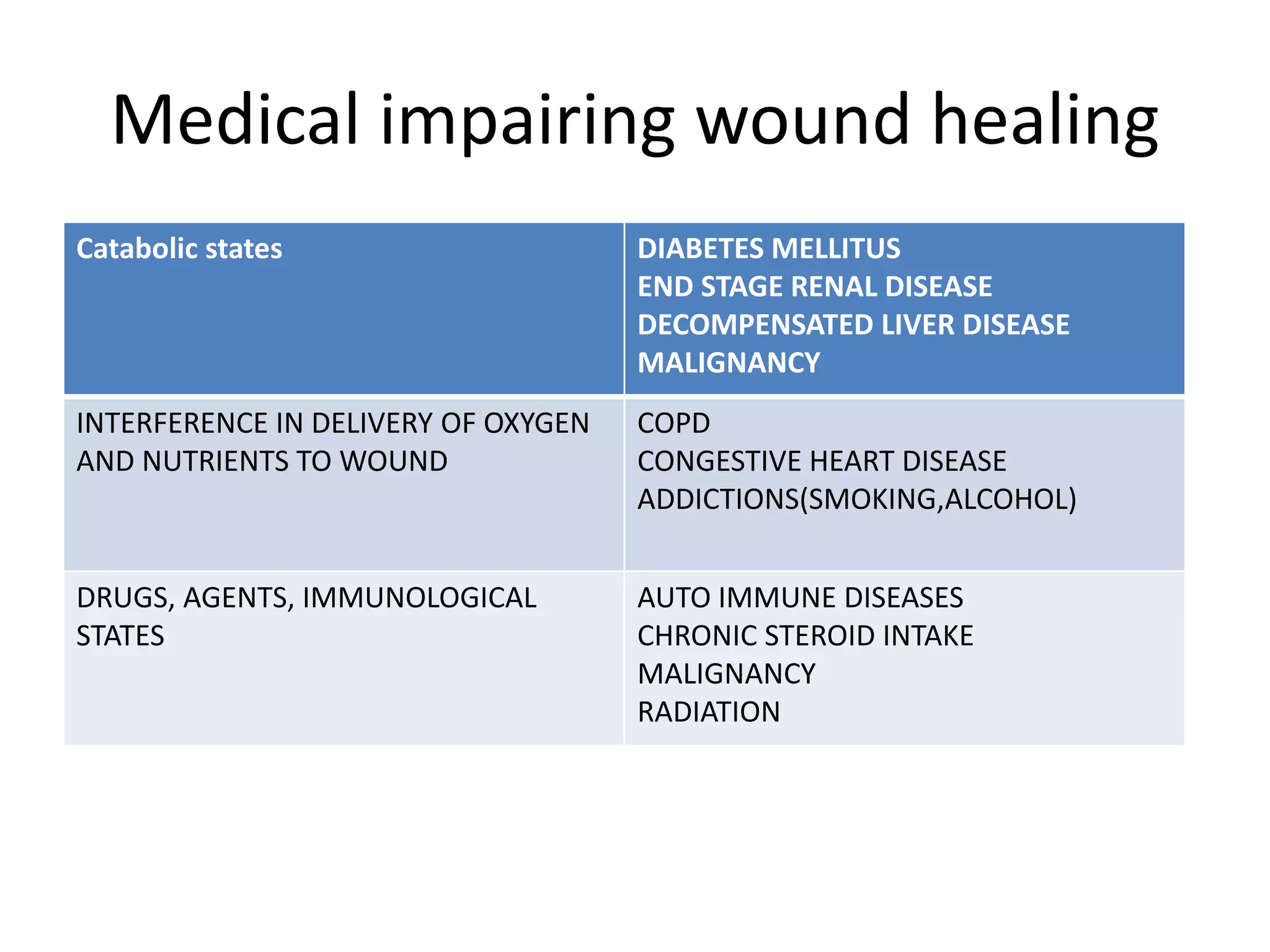
Medical impairing wound healing
Catabolic states DIABETES MELLITUS
END STAGE RENAL DISEASE
DECOMPENSATED LIVER DISEASE
MALIGNANCY
INTERFERENCE IN DELIVERY OF OXYGEN
AND NUTRIENTS TO WOUND
COPD
CONGESTIVE HEART DISEASE
ADDICTIONS(SMOKING,ALCOHOL)
DRUGS, AGENTS, IMMUNOLOGICAL
STATES
AUTO IMMUNE DISEASES
CHRONIC STEROID INTAKE
MALIGNANCY
RADIATION
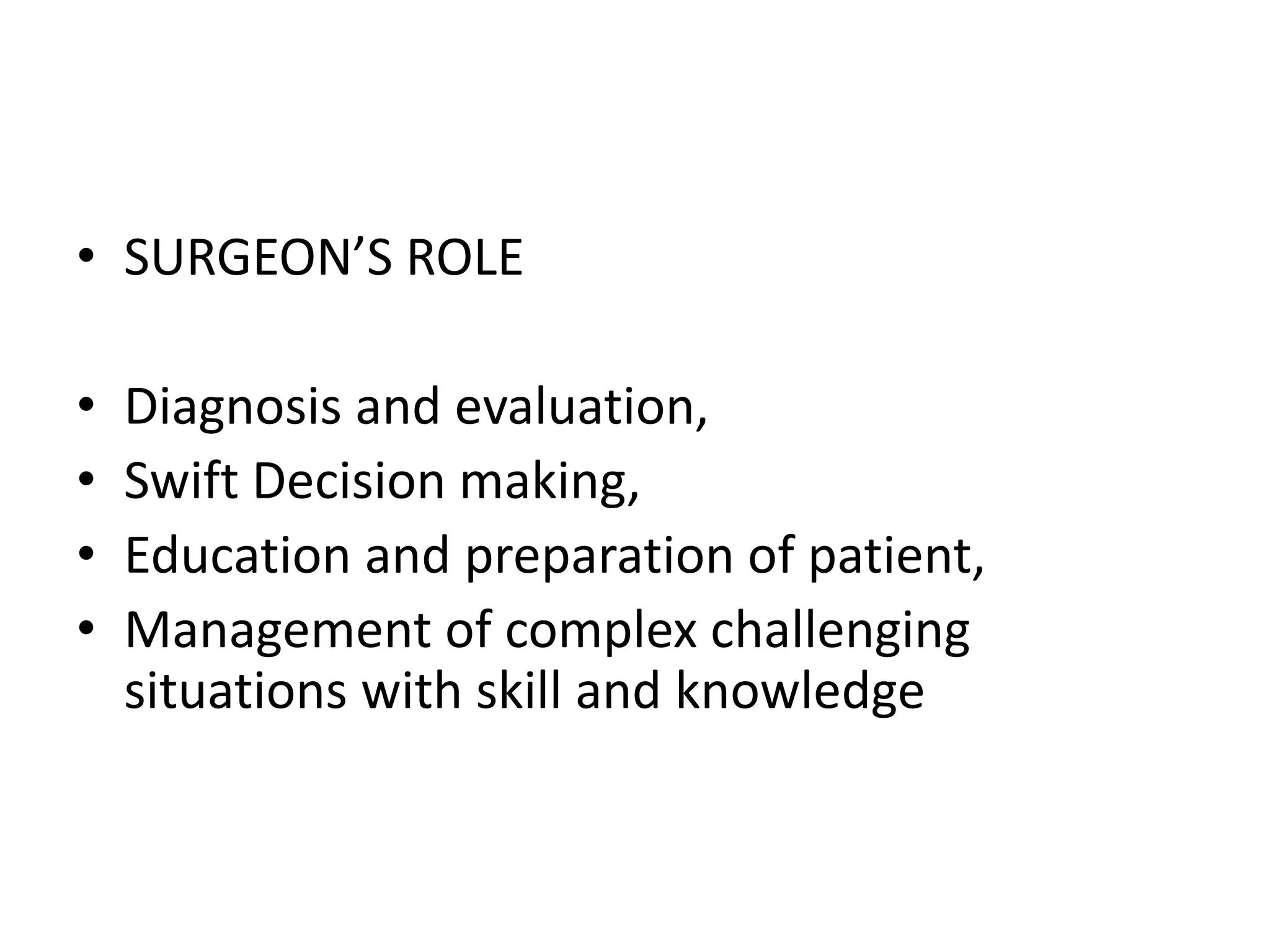
• SURGEON’S ROLE
• Diagnosis and evaluation,
• Swift Decision making,
• Education and preparation of patient,
• Management of complex challenging
situations with skill and knowledge
Surgeon’s Role
• Increasing chances of normal healing of
surgical wound by evaluating and optimizing
patients general health status before surgery
For malnourished patients
• Improving nutritional status to maintain
positive nitrogen balance and anabolic
metabolism
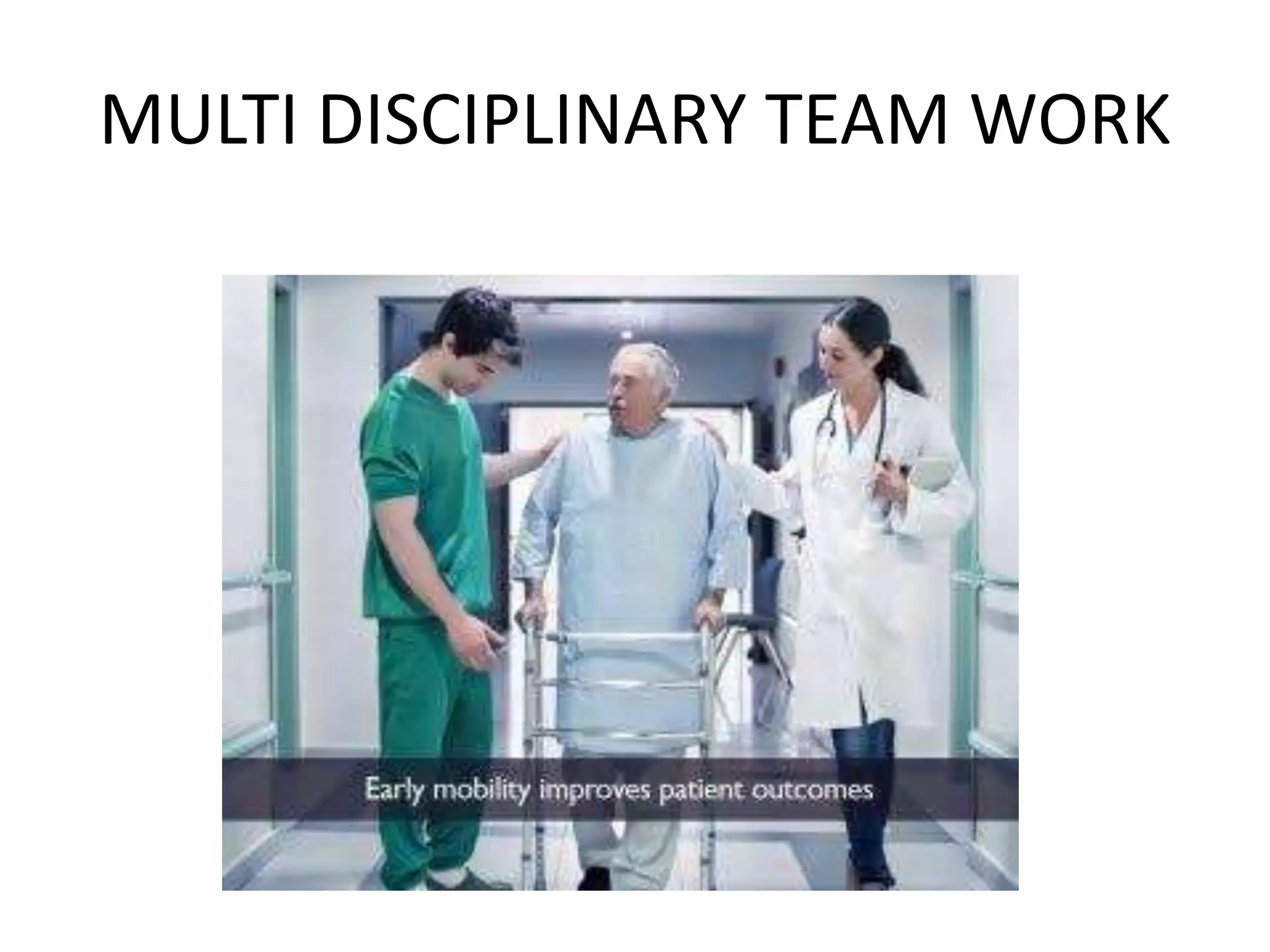
MULTI DISCIPLINARY TEAM WORK
THANK YOU FOR PATIENT LISTENING

Principles of general surgery

  • 2.
    PRINCIPLES OF GENERALSURGERY Dr MH Abdul Rahman General Surgeon Assistant Professor,Dept of General Surgery
  • 4.
    Principles of GeneralSurgery • Develop a Surgical diagnosis • Basic necessities of surgery • Aseptic technique • Incisions • Tissue handling • Hemostasis and wound healing • Promotion of hemostasis and wound healing
  • 5.
    • Decontamination anddebridement • Edema control • Management of General health and Nutrition
  • 6.
    • Human tissuesdue to their innate properties react to injury with less predictability, With experience certain set principles are evolved for optimal healing. These are called BASIC PRINCIPLES OF SURGERY.
  • 7.
    DEVELOPING A SURGICALDIAGNOSIS Decisions on surgery made from • Identifying signs and symptoms • Complete and thorough history • Physical examination • Radiographic findings • Laboratory investigations • Record keeping/Documentation • Differential diagnosis
  • 8.
    BASIC NECESSITIES FORSURGERY • CONSENT • ACCESS • ANESTHESIA • VISIBILITY • HEMOSTASIS • ASSISTANCE
  • 9.
    ASEPTIC TECHNIQUE • Minimizingwound contamination from pathogenic microbes • Instrument sterilisation • Disinfection
  • 10.
    • Universal precautions •Surgical staff and surgeon preparation • Clean and sterile technique
  • 11.
    INCISIONS • Use ofsharp blade of proper size • Firm continuous strokes • Avoid injury to vital structures • Respect skin lines
  • 12.
    TISSUE HANDLING • Respecttissue • Avoid excessive crushing, pulling, extremes of temperatures, dessication, harsh chemicals and tissue damage for proper healing. • Use of instruments and retractors for minimal tissue handling e.g.,Forceps, Retractors
  • 14.
    • Use ofirrigation, protection of soft tissue while cauterisation
  • 15.
    HEMOSTASIS Prevention of excessiveblood loss helps in • Preserving patients oxygen carrying capacity • Increasing visibility • Prevent formation of hematomas • Prevent infection
  • 16.
    Means of promotinghemostasis • Applying pressure on bleeding vessel, hemostat • Use of cautery • Suture ligation • Vasoconstrictor substances • Procoagulants (Thrombin, Collagen)
  • 17.
    WOUND HEALING • Aseptictechnique • Sterile precautions • Proper tissue handling • Avoid hematoma • Avoid dead space • Avoid infection • Adequate nutrition • Physiotherapy, Functional Activity and Mobilisation
  • 18.
    DECONTAMINATION AND DEBRIDEMENT • Decontaminationis to remove debris, foreign bodies, reduce bacterial count, minimize infection • Use of irrigation, dressing • Debridement is to remove necrotic, devitalized tissue • Can be Mechanical, Chemical, Surgical.
  • 19.
    EDEMA CONTROL • Collectionof fluid in interstitial space Factors responsible are • Tissue injury • Inflammatory mediators
  • 20.
    EDEMA CONTROL Edema controlledby • Gentle tissue handling, • Anti inflammatory drugs, • Elevation, Compression bandage • ‘RICE’ technique in trauma
  • 21.
    GENERAL HEALTH ANDNUTRITION Assessment of • Height • Weight • Built • Nourishment • Vitals
  • 22.
    Proper nutrition isessential for • Ability to resist infection • Essential nutrients for anabolism • Nutrients for cell repair
  • 23.
    Medical impairing woundhealing Catabolic states DIABETES MELLITUS END STAGE RENAL DISEASE DECOMPENSATED LIVER DISEASE MALIGNANCY INTERFERENCE IN DELIVERY OF OXYGEN AND NUTRIENTS TO WOUND COPD CONGESTIVE HEART DISEASE ADDICTIONS(SMOKING,ALCOHOL) DRUGS, AGENTS, IMMUNOLOGICAL STATES AUTO IMMUNE DISEASES CHRONIC STEROID INTAKE MALIGNANCY RADIATION
  • 24.
    • SURGEON’S ROLE •Diagnosis and evaluation, • Swift Decision making, • Education and preparation of patient, • Management of complex challenging situations with skill and knowledge
  • 25.
    Surgeon’s Role • Increasingchances of normal healing of surgical wound by evaluating and optimizing patients general health status before surgery For malnourished patients • Improving nutritional status to maintain positive nitrogen balance and anabolic metabolism
  • 27.
  • 28.
    THANK YOU FORPATIENT LISTENING