UNIT 1
COMMUNICATION
TECHNOLOGIES
TECHNOLOGIES, PROGRAMMING AND ROBOTICS
3 ESO
INDEX
• MOBILE PHONES
• RADIO
• SATELLITES AND POSITIONING SYSTEMS
• TELEVISION
• THE INTERNET
• NEGATIVE EFFECTS OF COMMUNICATION TECHNOLOGIES
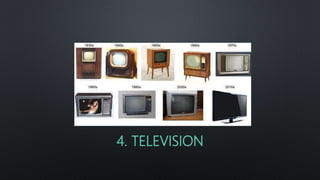
4. TELEVISION
· Television is an electronic system that transmits
fixed or moving images together with sound over a
wire or through space.
· A television system is able to transform light and
sound into electrical waves and reconverts them
into visible light rays and audible sound.
· The encoding process to transform light and
sound into electromagnetic waves that can be sent
to a receiver is called broadcasting.
· Broadcasting was an analogue process until the
late 2010s, when the Digital Terrestrial Television
was developed.
• TELEVISION
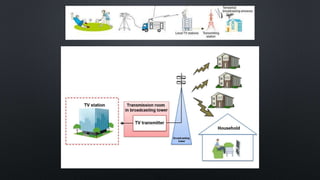
1. A camera captures images at normally 60 frames per second. Then, the camera
rasterizes the scene (converts the images in rows of pixels). Depending on the
amount of pixels, the pictures can have different formats:
a) Standard definition (SD)  704 x 480 pixels
b) High definition (HD)  1200 to 1920 x 720 to 1.080 pixels
2. A microphone transforms sound waves into electrical impulses.
3. Both signals are compressed into a MPEG-2 file.
4. That compressed information is transmitted through radio waves (images in AM,
sound in FM) or along cables.
5. The broadcaster can choose to transmit only one program in their channel or
multiple programs at the same time because they can broadcast in different formats.
This is called multicasting.
• TELEVISION BROADCASTING PROCESS
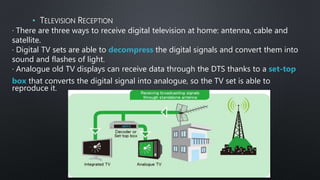
· There are three ways to receive digital television at home: antenna, cable and
satellite.
· Digital TV sets are able to decompress the digital signals and convert them into
sound and flashes of light.
· Analogue old TV displays can receive data through the DTS thanks to a set-top
box that converts the digital signal into analogue, so the TV set is able to
reproduce it.
• TELEVISION RECEPTION

presentation television

  • 1.
  • 2.
    INDEX • MOBILE PHONES •RADIO • SATELLITES AND POSITIONING SYSTEMS • TELEVISION • THE INTERNET • NEGATIVE EFFECTS OF COMMUNICATION TECHNOLOGIES
  • 3.
  • 4.
    · Television isan electronic system that transmits fixed or moving images together with sound over a wire or through space. · A television system is able to transform light and sound into electrical waves and reconverts them into visible light rays and audible sound. · The encoding process to transform light and sound into electromagnetic waves that can be sent to a receiver is called broadcasting. · Broadcasting was an analogue process until the late 2010s, when the Digital Terrestrial Television was developed. • TELEVISION
  • 5.
    1. A cameracaptures images at normally 60 frames per second. Then, the camera rasterizes the scene (converts the images in rows of pixels). Depending on the amount of pixels, the pictures can have different formats: a) Standard definition (SD)  704 x 480 pixels b) High definition (HD)  1200 to 1920 x 720 to 1.080 pixels 2. A microphone transforms sound waves into electrical impulses. 3. Both signals are compressed into a MPEG-2 file. 4. That compressed information is transmitted through radio waves (images in AM, sound in FM) or along cables. 5. The broadcaster can choose to transmit only one program in their channel or multiple programs at the same time because they can broadcast in different formats. This is called multicasting. • TELEVISION BROADCASTING PROCESS
  • 7.
    · There arethree ways to receive digital television at home: antenna, cable and satellite. · Digital TV sets are able to decompress the digital signals and convert them into sound and flashes of light. · Analogue old TV displays can receive data through the DTS thanks to a set-top box that converts the digital signal into analogue, so the TV set is able to reproduce it. • TELEVISION RECEPTION