PRESENTED BY - ANINDYA PALIT
COURSE:BACHELOR OF TECHNOLOGY
DEPT: ELECTRICAL ENGINEERING
REG NO-142690110094
ROLL NO-26901614001
1 8/5/2017
I wish to express my sincere gratitude to my class teacher Miss
Gargi Roy and the HOD my department Miss Debadyuti
Banarjee for giving me a golden opportunity to do this
wonderful Presentation on the topic ULTRA CAPACITOR.
I also thankful to my classmates who helped me and to collect
data about this topic.
THANKS TO ALL.
2 8/5/2017
1:INTRODUCTION
2:PRINCIPLE
3:CONSTRUCTION
4:WORKING PRINCIPLE
5:ADVANTAGES AND DISADVANTAGES
6:APPLICATION
7:FUTURE SCOPE
8:CONCLUSION
9:BIBLOGRAPHY
3 8/5/2017
CAPACITOR : In general, capacitor is a device
to store the charge in an electric circuit.
•Basically, a capacitor is made up of two conductors
separated by an insulator called dielectric.
•The dielectric can be made of paper, plastic, mica,
ceramic, glass, a vacuum or nearly any other
nonconductive material.
•Some capacitors are called Electrolytic in which the
dielectric is Aluminium foil conductor coated with
oxide layer.
4 8/5/2017
• The electron storing capacity of capacitor is
measured in unit Farads. One farad is
approximately the charge with
6,280,000,000,000,000,000 (628×1016 )electrons.
*Defination : Ultra capacitors can be defined as a energy
storage device that stores energy electrostatically by
polarising an electrolytic solution.
• Unlike batteries no chemical reaction takes place when
energy is being stored or discharged and so ultra capacitors
can go through hundreds of thousands of charging cycles with
no degredation.
• Ultracapacitors are also known as double-layer capacitors
or super capacitors.
5 8/5/2017
6 8/5/2017
7
*Energy is stored in the ultra capacitor by
polarizing the electrolytic solution. The
charges are separated via electrode –
electrolyte interface.
Current Collector
Electrolyte
Separator
porous electrode _
+ -8/5/2017
*ULTRACAPACITORULTRACAPACITOR
8 8/5/2017
9
Construction :
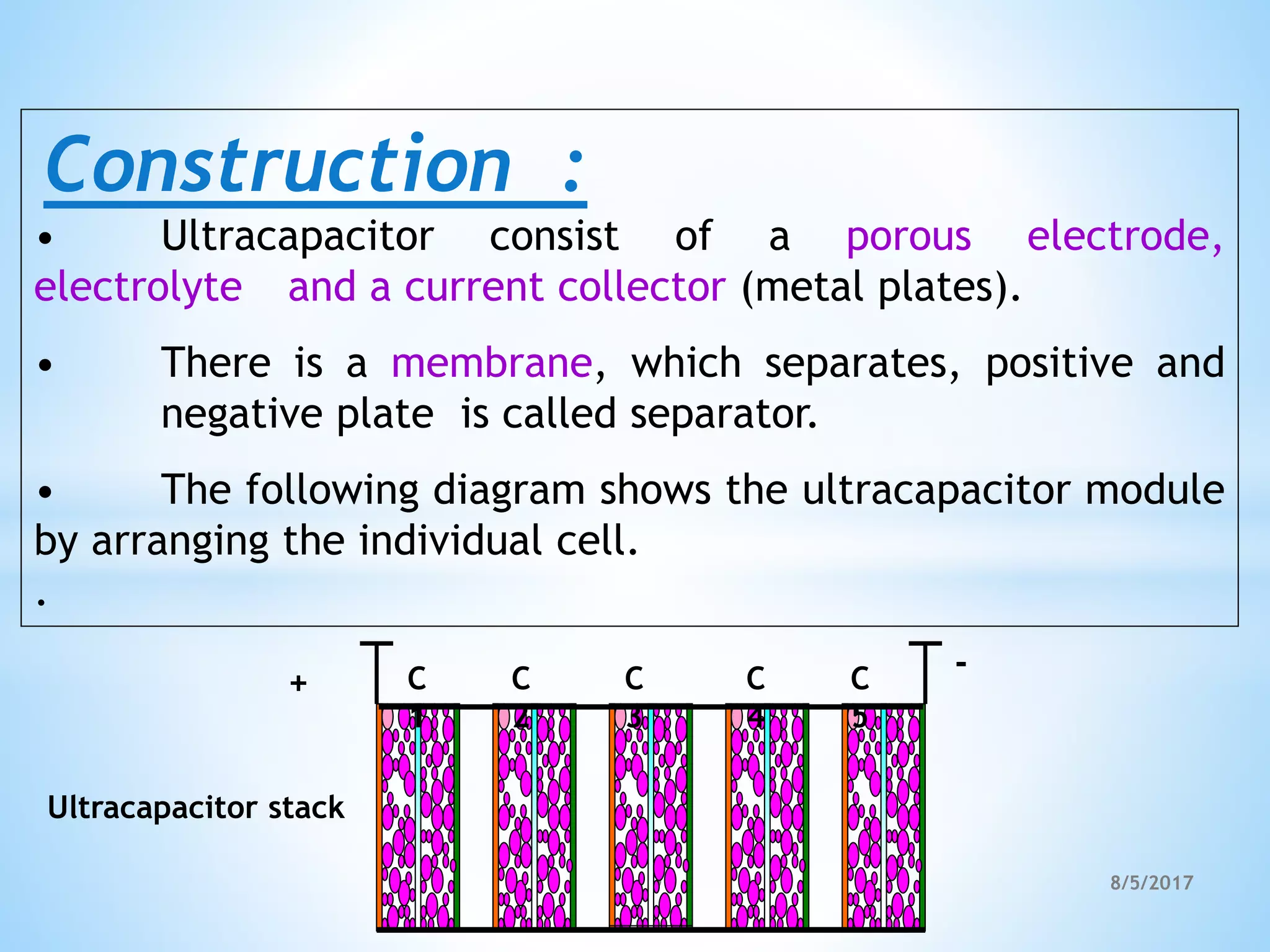
• Ultracapacitor consist of a porous electrode,
electrolyte and a current collector (metal plates).
• There is a membrane, which separates, positive and
negative plate is called separator.
• The following diagram shows the ultracapacitor module
by arranging the individual cell.
.
C
1
C
2
C
3
C
4
C
5
Ultracapacitor stack
+
-
8/5/2017
10
Working
• There are two carbon sheet separated by separator.
• The geometrical size of carbon sheet is taken in such a
way that they have a very high surface area.
• The highly porous carbon can store more energy than
any other electrolytic capacitor.
• When the voltage is applied to positive plate, it attracts
negative ions from electrolyte.
• When the voltage is applied to negative plate, it attracts
positive ions from electrolyte.
8/5/2017
11
• Therefore, there is a formation of a layer of ions on the
both side of plate. This is called ‘Double layer’
formation.
• For this reason, the ultracapacitor can also be called
Double layer capacitor.
• The ions are then stored near the surface of carbon.
• The distance between the plates is in the order of
angstroms.
According to the formula for the capacitance,
Dielectric constant of medium X area of the plate
Capacitance = -----------------------------------------------------------------
Distance between the plates
8/5/2017
12
---
--
--
--
--
--
--
--
--
--
++
++
++
++
+
+








+
+
+
+
+
+
Electrolyte
Separator
Electric double layer
▬
+
Diagram shows the formation of
double layer
8/5/2017
13
• Ultra capacitor stores energy via electrostatic charges on
opposite surfaces of the electric double layer.
• They utilize the high surface area of carbon as the energy
storage medium, resulting in an energy density much
higher than conventional capacitors.
• The purpose of having separator is to prevent the charges
moving across the electrodes.
• The amount of energy stored is very large as compared to
a standard capacitor because of the enormous surface
area created by the (typically) porous carbon electrodes
and the small charge separation (10 angstroms) created by
the dielectric separator
8/5/2017
14
Advantage
• Long life : It works for large number of cycle without
wear and aging.
• Rapid charging : It takes a second to charge completely.
• Low cost : It is less expensive as compared to
electrochemical battery.
• High power storage : It stores huge amount of energy in a
small volume.
• Faster release : Release the energy much faster than
battery.
8/5/2017
15
•Disadvantage
• They have Low energy density.
• Individual cell shows low voltage.
• Not all the energy can be utilized during discharge.
• They have high self-discharge as compared to battery.
• Voltage balancing is required when more than three
capacitors are connected in series.
8/5/2017
16
Applications
• They are used in electronic applications such as cellular
electronics, power conditioning, uninterruptible power
supplies (UPS),
• They used in industrial lasers, medical equipment.
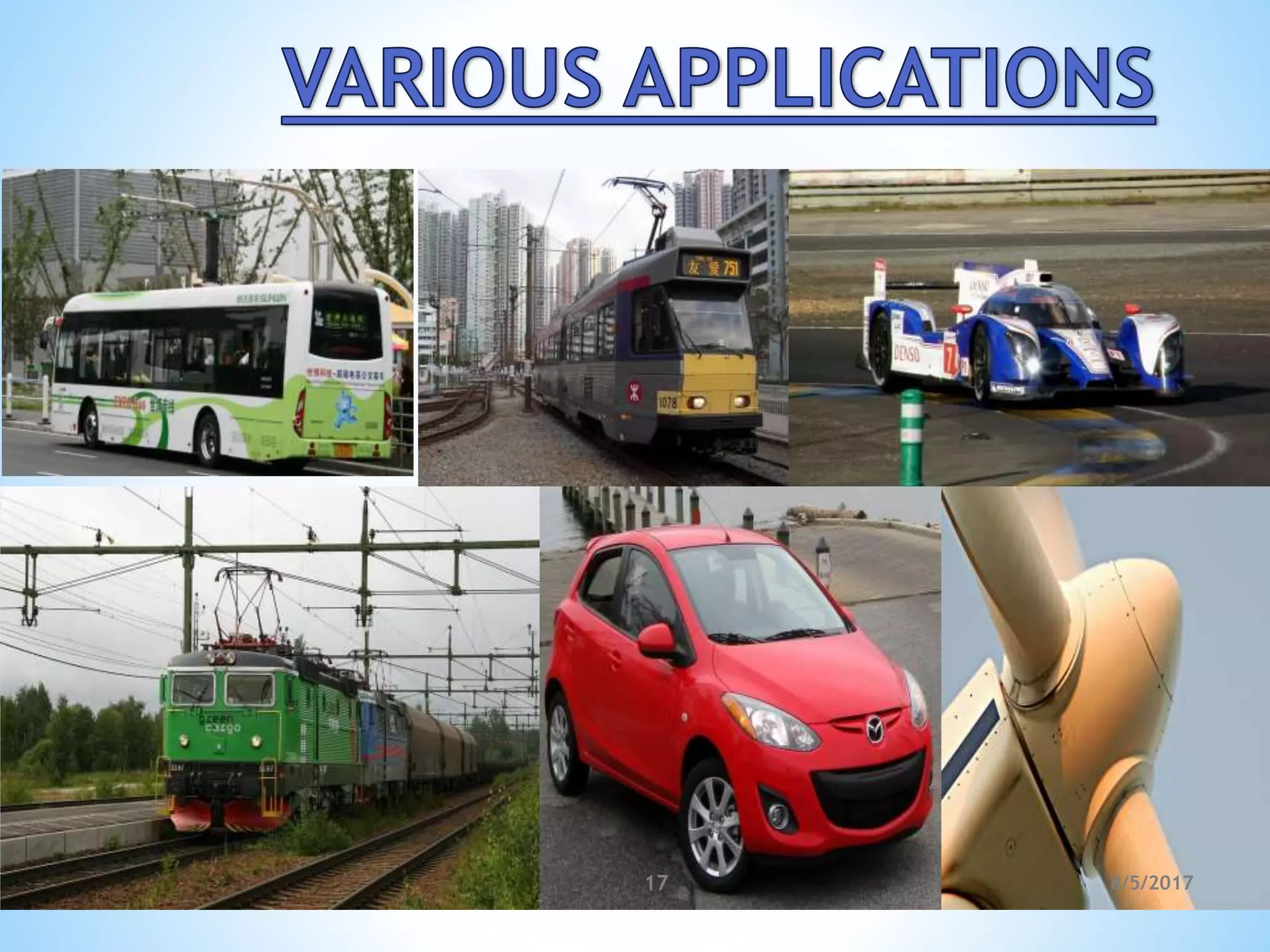
• They are used in electric vehicle and for load leveling to
extend the life of batteries.
• They are used in wireless communication system for
uninterrupted service.
• There are used in VCRs, CD players, electronic toys,
security systems, computers, scanners, smoke detectors,
microwaves and coffee makers.
8/5/2017
17 8/5/2017
*FUTURE SCOPE
 Hybrid Battery
The idea of replacing batteries with capacitors in
conjunction with novel alternative energy sources became
a conceptual umbrella of “Green Electricity (GEL)
Initiative, introduced by Dr. Alexander Bell
Hybrid Battery is the one which have the properties of both
capacitor and battery. High power density of caps and High
energy density of battery is combine together.
18 8/5/2017
*Conclusion
This presentation deals with Ultracapacitor as an
Energy storage device. The main advantage of
this Ultracapacitor is ,Its having high power
density, eco friendly, used in hybrid vehicles
etc.
I hope ,new technologies in the material science
& Nano will make this Super capacitor more
advanced.
19 8/5/2017
*Biblography
*http://worldwide espacenet
*"Transition from ‘Supercapacitor’ to ‘Battery’ Behavior in
Electrochemical Energy Storage-J Electrochem.
*Naoi, K.; Simon, P. (Spring 2008). "New Materials and New
Configurations for Advanced Electrochemical Capacitors”
*http://www.kurzweilai.net/improvedsupercapacitorsforsuperbatte
rieselectricvehicles.
*https://en.Wikipedia.Org/wiki/Supercapacitor
*http://slideshare.com/Supercapacitor
20 8/5/2017
21 8/5/2017

Presentation1

  • 1.
    PRESENTED BY -ANINDYA PALIT COURSE:BACHELOR OF TECHNOLOGY DEPT: ELECTRICAL ENGINEERING REG NO-142690110094 ROLL NO-26901614001 1 8/5/2017
  • 2.
    I wish toexpress my sincere gratitude to my class teacher Miss Gargi Roy and the HOD my department Miss Debadyuti Banarjee for giving me a golden opportunity to do this wonderful Presentation on the topic ULTRA CAPACITOR. I also thankful to my classmates who helped me and to collect data about this topic. THANKS TO ALL. 2 8/5/2017
  • 3.
    1:INTRODUCTION 2:PRINCIPLE 3:CONSTRUCTION 4:WORKING PRINCIPLE 5:ADVANTAGES ANDDISADVANTAGES 6:APPLICATION 7:FUTURE SCOPE 8:CONCLUSION 9:BIBLOGRAPHY 3 8/5/2017
  • 4.
    CAPACITOR : Ingeneral, capacitor is a device to store the charge in an electric circuit. •Basically, a capacitor is made up of two conductors separated by an insulator called dielectric. •The dielectric can be made of paper, plastic, mica, ceramic, glass, a vacuum or nearly any other nonconductive material. •Some capacitors are called Electrolytic in which the dielectric is Aluminium foil conductor coated with oxide layer. 4 8/5/2017
  • 5.
    • The electronstoring capacity of capacitor is measured in unit Farads. One farad is approximately the charge with 6,280,000,000,000,000,000 (628×1016 )electrons. *Defination : Ultra capacitors can be defined as a energy storage device that stores energy electrostatically by polarising an electrolytic solution. • Unlike batteries no chemical reaction takes place when energy is being stored or discharged and so ultra capacitors can go through hundreds of thousands of charging cycles with no degredation. • Ultracapacitors are also known as double-layer capacitors or super capacitors. 5 8/5/2017
  • 6.
  • 7.
    7 *Energy is storedin the ultra capacitor by polarizing the electrolytic solution. The charges are separated via electrode – electrolyte interface. Current Collector Electrolyte Separator porous electrode _ + -8/5/2017
  • 8.
  • 9.
    9 Construction : • Ultracapacitorconsist of a porous electrode, electrolyte and a current collector (metal plates). • There is a membrane, which separates, positive and negative plate is called separator. • The following diagram shows the ultracapacitor module by arranging the individual cell. . C 1 C 2 C 3 C 4 C 5 Ultracapacitor stack + - 8/5/2017
  • 10.
    10 Working • There aretwo carbon sheet separated by separator. • The geometrical size of carbon sheet is taken in such a way that they have a very high surface area. • The highly porous carbon can store more energy than any other electrolytic capacitor. • When the voltage is applied to positive plate, it attracts negative ions from electrolyte. • When the voltage is applied to negative plate, it attracts positive ions from electrolyte. 8/5/2017
  • 11.
    11 • Therefore, thereis a formation of a layer of ions on the both side of plate. This is called ‘Double layer’ formation. • For this reason, the ultracapacitor can also be called Double layer capacitor. • The ions are then stored near the surface of carbon. • The distance between the plates is in the order of angstroms. According to the formula for the capacitance, Dielectric constant of medium X area of the plate Capacitance = ----------------------------------------------------------------- Distance between the plates 8/5/2017
  • 12.
  • 13.
    13 • Ultra capacitorstores energy via electrostatic charges on opposite surfaces of the electric double layer. • They utilize the high surface area of carbon as the energy storage medium, resulting in an energy density much higher than conventional capacitors. • The purpose of having separator is to prevent the charges moving across the electrodes. • The amount of energy stored is very large as compared to a standard capacitor because of the enormous surface area created by the (typically) porous carbon electrodes and the small charge separation (10 angstroms) created by the dielectric separator 8/5/2017
  • 14.
    14 Advantage • Long life: It works for large number of cycle without wear and aging. • Rapid charging : It takes a second to charge completely. • Low cost : It is less expensive as compared to electrochemical battery. • High power storage : It stores huge amount of energy in a small volume. • Faster release : Release the energy much faster than battery. 8/5/2017
  • 15.
    15 •Disadvantage • They haveLow energy density. • Individual cell shows low voltage. • Not all the energy can be utilized during discharge. • They have high self-discharge as compared to battery. • Voltage balancing is required when more than three capacitors are connected in series. 8/5/2017
  • 16.
    16 Applications • They areused in electronic applications such as cellular electronics, power conditioning, uninterruptible power supplies (UPS), • They used in industrial lasers, medical equipment. • They are used in electric vehicle and for load leveling to extend the life of batteries. • They are used in wireless communication system for uninterrupted service. • There are used in VCRs, CD players, electronic toys, security systems, computers, scanners, smoke detectors, microwaves and coffee makers. 8/5/2017
  • 17.
  • 18.
    *FUTURE SCOPE  HybridBattery The idea of replacing batteries with capacitors in conjunction with novel alternative energy sources became a conceptual umbrella of “Green Electricity (GEL) Initiative, introduced by Dr. Alexander Bell Hybrid Battery is the one which have the properties of both capacitor and battery. High power density of caps and High energy density of battery is combine together. 18 8/5/2017
  • 19.
    *Conclusion This presentation dealswith Ultracapacitor as an Energy storage device. The main advantage of this Ultracapacitor is ,Its having high power density, eco friendly, used in hybrid vehicles etc. I hope ,new technologies in the material science & Nano will make this Super capacitor more advanced. 19 8/5/2017
  • 20.
    *Biblography *http://worldwide espacenet *"Transition from‘Supercapacitor’ to ‘Battery’ Behavior in Electrochemical Energy Storage-J Electrochem. *Naoi, K.; Simon, P. (Spring 2008). "New Materials and New Configurations for Advanced Electrochemical Capacitors” *http://www.kurzweilai.net/improvedsupercapacitorsforsuperbatte rieselectricvehicles. *https://en.Wikipedia.Org/wiki/Supercapacitor *http://slideshare.com/Supercapacitor 20 8/5/2017
  • 21.