NRI INSTITUTE OF INFORMATION
SCIENCE & TECHNOLOGY
DEPARTMENT OF ELECTRICAL &
ELECTRONICS ENGINEERING
SEMINAR PRESENTATION ON-
“POWER THEFT
IDENTIFICATION SYSTEM”
CONTENTS
>Introduction
-Power theft Definition
-How it occurs
>Different ways of monitoring power
theft
>Microcontroller Based power theft
monitoring
-proposed architecture
>Block diagram
>Advantages
>Disadvantages
>Conclusion
INTRODUCTION
(POWER THEFT)
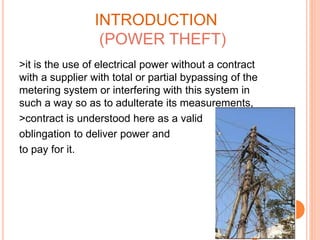
>it is the use of electrical power without a contract
with a supplier with total or partial bypassing of the
metering system or interfering with this system in
such a way so as to adulterate its measurements,
>contract is understood here as a valid
oblingation to deliver power and
to pay for it.
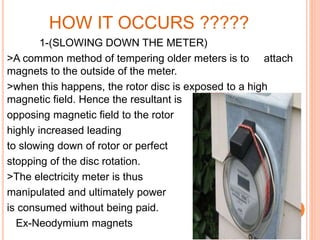
HOW IT OCCURS ?????
1-(SLOWING DOWN THE METER)
>A common method of tempering older meters is to attach
magnets to the outside of the meter.
>when this happens, the rotor disc is exposed to a high
magnetic field. Hence the resultant is
opposing magnetic field to the rotor
highly increased leading
to slowing down of rotor or perfect
stopping of the disc rotation.
>The electricity meter is thus
manipulated and ultimately power
is consumed without being paid.
Ex-Neodymium magnets
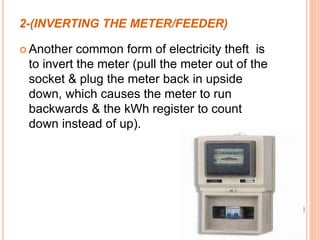
2-(INVERTING THE METER/FEEDER)
 Another common form of electricity theft is
to invert the meter (pull the meter out of the
socket & plug the meter back in upside
down, which causes the meter to run
backwards & the kWh register to count
down instead of up).
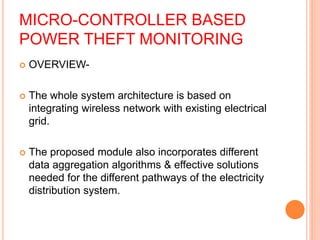
MICRO-CONTROLLER BASED
POWER THEFT MONITORING
 OVERVIEW-
 The whole system architecture is based on
integrating wireless network with existing electrical
grid.
 The proposed module also incorporates different
data aggregation algorithms & effective solutions
needed for the different pathways of the electricity
distribution system.
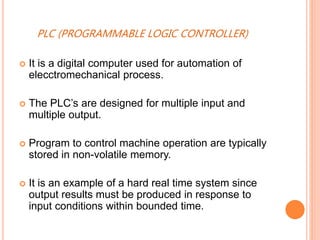
PLC (PROGRAMMABLE LOGIC CONTROLLER)
 It is a digital computer used for automation of
elecctromechanical process.
 The PLC’s are designed for multiple input and
multiple output.
 Program to control machine operation are typically
stored in non-volatile memory.
 It is an example of a hard real time system since
output results must be produced in response to
input conditions within bounded time.
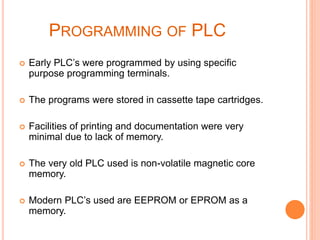
PROGRAMMING OF PLC
 Early PLC’s were programmed by using specific
purpose programming terminals.
 The programs were stored in cassette tape cartridges.
 Facilities of printing and documentation were very
minimal due to lack of memory.
 The very old PLC used is non-volatile magnetic core
memory.
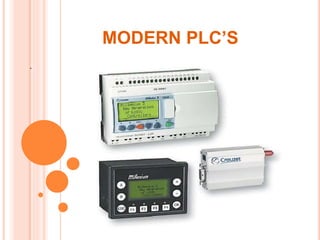
 Modern PLC’s used are EEPROM or EPROM as a
memory.
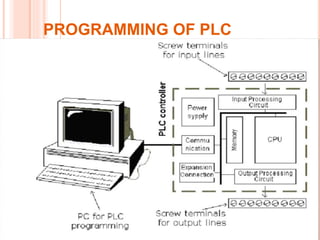
PROGRAMMING OF PLC
MODERN PLC’S
.
THANK YOU!
ANY DOUBT…

presentation on POWER THEFT IDENTIFICATION SYSTEM

  • 1.
    NRI INSTITUTE OFINFORMATION SCIENCE & TECHNOLOGY DEPARTMENT OF ELECTRICAL & ELECTRONICS ENGINEERING SEMINAR PRESENTATION ON- “POWER THEFT IDENTIFICATION SYSTEM”
  • 2.
    CONTENTS >Introduction -Power theft Definition -Howit occurs >Different ways of monitoring power theft >Microcontroller Based power theft monitoring -proposed architecture >Block diagram >Advantages >Disadvantages >Conclusion
  • 3.
    INTRODUCTION (POWER THEFT) >it isthe use of electrical power without a contract with a supplier with total or partial bypassing of the metering system or interfering with this system in such a way so as to adulterate its measurements, >contract is understood here as a valid oblingation to deliver power and to pay for it.
  • 4.
    HOW IT OCCURS????? 1-(SLOWING DOWN THE METER) >A common method of tempering older meters is to attach magnets to the outside of the meter. >when this happens, the rotor disc is exposed to a high magnetic field. Hence the resultant is opposing magnetic field to the rotor highly increased leading to slowing down of rotor or perfect stopping of the disc rotation. >The electricity meter is thus manipulated and ultimately power is consumed without being paid. Ex-Neodymium magnets
  • 5.
    2-(INVERTING THE METER/FEEDER) Another common form of electricity theft is to invert the meter (pull the meter out of the socket & plug the meter back in upside down, which causes the meter to run backwards & the kWh register to count down instead of up).
  • 8.
    MICRO-CONTROLLER BASED POWER THEFTMONITORING  OVERVIEW-  The whole system architecture is based on integrating wireless network with existing electrical grid.  The proposed module also incorporates different data aggregation algorithms & effective solutions needed for the different pathways of the electricity distribution system.
  • 15.
    PLC (PROGRAMMABLE LOGICCONTROLLER)  It is a digital computer used for automation of elecctromechanical process.  The PLC’s are designed for multiple input and multiple output.  Program to control machine operation are typically stored in non-volatile memory.  It is an example of a hard real time system since output results must be produced in response to input conditions within bounded time.
  • 16.
    PROGRAMMING OF PLC Early PLC’s were programmed by using specific purpose programming terminals.  The programs were stored in cassette tape cartridges.  Facilities of printing and documentation were very minimal due to lack of memory.  The very old PLC used is non-volatile magnetic core memory.  Modern PLC’s used are EEPROM or EPROM as a memory.
  • 17.
  • 18.
  • 27.
  • 28.