


Shyamoli Textile Engineering College
(Affiliated by University of Dhaka)
Subject: Industrial Visit
Subject Code: TE-3110
WELCOME
 TO MY PRESENTATION
Content
 Chronological development of garment industry in Bangladesh
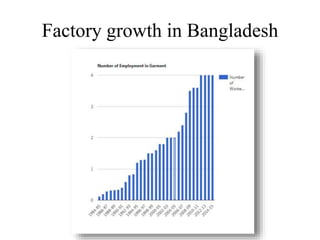
- Factory growth in Bangladesh
- Earn from garment industry
 Garments
 Garments manufacturing sequence
 Different section in garment industry
 Sample
 Cutting
 Sewing
 Washing
 Finishing
 Conclusion
Factory growth in Bangladesh
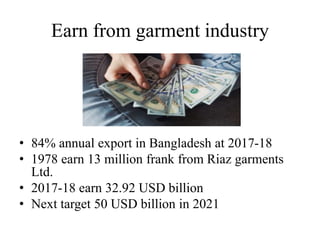
Earn from garment industry
• 84% annual export in Bangladesh at 2017-18
• 1978 earn 13 million frank from Riaz garments
Ltd.
• 2017-18 earn 32.92 USD billion
• Next target 50 USD billion in 2021
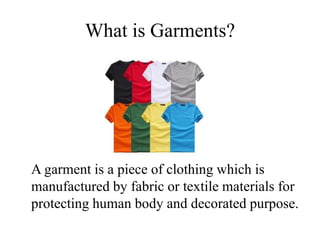
What is Garments?
A garment is a piece of clothing which is
manufactured by fabric or textile materials for
protecting human body and decorated purpose.
Different section in garment industry
Sample Section
Cutting Section
Sewing Section
Washing Section
Finishing Section
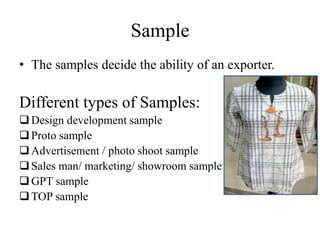
Sample
• The samples decide the ability of an exporter.
Different types of Samples:
Design development sample
Proto sample
Advertisement / photo shoot sample
Sales man/ marketing/ showroom sample
GPT sample
TOP sample
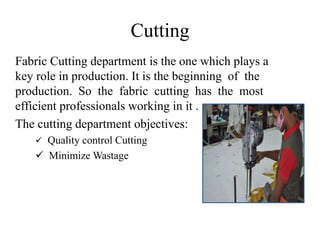
Cutting
Fabric Cutting department is the one which plays a
key role in production. It is the beginning of the
production. So the fabric cutting has the most
efficient professionals working in it .
The cutting department objectives:
 Quality control Cutting
 Minimize Wastage
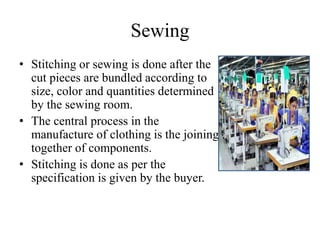
Sewing
• Stitching or sewing is done after the
cut pieces are bundled according to
size, color and quantities determined
by the sewing room.
• The central process in the
manufacture of clothing is the joining
together of components.
• Stitching is done as per the
specification is given by the buyer.
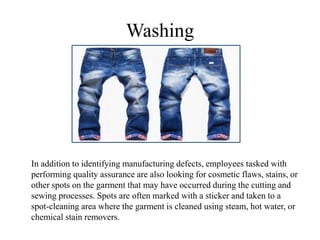
Washing
In addition to identifying manufacturing defects, employees tasked with
performing quality assurance are also looking for cosmetic flaws, stains, or
other spots on the garment that may have occurred during the cutting and
sewing processes. Spots are often marked with a sticker and taken to a
spot-cleaning area where the garment is cleaned using steam, hot water, or
chemical stain removers.
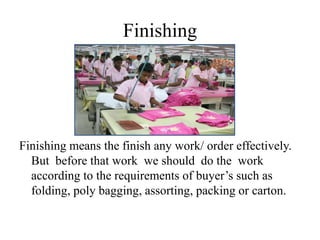
Finishing
Finishing means the finish any work/ order effectively.
But before that work we should do the work
according to the requirements of buyer’s such as
folding, poly bagging, assorting, packing or carton.
Conclusion
The garment industry has played a pioneering
role in the development of industrial sector of
Bangladesh. The Ready Made Garments
(RMG)industry occupies a unique position in
the Bangladesh economy. It is the largest
exporting industry in Bangladesh, which
experienced phenomenal growth during the
last 25 years.
Thank
You!!
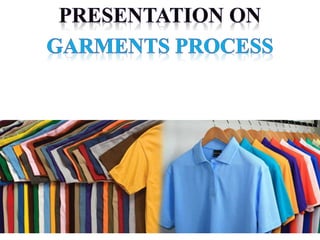
Presentation on Garments Process

Presentation on Garments Process

  • 1.
    Shyamoli Textile EngineeringCollege (Affiliated by University of Dhaka) Subject: Industrial Visit Subject Code: TE-3110
  • 2.
    WELCOME  TO MYPRESENTATION
  • 4.
    Content  Chronological developmentof garment industry in Bangladesh - Factory growth in Bangladesh - Earn from garment industry  Garments  Garments manufacturing sequence  Different section in garment industry  Sample  Cutting  Sewing  Washing  Finishing  Conclusion
  • 5.
  • 6.
    Earn from garmentindustry • 84% annual export in Bangladesh at 2017-18 • 1978 earn 13 million frank from Riaz garments Ltd. • 2017-18 earn 32.92 USD billion • Next target 50 USD billion in 2021
  • 7.
    What is Garments? Agarment is a piece of clothing which is manufactured by fabric or textile materials for protecting human body and decorated purpose.
  • 8.
    Different section ingarment industry Sample Section Cutting Section Sewing Section Washing Section Finishing Section
  • 9.
    Sample • The samplesdecide the ability of an exporter. Different types of Samples: Design development sample Proto sample Advertisement / photo shoot sample Sales man/ marketing/ showroom sample GPT sample TOP sample
  • 10.
    Cutting Fabric Cutting departmentis the one which plays a key role in production. It is the beginning of the production. So the fabric cutting has the most efficient professionals working in it . The cutting department objectives:  Quality control Cutting  Minimize Wastage
  • 11.
    Sewing • Stitching orsewing is done after the cut pieces are bundled according to size, color and quantities determined by the sewing room. • The central process in the manufacture of clothing is the joining together of components. • Stitching is done as per the specification is given by the buyer.
  • 12.
    Washing In addition toidentifying manufacturing defects, employees tasked with performing quality assurance are also looking for cosmetic flaws, stains, or other spots on the garment that may have occurred during the cutting and sewing processes. Spots are often marked with a sticker and taken to a spot-cleaning area where the garment is cleaned using steam, hot water, or chemical stain removers.
  • 13.
    Finishing Finishing means thefinish any work/ order effectively. But before that work we should do the work according to the requirements of buyer’s such as folding, poly bagging, assorting, packing or carton.
  • 14.
    Conclusion The garment industryhas played a pioneering role in the development of industrial sector of Bangladesh. The Ready Made Garments (RMG)industry occupies a unique position in the Bangladesh economy. It is the largest exporting industry in Bangladesh, which experienced phenomenal growth during the last 25 years.
  • 15.