Garments Manufacturing
Garment manufacturers are primarily engaged
in the design, cutting and sewing of garments
from fabric. On industrial basis there are
certain areas or sequence through which
garments are manufactured.
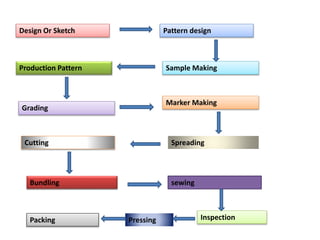
Design Or Sketch Pattern design
Sample MakingProduction Pattern
Grading
Marker Making
SpreadingCutting
Bundling sewing
InspectionPressingPacking
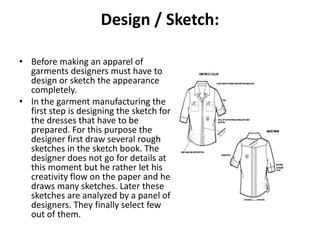
Design / Sketch:
• Before making an apparel of
garments designers must have to
design or sketch the appearance
completely.
• In the garment manufacturing the
first step is designing the sketch for
the dresses that have to be
prepared. For this purpose the
designer first draw several rough
sketches in the sketch book. The
designer does not go for details at
this moment but he rather let his
creativity flow on the paper and he
draws many sketches. Later these
sketches are analyzed by a panel of
designers. They finally select few
out of them.
Pattern Design:
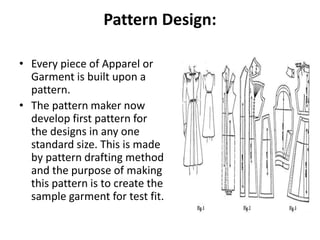
• Every piece of Apparel or
Garment is built upon a
pattern.
• The pattern maker now
develop first pattern for
the designs in any one
standard size. This is made
by pattern drafting method
and the purpose of making
this pattern is to create the
sample garment for test fit.
Sample Making:
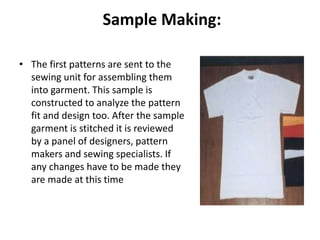
• The first patterns are sent to the
sewing unit for assembling them
into garment. This sample is
constructed to analyze the pattern
fit and design too. After the sample
garment is stitched it is reviewed
by a panel of designers, pattern
makers and sewing specialists. If
any changes have to be made they
are made at this time
Production Pattern:
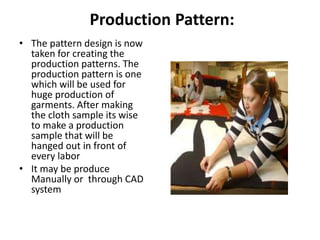
• The pattern design is now
taken for creating the
production patterns. The
production pattern is one
which will be used for
huge production of
garments. After making
the cloth sample its wise
to make a production
sample that will be
hanged out in front of
every labor
• It may be produce
Manually or through CAD
system
Grading
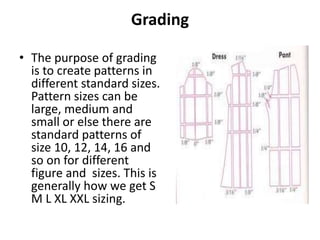
• The purpose of grading
is to create patterns in
different standard sizes.
Pattern sizes can be
large, medium and
small or else there are
standard patterns of
size 10, 12, 14, 16 and
so on for different
figure and sizes. This is
generally how we get S
M L XL XXL sizing.
Marker Making
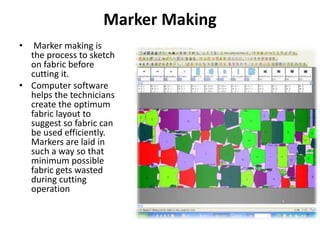
• Marker making is
the process to sketch
on fabric before
cutting it.
• Computer software
helps the technicians
create the optimum
fabric layout to
suggest so fabric can
be used efficiently.
Markers are laid in
such a way so that
minimum possible
fabric gets wasted
during cutting
operation
Spreading
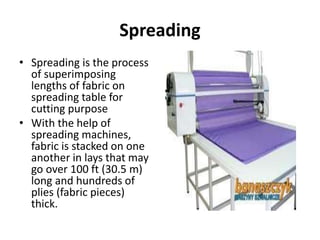
• Spreading is the process
of superimposing
lengths of fabric on
spreading table for
cutting purpose
• With the help of
spreading machines,
fabric is stacked on one
another in lays that may
go over 100 ft (30.5 m)
long and hundreds of
plies (fabric pieces)
thick.
Cutting
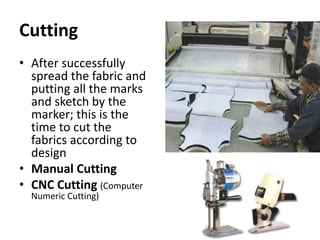
• After successfully
spread the fabric and
putting all the marks
and sketch by the
marker; this is the
time to cut the
fabrics according to
design
• Manual Cutting
• CNC Cutting (Computer
Numeric Cutting)
Sorting/Bundling:
• The sorter sorts the patterns according to size
and design and makes bundles of them. This
step requires much precision because making
bundles of mismatched patterns can create
severe problems. On each bundle there are
specifications of the style size and the marker
too is attached with it
Sewing & Assembling
• Each of the parts of a clothing
should be sewed or assembled in
order to make a complete apparel
that are wearable
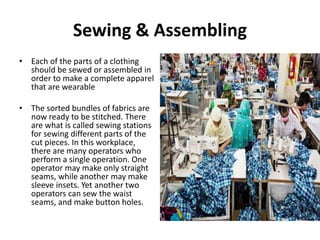
• The sorted bundles of fabrics are
now ready to be stitched. There
are what is called sewing stations
for sewing different parts of the
cut pieces. In this workplace,
there are many operators who
perform a single operation. One
operator may make only straight
seams, while another may make
sleeve insets. Yet another two
operators can sew the waist
seams, and make button holes.
Inspection
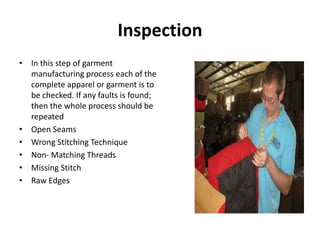
• In this step of garment
manufacturing process each of the
complete apparel or garment is to
be checked. If any faults is found;
then the whole process should be
repeated
• Open Seams
• Wrong Stitching Technique
• Non- Matching Threads
• Missing Stitch
• Raw Edges
Pressing/ Finishing
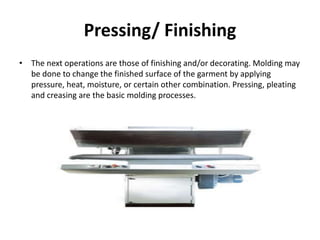
• The next operations are those of finishing and/or decorating. Molding may
be done to change the finished surface of the garment by applying
pressure, heat, moisture, or certain other combination. Pressing, pleating
and creasing are the basic molding processes.
Packing
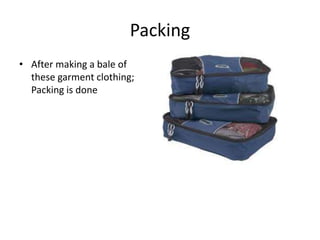
• After making a bale of
these garment clothing;
Packing is done

Garments manufacturing

  • 1.
  • 2.
    Garments Manufacturing Garment manufacturersare primarily engaged in the design, cutting and sewing of garments from fabric. On industrial basis there are certain areas or sequence through which garments are manufactured.
  • 3.
    Design Or SketchPattern design Sample MakingProduction Pattern Grading Marker Making SpreadingCutting Bundling sewing InspectionPressingPacking
  • 4.
    Design / Sketch: •Before making an apparel of garments designers must have to design or sketch the appearance completely. • In the garment manufacturing the first step is designing the sketch for the dresses that have to be prepared. For this purpose the designer first draw several rough sketches in the sketch book. The designer does not go for details at this moment but he rather let his creativity flow on the paper and he draws many sketches. Later these sketches are analyzed by a panel of designers. They finally select few out of them.
  • 5.
    Pattern Design: • Everypiece of Apparel or Garment is built upon a pattern. • The pattern maker now develop first pattern for the designs in any one standard size. This is made by pattern drafting method and the purpose of making this pattern is to create the sample garment for test fit.
  • 6.
    Sample Making: • Thefirst patterns are sent to the sewing unit for assembling them into garment. This sample is constructed to analyze the pattern fit and design too. After the sample garment is stitched it is reviewed by a panel of designers, pattern makers and sewing specialists. If any changes have to be made they are made at this time
  • 7.
    Production Pattern: • Thepattern design is now taken for creating the production patterns. The production pattern is one which will be used for huge production of garments. After making the cloth sample its wise to make a production sample that will be hanged out in front of every labor • It may be produce Manually or through CAD system
  • 8.
    Grading • The purposeof grading is to create patterns in different standard sizes. Pattern sizes can be large, medium and small or else there are standard patterns of size 10, 12, 14, 16 and so on for different figure and sizes. This is generally how we get S M L XL XXL sizing.
  • 9.
    Marker Making • Markermaking is the process to sketch on fabric before cutting it. • Computer software helps the technicians create the optimum fabric layout to suggest so fabric can be used efficiently. Markers are laid in such a way so that minimum possible fabric gets wasted during cutting operation
  • 10.
    Spreading • Spreading isthe process of superimposing lengths of fabric on spreading table for cutting purpose • With the help of spreading machines, fabric is stacked on one another in lays that may go over 100 ft (30.5 m) long and hundreds of plies (fabric pieces) thick.
  • 11.
    Cutting • After successfully spreadthe fabric and putting all the marks and sketch by the marker; this is the time to cut the fabrics according to design • Manual Cutting • CNC Cutting (Computer Numeric Cutting)
  • 12.
    Sorting/Bundling: • The sortersorts the patterns according to size and design and makes bundles of them. This step requires much precision because making bundles of mismatched patterns can create severe problems. On each bundle there are specifications of the style size and the marker too is attached with it
  • 13.
    Sewing & Assembling •Each of the parts of a clothing should be sewed or assembled in order to make a complete apparel that are wearable • The sorted bundles of fabrics are now ready to be stitched. There are what is called sewing stations for sewing different parts of the cut pieces. In this workplace, there are many operators who perform a single operation. One operator may make only straight seams, while another may make sleeve insets. Yet another two operators can sew the waist seams, and make button holes.
  • 14.
    Inspection • In thisstep of garment manufacturing process each of the complete apparel or garment is to be checked. If any faults is found; then the whole process should be repeated • Open Seams • Wrong Stitching Technique • Non- Matching Threads • Missing Stitch • Raw Edges
  • 15.
    Pressing/ Finishing • Thenext operations are those of finishing and/or decorating. Molding may be done to change the finished surface of the garment by applying pressure, heat, moisture, or certain other combination. Pressing, pleating and creasing are the basic molding processes.
  • 16.
    Packing • After makinga bale of these garment clothing; Packing is done