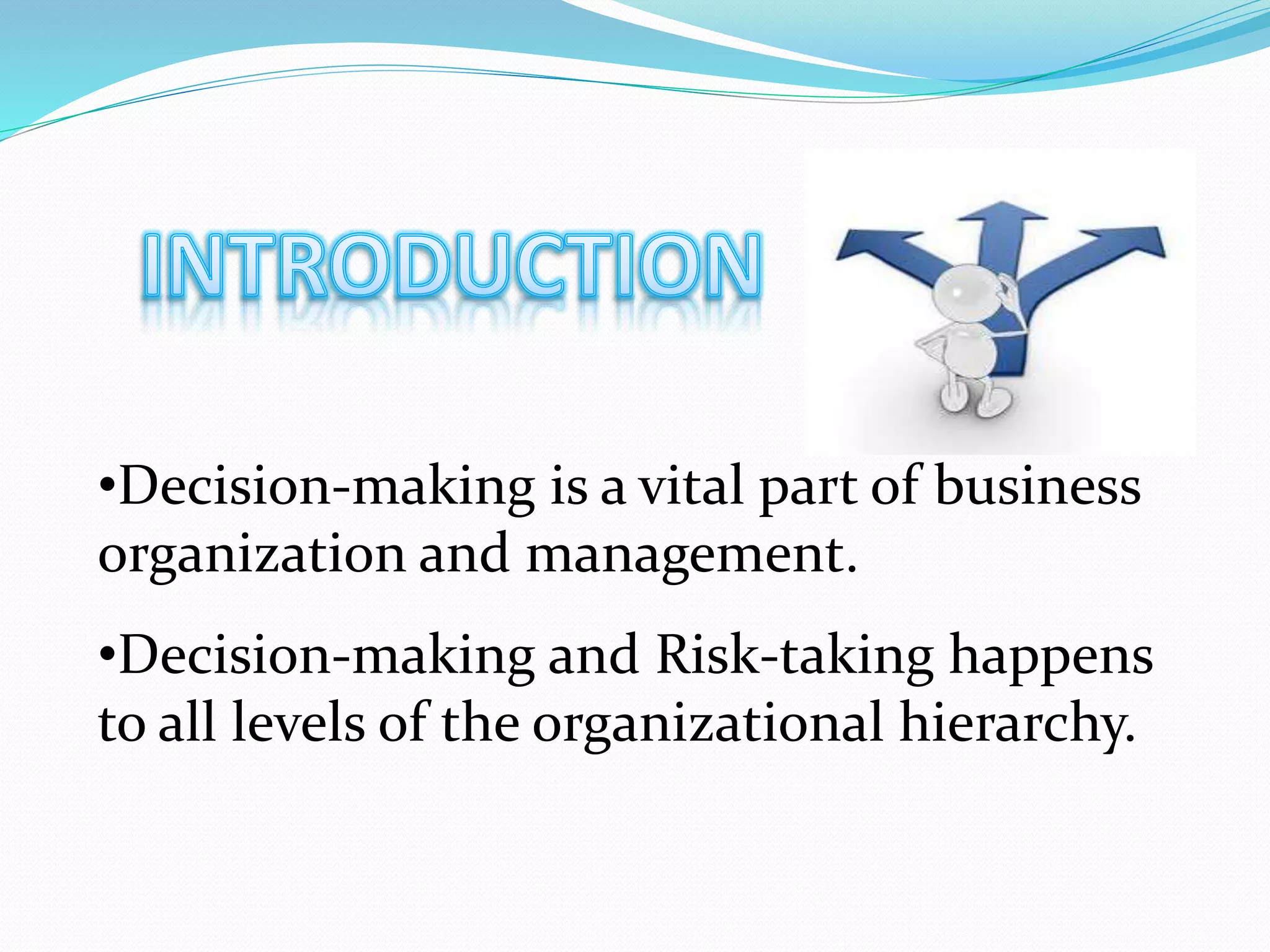
•Decision-making is a vital part of business
organization and management.
•Decision-making and Risk-taking happens
to all levels of the organizational hierarchy.
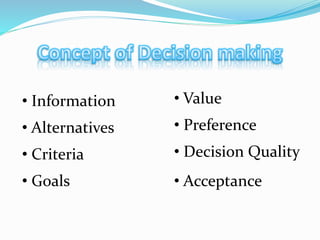
• Information
• Alternatives
• Criteria
• Goals
• Value
• Preference
• Decision Quality
• Acceptance
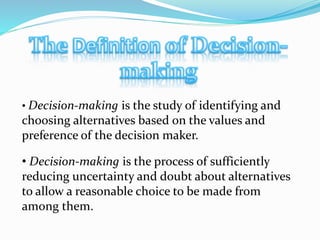
• Decision-making is the study of identifying and
choosing alternatives based on the values and
preference of the decision maker.
• Decision-making is the process of sufficiently
reducing uncertainty and doubt about alternatives
to allow a reasonable choice to be made from
among them.
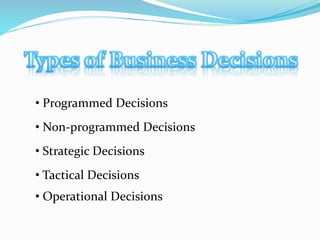
• Programmed Decisions
• Non-programmed Decisions
• Strategic Decisions
• Tactical Decisions
• Operational Decisions
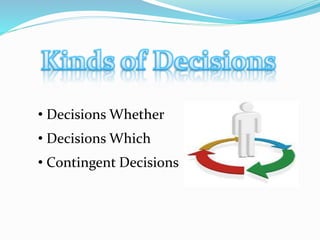
• Decisions Whether
• Decisions Which
• Contingent Decisions
– yes /
no, either / or decision that
must be made before we
proceed with the selection
of an alternative.
–
involve a choice of one (1) or
more alternatives from
among a set of possibilities.
–
decisions that have been
made but put on hold until
some conditions are met.
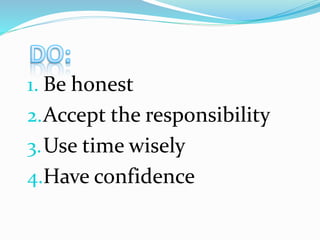
1. Be honest
2.Accept the responsibility
3.Use time wisely
4.Have confidence
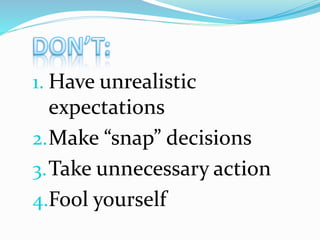
1. Have unrealistic
expectations
2.Make “snap” decisions
3.Take unnecessary action
4.Fool yourself
1. Continuous training and
development of managers in
decision-making skills.
2. Complete good information
about the problems and
alternatives.
3. Management skills in analyzing
information and handling its
shortcomings.
4. Experience and natural
ability in decision-making.
5. Risks and attitudes to risk.
6. Human factors.
Internal Constraints
External Constraints
1. Availability of funds and
resources.
2.Existing Business Policy.
3.People’s Abilities and
Feelings.
1. Constitutional mandate, laws,
rules and regulations
2. Competitors
3. Lack of technology
4. Economic climate / condition
5. Legislations
6. Lack of supplies (material
and manpower)
7. Lack of manpower
.
Lalic, Jennyleen B.
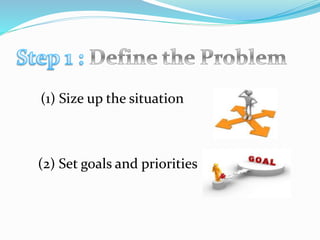
(1) Size up the situation
(2) Set goals and priorities
(1) Considered your option
(2) Don’t make unnecessary
decisions
(1) Use your time
wisely
(2) Seek advice
(3) Use all resources
(1) Be open
(2) Don’t judge
(3)Record your ideas
(1) Think Ahead
(2) Be Practical
(3)Be Creative
(1) Take action
(2) Inform others
(3) Follow up your plan
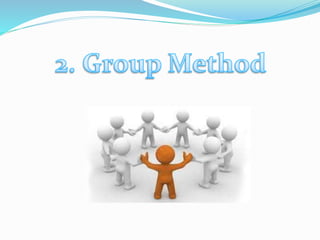
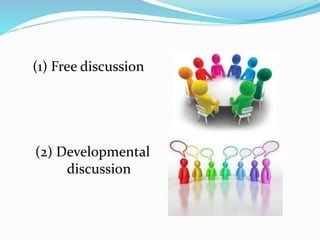
(1) Free discussion
(2) Developmental
discussion
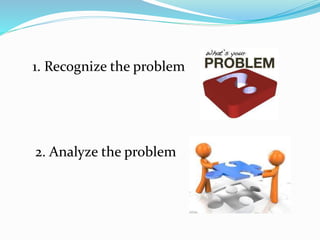
1. Recognize the problem
2. Analyze the problem
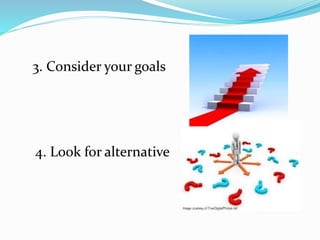
3. Consider your goals
4. Look for alternative
5. Select the best alternative
6. Put your decision
into action
1.Become aware of your own and family’s values.
2.Develop sensitivity to the individual responses of
persons affected by the decision.
3.Be objective in viewing the problem that demands
decision.
 Decision that is REVERSIBLE- practice
making quick decisions when the
outcome involves only small changes.
 Decision that is NOT REVERSIBLE-
allow time to thoroughly consider all
alternatives.
 There are four major Benefits of Planning:
1. Planning allows the establishment of independent
goals.
2. Planning provides a standard of measurement.
3. Planning converts values to action.
4. Planning allows limited resources to be committed
in an orderly way.
 Only the risk takers are truly free.
 There is really no such thing as permanent
security in anything on earth.
 You are supposed to be afraid when you risk.
 Risk taking normally involves a degree of
separation anxiety.
1. Decide whether the risk is necessary or desirable.
2. Risk for the right reasons and when you are calm and
thoughtful.
3. Have a goal.
4. Determine the possible loss as well as the gain.
5. Try to make an accurate estimate about the probability of each
case.
6. When possible, take one risk at a time
7. Use imaginary role playing to work through the various
possibilities, so that you will be mentally prepared for any
outcome.
8. Use a plan.
9. Act decisively.
10. Don’t expect complete success.
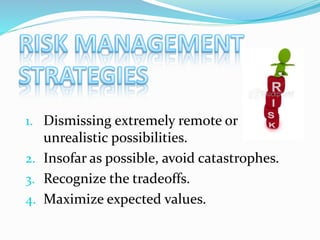
1. Dismissing extremely remote or
unrealistic possibilities.
2. Insofar as possible, avoid catastrophes.
3. Recognize the tradeoffs.
4. Maximize expected values.

Decision Making and Risk Taking

  • 1.
    •Decision-making is avital part of business organization and management. •Decision-making and Risk-taking happens to all levels of the organizational hierarchy.
  • 2.
    • Information • Alternatives •Criteria • Goals • Value • Preference • Decision Quality • Acceptance
  • 3.
    • Decision-making isthe study of identifying and choosing alternatives based on the values and preference of the decision maker. • Decision-making is the process of sufficiently reducing uncertainty and doubt about alternatives to allow a reasonable choice to be made from among them.
  • 4.
    • Programmed Decisions •Non-programmed Decisions • Strategic Decisions • Tactical Decisions • Operational Decisions
  • 5.
    • Decisions Whether •Decisions Which • Contingent Decisions
  • 6.
    – yes / no,either / or decision that must be made before we proceed with the selection of an alternative.
  • 7.
    – involve a choiceof one (1) or more alternatives from among a set of possibilities.
  • 8.
    – decisions that havebeen made but put on hold until some conditions are met.
  • 10.
    1. Be honest 2.Acceptthe responsibility 3.Use time wisely 4.Have confidence
  • 11.
    1. Have unrealistic expectations 2.Make“snap” decisions 3.Take unnecessary action 4.Fool yourself
  • 13.
    1. Continuous trainingand development of managers in decision-making skills. 2. Complete good information about the problems and alternatives. 3. Management skills in analyzing information and handling its shortcomings.
  • 14.
    4. Experience andnatural ability in decision-making. 5. Risks and attitudes to risk. 6. Human factors.
  • 15.
  • 16.
    1. Availability offunds and resources. 2.Existing Business Policy. 3.People’s Abilities and Feelings.
  • 17.
    1. Constitutional mandate,laws, rules and regulations 2. Competitors 3. Lack of technology 4. Economic climate / condition
  • 18.
    5. Legislations 6. Lackof supplies (material and manpower) 7. Lack of manpower . Lalic, Jennyleen B.
  • 20.
    (1) Size upthe situation (2) Set goals and priorities
  • 21.
    (1) Considered youroption (2) Don’t make unnecessary decisions
  • 22.
    (1) Use yourtime wisely (2) Seek advice (3) Use all resources
  • 23.
    (1) Be open (2)Don’t judge (3)Record your ideas
  • 24.
    (1) Think Ahead (2)Be Practical (3)Be Creative
  • 25.
    (1) Take action (2)Inform others (3) Follow up your plan
  • 29.
    (1) Free discussion (2)Developmental discussion
  • 31.
    1. Recognize theproblem 2. Analyze the problem
  • 32.
    3. Consider yourgoals 4. Look for alternative
  • 33.
    5. Select thebest alternative 6. Put your decision into action
  • 36.
    1.Become aware ofyour own and family’s values. 2.Develop sensitivity to the individual responses of persons affected by the decision. 3.Be objective in viewing the problem that demands decision.
  • 37.
     Decision thatis REVERSIBLE- practice making quick decisions when the outcome involves only small changes.  Decision that is NOT REVERSIBLE- allow time to thoroughly consider all alternatives.
  • 38.
     There arefour major Benefits of Planning: 1. Planning allows the establishment of independent goals. 2. Planning provides a standard of measurement. 3. Planning converts values to action. 4. Planning allows limited resources to be committed in an orderly way.
  • 40.
     Only therisk takers are truly free.  There is really no such thing as permanent security in anything on earth.  You are supposed to be afraid when you risk.  Risk taking normally involves a degree of separation anxiety.
  • 41.
    1. Decide whetherthe risk is necessary or desirable. 2. Risk for the right reasons and when you are calm and thoughtful. 3. Have a goal. 4. Determine the possible loss as well as the gain. 5. Try to make an accurate estimate about the probability of each case. 6. When possible, take one risk at a time 7. Use imaginary role playing to work through the various possibilities, so that you will be mentally prepared for any outcome. 8. Use a plan. 9. Act decisively. 10. Don’t expect complete success.
  • 42.
    1. Dismissing extremelyremote or unrealistic possibilities. 2. Insofar as possible, avoid catastrophes. 3. Recognize the tradeoffs. 4. Maximize expected values.