
“Ethics in decision making and risk taking” 
A/Prof Michael Robertson 
University of Sydney and the Recovre Group / Medicolegalopinions
Outline 
› Ethics, Values and Knowledge 
› Risk from an epistemological perspective 
› Risk from a clinical perspective 
› Towards an ethics of “risk” 
2
1. Knowledge, Values and Ethics 
3
Basic questions in ethics 
› How do I live a good life? 
› How do I behave as a good citizen? 
› How do I make good decisions? 
› How do I know what I know is good? 
›What is the true nature of things? 
›What are the values upon which I base my 
conception of ‘the good’? 
4
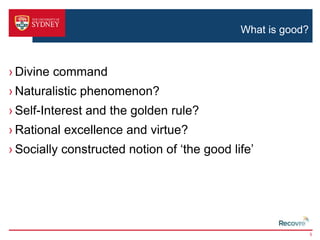
What is good? 
› Divine command 
› Naturalistic phenomenon? 
› Self-Interest and the golden rule? 
› Rational excellence and virtue? 
› Socially constructed notion of ‘the good life’ 
5
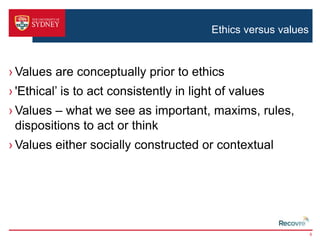
Ethics versus values 
›Values are conceptually prior to ethics 
› 'Ethical’ is to act consistently in light of values 
›Values – what we see as important, maxims, rules, 
dispositions to act or think 
›Values either socially constructed or contextual 
6
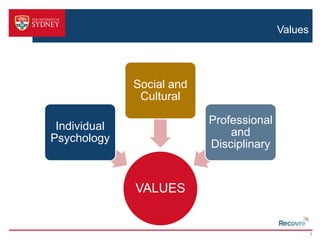
Values 
VALUES 
Individual 
Psychology 
Social and 
Cultural 
Professional 
and 
Disciplinary 
7
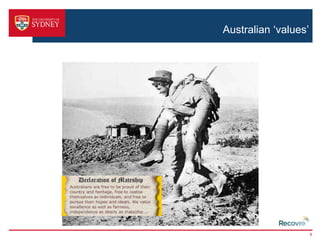
Australian ‘values’ 
8
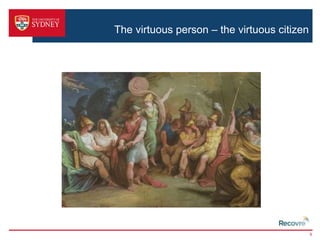
The virtuous person – the virtuous citizen 
9
“Descriptive” versus normative ethics 
›What is done rather than what ought be done 
› Departs from the “grand theories” of ethics 
› Derives from Aristotle’s Nicomachean Ethics 
› The observation of the habits and dispositions of 
great individuals and their deeds 
› The basis of empirical studies of ethics 
10
Knowledge 
11
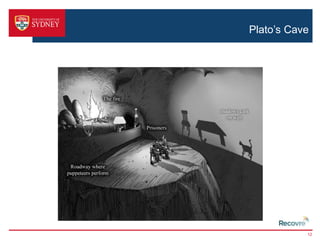
Plato’s Cave 
12
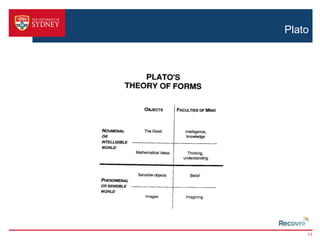
Plato 
13
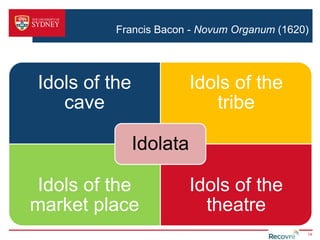
Francis Bacon - Novum Organum (1620) 
Idols of the 
cave 
Idols of the 
tribe 
Idols of the 
market place 
Idols of the 
theatre 
Idolata 
14
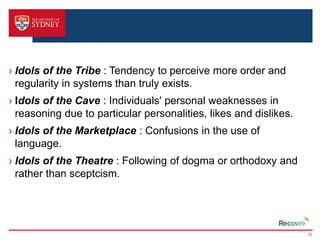
› Idols of the Tribe : Tendency to perceive more order and 
regularity in systems than truly exists. 
› Idols of the Cave : Individuals' personal weaknesses in 
reasoning due to particular personalities, likes and dislikes. 
› Idols of the Marketplace : Confusions in the use of 
language. 
› Idols of the Theatre : Following of dogma or orthodoxy and 
rather than sceptcism. 
15
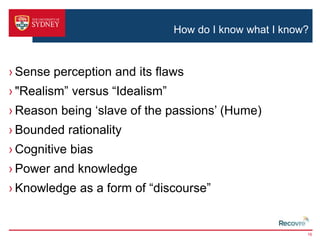
How do I know what I know? 
› Sense perception and its flaws 
› "Realism” versus “Idealism” 
› Reason being ‘slave of the passions’ (Hume) 
› Bounded rationality 
› Cognitive bias 
› Power and knowledge 
› Knowledge as a form of “discourse” 
16
The many faces of ‘risk’ 
17
The problem of language 
› “Risk” as a polysemous term with multiple discourses 
› Multiple meanings in multiple context 
› Emotive and with connotation 
› “Risk assessment” as a definitive act in different 
settings e.g actuarial, financial, political 
› Term abused eg ”risk issues” 
18
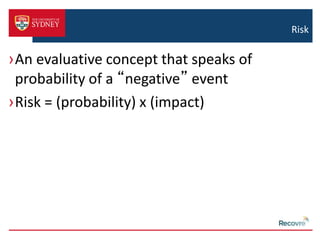
Risk 
›An evaluative concept that speaks of 
probability of a “negative” event 
›Risk = (probability) x (impact)
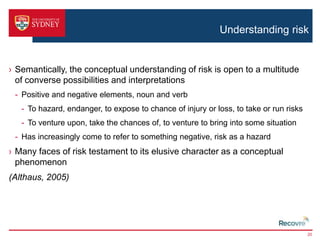
Understanding risk 
› Semantically, the conceptual understanding of risk is open to a multitude 
of converse possibilities and interpretations 
- Positive and negative elements, noun and verb 
- To hazard, endanger, to expose to chance of injury or loss, to take or run risks 
- To venture upon, take the chances of, to venture to bring into some situation 
- Has increasingly come to refer to something negative, risk as a hazard 
› Many faces of risk testament to its elusive character as a conceptual 
phenomenon 
(Althaus, 2005) 
20
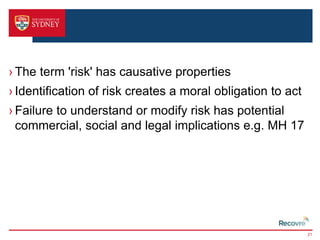
› The term 'risk' has causative properties 
› Identification of risk creates a moral obligation to act 
› Failure to understand or modify risk has potential 
commercial, social and legal implications e.g. MH 17 
21
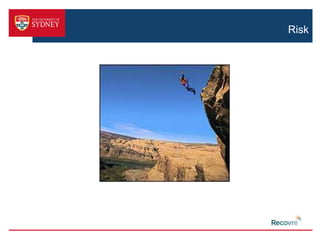
Risk
Risk
The risk society 
›A cultural phenomenon described by sociologists 
Ulrich Beck (1992) and Anthony Giddens(1999). 
› In the light of progression in technology, much of our 
life experience arises from human agency and 
therefore we face “manufactured risk”. 
› This necessitates our constant reflexive alterations to 
how we act. 
24
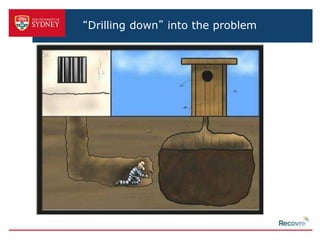
“Drilling down” into the problem
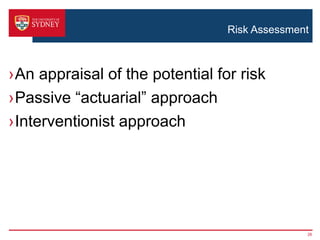
Risk Assessment 
›An appraisal of the potential for risk 
›Passive “actuarial” approach 
›Interventionist approach 
26
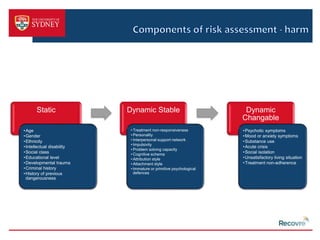
Static 
•Age 
•Gender 
•Ethnicity 
• Intellectual disability 
•Social class 
•Educational level 
•Developmental trauma 
•Criminal history 
•History of previous 
dangerousness 
Dynamic Stable 
• Treatment non-responsiveness 
• Personality 
• Interpersonal support network 
• Impulsivity 
• Problem solving capacity 
• Cognitive schema 
• Attribution style 
• Attachment style 
• Immature or primitive psychological 
defences 
Dynamic 
Changable 
•Psychotic symptoms 
•Mood or anxiety symptoms 
•Substance use 
•Acute crisis 
•Social isolation 
•Unsatisfactory living situation 
•Treatment non-adherence
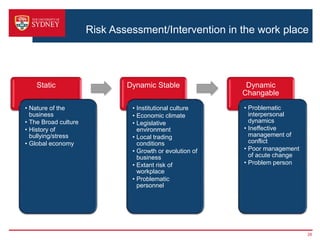
Risk Assessment/Intervention in the work place 
28 
Static 
• Nature of the 
business 
• The Broad culture 
• History of 
bullying/stress 
• Global economy 
Dynamic Stable 
• Institutional culture 
• Economic climate 
• Legislative 
environment 
• Local trading 
conditions 
• Growth or evolution of 
business 
• Extant risk of 
workplace 
• Problematic 
personnel 
Dynamic 
Changable 
• Problematic 
interpersonal 
dynamics 
• Ineffective 
management of 
conflict 
• Poor management 
of acute change 
• Problem person
29 
Towards ‘an ethics of risk’
An ethics of risk 
› Descriptive – observe what is done well 
› Linguistic – careful use of clear language and 
communication 
› Epistemic – awareness of the limits of knowledge 
and the effects of context 
› Moral action – methodology of risk mitigation rather 
than risk assessment 
30
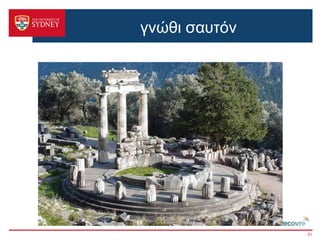
γνώθι σαυτόν 
31

Ethics in decision making and risk taking

  • 1.
    “Ethics in decisionmaking and risk taking” A/Prof Michael Robertson University of Sydney and the Recovre Group / Medicolegalopinions
  • 2.
    Outline › Ethics,Values and Knowledge › Risk from an epistemological perspective › Risk from a clinical perspective › Towards an ethics of “risk” 2
  • 3.
  • 4.
    Basic questions inethics › How do I live a good life? › How do I behave as a good citizen? › How do I make good decisions? › How do I know what I know is good? ›What is the true nature of things? ›What are the values upon which I base my conception of ‘the good’? 4
  • 5.
    What is good? › Divine command › Naturalistic phenomenon? › Self-Interest and the golden rule? › Rational excellence and virtue? › Socially constructed notion of ‘the good life’ 5
  • 6.
    Ethics versus values ›Values are conceptually prior to ethics › 'Ethical’ is to act consistently in light of values ›Values – what we see as important, maxims, rules, dispositions to act or think ›Values either socially constructed or contextual 6
  • 7.
    Values VALUES Individual Psychology Social and Cultural Professional and Disciplinary 7
  • 8.
  • 9.
    The virtuous person– the virtuous citizen 9
  • 10.
    “Descriptive” versus normativeethics ›What is done rather than what ought be done › Departs from the “grand theories” of ethics › Derives from Aristotle’s Nicomachean Ethics › The observation of the habits and dispositions of great individuals and their deeds › The basis of empirical studies of ethics 10
  • 11.
  • 12.
  • 13.
  • 14.
    Francis Bacon -Novum Organum (1620) Idols of the cave Idols of the tribe Idols of the market place Idols of the theatre Idolata 14
  • 15.
    › Idols ofthe Tribe : Tendency to perceive more order and regularity in systems than truly exists. › Idols of the Cave : Individuals' personal weaknesses in reasoning due to particular personalities, likes and dislikes. › Idols of the Marketplace : Confusions in the use of language. › Idols of the Theatre : Following of dogma or orthodoxy and rather than sceptcism. 15
  • 16.
    How do Iknow what I know? › Sense perception and its flaws › "Realism” versus “Idealism” › Reason being ‘slave of the passions’ (Hume) › Bounded rationality › Cognitive bias › Power and knowledge › Knowledge as a form of “discourse” 16
  • 17.
    The many facesof ‘risk’ 17
  • 18.
    The problem oflanguage › “Risk” as a polysemous term with multiple discourses › Multiple meanings in multiple context › Emotive and with connotation › “Risk assessment” as a definitive act in different settings e.g actuarial, financial, political › Term abused eg ”risk issues” 18
  • 19.
    Risk ›An evaluativeconcept that speaks of probability of a “negative” event ›Risk = (probability) x (impact)
  • 20.
    Understanding risk ›Semantically, the conceptual understanding of risk is open to a multitude of converse possibilities and interpretations - Positive and negative elements, noun and verb - To hazard, endanger, to expose to chance of injury or loss, to take or run risks - To venture upon, take the chances of, to venture to bring into some situation - Has increasingly come to refer to something negative, risk as a hazard › Many faces of risk testament to its elusive character as a conceptual phenomenon (Althaus, 2005) 20
  • 21.
    › The term'risk' has causative properties › Identification of risk creates a moral obligation to act › Failure to understand or modify risk has potential commercial, social and legal implications e.g. MH 17 21
  • 22.
  • 23.
  • 24.
    The risk society ›A cultural phenomenon described by sociologists Ulrich Beck (1992) and Anthony Giddens(1999). › In the light of progression in technology, much of our life experience arises from human agency and therefore we face “manufactured risk”. › This necessitates our constant reflexive alterations to how we act. 24
  • 25.
  • 26.
    Risk Assessment ›Anappraisal of the potential for risk ›Passive “actuarial” approach ›Interventionist approach 26
  • 27.
    Static •Age •Gender •Ethnicity • Intellectual disability •Social class •Educational level •Developmental trauma •Criminal history •History of previous dangerousness Dynamic Stable • Treatment non-responsiveness • Personality • Interpersonal support network • Impulsivity • Problem solving capacity • Cognitive schema • Attribution style • Attachment style • Immature or primitive psychological defences Dynamic Changable •Psychotic symptoms •Mood or anxiety symptoms •Substance use •Acute crisis •Social isolation •Unsatisfactory living situation •Treatment non-adherence
  • 28.
    Risk Assessment/Intervention inthe work place 28 Static • Nature of the business • The Broad culture • History of bullying/stress • Global economy Dynamic Stable • Institutional culture • Economic climate • Legislative environment • Local trading conditions • Growth or evolution of business • Extant risk of workplace • Problematic personnel Dynamic Changable • Problematic interpersonal dynamics • Ineffective management of conflict • Poor management of acute change • Problem person
  • 29.
    29 Towards ‘anethics of risk’
  • 30.
    An ethics ofrisk › Descriptive – observe what is done well › Linguistic – careful use of clear language and communication › Epistemic – awareness of the limits of knowledge and the effects of context › Moral action – methodology of risk mitigation rather than risk assessment 30
  • 31.