Managers and Managing
DESINGED BY,
MR.P.SURESH
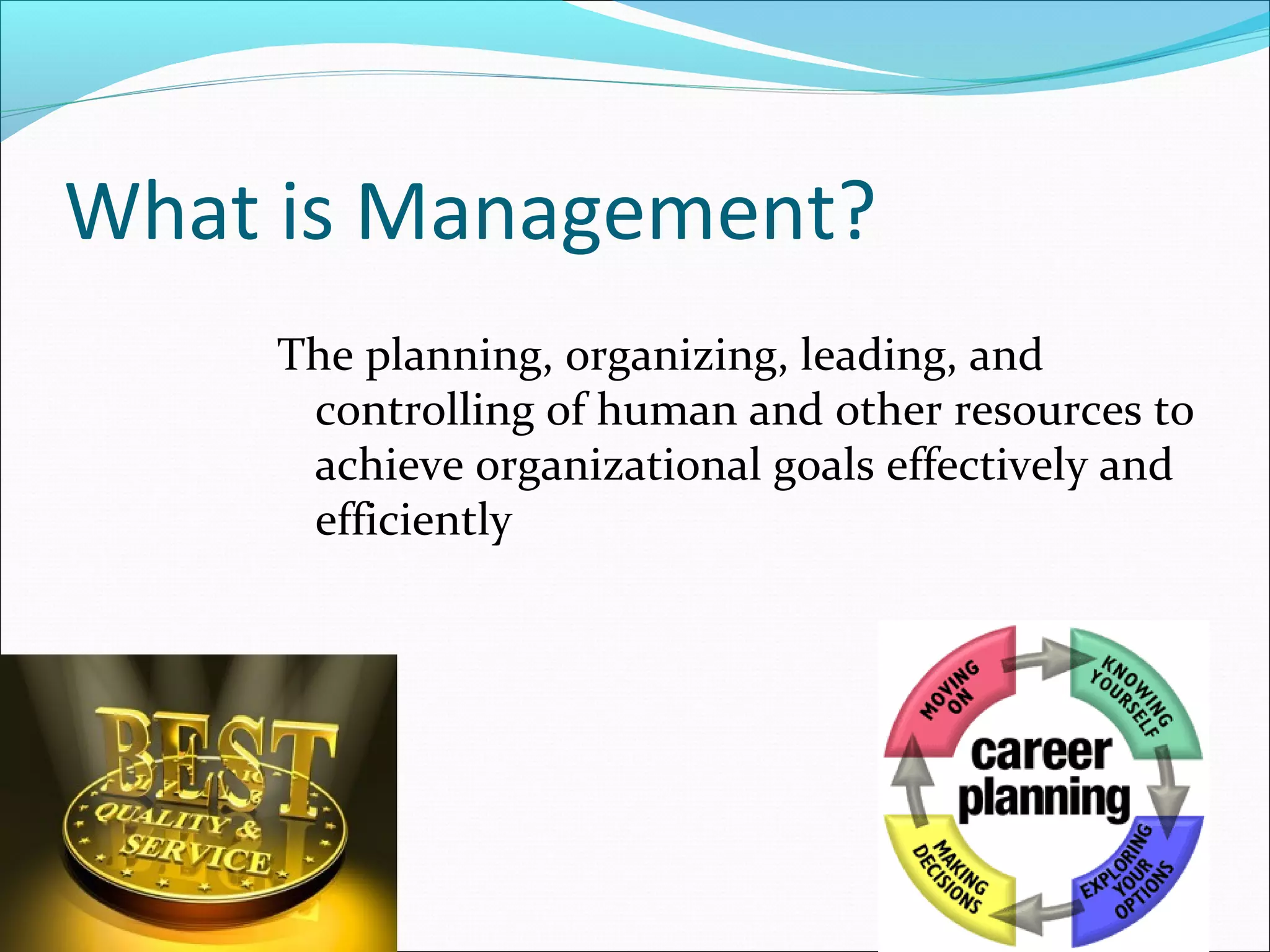
What is Management?
The planning, organizing, leading, and
controlling of human and other resources to
achieve organizational goals effectively and
efficiently
Managers
The people responsible for supervising the use of an
organization’s resources to meet its goals
Resources include people, skills, knowledge, machinery,
computers and I.T., and financial capital
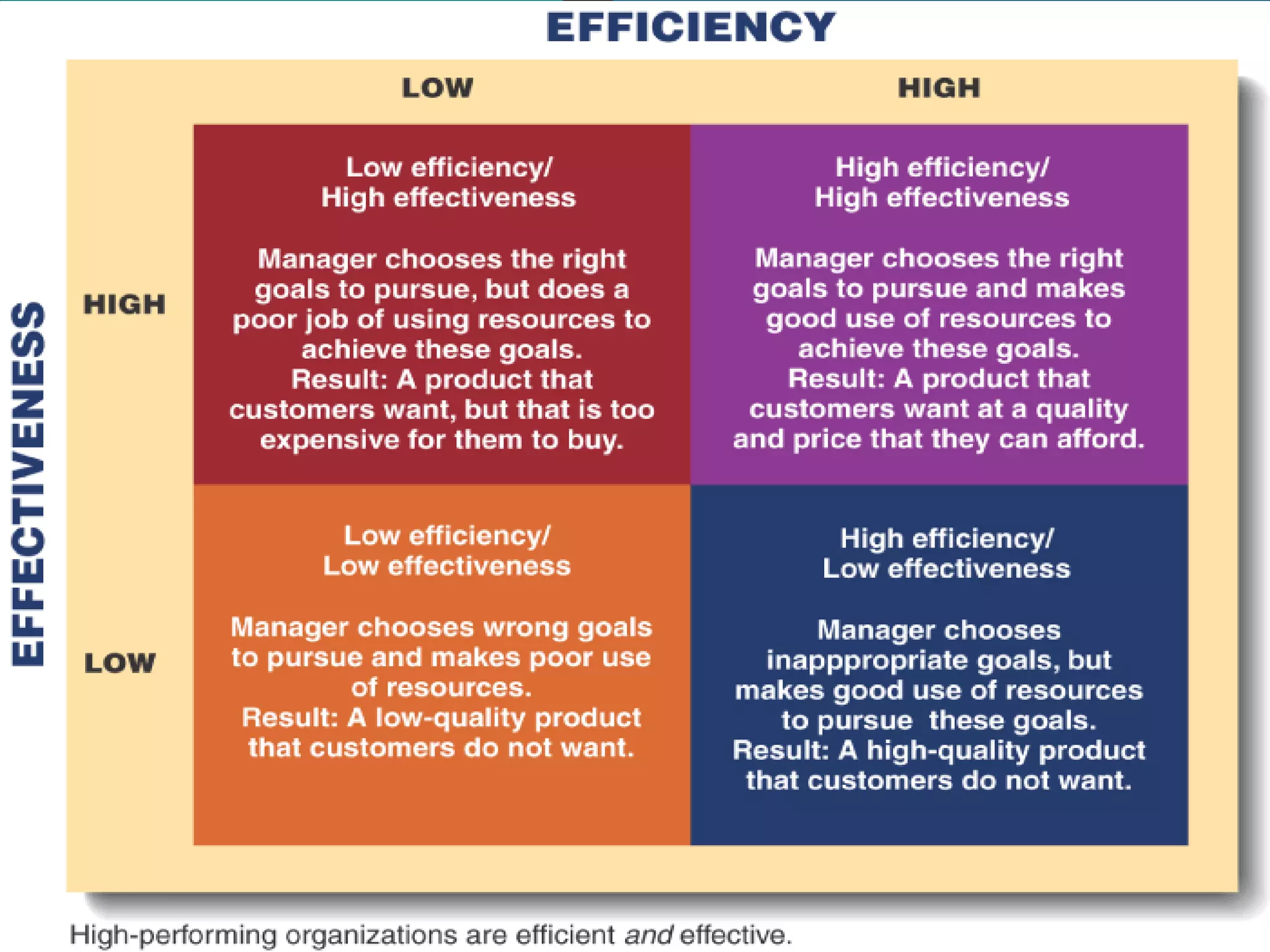
Organizational performance
A measure of how efficiently and effectively
managers are using organizational resources
to satisfy customers and achieve goals
Organizational performance
Efficiency
A measure of how well or productively
resources are used to achieve a goal
Effectiveness
A measure of the appropriateness of the goals
an organization is pursuing and the degree to
which they are achieved.
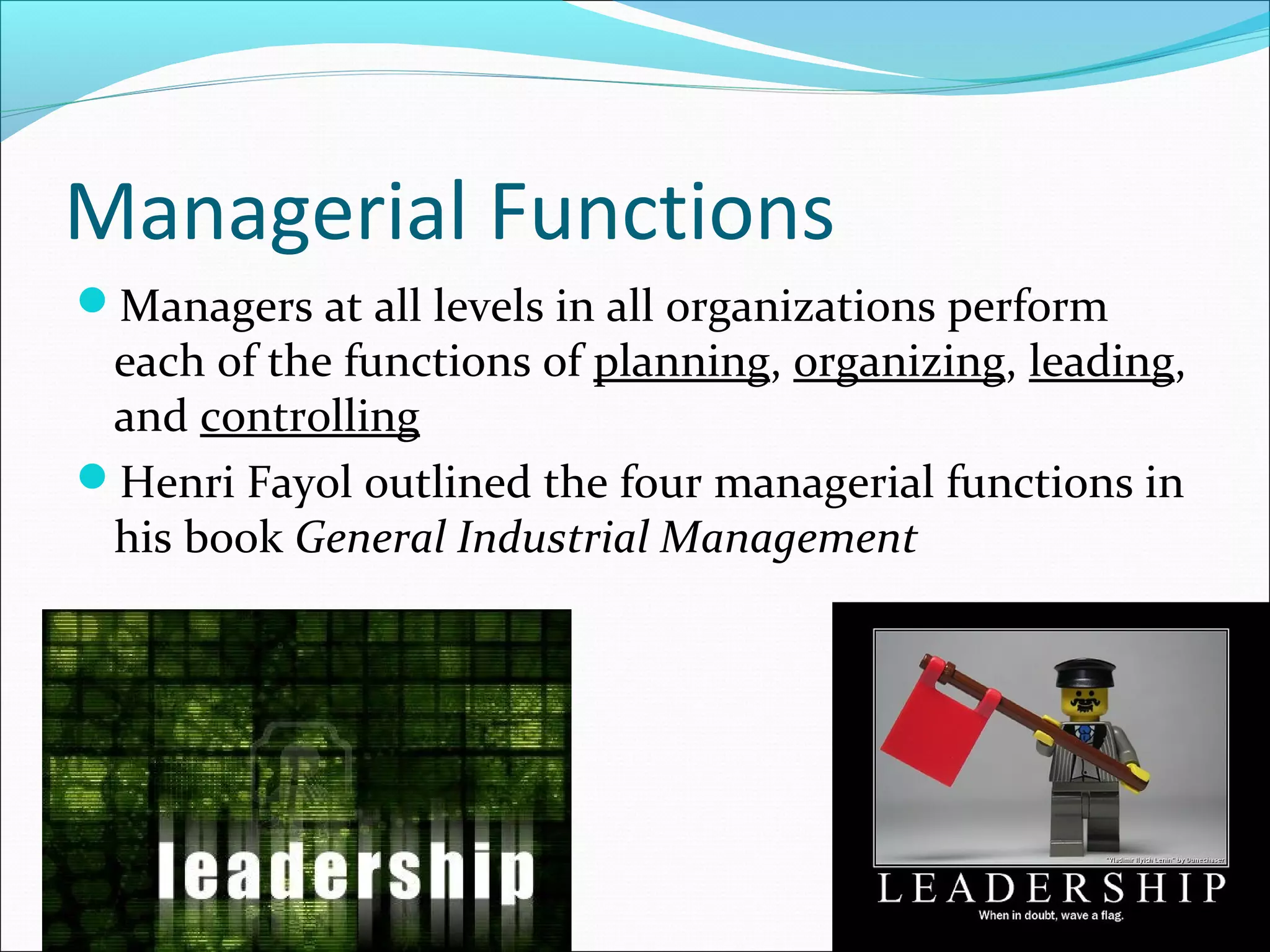
Managerial Functions
Managers at all levels in all organizations perform
each of the functions of planning, organizing, leading,
and controlling
Henri Fayol outlined the four managerial functions in
his book General Industrial Management
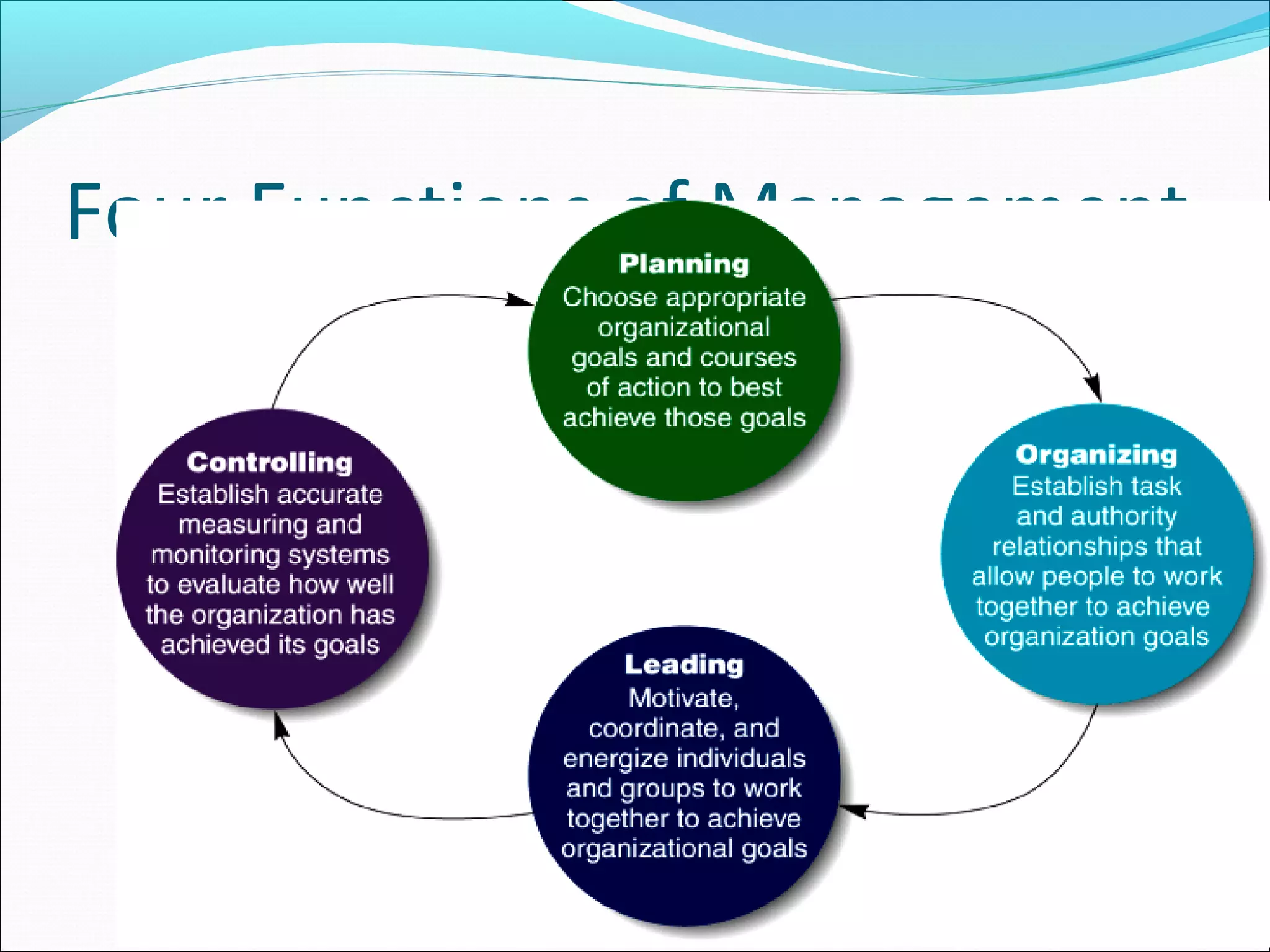
Four Functions of Management
Planning
The process of identifying and selecting appropriate
goals and courses of action
Examples: Strategic planning, financial planning,
human resources planning
Steps in the Planning Process
Deciding which goals to pursue
Deciding what courses of action to adopt
Deciding how to allocate resources
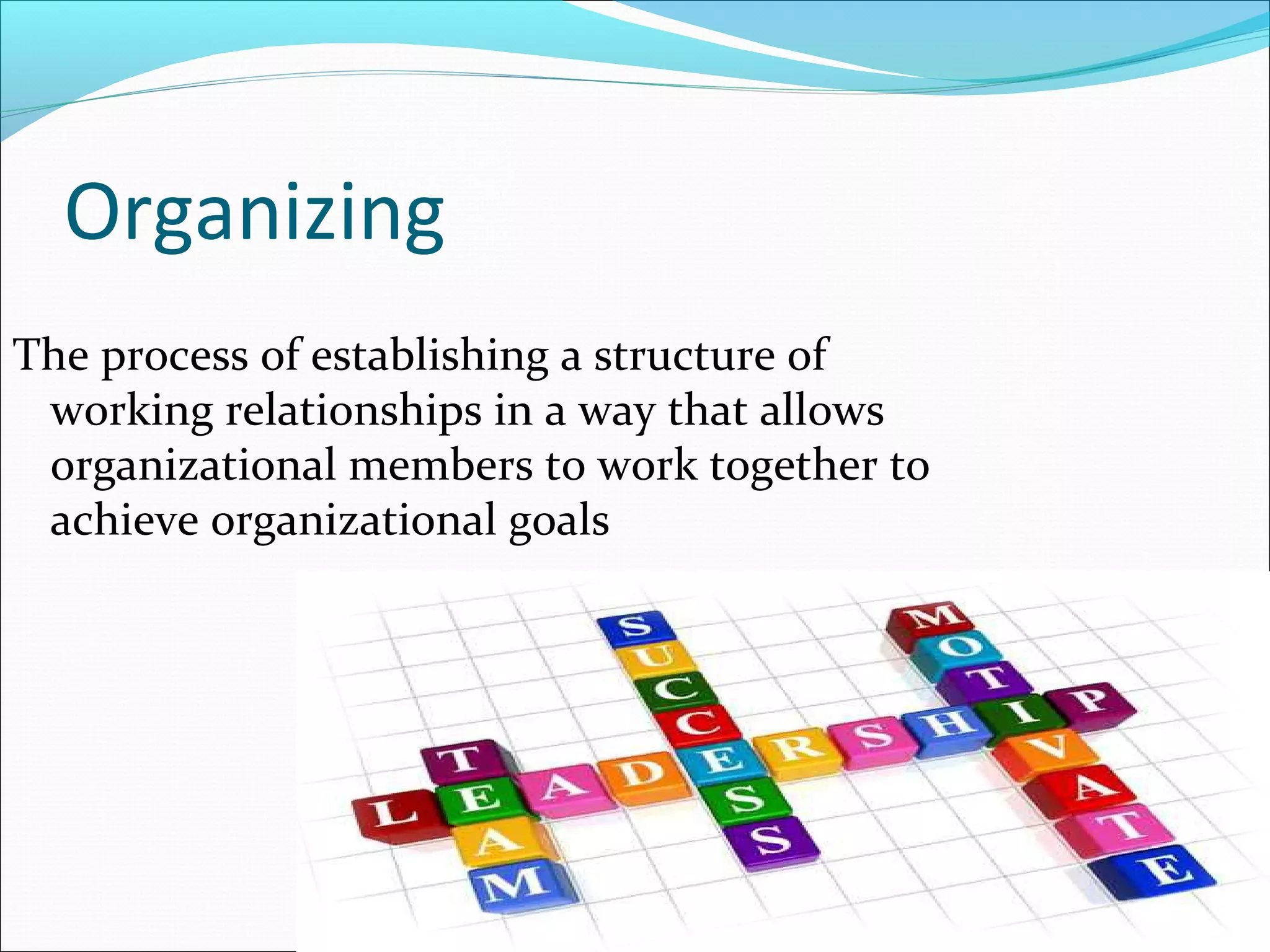
Organizing
The process of establishing a structure of
working relationships in a way that allows
organizational members to work together to
achieve organizational goals
Organizational Structure
A formal system of task and reporting
relationships that coordinates and motivates
organizational members
Often represented visually by a company’s
organizational chart
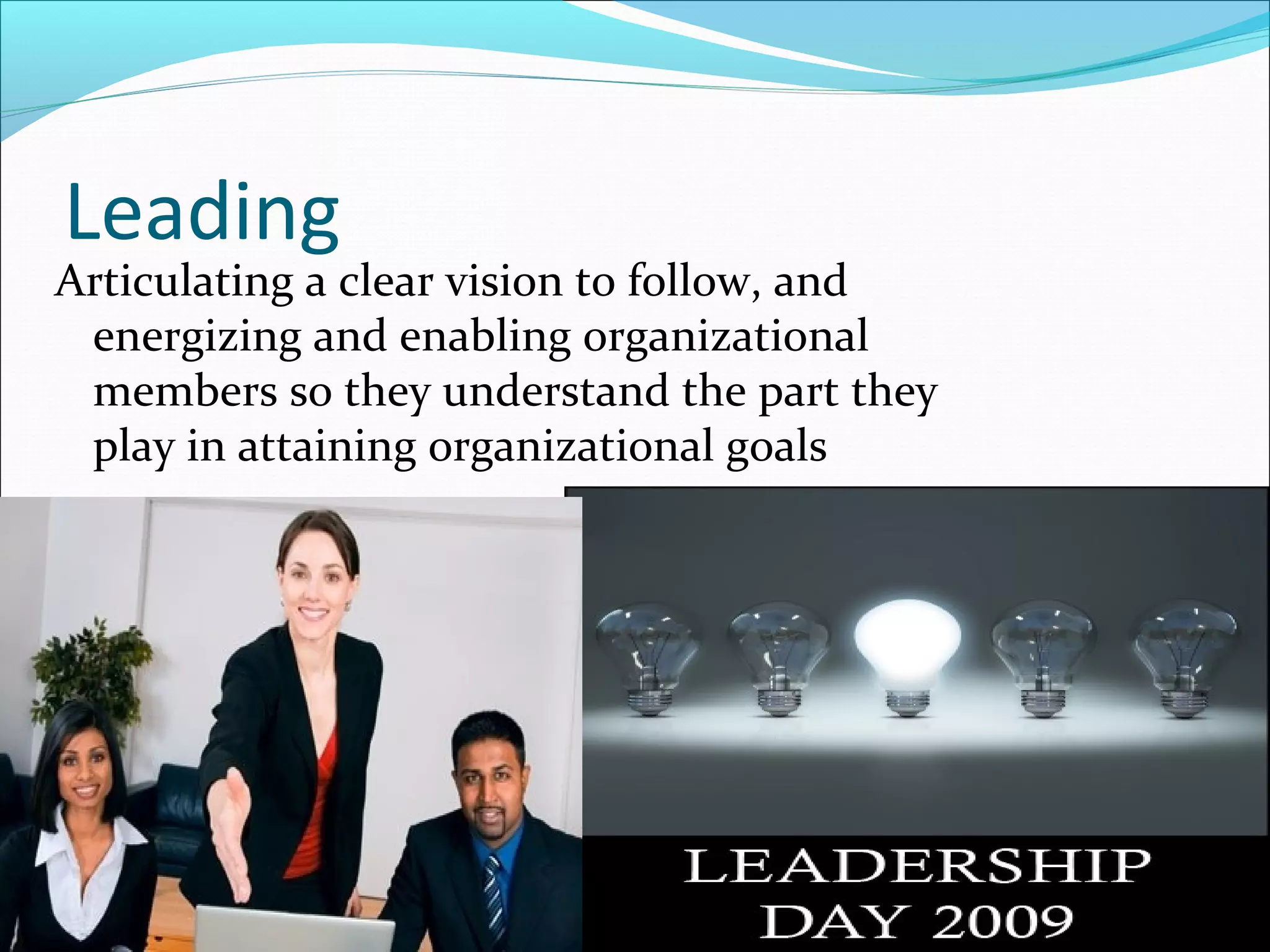
Leading
Articulating a clear vision to follow, and
energizing and enabling organizational
members so they understand the part they
play in attaining organizational goals
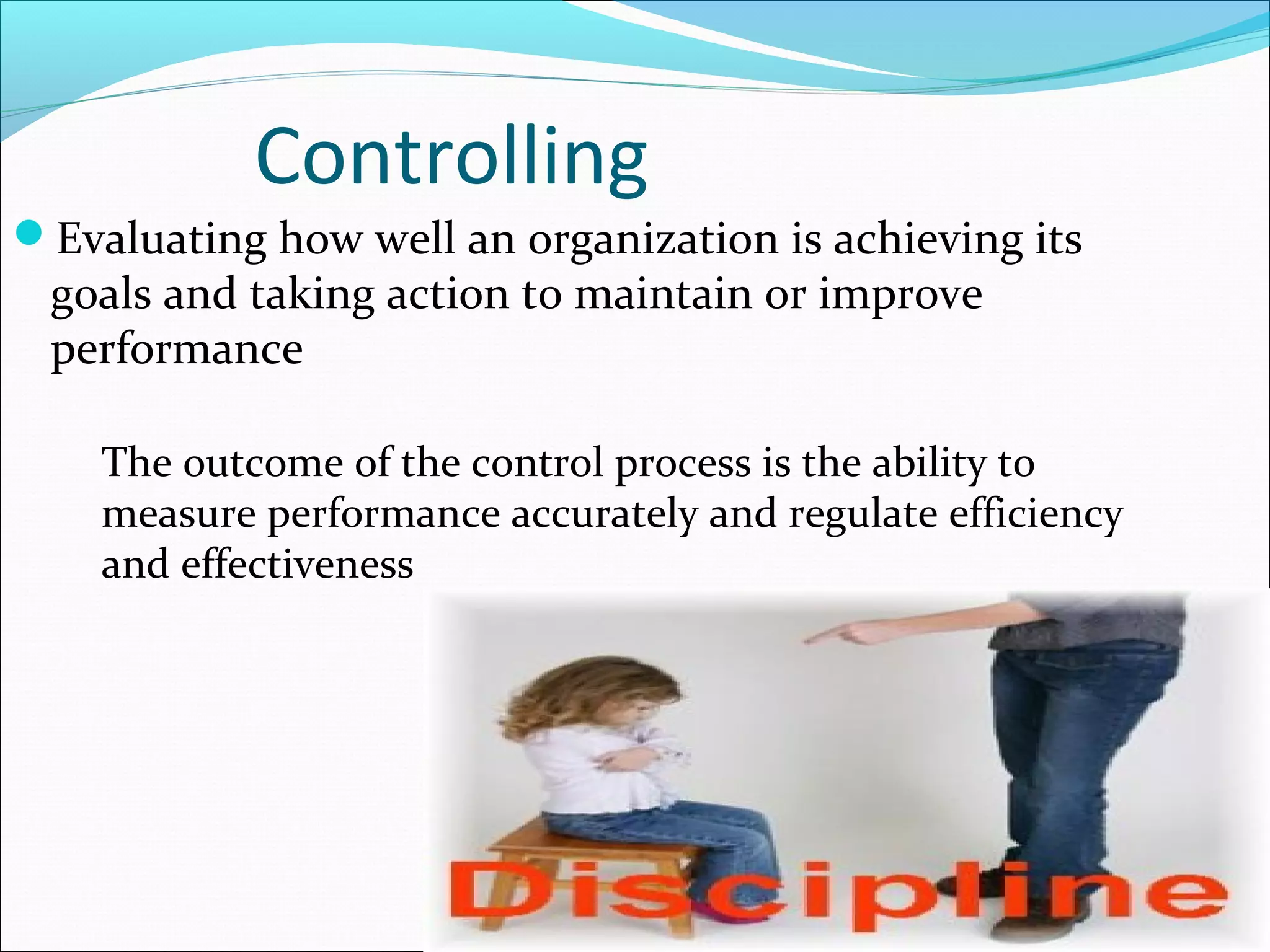
Controlling
Evaluating how well an organization is achieving its
goals and taking action to maintain or improve
performance
The outcome of the control process is the ability to
measure performance accurately and regulate efficiency
and effectiveness
Types of Managers
First line managers - Responsible
for day-to-day operations. Supervise
people performing activities
required to make the good or service
Middle managers - Supervise first-line
managers. Are responsible to find the
best way to use departmental resources
to achieve goals
Types of Managers
Top managers - Responsible for the
performance of all departments and
have cross-departmental responsibility.
Establish organizational goals and
monitor middle managers
Areas of Managers
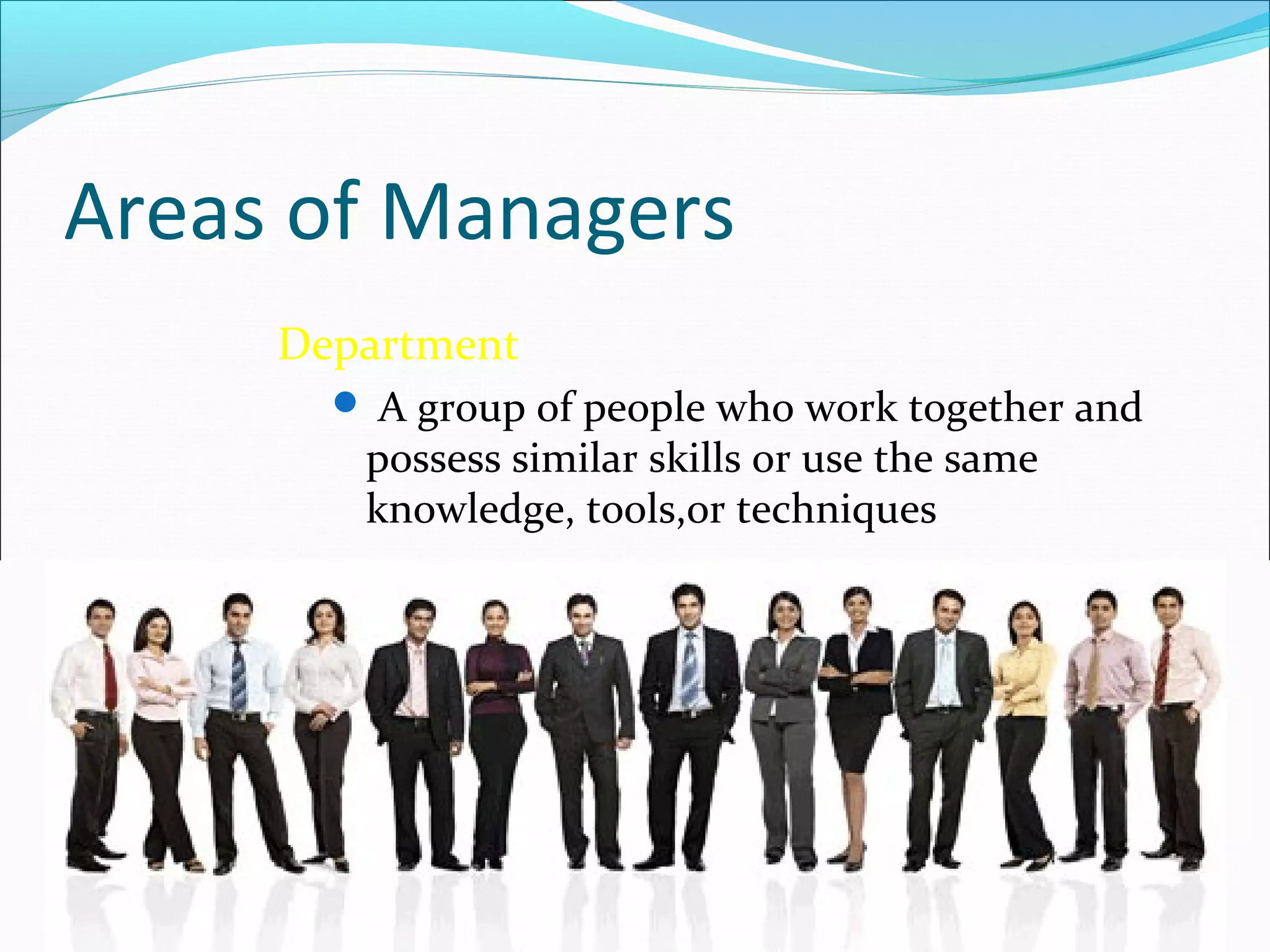
Department
 A group of people who work together and
possess similar skills or use the same
knowledge, tools,or techniques
Changes in Managerial Hierarchies
The tasks and responsibilities of managers have
changed drastically in the last decade as a result of
the widespread use of IT and stiffer global
competition
General tendencies toward leaner and flatter
organizations
Changes in Managerial HierarchiesRestructuring – an attempt to make an
organization more efficient by eliminating
the jobs of large numbers of people
Outsourcing – contracting with another
company, usually (but not always) abroad, to
have it perform an activity the company once
performed itself
Empowerment
Expanding employees’ knowledge, tasks, and
responsibilities
Often by providing new software and
systems for employees’ use as decision-
making tools
Also, the adoption of new philosophies about
job responsibilities and authority
Especially necessary when layers of
management are being reduced
Self-managed teams
Groups of employees with the responsibility for
supervising their own actions such that the
team can monitor its members and the
quality of the work performed
Managerial Roles and Skills
Managerial role - The set of specific tasks that a person
is expected to perform because of the position he or
she holds in the organization
Mintzberg identified three categories of roles –
Decisional, Informational, Interpersonal
Decisional Roles
Roles associated with the methods managers use in planning
strategy and utilizing resources.
Entrepreneur—deciding which new projects or programs to
initiate and to invest resources in.
Disturbance handler—managing an unexpected event or
crisis.
Resource allocator—assigning resources between functions
and divisions, setting the budgets of lower managers.
Negotiator—reaching agreements between other managers,
unions, customers, or shareholders.
Informational Roles
Roles associated with the tasks needed to obtain
and transmit information in the process of
managing the organization.
Monitor—analyzing information from both the
internal and external environment.
Disseminator—transmitting information to
influence the attitudes and behavior of employees.
Spokesperson—using information to positively
influence the way people in and out of the
organization respond to it.
Interpersonal Roles
Roles that managers assume to provide direction and
supervision, both to employees and to the organization as
a whole.
Figurehead—symbolizing the organization’s mission and
what it is seeking to achieve.
Leader—training, counseling, and mentoring high employee
performance.
Liaison—linking and coordinating the activities of people
and groups both inside and outside the organization.
Managerial Skills
Conceptual skills
The ability to analyze and diagnose a situation and
distinguish between cause and effect.
Human skills
The ability to understand, alter, lead, and control the
behavior of other individuals and groups.
Technical skills
The specific knowledge and techniques required to
perform an organizational role.
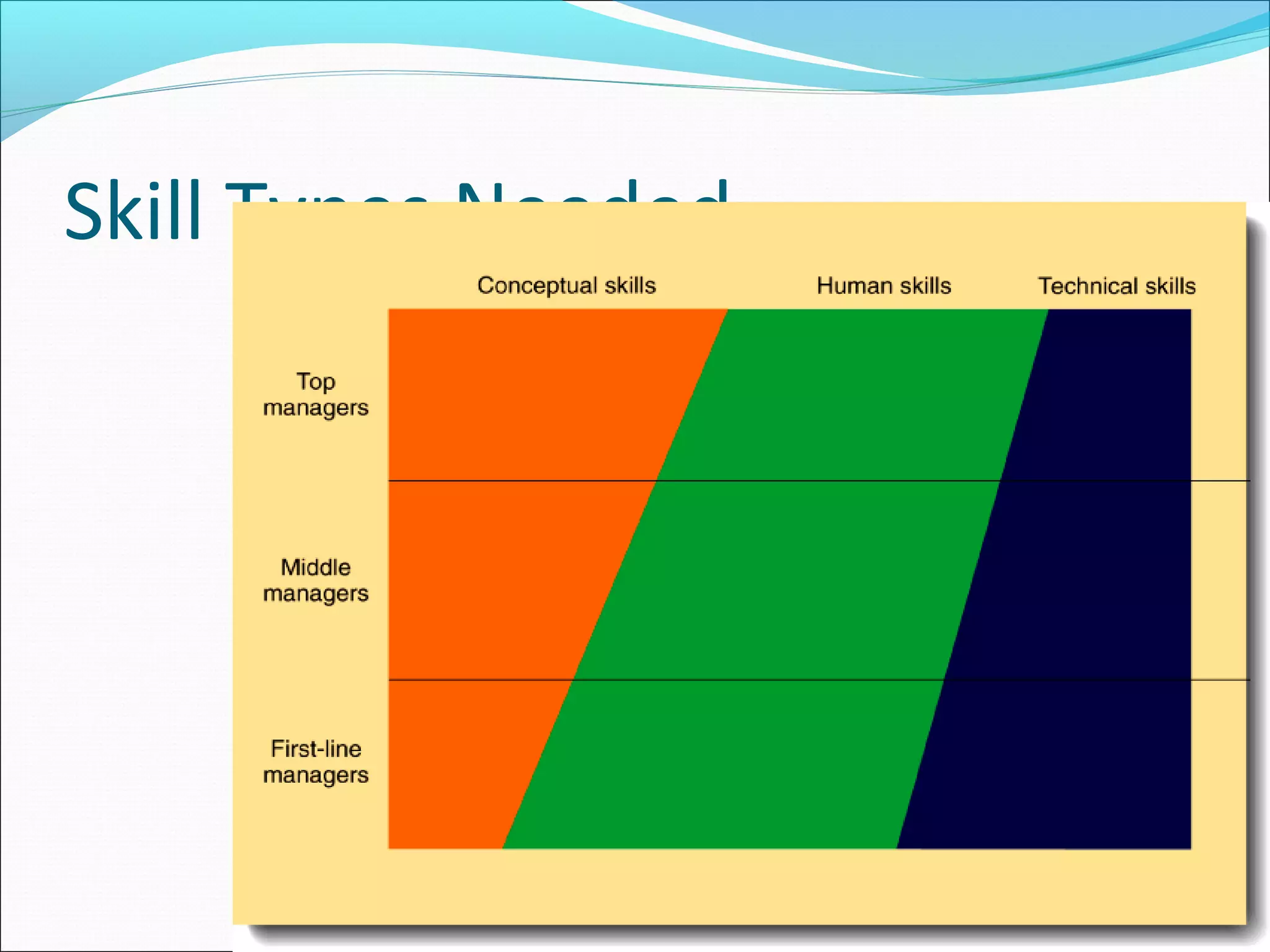
Skill Types Needed
Competencies
Specific set of skills, abilities, and experiences that gives
one manager the ability to perform at a higher level
than another manager in a particular organizational
setting
NOTE: This is different from the idea of core competencies we
talk about when we refer to the area of strategic
management
Challenges for Management in
a Global Environment
Rise of Global Organizations.
Building a Competitive Advantage
Maintaining Ethical and Socially
Responsible Standards
Managing a Diverse Workforce
Utilizing Information Technology and E-
commerce
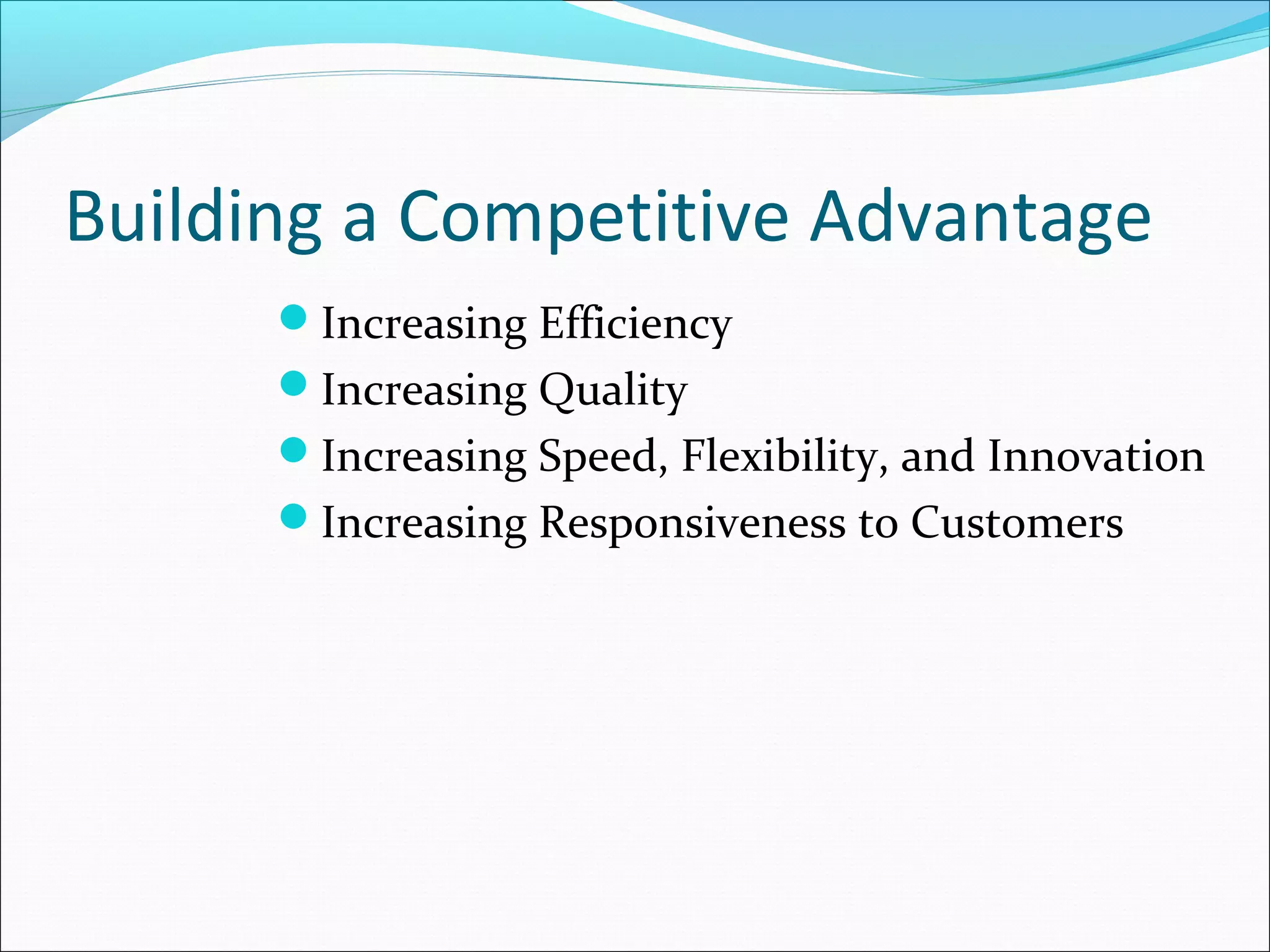
Building a Competitive Advantage
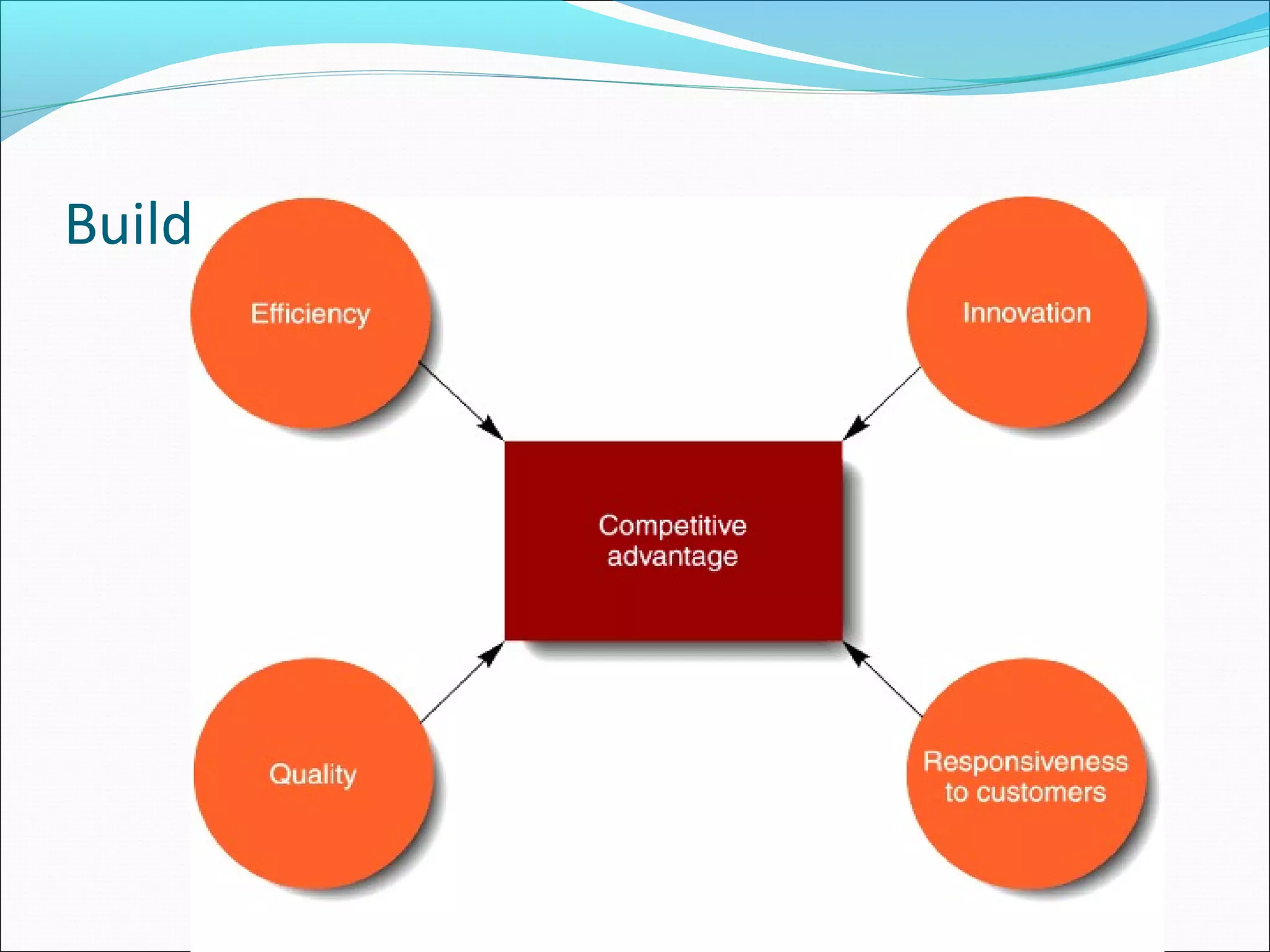
Increasing Efficiency
Increasing Quality
Increasing Speed, Flexibility, and Innovation
Increasing Responsiveness to Customers
Building Blocks of Competitive Advantage

Ppt on managerial skills

  • 1.
  • 2.
    What is Management? Theplanning, organizing, leading, and controlling of human and other resources to achieve organizational goals effectively and efficiently
  • 3.
    Managers The people responsiblefor supervising the use of an organization’s resources to meet its goals Resources include people, skills, knowledge, machinery, computers and I.T., and financial capital
  • 4.
    Organizational performance A measureof how efficiently and effectively managers are using organizational resources to satisfy customers and achieve goals
  • 5.
    Organizational performance Efficiency A measureof how well or productively resources are used to achieve a goal Effectiveness A measure of the appropriateness of the goals an organization is pursuing and the degree to which they are achieved.
  • 7.
    Managerial Functions Managers atall levels in all organizations perform each of the functions of planning, organizing, leading, and controlling Henri Fayol outlined the four managerial functions in his book General Industrial Management
  • 8.
  • 9.
    Planning The process ofidentifying and selecting appropriate goals and courses of action Examples: Strategic planning, financial planning, human resources planning
  • 10.
    Steps in thePlanning Process Deciding which goals to pursue Deciding what courses of action to adopt Deciding how to allocate resources
  • 11.
    Organizing The process ofestablishing a structure of working relationships in a way that allows organizational members to work together to achieve organizational goals
  • 12.
    Organizational Structure A formalsystem of task and reporting relationships that coordinates and motivates organizational members Often represented visually by a company’s organizational chart
  • 13.
    Leading Articulating a clearvision to follow, and energizing and enabling organizational members so they understand the part they play in attaining organizational goals
  • 14.
    Controlling Evaluating how wellan organization is achieving its goals and taking action to maintain or improve performance The outcome of the control process is the ability to measure performance accurately and regulate efficiency and effectiveness
  • 15.
    Types of Managers Firstline managers - Responsible for day-to-day operations. Supervise people performing activities required to make the good or service Middle managers - Supervise first-line managers. Are responsible to find the best way to use departmental resources to achieve goals
  • 16.
    Types of Managers Topmanagers - Responsible for the performance of all departments and have cross-departmental responsibility. Establish organizational goals and monitor middle managers
  • 17.
    Areas of Managers Department A group of people who work together and possess similar skills or use the same knowledge, tools,or techniques
  • 18.
    Changes in ManagerialHierarchies The tasks and responsibilities of managers have changed drastically in the last decade as a result of the widespread use of IT and stiffer global competition General tendencies toward leaner and flatter organizations
  • 19.
    Changes in ManagerialHierarchiesRestructuring – an attempt to make an organization more efficient by eliminating the jobs of large numbers of people Outsourcing – contracting with another company, usually (but not always) abroad, to have it perform an activity the company once performed itself
  • 20.
    Empowerment Expanding employees’ knowledge,tasks, and responsibilities Often by providing new software and systems for employees’ use as decision- making tools Also, the adoption of new philosophies about job responsibilities and authority Especially necessary when layers of management are being reduced
  • 21.
    Self-managed teams Groups ofemployees with the responsibility for supervising their own actions such that the team can monitor its members and the quality of the work performed
  • 22.
    Managerial Roles andSkills Managerial role - The set of specific tasks that a person is expected to perform because of the position he or she holds in the organization Mintzberg identified three categories of roles – Decisional, Informational, Interpersonal
  • 23.
    Decisional Roles Roles associatedwith the methods managers use in planning strategy and utilizing resources. Entrepreneur—deciding which new projects or programs to initiate and to invest resources in. Disturbance handler—managing an unexpected event or crisis. Resource allocator—assigning resources between functions and divisions, setting the budgets of lower managers. Negotiator—reaching agreements between other managers, unions, customers, or shareholders.
  • 24.
    Informational Roles Roles associatedwith the tasks needed to obtain and transmit information in the process of managing the organization. Monitor—analyzing information from both the internal and external environment. Disseminator—transmitting information to influence the attitudes and behavior of employees. Spokesperson—using information to positively influence the way people in and out of the organization respond to it.
  • 25.
    Interpersonal Roles Roles thatmanagers assume to provide direction and supervision, both to employees and to the organization as a whole. Figurehead—symbolizing the organization’s mission and what it is seeking to achieve. Leader—training, counseling, and mentoring high employee performance. Liaison—linking and coordinating the activities of people and groups both inside and outside the organization.
  • 26.
    Managerial Skills Conceptual skills Theability to analyze and diagnose a situation and distinguish between cause and effect. Human skills The ability to understand, alter, lead, and control the behavior of other individuals and groups. Technical skills The specific knowledge and techniques required to perform an organizational role.
  • 27.
  • 28.
    Competencies Specific set ofskills, abilities, and experiences that gives one manager the ability to perform at a higher level than another manager in a particular organizational setting NOTE: This is different from the idea of core competencies we talk about when we refer to the area of strategic management
  • 29.
    Challenges for Managementin a Global Environment Rise of Global Organizations. Building a Competitive Advantage Maintaining Ethical and Socially Responsible Standards Managing a Diverse Workforce Utilizing Information Technology and E- commerce
  • 30.
    Building a CompetitiveAdvantage Increasing Efficiency Increasing Quality Increasing Speed, Flexibility, and Innovation Increasing Responsiveness to Customers
  • 31.
    Building Blocks ofCompetitive Advantage