BRAIN
ROMENA BEGUM
FINAL YEAR MSC
NURSING
Introduction
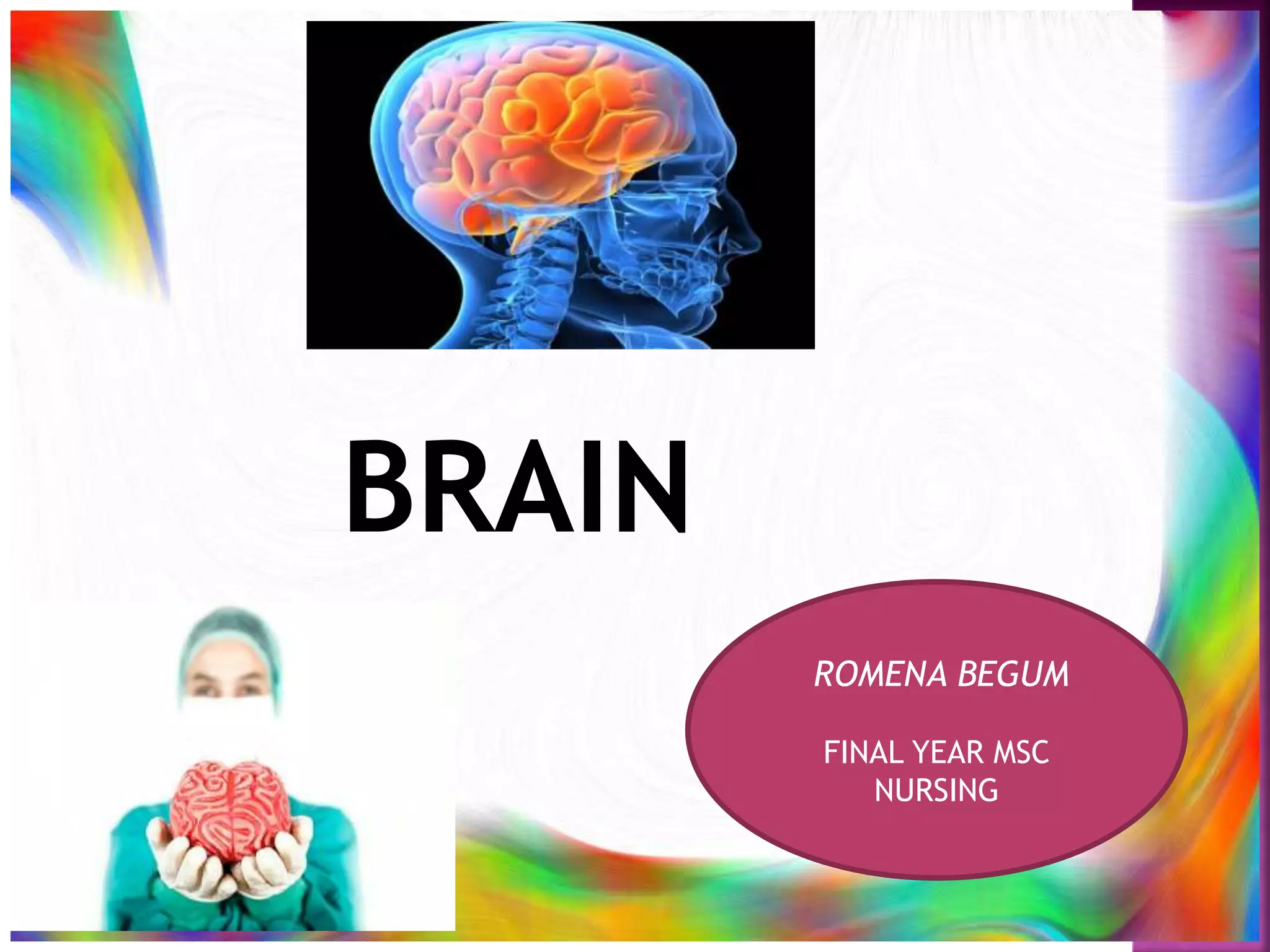
The human brain is the main organ of the
human nervous system. It is located in
the head, protected by the skull.
The cerebral hemispheres (the cerebrum)
form the largest part of the human brain
and are situated above other brain
structures.
Structure of the Brain
The brain constitutes about one-fiftieth of the
body weight.
•Weight of the brain is 1300 to1400 grams.
Membranes covering of the Brain:
The brain is surround by the meninges which
protect the delicate nerve structure.
Meninges:
The meninges consist of
 Dura mater
Arachnoid mater
 Pia mater
The brain is divided into sections.
 The cerebrum
 The diencephalon
 The brainstem
The cerebellum
CEREBRUM
Cerebral cortex Cerebral medulla
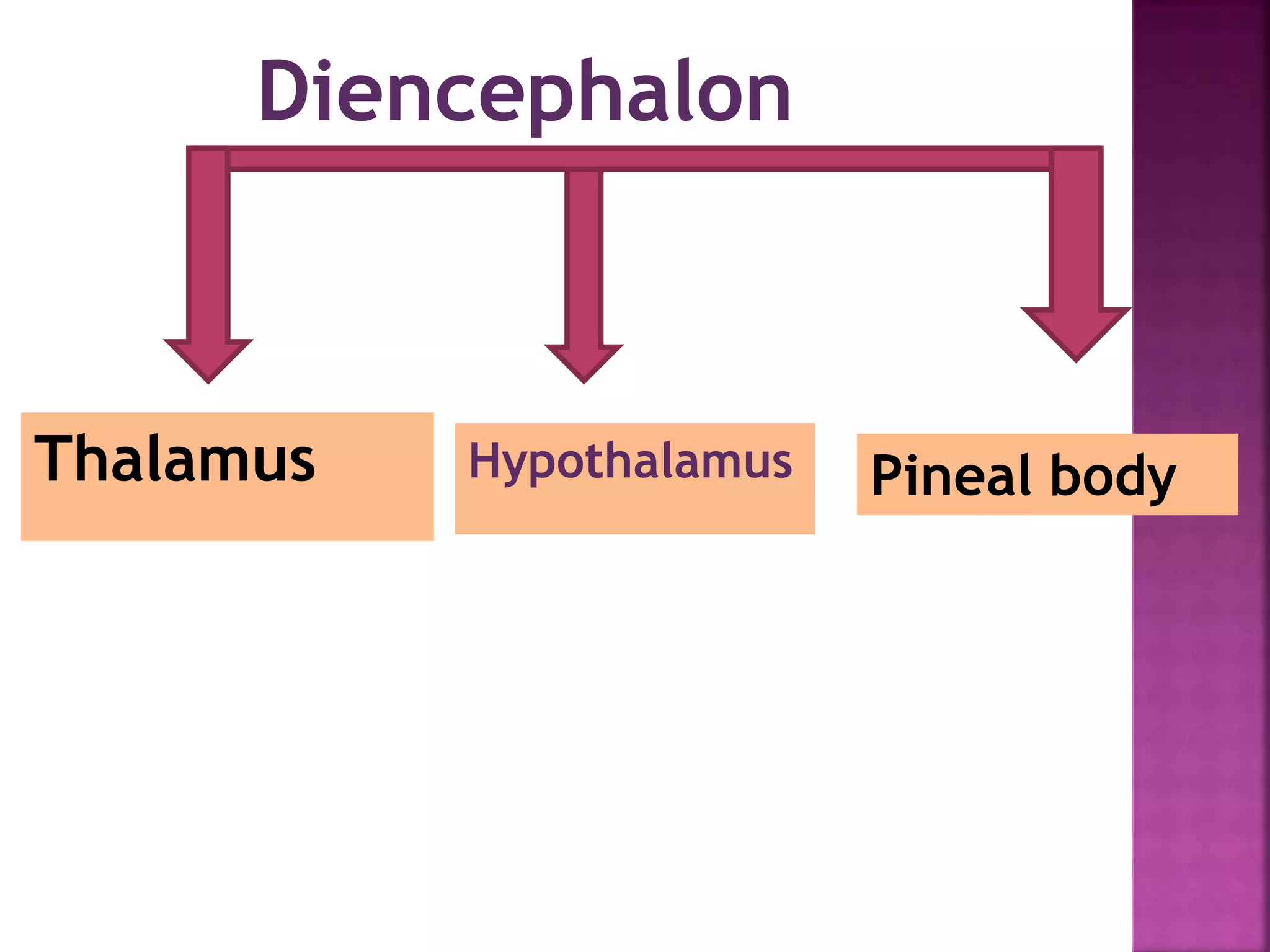
Diencephalon
Thalamus Hypothalamus Pineal body
Brainstem
pons Medulla
oblongata
Mid brain
The cerebrum is the largest part of the brain.
Function :
 It is responsible for memory
intelligence ,thinking ,speaking,reading,writing ,emotional
response.
Perception of pain,temperature,touch,sight,hearing,
taste and smell.
It stimulates and controls the skeletal muscle contraction.
Cerebrum
Diencephalon
The diencephalon is inside the
cerebrum above the brain stem.
Function:
 Its tasks include sensory function,
food intake control, and the body's sleep
cycle.
Thalamus :
Thalamus regulates the action for
sensation and movement.
Hypothalamus :
Control of ;
Body temperature
Hunger
Thirst
Emotional reaction; pleasure,fear.
The autonomic nervous system.
Basal ganglia:
Coordinate the main voluntary muscle
movement
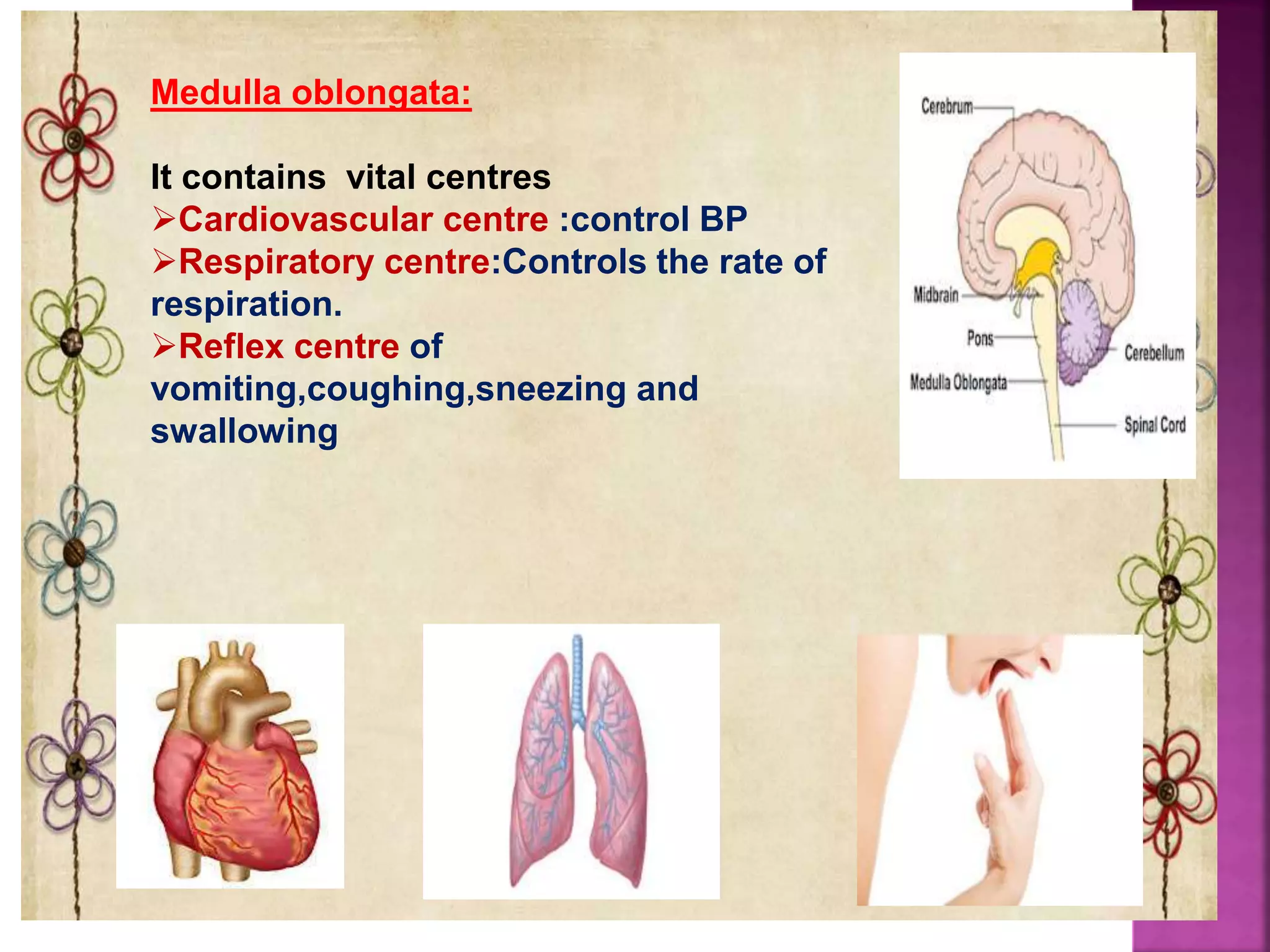
Medulla oblongata:
It contains vital centres
Cardiovascular centre :control BP
Respiratory centre:Controls the rate of
respiration.
Reflex centre of
vomiting,coughing,sneezing and
swallowing
Mid brain :
It contains centre for the control of
balance and movement of the eyes.
Pons:
Pons is situated in front of the
cerebellum,below the midbrain and
above the medulla.
it consist of mainly nerve fibres.
.it control certain respiratory function
The brain stem
Cerebellum
Function:
It regulates posture and
postural activities.
Muscular coordination
Maintenance of balance.
Control of voluntary movements.
The ventricularsystem is composed of
2 lateral ventricles
i.e Right and left ventricle
Thirdventricle,
Fourth ventricle
The ventricles of the Brain
Lobes of the brain:
Lobes of the brain:
• The frontal lobes are responsible for
problem solving and judgment and motor
function.
• The parietal lobes manage sensation,
handwriting, and body position.
• The temporal lobes are involved with
memory and hearing.
• The occipital lobes contain the brain's
visual processing system.
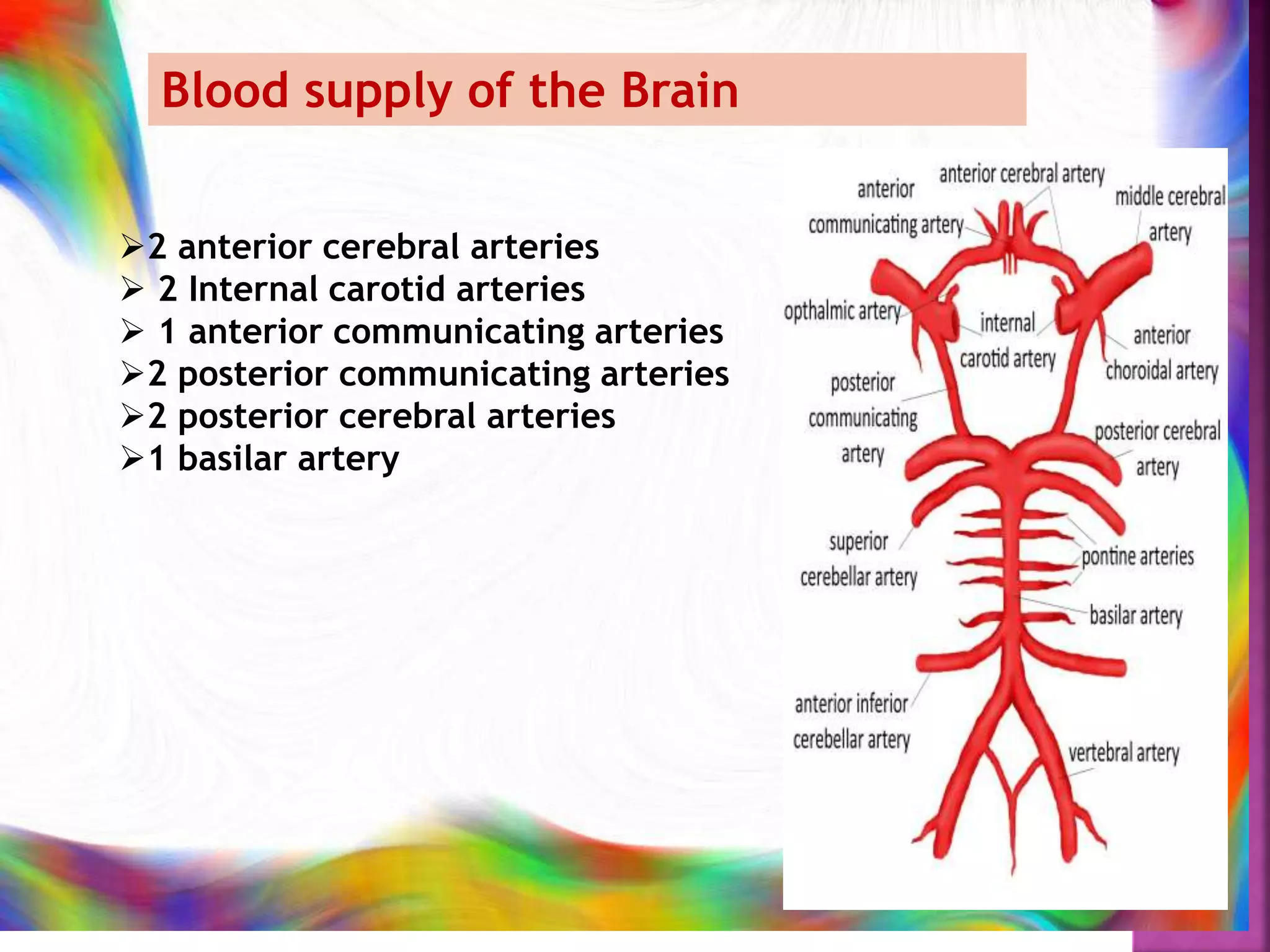
Blood supply of the Brain
2 anterior cerebral arteries
 2 Internal carotid arteries
 1 anterior communicating arteries
2 posterior communicating arteries
2 posterior cerebral arteries
1 basilar artery
Bibliography
1. Nirmal kaur. Poonam Monga. Anatomy
and Physiology, Third Edition, Lotus
Publisher, Pp- 147 to153
2. S.S. Randhawa, Biological Science
Multicolour edition, P.V. Publisher Pp-
621 to 630
3. Indu Khurana. Arushi, Anatomy and Physiology,
CBS Publisher, Pp-441to 444.
Bibliography
4. Ross and wilson .anatomy and physiology , 11th
edition, Elsevier publication; page no -148-154.
5. https://mayfieldclinic.com/pe-anatbrain.htm
6. https://www.britannica.com/science/brain
Brain

Brain

  • 1.
  • 2.
    Introduction The human brainis the main organ of the human nervous system. It is located in the head, protected by the skull. The cerebral hemispheres (the cerebrum) form the largest part of the human brain and are situated above other brain structures.
  • 3.
    Structure of theBrain The brain constitutes about one-fiftieth of the body weight. •Weight of the brain is 1300 to1400 grams. Membranes covering of the Brain: The brain is surround by the meninges which protect the delicate nerve structure.
  • 4.
    Meninges: The meninges consistof  Dura mater Arachnoid mater  Pia mater
  • 5.
    The brain isdivided into sections.  The cerebrum  The diencephalon  The brainstem The cerebellum
  • 6.
  • 7.
  • 8.
  • 9.
    The cerebrum isthe largest part of the brain. Function :  It is responsible for memory intelligence ,thinking ,speaking,reading,writing ,emotional response. Perception of pain,temperature,touch,sight,hearing, taste and smell. It stimulates and controls the skeletal muscle contraction. Cerebrum
  • 10.
    Diencephalon The diencephalon isinside the cerebrum above the brain stem. Function:  Its tasks include sensory function, food intake control, and the body's sleep cycle.
  • 11.
    Thalamus : Thalamus regulatesthe action for sensation and movement. Hypothalamus : Control of ; Body temperature Hunger Thirst Emotional reaction; pleasure,fear. The autonomic nervous system. Basal ganglia: Coordinate the main voluntary muscle movement
  • 12.
    Medulla oblongata: It containsvital centres Cardiovascular centre :control BP Respiratory centre:Controls the rate of respiration. Reflex centre of vomiting,coughing,sneezing and swallowing
  • 13.
    Mid brain : Itcontains centre for the control of balance and movement of the eyes. Pons: Pons is situated in front of the cerebellum,below the midbrain and above the medulla. it consist of mainly nerve fibres. .it control certain respiratory function The brain stem
  • 14.
    Cerebellum Function: It regulates postureand postural activities. Muscular coordination Maintenance of balance. Control of voluntary movements.
  • 15.
    The ventricularsystem iscomposed of 2 lateral ventricles i.e Right and left ventricle Thirdventricle, Fourth ventricle The ventricles of the Brain
  • 16.
  • 17.
    Lobes of thebrain: • The frontal lobes are responsible for problem solving and judgment and motor function. • The parietal lobes manage sensation, handwriting, and body position. • The temporal lobes are involved with memory and hearing. • The occipital lobes contain the brain's visual processing system.
  • 18.
    Blood supply ofthe Brain 2 anterior cerebral arteries  2 Internal carotid arteries  1 anterior communicating arteries 2 posterior communicating arteries 2 posterior cerebral arteries 1 basilar artery
  • 19.
    Bibliography 1. Nirmal kaur.Poonam Monga. Anatomy and Physiology, Third Edition, Lotus Publisher, Pp- 147 to153 2. S.S. Randhawa, Biological Science Multicolour edition, P.V. Publisher Pp- 621 to 630 3. Indu Khurana. Arushi, Anatomy and Physiology, CBS Publisher, Pp-441to 444.
  • 20.
    Bibliography 4. Ross andwilson .anatomy and physiology , 11th edition, Elsevier publication; page no -148-154. 5. https://mayfieldclinic.com/pe-anatbrain.htm 6. https://www.britannica.com/science/brain