APPLIED
ANATOMY
SEMINAR ON APPLIED ANATOMY
STRUCTURE OF
BRAIN 🧠
OBJECTIVES
 Identify the brain regions.
 Describe the major regions of the brain.
 Examine Specific functions of each lobe and their
interconnections.
 Understanding Brain connectivity.
 Identity and explain special sensation areas in brain.
 Investigate specialized structure.
 Understanding blood supply of brain.
INTRODUCTION
The brain is the most complex organ in the human body. It
controls thoughts, memory, speech, and movement.
Understanding its structure and functions is crucial for
understanding how the body works. The brain, a marvel of
intricate design, serves as a epicenter of human cognition and
function, comprising an elaborate network of neurons, it is
divided into specialized region that orchestrate a symphony of
thoughts, emotions and the bodily processes.
This seminar delves into the remarkable structure of the brain.
Exploring its division like cerebrum, cerebellum, brainstem etc.
STRUCTURE OF BRAIN
 LOCATION
IT IS PLACED WITHIN CRANIAL CAVITY,PASSING
THROUGH THE FORAMEN MAGNUM,IT IS CONTINUE
AS SPINAL CORD.
WEIGHT - The brain is contained in skull & weighs
1300-1400 gm.
made up of about 100 billion neurons, 7 each neuron
is surrounded by about 10 glial cells (neuroglia).
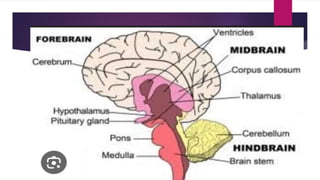
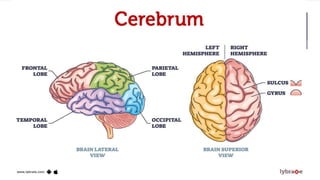
CEREBRUM(FOREBRAIN)
 LARGEST PART OF THE BRAIN.
 CONSISTS OF TWO CEREBRAL HEMISPHERES
CONNECTED TO CORPUS CALLOSUM.
 THE CEREBRAL CORTEX IS DIVIDED INTO
FOLDS OR GYRI THAT ARE SEPERATED BY
FISSURE OR SULCI.
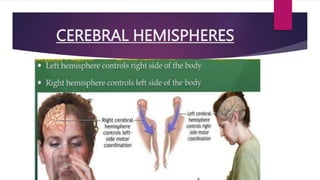
CEREBRAL HEMISPHERES
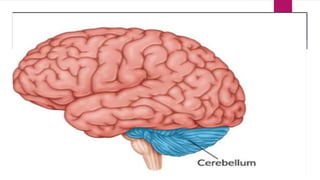
CEREBELLUM
A Part of the brain located at the back Of
head, just above and behind where
spinal cord connects to brain itself. It
controls coordination, balance and
muscle movement.
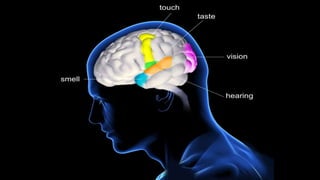
AREAS OF SPECIAL SENSATION
 Motor area
 Promoter area
 Boca's area
 Visual area
 Sensory area
BRAINSTEM
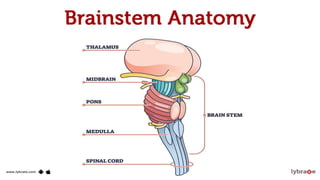
 Connect the brain to the spinal cord.
 It includes midbrain, pons medulla oblongata.
 Regulates basic functions like breathing,
heartbeat and sleep.
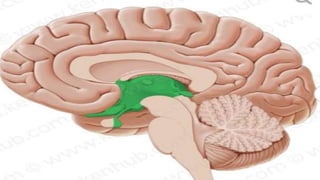
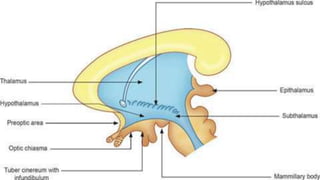
DIENCEPHALON
 Presents in the middle of cerebrum, it forms
the third ventricle of the brain.
 Parts of diencephalon
1. Thalamus
2. Hypothalamus
3. Metathalamus
4. Epithalamus
BRAINSTEM
1. MIDBRAIN
2. PONS
3. MEDULLA OBLONGATA
MIDBRAIN
 Slender region of the brain.
 Connects forebrain and hindbrain.
 Responsible for motor movements,auditary
and visual processing.
 Contains tectum, tegmentum,substantia nigra.
PONS
 Vital part of brainstem.
 situated above medulla oblongata, below
midbrain.
 Functions-breathing, transmitting signals
between brain, control facial muscle.
 Pons means bridge, bridge connecting various
regions.
MEDULLA OBLONGATA
 Lowermost part of brainstem .
 connecting spinal cord to rest of brain
 controlling-regulate heartbeat, breathing, B. P,
Swallowing, sneezing, vomiting.
 serves as pathway for nerve Fibers.
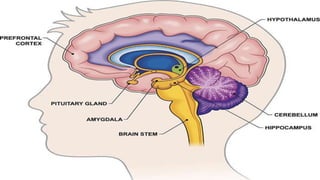
LIMBIC SYSTEM
 Amygdala: Involved in processing emotions, particularly fear and
pleasure. It also plays a role in memory consolidation.
 Hippocampus: Crucial for the formation of new memories and spatial
navigation. It also contributes to emotional regulation.
 Hypothalamus: Regulates various bodily functions, including hunger,
thirst, body temperature, and the sleep-wake cycle. It also links the
nervous system to the endocrine system via the pituitary gland.
 Thalamus: Acts as a relay station for sensory information, helping to direct
it to the appropriate areas of the brain for processing.
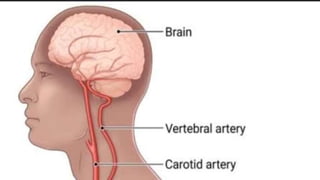
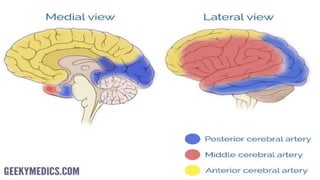
BLOOD SUPPLY OF BRAIN
INTERNAL CAROTID ARTERY
VERTEBRAL ARTERY
INTERNAL CAROTID ARTERY
After piercing the dura mater, internal carotid
artery gives of three branches, These are-
-ophthalmic artery
- Anterior cerebral artery
- middle cerebral artery
VERTEBRAL ARTERY
- originated from the First part of subclavian artery.
- It passes ventral to the pons and ends at its upper boarder
dividing into right and left Posterior cerebral artery.
BRANCHES
- Superior cerebellar artery
- Pontine artery
- Labyrinthine artery –
- Anterior inferior cerebellar artery
SUMMARY
 The brain’s structure comprises the cerebrum,
cerebellum, and brainstem. The cerebrum controls
voluntary actions and cognitive functions. The
cerebellum coordinates movement and balance. The
brainstem regulates vital functions like breathing
and heart rate. Neurons, the brain’s building blocks,
transmit signals through networks, enabling
communication and processing of information
throughout the brain.
REFERENCE
TEXBOOK OF APPLIED ANATOMY AND
PHYSIOLOGY FOR B.SC NURSING
STUDENTS – BY VISION HEALTH
SCIENCE PUBLICATION.
Textbook of Anatomy and Physiology for
Nurses” by Seema Rekha Devi.

Structure of brain..basic information anatomy

  • 1.
  • 2.
    SEMINAR ON APPLIEDANATOMY STRUCTURE OF BRAIN 🧠
  • 4.
    OBJECTIVES  Identify thebrain regions.  Describe the major regions of the brain.  Examine Specific functions of each lobe and their interconnections.  Understanding Brain connectivity.  Identity and explain special sensation areas in brain.  Investigate specialized structure.  Understanding blood supply of brain.
  • 5.
    INTRODUCTION The brain isthe most complex organ in the human body. It controls thoughts, memory, speech, and movement. Understanding its structure and functions is crucial for understanding how the body works. The brain, a marvel of intricate design, serves as a epicenter of human cognition and function, comprising an elaborate network of neurons, it is divided into specialized region that orchestrate a symphony of thoughts, emotions and the bodily processes. This seminar delves into the remarkable structure of the brain. Exploring its division like cerebrum, cerebellum, brainstem etc.
  • 6.
    STRUCTURE OF BRAIN LOCATION IT IS PLACED WITHIN CRANIAL CAVITY,PASSING THROUGH THE FORAMEN MAGNUM,IT IS CONTINUE AS SPINAL CORD. WEIGHT - The brain is contained in skull & weighs 1300-1400 gm. made up of about 100 billion neurons, 7 each neuron is surrounded by about 10 glial cells (neuroglia).
  • 7.
    CEREBRUM(FOREBRAIN)  LARGEST PARTOF THE BRAIN.  CONSISTS OF TWO CEREBRAL HEMISPHERES CONNECTED TO CORPUS CALLOSUM.  THE CEREBRAL CORTEX IS DIVIDED INTO FOLDS OR GYRI THAT ARE SEPERATED BY FISSURE OR SULCI.
  • 9.
  • 11.
    CEREBELLUM A Part ofthe brain located at the back Of head, just above and behind where spinal cord connects to brain itself. It controls coordination, balance and muscle movement.
  • 12.
    AREAS OF SPECIALSENSATION  Motor area  Promoter area  Boca's area  Visual area  Sensory area
  • 14.
    BRAINSTEM  Connect thebrain to the spinal cord.  It includes midbrain, pons medulla oblongata.  Regulates basic functions like breathing, heartbeat and sleep.
  • 16.
    DIENCEPHALON  Presents inthe middle of cerebrum, it forms the third ventricle of the brain.  Parts of diencephalon 1. Thalamus 2. Hypothalamus 3. Metathalamus 4. Epithalamus
  • 19.
  • 20.
    MIDBRAIN  Slender regionof the brain.  Connects forebrain and hindbrain.  Responsible for motor movements,auditary and visual processing.  Contains tectum, tegmentum,substantia nigra.
  • 21.
    PONS  Vital partof brainstem.  situated above medulla oblongata, below midbrain.  Functions-breathing, transmitting signals between brain, control facial muscle.  Pons means bridge, bridge connecting various regions.
  • 22.
    MEDULLA OBLONGATA  Lowermostpart of brainstem .  connecting spinal cord to rest of brain  controlling-regulate heartbeat, breathing, B. P, Swallowing, sneezing, vomiting.  serves as pathway for nerve Fibers.
  • 24.
    LIMBIC SYSTEM  Amygdala:Involved in processing emotions, particularly fear and pleasure. It also plays a role in memory consolidation.  Hippocampus: Crucial for the formation of new memories and spatial navigation. It also contributes to emotional regulation.  Hypothalamus: Regulates various bodily functions, including hunger, thirst, body temperature, and the sleep-wake cycle. It also links the nervous system to the endocrine system via the pituitary gland.  Thalamus: Acts as a relay station for sensory information, helping to direct it to the appropriate areas of the brain for processing.
  • 25.
    BLOOD SUPPLY OFBRAIN INTERNAL CAROTID ARTERY VERTEBRAL ARTERY
  • 27.
    INTERNAL CAROTID ARTERY Afterpiercing the dura mater, internal carotid artery gives of three branches, These are- -ophthalmic artery - Anterior cerebral artery - middle cerebral artery
  • 29.
    VERTEBRAL ARTERY - originatedfrom the First part of subclavian artery. - It passes ventral to the pons and ends at its upper boarder dividing into right and left Posterior cerebral artery. BRANCHES - Superior cerebellar artery - Pontine artery - Labyrinthine artery – - Anterior inferior cerebellar artery
  • 30.
    SUMMARY  The brain’sstructure comprises the cerebrum, cerebellum, and brainstem. The cerebrum controls voluntary actions and cognitive functions. The cerebellum coordinates movement and balance. The brainstem regulates vital functions like breathing and heart rate. Neurons, the brain’s building blocks, transmit signals through networks, enabling communication and processing of information throughout the brain.
  • 31.
    REFERENCE TEXBOOK OF APPLIEDANATOMY AND PHYSIOLOGY FOR B.SC NURSING STUDENTS – BY VISION HEALTH SCIENCE PUBLICATION. Textbook of Anatomy and Physiology for Nurses” by Seema Rekha Devi.