SAVEETHA UNIVERSITY
                CHENNAI:602105
DEPARTMENT OF ELECTRONICS AND
   COMMUNICATION ENGINEERING
DONE BY,
POOJA SHUKLA
PRIYANKA RANJAN
SONAM TIWARI
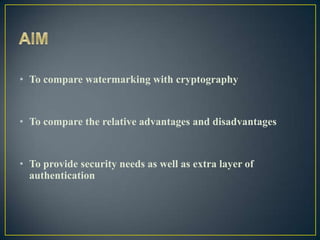
• To compare watermarking with cryptography


• To compare the relative advantages and disadvantages


• To provide security needs as well as extra layer of
  authentication
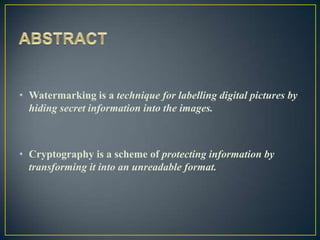
• Watermarking is a technique for labelling digital pictures by
  hiding secret information into the images.


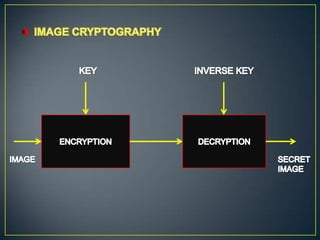
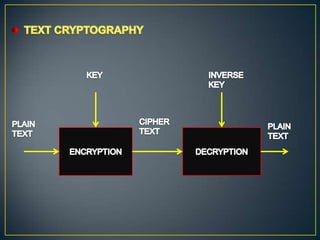
• Cryptography is a scheme of protecting information by
  transforming it into an unreadable format.
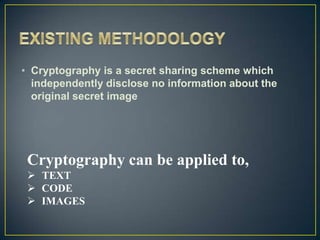
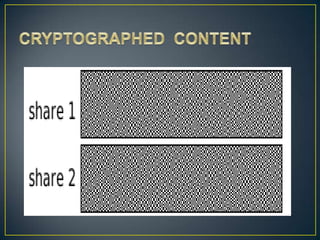
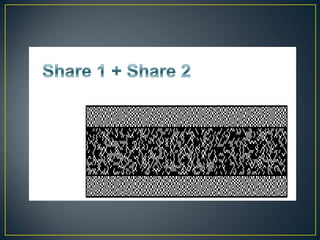
• Cryptography is a secret sharing scheme which
  independently disclose no information about the
  original secret image


 Cryptography can be applied to,
  TEXT
  CODE
  IMAGES
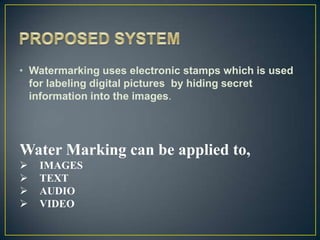
• Watermarking uses electronic stamps which is used
  for labeling digital pictures by hiding secret
  information into the images.


Water Marking can be applied to,
   IMAGES
   TEXT
   AUDIO
   VIDEO
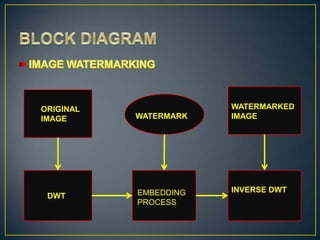
ORIGINAL               WATERMARKED
IMAGE      WATERMARK   IMAGE


           EMBEDDING   INVERSE DWT
 DWT
           PROCESS
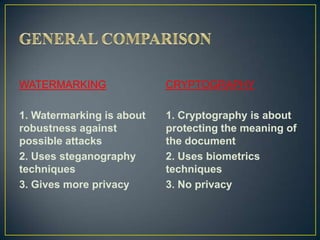
WATERMARKING               CRYPTOGRAPHY

1. Watermarking is about   1. Cryptography is about
robustness against         protecting the meaning of
possible attacks           the document
2. Uses steganography      2. Uses biometrics
techniques                 techniques
3. Gives more privacy      3. No privacy
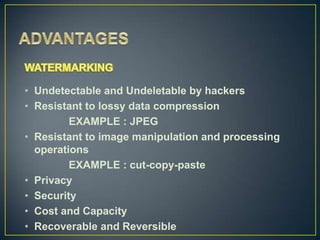
• Undetectable and Undeletable by hackers
• Resistant to lossy data compression
         EXAMPLE : JPEG
• Resistant to image manipulation and processing
  operations
         EXAMPLE : cut-copy-paste
• Privacy
• Security
• Cost and Capacity
• Recoverable and Reversible
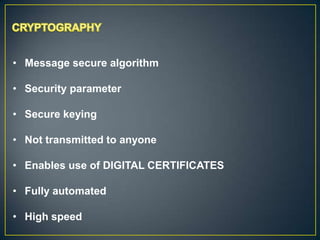
• Message secure algorithm

• Security parameter

• Secure keying

• Not transmitted to anyone

• Enables use of DIGITAL CERTIFICATES

• Fully automated

• High speed
•   Copyright protection
•   Prevention of unauthorized copying
•   Authentication
•   Media Bridging
•   Broadcast Monitoring
•   Fingerprinting
•   Secret Communication
•   Determination of ownership
• Secrecy in transmission and storage

• Integrity in transmission and storage

• Authentication of identity

• Credentialing system

• System using changing key

• Hardware support
 Perceptually Invisible

 Robustness

 Embedding Effectiveness

 Data Payload

 Blind and Informed Detection

 High bit rate
 Image resistance

 Message authentication codes

 Accessibility

 Cryptokey security

 Protection

 Exportable and Removable

 Unique owner
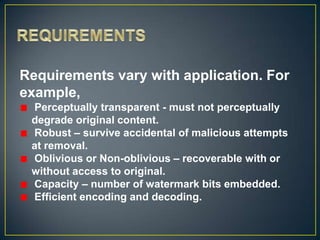
Requirements vary with application. For
example,
 Perceptually transparent - must not perceptually
 degrade original content.
 Robust – survive accidental of malicious attempts
 at removal.
 Oblivious or Non-oblivious – recoverable with or
 without access to original.
 Capacity – number of watermark bits embedded.
 Efficient encoding and decoding.
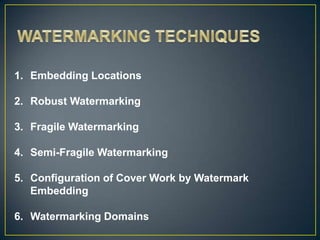
1. Embedding Locations

2. Robust Watermarking

3. Fragile Watermarking

4. Semi-Fragile Watermarking

5. Configuration of Cover Work by Watermark
   Embedding

6. Watermarking Domains
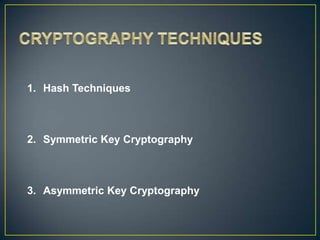
1. Hash Techniques


2. Symmetric Key Cryptography


3. Asymmetric Key Cryptography
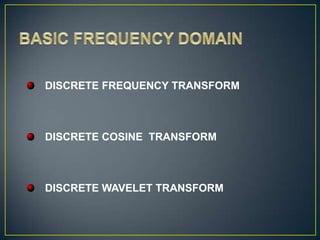
DISCRETE FREQUENCY TRANSFORM


DISCRETE COSINE TRANSFORM


DISCRETE WAVELET TRANSFORM
•   PSNR
•   SNR
•   Transformation Method
•   Image Format
•   Quality Factor
•   Kemel size
•   Security Parameter
•   Embedding Parameter
•   Detection Parameter
 Detecting and decoding the hidden data within a given
  medium.
 Even if secret content is not revealed, modifying the
  cover medium changes the medium’s statistical
  properties.
 Distributed Dictionary Attack


 It deals with possible attacks and protects the
  content.
 Once you try to hack the secret the whole content
  gets destroy.
The most important use of
 CRYPTOGRAPHY techniques will probably
 lie in the field of digital watermarking.


It may become limited under laws -
 governments claimed that criminals use
 CRYPTOGRAPHY AND WATERMARKING to
 communicate.
• Independent watermarking classification by
  Dittmann, J., Mukherjee, A., & Steinebach, M. (2000,
  March 27 - 29).


• Applied cryptography by Wiley and Sons, 1996.
• Hidden Digital Watermarks in Images by Chiou-Ting
  Hsu and Ja-Ling Wu, Senior Member, IEEE


• A Feature-Based Robust Digital Image Watermarking
  Scheme by Chih-Wei Tang and Hsueh-Ming Hang,
  Fellow, IEEE


• Comparison Of Visual Cryptography Schemes by M.
  Amarnath Reddy, IJEST
Ppt nc
Ppt nc

Ppt nc

  • 1.
    SAVEETHA UNIVERSITY CHENNAI:602105 DEPARTMENT OF ELECTRONICS AND COMMUNICATION ENGINEERING
  • 2.
    DONE BY, POOJA SHUKLA PRIYANKARANJAN SONAM TIWARI
  • 3.
    • To comparewatermarking with cryptography • To compare the relative advantages and disadvantages • To provide security needs as well as extra layer of authentication
  • 4.
    • Watermarking isa technique for labelling digital pictures by hiding secret information into the images. • Cryptography is a scheme of protecting information by transforming it into an unreadable format.
  • 5.
    • Cryptography isa secret sharing scheme which independently disclose no information about the original secret image Cryptography can be applied to,  TEXT  CODE  IMAGES
  • 6.
    • Watermarking useselectronic stamps which is used for labeling digital pictures by hiding secret information into the images. Water Marking can be applied to,  IMAGES  TEXT  AUDIO  VIDEO
  • 7.
    ORIGINAL WATERMARKED IMAGE WATERMARK IMAGE EMBEDDING INVERSE DWT DWT PROCESS
  • 11.
    WATERMARKING CRYPTOGRAPHY 1. Watermarking is about 1. Cryptography is about robustness against protecting the meaning of possible attacks the document 2. Uses steganography 2. Uses biometrics techniques techniques 3. Gives more privacy 3. No privacy
  • 12.
    • Undetectable andUndeletable by hackers • Resistant to lossy data compression EXAMPLE : JPEG • Resistant to image manipulation and processing operations EXAMPLE : cut-copy-paste • Privacy • Security • Cost and Capacity • Recoverable and Reversible
  • 13.
    • Message securealgorithm • Security parameter • Secure keying • Not transmitted to anyone • Enables use of DIGITAL CERTIFICATES • Fully automated • High speed
  • 14.
    Copyright protection • Prevention of unauthorized copying • Authentication • Media Bridging • Broadcast Monitoring • Fingerprinting • Secret Communication • Determination of ownership
  • 15.
    • Secrecy intransmission and storage • Integrity in transmission and storage • Authentication of identity • Credentialing system • System using changing key • Hardware support
  • 16.
     Perceptually Invisible Robustness  Embedding Effectiveness  Data Payload  Blind and Informed Detection  High bit rate
  • 17.
     Image resistance Message authentication codes  Accessibility  Cryptokey security  Protection  Exportable and Removable  Unique owner
  • 18.
    Requirements vary withapplication. For example, Perceptually transparent - must not perceptually degrade original content. Robust – survive accidental of malicious attempts at removal. Oblivious or Non-oblivious – recoverable with or without access to original. Capacity – number of watermark bits embedded. Efficient encoding and decoding.
  • 19.
    1. Embedding Locations 2.Robust Watermarking 3. Fragile Watermarking 4. Semi-Fragile Watermarking 5. Configuration of Cover Work by Watermark Embedding 6. Watermarking Domains
  • 20.
    1. Hash Techniques 2.Symmetric Key Cryptography 3. Asymmetric Key Cryptography
  • 21.
    DISCRETE FREQUENCY TRANSFORM DISCRETECOSINE TRANSFORM DISCRETE WAVELET TRANSFORM
  • 22.
    PSNR • SNR • Transformation Method • Image Format • Quality Factor • Kemel size • Security Parameter • Embedding Parameter • Detection Parameter
  • 27.
     Detecting anddecoding the hidden data within a given medium.  Even if secret content is not revealed, modifying the cover medium changes the medium’s statistical properties.  Distributed Dictionary Attack  It deals with possible attacks and protects the content.  Once you try to hack the secret the whole content gets destroy.
  • 28.
    The most importantuse of CRYPTOGRAPHY techniques will probably lie in the field of digital watermarking. It may become limited under laws - governments claimed that criminals use CRYPTOGRAPHY AND WATERMARKING to communicate.
  • 29.
    • Independent watermarkingclassification by Dittmann, J., Mukherjee, A., & Steinebach, M. (2000, March 27 - 29). • Applied cryptography by Wiley and Sons, 1996.
  • 30.
    • Hidden DigitalWatermarks in Images by Chiou-Ting Hsu and Ja-Ling Wu, Senior Member, IEEE • A Feature-Based Robust Digital Image Watermarking Scheme by Chih-Wei Tang and Hsueh-Ming Hang, Fellow, IEEE • Comparison Of Visual Cryptography Schemes by M. Amarnath Reddy, IJEST