ONE TIME RESEARCH AND
LONGITUDINAL RESEARCH
BY,
A. POOJA SHUKLA
M. Tech (NANO)
1821310006
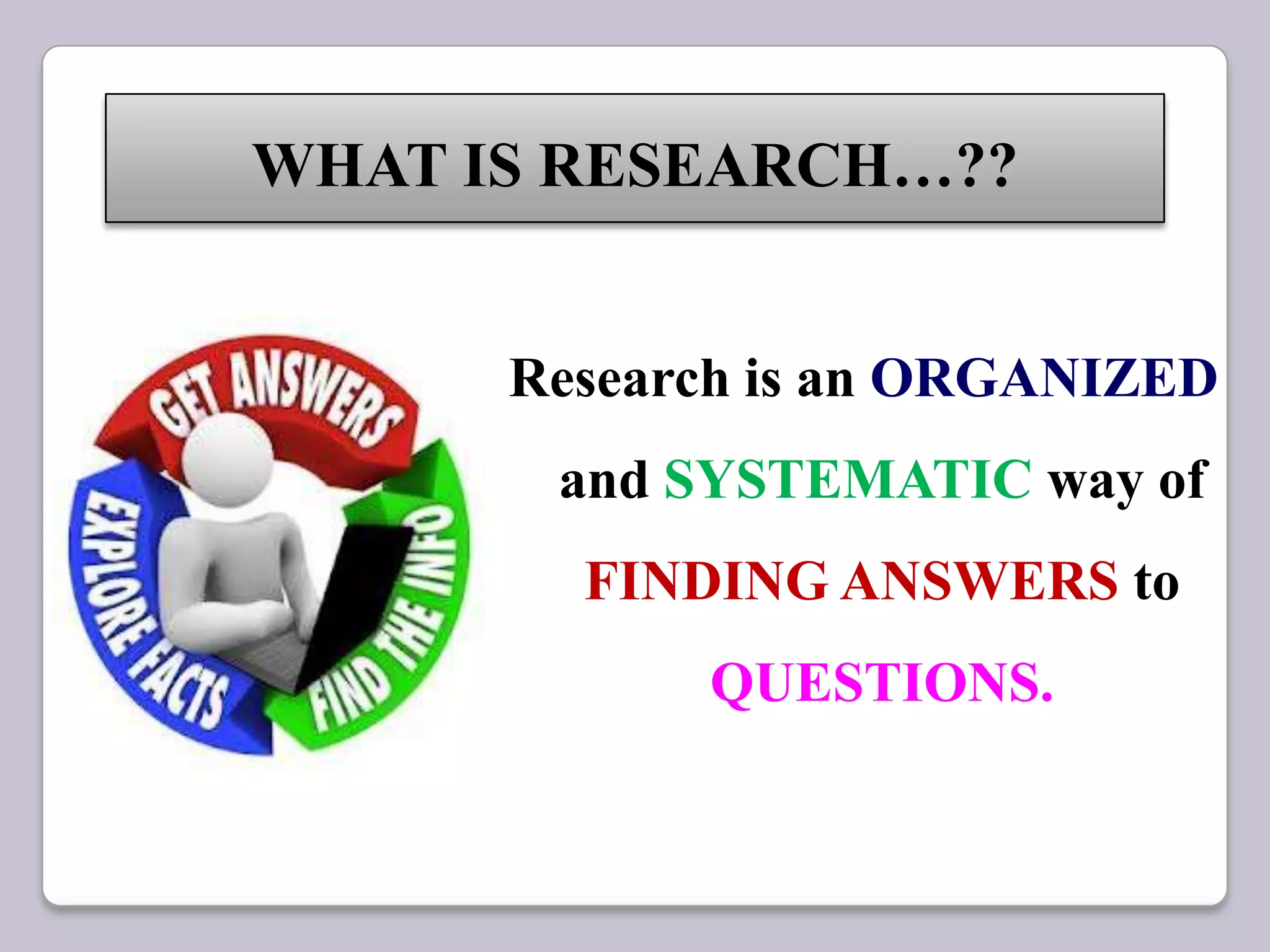
Research is an ORGANIZED
and SYSTEMATIC way of
FINDING ANSWERS to
QUESTIONS.
WHAT IS RESEARCH…??
 Research must be systematic and follow a series of
steps and a rigid standard protocol.
 These rules are broadly similar but may vary
slightly between the different fields of science.
DEFINING RESEARCH
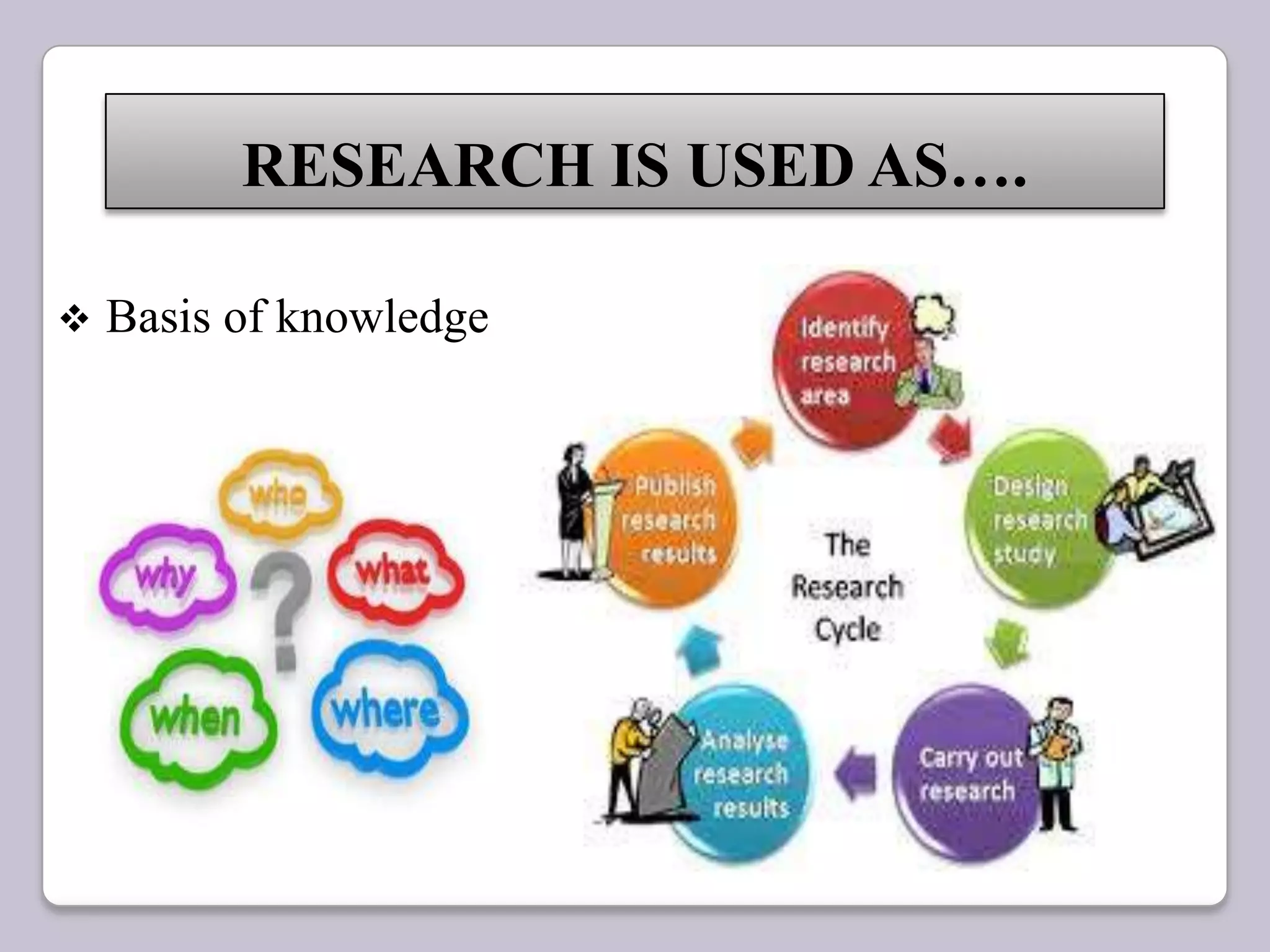
 Basis of knowledge
RESEARCH IS USED AS….
o Purpose of gaining knowledge
o It advanced understanding about social world
o Help in supporting & rejecting existing hypothesis &
theories
BASIC OF RESEARCH
• Descriptive research is undertaken to provide answers to
questions of who, what, where, when, and how – but not
why.
• Two basic classifications:
• Cross-sectional studies
• Longitudinal studies
RESEARCH DESIGN –
DESCRIPTIVE RESEARCH
 One time research is a kind of research that is carried
out over a single time period.
 e.g. Population Researches
ONE TIME RESEARCH
• Cross-sectional studies measure units from a sample
of the population at only one point in time.
• Sample surveys are cross-sectional studies whose samples
are drawn in such a way as to be representative of a
specific population.
• On-line survey research is being used to collect data for
cross-sectional surveys at a faster rate of speed.
CROSS – SECTIONAL RESEARCH
 Cross-sectional surveys can thus be contrasted with panel
surveys, for which the individual respondents are followed over
time.
 Cross-sectional surveys can be conducted using any mode of data
collection, including telephone interviews, face-to-face
interviews, mailed questionnaires.
CROSS – SECTIONAL RESEARCH
 Takes place at a single point in time
 Does not involve manipulating variables
 Allows researchers to look at numerous things at once (age,
income, gender)
 Often used to look at the prevalence of something in a given
population
DEFINING CHARACTERISTICS
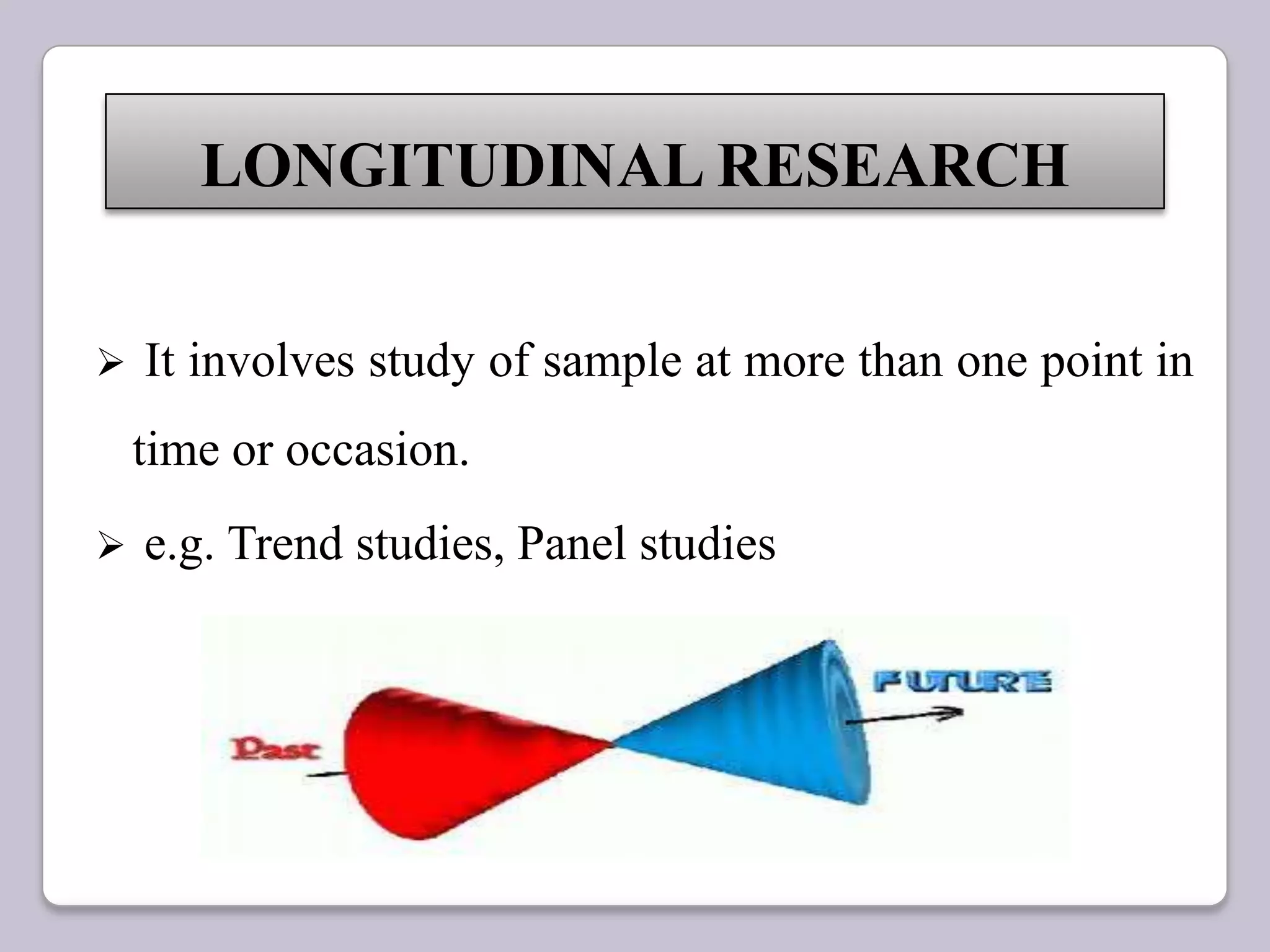
 It involves study of sample at more than one point in
time or occasion.
 e.g. Trend studies, Panel studies
LONGITUDINAL RESEARCH
• Longitudinal studies repeatedly draw sample units of a
population over time.
• One method is to draw different units from the same
sampling frame.
• A second method is to use a “panel” where the same
people are asked to respond periodically.
• On-line survey research firms recruit panel members to
respond to online queries.
LONGITUDINAL RESEARCH
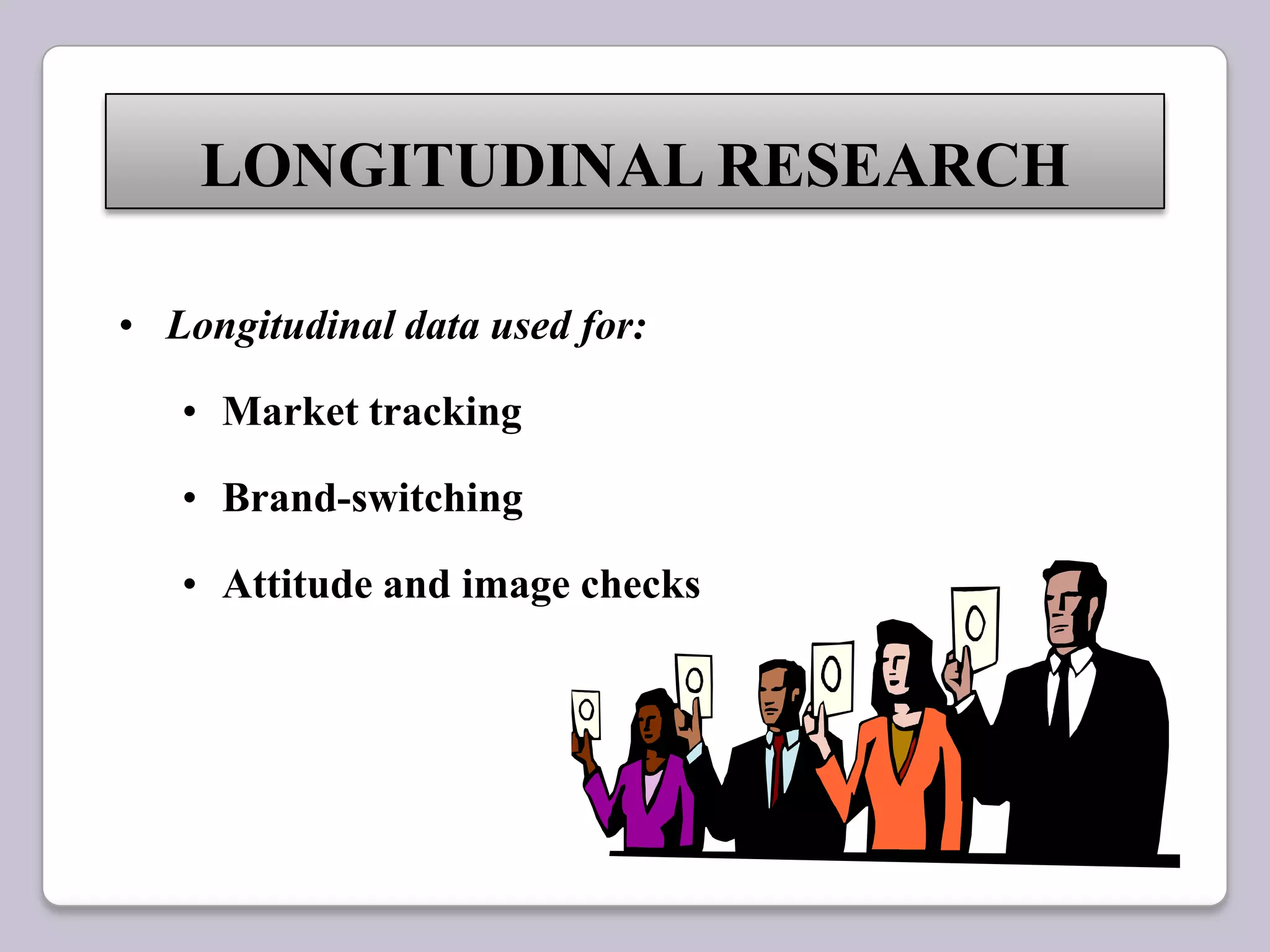
• Longitudinal data used for:
• Market tracking
• Brand-switching
• Attitude and image checks
LONGITUDINAL RESEARCH
 Longitudinal Study - Any social or developmental research
involving collection of data from the same individuals (or
groups) across time.
 Observing change in these individuals gives a better basis
for causal inference than a cross-sectional study, because of
the temporal sequencing involved. In this sense the
longitudinal study is a form of „quasi-experimental design‟.
LONGITUDINAL RESEARCH
TYPES
 COHORT RESEARCH / STUDY
 PANEL RESEARCH / STUDY
COHORT RESEARCH
 Cohort studies, defined as a group experiencing
some event in a selected time period, and studying
them at intervals through time.
PANEL RESEARCH
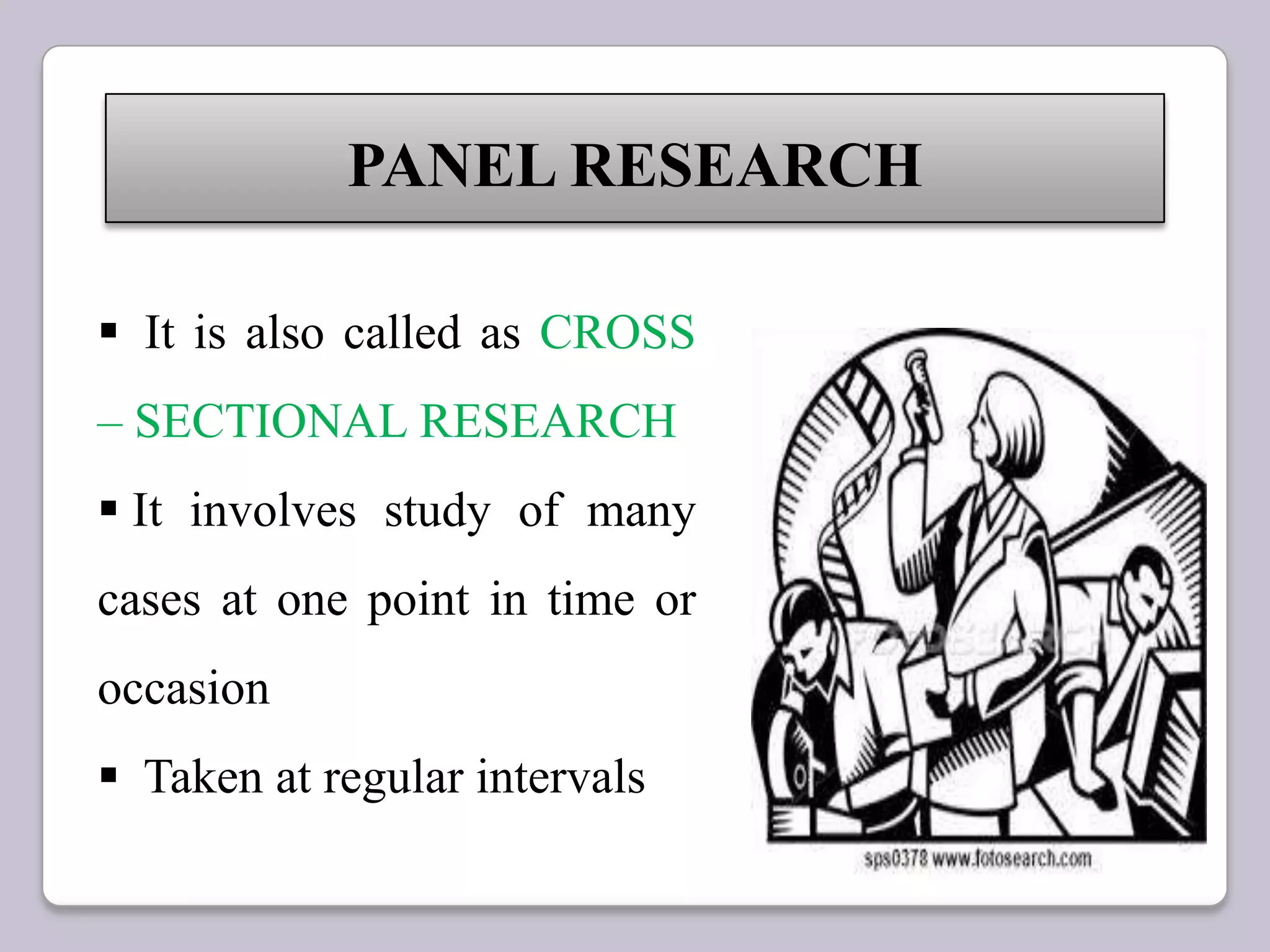
 It is also called as CROSS
– SECTIONAL RESEARCH
 It involves study of many
cases at one point in time or
occasion
 Taken at regular intervals
• Two types of panels:
• Continuous panels ask panel members the same
questions on each panel measurement.
• Discontinuous (Omnibus) panels vary questions
from one time to the next
PANEL RESEARCH
ADVANTAGES
 Ideas and data available
 Lot of observations available
 Lot of results available
 Research is made easy to study and
understand
DISADVANTAGES
 Long term process
 Requires lot of time
 Very expensive
 Not very convenient
THANK YOU…!!

One time research and longitudinal research

  • 1.
    ONE TIME RESEARCHAND LONGITUDINAL RESEARCH BY, A. POOJA SHUKLA M. Tech (NANO) 1821310006
  • 2.
    Research is anORGANIZED and SYSTEMATIC way of FINDING ANSWERS to QUESTIONS. WHAT IS RESEARCH…??
  • 3.
     Research mustbe systematic and follow a series of steps and a rigid standard protocol.  These rules are broadly similar but may vary slightly between the different fields of science. DEFINING RESEARCH
  • 4.
     Basis ofknowledge RESEARCH IS USED AS….
  • 5.
    o Purpose ofgaining knowledge o It advanced understanding about social world o Help in supporting & rejecting existing hypothesis & theories BASIC OF RESEARCH
  • 6.
    • Descriptive researchis undertaken to provide answers to questions of who, what, where, when, and how – but not why. • Two basic classifications: • Cross-sectional studies • Longitudinal studies RESEARCH DESIGN – DESCRIPTIVE RESEARCH
  • 7.
     One timeresearch is a kind of research that is carried out over a single time period.  e.g. Population Researches ONE TIME RESEARCH
  • 8.
    • Cross-sectional studiesmeasure units from a sample of the population at only one point in time. • Sample surveys are cross-sectional studies whose samples are drawn in such a way as to be representative of a specific population. • On-line survey research is being used to collect data for cross-sectional surveys at a faster rate of speed. CROSS – SECTIONAL RESEARCH
  • 9.
     Cross-sectional surveyscan thus be contrasted with panel surveys, for which the individual respondents are followed over time.  Cross-sectional surveys can be conducted using any mode of data collection, including telephone interviews, face-to-face interviews, mailed questionnaires. CROSS – SECTIONAL RESEARCH
  • 10.
     Takes placeat a single point in time  Does not involve manipulating variables  Allows researchers to look at numerous things at once (age, income, gender)  Often used to look at the prevalence of something in a given population DEFINING CHARACTERISTICS
  • 11.
     It involvesstudy of sample at more than one point in time or occasion.  e.g. Trend studies, Panel studies LONGITUDINAL RESEARCH
  • 12.
    • Longitudinal studiesrepeatedly draw sample units of a population over time. • One method is to draw different units from the same sampling frame. • A second method is to use a “panel” where the same people are asked to respond periodically. • On-line survey research firms recruit panel members to respond to online queries. LONGITUDINAL RESEARCH
  • 13.
    • Longitudinal dataused for: • Market tracking • Brand-switching • Attitude and image checks LONGITUDINAL RESEARCH
  • 14.
     Longitudinal Study- Any social or developmental research involving collection of data from the same individuals (or groups) across time.  Observing change in these individuals gives a better basis for causal inference than a cross-sectional study, because of the temporal sequencing involved. In this sense the longitudinal study is a form of „quasi-experimental design‟. LONGITUDINAL RESEARCH
  • 15.
    TYPES  COHORT RESEARCH/ STUDY  PANEL RESEARCH / STUDY
  • 16.
    COHORT RESEARCH  Cohortstudies, defined as a group experiencing some event in a selected time period, and studying them at intervals through time.
  • 17.
    PANEL RESEARCH  Itis also called as CROSS – SECTIONAL RESEARCH  It involves study of many cases at one point in time or occasion  Taken at regular intervals
  • 18.
    • Two typesof panels: • Continuous panels ask panel members the same questions on each panel measurement. • Discontinuous (Omnibus) panels vary questions from one time to the next PANEL RESEARCH
  • 19.
    ADVANTAGES  Ideas anddata available  Lot of observations available  Lot of results available  Research is made easy to study and understand
  • 20.
    DISADVANTAGES  Long termprocess  Requires lot of time  Very expensive  Not very convenient
  • 21.