
All who have influence have power
But all who have power don’t have influence
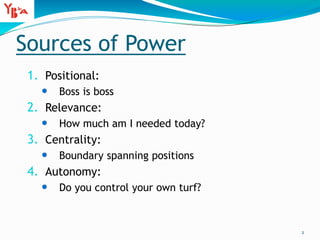
Sources of Power
1. Positional:
 Boss is boss
2. Relevance:
 How much am I needed today?
3. Centrality:
 Boundary spanning positions
4. Autonomy:
 Do you control your own turf?
2
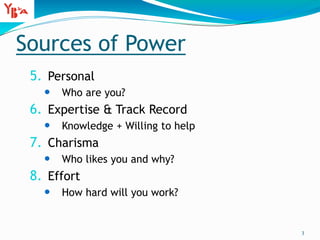
Sources of Power
5. Personal
 Who are you?
6. Expertise & Track Record
 Knowledge + Willing to help
7. Charisma
 Who likes you and why?
8. Effort
 How hard will you work?
3
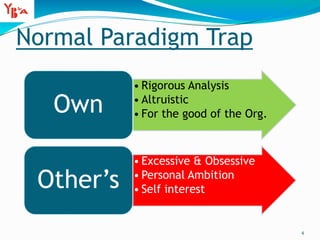
Normal Paradigm Trap
• Rigorous Analysis
• Altruistic
• For the good of the Org.Own
• Excessive & Obsessive
• Personal Ambition
• Self interestOther’s
4
5
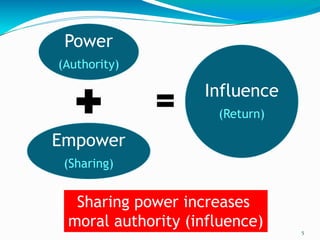
Power
(Authority)
Empower
(Sharing)
Influence
(Return)
Sharing power increases
moral authority (influence)
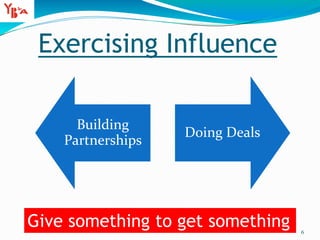
Exercising Influence
Give something to get something 6
Building
Partnerships
Doing Deals
Influence Control
 Influence is
 What people are willing to do for you
 Getting buy-in to your idea /way
 When people see benefit for themselves
 When people feel in control / significant
 When people feel it is their own work
 Value of what you have to offer in people’s eyes
7
To control is to limit
Power dynamics are just that-
 Who depends on whom for what?
 Is this available from somewhere else? At what cost?
 Whose cooperation is essential?
 Useful but not essential?
 What are the stances of parties?
 What are the differences? How rigid?
 What reinforces? Diffuses?
 What are the common goals?
 What is the dynamics of the culture?
8
Dynamic
What the leader must develop to create
Organizational Excellence
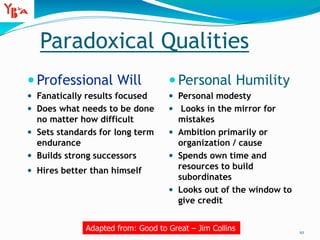
Paradoxical Qualities
 Professional Will
 Fanatically results focused
 Does what needs to be done
no matter how difficult
 Sets standards for long term
endurance
 Builds strong successors
 Hires better than himself
 Personal Humility
 Personal modesty
 Looks in the mirror for
mistakes
 Ambition primarily or
organization / cause
 Spends own time and
resources to build
subordinates
 Looks out of the window to
give credit
10
Adapted from: Good to Great – Jim Collins
Barriers & Gateways
 My way = right way
 Unwilling to change
 Afraid to risk
 Unwilling to learn
 Ashamed to ask
 ‘Seniority’, ‘Rank’
 Secrecy, closed-ness
 New ways welcome
 Open to change
 Measured risk
 Open to learn
 Questioner
 Confidence in self
11
To remove a barrier is to open a Gateway
4 – Critical steps
 Don’t assume
 Question conventional wisdom
 Try new things/ways
 Be creative. Innovate. Involve others
 Be solution focused
 Lamenting a problem will not solve it
 Embrace change
 Be open to new ways, methods, ideas
12
Organizational culture
1. Uncompromising quality standards
2. Leveraging knowledge and technology
3. Fanatically results driven approach
4. Totally customer oriented systems
5. Speed of response
6. Change friendly environment
13
There’s always a better way
People development
1. Clear strategy to develop talent
2. Customer centered approach
3. Give employees a stake in success
4. Succession planning
5. Unequal compensation
6. Create role models of success
14
Help your people to belong with pride
15
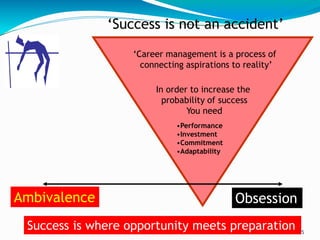
‘Career management is a process of
connecting aspirations to reality’
In order to increase the
probability of success
You need
•Performance
•Investment
•Commitment
•Adaptability
Ambivalence Obsession
‘Success is not an accident’
Success is where opportunity meets preparation
www.yawarbaig.com

Power dynamics

  • 1.
    All who haveinfluence have power But all who have power don’t have influence
  • 2.
    Sources of Power 1.Positional:  Boss is boss 2. Relevance:  How much am I needed today? 3. Centrality:  Boundary spanning positions 4. Autonomy:  Do you control your own turf? 2
  • 3.
    Sources of Power 5.Personal  Who are you? 6. Expertise & Track Record  Knowledge + Willing to help 7. Charisma  Who likes you and why? 8. Effort  How hard will you work? 3
  • 4.
    Normal Paradigm Trap •Rigorous Analysis • Altruistic • For the good of the Org.Own • Excessive & Obsessive • Personal Ambition • Self interestOther’s 4
  • 5.
  • 6.
    Exercising Influence Give somethingto get something 6 Building Partnerships Doing Deals
  • 7.
    Influence Control  Influenceis  What people are willing to do for you  Getting buy-in to your idea /way  When people see benefit for themselves  When people feel in control / significant  When people feel it is their own work  Value of what you have to offer in people’s eyes 7 To control is to limit
  • 8.
    Power dynamics arejust that-  Who depends on whom for what?  Is this available from somewhere else? At what cost?  Whose cooperation is essential?  Useful but not essential?  What are the stances of parties?  What are the differences? How rigid?  What reinforces? Diffuses?  What are the common goals?  What is the dynamics of the culture? 8 Dynamic
  • 9.
    What the leadermust develop to create Organizational Excellence
  • 10.
    Paradoxical Qualities  ProfessionalWill  Fanatically results focused  Does what needs to be done no matter how difficult  Sets standards for long term endurance  Builds strong successors  Hires better than himself  Personal Humility  Personal modesty  Looks in the mirror for mistakes  Ambition primarily or organization / cause  Spends own time and resources to build subordinates  Looks out of the window to give credit 10 Adapted from: Good to Great – Jim Collins
  • 11.
    Barriers & Gateways My way = right way  Unwilling to change  Afraid to risk  Unwilling to learn  Ashamed to ask  ‘Seniority’, ‘Rank’  Secrecy, closed-ness  New ways welcome  Open to change  Measured risk  Open to learn  Questioner  Confidence in self 11 To remove a barrier is to open a Gateway
  • 12.
    4 – Criticalsteps  Don’t assume  Question conventional wisdom  Try new things/ways  Be creative. Innovate. Involve others  Be solution focused  Lamenting a problem will not solve it  Embrace change  Be open to new ways, methods, ideas 12
  • 13.
    Organizational culture 1. Uncompromisingquality standards 2. Leveraging knowledge and technology 3. Fanatically results driven approach 4. Totally customer oriented systems 5. Speed of response 6. Change friendly environment 13 There’s always a better way
  • 14.
    People development 1. Clearstrategy to develop talent 2. Customer centered approach 3. Give employees a stake in success 4. Succession planning 5. Unequal compensation 6. Create role models of success 14 Help your people to belong with pride
  • 15.
    15 ‘Career management isa process of connecting aspirations to reality’ In order to increase the probability of success You need •Performance •Investment •Commitment •Adaptability Ambivalence Obsession ‘Success is not an accident’ Success is where opportunity meets preparation
  • 16.