Setting the agenda 
Taking others with you 
Doing it the right way 
Source: Cacioppe
What products and services should we offer and not offer? 
What markets and types of customer should we service 
and not service? 
How are we going to win? 
Source: Cokins
Creative skills to generate new ideas 
Analytical skills to evaluate which ideas are good ones 
Practical skills to implement the ideas and to persuade 
others of their value 
Wisdom Intelligence Creativity 
Source: Robert Sternberg
Flexible and adaptable 
Committed to making a difference 
Communicates with impact 
Clear service orientation 
Clarity 
Intellectually robust 
Constantly extends business knowledge 
Recognises the need for change, creates new directions 
Strong self regard 
Acts with integrity 
Brings out the best in people
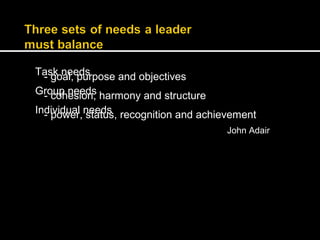
T a-s gko nael,e pdusr p ose and objectives 
G r-o cuoph neesieodns, harmony and structure 
I n d- ipvoidwuearl, nsetaetduss, recognition and achievement 
John Adair
Curiosity 
Creativity 
Commitment
Set direction 
Focus on results 
Influence others 
Develop people 
Source: Michael Pepe
Builds a collaborative environment 
Insists on a culture of personal accountability 
Demands focus on critical issues and processes 
Develops ad implements robust processes 
Source: Malone
Set direction 
Focus on results 
Influence others 
Develop people 
Source: Pepe
How do you learn? 
Do you face reality? 
Do you watch and listen? 
Are you willing to improve? 
Source: Tichy and Bennis
Speak the truth when it needs to be heard 
Encourage debate and different opinions 
Listen well 
Accept failure is a possibility 
Larraine and Segil
Stable and fixable 
Complex with different patterns 
Chaotic with no sure outcomes 
Terrifying – challenging and hopeful 
Source: Robert Terry
Alienated 
Conformist 
Passive 
Exemplary
Inviting 
Interpreting 
Integrating 
Institutionalising
Leaders can: 
Focus their own attention 
Attract the right attention to themselves 
Direct the attention of those that follow them 
Maintain the attention of their customers and clients 
Source: Beck and Davenport
Dealing with uncertainty 
Knowing customers 
Balancing tensions 
Appreciating diversity 
Source: Pepper
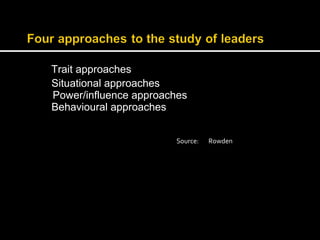
Trait approaches 
Situational approaches 
Power/influence approaches 
Behavioural approaches 
Source: Rowden
Precedence 
Pre-eminence 
Prescription 
Priority 
Source: Joy Klagge
Service-offering based 
Needs-based 
Relationship-based 
Trust-based
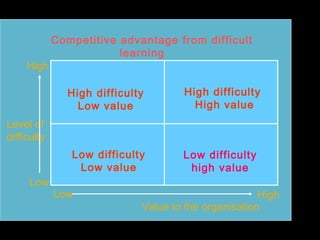
Level of 
difficulty 
Competitive advantage from difficult 
learning 
Low 
High difficulty 
Low value 
Low difficulty 
Low value 
Low 
High 
High difficulty 
High value 
High 
Low difficulty 
high value 
Value to the organisation
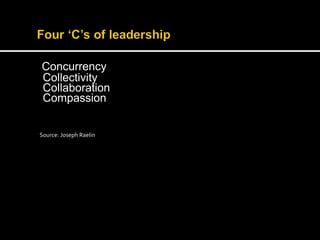
Concurrency 
Collectivity 
Collaboration 
Compassion 
Source: Joseph Raelin
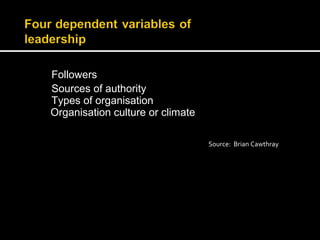
Followers 
Sources of authority 
Types of organisation 
Organisation culture or climate 
Source: Brian Cawthray
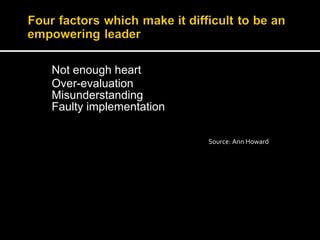
Not enough heart 
Over-evaluation 
Misunderstanding 
Faulty implementation 
Source: Ann Howard
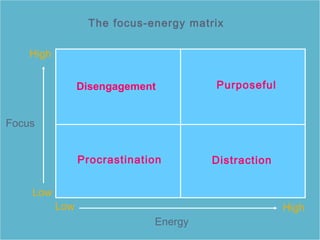
Focus 
The focus-energy matrix 
Low 
Low 
High 
High 
Disengagement Purposeful 
Procrastination Distraction 
Energy
Directive 
Supportive 
Participative 
Achievement oriented 
Source: Brown and Thornborrow
Charisma 
Intellectual stimulation 
Individualised consideration and influence 
Inspirational motivation 
Bass
You are your own best teacher 
Accept responsibility, and blame no-one 
You can learn anything you want to learn 
True understanding comes from reflecting 
on your experience
Individualised consideration 
Intellectual stimulation 
Inspirational motivation 
Idealised influence 
Source: Coad and Barrie
Discover 
Dream 
Design 
Deliver 
Source: Liz Mellish
Communication 
Clear decision rights 
A lock on the back door 
A shared spotlight 
Source: Bennett and Miller
True respect 
An ego in check 
An eye for execution 
Coaching and co-ordination skills 
Source: Bennett and Miller
Traditionalists 
Catalysts 
Visionaries 
Trouble shooters/negotiators 
Source: Stuart Hannabuss
E nvision 
E nable 
E mpower 
E nvisage
Personal insight 
Resourcefulness 
Courage and self belief 
Skilled risk taking 
Foresight 
Source: Jan King
Vision 
Control 
Power 
Narcissism 
Altruism
Seeking understanding and maintaining curiosity 
Using help and showing humility 
Having a sense of perspective and balance to life 
Showing generosity and giving credit 
Winning wars not ‘just’ battles 
Source: Patricia Wallington
Walks the talk 
See strengths 
Approaches others with unconditional positive self regard 
Positively influences conversations and relationships 
Creates an appreciative context 
Source: Malone
Coolness 
Control 
Audacity 
Endurance 
Decisiveness 
Source: Sarros and Santora
Managing self – the reflective mindset 
Managing the organisation – the analytical mindset 
Managing context – the worldly mindset 
Managing relationships – the collaborative mindset 
Managing change – the action mindset 
Source: Gosling and Mintzberg
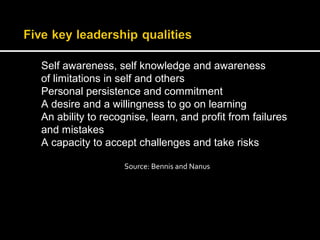
Self awareness, self knowledge and awareness 
of limitations in self and others 
Personal persistence and commitment 
A desire and a willingness to go on learning 
An ability to recognise, learn, and profit from failures 
and mistakes 
A capacity to accept challenges and take risks 
Source: Bennis and Nanus
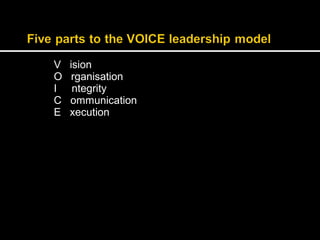
V ision 
O rganisation 
I ntegrity 
C ommunication 
E xecution
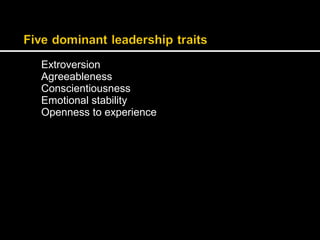
Extroversion 
Agreeableness 
Conscientiousness 
Emotional stability 
Openness to experience
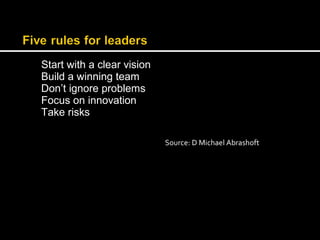
Start with a clear vision 
Build a winning team 
Don’t ignore problems 
Focus on innovation 
Take risks 
Source: D Michael Abrashoft
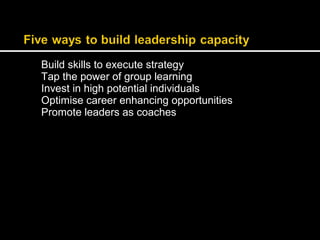
Build skills to execute strategy 
Tap the power of group learning 
Invest in high potential individuals 
Optimise career enhancing opportunities 
Promote leaders as coaches
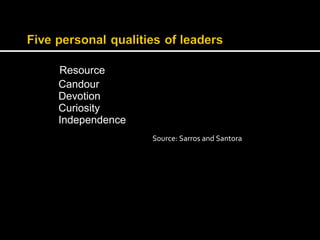
Resource 
Candour 
Devotion 
Curiosity 
Independence 
Source: Sarros and Santora
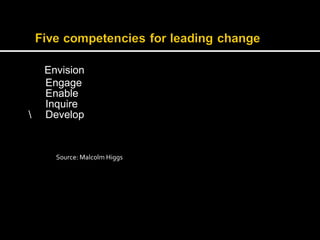
Envision 
Engage 
Enable 
Inquire 
 Develop 
Source: Malcolm Higgs
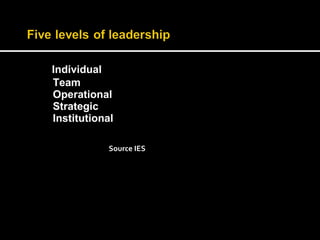
Individual 
Team 
Operational 
Strategic 
Institutional 
Source IES
Empathetic responses 
Mood regulation and control 
Interpersonal skill 
Intrinsic motivation 
Self awareness 
Carson et al
The ability to: 
Manage themselves and be a role model 
Create and lead the vision 
Get things done with less resource 
Work constructively with others 
Manage constituencies effectively 
Get results swiftly 
Eichinger and Lominger
Organisational structure and hierarchy 
Financial results 
The leader’s sense of his/her own job 
Time management 
Corporate culture 
John Hamm

Leadership 1 50

  • 1.
    Setting the agenda Taking others with you Doing it the right way Source: Cacioppe
  • 2.
    What products andservices should we offer and not offer? What markets and types of customer should we service and not service? How are we going to win? Source: Cokins
  • 3.
    Creative skills togenerate new ideas Analytical skills to evaluate which ideas are good ones Practical skills to implement the ideas and to persuade others of their value Wisdom Intelligence Creativity Source: Robert Sternberg
  • 4.
    Flexible and adaptable Committed to making a difference Communicates with impact Clear service orientation Clarity Intellectually robust Constantly extends business knowledge Recognises the need for change, creates new directions Strong self regard Acts with integrity Brings out the best in people
  • 5.
    T a-s gkonael,e pdusr p ose and objectives G r-o cuoph neesieodns, harmony and structure I n d- ipvoidwuearl, nsetaetduss, recognition and achievement John Adair
  • 6.
  • 7.
    Set direction Focuson results Influence others Develop people Source: Michael Pepe
  • 8.
    Builds a collaborativeenvironment Insists on a culture of personal accountability Demands focus on critical issues and processes Develops ad implements robust processes Source: Malone
  • 9.
    Set direction Focuson results Influence others Develop people Source: Pepe
  • 10.
    How do youlearn? Do you face reality? Do you watch and listen? Are you willing to improve? Source: Tichy and Bennis
  • 11.
    Speak the truthwhen it needs to be heard Encourage debate and different opinions Listen well Accept failure is a possibility Larraine and Segil
  • 12.
    Stable and fixable Complex with different patterns Chaotic with no sure outcomes Terrifying – challenging and hopeful Source: Robert Terry
  • 13.
  • 14.
  • 15.
    Leaders can: Focustheir own attention Attract the right attention to themselves Direct the attention of those that follow them Maintain the attention of their customers and clients Source: Beck and Davenport
  • 16.
    Dealing with uncertainty Knowing customers Balancing tensions Appreciating diversity Source: Pepper
  • 17.
    Trait approaches Situationalapproaches Power/influence approaches Behavioural approaches Source: Rowden
  • 18.
    Precedence Pre-eminence Prescription Priority Source: Joy Klagge
  • 19.
    Service-offering based Needs-based Relationship-based Trust-based
  • 20.
    Level of difficulty Competitive advantage from difficult learning Low High difficulty Low value Low difficulty Low value Low High High difficulty High value High Low difficulty high value Value to the organisation
  • 21.
    Concurrency Collectivity Collaboration Compassion Source: Joseph Raelin
  • 22.
    Followers Sources ofauthority Types of organisation Organisation culture or climate Source: Brian Cawthray
  • 23.
    Not enough heart Over-evaluation Misunderstanding Faulty implementation Source: Ann Howard
  • 24.
    Focus The focus-energymatrix Low Low High High Disengagement Purposeful Procrastination Distraction Energy
  • 25.
    Directive Supportive Participative Achievement oriented Source: Brown and Thornborrow
  • 26.
    Charisma Intellectual stimulation Individualised consideration and influence Inspirational motivation Bass
  • 27.
    You are yourown best teacher Accept responsibility, and blame no-one You can learn anything you want to learn True understanding comes from reflecting on your experience
  • 28.
    Individualised consideration Intellectualstimulation Inspirational motivation Idealised influence Source: Coad and Barrie
  • 29.
    Discover Dream Design Deliver Source: Liz Mellish
  • 30.
    Communication Clear decisionrights A lock on the back door A shared spotlight Source: Bennett and Miller
  • 31.
    True respect Anego in check An eye for execution Coaching and co-ordination skills Source: Bennett and Miller
  • 32.
    Traditionalists Catalysts Visionaries Trouble shooters/negotiators Source: Stuart Hannabuss
  • 33.
    E nvision Enable E mpower E nvisage
  • 34.
    Personal insight Resourcefulness Courage and self belief Skilled risk taking Foresight Source: Jan King
  • 35.
    Vision Control Power Narcissism Altruism
  • 36.
    Seeking understanding andmaintaining curiosity Using help and showing humility Having a sense of perspective and balance to life Showing generosity and giving credit Winning wars not ‘just’ battles Source: Patricia Wallington
  • 37.
    Walks the talk See strengths Approaches others with unconditional positive self regard Positively influences conversations and relationships Creates an appreciative context Source: Malone
  • 38.
    Coolness Control Audacity Endurance Decisiveness Source: Sarros and Santora
  • 39.
    Managing self –the reflective mindset Managing the organisation – the analytical mindset Managing context – the worldly mindset Managing relationships – the collaborative mindset Managing change – the action mindset Source: Gosling and Mintzberg
  • 40.
    Self awareness, selfknowledge and awareness of limitations in self and others Personal persistence and commitment A desire and a willingness to go on learning An ability to recognise, learn, and profit from failures and mistakes A capacity to accept challenges and take risks Source: Bennis and Nanus
  • 41.
    V ision Organisation I ntegrity C ommunication E xecution
  • 42.
    Extroversion Agreeableness Conscientiousness Emotional stability Openness to experience
  • 43.
    Start with aclear vision Build a winning team Don’t ignore problems Focus on innovation Take risks Source: D Michael Abrashoft
  • 44.
    Build skills toexecute strategy Tap the power of group learning Invest in high potential individuals Optimise career enhancing opportunities Promote leaders as coaches
  • 45.
    Resource Candour Devotion Curiosity Independence Source: Sarros and Santora
  • 46.
    Envision Engage Enable Inquire Develop Source: Malcolm Higgs
  • 47.
    Individual Team Operational Strategic Institutional Source IES
  • 48.
    Empathetic responses Moodregulation and control Interpersonal skill Intrinsic motivation Self awareness Carson et al
  • 49.
    The ability to: Manage themselves and be a role model Create and lead the vision Get things done with less resource Work constructively with others Manage constituencies effectively Get results swiftly Eichinger and Lominger
  • 50.
    Organisational structure andhierarchy Financial results The leader’s sense of his/her own job Time management Corporate culture John Hamm