POST MENOPAUSAL
BLEEDING
BY DR.HAFSA ASIM
DEFINITION
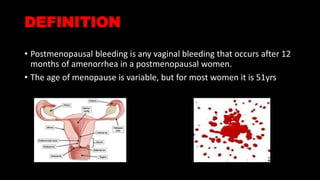
• Postmenopausal bleeding is any vaginal bleeding that occurs after 12
months of amenorrhea in a postmenopausal women.
• The age of menopause is variable, but for most women it is 51yrs
CAUSES
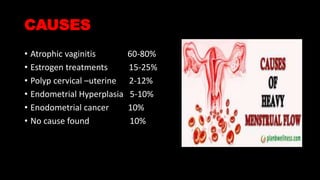
• Atrophic vaginitis 60-80%
• Estrogen treatments 15-25%
• Polyp cervical –uterine 2-12%
• Endometrial Hyperplasia 5-10%
• Enodometrial cancer 10%
• No cause found 10%
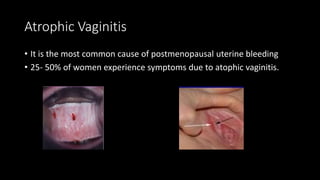
Atrophic Vaginitis
• It is the most common cause of postmenopausal uterine bleeding
• 25- 50% of women experience symptoms due to atophic vaginitis.
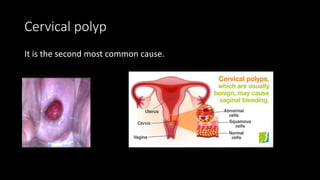
Cervical polyp
It is the second most common cause.
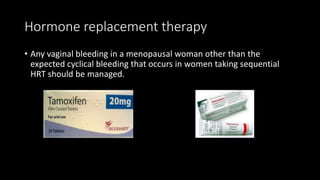
Hormone replacement therapy
• Any vaginal bleeding in a menopausal woman other than the
expected cyclical bleeding that occurs in women taking sequential
HRT should be managed.
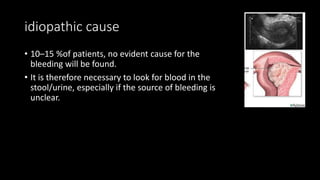
idiopathic cause
• 10–15 %of patients, no evident cause for the
bleeding will be found.
• It is therefore necessary to look for blood in the
stool/urine, especially if the source of bleeding is
unclear.
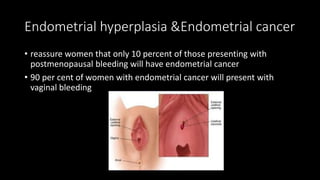
Endometrial hyperplasia &Endometrial cancer
• reassure women that only 10 percent of those presenting with
postmenopausal bleeding will have endometrial cancer
• 90 per cent of women with endometrial cancer will present with
vaginal bleeding
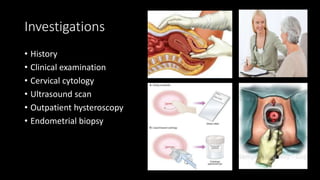
Investigations
• History
• Clinical examination
• Cervical cytology
• Ultrasound scan
• Outpatient hysteroscopy
• Endometrial biopsy
History
• Duration and severity
• No evidence of association with pattern of bleeding and malignancy
eg: one off bleed vs regular bleeding
• Associated symptoms
• Hormonal treatment
• Past medical and surgical history
• Family History of colorectal, endometrial or other cancers associated
with hereditary non-polyposis colorectal cancer Lynch ll syndrome
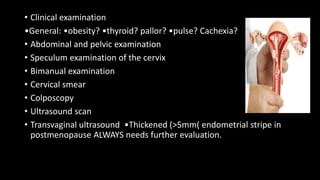
• Clinical examination
•General: •obesity? •thyroid? pallor? •pulse? Cachexia?
• Abdominal and pelvic examination
• Speculum examination of the cervix
• Bimanual examination
• Cervical smear
• Colposcopy
• Ultrasound scan
• Transvaginal ultrasound •Thickened (>5mm( endometrial stripe in
postmenopause ALWAYS needs further evaluation.
Management
• General treatment:
• In some cases the blood loss may be excessive, rapid and possibly life
threatening. Correct general condition(Anti-shock-Hospitalization)
• Rapid restoration of blood volume ,vital parameters.
Treatment
• Treatment depends on what's causing your bleeding.
• Cervical polyps the polyps may need to be removed
• Endometrial atrophy offer oestrogen cream or pessaries
• Endometrial hyperplasia depending on the type of
hyperplasia, no treatment, hormone
medicine (tablets or an intrauterine system, IUS) or a total
hysterectomy (surgery to remove your uterus, cervix and ovaries)
THANK YOU

Post menopausal bleeding

  • 1.
  • 2.
    DEFINITION • Postmenopausal bleedingis any vaginal bleeding that occurs after 12 months of amenorrhea in a postmenopausal women. • The age of menopause is variable, but for most women it is 51yrs
  • 3.
    CAUSES • Atrophic vaginitis60-80% • Estrogen treatments 15-25% • Polyp cervical –uterine 2-12% • Endometrial Hyperplasia 5-10% • Enodometrial cancer 10% • No cause found 10%
  • 4.
    Atrophic Vaginitis • Itis the most common cause of postmenopausal uterine bleeding • 25- 50% of women experience symptoms due to atophic vaginitis.
  • 5.
    Cervical polyp It isthe second most common cause.
  • 6.
    Hormone replacement therapy •Any vaginal bleeding in a menopausal woman other than the expected cyclical bleeding that occurs in women taking sequential HRT should be managed.
  • 7.
    idiopathic cause • 10–15%of patients, no evident cause for the bleeding will be found. • It is therefore necessary to look for blood in the stool/urine, especially if the source of bleeding is unclear.
  • 8.
    Endometrial hyperplasia &Endometrialcancer • reassure women that only 10 percent of those presenting with postmenopausal bleeding will have endometrial cancer • 90 per cent of women with endometrial cancer will present with vaginal bleeding
  • 9.
    Investigations • History • Clinicalexamination • Cervical cytology • Ultrasound scan • Outpatient hysteroscopy • Endometrial biopsy
  • 10.
    History • Duration andseverity • No evidence of association with pattern of bleeding and malignancy eg: one off bleed vs regular bleeding • Associated symptoms • Hormonal treatment • Past medical and surgical history • Family History of colorectal, endometrial or other cancers associated with hereditary non-polyposis colorectal cancer Lynch ll syndrome
  • 11.
    • Clinical examination •General:•obesity? •thyroid? pallor? •pulse? Cachexia? • Abdominal and pelvic examination • Speculum examination of the cervix • Bimanual examination • Cervical smear • Colposcopy • Ultrasound scan • Transvaginal ultrasound •Thickened (>5mm( endometrial stripe in postmenopause ALWAYS needs further evaluation.
  • 12.
    Management • General treatment: •In some cases the blood loss may be excessive, rapid and possibly life threatening. Correct general condition(Anti-shock-Hospitalization) • Rapid restoration of blood volume ,vital parameters.
  • 13.
    Treatment • Treatment dependson what's causing your bleeding. • Cervical polyps the polyps may need to be removed • Endometrial atrophy offer oestrogen cream or pessaries • Endometrial hyperplasia depending on the type of hyperplasia, no treatment, hormone medicine (tablets or an intrauterine system, IUS) or a total hysterectomy (surgery to remove your uterus, cervix and ovaries)
  • 14.