AMNIOTIC FLUID & ITS
DISORDERS
BY DR.HAFSA
DEFINITION
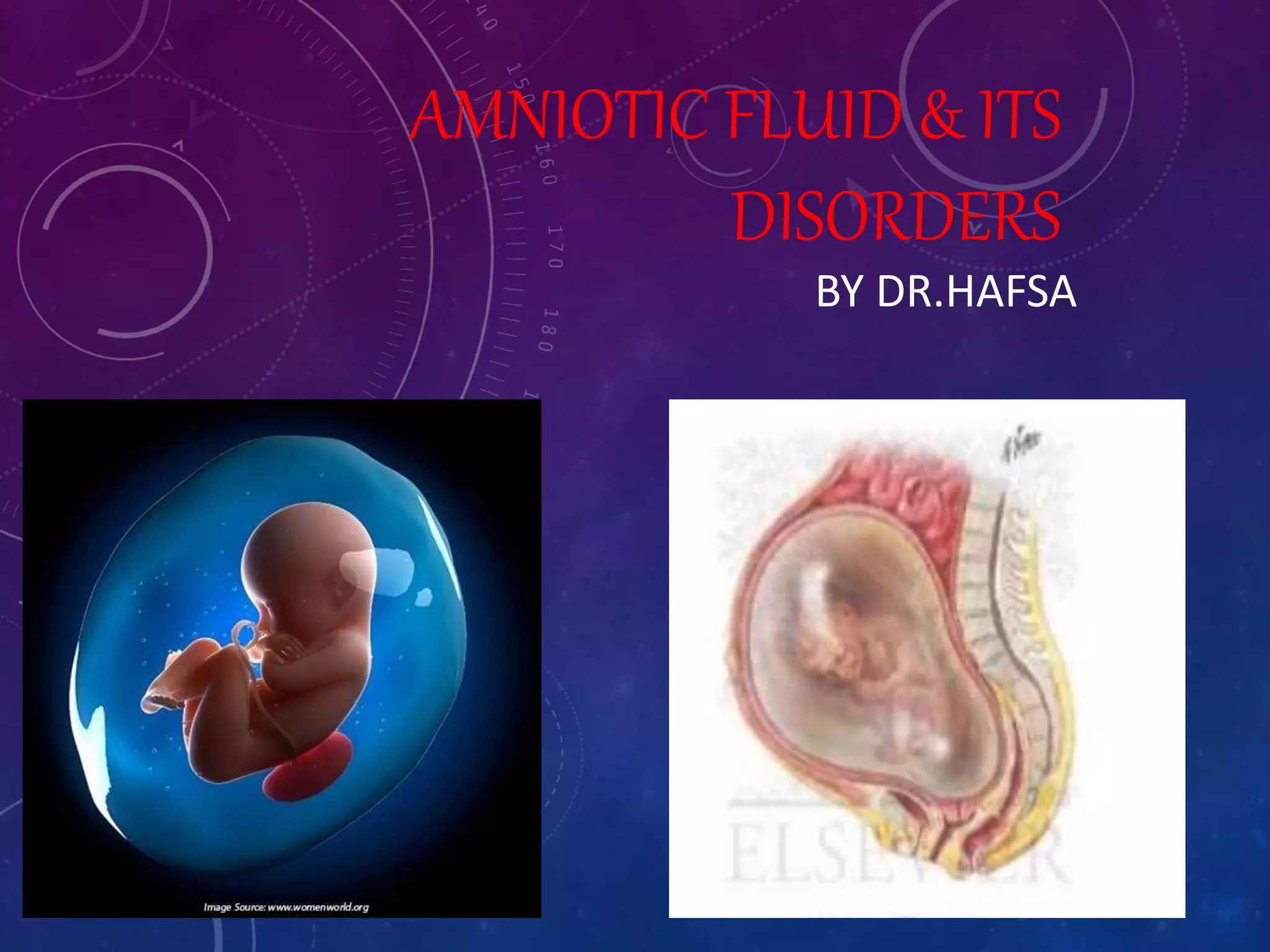
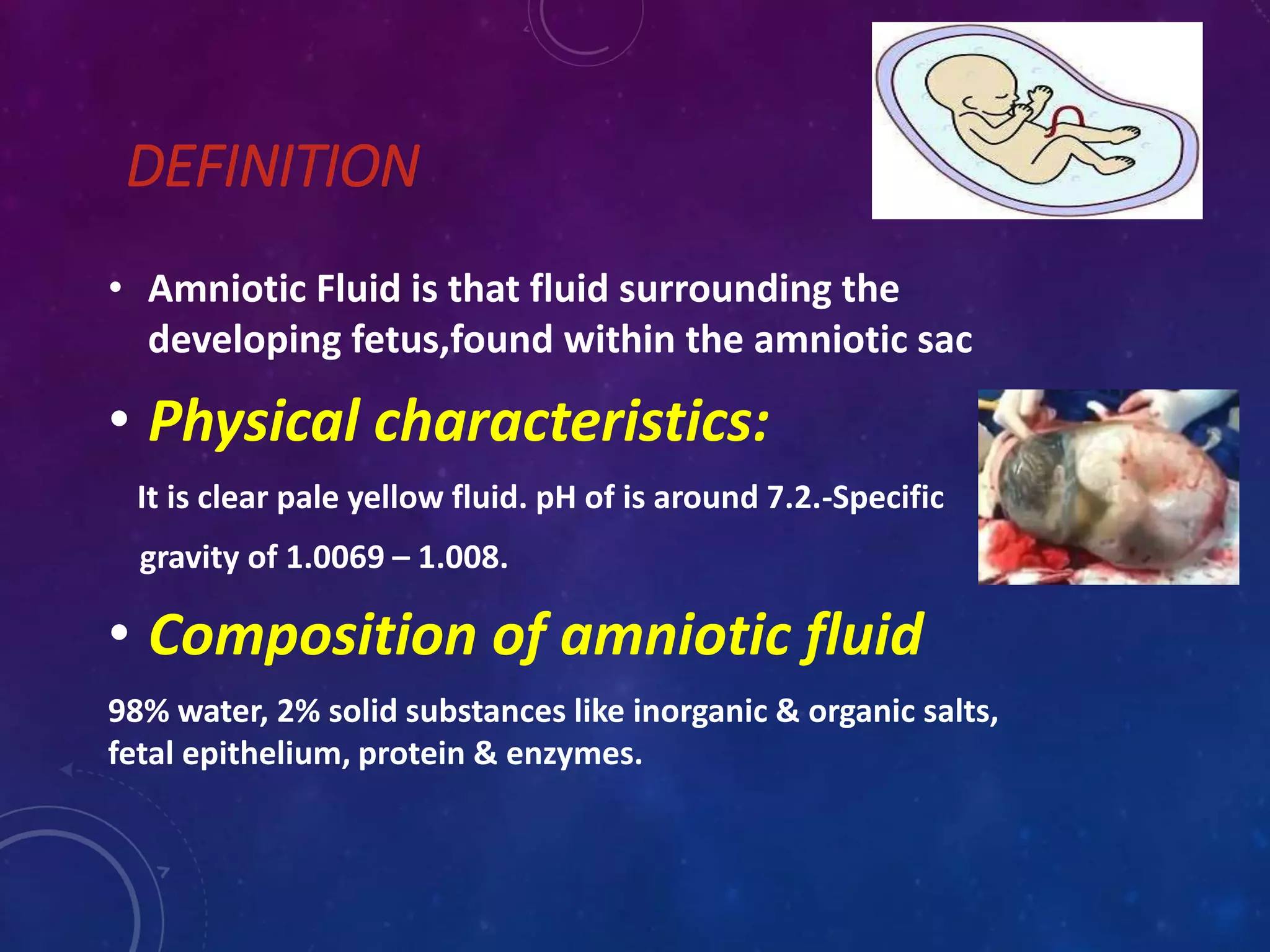
• Amniotic Fluid is that fluid surrounding the
developing fetus,found within the amniotic sac
• Physical characteristics:
It is clear pale yellow fluid. pH of is around 7.2.-Specific
gravity of 1.0069 – 1.008.
• Composition of amniotic fluid
98% water, 2% solid substances like inorganic & organic salts,
fetal epithelium, protein & enzymes.
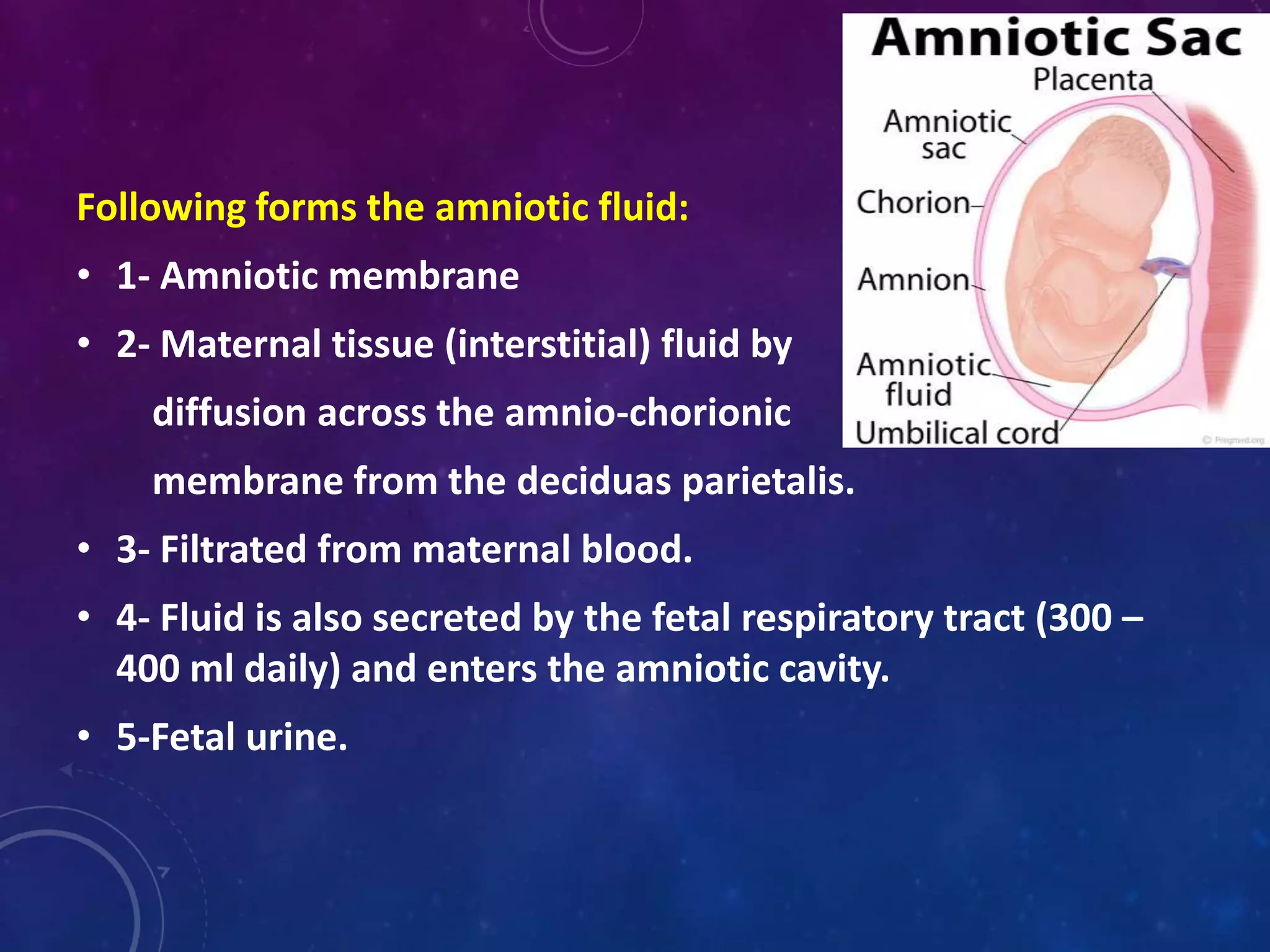
Following forms the amniotic fluid:
• 1- Amniotic membrane
• 2- Maternal tissue (interstitial) fluid by
diffusion across the amnio-chorionic
membrane from the deciduas parietalis.
• 3- Filtrated from maternal blood.
• 4- Fluid is also secreted by the fetal respiratory tract (300 –
400 ml daily) and enters the amniotic cavity.
• 5-Fetal urine.
AMNIOTIC FLUID CIRCULATION
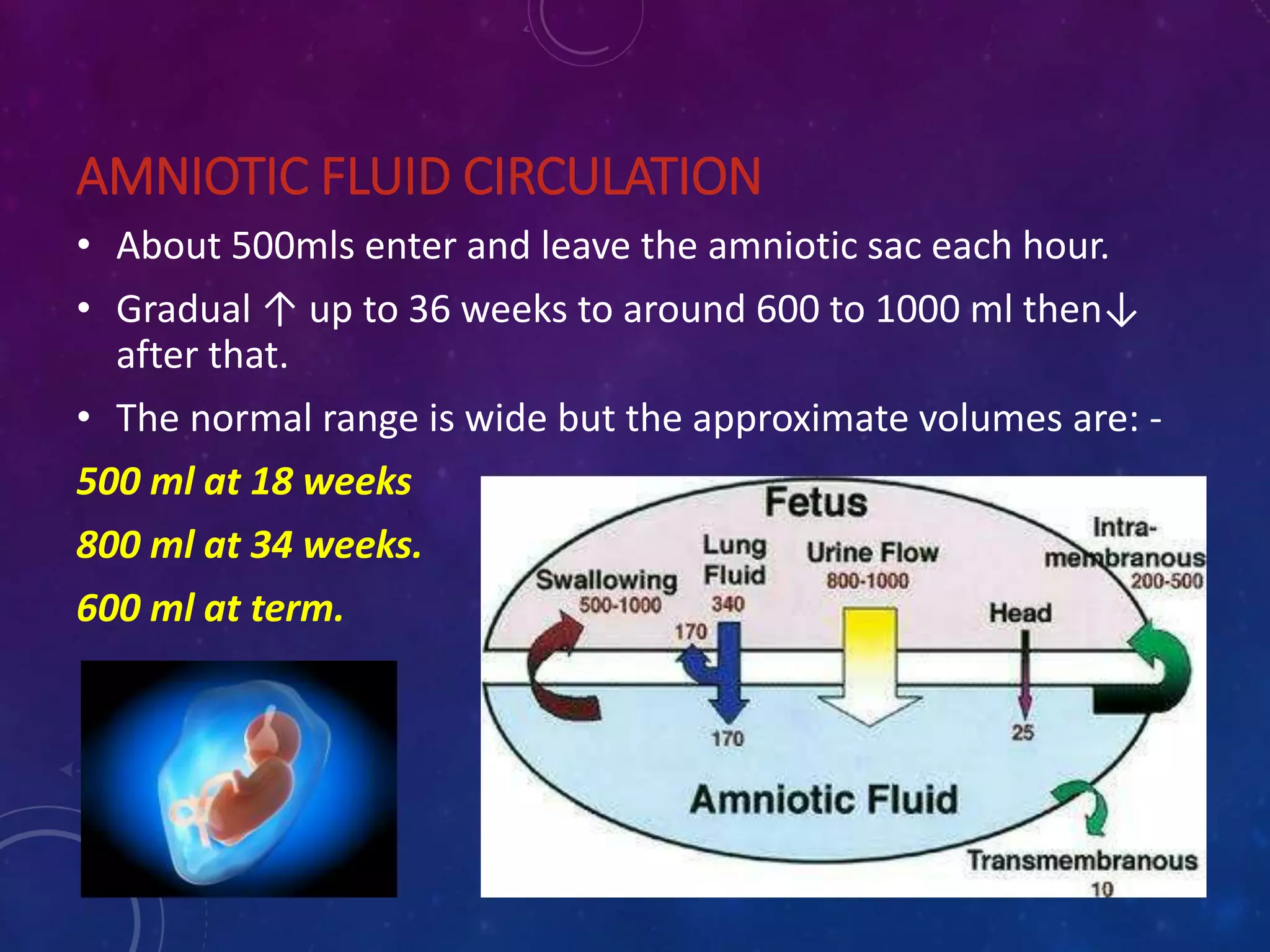
• About 500mls enter and leave the amniotic sac each hour.
• Gradual ↑ up to 36 weeks to around 600 to 1000 ml then↓
after that.
• The normal range is wide but the approximate volumes are: -
500 ml at 18 weeks
800 ml at 34 weeks.
600 ml at term.
AMNIOTIC FLUID FUNCTION:
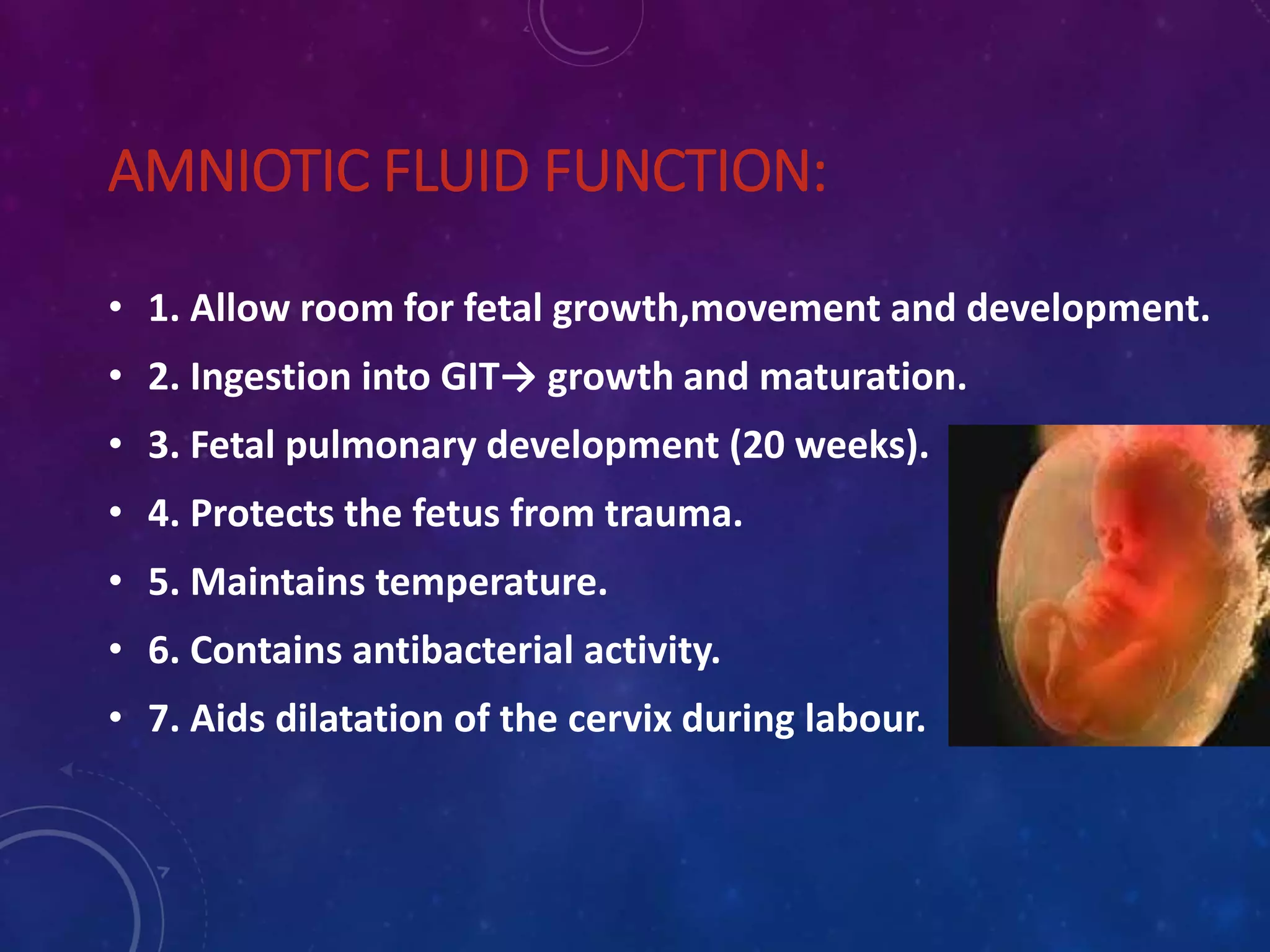
• 1. Allow room for fetal growth,movement and development.
• 2. Ingestion into GIT→ growth and maturation.
• 3. Fetal pulmonary development (20 weeks).
• 4. Protects the fetus from trauma.
• 5. Maintains temperature.
• 6. Contains antibacterial activity.
• 7. Aids dilatation of the cervix during labour.
CLINICAL IMPORTANCE OF AF:
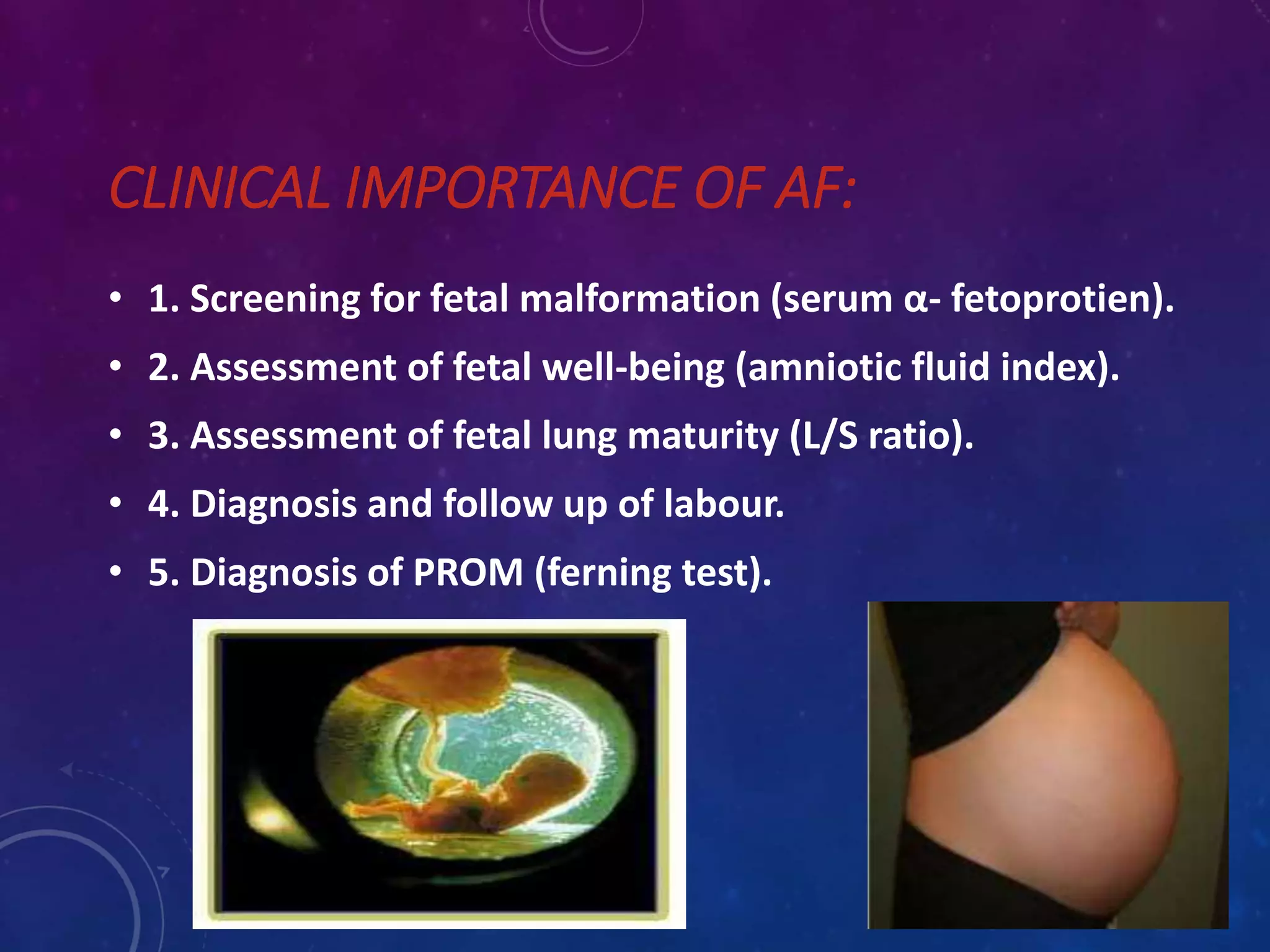
• 1. Screening for fetal malformation (serum α- fetoprotien).
• 2. Assessment of fetal well-being (amniotic fluid index).
• 3. Assessment of fetal lung maturity (L/S ratio).
• 4. Diagnosis and follow up of labour.
• 5. Diagnosis of PROM (ferning test).
AMNIOTIC FLUID VOLUME ASSESSMENT
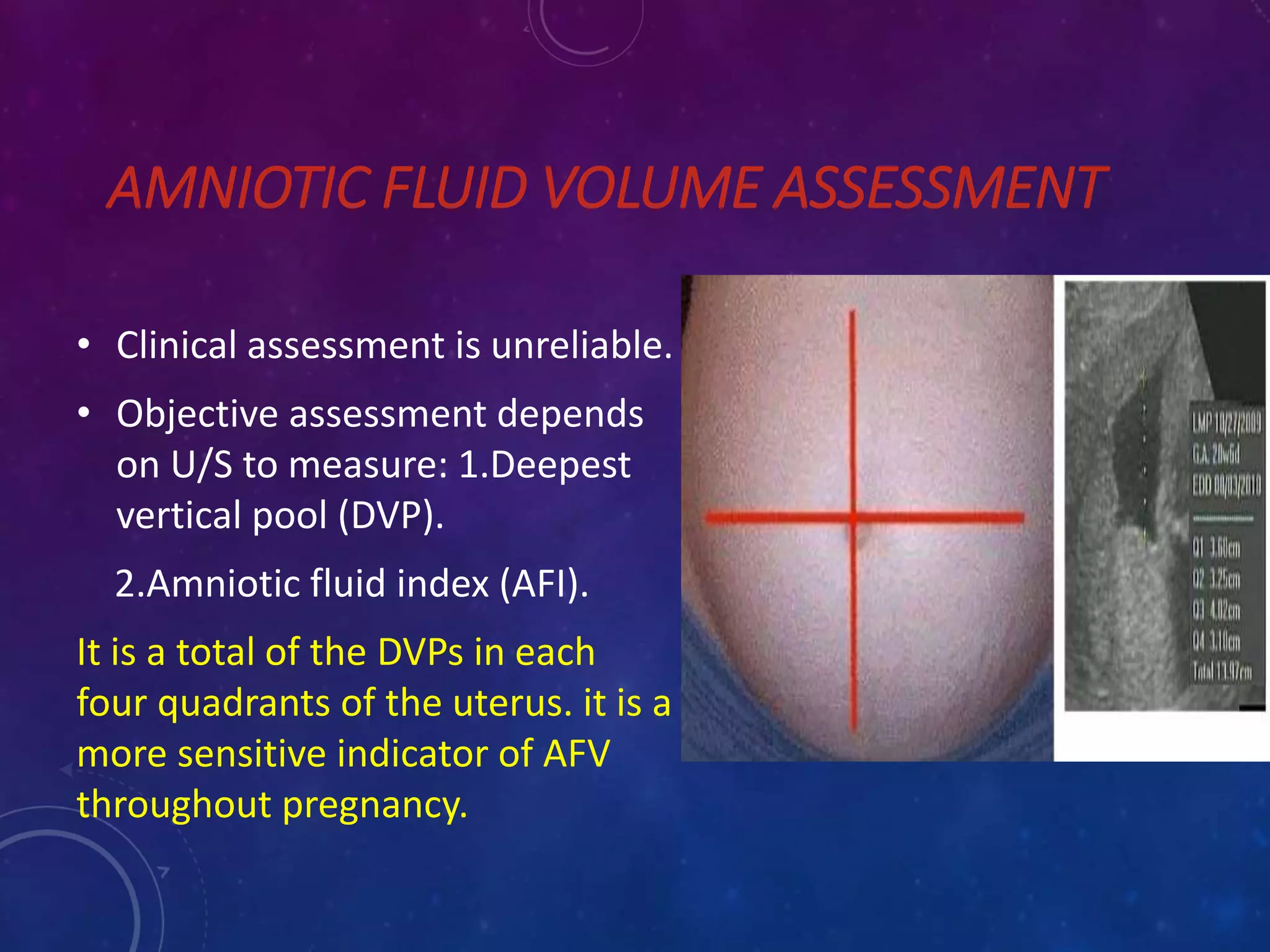
• Clinical assessment is unreliable.
• Objective assessment depends
on U/S to measure: 1.Deepest
vertical pool (DVP).
2.Amniotic fluid index (AFI).
It is a total of the DVPs in each
four quadrants of the uterus. it is a
more sensitive indicator of AFV
throughout pregnancy.
AMNIOTIC FLUID ABNORMALITIES
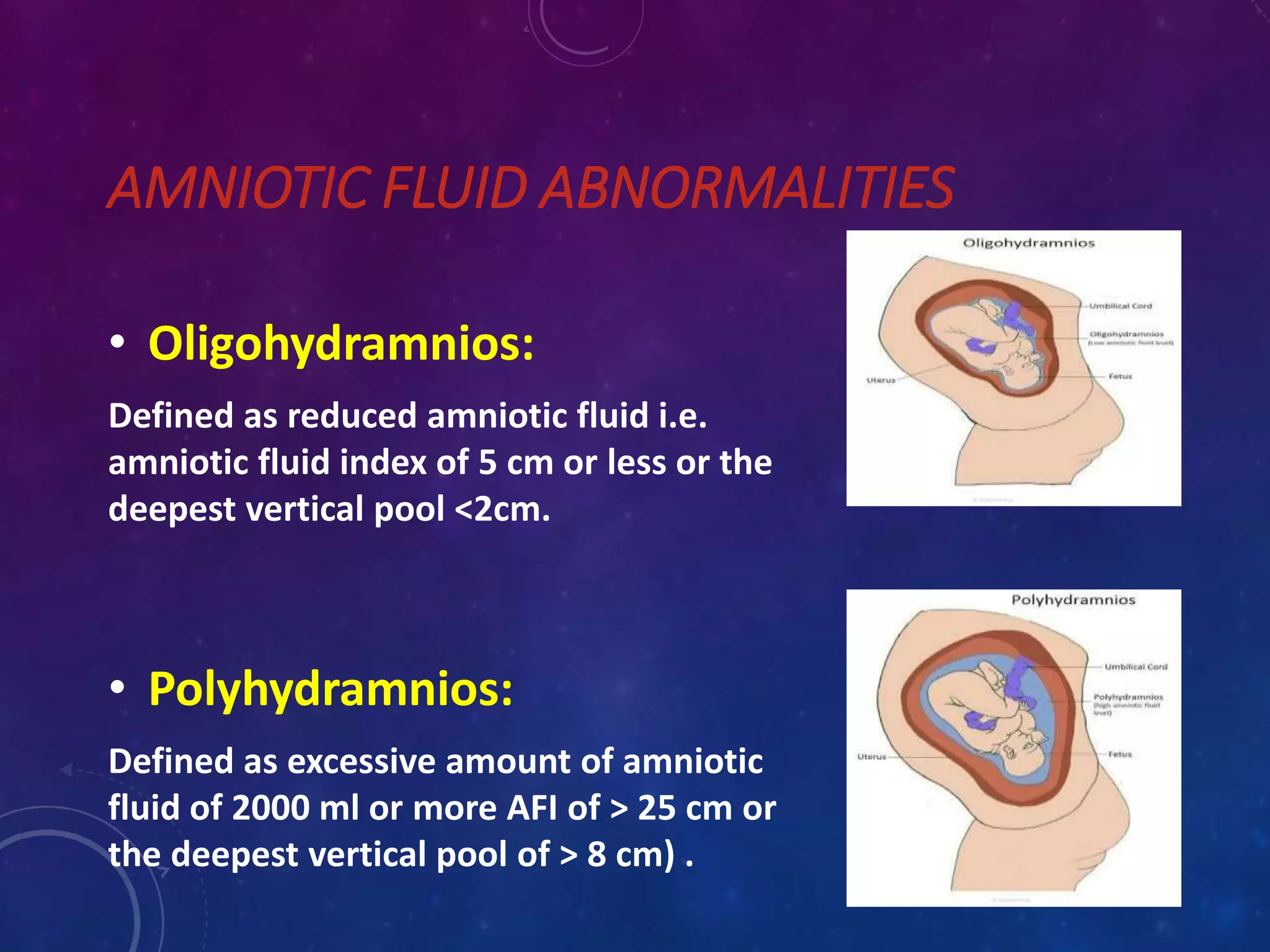
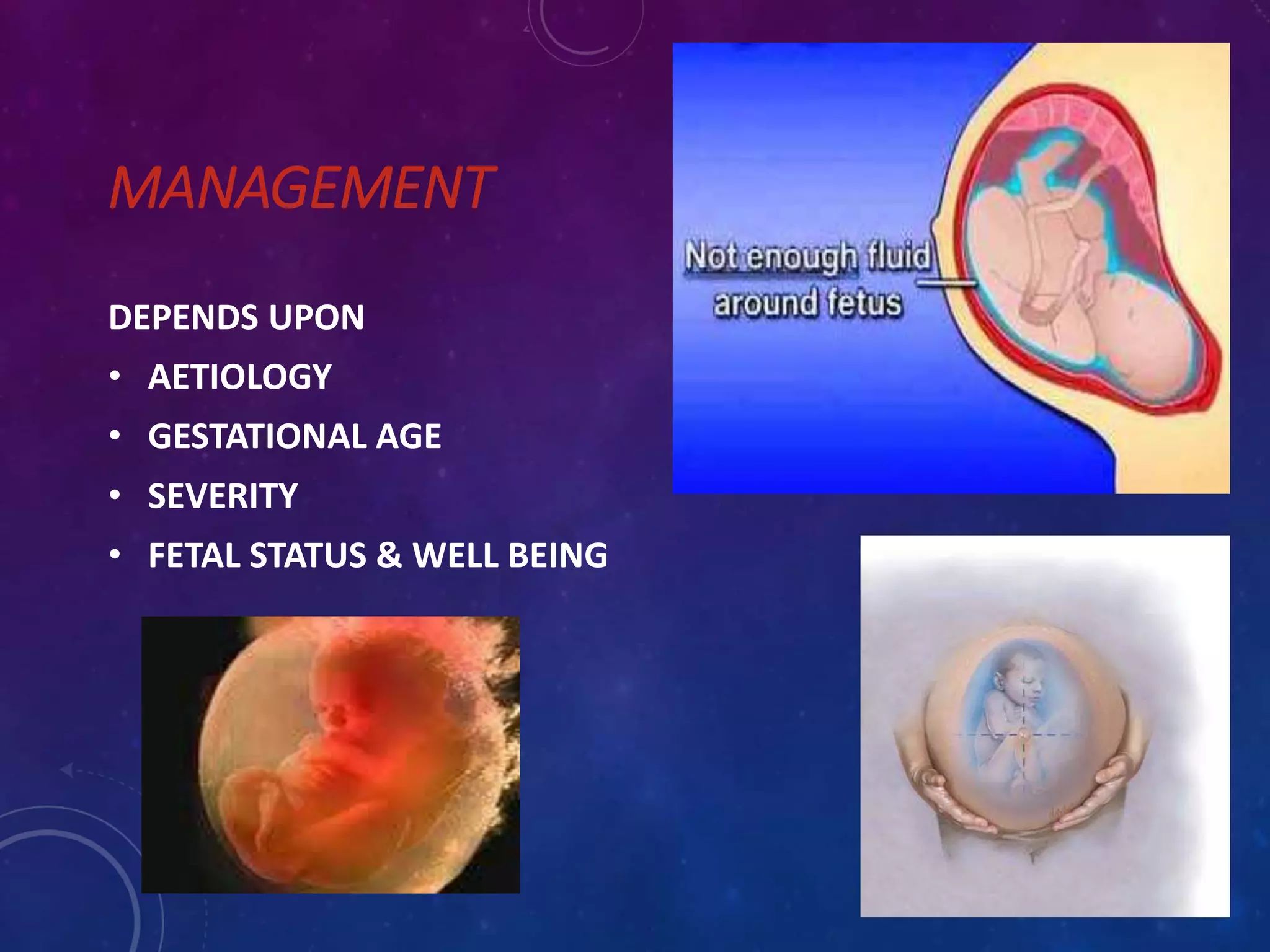
• Oligohydramnios:
Defined as reduced amniotic fluid i.e.
amniotic fluid index of 5 cm or less or the
deepest vertical pool <2cm.
• Polyhydramnios:
Defined as excessive amount of amniotic
fluid of 2000 ml or more AFI of > 25 cm or
the deepest vertical pool of > 8 cm) .
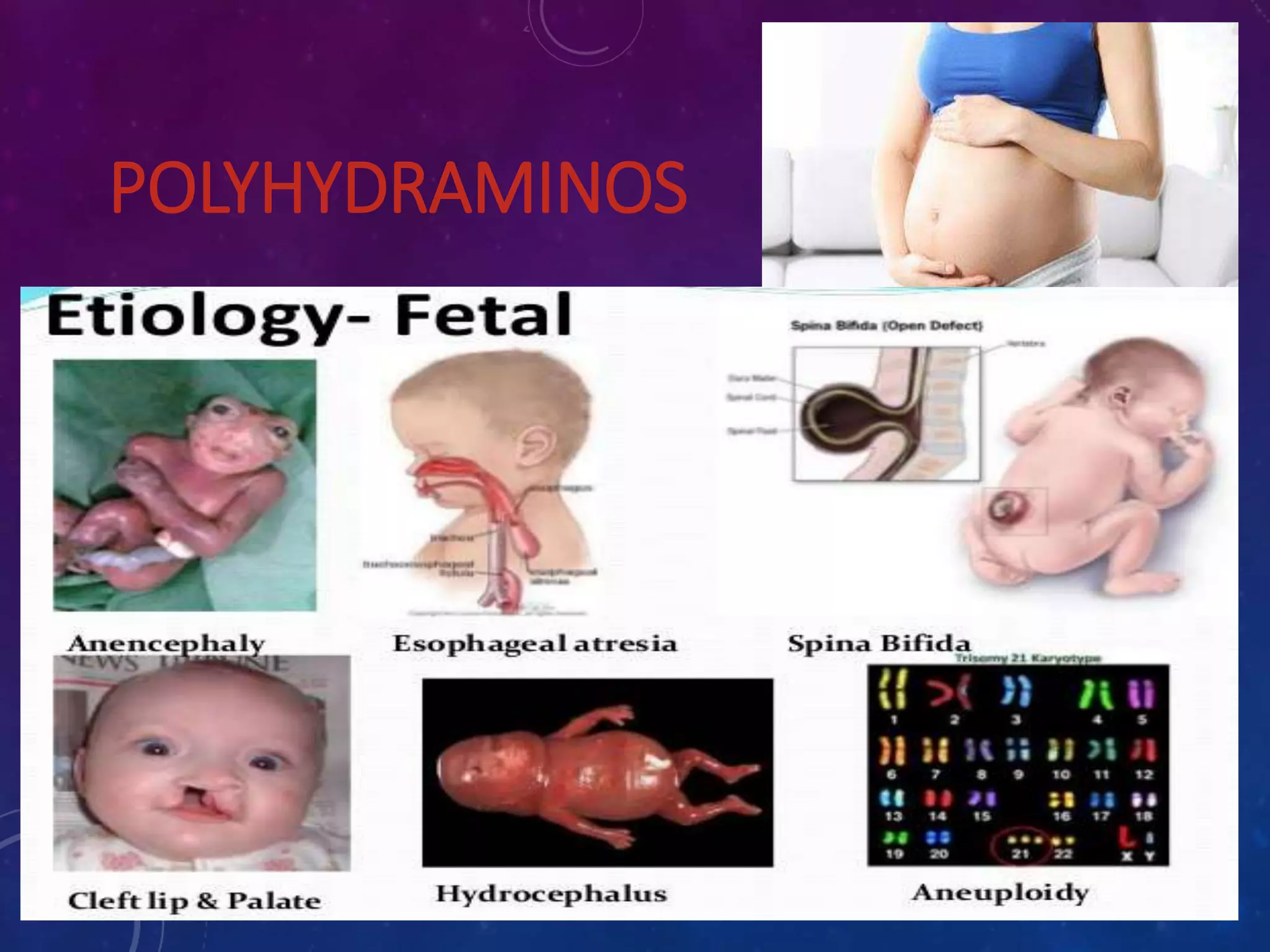
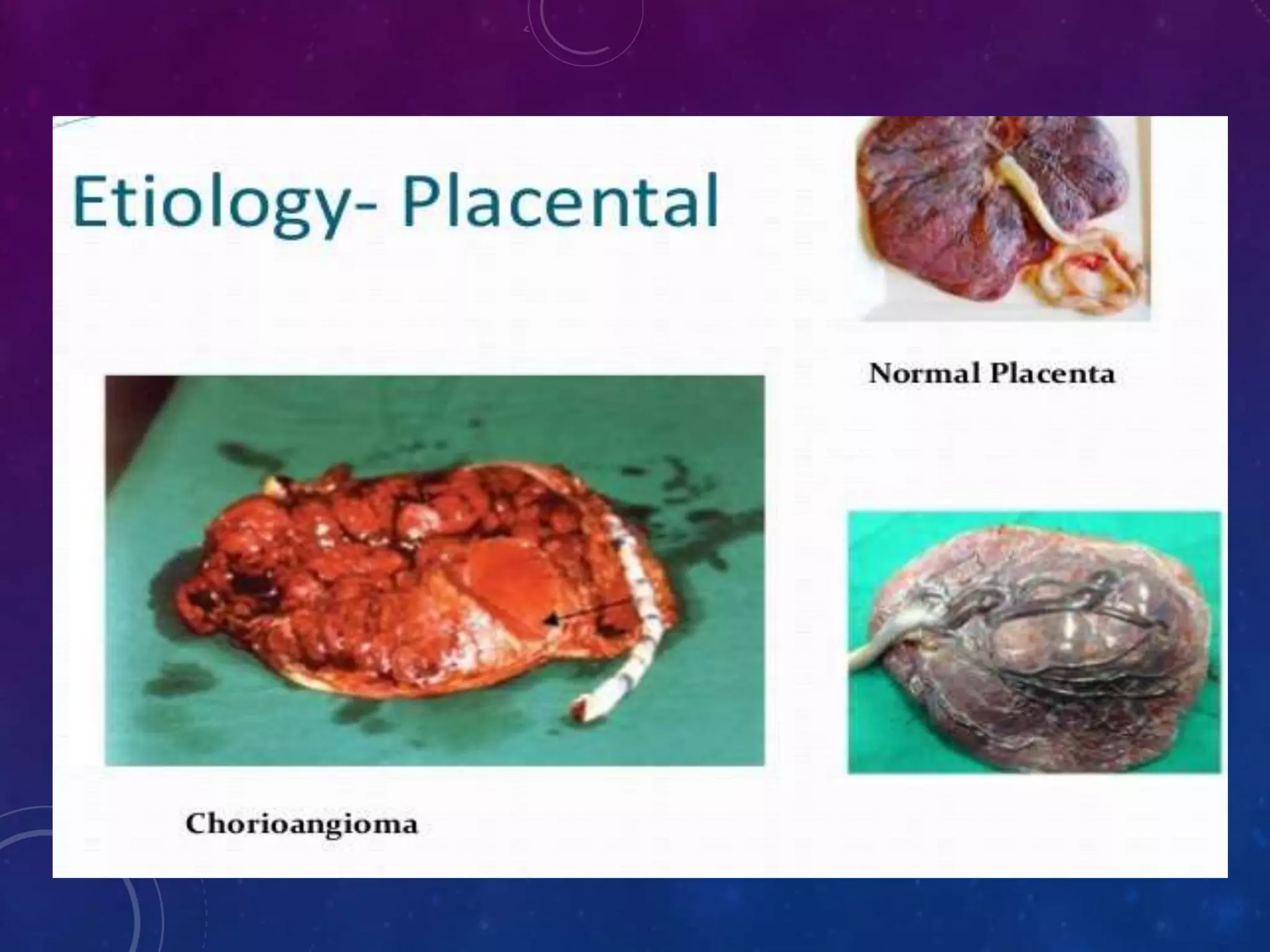
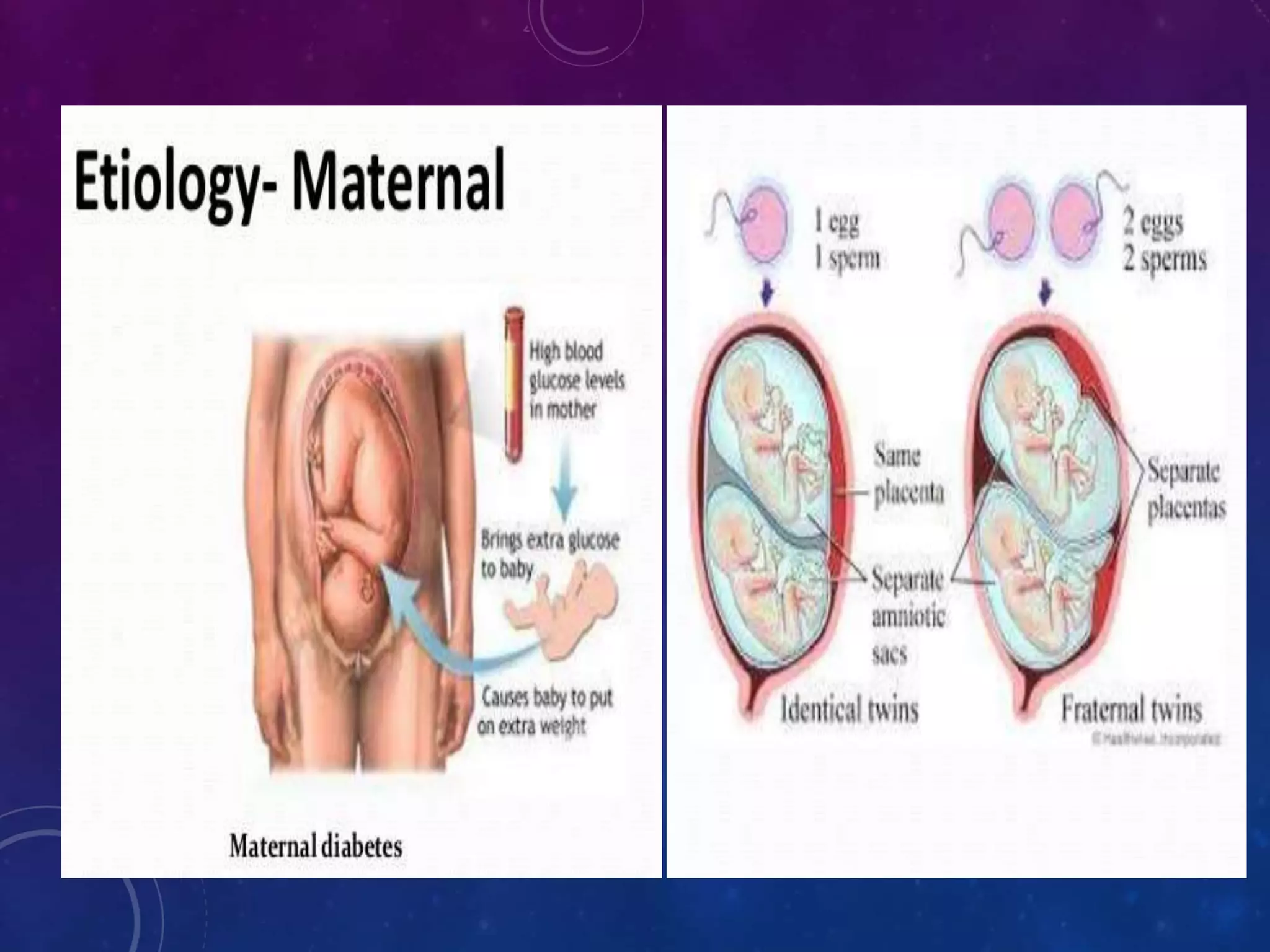
POLYHYDRAMINOS
DIAGNOSIS OF POLYHYDRAMNIOS
Symptoms: -
• dyspnea.
• edema.
• abdominal distention
• preterm labour
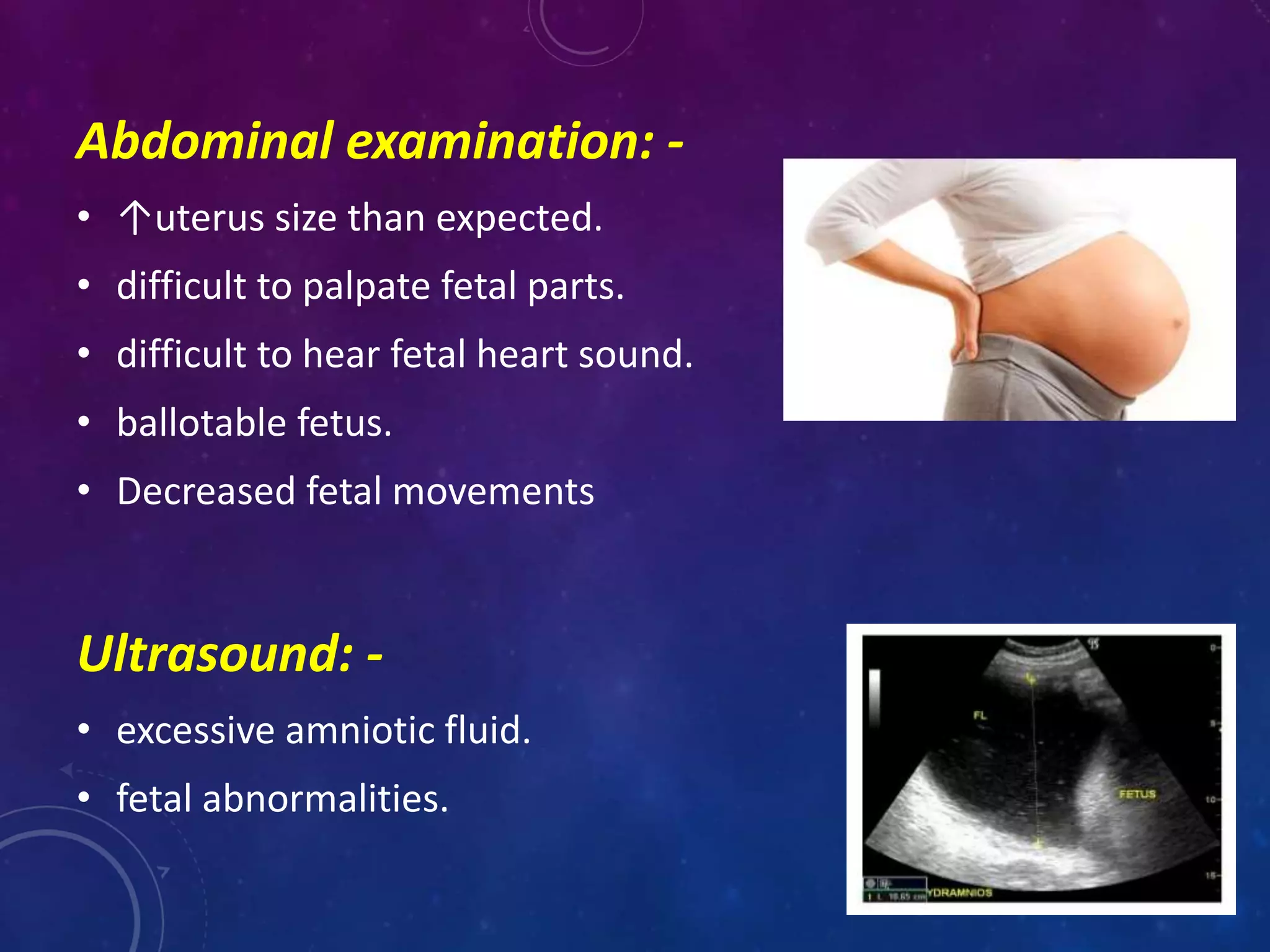
Abdominal examination: -
• ↑uterus size than expected.
• difficult to palpate fetal parts.
• difficult to hear fetal heart sound.
• ballotable fetus.
• Decreased fetal movements
Ultrasound: -
• excessive amniotic fluid.
• fetal abnormalities.
COMPLICATIONS
Fetus
• Fetal prognosis worsens with more severe
hydramnios and congenital anomalies
• 15-20% fetal malformations
• Preterm delivery
• Suspect diabetes
• Prolapse of cord
• Abruption
Mother
• Placental abruption
• Uterine dysfunction
• Post-partum hemorrhage
• Abnormal presentation –C/S
TREATMENT
• Mild to Moderate hydramnios: rarely
requires treatment
• Hospitalization, bed rest
• Amniocentesis
• NSAIDs
• Blood sugar control
Indomethacin therapy:
impairs lung liquid production/enhances absorption.
↓fluid movement across fetal membranes.
Complications:
premature closure of ductus arteriosus
impairment of renal function, and cerebral vasoconstriction.
NOT USED AFTER 34 WKS
OLIGOHYDRAMINOS
DIAGNOSIS
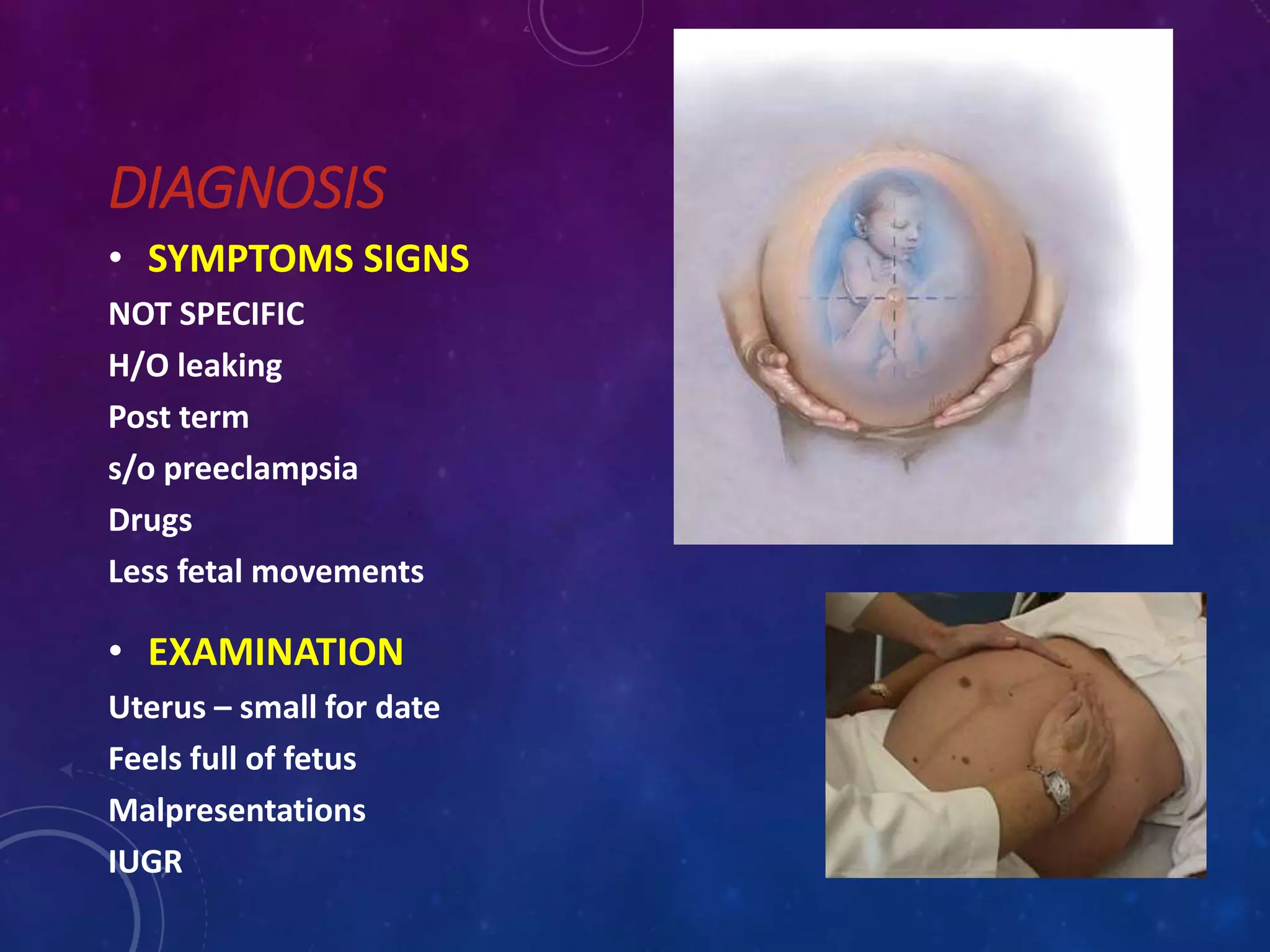
• SYMPTOMS SIGNS
NOT SPECIFIC
H/O leaking
Post term
s/o preeclampsia
Drugs
Less fetal movements
• EXAMINATION
Uterus – small for date
Feels full of fetus
Malpresentations
IUGR
ULTRASOUND METHODS
• DVP <2 cms (<1 severe)
• AFI <5 cms (5-8 borderline)
• 2D pocket <15 sq cms
COMPLICATIONS
• FETAL
Abortion
Prematurity
Increased morbidity
IUFD
Deformities –
contractures Potters
syndrome
pulmonary hypoplasia
Fetal distress
Low APGAR
• MATERNAL
Prolonged labour
uterine inertia
Increased
operative
intervention
malformations
MANAGEMENT
DEPENDS UPON
• AETIOLOGY
• GESTATIONAL AGE
• SEVERITY
• FETAL STATUS & WELL BEING
• ADEQUATE REST – decreases
dehydration
• HYDRATION – Oral/IV Hypotonic fluids
• SERIAL USG
Monitor growth
AFI
BPP
• INDUCTION OF LABOUR/ LSCS
After Lung maturity attained
Lethal malformation
Severe IUGR
Severe oligohydraminos
AMNIOINFUSION
• INDICATIONS
1.Diagnostic
2.Prophylactic
3.Therapeutic
• Decreases cord
compression
• Dilutes meconium
THANK YOU

Amniotic fluid &amp; its disorders

  • 1.
    AMNIOTIC FLUID &ITS DISORDERS BY DR.HAFSA
  • 2.
    DEFINITION • Amniotic Fluidis that fluid surrounding the developing fetus,found within the amniotic sac • Physical characteristics: It is clear pale yellow fluid. pH of is around 7.2.-Specific gravity of 1.0069 – 1.008. • Composition of amniotic fluid 98% water, 2% solid substances like inorganic & organic salts, fetal epithelium, protein & enzymes.
  • 3.
    Following forms theamniotic fluid: • 1- Amniotic membrane • 2- Maternal tissue (interstitial) fluid by diffusion across the amnio-chorionic membrane from the deciduas parietalis. • 3- Filtrated from maternal blood. • 4- Fluid is also secreted by the fetal respiratory tract (300 – 400 ml daily) and enters the amniotic cavity. • 5-Fetal urine.
  • 4.
    AMNIOTIC FLUID CIRCULATION •About 500mls enter and leave the amniotic sac each hour. • Gradual ↑ up to 36 weeks to around 600 to 1000 ml then↓ after that. • The normal range is wide but the approximate volumes are: - 500 ml at 18 weeks 800 ml at 34 weeks. 600 ml at term.
  • 5.
    AMNIOTIC FLUID FUNCTION: •1. Allow room for fetal growth,movement and development. • 2. Ingestion into GIT→ growth and maturation. • 3. Fetal pulmonary development (20 weeks). • 4. Protects the fetus from trauma. • 5. Maintains temperature. • 6. Contains antibacterial activity. • 7. Aids dilatation of the cervix during labour.
  • 6.
    CLINICAL IMPORTANCE OFAF: • 1. Screening for fetal malformation (serum α- fetoprotien). • 2. Assessment of fetal well-being (amniotic fluid index). • 3. Assessment of fetal lung maturity (L/S ratio). • 4. Diagnosis and follow up of labour. • 5. Diagnosis of PROM (ferning test).
  • 7.
    AMNIOTIC FLUID VOLUMEASSESSMENT • Clinical assessment is unreliable. • Objective assessment depends on U/S to measure: 1.Deepest vertical pool (DVP). 2.Amniotic fluid index (AFI). It is a total of the DVPs in each four quadrants of the uterus. it is a more sensitive indicator of AFV throughout pregnancy.
  • 8.
    AMNIOTIC FLUID ABNORMALITIES •Oligohydramnios: Defined as reduced amniotic fluid i.e. amniotic fluid index of 5 cm or less or the deepest vertical pool <2cm. • Polyhydramnios: Defined as excessive amount of amniotic fluid of 2000 ml or more AFI of > 25 cm or the deepest vertical pool of > 8 cm) .
  • 9.
  • 12.
    DIAGNOSIS OF POLYHYDRAMNIOS Symptoms:- • dyspnea. • edema. • abdominal distention • preterm labour
  • 13.
    Abdominal examination: - •↑uterus size than expected. • difficult to palpate fetal parts. • difficult to hear fetal heart sound. • ballotable fetus. • Decreased fetal movements Ultrasound: - • excessive amniotic fluid. • fetal abnormalities.
  • 14.
    COMPLICATIONS Fetus • Fetal prognosisworsens with more severe hydramnios and congenital anomalies • 15-20% fetal malformations • Preterm delivery • Suspect diabetes • Prolapse of cord • Abruption Mother • Placental abruption • Uterine dysfunction • Post-partum hemorrhage • Abnormal presentation –C/S
  • 15.
    TREATMENT • Mild toModerate hydramnios: rarely requires treatment • Hospitalization, bed rest • Amniocentesis • NSAIDs • Blood sugar control Indomethacin therapy: impairs lung liquid production/enhances absorption. ↓fluid movement across fetal membranes. Complications: premature closure of ductus arteriosus impairment of renal function, and cerebral vasoconstriction. NOT USED AFTER 34 WKS
  • 16.
  • 17.
    DIAGNOSIS • SYMPTOMS SIGNS NOTSPECIFIC H/O leaking Post term s/o preeclampsia Drugs Less fetal movements • EXAMINATION Uterus – small for date Feels full of fetus Malpresentations IUGR
  • 18.
    ULTRASOUND METHODS • DVP<2 cms (<1 severe) • AFI <5 cms (5-8 borderline) • 2D pocket <15 sq cms
  • 19.
    COMPLICATIONS • FETAL Abortion Prematurity Increased morbidity IUFD Deformities– contractures Potters syndrome pulmonary hypoplasia Fetal distress Low APGAR • MATERNAL Prolonged labour uterine inertia Increased operative intervention malformations
  • 20.
    MANAGEMENT DEPENDS UPON • AETIOLOGY •GESTATIONAL AGE • SEVERITY • FETAL STATUS & WELL BEING
  • 21.
    • ADEQUATE REST– decreases dehydration • HYDRATION – Oral/IV Hypotonic fluids • SERIAL USG Monitor growth AFI BPP • INDUCTION OF LABOUR/ LSCS After Lung maturity attained Lethal malformation Severe IUGR Severe oligohydraminos
  • 22.
  • 24.