POST FERTILIZATION CHANGES
DEVELOPMENT OF ENDOSPERM










Endosper m is the nutritive tissue for nourishment
of developed embr yo.
In some angiosper m, the product of second
fer tilization or triple fusion is PEN.
It develops into endosper m.
In some cases it is absent such seeds are called
non endosper mic or ex -albuminous seeds e g. pea,
bean, grams etc.
In other angiosper m, endosper m per sists in
mature seeds and it suppor t the g r owth of embr yo,
such seeds ar e called endosper mic or albuminous
s e e d s e g . S u n f l o w e r, c a s t o r, c o c o n u t , m a i z e e t c
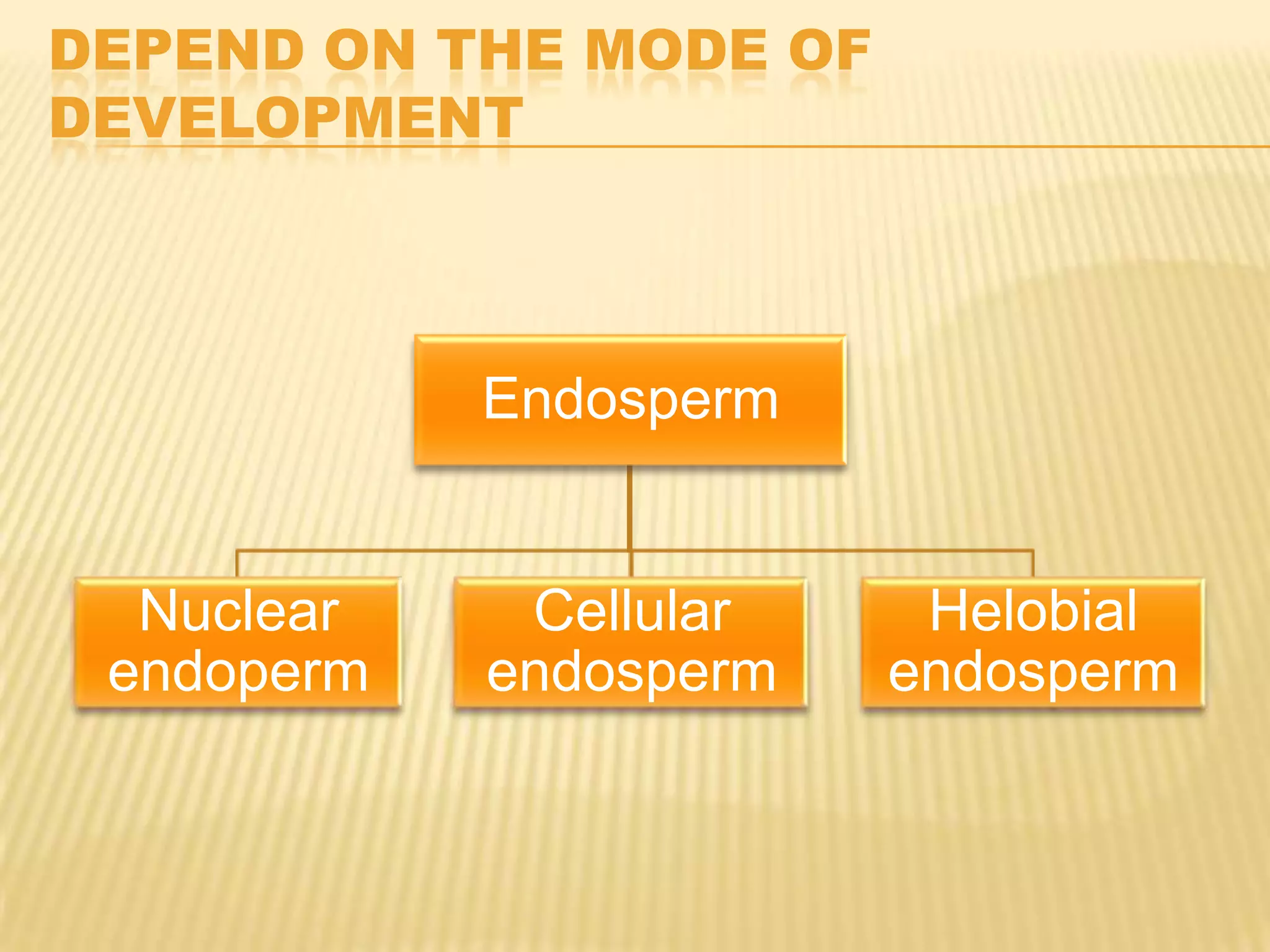
DEPEND ON THE MODE OF
DEVELOPMENT

Endosperm

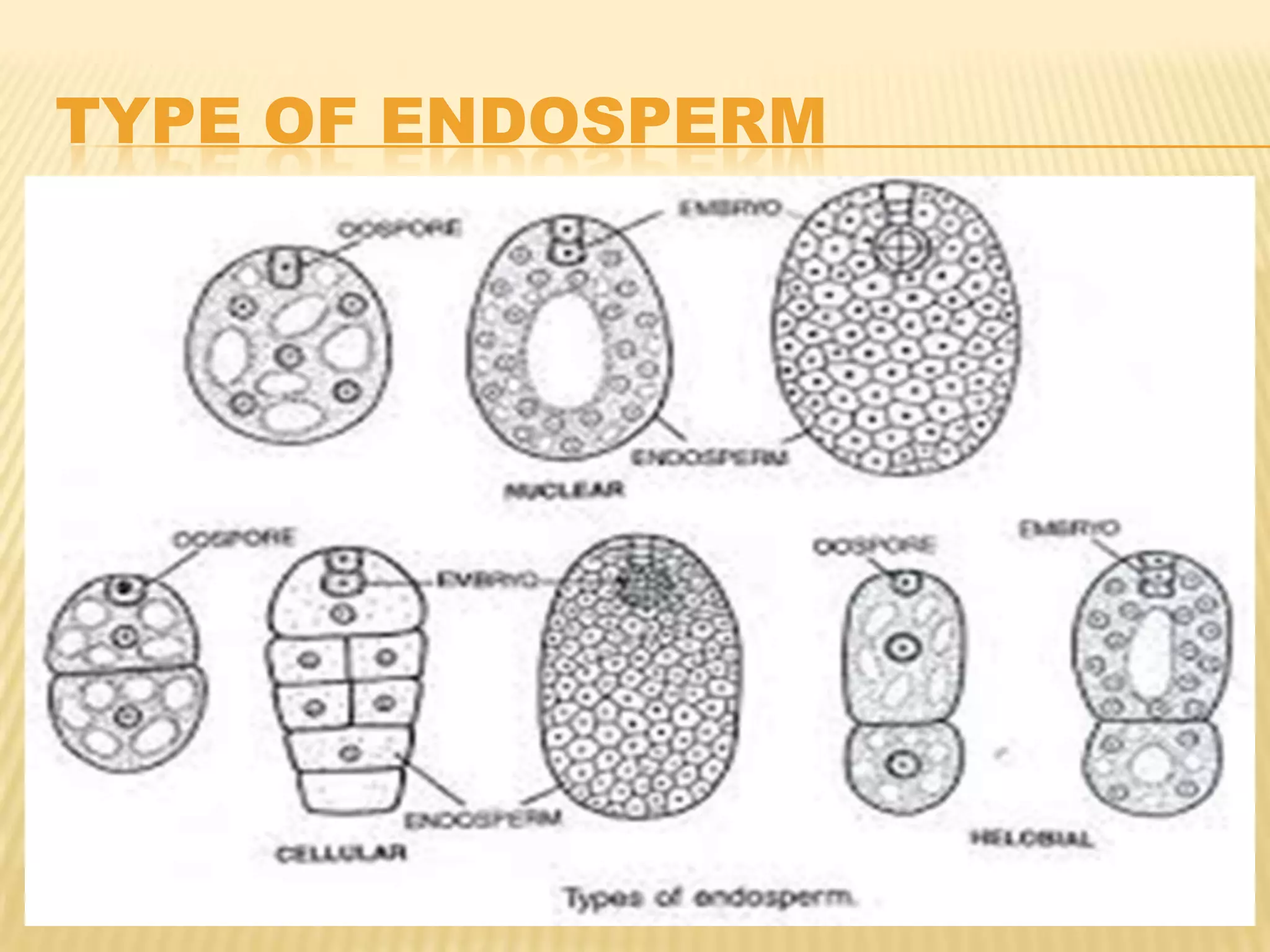
Nuclear
endoperm

Cellular
endosperm

Helobial
endosperm
TYPE OF ENDOSPERM
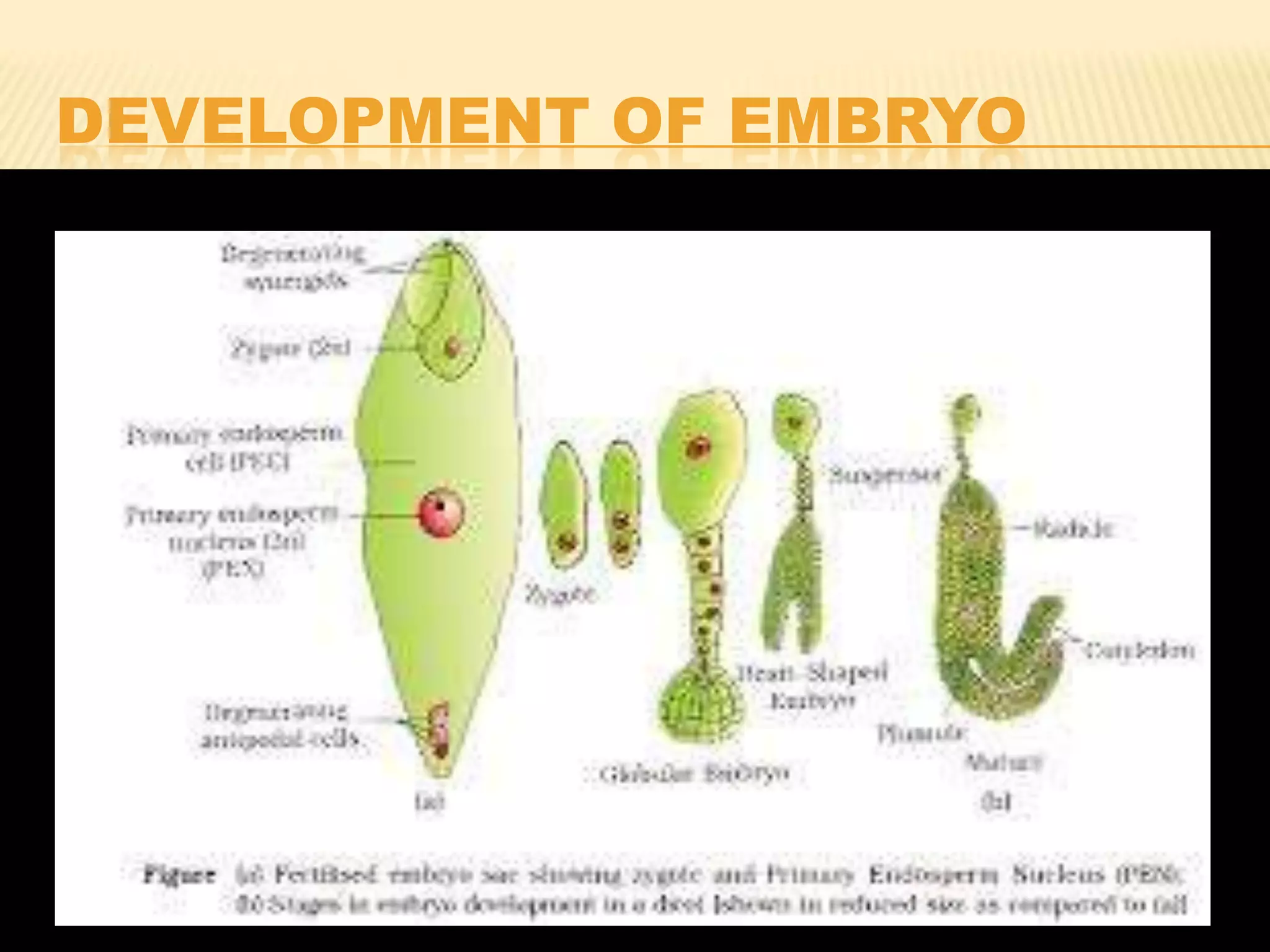
DEVELOPMENT OF EMBRYO
FORMATION OF SEEDS AND FRUITS


Simaltaneously with the development of embryo and endosperm, ovary
enlarges in size.



Sepals, petals, stamens, style and stigma fall off and ovary changes into
fruit.



Ovary wall change into pericarp (fruit wall).



Pericarp initially is green and on ripening become
orange, red, purple, yellow etc.



Each ovule in ovary also enlarge, outer integument become thick and
hard outer seed coat, called testa .



Inner integument become thin, inner seed coat, called tegmen.
PARTHENOCARPY




Mostly, the fruits are formed after fertilization
but there are some species in which fruits
develop without fertilization.

This is called parthenocarpy and such fruits are
called parthenocarpic fruits eg. Banana.
APOMIXIS AND POLYEMBRYONY


Seeds are the product of fertilization.



In some spices of grasses seeds are
produce without fertilization.



This is called apomixis and such seed is
called apomictic seeds.



Some nucellar cell near embryo sac start
dividing and develop many embryo this is
called polyembryony.
SIGNIFICANCE OF SEED


The distribution and dominance of angiosperms on
earth is due to the seeds.



Success of seeds as propogule is due to many
characters such as –

1.
2.
3.
4.
5.

6.

Dormancy
Viability
Reserve food
Protective coat
Dispersal
Edible fruits
Post fertilization changes

Post fertilization changes

  • 1.
    POST FERTILIZATION CHANGES DEVELOPMENTOF ENDOSPERM      Endosper m is the nutritive tissue for nourishment of developed embr yo. In some angiosper m, the product of second fer tilization or triple fusion is PEN. It develops into endosper m. In some cases it is absent such seeds are called non endosper mic or ex -albuminous seeds e g. pea, bean, grams etc. In other angiosper m, endosper m per sists in mature seeds and it suppor t the g r owth of embr yo, such seeds ar e called endosper mic or albuminous s e e d s e g . S u n f l o w e r, c a s t o r, c o c o n u t , m a i z e e t c
  • 2.
    DEPEND ON THEMODE OF DEVELOPMENT Endosperm Nuclear endoperm Cellular endosperm Helobial endosperm
  • 3.
  • 4.
  • 5.
    FORMATION OF SEEDSAND FRUITS  Simaltaneously with the development of embryo and endosperm, ovary enlarges in size.  Sepals, petals, stamens, style and stigma fall off and ovary changes into fruit.  Ovary wall change into pericarp (fruit wall).  Pericarp initially is green and on ripening become orange, red, purple, yellow etc.  Each ovule in ovary also enlarge, outer integument become thick and hard outer seed coat, called testa .  Inner integument become thin, inner seed coat, called tegmen.
  • 6.
    PARTHENOCARPY   Mostly, the fruitsare formed after fertilization but there are some species in which fruits develop without fertilization. This is called parthenocarpy and such fruits are called parthenocarpic fruits eg. Banana.
  • 7.
    APOMIXIS AND POLYEMBRYONY  Seedsare the product of fertilization.  In some spices of grasses seeds are produce without fertilization.  This is called apomixis and such seed is called apomictic seeds.  Some nucellar cell near embryo sac start dividing and develop many embryo this is called polyembryony.
  • 8.
    SIGNIFICANCE OF SEED  Thedistribution and dominance of angiosperms on earth is due to the seeds.  Success of seeds as propogule is due to many characters such as – 1. 2. 3. 4. 5. 6. Dormancy Viability Reserve food Protective coat Dispersal Edible fruits