ROLE OF POSITIVE ATTITUDE, ASSERTIVENESS & INFLUENCING SKILLS  Dr. Anita T. Lal FORE SCHOOL OF MANAGEMENT [email_address]   9810169890 19 February 2007 ++
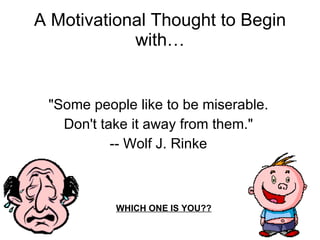
A Motivational Thought to Begin with… "Some people like to be miserable.  Don't take it away from them."  -- Wolf J. Rinke  WHICH ONE IS YOU??
POSITIVE ATTITUDE Thoughts Speech Behaviour Written Communication Body Language Facial Expressions Posture Sense of Dressing Proximity
 
Benefits of Positive Attitude Communicator Negotiator ‘ Delegator’ Team Player Motivator Approachable Problem Solver
How to inculcate PA Separate out Office and Home work Plan Your goals Objectives Methodology Action Plan SMART Test (Specific Measurable Achievable Realistic and Time Phased) Practice and Rehearse Manage your Body Language De-stress everyday Work out Music Dance Yoga/ Meditation/ Reading
Tackle Failure Positively Learning What not to do next time? What more to do next time?
‘ Criticism is never inhibited by ignorance ’ Harold Macmillan
What Kind of a person are you? Good News/ Bad News Positive Thinking Look for ‘more of’ and avoid the ‘lack of’ …
How to present Positively There is lack of communication between departments There is an opportunity to improve communication between departments There is a lack of Motivation amongst Junior staff There is a need to develop motivation amongst junior staff There seems to be an absence of support for the planning initiatives taken It is proposed that support be given to the planning initiatives taken
There is a problem with decision making Many people expressed the need to speed up decision making Training programs are both inadequate and deficient Training programs should be more adequate and effective
How to manage Positives and Negatives Highlight Achievements Present a balanced view Ask for cases Indicate your feelings Clarify the implications Ask for ideas Reward Positive Behaviour Convert Bad News to Action Options Present the facts Forewarn People
Summing Up…. Convert Negatives to Positives Emphasize the need for improvements Reward effective behavior  Seek Opportunities but test for the barriers and difficulties
ENHANCING ASSERTIVENESS & INFLUENCING SKILLS
Which one are you?! ” Only an idiot would think of a solution like this! Don’t you even think before you talk?!” ” You know,we might want to think of another alterative. What do you think?” ” I am not completely comfortable with your solution. Would you please develop at least one more option?”
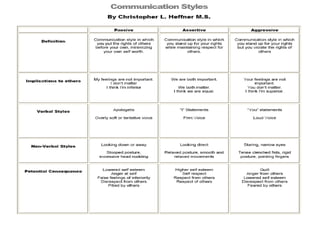
Given  any situation  with which we are unhappy we have the following 4 choices; Accept the situation Be Aggressive Be Passive Be Assertive
 
Reasons for not being assertive! Stressed at Work Stressed at Home Anger Tensed Upset Fear Introvert Emotional And.........Many more
Assertiveness What is assertiveness? Why do you have to be assertive? Who do you have to assertive with? When do you need to be assertive? Where do you need to be assertive? How do you need to be assertive?
Assertiveness...What is it?? Assertiveness considers the rights and needs of everybody because assertion rests on the principle that we all have rights as human beings and that other people have those rights too.....
Assertiveness...Why be assertive?? Treated with respect Being aware about your feelings Expressing yourself Challenging situations on an equal basis Getting your own way
Assertiveness.... ...When?? At work place While delegating While negotiating While Teaching While Praising While reprimanding While Apologising At Home At Other Places
Assertiveness...with Whom?? Co-Workers Subordinates Superordinates Clients Children Neighbors Yourself
Assertiveness....How?? Decide to be assertive not aggressive/Passive Think about a recent conflict and how you could have handled it  Practice Talking Respect others viewpoints Try to view the other person as a collaborator than an opponent Be Honest about your feelings Use Assertive Language...I feel, I think, I propose.. Listen Attentively to others Suggest Brainstorming as a problem solving tool Learn from past experiences and plan for the future Seek help from a Doctor Practice Meditation
Assertiveness...Body Language?? Look the person in the eye Hold your body upright Conciously relax your shoulders Try to Breathe normally,do not hold your Breath Keep your face relaxed Speak at a normal conversational Volume
Assertiveness...Advantages! Your needs and feelings are understood You are less stressed Nobody’s feelings are hurt Both parties feel respected and heard The relationship is strengthened by the exchange Fewer conflicts and arguments You feel in control of your life Your confidence and self esteem are enhanced You have better chance of getting what you want
INFLUENCING SKILLS (Position Vs. Personal Power) Influencing Personality Making an Impact- Building Influential Skills Knowledge Team Player Comunication Listening Leadership Performance Management  Persuasive Presentations Negotiating  Delegation Facilitating and Meeting  Cross Cultural Awareness Recruitment Developing Talent and Releasing Potential Valuing Work Place Diversity Legal Aspects
Be Positive, Assertive & Influence!! Always remember Humility Inclusion Generosity Freedom You become  the sought after  person in your organisation. ADOPT THE 6 Extras Effort Patience Careful Mile Time Smile
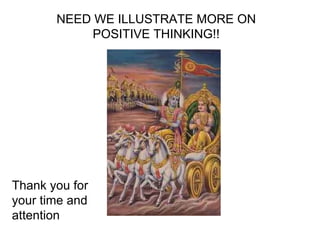
NEED WE ILLUSTRATE MORE ON POSITIVE THINKING!! Thank you for your time and attention

Positive Attitude Assertiveness And Influencing

  • 1.
    ROLE OF POSITIVEATTITUDE, ASSERTIVENESS & INFLUENCING SKILLS Dr. Anita T. Lal FORE SCHOOL OF MANAGEMENT [email_address] 9810169890 19 February 2007 ++
  • 2.
    A Motivational Thoughtto Begin with… "Some people like to be miserable. Don't take it away from them." -- Wolf J. Rinke WHICH ONE IS YOU??
  • 3.
    POSITIVE ATTITUDE ThoughtsSpeech Behaviour Written Communication Body Language Facial Expressions Posture Sense of Dressing Proximity
  • 4.
  • 5.
    Benefits of PositiveAttitude Communicator Negotiator ‘ Delegator’ Team Player Motivator Approachable Problem Solver
  • 6.
    How to inculcatePA Separate out Office and Home work Plan Your goals Objectives Methodology Action Plan SMART Test (Specific Measurable Achievable Realistic and Time Phased) Practice and Rehearse Manage your Body Language De-stress everyday Work out Music Dance Yoga/ Meditation/ Reading
  • 7.
    Tackle Failure PositivelyLearning What not to do next time? What more to do next time?
  • 8.
    ‘ Criticism isnever inhibited by ignorance ’ Harold Macmillan
  • 9.
    What Kind ofa person are you? Good News/ Bad News Positive Thinking Look for ‘more of’ and avoid the ‘lack of’ …
  • 10.
    How to presentPositively There is lack of communication between departments There is an opportunity to improve communication between departments There is a lack of Motivation amongst Junior staff There is a need to develop motivation amongst junior staff There seems to be an absence of support for the planning initiatives taken It is proposed that support be given to the planning initiatives taken
  • 11.
    There is aproblem with decision making Many people expressed the need to speed up decision making Training programs are both inadequate and deficient Training programs should be more adequate and effective
  • 12.
    How to managePositives and Negatives Highlight Achievements Present a balanced view Ask for cases Indicate your feelings Clarify the implications Ask for ideas Reward Positive Behaviour Convert Bad News to Action Options Present the facts Forewarn People
  • 13.
    Summing Up…. ConvertNegatives to Positives Emphasize the need for improvements Reward effective behavior Seek Opportunities but test for the barriers and difficulties
  • 14.
    ENHANCING ASSERTIVENESS &INFLUENCING SKILLS
  • 15.
    Which one areyou?! ” Only an idiot would think of a solution like this! Don’t you even think before you talk?!” ” You know,we might want to think of another alterative. What do you think?” ” I am not completely comfortable with your solution. Would you please develop at least one more option?”
  • 16.
    Given anysituation with which we are unhappy we have the following 4 choices; Accept the situation Be Aggressive Be Passive Be Assertive
  • 17.
  • 18.
    Reasons for notbeing assertive! Stressed at Work Stressed at Home Anger Tensed Upset Fear Introvert Emotional And.........Many more
  • 19.
    Assertiveness What isassertiveness? Why do you have to be assertive? Who do you have to assertive with? When do you need to be assertive? Where do you need to be assertive? How do you need to be assertive?
  • 20.
    Assertiveness...What is it??Assertiveness considers the rights and needs of everybody because assertion rests on the principle that we all have rights as human beings and that other people have those rights too.....
  • 21.
    Assertiveness...Why be assertive??Treated with respect Being aware about your feelings Expressing yourself Challenging situations on an equal basis Getting your own way
  • 22.
    Assertiveness.... ...When?? Atwork place While delegating While negotiating While Teaching While Praising While reprimanding While Apologising At Home At Other Places
  • 23.
    Assertiveness...with Whom?? Co-WorkersSubordinates Superordinates Clients Children Neighbors Yourself
  • 24.
    Assertiveness....How?? Decide tobe assertive not aggressive/Passive Think about a recent conflict and how you could have handled it Practice Talking Respect others viewpoints Try to view the other person as a collaborator than an opponent Be Honest about your feelings Use Assertive Language...I feel, I think, I propose.. Listen Attentively to others Suggest Brainstorming as a problem solving tool Learn from past experiences and plan for the future Seek help from a Doctor Practice Meditation
  • 25.
    Assertiveness...Body Language?? Lookthe person in the eye Hold your body upright Conciously relax your shoulders Try to Breathe normally,do not hold your Breath Keep your face relaxed Speak at a normal conversational Volume
  • 26.
    Assertiveness...Advantages! Your needsand feelings are understood You are less stressed Nobody’s feelings are hurt Both parties feel respected and heard The relationship is strengthened by the exchange Fewer conflicts and arguments You feel in control of your life Your confidence and self esteem are enhanced You have better chance of getting what you want
  • 27.
    INFLUENCING SKILLS (PositionVs. Personal Power) Influencing Personality Making an Impact- Building Influential Skills Knowledge Team Player Comunication Listening Leadership Performance Management Persuasive Presentations Negotiating Delegation Facilitating and Meeting Cross Cultural Awareness Recruitment Developing Talent and Releasing Potential Valuing Work Place Diversity Legal Aspects
  • 28.
    Be Positive, Assertive& Influence!! Always remember Humility Inclusion Generosity Freedom You become the sought after person in your organisation. ADOPT THE 6 Extras Effort Patience Careful Mile Time Smile
  • 29.
    NEED WE ILLUSTRATEMORE ON POSITIVE THINKING!! Thank you for your time and attention