

Enhancing Soft Skills
Mr. Parikshit Sharma
&
Mr. Ashutosh Sharma School of Hospitality & Tourism
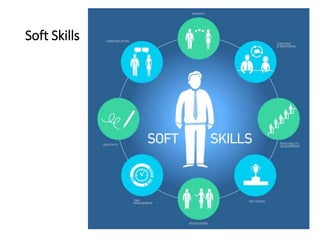
Soft Skills
Presentation Outline
1. Attitude
2. Positive thinking
3. Will power
4. Self discipline
5. Goal setting
6. Confidence building
7. Realizing your potential
Belief
Belief is a feeling of certainty
that something exists or
is good.
Values
The values of a person or a group
are the moral principles and beliefs
that they think are important in life
and that they tend to live their
lives accordingly.
Today’s Youth Tomorrow's Wealth
What is ‘Life Skills’?
 WHO (1997)
–“the abilities for adaptive and positive behavior that
enables individuals to deal effectively with the demands
and challenges of everyday life”
UNICEF (2001)
“life-skills based education is
-behavior change or behavior development approach
-designed to address a balance of three areas:
 knowledge, attitude, and skills.
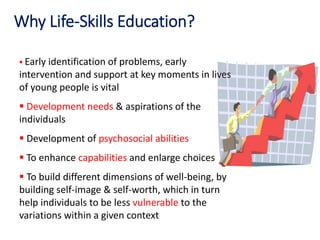
Why Life-Skills Education?
 Early identification of problems, early
intervention and support at key moments in lives
of young people is vital
 Development needs & aspirations of the
individuals
 Development of psychosocial abilities
 To enhance capabilities and enlarge choices
 To build different dimensions of well-being, by
building self-image & self-worth, which in turn
help individuals to be less vulnerable to the
variations within a given context
WHY LEARNING LIFE SKILLS ?
Delors Report :
‘Learning: The Treasure Within’
• learning to know
• learning to be
• learning to do
• learning to live together
SHIFTING LIFE SKILL CONCEPT
From:
• survival and income generation skills
(i.e. livelihood skills)
to:
• individual's capacity to fully function
and participate in daily life
(i.e. life skills)
GENERIC LIFE SKILLS
1 COGNITIVE SKILLS – including search,
selection, analysis of information; critical
thinking; problem-solving; understanding
consequences; decision-making;
adaptability; creativity
2 EMOTIONAL COPING SKILLS – including
motivation; sense of responsibility;
commitment; managing stress; managing
feelings; self-management, self-
monitoring and self-adjustment
3 SOCIAL OR INTERPERSONAL SKILLS –
including communication; assertiveness;
negotiation/refusal skills; cooperation;
empathy; teamwork
ATTITUDE
1. Your attitude to something
is the way that you think and feel about it.
2. Your attitude towards someone is the way
you behave when you are dealing with them,
especially when this shows how you feel
about them.
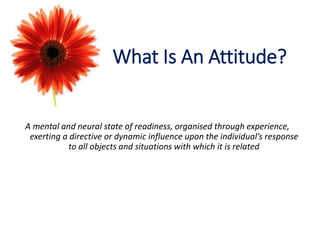
What Is An Attitude?
A mental and neural state of readiness, organised through experience,
exerting a directive or dynamic influence upon the individual’s response
to all objects and situations with which it is related
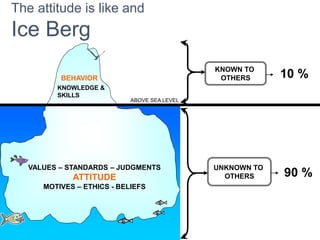
ABOVE SEA LEVEL
BEHAVIOR
VALUES – STANDARDS – JUDGMENTS
ATTITUDE
MOTIVES – ETHICS - BELIEFS
KNOWLEDGE &
SKILLS
KNOWN TO
OTHERS
UNKNOWN TO
OTHERS
10 %
90 %
The attitude is like and
Ice Berg
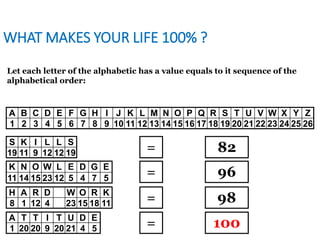
WHAT MAKES YOUR LIFE 100% ?
A B C D E F G H I J K L M N O P Q R S T U V W X Y Z
1 2 3 4 5 6 7 8 9 10 11 12 13 14 15 16 17 18 19 20 21 22 23 24 25 26
A T T I T U D E
1 20 20 9 20 21 4 5
K N O W L E D G E
11 14 15 23 12 5 4 7 5
H A R D W O R K
8 1 12 4 23 15 18 11
S K I L L S
19 11 9 12 12 19 =
=
=
=
82
96
98
100
Let each letter of the alphabetic has a value equals to it sequence of the
alphabetical order:
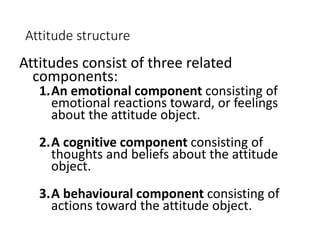
Attitude structure
Attitudes consist of three related
components:
1.An emotional component consisting of
emotional reactions toward, or feelings
about the attitude object.
2.A cognitive component consisting of
thoughts and beliefs about the attitude
object.
3.A behavioural component consisting of
actions toward the attitude object.
A positive attitude allows a
person to create the life they
want because they are not
afraid to see things as they
really are and work to create
their own reality.
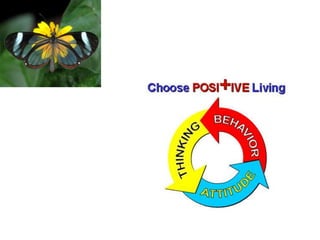
Positive
Attitude
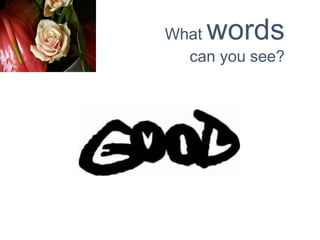
What words
can you see?
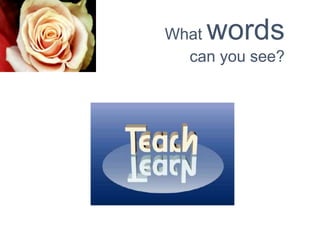
What words
can you see?
What words
can you see?
What is required ?
An ATTITUDINAL CHANGE
for the BETTER
Barriers to changing attitude
Prior Commitments
Insufficient information
Personal Ego
Influence of social surroundings
To bring a change you have to
oversome these barriers
Good Attitude Plays A Vital Role
Good work attitude is
important for the increase of
success at work. Any company
or concerns that are looking for
good employees and workers
will look only for the person
who has got good work
attitude
How to develop such good work
attitude?
Say You Can Do it
Never Say it’s not Possible
Do Not Complain With Your Work
Hard Work
Plan your Work
Behavior
A person’s behavior
is the way they act in general,
especially
in relation to the situation they are in
or the people they are with.
(IS THERE ANYTHING IMPOSSIBLE?)
•If you use the right instruments and choose the
right time, that is.
•Believe you can, you will.
•It’s all in your mind. Winning comes from within.
•It is not your aptitude, but your attitude, that
will determine your altitude in life.
•Happiness is simply a result of choosing
attitudes.
•Progress has always come from those who said it
could be done.
smile, please.
1. To be positive is natural.
---------------------------------------
•Be cheerful.
•Happiness is a state of mind. If you
think you are in heaven, you are.
•Use bright & positive language in
everything you do.
•Think positive. It is good for you.
----------------------------------------------------
• Expect the best. You willget it.
Be open.
•Free your mind from prejudices.
•Have an open mind. “Emptied, you hold.”
•Be receptive to ideas.
•Be quick to listen. Be slow to respond.
•Perceptions differ. What is right in your view
may not be that.
•Don’t jump to conclusions. See the other
person’s point of view.
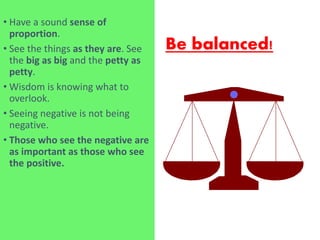
Be balanced!
• Have a sound sense of
proportion.
• See the things as they are. See
the big as big and the petty as
petty.
• Wisdom is knowing what to
overlook.
• Seeing negative is not being
negative.
• Those who see the negative are
as important as those who see
the positive.
Think right towards people.
• Have a positive attitude towards people. Find
qualities in them to like.
• Everyone’s, just everyone’s, life is littered with
compromises, morally questionable decisions
& inconsistent behaviour. Keep this in mind.
• People can only be as perfect as you are.
Accept differences & limitations.
• Judge them less harshly. Don’t be hostile
when they slip up in tiny ways.
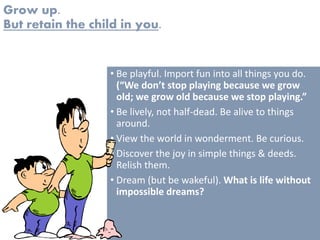
Grow up.
But retain the child in you.
• Be playful. Import fun into all things you do.
(“We don’t stop playing because we grow
old; we grow old because we stop playing.”
• Be lively, not half-dead. Be alive to things
around.
• View the world in wonderment. Be curious.
• Discover the joy in simple things & deeds.
Relish them.
• Dream (but be wakeful). What is life without
impossible dreams?
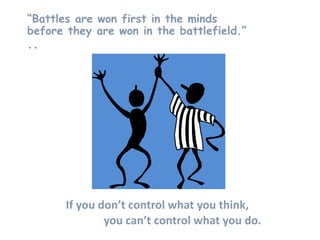
“Battles are won first in the minds
before they are won in the battlefield.”
..
If you don’t control what you think,
you can’t control what you do.
Have a winning attitude.
• ‘Yes, we can.’
• ‘We can make it work.’
• ‘We are perfect for this job.’
• ‘We are a lean, mean machine.’
• ‘I’ll be glad to take
responsibility.’
• ‘It is a challenge.’
• ‘I’ll come up with alternatives.’
• ‘We have the opportunity to be the
first.’
• ‘There’s room for improvement.’
• ‘We shall learn something new.’
• ‘Let’s try it a few more times.’
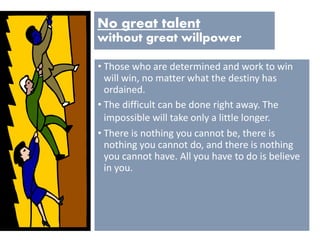
No great talent
without great willpower
• Those who are determined and work to win
will win, no matter what the destiny has
ordained.
• The difficult can be done right away. The
impossible will take only a little longer.
• There is nothing you cannot be, there is
nothing you cannot do, and there is nothing
you cannot have. All you have to do is believe
in you.
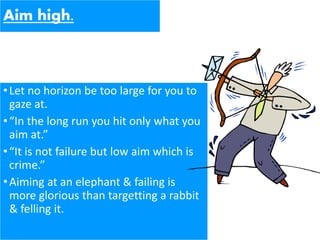
Aim high.
•Let no horizon be too large for you to
gaze at.
•“In the long run you hit only what you
aim at.”
•“It is not failure but low aim which is
crime.”
•Aiming at an elephant & failing is
more glorious than targetting a rabbit
& felling it.
Never quit. No one can cheat you
out of ultimate success but you.
• Life is full of beginnings.
• A mere bend in the road is not the end of it.
• Have belief in yourself. Never sell yourself short.
• There is always some good in every situation. Look
out.
• Sharpen your awareness to the opportunities that
lie around.
• You will never know what can be done until you try
it.
The secret to success is never to give up.
•Failures are but stepping stones to success.
•There are no mistakes in life, only lessons.
•Every failure is a lesson in learning.
•There is no failure except in no longer trying.
•Failing is not bad. Staying down is.
•No failure is final.
•------------------“Failure is a noun. The only fear it holds for us is in the
meaning we give it. Define failure as giving up. Take control of it. ”
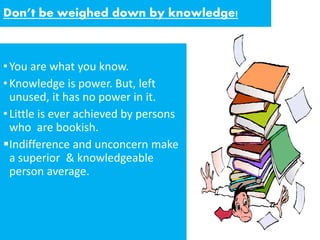
Don’t be weighed down by knowledge!
•You are what you know.
•Knowledge is power. But, left
unused, it has no power in it.
•Little is ever achieved by persons
who are bookish.
Indifference and unconcern make
a superior & knowledgeable
person average.
“He who has imagination without
knowledge has wings but no feet.”
Creativity without knowledge is rudderless. Build up
knowledge.
Imagination helps in exploring the unknown. Use
imagination to go beyond knowledge.
Reinforce your skills. Constantly update them.
Rich vocabulary helps.
A higher order language allows us
- to deal better with processes and things, and
– to convey more, saying less.
• Aim at perfection. Achieve excellence.
• Develop an instinct for quality. It pays.
• If it is worth doing, it is worth doing well.
• Try to do it right at the very first instance. A work done poorly
must be done again.
• Do it in time.
• “We are what we repeatedly do.
------------------------------------------------------------
Excellence then is not an act,
but a habit.
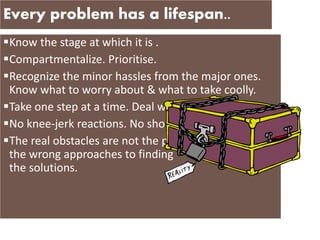
Every problem has a lifespan..
Know the stage at which it is .
Compartmentalize. Prioritise.
Recognize the minor hassles from the major ones.
Know what to worry about & what to take coolly.
Take one step at a time. Deal with them in small bits.
No knee-jerk reactions. No short-term patches.
The real obstacles are not the pbms themselves, but
the wrong approaches to finding
the solutions.
Think solution, not problem.
See a solution, where others see a pbm. There is a
solution to every problem.
Try to solve, not prolong.
Ascertain the facts.
Have an uncluttered mind. Cut out the extraneous.
Identify the core.
Face the issue head on. Take it on without breaking
step.
While with major pbm, stay detached.
Intractable? Sleep over it . Let it work its way out.
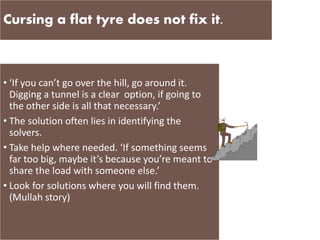
Cursing a flat tyre does not fix it.
• ‘If you can’t go over the hill, go around it.
Digging a tunnel is a clear option, if going to
the other side is all that necessary.’
• The solution often lies in identifying the
solvers.
• Take help where needed. ‘If something seems
far too big, maybe it’s because you’re meant to
share the load with someone else.’
• Look for solutions where you will find them.
(Mullah story)
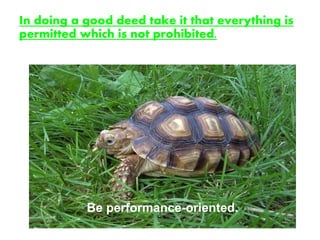
In doing a good deed take it that everything is
permitted which is not prohibited.
Be performance-oriented.
“If one desires a change, one must be that
change before it can take place.”
• Anticipate change. Things can change in a
day.
• Be alert to the first signs of change.
• Feel obligated to effect the change.
• Look at opportunities that change
represents.
• Keep renewing yourself. Don’t allow
routines to become chains.
• Keep managing the present while
managing the change.
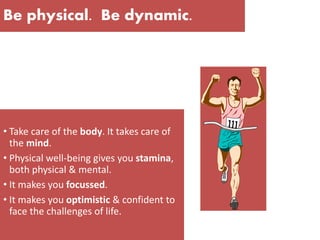
Be physical. Be dynamic.
• Take care of the body. It takes care of
the mind.
• Physical well-being gives you stamina,
both physical & mental.
• It makes you focussed.
• It makes you optimistic & confident to
face the challenges of life.
Learn from the past. Focus on the future.
Be in the present. Enjoy.
• The past is finished. Learn from it & let
it go.
• The future is not even here yet. Plan for
it, but do not waste time worrying
about it.
• Live in the present. Enjoy its joys.
• How many crores of pleasures you have
created for us, oh our Lord!
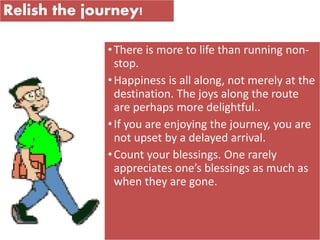
Relish the journey!
•There is more to life than running non-
stop.
•Happiness is all along, not merely at the
destination. The joys along the route
are perhaps more delightful..
•If you are enjoying the journey, you are
not upset by a delayed arrival.
•Count your blessings. One rarely
appreciates one’s blessings as much as
when they are gone.
“We don’t laugh because we are happy.
We are happy because we laugh.”
• Control your emotions by your actions.
• Be cheerful, in order to feel cheerful.
• Act brave, in order to be brave.
• Want a facelift? Smile. It’s the duty you owe others.
Don’t just throw out a vice.
Replace it with a virtue.
•Sow an action, you reap a habit. Sow a habit,
you reap a character. Sow a character,you reap a
destiny.
•“As we become drunkards by so many separate
drinks, so we become saints & authorities &
experts by so many separate acts & hours of
work.”
•How to break a habit or acquire it ? Break off
abruptly & with all emphasis.
•Abrupt acqn of the new habit is the best way, if
there be a real possibility of carrying it out.
Pleasantness is the duty
we owe others.
• Be natural & humble.
• Drain off your grievances.
• Sincerely attempt to heal.
• Acquire the quality of
easygoingness.
• What is practical is just.
• Relax, for easy power.
• Never allow things to ruffle
you.
• Be interesting.
• Practice liking people.
• Never miss the
opportunity to -
congratulate,
sympathize, or
express sorrow.
• Be a comfortable person to
be with.
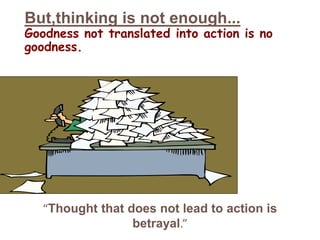
But,thinking is not enough...
Goodness not translated into action is no
goodness.
“Thought that does not lead to action is
betrayal.”
What are the “Life Skills” ?
• Problem-Solving
• Decision Making
• Critical Thinking
• Creative Thinking
• Communication Skills
• Self-Awareness
• Stress Management
• Empathy
• Interpersonal Relationship
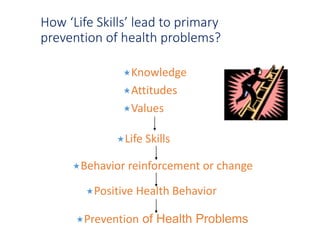
How ‘Life Skills’ lead to primary
prevention of health problems?
Knowledge
Attitudes
Values
Life Skills
Behavior reinforcement or change
Positive Health Behavior
Prevention of Health Problems
PROBLEM-SOLVING SKILL
Allows to solve an issue, problem or conflict
without anger, intimidation, insubordination,
aggressive force or behavior
Devising a plan in order to solve a problem
Examining a related problem
Adjustment to a situation
PROBLEMS if left unresolved  MENTAL &
PHYSICAL STRESS
What is Decision Making ?
• Abilities to assess available options
• Relating current situation to past similar situation
• To foresee the consequences of different decisions
(actions/non-actions)
• No decision is also a decision
Responsible Decision Making
Making decision after
examining the choices &
consequences in view of
one’s values and goals is
Responsible Decision
Making
Steps for
Responsible Decision Making
•Identify/Define the problem
•Consider the consequences or outcomes
•Consider family and personal values
•Choose one alternative
•Implement the decision
Critical Thinking
•Ability to analyze information and experiences in an
objective manner
• Helps adolescents to recognize and to assess the
factors influencing attitude & behavior - values,
pressures (peer,family)
• Key to form right attitudes towards life
• Assists in developing responsible behavior.
Creative Thinking
•Enables to explore available alternatives and
consequences of actions or non-actions
•Openness to experience
•Helps adolescents to respond adaptively and with
flexibility to the daily life situations
SELF-AWARENESS
• Body movement and gestures
• Taking responsibility for own behavior
• Being able to stand up for one’s own values and
needs
• Awareness of mental process
• Knowing one’s thought, feelings and actions
Coping with emotions & stress
•Recognizing effects of emotions on others and
ourselves
•Being aware of how emotions influence behaviors
•Able to respond to emotions appropriately
How to Cope with Stress
•Recognize sources of stress in our life
•Recognizing how these affect us
•Identifying ways that help to control our levels of stress
•Learning how to relax to minimize tensions
Empathy
•Ability to understand and accept others
•To put oneself in other person’s shoes
•Being nurturing and tolerant
•Encourages a positive behavior towards
people in need or difficulty
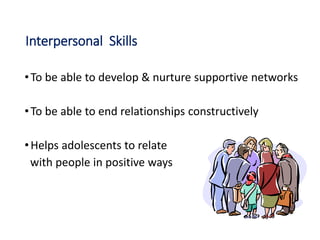
Interpersonal Skills
•To be able to develop & nurture supportive networks
•To be able to end relationships constructively
•Helps adolescents to relate
with people in positive ways
Effective Communication
•To express ourselves verbally & non-verbally
•To express opinions, desires, needs & fears also
•To ask for advice and help
Thank you !

Soft Skills

  • 1.
    Enhancing Soft Skills Mr.Parikshit Sharma & Mr. Ashutosh Sharma School of Hospitality & Tourism
  • 2.
  • 3.
    Presentation Outline 1. Attitude 2.Positive thinking 3. Will power 4. Self discipline 5. Goal setting 6. Confidence building 7. Realizing your potential
  • 4.
    Belief Belief is afeeling of certainty that something exists or is good.
  • 5.
    Values The values ofa person or a group are the moral principles and beliefs that they think are important in life and that they tend to live their lives accordingly.
  • 6.
  • 7.
    What is ‘LifeSkills’?  WHO (1997) –“the abilities for adaptive and positive behavior that enables individuals to deal effectively with the demands and challenges of everyday life” UNICEF (2001) “life-skills based education is -behavior change or behavior development approach -designed to address a balance of three areas:  knowledge, attitude, and skills.
  • 8.
    Why Life-Skills Education? Early identification of problems, early intervention and support at key moments in lives of young people is vital  Development needs & aspirations of the individuals  Development of psychosocial abilities  To enhance capabilities and enlarge choices  To build different dimensions of well-being, by building self-image & self-worth, which in turn help individuals to be less vulnerable to the variations within a given context
  • 9.
    WHY LEARNING LIFESKILLS ? Delors Report : ‘Learning: The Treasure Within’ • learning to know • learning to be • learning to do • learning to live together
  • 10.
    SHIFTING LIFE SKILLCONCEPT From: • survival and income generation skills (i.e. livelihood skills) to: • individual's capacity to fully function and participate in daily life (i.e. life skills)
  • 11.
    GENERIC LIFE SKILLS 1COGNITIVE SKILLS – including search, selection, analysis of information; critical thinking; problem-solving; understanding consequences; decision-making; adaptability; creativity 2 EMOTIONAL COPING SKILLS – including motivation; sense of responsibility; commitment; managing stress; managing feelings; self-management, self- monitoring and self-adjustment 3 SOCIAL OR INTERPERSONAL SKILLS – including communication; assertiveness; negotiation/refusal skills; cooperation; empathy; teamwork
  • 12.
    ATTITUDE 1. Your attitudeto something is the way that you think and feel about it. 2. Your attitude towards someone is the way you behave when you are dealing with them, especially when this shows how you feel about them.
  • 13.
    What Is AnAttitude? A mental and neural state of readiness, organised through experience, exerting a directive or dynamic influence upon the individual’s response to all objects and situations with which it is related
  • 14.
    ABOVE SEA LEVEL BEHAVIOR VALUES– STANDARDS – JUDGMENTS ATTITUDE MOTIVES – ETHICS - BELIEFS KNOWLEDGE & SKILLS KNOWN TO OTHERS UNKNOWN TO OTHERS 10 % 90 % The attitude is like and Ice Berg
  • 15.
    WHAT MAKES YOURLIFE 100% ? A B C D E F G H I J K L M N O P Q R S T U V W X Y Z 1 2 3 4 5 6 7 8 9 10 11 12 13 14 15 16 17 18 19 20 21 22 23 24 25 26 A T T I T U D E 1 20 20 9 20 21 4 5 K N O W L E D G E 11 14 15 23 12 5 4 7 5 H A R D W O R K 8 1 12 4 23 15 18 11 S K I L L S 19 11 9 12 12 19 = = = = 82 96 98 100 Let each letter of the alphabetic has a value equals to it sequence of the alphabetical order:
  • 16.
    Attitude structure Attitudes consistof three related components: 1.An emotional component consisting of emotional reactions toward, or feelings about the attitude object. 2.A cognitive component consisting of thoughts and beliefs about the attitude object. 3.A behavioural component consisting of actions toward the attitude object.
  • 17.
    A positive attitudeallows a person to create the life they want because they are not afraid to see things as they really are and work to create their own reality. Positive Attitude
  • 18.
  • 19.
  • 20.
  • 21.
    What is required? An ATTITUDINAL CHANGE for the BETTER
  • 22.
    Barriers to changingattitude Prior Commitments Insufficient information Personal Ego Influence of social surroundings To bring a change you have to oversome these barriers
  • 23.
    Good Attitude PlaysA Vital Role Good work attitude is important for the increase of success at work. Any company or concerns that are looking for good employees and workers will look only for the person who has got good work attitude
  • 24.
    How to developsuch good work attitude? Say You Can Do it Never Say it’s not Possible Do Not Complain With Your Work Hard Work Plan your Work
  • 25.
    Behavior A person’s behavior isthe way they act in general, especially in relation to the situation they are in or the people they are with.
  • 27.
    (IS THERE ANYTHINGIMPOSSIBLE?) •If you use the right instruments and choose the right time, that is. •Believe you can, you will. •It’s all in your mind. Winning comes from within. •It is not your aptitude, but your attitude, that will determine your altitude in life. •Happiness is simply a result of choosing attitudes. •Progress has always come from those who said it could be done.
  • 28.
    smile, please. 1. Tobe positive is natural. --------------------------------------- •Be cheerful. •Happiness is a state of mind. If you think you are in heaven, you are. •Use bright & positive language in everything you do. •Think positive. It is good for you. ---------------------------------------------------- • Expect the best. You willget it.
  • 29.
    Be open. •Free yourmind from prejudices. •Have an open mind. “Emptied, you hold.” •Be receptive to ideas. •Be quick to listen. Be slow to respond. •Perceptions differ. What is right in your view may not be that. •Don’t jump to conclusions. See the other person’s point of view.
  • 30.
    Be balanced! • Havea sound sense of proportion. • See the things as they are. See the big as big and the petty as petty. • Wisdom is knowing what to overlook. • Seeing negative is not being negative. • Those who see the negative are as important as those who see the positive.
  • 31.
    Think right towardspeople. • Have a positive attitude towards people. Find qualities in them to like. • Everyone’s, just everyone’s, life is littered with compromises, morally questionable decisions & inconsistent behaviour. Keep this in mind. • People can only be as perfect as you are. Accept differences & limitations. • Judge them less harshly. Don’t be hostile when they slip up in tiny ways.
  • 32.
    Grow up. But retainthe child in you. • Be playful. Import fun into all things you do. (“We don’t stop playing because we grow old; we grow old because we stop playing.” • Be lively, not half-dead. Be alive to things around. • View the world in wonderment. Be curious. • Discover the joy in simple things & deeds. Relish them. • Dream (but be wakeful). What is life without impossible dreams?
  • 33.
    “Battles are wonfirst in the minds before they are won in the battlefield.” .. If you don’t control what you think, you can’t control what you do.
  • 34.
    Have a winningattitude. • ‘Yes, we can.’ • ‘We can make it work.’ • ‘We are perfect for this job.’ • ‘We are a lean, mean machine.’ • ‘I’ll be glad to take responsibility.’ • ‘It is a challenge.’ • ‘I’ll come up with alternatives.’ • ‘We have the opportunity to be the first.’ • ‘There’s room for improvement.’ • ‘We shall learn something new.’ • ‘Let’s try it a few more times.’
  • 35.
    No great talent withoutgreat willpower • Those who are determined and work to win will win, no matter what the destiny has ordained. • The difficult can be done right away. The impossible will take only a little longer. • There is nothing you cannot be, there is nothing you cannot do, and there is nothing you cannot have. All you have to do is believe in you.
  • 36.
    Aim high. •Let nohorizon be too large for you to gaze at. •“In the long run you hit only what you aim at.” •“It is not failure but low aim which is crime.” •Aiming at an elephant & failing is more glorious than targetting a rabbit & felling it.
  • 37.
    Never quit. Noone can cheat you out of ultimate success but you. • Life is full of beginnings. • A mere bend in the road is not the end of it. • Have belief in yourself. Never sell yourself short. • There is always some good in every situation. Look out. • Sharpen your awareness to the opportunities that lie around. • You will never know what can be done until you try it.
  • 38.
    The secret tosuccess is never to give up. •Failures are but stepping stones to success. •There are no mistakes in life, only lessons. •Every failure is a lesson in learning. •There is no failure except in no longer trying. •Failing is not bad. Staying down is. •No failure is final. •------------------“Failure is a noun. The only fear it holds for us is in the meaning we give it. Define failure as giving up. Take control of it. ”
  • 39.
    Don’t be weigheddown by knowledge! •You are what you know. •Knowledge is power. But, left unused, it has no power in it. •Little is ever achieved by persons who are bookish. Indifference and unconcern make a superior & knowledgeable person average.
  • 40.
    “He who hasimagination without knowledge has wings but no feet.” Creativity without knowledge is rudderless. Build up knowledge. Imagination helps in exploring the unknown. Use imagination to go beyond knowledge. Reinforce your skills. Constantly update them. Rich vocabulary helps. A higher order language allows us - to deal better with processes and things, and – to convey more, saying less.
  • 41.
    • Aim atperfection. Achieve excellence. • Develop an instinct for quality. It pays. • If it is worth doing, it is worth doing well. • Try to do it right at the very first instance. A work done poorly must be done again. • Do it in time. • “We are what we repeatedly do. ------------------------------------------------------------ Excellence then is not an act, but a habit.
  • 42.
    Every problem hasa lifespan.. Know the stage at which it is . Compartmentalize. Prioritise. Recognize the minor hassles from the major ones. Know what to worry about & what to take coolly. Take one step at a time. Deal with them in small bits. No knee-jerk reactions. No short-term patches. The real obstacles are not the pbms themselves, but the wrong approaches to finding the solutions.
  • 43.
    Think solution, notproblem. See a solution, where others see a pbm. There is a solution to every problem. Try to solve, not prolong. Ascertain the facts. Have an uncluttered mind. Cut out the extraneous. Identify the core. Face the issue head on. Take it on without breaking step. While with major pbm, stay detached. Intractable? Sleep over it . Let it work its way out.
  • 44.
    Cursing a flattyre does not fix it. • ‘If you can’t go over the hill, go around it. Digging a tunnel is a clear option, if going to the other side is all that necessary.’ • The solution often lies in identifying the solvers. • Take help where needed. ‘If something seems far too big, maybe it’s because you’re meant to share the load with someone else.’ • Look for solutions where you will find them. (Mullah story)
  • 45.
    In doing agood deed take it that everything is permitted which is not prohibited. Be performance-oriented.
  • 46.
    “If one desiresa change, one must be that change before it can take place.” • Anticipate change. Things can change in a day. • Be alert to the first signs of change. • Feel obligated to effect the change. • Look at opportunities that change represents. • Keep renewing yourself. Don’t allow routines to become chains. • Keep managing the present while managing the change.
  • 47.
    Be physical. Bedynamic. • Take care of the body. It takes care of the mind. • Physical well-being gives you stamina, both physical & mental. • It makes you focussed. • It makes you optimistic & confident to face the challenges of life.
  • 48.
    Learn from thepast. Focus on the future. Be in the present. Enjoy. • The past is finished. Learn from it & let it go. • The future is not even here yet. Plan for it, but do not waste time worrying about it. • Live in the present. Enjoy its joys. • How many crores of pleasures you have created for us, oh our Lord!
  • 49.
    Relish the journey! •Thereis more to life than running non- stop. •Happiness is all along, not merely at the destination. The joys along the route are perhaps more delightful.. •If you are enjoying the journey, you are not upset by a delayed arrival. •Count your blessings. One rarely appreciates one’s blessings as much as when they are gone.
  • 50.
    “We don’t laughbecause we are happy. We are happy because we laugh.” • Control your emotions by your actions. • Be cheerful, in order to feel cheerful. • Act brave, in order to be brave. • Want a facelift? Smile. It’s the duty you owe others.
  • 51.
    Don’t just throwout a vice. Replace it with a virtue. •Sow an action, you reap a habit. Sow a habit, you reap a character. Sow a character,you reap a destiny. •“As we become drunkards by so many separate drinks, so we become saints & authorities & experts by so many separate acts & hours of work.” •How to break a habit or acquire it ? Break off abruptly & with all emphasis. •Abrupt acqn of the new habit is the best way, if there be a real possibility of carrying it out.
  • 52.
    Pleasantness is theduty we owe others. • Be natural & humble. • Drain off your grievances. • Sincerely attempt to heal. • Acquire the quality of easygoingness. • What is practical is just. • Relax, for easy power. • Never allow things to ruffle you. • Be interesting. • Practice liking people. • Never miss the opportunity to - congratulate, sympathize, or express sorrow. • Be a comfortable person to be with.
  • 53.
    But,thinking is notenough... Goodness not translated into action is no goodness. “Thought that does not lead to action is betrayal.”
  • 54.
    What are the“Life Skills” ? • Problem-Solving • Decision Making • Critical Thinking • Creative Thinking • Communication Skills • Self-Awareness • Stress Management • Empathy • Interpersonal Relationship
  • 55.
    How ‘Life Skills’lead to primary prevention of health problems? Knowledge Attitudes Values Life Skills Behavior reinforcement or change Positive Health Behavior Prevention of Health Problems
  • 56.
    PROBLEM-SOLVING SKILL Allows tosolve an issue, problem or conflict without anger, intimidation, insubordination, aggressive force or behavior Devising a plan in order to solve a problem Examining a related problem Adjustment to a situation PROBLEMS if left unresolved  MENTAL & PHYSICAL STRESS
  • 57.
    What is DecisionMaking ? • Abilities to assess available options • Relating current situation to past similar situation • To foresee the consequences of different decisions (actions/non-actions) • No decision is also a decision
  • 58.
    Responsible Decision Making Makingdecision after examining the choices & consequences in view of one’s values and goals is Responsible Decision Making
  • 59.
    Steps for Responsible DecisionMaking •Identify/Define the problem •Consider the consequences or outcomes •Consider family and personal values •Choose one alternative •Implement the decision
  • 60.
    Critical Thinking •Ability toanalyze information and experiences in an objective manner • Helps adolescents to recognize and to assess the factors influencing attitude & behavior - values, pressures (peer,family) • Key to form right attitudes towards life • Assists in developing responsible behavior.
  • 61.
    Creative Thinking •Enables toexplore available alternatives and consequences of actions or non-actions •Openness to experience •Helps adolescents to respond adaptively and with flexibility to the daily life situations
  • 62.
    SELF-AWARENESS • Body movementand gestures • Taking responsibility for own behavior • Being able to stand up for one’s own values and needs • Awareness of mental process • Knowing one’s thought, feelings and actions
  • 63.
    Coping with emotions& stress •Recognizing effects of emotions on others and ourselves •Being aware of how emotions influence behaviors •Able to respond to emotions appropriately
  • 64.
    How to Copewith Stress •Recognize sources of stress in our life •Recognizing how these affect us •Identifying ways that help to control our levels of stress •Learning how to relax to minimize tensions
  • 65.
    Empathy •Ability to understandand accept others •To put oneself in other person’s shoes •Being nurturing and tolerant •Encourages a positive behavior towards people in need or difficulty
  • 66.
    Interpersonal Skills •To beable to develop & nurture supportive networks •To be able to end relationships constructively •Helps adolescents to relate with people in positive ways
  • 67.
    Effective Communication •To expressourselves verbally & non-verbally •To express opinions, desires, needs & fears also •To ask for advice and help
  • 68.